Techniques
Cooking Bap
밥 짓기
How Korean cooks wash, soak and cook rice so every grain is tender but separate, and how the scorched layer in the pot became nurungji and sungnyung.
Bap, cooked rice or other grains, is the fixed center of the everyday Korean meal. The Encyclopedia of Korean Culture describes the traditional table as divided into a staple and side dishes, with the staple valued so highly that a bowl of rice could be eaten with nothing more than cold water, soy sauce or gochujang. Even the vocabulary shows its rank: rice is bap for most people, jinji when offered to an elder, sura for the king and queen, and me on an ancestral-rite table. Everything else, from namul to jjigae, is planned around it. For the cultural story, see rice in Korean culture and Korean table settings.
From steaming to boiling
The encyclopedia suggests that early grain was probably cooked in fragile earthenware, then steamed in a perforated siru, a scene painted on the wall of the Goguryeo tomb at Anak. Absorption-cooked rice, the method used today, followed the spread of iron cauldrons: the Samguk sagi already uses characters for a cauldron and for cooking rice, and iron pots turn up in Silla tombs. The encyclopedia quotes a Qing-dynasty Chinese author praising Korean rice as glossy, soft, fragrant and evenly cooked.
Washing and soaking
The traditional sequence was simple and careful. Rice was winnowed, then washed in several changes of cold water and scooped out with a bamboo strainer, which in the days of stony rice was also how grit was separated. The encyclopedia advises against washing in hot water and records soaking for about four hours before cooking, which it says gives better rice and saves fuel; many modern cooks soak for less time, especially with newer rice. Soaked rice was spread over a bottom layer of boiled barley or soaked beans (babmit) in an iron pot, then covered with water.
Water, fire and resting
- Water: for white rice the encyclopedia gives roughly 1.2 to 1.4 parts water to 1 part rice, adjusted for the variety and how dry the grain is. The Joseon text Onghui japji gives a rule of thumb instead: water a palm's thickness above the rice.
- Heat: bring the pot to a full boil, lower the fire, and when the surface water has nearly disappeared, keep it low; then raise the heat once more during the resting stage (tteum), so the rice finishes evenly.
- The lid: the nineteenth-century Imwon gyeongjeji warns that a lid sitting crooked lets steam escape, wastes fuel and leaves rice half cooked. The heavy lid of a cast-iron sot kept steam in so well that the encyclopedia compares it to a pressure cooker.
- Done right: the grains are cooked through and the water fully absorbed. Leftover water and burst, sticky grains mean something went wrong.
Because the iron pot held its heat, a small bowl of jjigae was often set inside to steam while the rice rested, then reheated over embers before serving.
Pots: sot, dolsot and the electric cooker
The encyclopedia notes that technique changes with the vessel and fuel: a cast-iron pot over firewood, a soapstone pot over charcoal, or modern aluminum pots, pressure cookers and electric rice cookers. The small stone pot (gopdol-sot, the ancestor of the restaurant dolsot) is carved from a smooth, waxy stone that holds heat evenly; the encyclopedia says it cooks one or two servings without scorching and keeps rice warm, and that the royal kitchen used one to cook single bowls of white rice and red-bean rice. A new stone pot was traditionally tempered by heating it over a straw fire and cooling it several times.
Nurungji and sungnyung
As the last water is absorbed, the bottom of the pot climbs well above boiling. The Encyclopedia of Korean Culture puts it at over 200°C, high enough for browning reactions that give the scorched layer, nurungji, its toasty smell, which also perfumes the rice above. When snacks were scarce, cooks scorched extra on purpose to fry as a treat.
Pour water over the nurungji and simmer it, and the liquid becomes sungnyung, a mild, nutty drink that traditionally ended the meal. The encyclopedia ties its existence to Korean cooking itself: rice cooked until the water is gone leaves a crust, and fixed cauldrons set into the kitchen hearth were hard to lift and scrub, so simmering water in them both cleaned the pot and made a drink. It even suggests sungnyung is one reason tea never became an everyday mealtime habit. Lightweight pots and electric cookers largely ended the crust, and barley tea took sungnyung's place.
Japgokbap: mixed-grain rice
For much of history, white rice was a luxury. The encyclopedia explains that millet, barley, beans, sorghum and red beans were the everyday staples of ordinary people, and that even Goryeo officials received mixed grains as salary. Mixed-grain rice (japgokbap) survives both as daily food and as ritual: on the first full moon of the lunar year, households cook five-grain rice (ogokbap) and share it with neighbors, a custom recorded in the nineteenth-century Dongguk sesigi. Grains cook at different speeds, so order matters; for rice with red beans and millet, the encyclopedia simmers the red beans first, adds the rice, and adds the millet last. Today barley, glutinous rice and black beans are common additions. See whole grains and japgokbap, and for one-pot rice dishes, kongnamul-bap and bibimbap.
Cooked rice left warm for hours is a food-safety concern; cool leftovers promptly and refrigerate them. See food safety at home.
Dishes using this technique
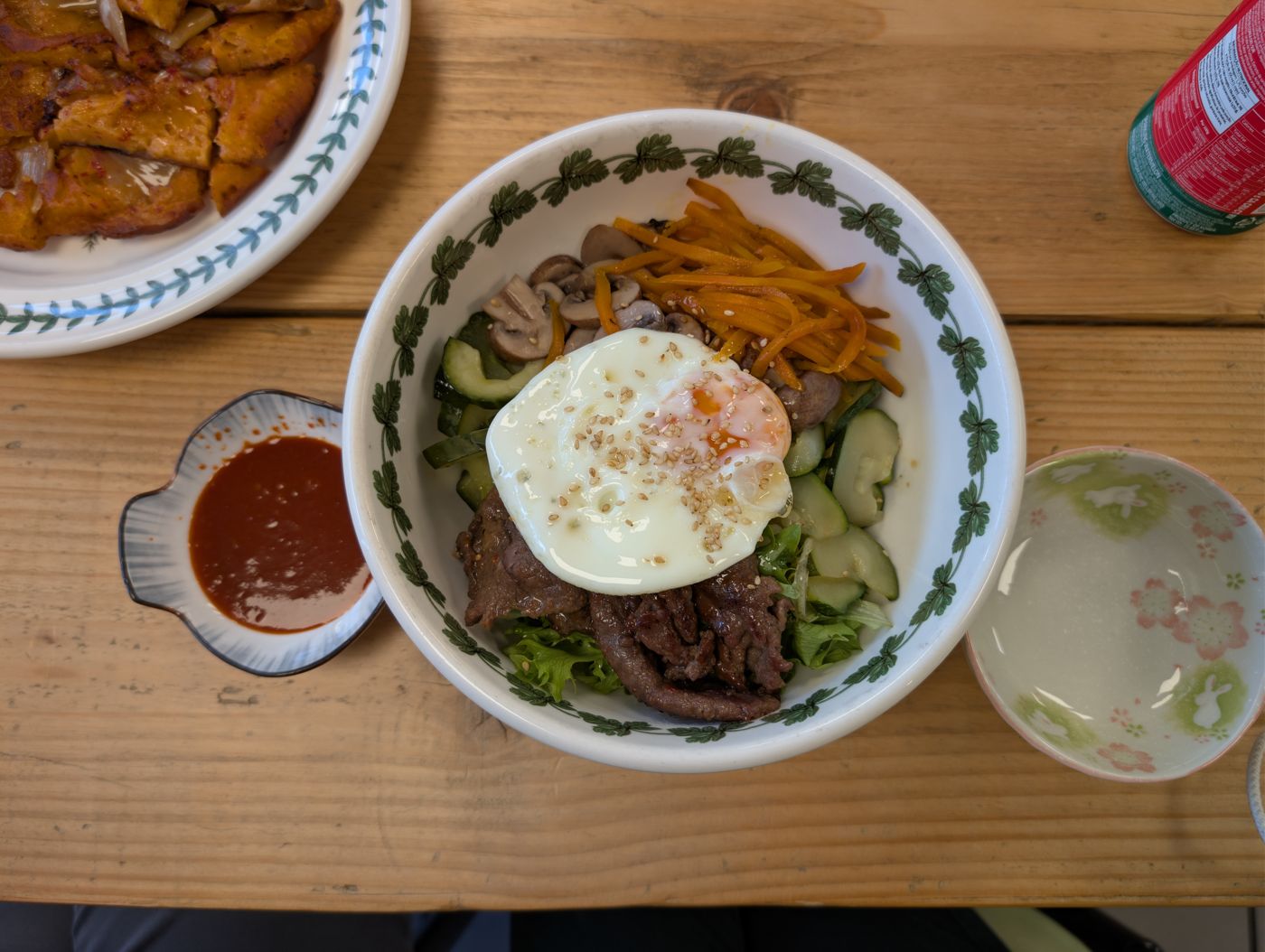 Bibimbap (Mixed Rice with Namul)비빔밥A bowl of rice topped with seasoned namul, beef and egg, mixed at the table with chili paste and sesame oil — banchan gathered into a single meal.
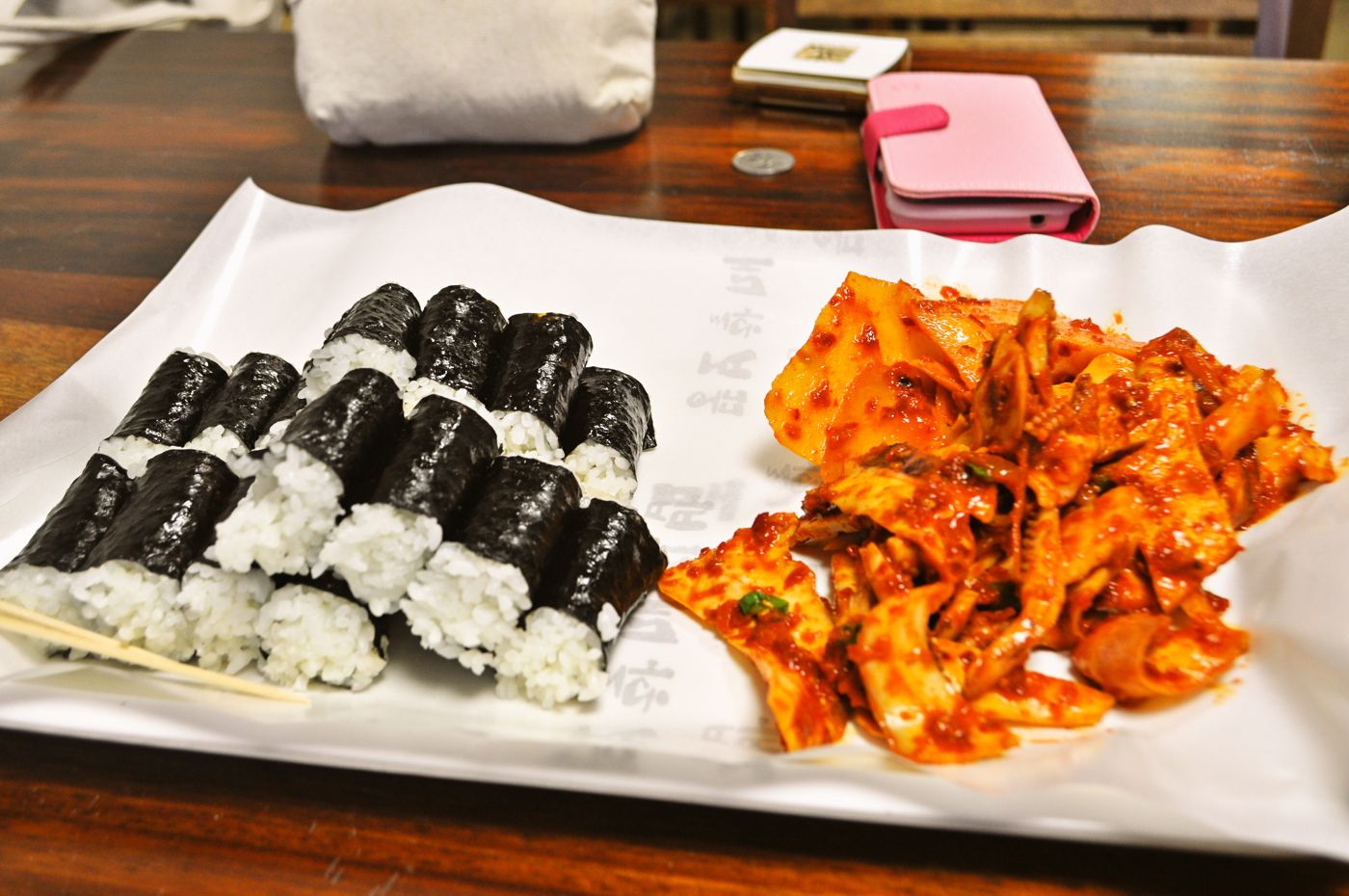 Chungmu Gimbap (Tongyeong Rice Rolls)충무김밥Finger-sized rolls of plain rice in laver, eaten with spicy squid and chunky radish kimchi on the side — Tongyeong's harbor food, built to survive summer heat.
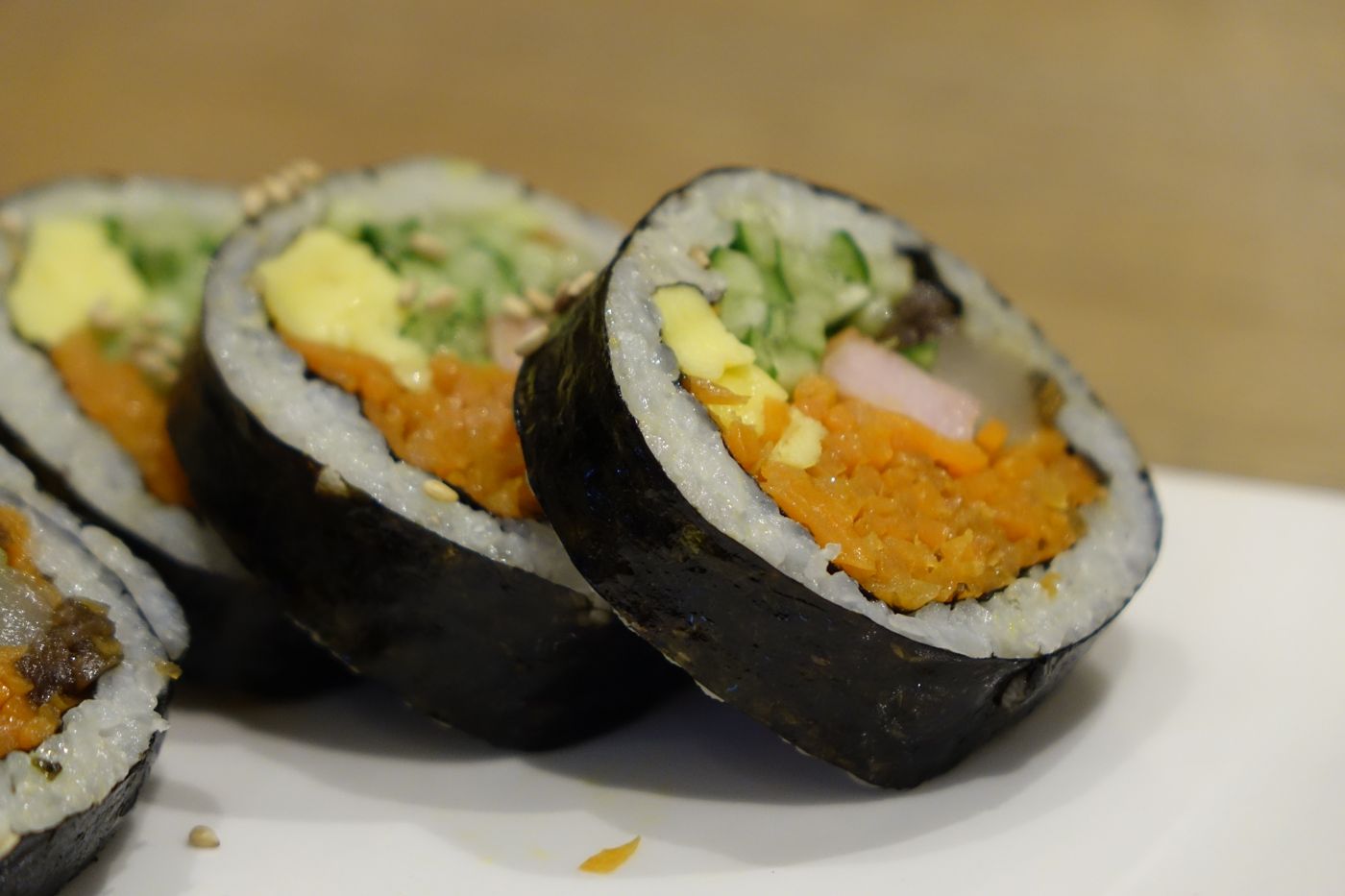 Gimbap (Seaweed Rice Rolls)김밥Rice seasoned with sesame oil and salt, rolled in laver around strips of spinach, egg, carrot and pickled radish, then sliced — Korea's classic picnic and lunchbox food.
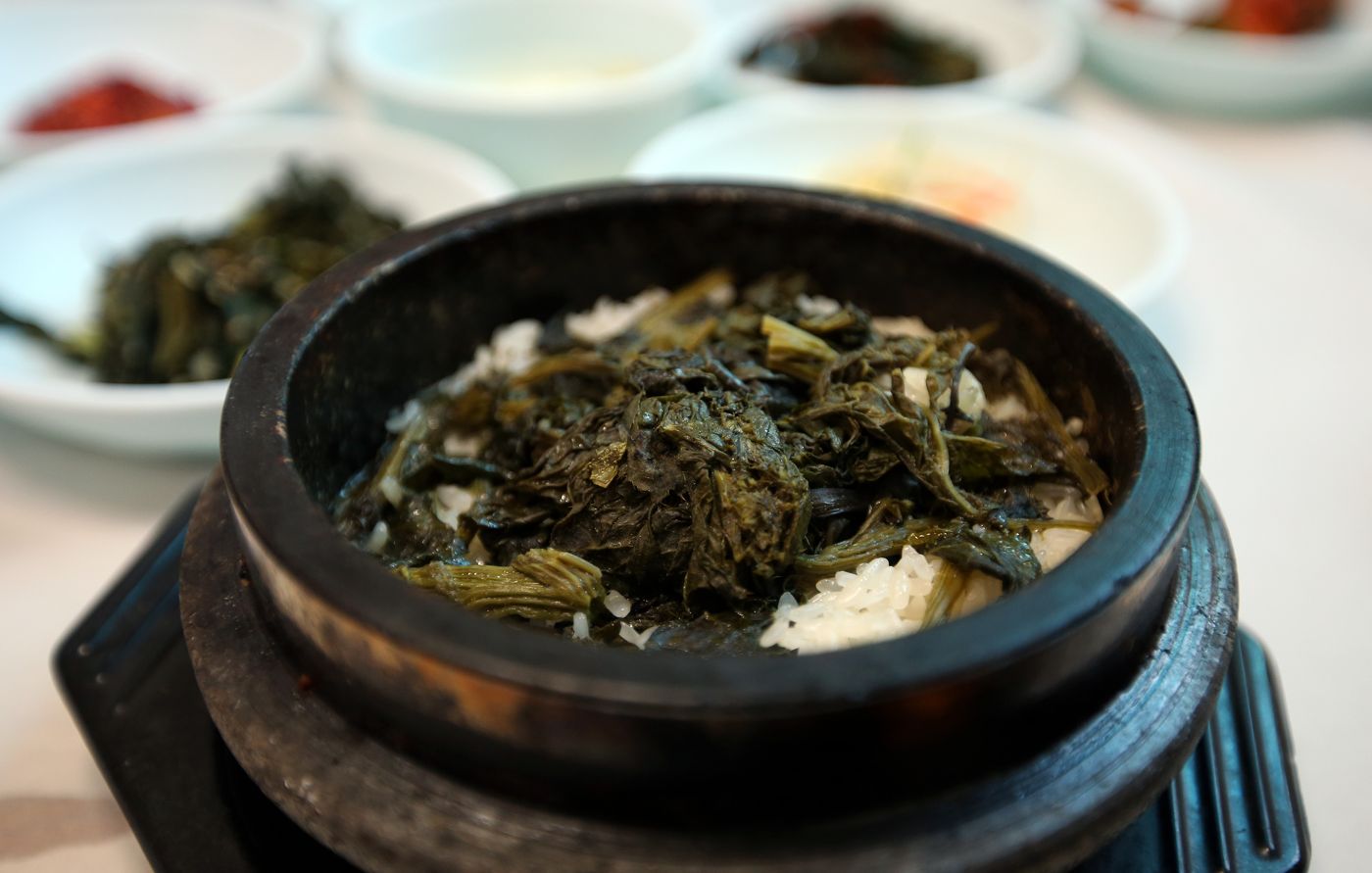 Gondeure-bap (Thistle Rice)곤드레밥Rice steamed with dried-and-rehydrated gondeure, a soft mountain thistle, then stirred with a soy-sauce dressing — the signature dish of Gangwon's highlands, especially Jeongseon.
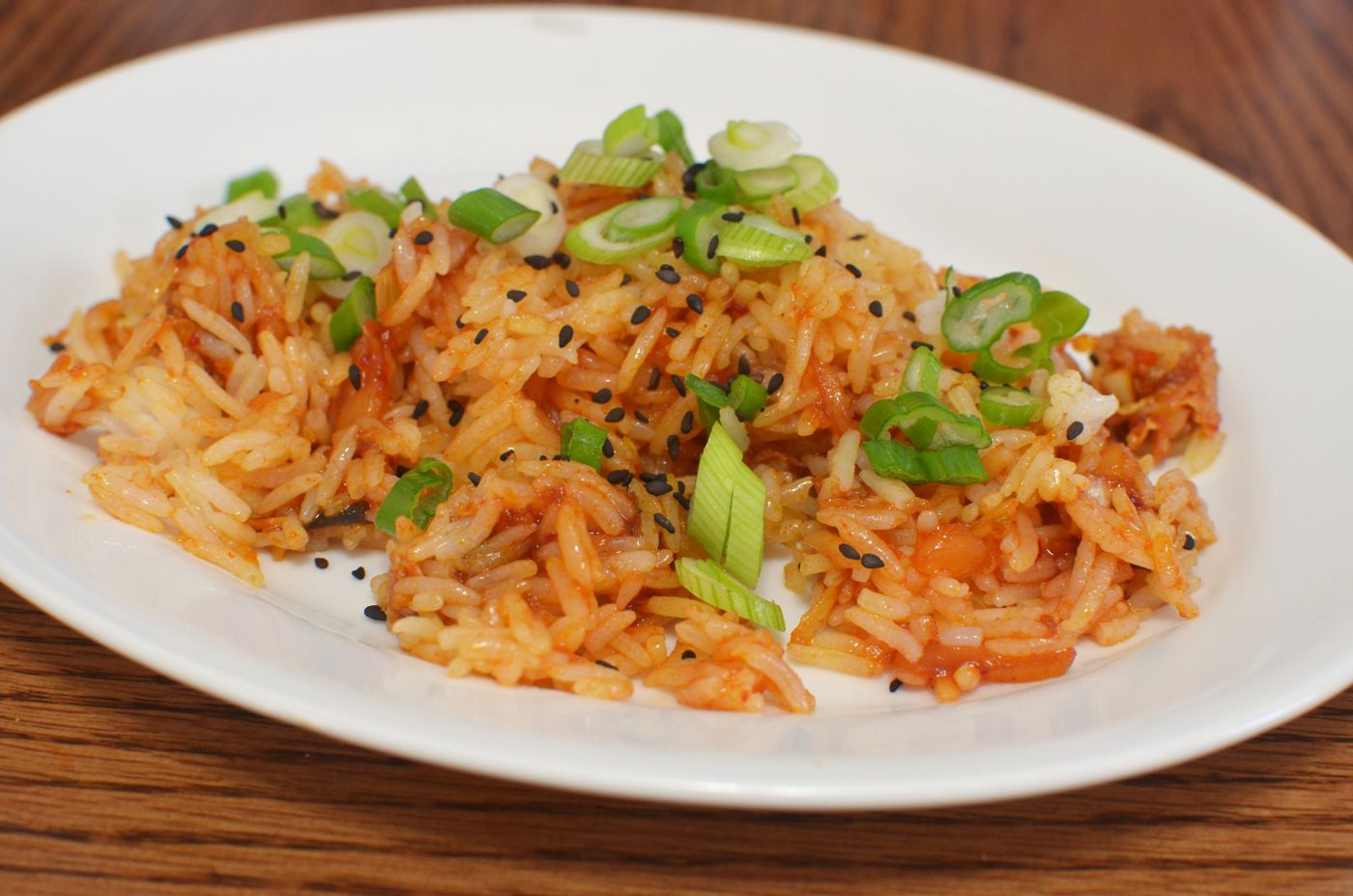 Kimchi-bokkeumbap (Kimchi Fried Rice)김치볶음밥Leftover rice stir-fried with sour, well-fermented kimchi and a little pork, usually topped with a fried egg — a home staple that spread with frying pans and cooking oil.
- Kongnamul-bap (Soybean Sprout Rice)콩나물밥Rice steamed over a bed of soybean sprouts, often with a little beef, and eaten with a spoonful of soy-and-scallion sauce — a thrifty one-pot meal from Chungcheong.
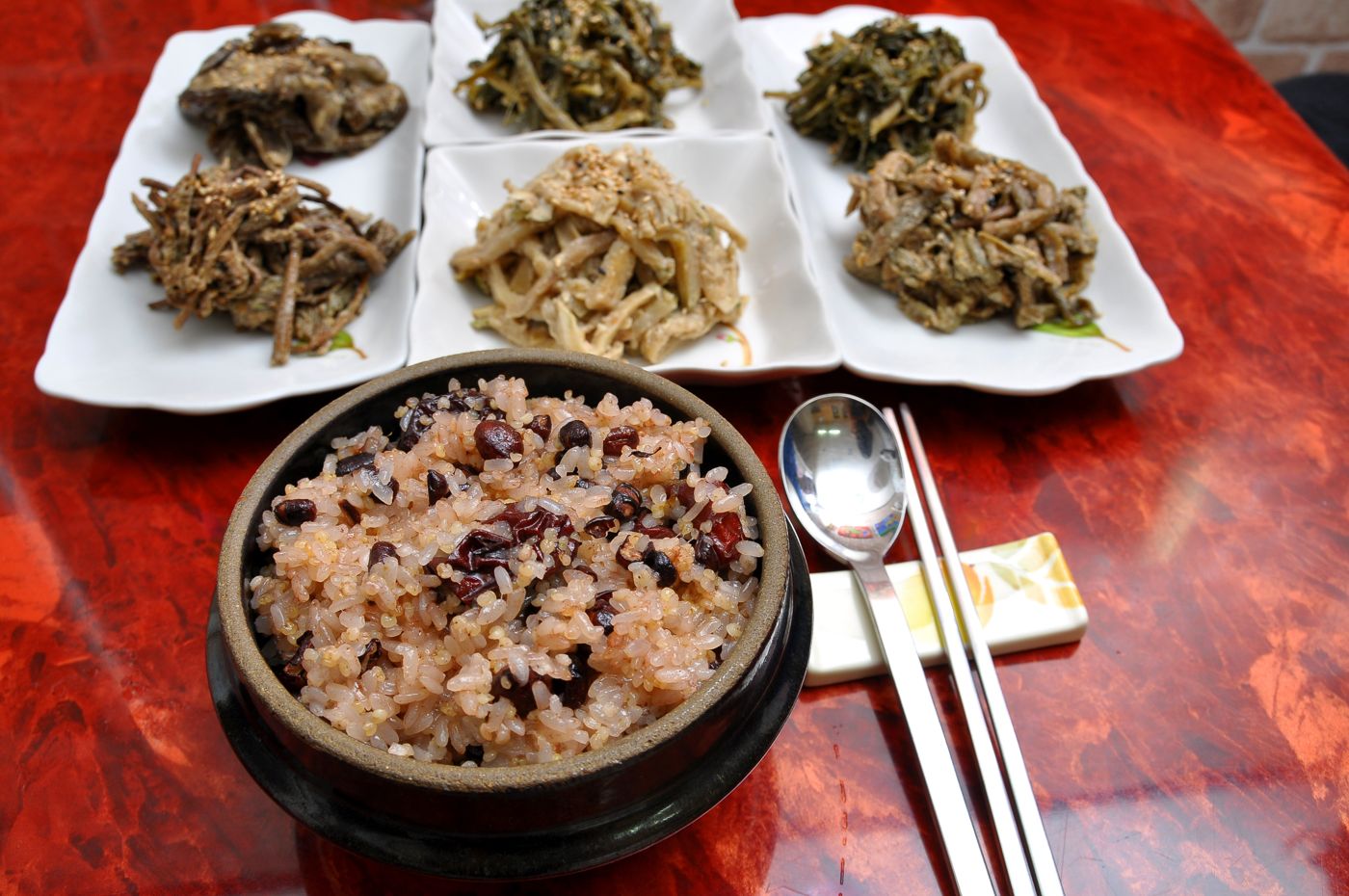 Ogokbap (Five-Grain Rice)오곡밥Glutinous rice cooked with sorghum, millet, red beans and black soybeans for Daeboreum, the first full moon of the lunar year, and shared among neighbors for a good harvest.
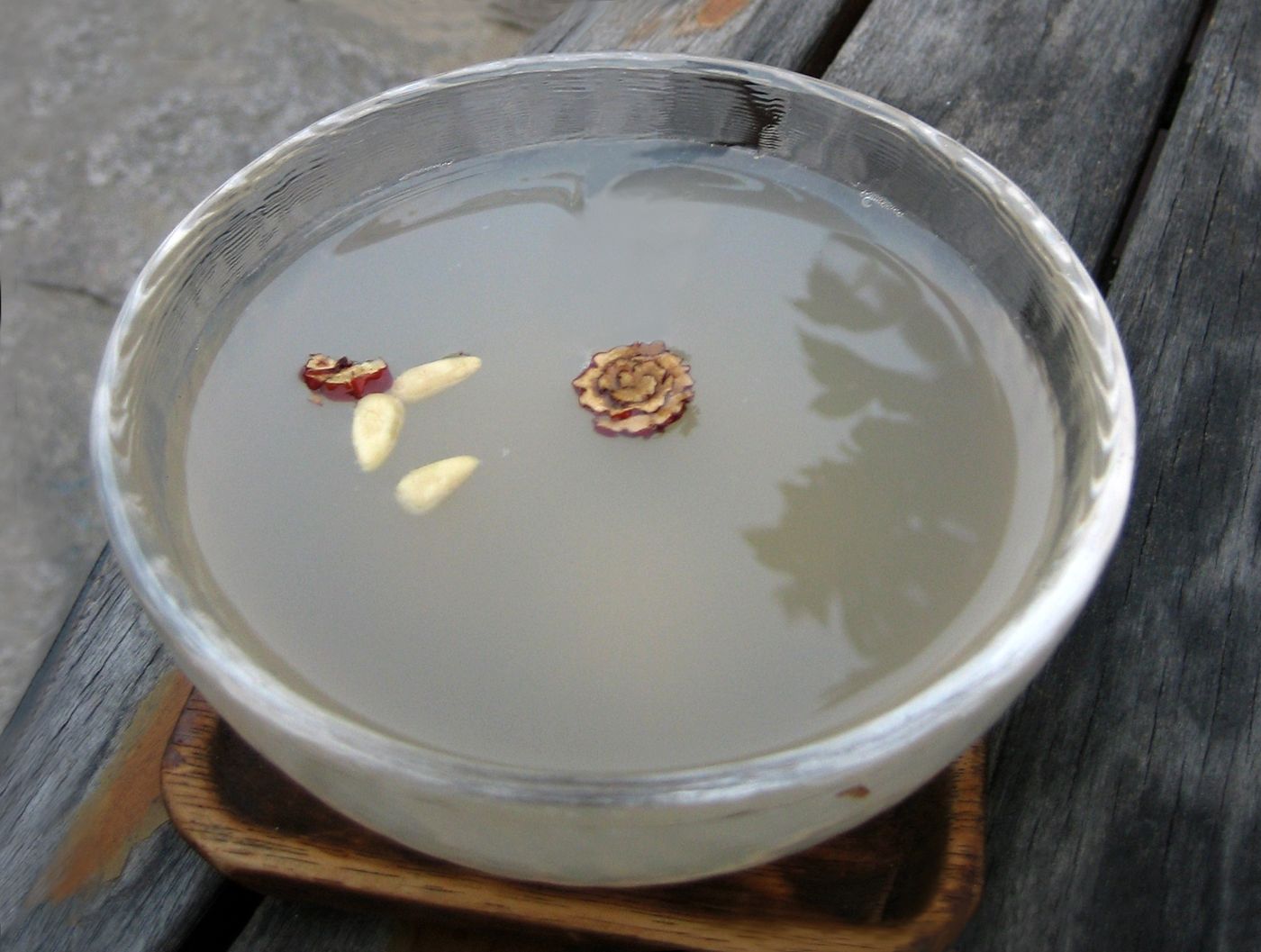 Sikhye (Sweet Malted Rice Drink)식혜Cooked rice steeped in barley-malt water until it sweetens and the grains float, then chilled — the traditional after-feast drink of Korean holidays.