Ingredient
Shiitake mushroom
표고
Romanization: pyogo
Dark-capped, meaty mushrooms known in Korean as pyogo or pyogo-beoseot. Used fresh in stir-fries and pan-fried dishes, and dried for a deeply savory broth and an intensely aromatic bite.
Flavor
Earthy, woodsy and deeply savory, with a firm, meaty chew. Dried shiitake is far more aromatic and concentrated than fresh, with a smoky, almost garlicky perfume.
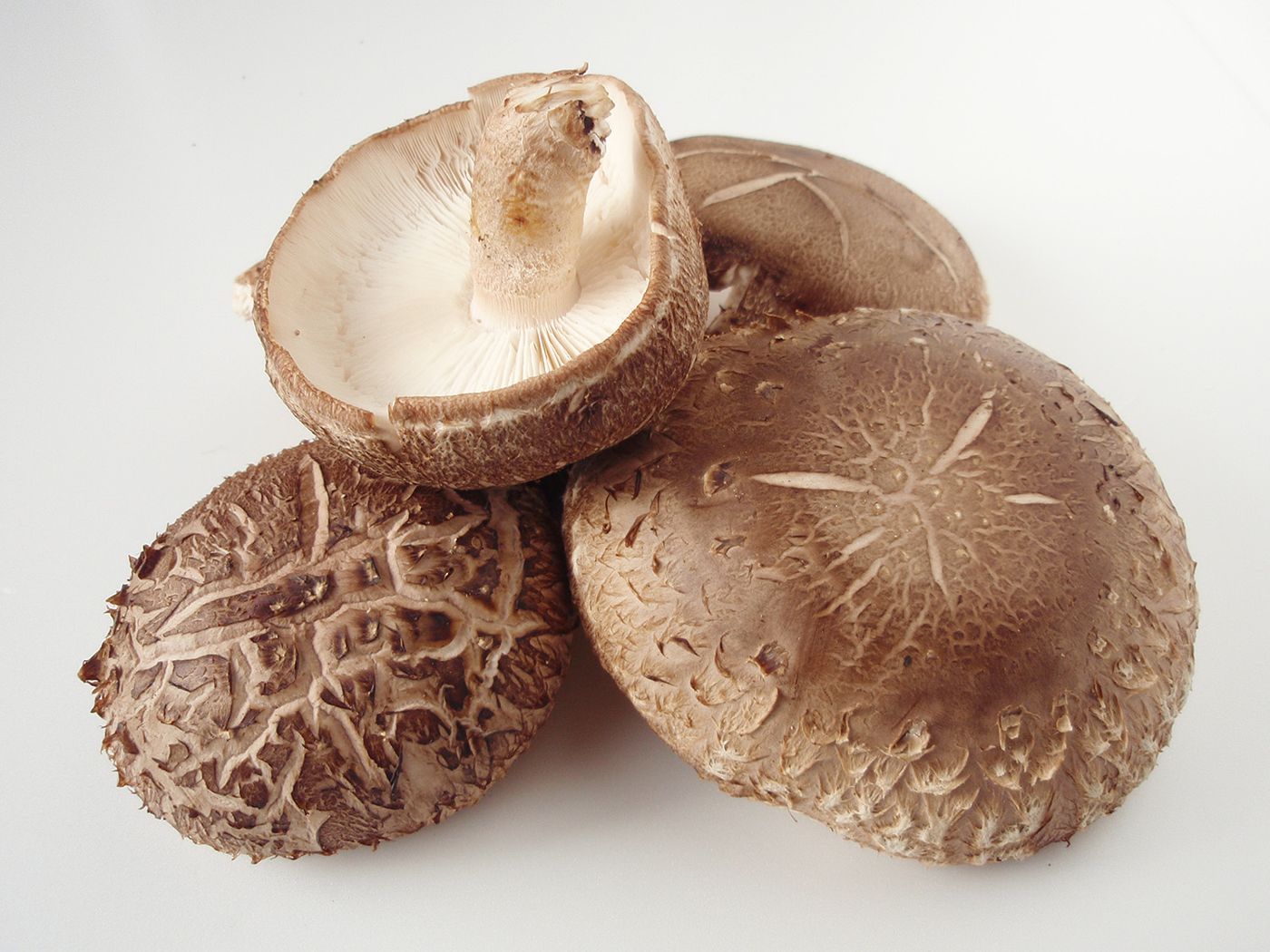 Photo: Batholith (talk), Public domain, via Wikimedia Commons
Origin & History
Shiitake (Lentinula edodes) is a wood-decaying mushroom native to East Asia. In the wild it grows on dead broadleaf trees such as chestnut and various oaks. The cap, typically 3 to 6 centimeters across, is dark brown to blackish brown, with tough, meaty flesh that dries well. In China it has traditionally been ranked the finest of mushrooms, while in Korea and Japan the pine mushroom (songi) commands the highest price.
Most shiitake today is cultivated. In the traditional log method, oak or chestnut trees of about twenty years are felled in late autumn as the leaves fall, left to dry until spring, cut into logs about a meter long and inoculated through notches in the bark. The logs are then stacked in moist woodland shade; mushrooms appear in quantity from the second year and keep coming for five or six years. Shiitake is also grown on sawdust-based blocks (baeji), the method behind the nutrition figures below. Jangheung County in South Jeolla is a leading producing area, especially for dried shiitake.
Drying transforms the mushroom. Its distinctive aroma comes from lenthionine, which develops as it dries, and its savory depth from guanylate, a nucleotide that ranks among the strongest umami compounds. Dried shiitake should be soaked only briefly, and the soaking water kept, because flavor compounds dissolve into it.
In Korean cooking, shiitake is added to vegetable dishes, where it lends a richness that can rival meat, and is used in stir-fries, broths and braises.
Nutrition
| Calories | 22 kcal |
|---|---|
| Protein | 2.74 g |
| Fat | 0.38 g |
| Carbohydrates | 7.38 g |
| Fiber | 5 g |
| Sodium | 3 mg |
Notable forDietary fiber · Niacin · Riboflavin · Potassium
Korean Food Composition Table entry "Oak mushroom (Pyogo-beoseot), On the growing medium, Raw" (표고버섯, 배지재배, 생것): also 2.13 mg niacin, 0.19 mg riboflavin, 0.25 mg thiamin and 278 mg potassium per 100 g. Actual values vary with ingredients, portion size and preparation.
Health Benefits
- Low in calories: Fresh shiitake provides about 22 kcal per 100 g along with 5 g of dietary fiber (Korean Food Composition Table).
- B vitamins: It is a source of niacin, riboflavin and thiamin.
- Flavor without salt: Its natural umami can add depth to broths and vegetable dishes, which may help cooks use less salt.
- Shiitake dermatitis: Eating raw or undercooked shiitake can, in some people, cause a distinctive itchy, streaky rash that appears hours to days later and usually clears on its own within weeks; it is attributed to lentinan, a heat-sensitive compound in the mushroom. Cook shiitake thoroughly.
- Research claims: Compounds such as eritadenine and lentinan are studied for possible health effects, but evidence in people is limited and research is ongoing.
Informational, not medical advice. Talk to a qualified professional about your own health and diet.
Dishes with Shiitake mushroom
- Beoseot Bokkeum (Stir-Fried Mushrooms)버섯볶음Oyster mushrooms torn by hand and stir-fried with onion, garlic and a little soy sauce — a quick, savory, meaty-textured banchan.
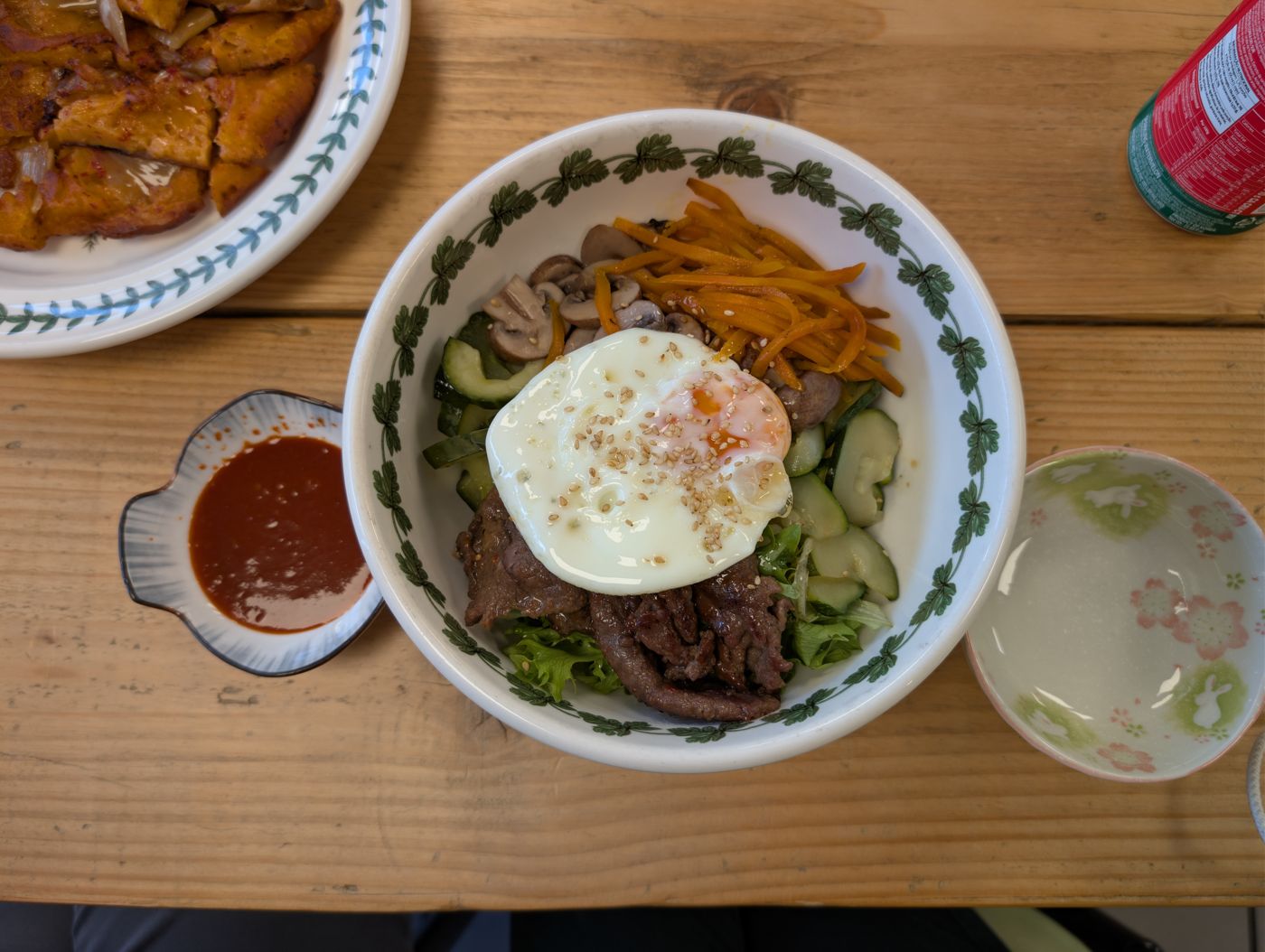 Bibimbap (Mixed Rice with Namul)비빔밥A bowl of rice topped with seasoned namul, beef and egg, mixed at the table with chili paste and sesame oil — banchan gathered into a single meal.
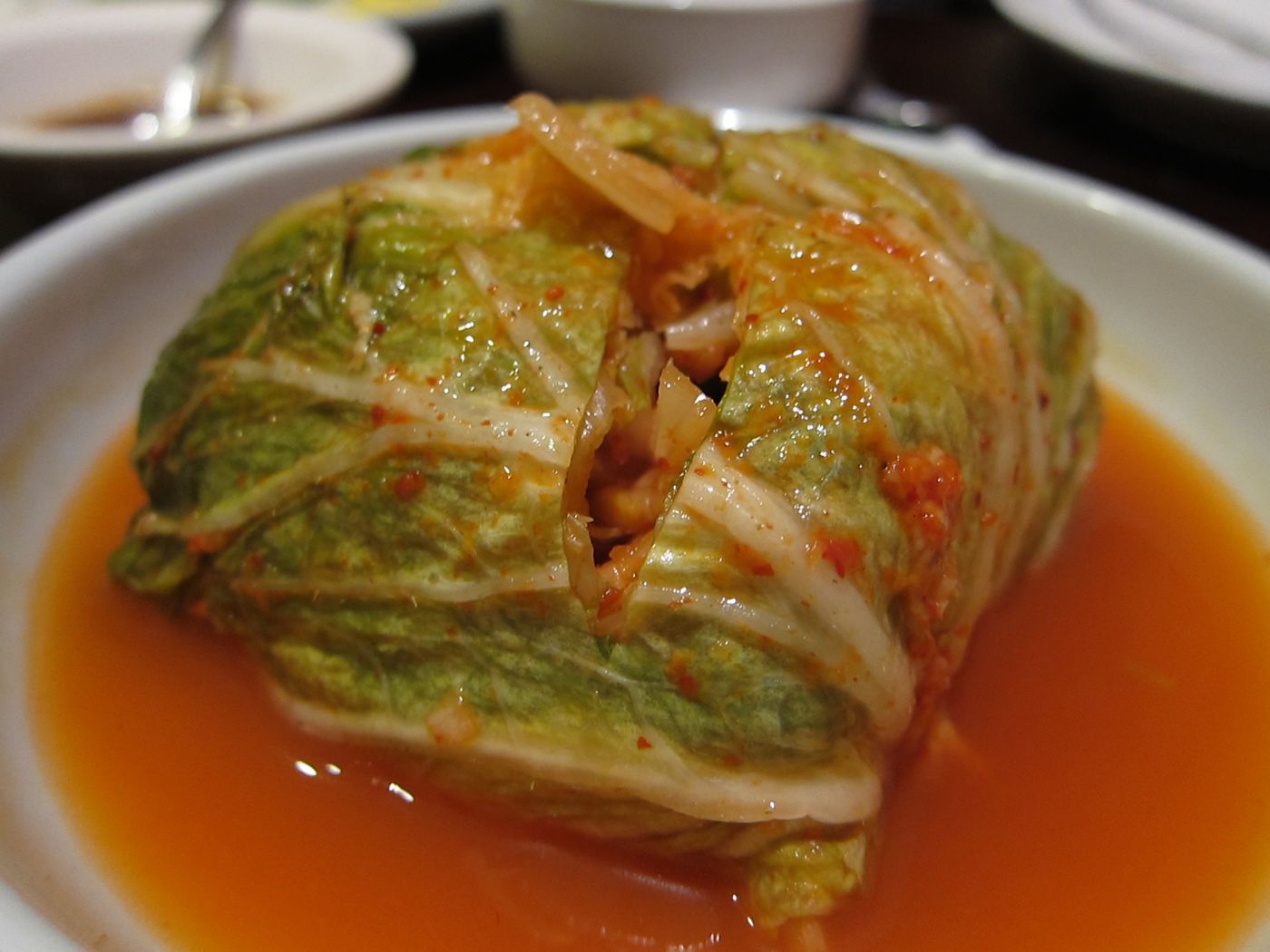 Wrapped Kimchi보쌈김치Cabbage, radish, fruit, nuts and seafood bundled inside whole cabbage leaves — the lavish wrapped kimchi of Gaeseong, made for honored guests.
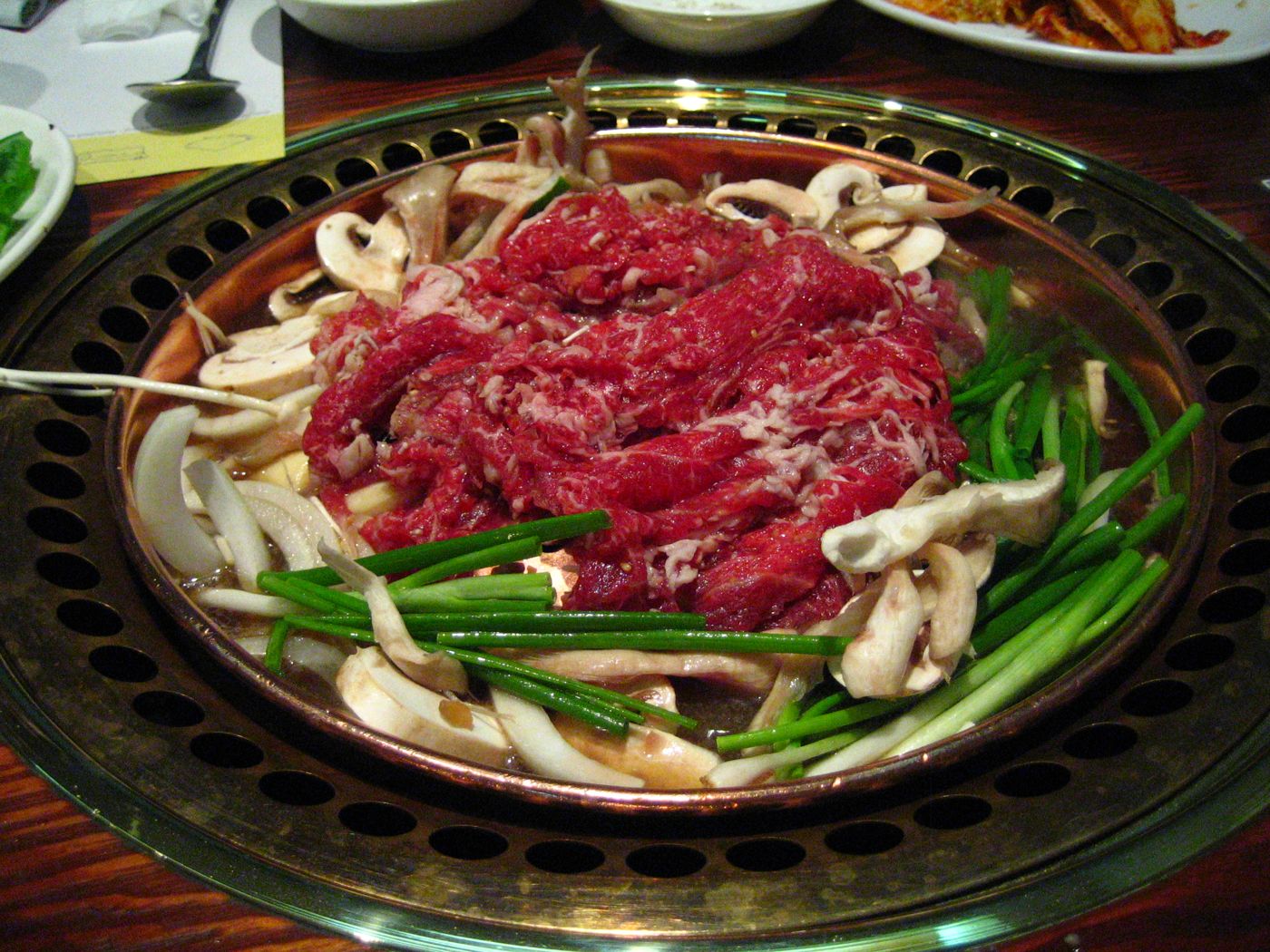 Bulgogi (Marinated Grilled Beef)불고기Thin slices of beef marinated in soy sauce, pear, garlic and sesame, then grilled or seared — descended from the court dish neobiani and Korea's best-known meat dish.
 Doenjang Jjigae (Soybean Paste Stew)된장찌개A thick, savory stew of fermented soybean paste with tofu, zucchini and whatever the season offers — the everyday pot at the center of the Korean table.
- Gaji Jjim (Steamed Stuffed Eggplant)가지찜Short lengths of eggplant slit and packed with seasoned beef and mushroom, steamed until silky and dressed with a light soy sauce — a refined summer banchan.
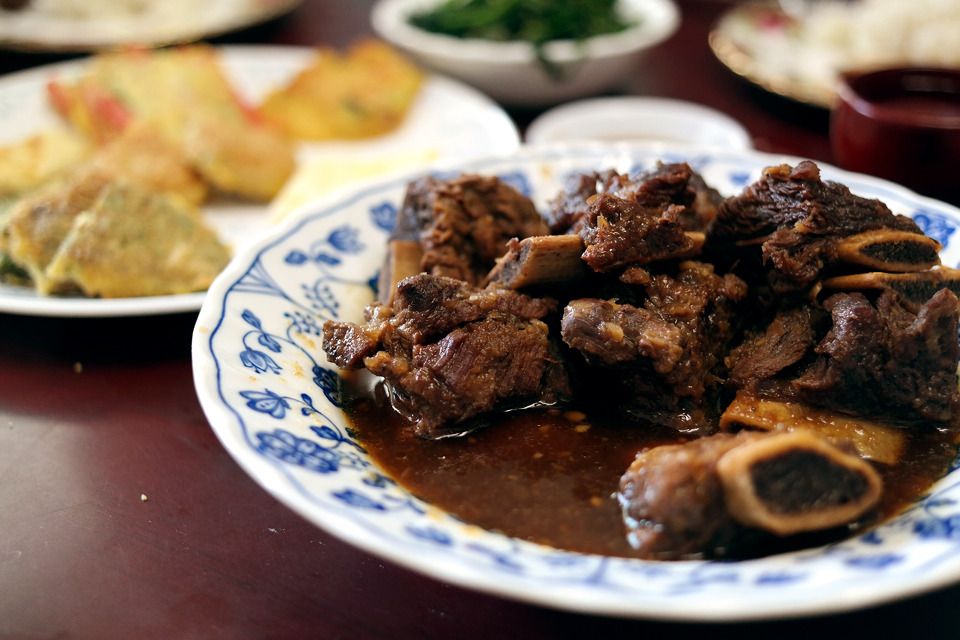 Galbi-jjim (Braised Beef Short Ribs)갈비찜Beef short ribs simmered slowly in soy sauce, pear and garlic with radish, carrot, chestnuts and jujubes until glossy and tender — a dish for holidays and honored guests.
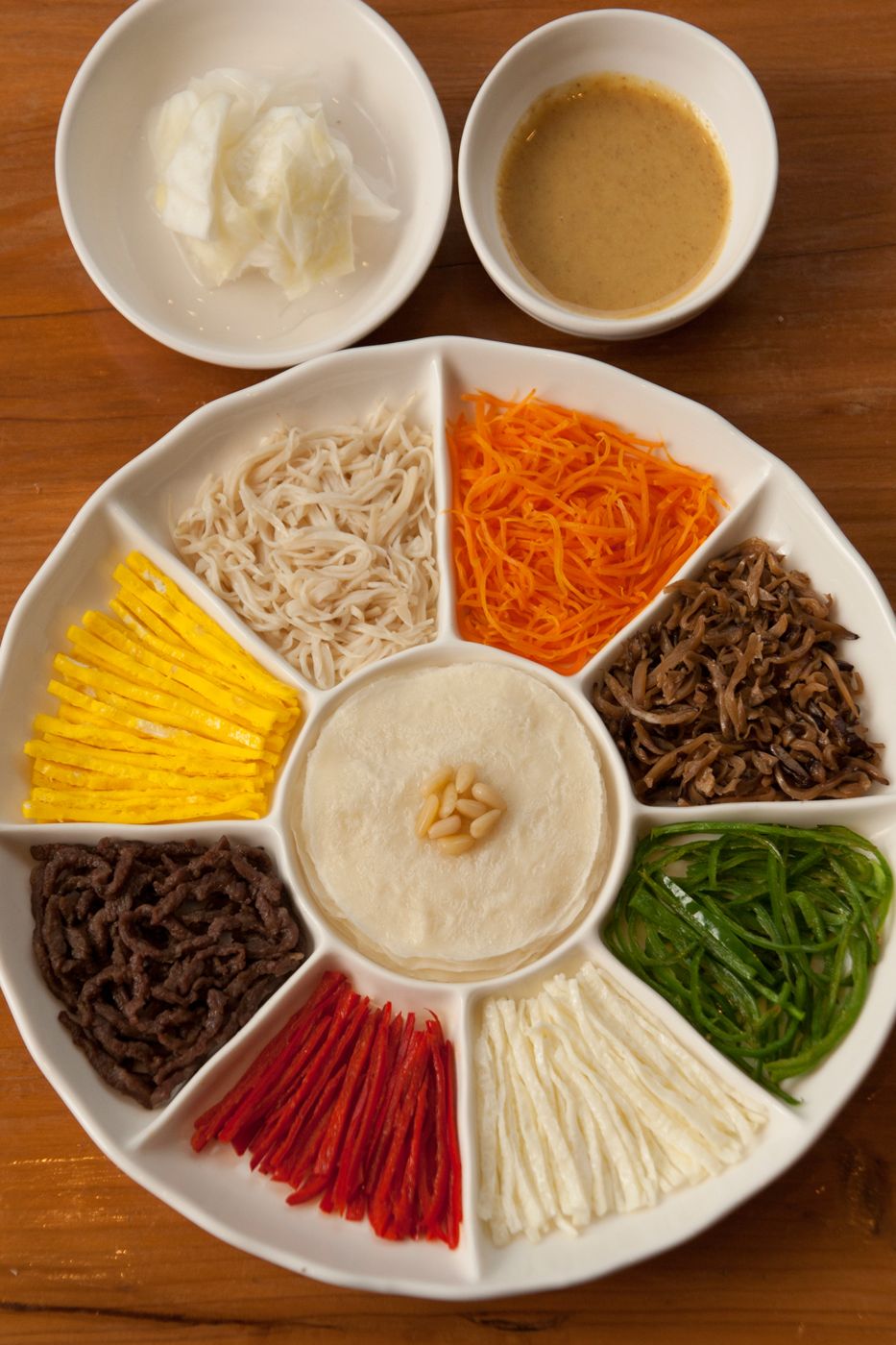 Gujeolpan (Platter of Nine Delicacies)구절판Eight finely cut fillings arranged by color around a stack of paper-thin crepes in a nine-compartment dish, wrapped at the table — an elegant banquet dish.
- Soy Sauce Water Kimchi장김치Cabbage and radish cured in soy sauce instead of salt, floated in a lightly sweet soy brine with pear, chestnut and pine nuts — a court and gentry kimchi.
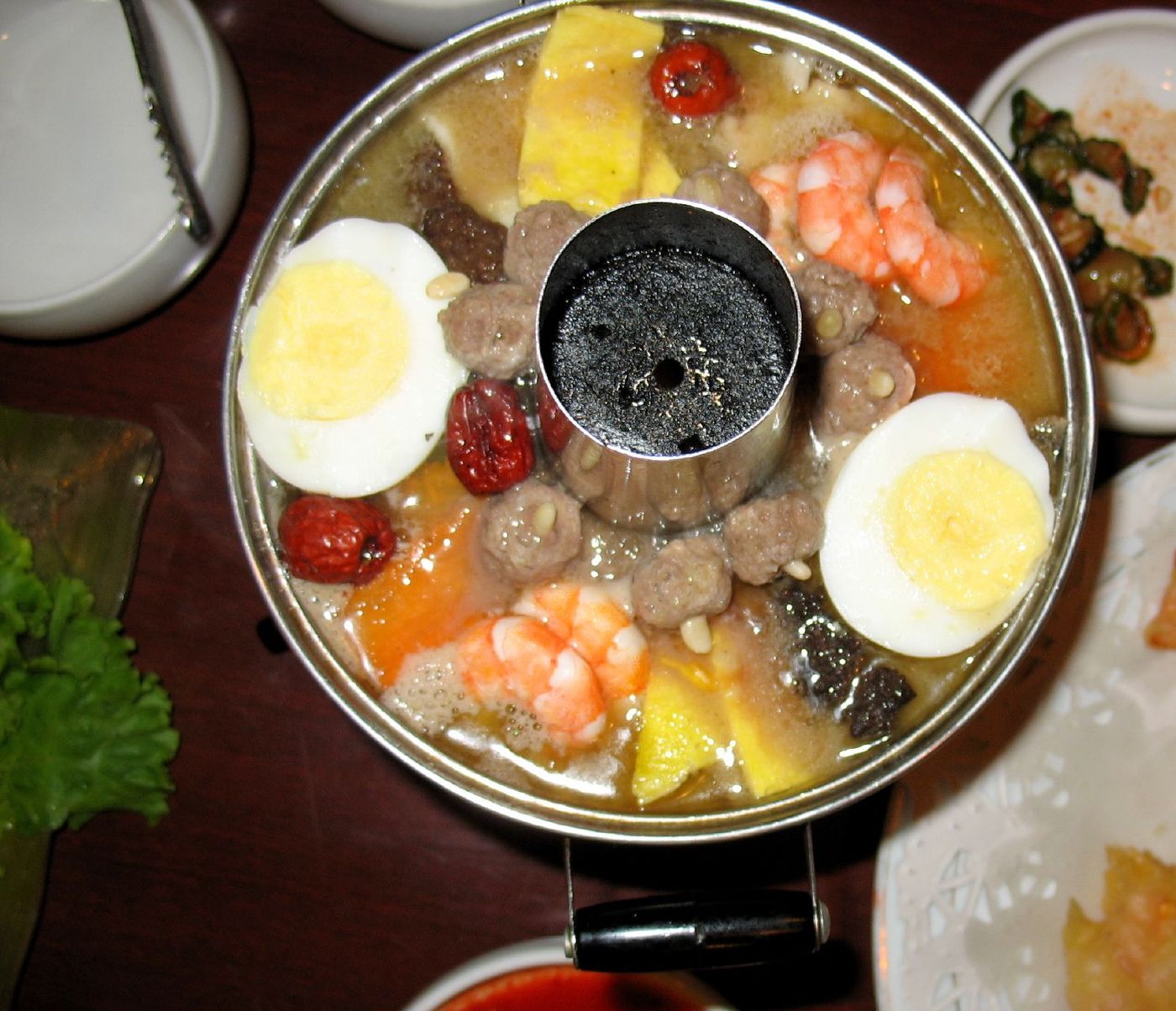 Sinseollo (Royal Hot Pot)신선로A court banquet dish of colorful beef, fish, egg, mushrooms and vegetables arranged in a chimney-centered brazier pot, with hot broth poured over and kept warm at the table.