Wellness
Vegetables and Namul
채소와 나물
From spinach and bean sprouts to foraged mountain greens, namul show how Korean cooking turns a wide range of vegetables into everyday side dishes.
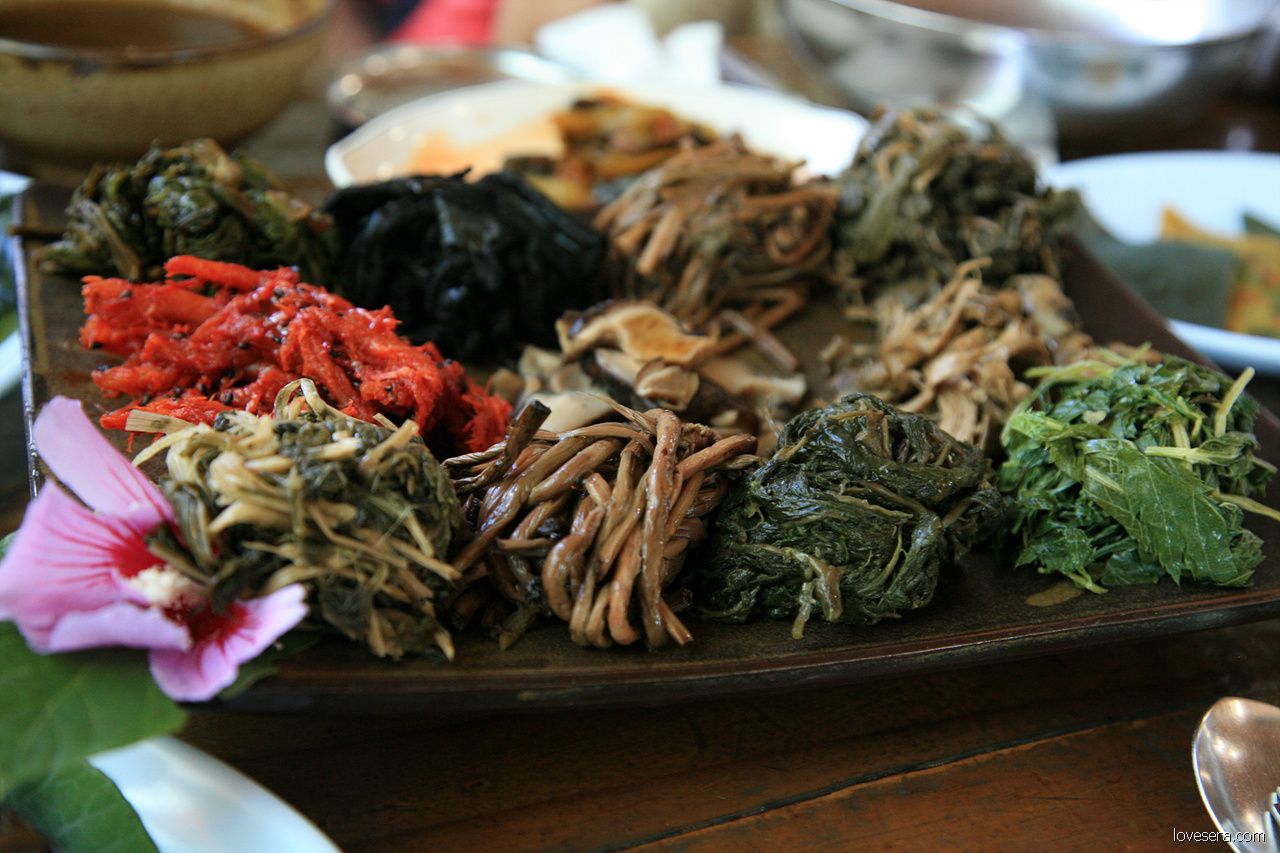 Photo: Junho Jung at Flickr from South Korea, CC BY-SA 3.0, via Wikimedia Commons
If kimchi is the most famous Korean vegetable dish, namul are the most numerous. The word covers both the edible greens themselves and the seasoned dishes made from them, and a single meal may include two or three. Researchers describing the traditional Korean diet list abundant vegetables from fields, mountains and the sea among its defining traits.
What counts as namul
The Encyclopedia of Korean Culture describes namul as seasoned vegetables and plants gathered from mountains and fields, and a basic side dish of Korean cooking. The term includes both sukchae, cooked vegetables, and saengchae, raw dressed vegetables, though in everyday speech it usually means the cooked kind. The encyclopedia notes that dishes made from wild mountain and field greens are especially well developed in Korea, a country with a great deal of mountainous land.
The range is wide. Familiar cultivated vegetables include spinach, soybean sprouts, mung bean sprouts, Korean radish, cucumber and Korean zucchini. Foraged or traditionally wild plants include bracken fern, bellflower root and chwinamul, an aster green. A 2016 paper listing representative Korean foods names a long run of namul alone, from spinach and bean sprouts to eggplant, mushroom and bellflower.
Seaweeds widen the picture further. The same paper points to laver, kelp and other sea vegetables as common in Korean cooking and as sources of dietary fiber and vitamins.
How namul are made
According to the Encyclopedia of Korean Culture, there are two main cooking approaches:
- Blanch and season: Tender vegetables such as spinach, crown daisy and bean sprouts are parboiled, squeezed dry and dressed with soy sauce, sesame oil, garlic, green onion and sesame seeds. See blanching and seasoning namul.
- Stir-fry: Firmer or dried vegetables such as bracken and bellflower root are cooked in oil with seasonings, as in gosari-namul and doraji-namul.
Raw saengchae, such as musaengchae or oi-muchim, are dressed without cooking, sometimes with vinegar.
Drying was the traditional way to keep namul through winter and early spring, when fresh greens were scarce. On Daeboreum, the first full moon of the lunar year, the encyclopedia records a custom of rehydrating and cooking several kinds of dried namul, eaten with the folk belief that it would ward off illness in the summer heat. See seasonal foods.
Nutrients from leafy greens
Leafy and green vegetables are valued in nutrition for the vitamins and minerals they provide.
- Vitamin K: MedlinePlus lists green leafy vegetables, including spinach, among the best food sources of vitamin K, which the body needs to make blood-clotting factors.
- Folate: Dark green leafy vegetables are a natural source of folate, a B vitamin involved in making red blood cells and DNA.
- Fat-soluble vitamins: A study of vegetables commonly eaten in Korea measured vitamin K and vitamin E across 21 kinds of vegetables and found the amounts varied widely between them.
Because no single vegetable supplies everything, the variety on a Korean table is one of its real strengths.
Cooking and nutrient retention
Cooking changes what a vegetable delivers, and the direction depends on the nutrient.
- Vitamin C is the most fragile. In a study of vegetables cooked by blanching, boiling, steaming and microwaving, vitamin C retention ranged from none to about 91 percent depending on the vegetable and method, with boiling generally causing the greatest loss and microwaving the least.
- Fat-soluble vitamins can hold up or rise. The same study found that cooked vegetables sometimes contained more beta-carotene and vitamin E than raw ones, depending on the vegetable. A separate study reported that vitamin E and vitamin K content increased in most vegetables after blanching, boiling, steaming or grilling.
- Method matters. For namul, a short blanch in plenty of boiling water, followed by quick cooling, limits cooking time. Eating a mix of raw dishes such as saengchae and cooked namul covers more bases than relying on one method.
The researchers behind both studies emphasize that results depend on the particular vegetable and cooking process, so broad rules should be treated as general guidance.
Things to keep in mind
- Vitamin K and warfarin: People taking the blood thinner warfarin are generally advised to keep their vitamin K intake steady from day to day, since sudden changes can affect the medicine. Large swings in leafy-green namul are worth discussing with a clinician.
- Seasoning: Namul are often dressed with soy sauce, salt or doenjang. A lighter hand keeps them a low-sodium counterweight to saltier banchan. See sodium in Korean food.
- Foraging: Some wild plants have toxic look-alikes, and certain greens, such as bracken, are traditionally soaked and cooked before eating. Buy from reliable sources unless you know the plants well.
Sources
- 01나물 (Namul) — Encyclopedia of Korean Culture
- 02Korean diet: Characteristics and historical background (Kim et al., Journal of Ethnic Foods, 2016)
- 03Effect of different cooking methods on the content of vitamins and true retention in selected vegetables (Lee et al., Food Science and Biotechnology, 2018)
- 04Effect of different cooking method on vitamin E and K content and true retention of legumes and vegetables commonly consumed in Korea (Kim et al., Food Science and Biotechnology, 2023)
- 05Vitamin K (MedlinePlus Medical Encyclopedia)
- 06Folic acid in diet (MedlinePlus Medical Encyclopedia)