Ingredient
Spinach
시금치
Romanization: sigeumchi
Tender, deep-green spinach, most often blanched, squeezed and dressed with sesame oil as sigeumchi-namul, one of the most familiar banchan on the Korean table.
Flavor
Soft and mineral, with a clean, slightly sweet green taste; winter spinach is noticeably sweeter. Blanching tames its faint astringency.
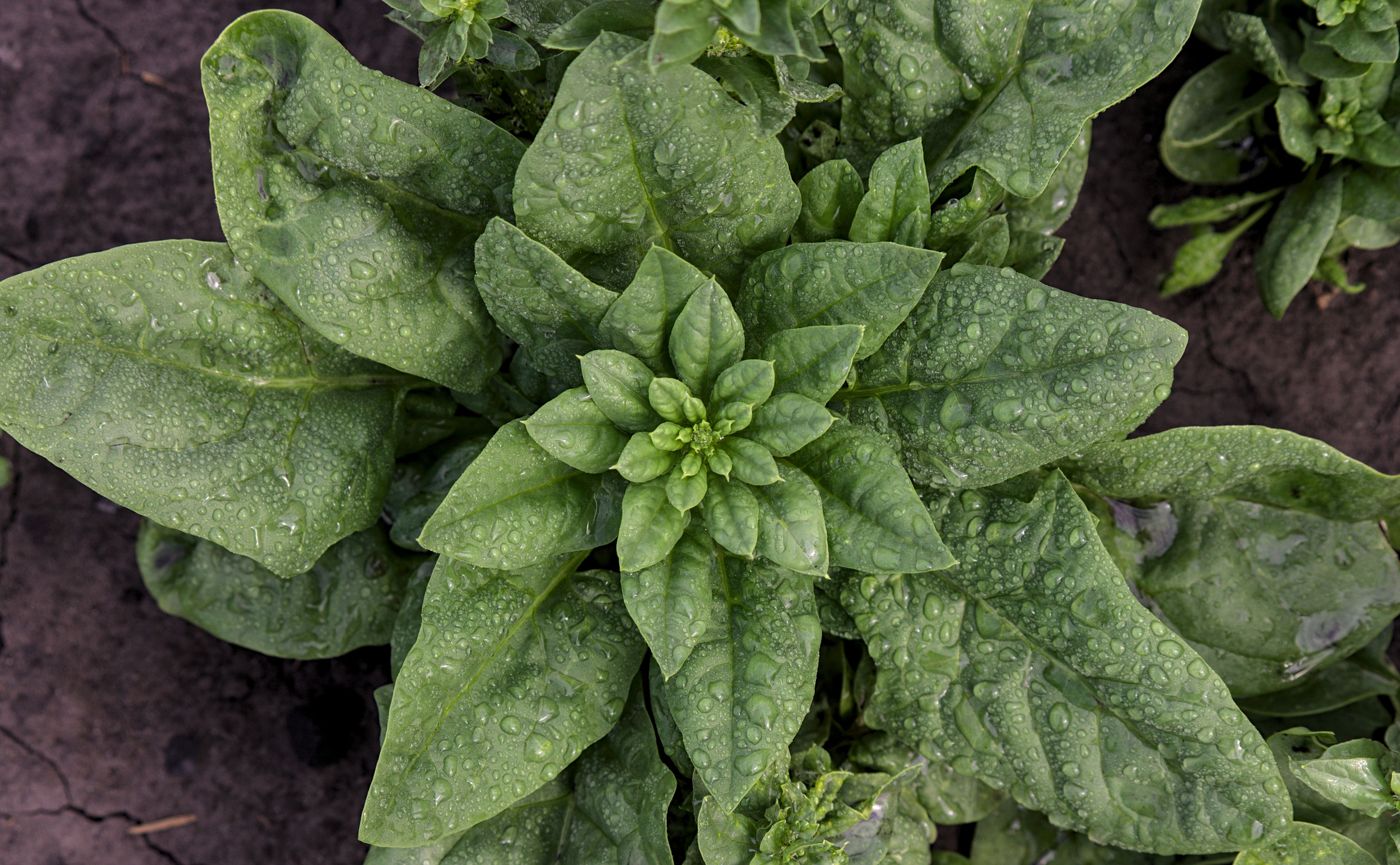 Photo: Алексей Тараканов, CC BY-SA 2.0, via Wikimedia Commons
Origin & History
Spinach (Spinacia oleracea) is an annual or biennial leafy plant of the amaranth family. It is thought to have originated in Persia and to have reached Korea by way of China. Older Sino-Korean names include jeokgeunchae, "red-root vegetable," after the rosy base of its stems, and pachae.
Spinach appears in Korean writing in Hunmongjahoe, a sixteenth-century character primer compiled by Choe Se-jin, which suggests it was already being grown in the early Joseon period. Growers distinguish two seed types: prickly-seeded strains with narrow leaves, suited to autumn sowing, and smooth-seeded strains with broad, wavy leaves, preferred in spring; hybrids of the two are common.
In Korea spinach is sown in spring, in summer (only in cool highland areas) and in autumn, when the crop is harvested from October through March. Winter spinach grown outdoors in coastal areas is especially prized. Two well-known examples are seomcho, the broad, thick-leaved island spinach of Sinan in South Jeolla, and Pohangcho, a short, fragrant variety with plump roots from Pohang in North Gyeongsang. Cold and sea wind make these winter greens noticeably sweet.
In the kitchen spinach is usually blanched briefly and seasoned as namul, the role it plays in sigeumchi-namul, or added to soups made with doenjang.
Nutrition
| Calories | 23 kcal |
|---|---|
| Protein | 2.86 g |
| Fat | 0.39 g |
| Carbohydrates | 3.63 g |
| Fiber | 2.2 g |
| Sodium | 79 mg |
Notable forVitamin K · Vitamin A · Folate · Magnesium
Values from USDA FoodData Central (SR Legacy), "Spinach, raw" (FDC ID 168462). Blanched and squeezed spinach is more concentrated per 100 g. Actual values vary with ingredients, portion size and preparation.
Health Benefits
- Vitamins: Spinach is rich in vitamin K and is a source of vitamin A, folate and vitamin C.
- Minerals: It provides magnesium, potassium and iron, although the iron in plant foods is absorbed less readily than iron from animal foods.
- Vitamin K and warfarin: People taking warfarin (Coumadin) are advised to keep their intake of vitamin K–rich foods such as leafy greens consistent from week to week and to talk with their doctor before changing their diet.
- Oxalates: Spinach is high in oxalate. People who have had calcium oxalate kidney stones may be advised to limit it; a healthcare professional can give individual guidance.
Informational, not medical advice. Talk to a qualified professional about your own health and diet.
Dishes with Spinach
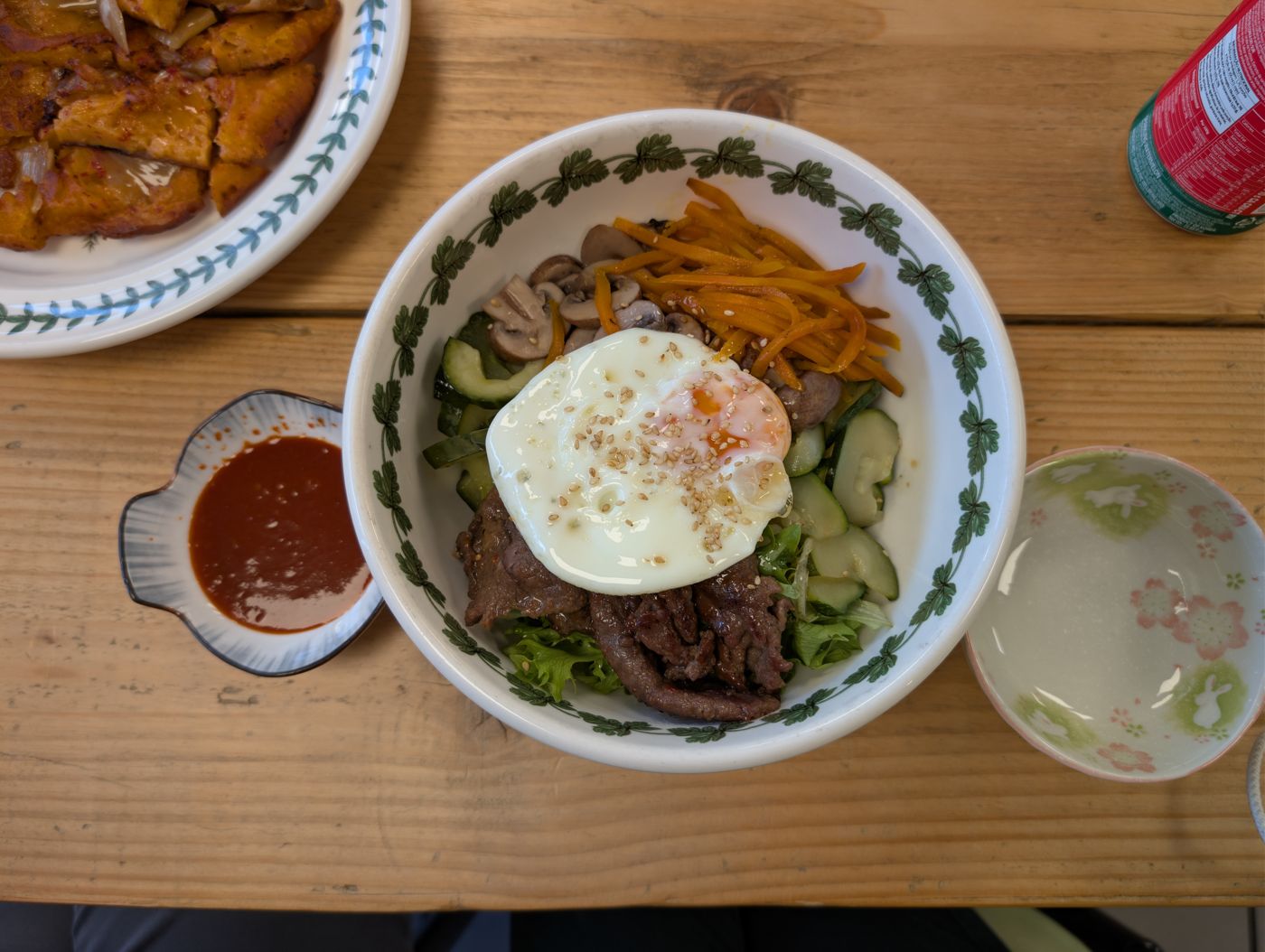 Bibimbap (Mixed Rice with Namul)비빔밥A bowl of rice topped with seasoned namul, beef and egg, mixed at the table with chili paste and sesame oil — banchan gathered into a single meal.
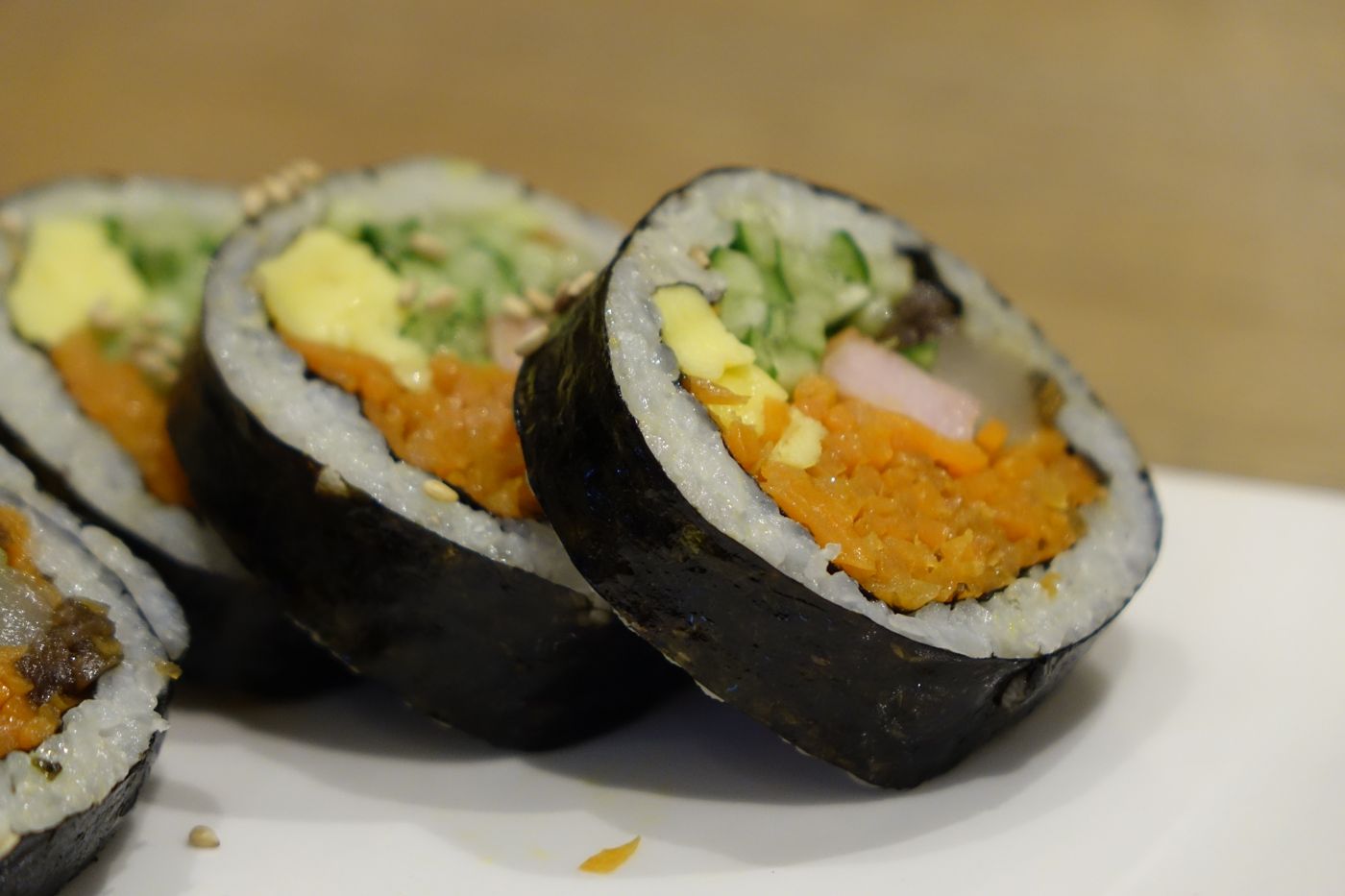 Gimbap (Seaweed Rice Rolls)김밥Rice seasoned with sesame oil and salt, rolled in laver around strips of spinach, egg, carrot and pickled radish, then sliced — Korea's classic picnic and lunchbox food.
 Japchae (Glass Noodles with Vegetables)잡채Chewy sweet potato glass noodles tossed with stir-fried vegetables, mushrooms and beef in soy sauce and sesame oil — Korea's essential celebration dish.
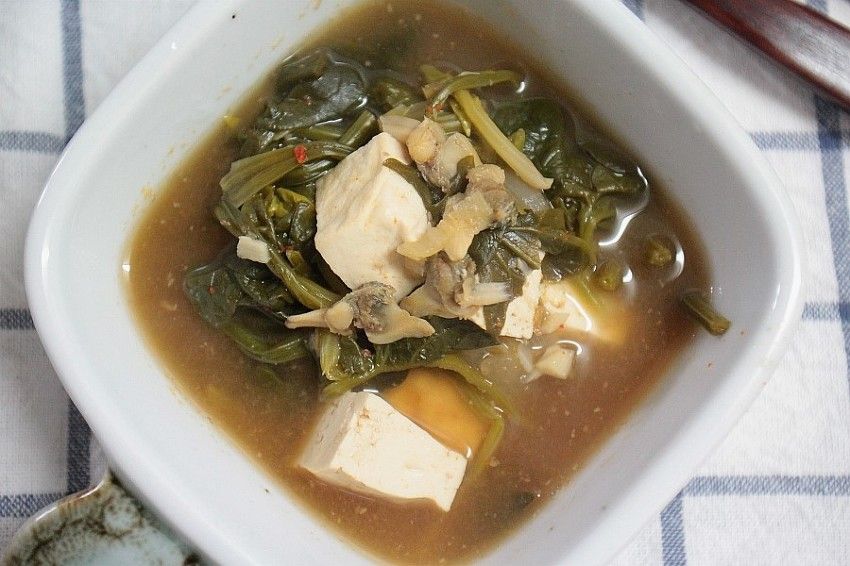 Sigeumchi Doenjang Guk (Spinach Soybean-Paste Soup)시금치된장국Tender spinach simmered in an anchovy broth seasoned with doenjang — a mild, everyday soup that is at its sweetest in winter and early spring.
 Sigeumchi Namul시금치나물Spinach blanched for a few seconds, squeezed dry and dressed with garlic, soy sauce and sesame — one of the simplest and most familiar namul.