Ingredient
Minari (water dropwort)
미나리
Romanization: minari
A long-stemmed, aromatic water plant with a fresh, celery-like perfume. Blanched and dressed as minari-muchim, tucked into kimchi, wrapped into little bundles for minari-ganghoe and piled into fish stews and hot pots.
Flavor
Bright, green and peppery-herbal, somewhere between celery and parsley, with crisp, hollow stems and tender leaves. Wild minari is more intensely aromatic than cultivated bunches.
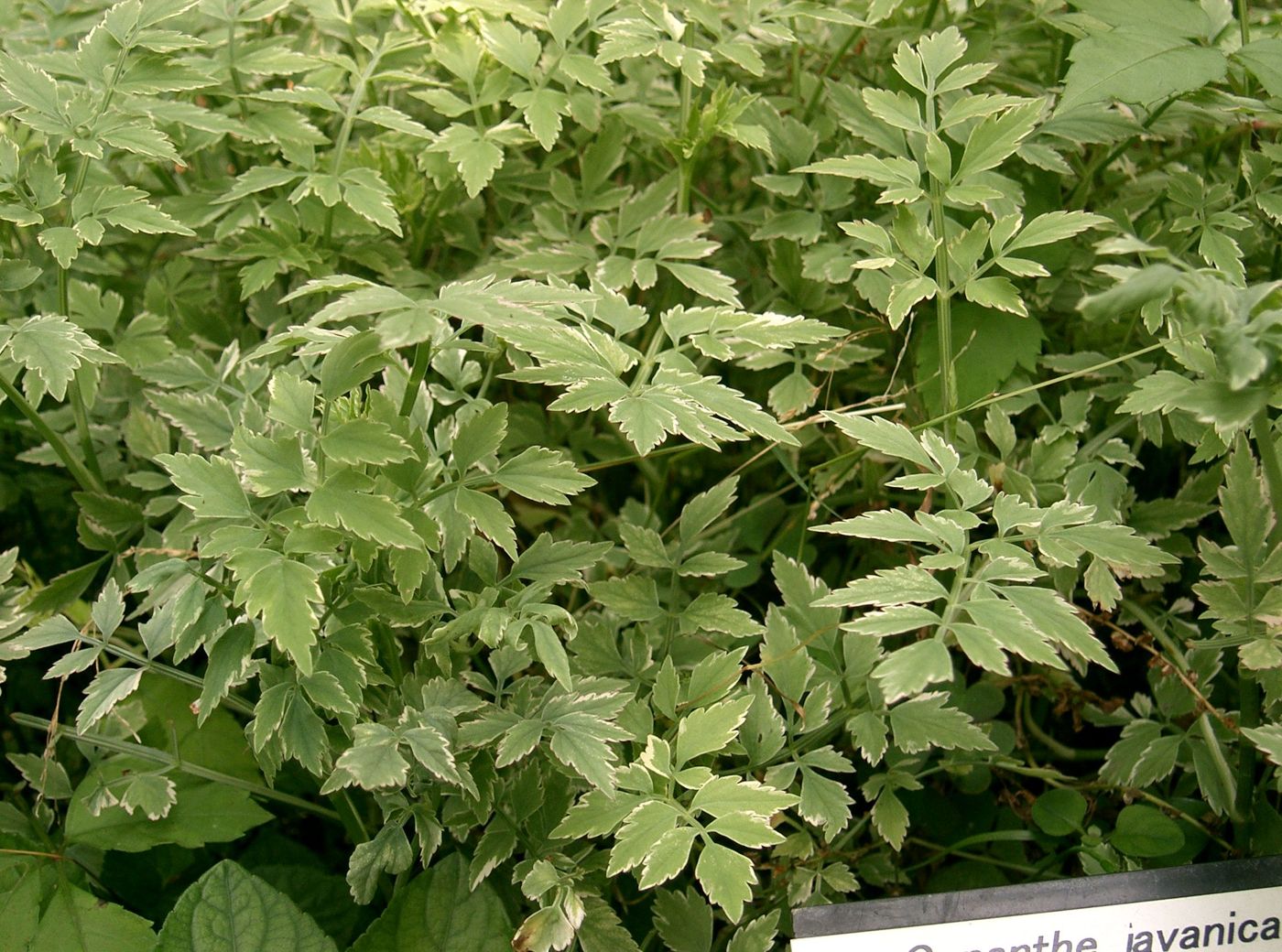 Photo: KENPEI, CC BY-SA 3.0, via Wikimedia Commons
Origin & History
Minari is Java water dropwort (Oenanthe javanica), a perennial of the carrot family (Apiaceae) that grows in wet ground and shallow water. It is native to Korea and is found across East and Southeast Asia, from Sakhalin and Japan to China, India and Java. Older names include suyeong and sugeunchae.
It is one of the oldest documented Korean vegetables. Goryeosa, the official history of the Goryeo dynasty, mentions a minari field, and in the Goryeo period minari kimchi was offered at the royal ancestral shrine. The word minari is already recorded in the 1527 character primer Hunmongjahoe, and Joseon farming and cookery books describe planting it where water is plentiful and blanching the young stems whole. In folk custom, long, uncut stems were set on a child's first-birthday table as a wish for long life.
Traditionally, minari was grown in flooded paddies called minari-kkwang and was for a long time one of the few fresh greens available in winter. Paddy minari is planted in late summer and harvested from about November through March; field and hydroponic methods developed from the mid-1980s extend the season. North Jeolla and South Gyeongsang were long the main producing regions, and branded crops such as Hanjae minari from Cheongdo, grown with pumped groundwater in greenhouses, are well known. Wild dol-minari from streamsides is prized for a stronger aroma.
In the kitchen minari is blanched for namul, added raw to kimchi for its cool fragrance, eaten in wraps and fresh salads, and considered almost essential in fish stews, hot pots and puffer-fish soup, where its aroma helps mask fishiness. For minari-ganghoe, blanched stems are wound around small stacks of sliced meat, egg garnish and chili threads.
Because paddy-grown minari can harbor leeches, cooks have long been careful to soak and wash it thoroughly; one old trick was to leave the bunch in water with a brass spoon so the leeches would let go and sink.
Nutrition
| Calories | 18 kcal |
|---|---|
| Protein | 1.69 g |
| Fat | 0.22 g |
| Carbohydrates | 3.5 g |
| Fiber | 2.4 g |
| Sodium | 24 mg |
Notable forVitamin K · Vitamin A · Folate · Potassium
Korean Food Composition Table entry "Water dropwort (Minari), Whole, Raw" (미나리, 전체, 생것): also 186.85 µg vitamin K, 80 µg RAE vitamin A, 50 µg folate, 280 mg potassium and 11.5 mg vitamin C per 100 g. Actual values vary with ingredients, portion size and preparation.
Health Benefits
- Leafy green: Per the Korean Food Composition Table, raw minari is a rich source of vitamin K and also provides vitamin A (as beta-carotene), folate and potassium.
- Traditional beliefs: Korean folk medicine has long regarded minari as cooling, cleansing and good for recovering after drinking; compounds such as persicarin and isorhamnetin are being studied, but these remain traditional beliefs rather than established effects.
- Wash thoroughly: Paddy-grown minari can carry leeches and soil, so soak it and rinse it well, stem by stem, before eating, especially raw.
- Not a plant to forage casually: Edible minari is a different species from hemlock water dropwort (Oenanthe crocata) and from water hemlock (Cicuta virosa), two wetland relatives that are among the most poisonous plants known and have killed foragers who mistook them for edible herbs. Buy minari from a trusted grower or market rather than picking wild wetland plants.
- Vitamin K and warfarin: People taking warfarin are advised to keep their intake of vitamin K–rich greens consistent and to talk with their doctor before changing their diet.
Informational, not medical advice. Talk to a qualified professional about your own health and diet.
Dishes with Minari (water dropwort)
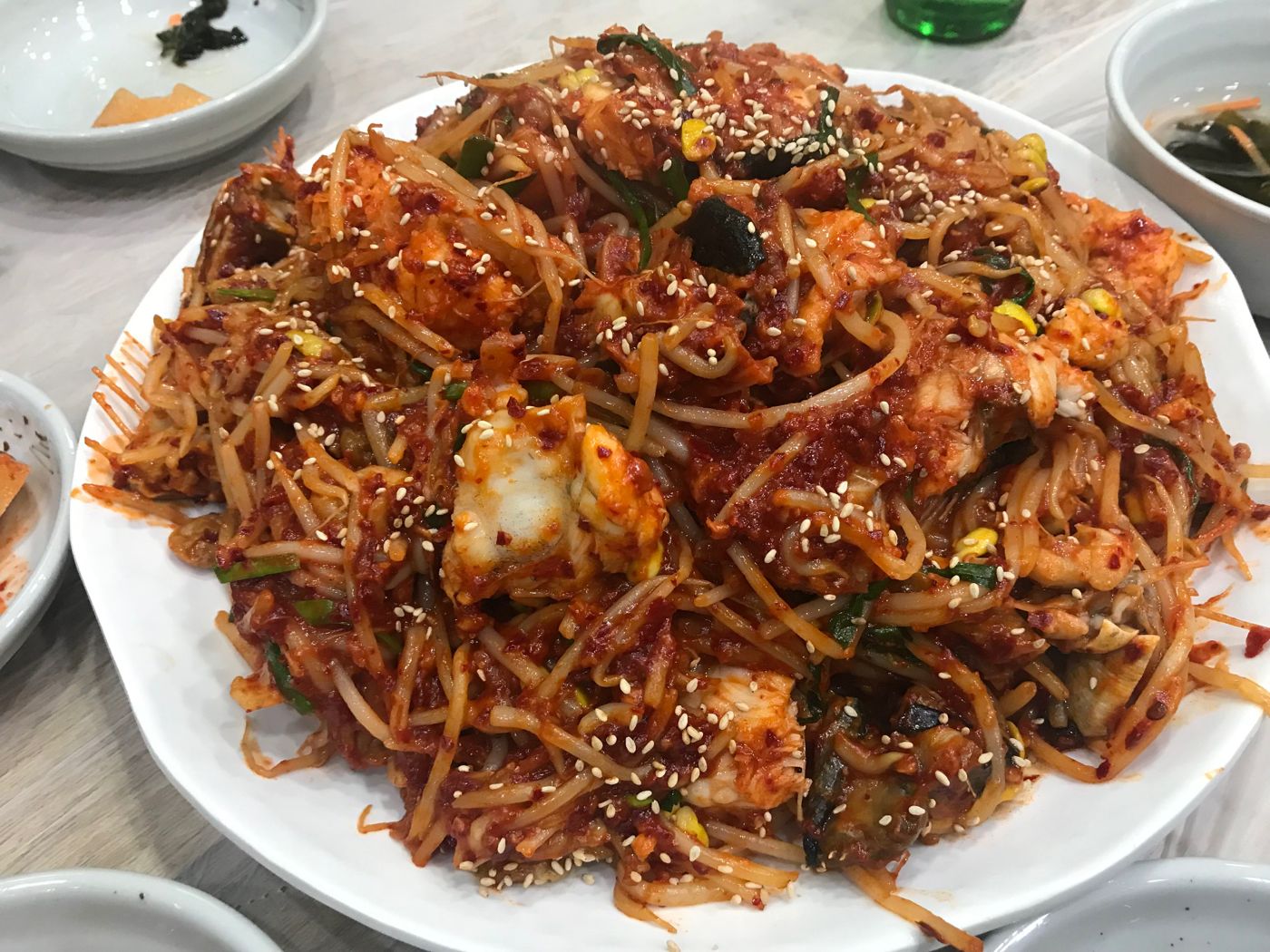 Agu-jjim (Spicy Braised Monkfish)아귀찜Monkfish braised with a mountain of soybean sprouts and minari in a fiery chili sauce thickened with starch — a Masan specialty now eaten across Korea.
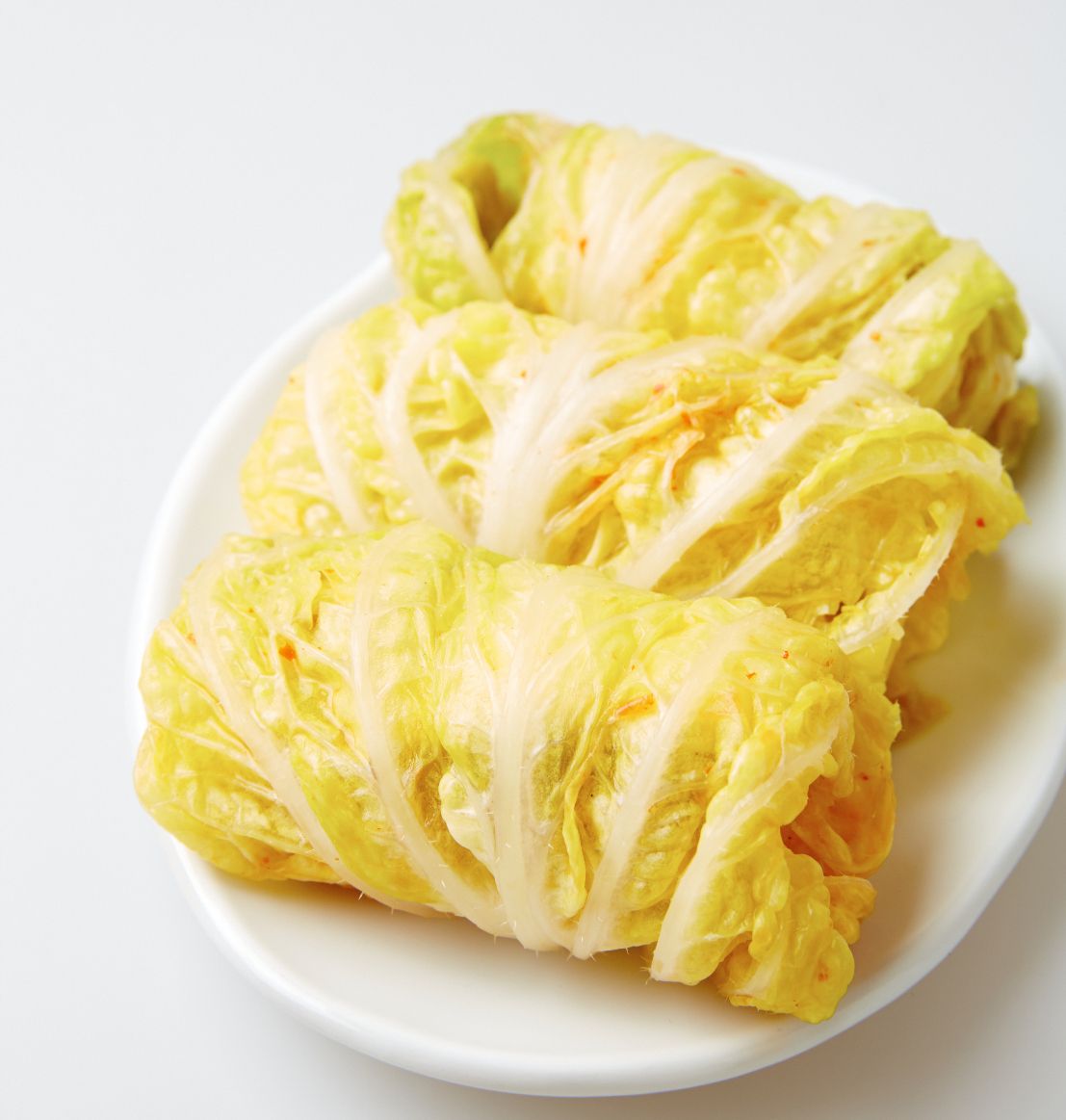 White Kimchi백김치Napa cabbage stuffed with radish, pear, chestnut and jujube and ripened in a clear, cool brine — kimchi with no chili flakes, mild and refreshing.
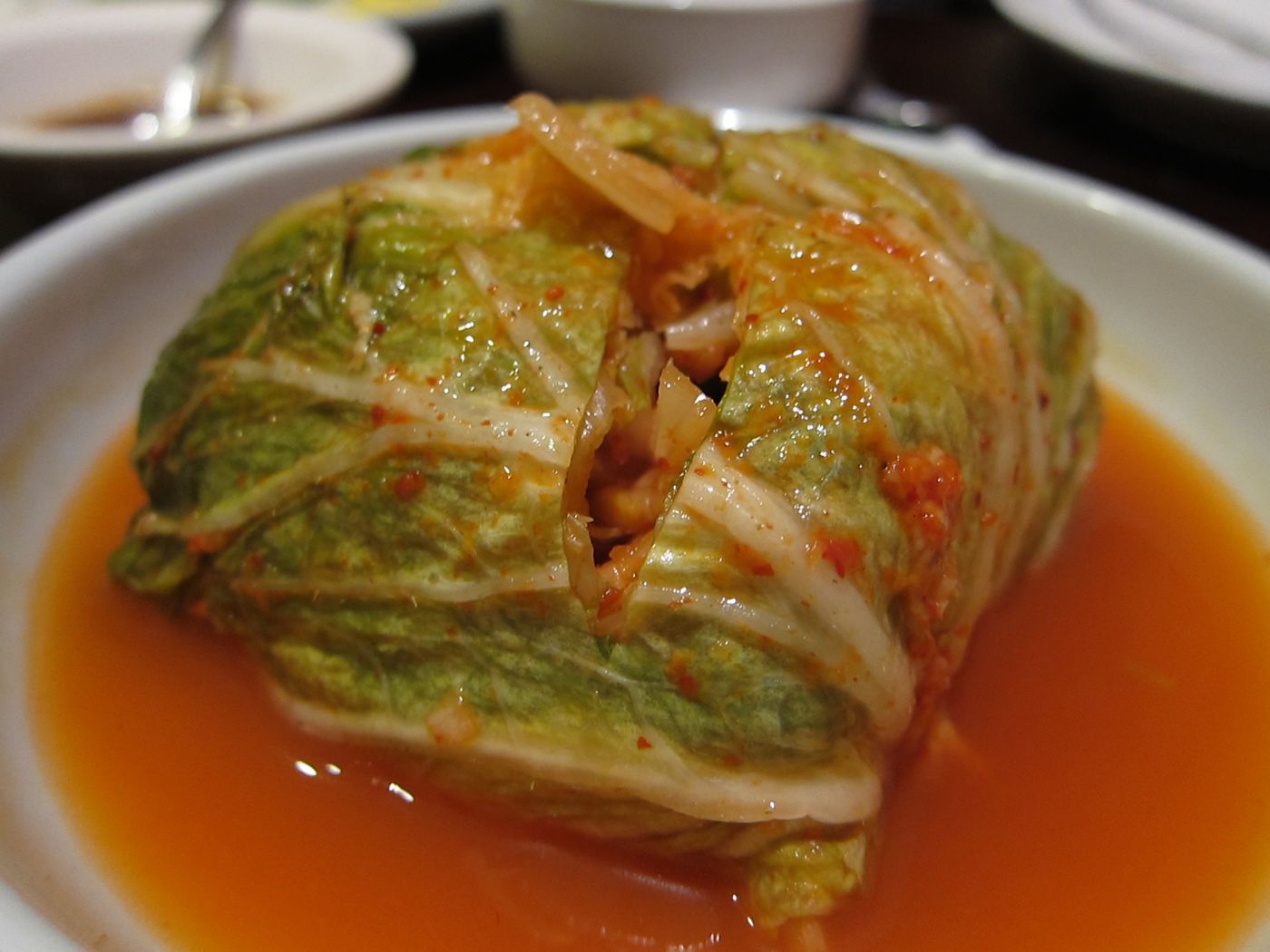 Wrapped Kimchi보쌈김치Cabbage, radish, fruit, nuts and seafood bundled inside whole cabbage leaves — the lavish wrapped kimchi of Gaeseong, made for honored guests.
- Dongtae-jjigae (Frozen Pollack Stew)동태찌개A spicy, clean-tasting stew of frozen Alaska pollack with radish, tofu and fresh greens in a gochugaru-and-jang broth — a winter staple at the Korean table.
- Oyster Radish Kimchi굴깍두기Cubed radish kimchi folded through with fresh raw oysters — a short-lived winter kimchi, eaten within days while the oysters are still sweet.
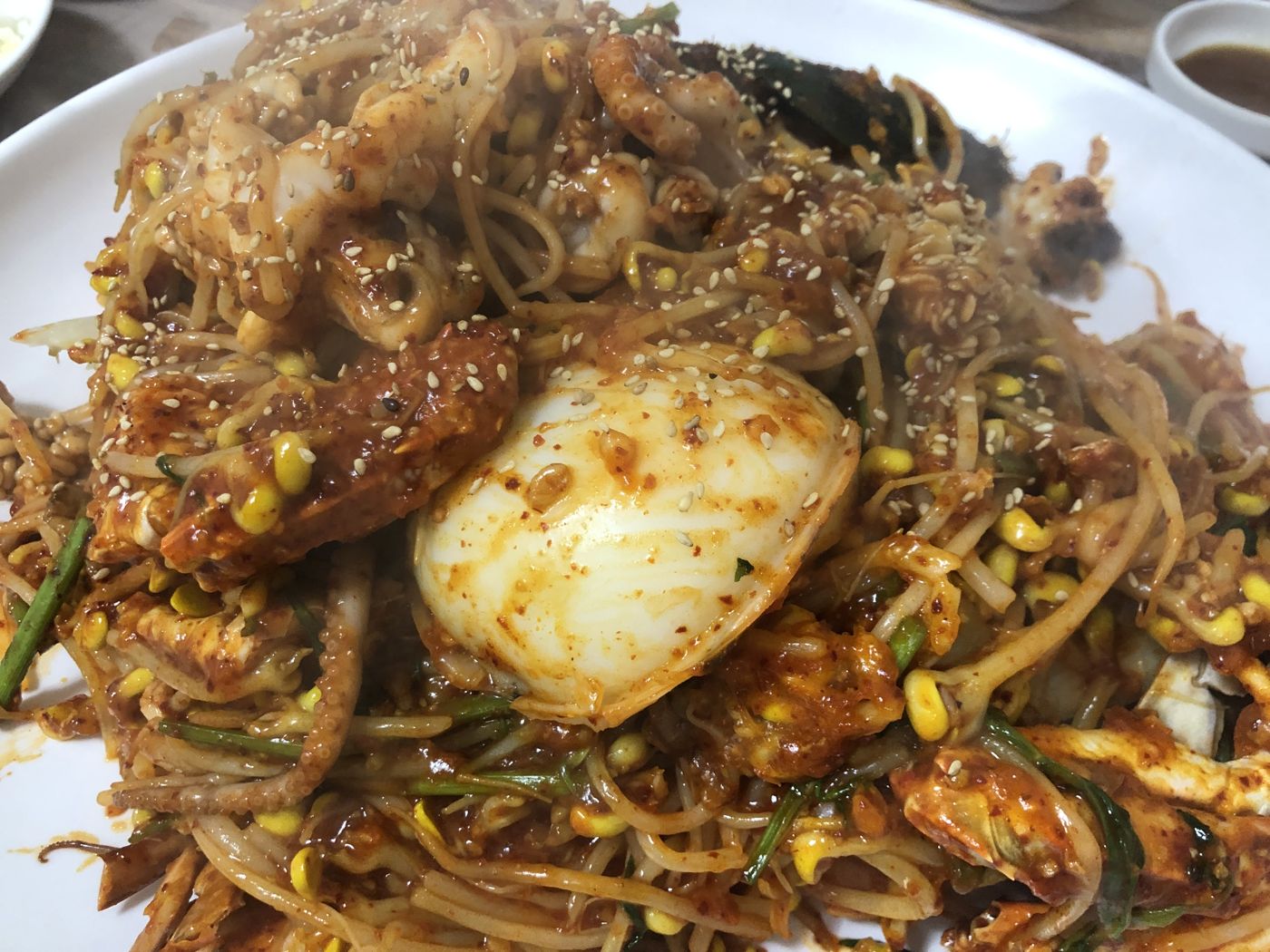 Haemul-jjim (Spicy Braised Seafood with Bean Sprouts)해물찜Squid, shrimp and shellfish piled over crisp bean sprouts and simmered in a thick, fiery red sauce — a modern Gyeongsang coastal dish now served at restaurants nationwide.
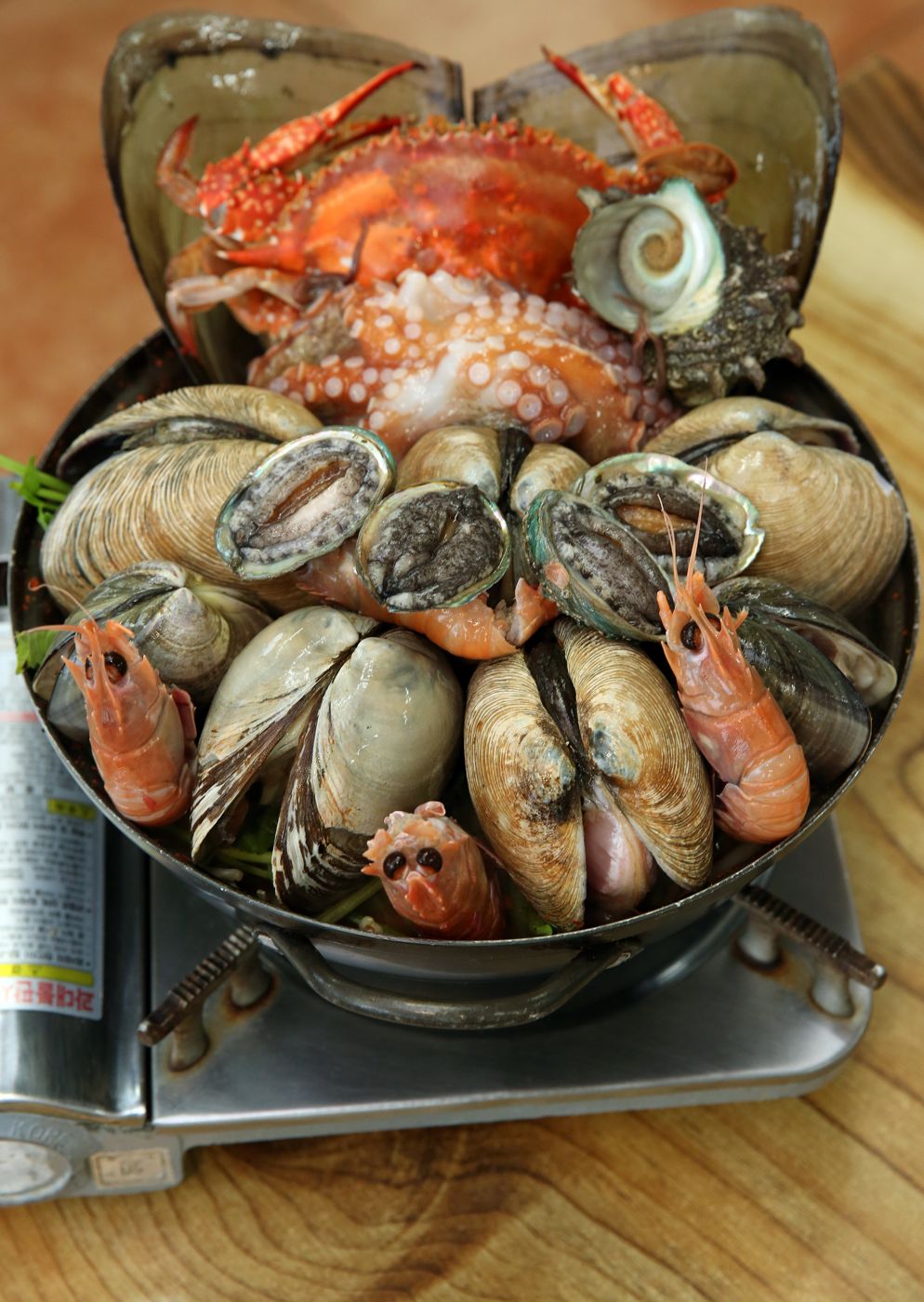 Haemul Tang (Spicy Seafood Hot Pot)해물탕Blue crab, octopus, shrimp, clams and sea squirt simmered with radish and water dropwort in a bright, spicy gochujang broth — a seafood feast in one pot.
- Spicy Skate Salad홍어회무침Strips of raw or lightly fermented skate, firmed in vinegar and tossed with minari, radish and a sweet-sour gochujang dressing — Jeolla's feast-day salad.
- Soy Sauce Water Kimchi장김치Cabbage and radish cured in soy sauce instead of salt, floated in a lightly sweet soy brine with pear, chestnut and pine nuts — a court and gentry kimchi.
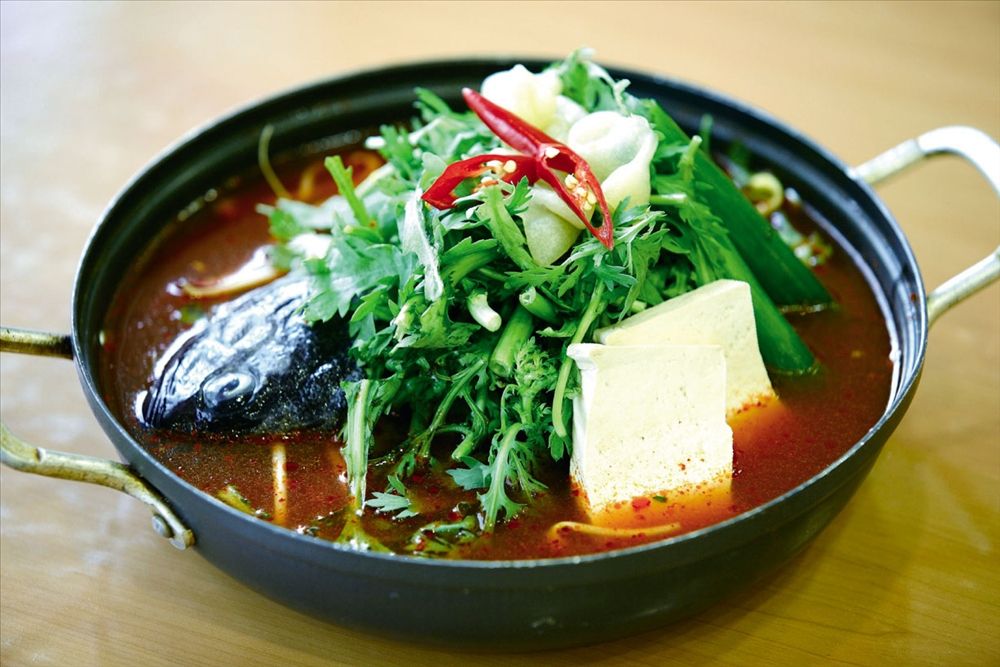 Maeuntang (Spicy Fish Stew)매운탕Fish — freshwater or sea — simmered with radish, tofu and fragrant greens in a fiery gochugaru and gochujang broth; the stew that follows sashimi and fills riverside restaurants.
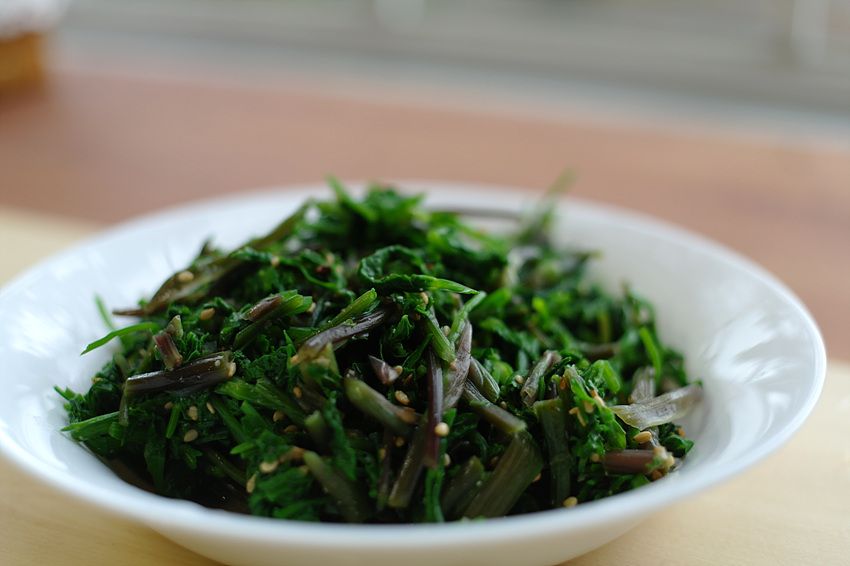 Minari Muchim미나리무침Korean water dropwort blanched for a few seconds and dressed with tangy gochujang and vinegar — fresh, herbal and very much a taste of spring.
- Saengtae Jjigae (Fresh Pollock Stew)생태찌개Chunks of fresh, never-frozen pollock simmered with radish, tofu and a red chili broth, finished with water dropwort and crown daisy — a winter stew prized for its clean, bracing taste.
- Chunky Radish and Cabbage Kimchi섞박지Big, flat-cut pieces of radish and cabbage mixed in one chili and jeotgal seasoning — a late-autumn “mixed” kimchi, and the name for big radish kimchi today.
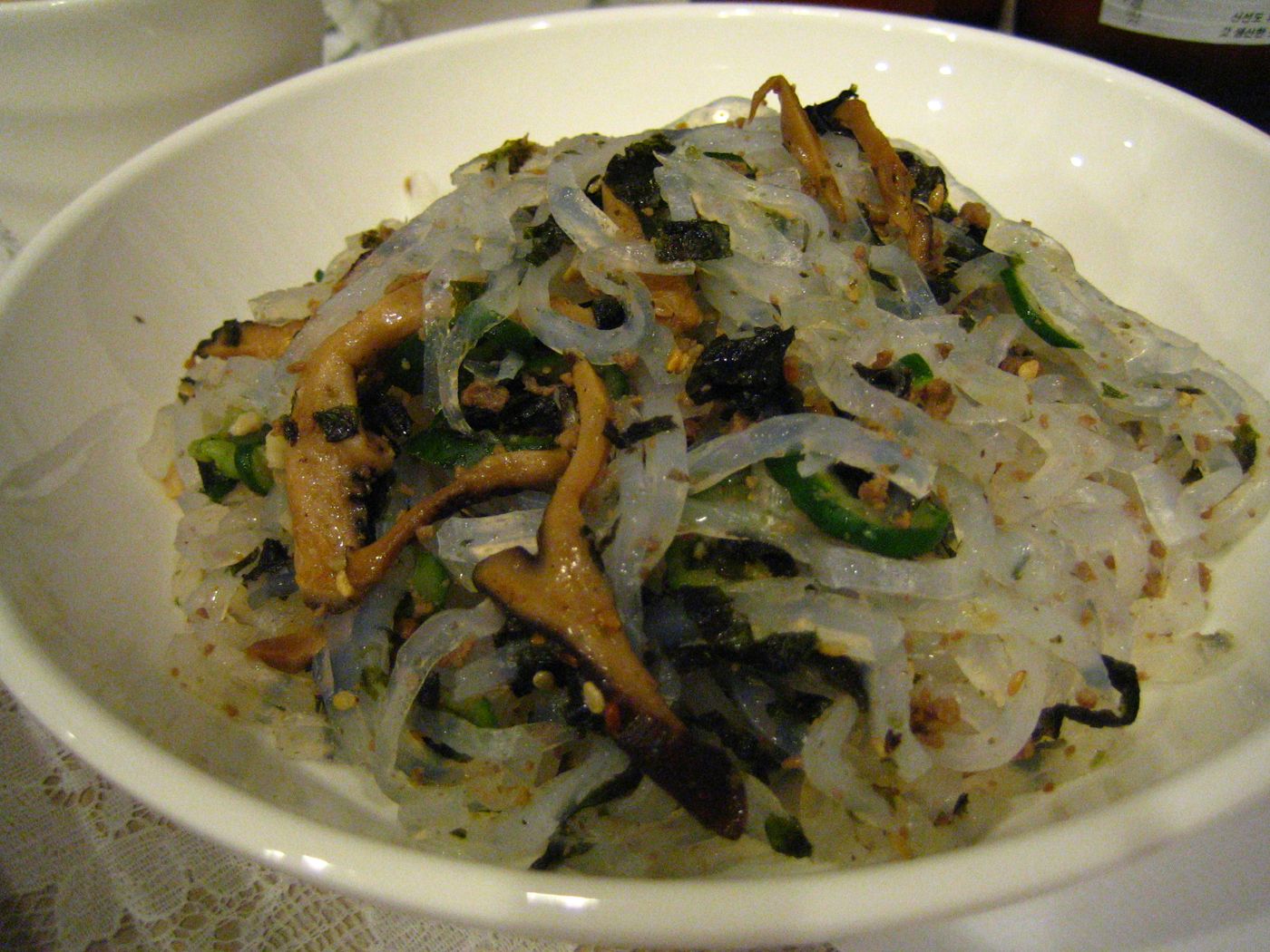 Tangpyeongchae탕평채Mung bean jelly tossed with beef, sprouts, water dropwort, egg and roasted gim in a soy-vinegar dressing — a classic spring dish named after a Joseon policy of political harmony.
Sources
- 01미나리 — Encyclopedia of Korean Culture
- 02미나리 — Encyclopedia of Korean Folk Culture (한국의식주생활사전)
- 03미나리 — Encyclopedia of Korean Folk Culture (한국생업기술사전)
- 04Korean Food Composition Table: Water dropwort (Minari), Whole, Raw — National Institute of Agricultural Sciences
- 05Three poisonous plants (Oenanthe, Cicuta and Anamirta) that antagonise the effect of γ-aminobutyric acid in human brain — J R Coll Physicians Edinb (2020)
- 06Warfarin — MedlinePlus Drug Information