Ingredient
Long-arm octopus (nakji)
낙지
Romanization: nakji
A slender octopus with long, thin arms, dug from the tidal mudflats of South Jeolla. Koreans eat it stir-fried with chili, in clear yeonpo-tang, and famously raw as sannakji.
Flavor
Clean, faintly sweet and briny, with a bouncy, chewy bite; raw pieces are slippery and grip with their suckers, while cooked nakji turns tender if cooked briefly and rubbery if overcooked.
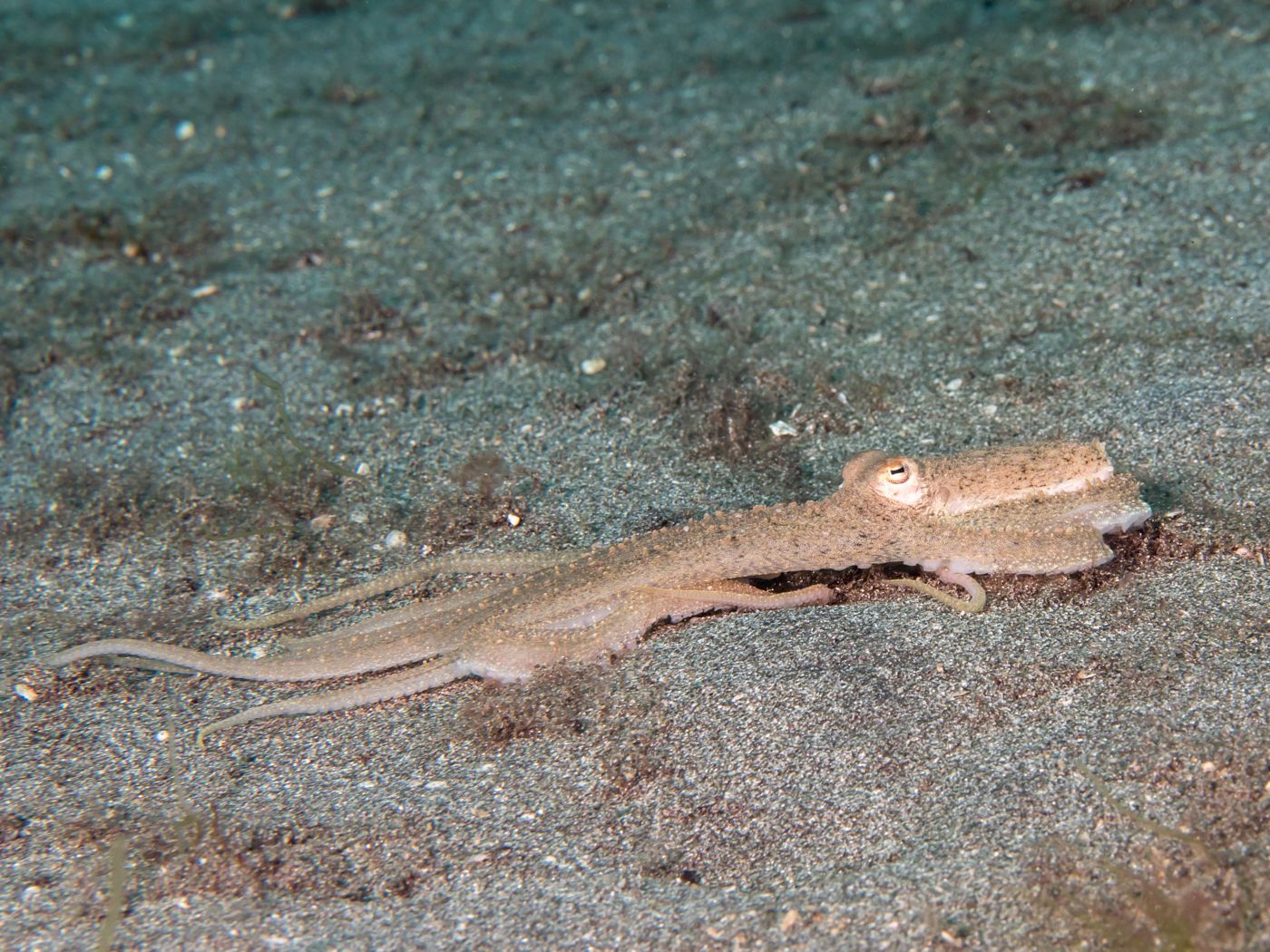 Photo: Rickard Zerpe, CC BY 2.0, via Wikimedia Commons
Origin & History
Nakji is Octopus minor, a small octopus up to about 60 cm long, most of it arms. It lives in burrows in the soft mud of sheltered bays and tidal flats, hunting crabs, shrimp and clams by night, and dies after breeding. Older texts call it seokgeo or nakje, and dialects add nakja, nakjju and nakchi. It is found off Korea, China and Japan, but in Korea it is above all a fish of the south and west coasts, where tidal flats are widest. Sebal-nakji, prized young nakji with especially thin arms, is not a separate species; the name means "thin-legged," not "three-legged."
Nakji has long been eaten as a restorative. Jeong Yak-jeon's Jasan eobo praised its white, sweet flesh for raw slices, soups and dried strips and said it lifts a person's vigor, and a well-known saying claims nakji can revive a collapsing ox. Folk wisdom also pairs "spring clams and autumn nakji," marking autumn as its best season. The Encyclopedia of Korean Culture reports that the Jeonnam coast accounts for roughly 80 percent of Korea's nakji catch. Mokpo calls it "ginseng of the mudflats," and neighboring Muan County is known for the sebal-nakji caught along its coast, a local specialty.
In the kitchen, nakji is stir-fried with gochugaru and vegetables as nakji-bokkeum, simmered in a clear anchovy-kelp broth as yeonpo-tang, and even tucked into kimchi at gimjang time. Yeonpo-tang once meant a Joseon-era soup of fried tofu in beef or chicken broth; today the name means a clear soup of live nakji, said by some to come from the way the arms open like a lotus flower in the hot broth. Sannakji, freshly cut nakji served while the arms still move, is eaten with sesame oil and salt.
Nutrition
| Calories | 73 kcal |
|---|---|
| Protein | 16.3 g |
| Fat | 0.43 g |
| Carbohydrates | 0 g |
| Fiber | 0 g |
| Sodium | 479 mg |
Notable forMagnesium (67 mg) · Zinc (2.0 mg) · Phosphorus (166 mg)
Values copied from the Korean Food Composition Table (Rural Development Administration / National Institute of Crop Science) for this exact food, per 100 g edible portion. Actual values vary with ingredients, portion size and preparation.
Health Benefits
- Lean protein: Raw nakji has about 16 g of protein and less than half a gram of fat per 100 g, with magnesium, zinc and phosphorus.
- Naturally salty: The Korean table lists almost 480 mg of sodium per 100 g of raw nakji, before any seasoning, so spicy stir-fries add to an already salty base.
- Mollusk allergy: Octopus is a mollusk. U.S. law's major-allergen list names crustacean shellfish, not mollusks, so mollusks may not be labeled the same way; people with shellfish allergies should ask an allergist which kinds to avoid.
- Raw seafood: The FDA says cooking seafood thoroughly is safest, and advises pregnant women, children, older adults and people with weakened immunity to avoid raw or undercooked seafood, which includes sannakji.
Informational, not medical advice. Talk to a qualified professional about your own health and diet.
Dishes with Long-arm octopus (nakji)
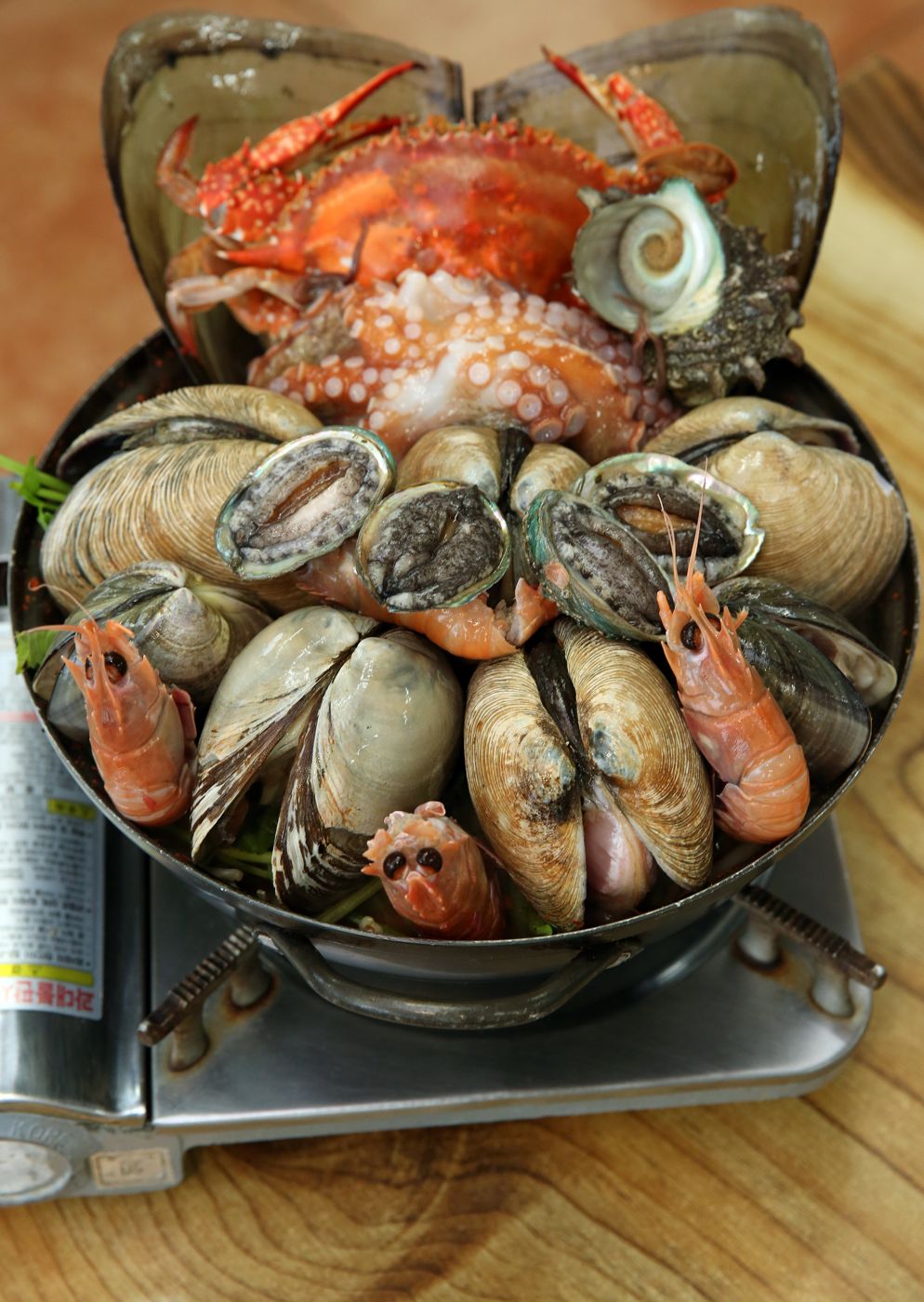 Haemul Tang (Spicy Seafood Hot Pot)해물탕Blue crab, octopus, shrimp, clams and sea squirt simmered with radish and water dropwort in a bright, spicy gochujang broth — a seafood feast in one pot.
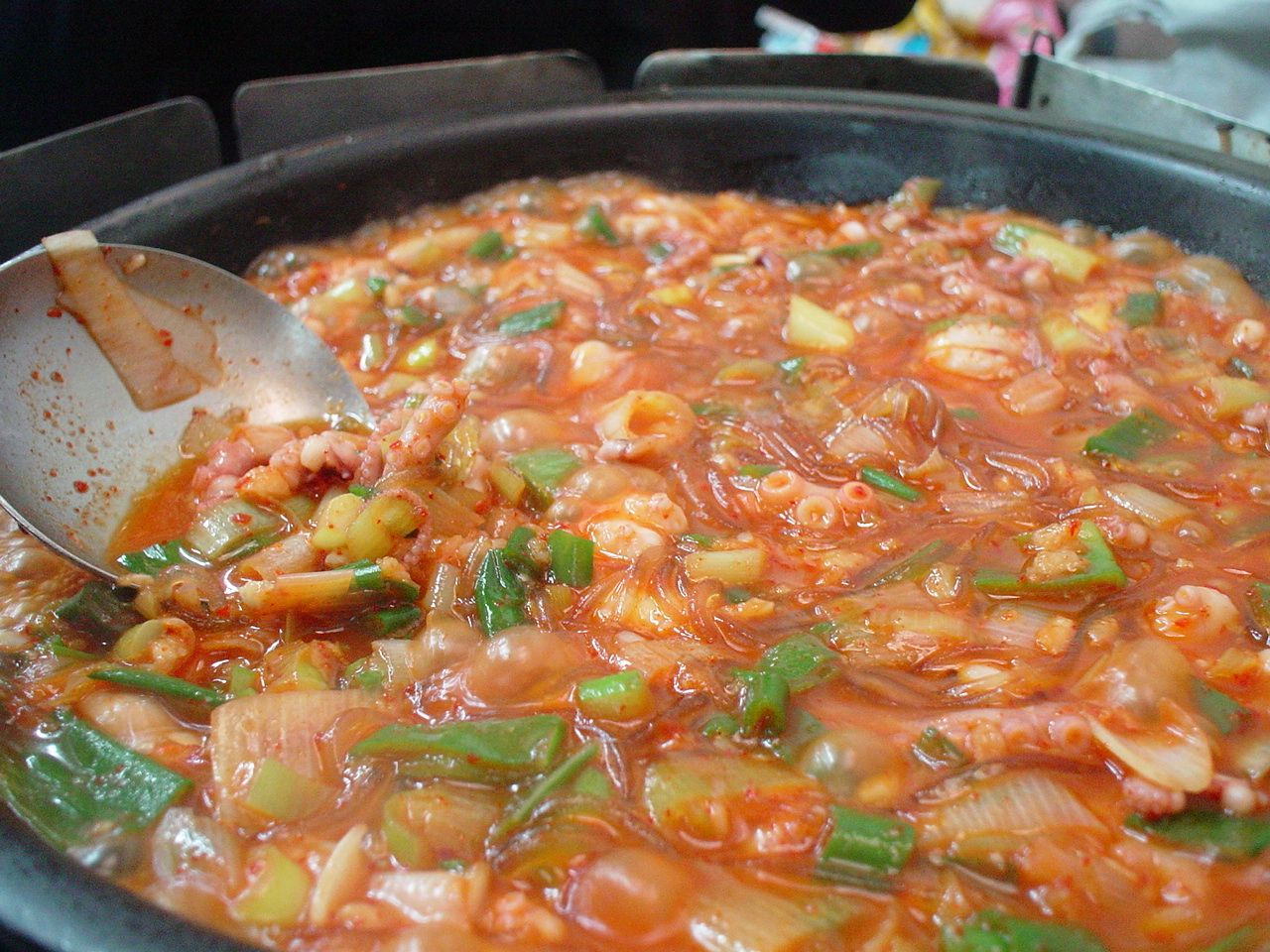 Nakji Bokkeum (Spicy Stir-Fried Octopus)낙지볶음Long-arm octopus stir-fried fast over high heat with onion and a fiery gochugaru sauce, usually served with rice and a mild soup to calm the heat.
Sources
- 01낙지 (Long-arm octopus) — Encyclopedia of Korean Culture
- 02세발낙지 (Sebal-nakji) — Encyclopedia of Korean Culture
- 03무안군 (Muan County) — Encyclopedia of Korean Culture
- 04연포탕 (Yeonpo-tang) — Encyclopedia of Korean Culture
- 05Korean Food Composition Table — Whiparm octopus, Raw
- 06Selecting and Serving Fresh and Frozen Seafood Safely — U.S. Food and Drug Administration