Ingredient
Manila clam (bajirak)
바지락
Romanization: bajirak
Small, ridged tidal-flat clams that give Korean soups and noodle broths their clean, sweet depth. Bajirak are the clams of bajirak-kalguksu, the west coast's clam noodle soup.
Flavor
Sweet, briny and clean, with a gently chewy bite; the broth they release is light, savory and refreshing rather than fishy.
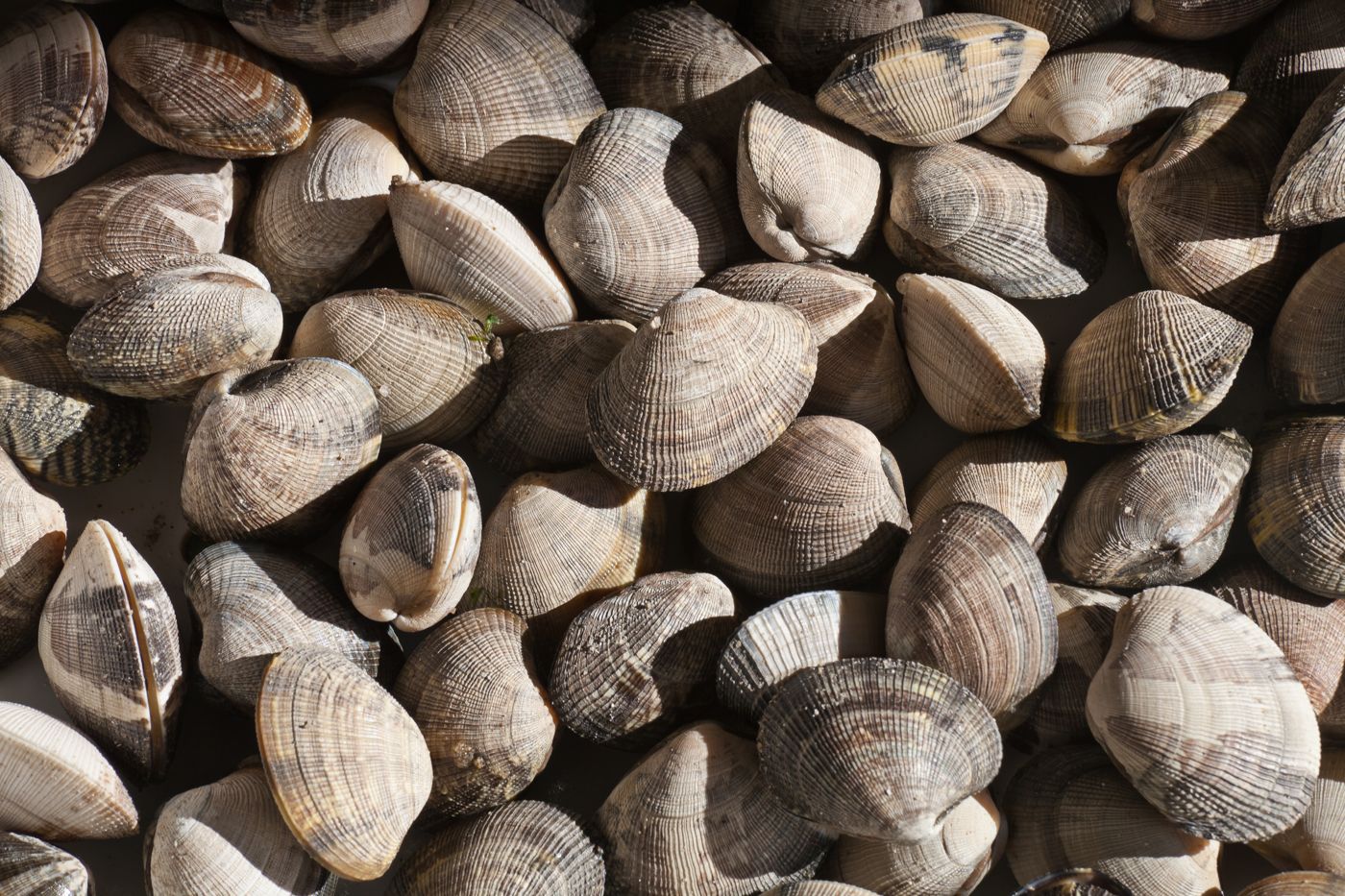 Photo: Luis Miguel Bugallo Sánchez, CC BY-SA 3.0, via Wikimedia Commons
Origin & History
Bajirak is the Manila clam, listed by the Encyclopedia of Korean Culture under the older name Tapes philippinarum. It is a small, oval clam, about 4 cm long, with a lattice of fine ribs and growth lines across the shell. It lives along all of Korea's coasts but is especially abundant on the west coast, burrowing in sandy mud from the upper tidal flats down to about 5 m, and spawns in summer.
Coastal villagers have dug bajirak at low tide for generations, and in winter the same flats yield oysters and laver. According to the encyclopedia, clam farming began in 1912; because the young clams soon bury themselves rather than cling to collectors, they are raised by seeding shallow, managed beds and harvested later. Farmed and wild harvests together ran to tens of thousands of tonnes a year in the late 20th century, and the clams also became a raw material for canning.
In the kitchen bajirak are a broth maker. VisitKorea describes bajirak-kalguksu, knife-cut noodles boiled with zucchini and onion in a generous clam broth, as a dish once mostly eaten in the west-coast towns that produce the clams and now found all over the country. The clams also flavor other soups and stews, and they are salted as bajirak-jeot or simmered in soy sauce; the Korean Food Composition Table lists both, along with canned and dried bajirak.
Nutrition
| Calories | 74 kcal |
|---|---|
| Protein | 12.27 g |
| Fat | 0.93 g |
| Carbohydrates | 3.2 g |
| Fiber | 0 g |
| Sodium | 383 mg |
Notable forIron (2.68 mg) · Magnesium (55 mg) · Phosphorus (129 mg)
Values copied from the Korean Food Composition Table (Rural Development Administration / National Institute of Crop Science) for this exact food, per 100 g edible portion. The table's English name is "Little neck clam"; its Korean name confirms it is bajirak. Actual values vary with ingredients, portion size and preparation.
Health Benefits
- Lean protein with minerals: Bajirak supply about 12 g of protein per 100 g with very little fat, plus iron and magnesium.
- Naturally salty: Clams carry seawater, so the table lists close to 400 mg of sodium per 100 g before any seasoning; season clam broths lightly.
- Cook thoroughly: CDC links most vibriosis to raw or undercooked shellfish, and the FDA advises cooking clams until the shells open and throwing out any that stay shut.
- Low in mercury: Clams are on the FDA/EPA "Best Choices" list.
- Shellfish allergy: Clams are mollusks; people with shellfish allergy should ask an allergist whether to avoid them.
Informational, not medical advice. Talk to a qualified professional about your own health and diet.
Dishes with Manila clam (bajirak)
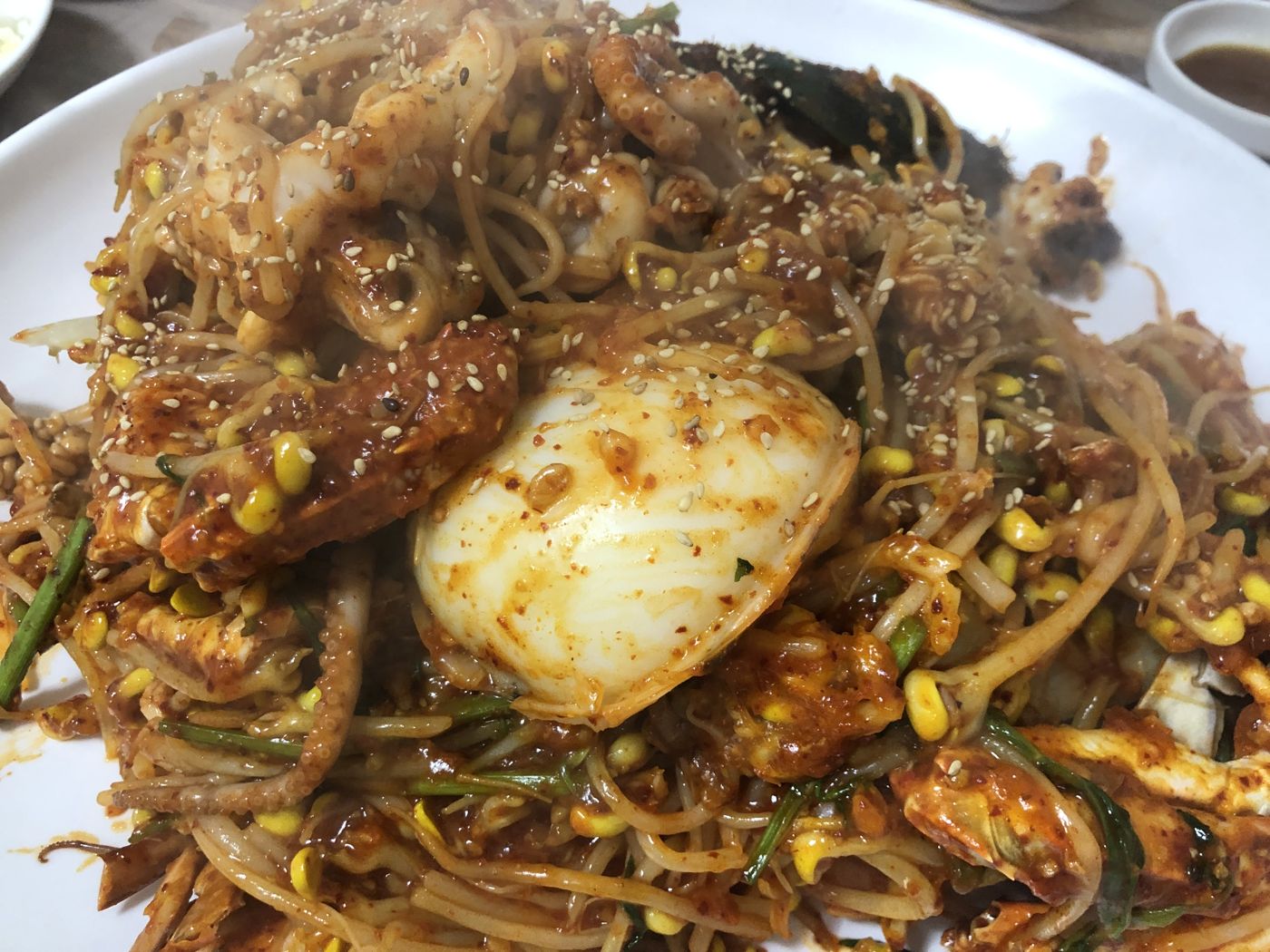 Haemul-jjim (Spicy Braised Seafood with Bean Sprouts)해물찜Squid, shrimp and shellfish piled over crisp bean sprouts and simmered in a thick, fiery red sauce — a modern Gyeongsang coastal dish now served at restaurants nationwide.
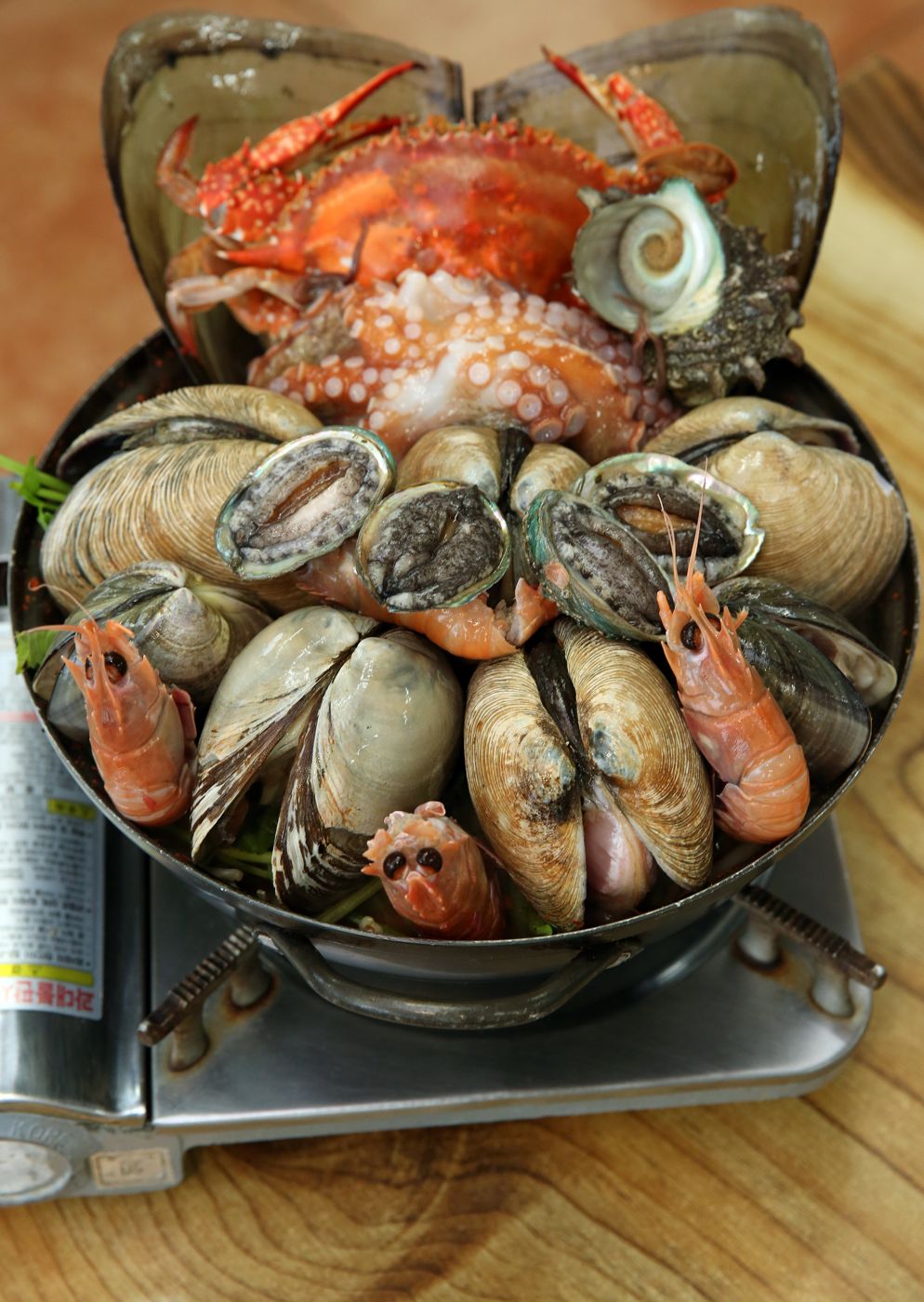 Haemul Tang (Spicy Seafood Hot Pot)해물탕Blue crab, octopus, shrimp, clams and sea squirt simmered with radish and water dropwort in a bright, spicy gochujang broth — a seafood feast in one pot.
- Salted Clams조개젓Small shucked clams salted in their own boiled juices for a few weeks, then dressed with chili and green onion — an early-summer rice companion.
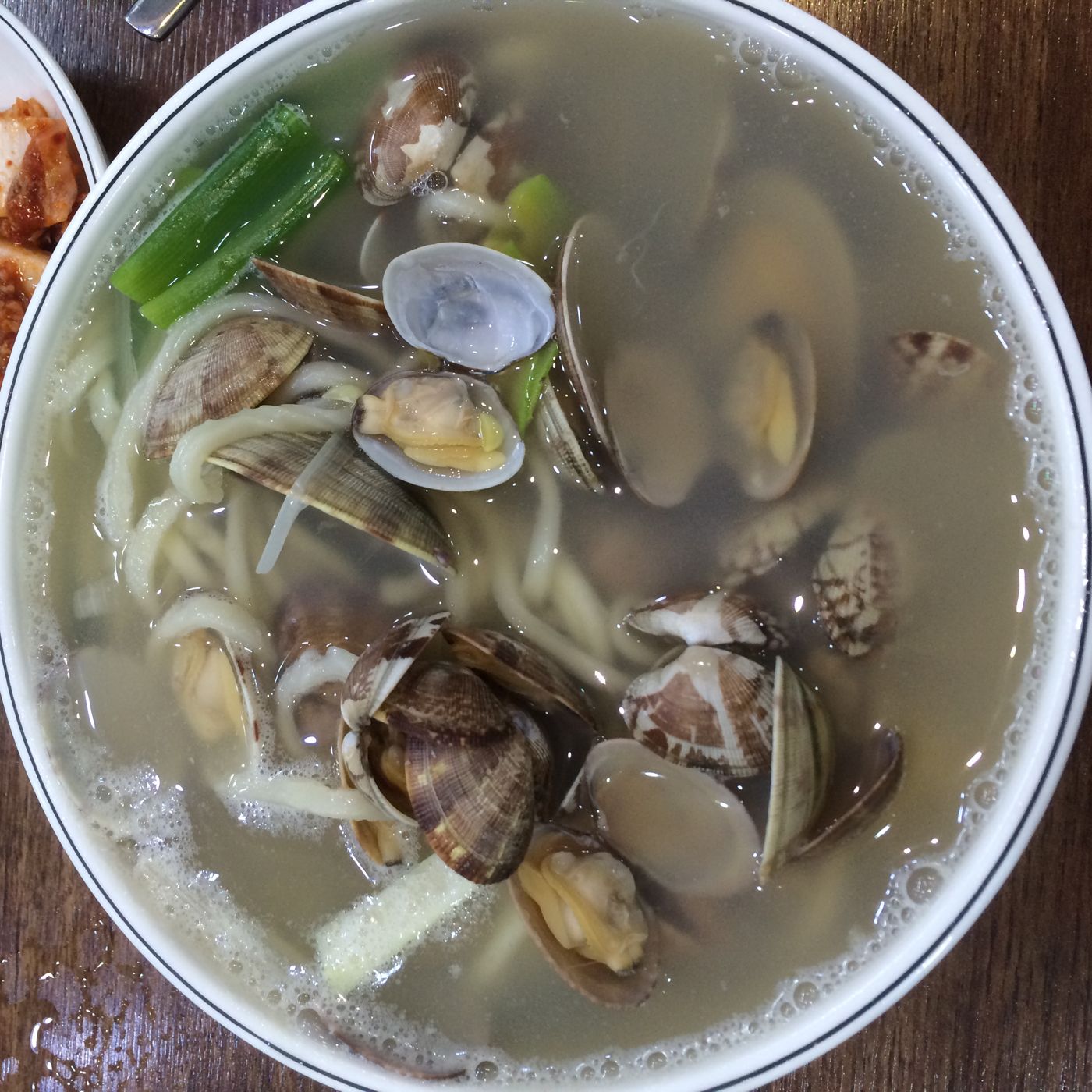 Kalguksu (Knife-Cut Noodle Soup)칼국수Hand-rolled wheat dough cut into ribbons with a knife and cooked right in anchovy, chicken or clam broth with potato and zucchini — Korea's homely noodle soup.
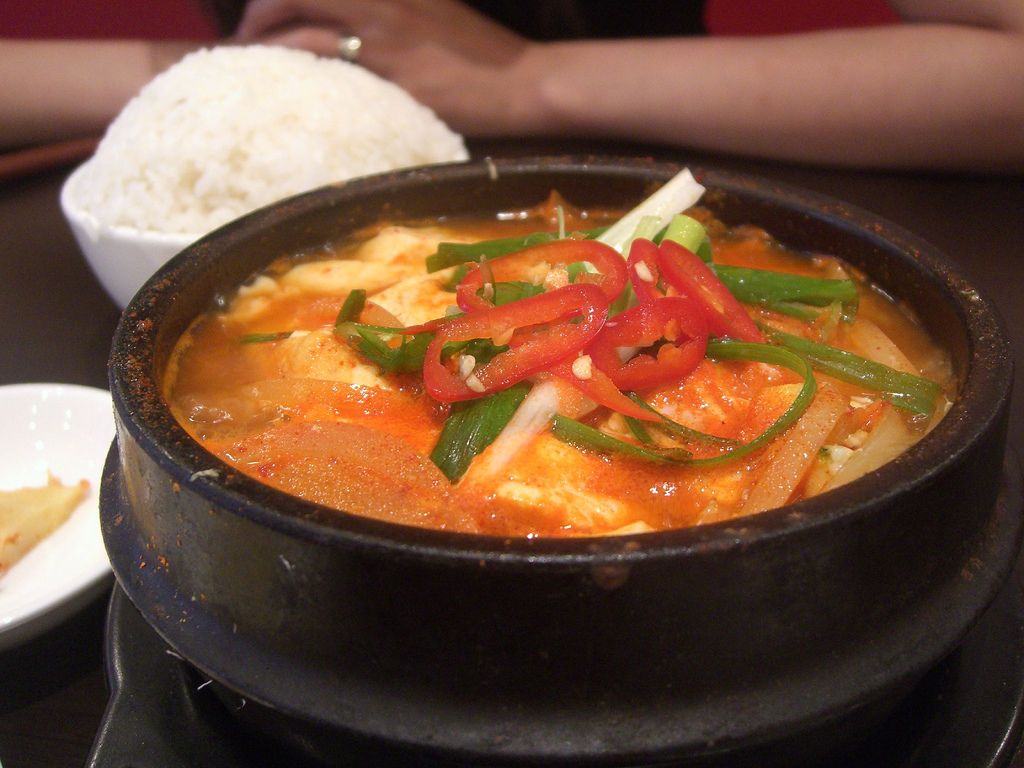 Sundubu Jjigae (Soft Tofu Stew)순두부찌개Silky, unpressed tofu simmered in a fiery chili broth with clams or pork and finished with a raw egg — served still boiling in its earthenware pot.
Sources
- 01바지락 (Manila clam) — Encyclopedia of Korean Culture
- 02Noodle Soup with Clams (바지락 칼국수 / Bajirakkalguksu) — VISITKOREA
- 03Korean Food Composition Table — Little neck clam, Wild, Raw
- 04About Vibrio Infection — U.S. Centers for Disease Control and Prevention
- 05Selecting and Serving Fresh and Frozen Seafood Safely — U.S. Food and Drug Administration
- 06Advice about Eating Fish — U.S. Food and Drug Administration / EPA