Ingredient
Squid
오징어
Romanization: ojingeo
Fresh squid for stir-fries, pancakes and stuffed ojingeo-sundae, and dried squid — whole, sun-cured bodies or sweet-salty shredded jinmichae — that has become one of Korea's best-loved pantry foods.
Flavor
Fresh squid is mild, sweet and springy, turning tough if overcooked; dried squid is intensely savory and chewy, and seasoned jinmichae is sweet, salty and tender-chewy.
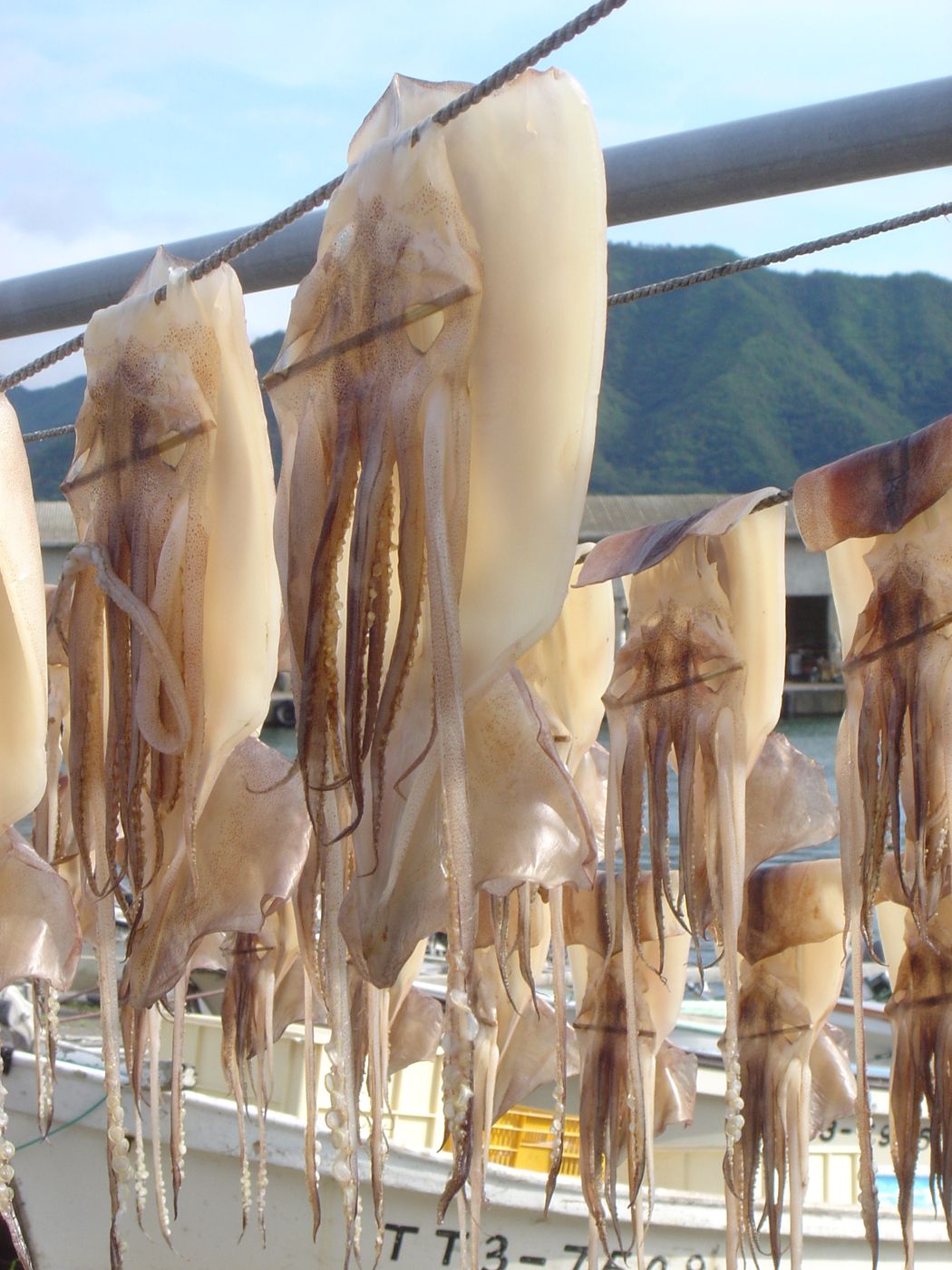 Photo: David Monniaux, CC BY-SA 3.0, via Wikimedia Commons
Origin & History
Ojingeo is a general name for squid. In everyday Korean it usually means the Japanese flying squid (Todarodes pacificus), though the encyclopedia notes long-standing confusion with cuttlefish and other species. Squid have a torpedo-shaped mantle with fins, eight arms and two long tentacles, and a thin internal shell; about ten species are known in Korean waters.
Old texts recorded the name as ojeogeo (烏賊魚), 'crow thief.' Jeong Yak-jeon's Jasan eobo (1814) repeats a Chinese tale that the squid floats as if dead, then seizes the crows that peck at it, and it also describes the ink sac, noting that ink writing from it fades over time. Joseon reference works distinguished salted, dried squid (myeongsang) from squid dried without salt (posang).
Squid are drawn to light, so they are fished at night under banks of lamps. Ulleungdo, in the East Sea where warm and cold currents meet, is the most famous ground: the season runs from late June through September, and the catch was traditionally sun-dried within hours, spread across yards and even rooftops.
Fresh squid is stir-fried with chili (ojingeo-bokkeum), added to haemul-pajeon, or stuffed and steamed as ojingeo-sundae. Dried squid is grilled as a snack. Shredded, seasoned dried squid — jinmichae or ojingeochae — is softened and tossed with gochujang as ojingeochae-muchim or stir-fried with a sweet soy glaze as jinmichae-bokkeum.
Nutrition
| Calories | 94 kcal |
|---|---|
| Protein | 18.84 g |
| Fat | 1.44 g |
| Carbohydrates | 0.16 g |
| Fiber | 0 g |
| Sodium | 199 mg |
Notable forVitamin B12 (4.4 µg) · DHA (621 mg) · Cholesterol (234 mg)
Values copied from the Korean Food Composition Table (Rural Development Administration / National Institute of Crop Science) for this exact food, per 100 g edible portion. Drying concentrates everything: the same table lists dried squid at 352 kcal, 67.8 g protein and 980 mg sodium per 100 g, and seasoned shredded dried squid (jinmichae) at 282 kcal, 14.8 g sugars and 1,123 mg sodium. Actual values vary with ingredients, portion size and preparation.
Health Benefits
- Lean protein: Raw squid is high in protein and low in fat, and supplies vitamin B12 and some DHA, per the Korean Food Composition Table.
- A low-mercury seafood: Squid is on the FDA–EPA 'Best Choices' list of lower-mercury seafood.
- Dietary cholesterol: Squid is notably high in cholesterol (about 234 mg per 100 g raw), something people following a clinician's advice on cholesterol may want to note.
- Dried and seasoned forms are salty and sweet: Dried squid and jinmichae are concentrated sources of sodium, and jinmichae also contains added sugar; banchan made from it adds more.
- Mollusk allergy: Squid is a mollusk. Mollusks are not among the nine major allergens U.S. law requires on labels, but the FDA notes that more than 160 foods can cause allergic reactions, and people with a shellfish allergy should ask their clinician about squid.
Informational, not medical advice. Talk to a qualified professional about your own health and diet.
Dishes with Squid
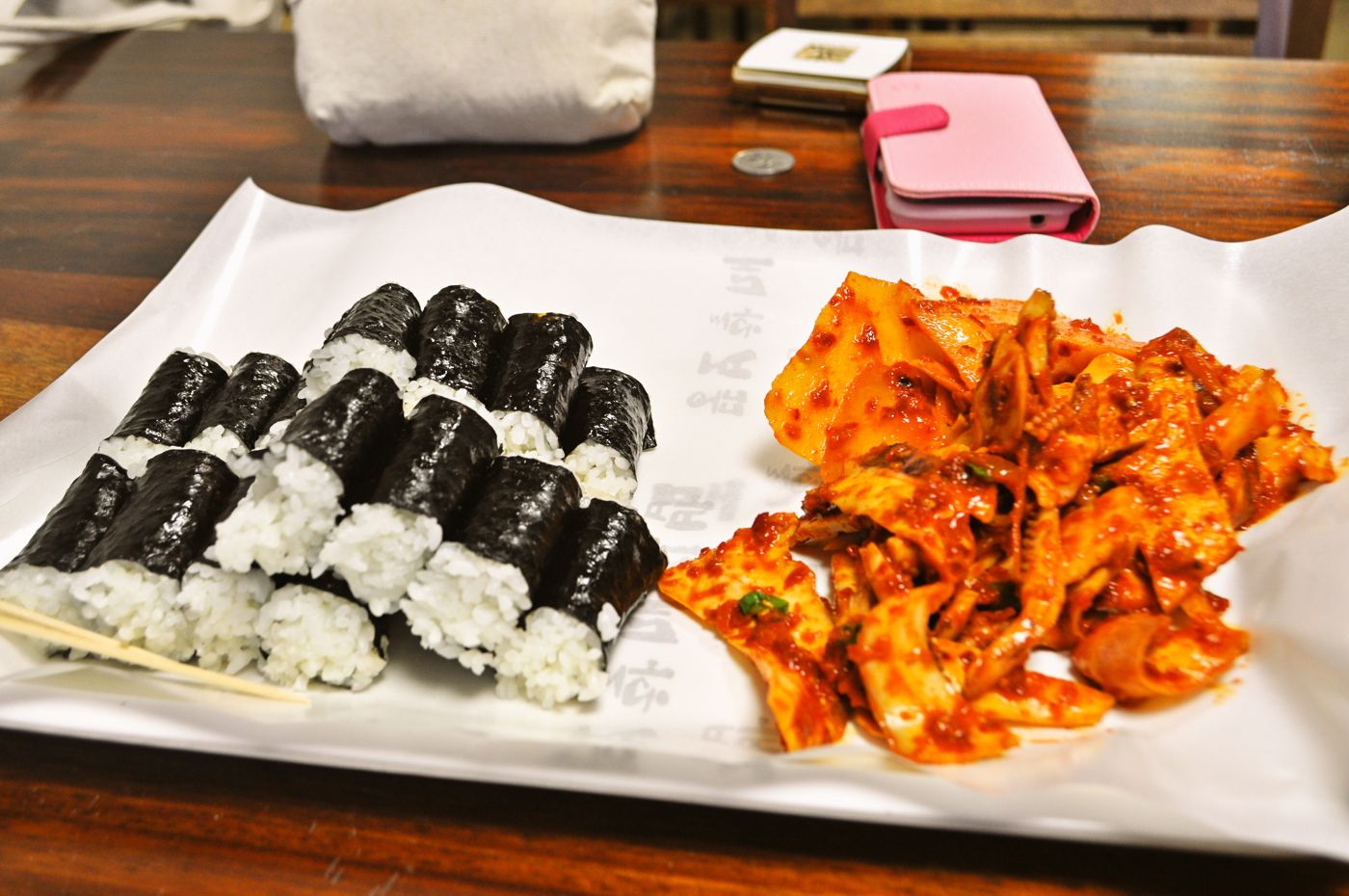 Chungmu Gimbap (Tongyeong Rice Rolls)충무김밥Finger-sized rolls of plain rice in laver, eaten with spicy squid and chunky radish kimchi on the side — Tongyeong's harbor food, built to survive summer heat.
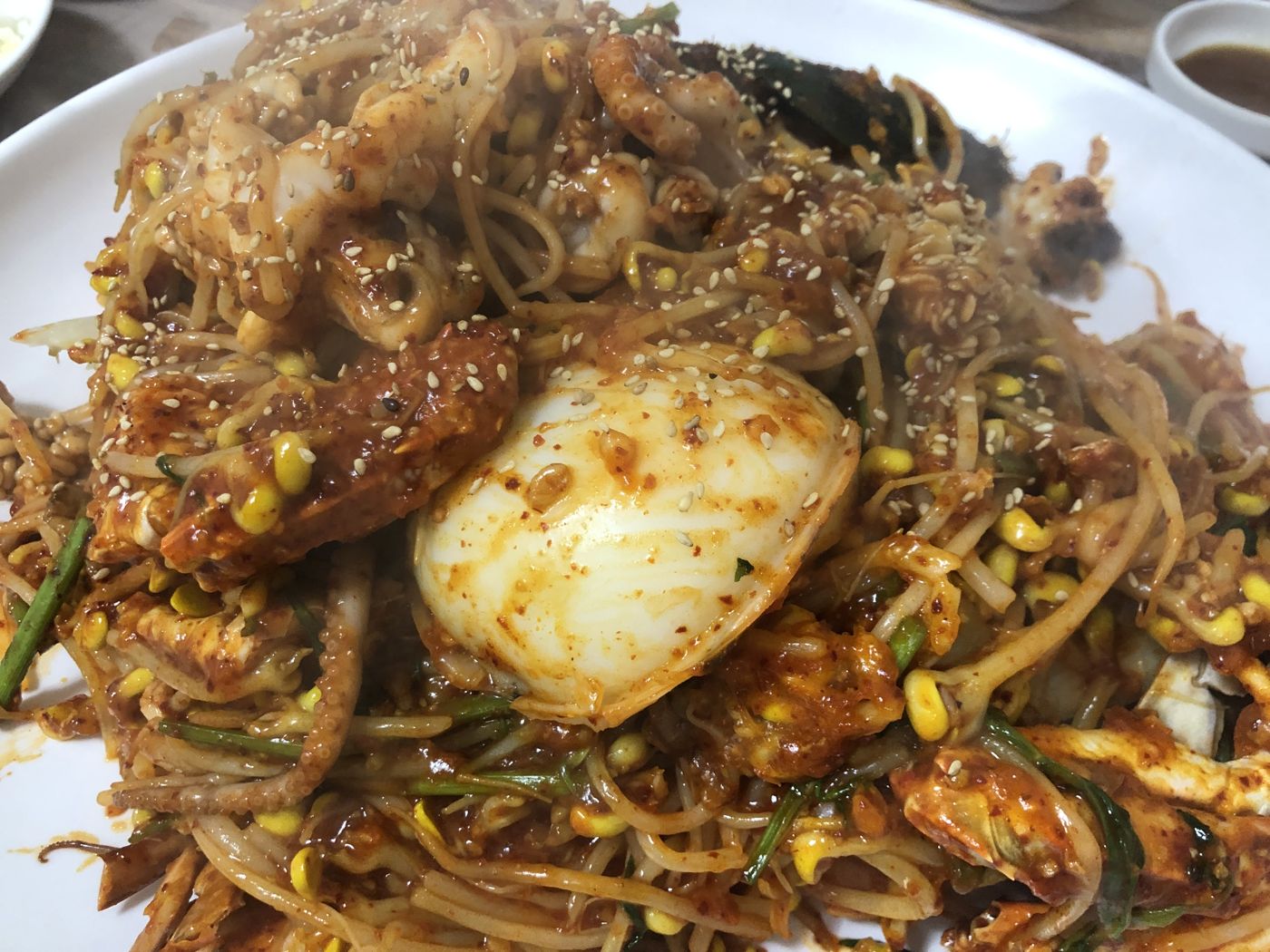 Haemul-jjim (Spicy Braised Seafood with Bean Sprouts)해물찜Squid, shrimp and shellfish piled over crisp bean sprouts and simmered in a thick, fiery red sauce — a modern Gyeongsang coastal dish now served at restaurants nationwide.
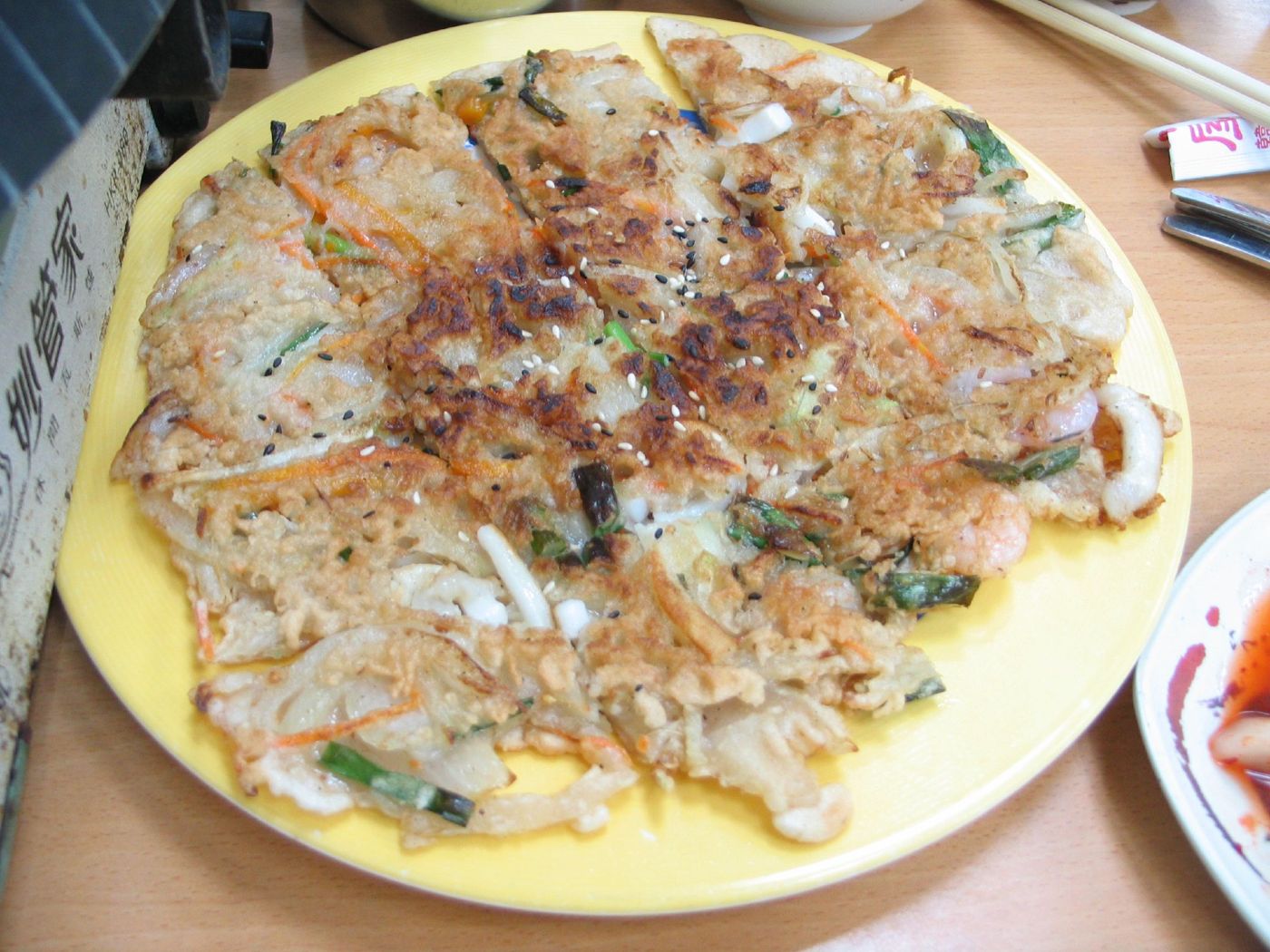 Haemul Pajeon (Seafood and Green Onion Pancake)해물파전Whole green onions bound in a light batter with squid, shrimp and clams, pan-fried until crisp — a generous jeon for sharing, closely tied to Busan's Dongnae.
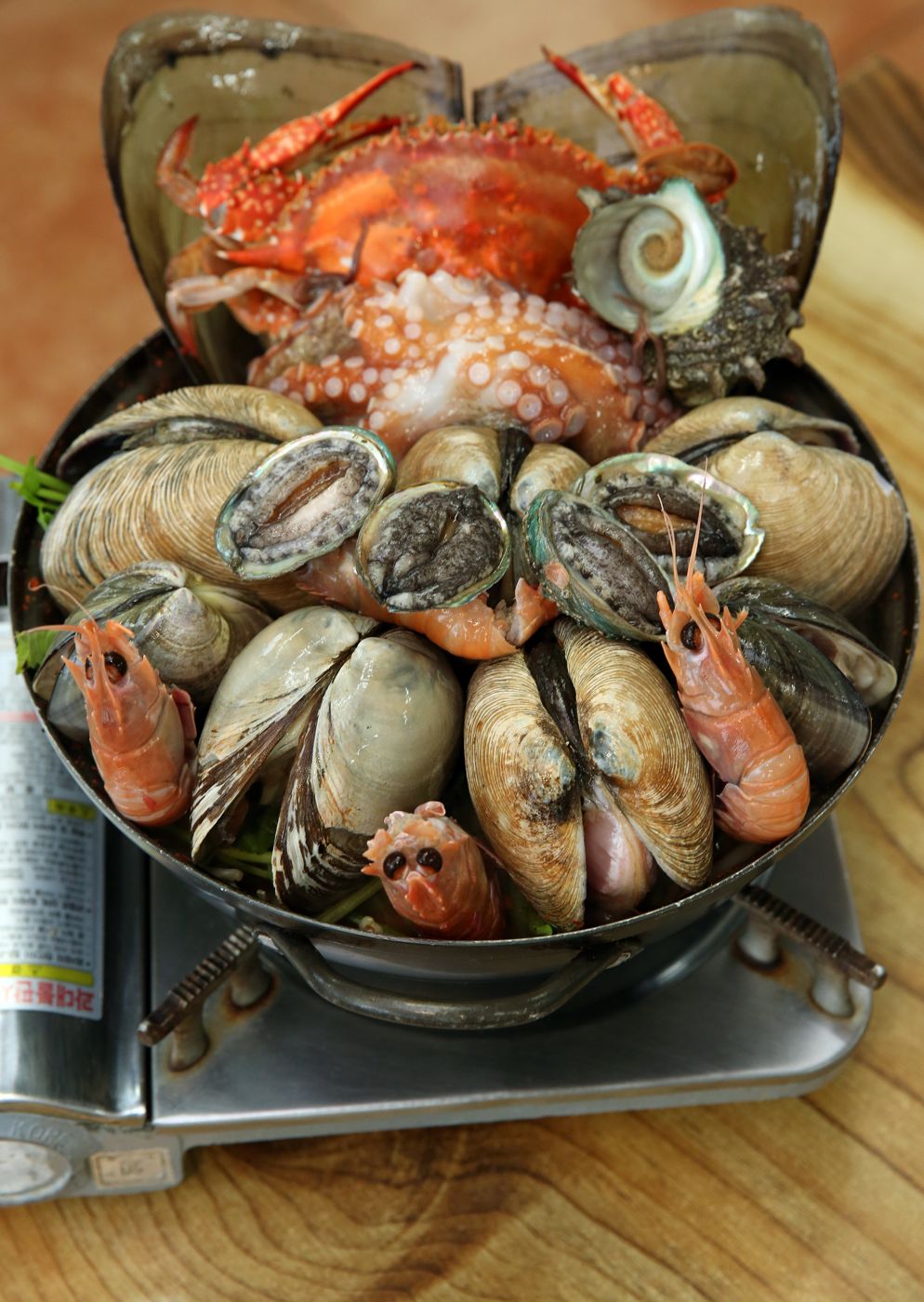 Haemul Tang (Spicy Seafood Hot Pot)해물탕Blue crab, octopus, shrimp, clams and sea squirt simmered with radish and water dropwort in a bright, spicy gochujang broth — a seafood feast in one pot.
- Jinmichae Bokkeum진미채볶음Seasoned dried squid shreds tossed in a sweet, spicy gochujang glaze — chewy, glossy and one of the most familiar keeping banchan.
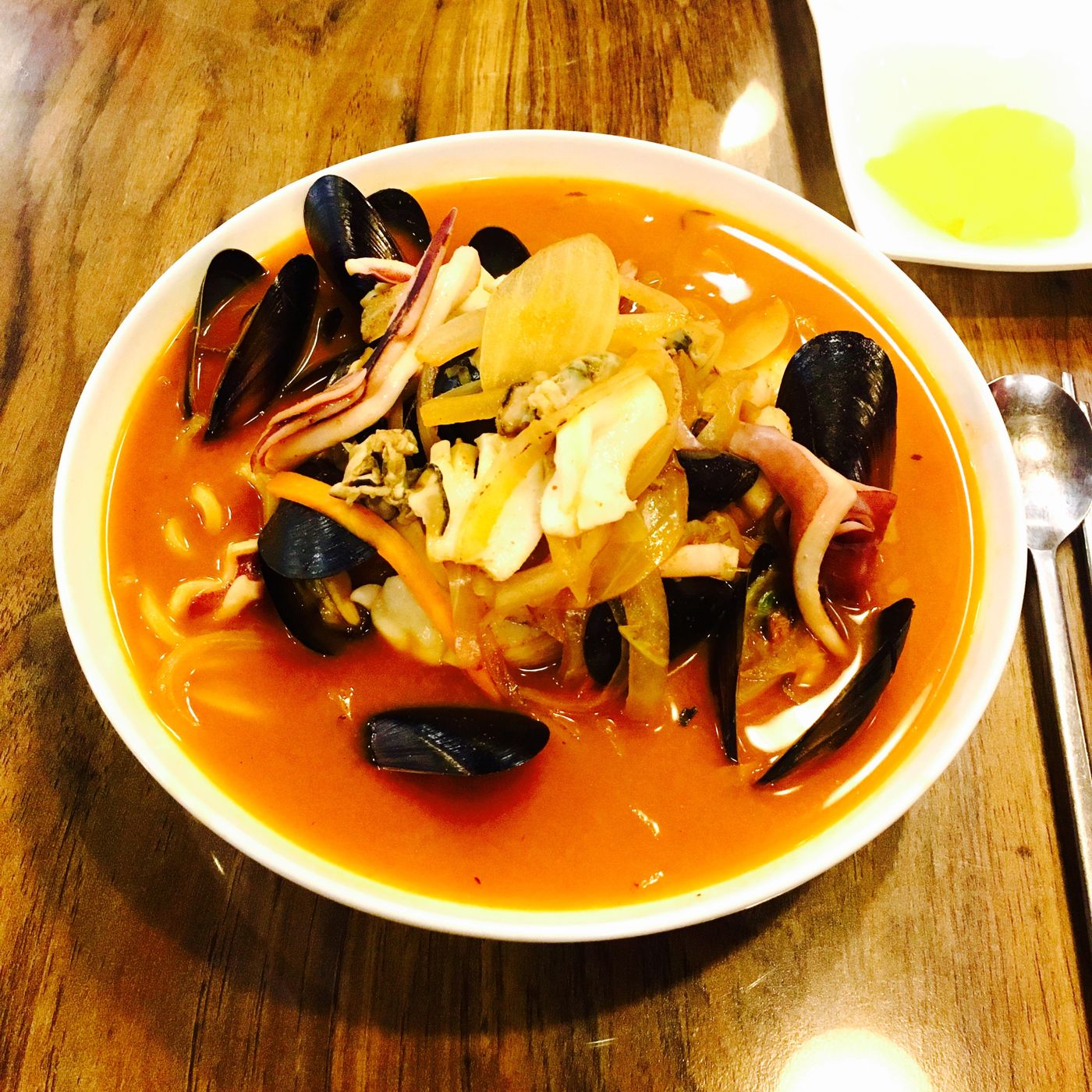 Jjamppong (Spicy Seafood Noodle Soup)짬뽕Thick wheat noodles in a fiery red broth of stir-fried pork, squid, shellfish and vegetables — the Korean-Chinese restaurant's spicy counterpart to jajangmyeon.
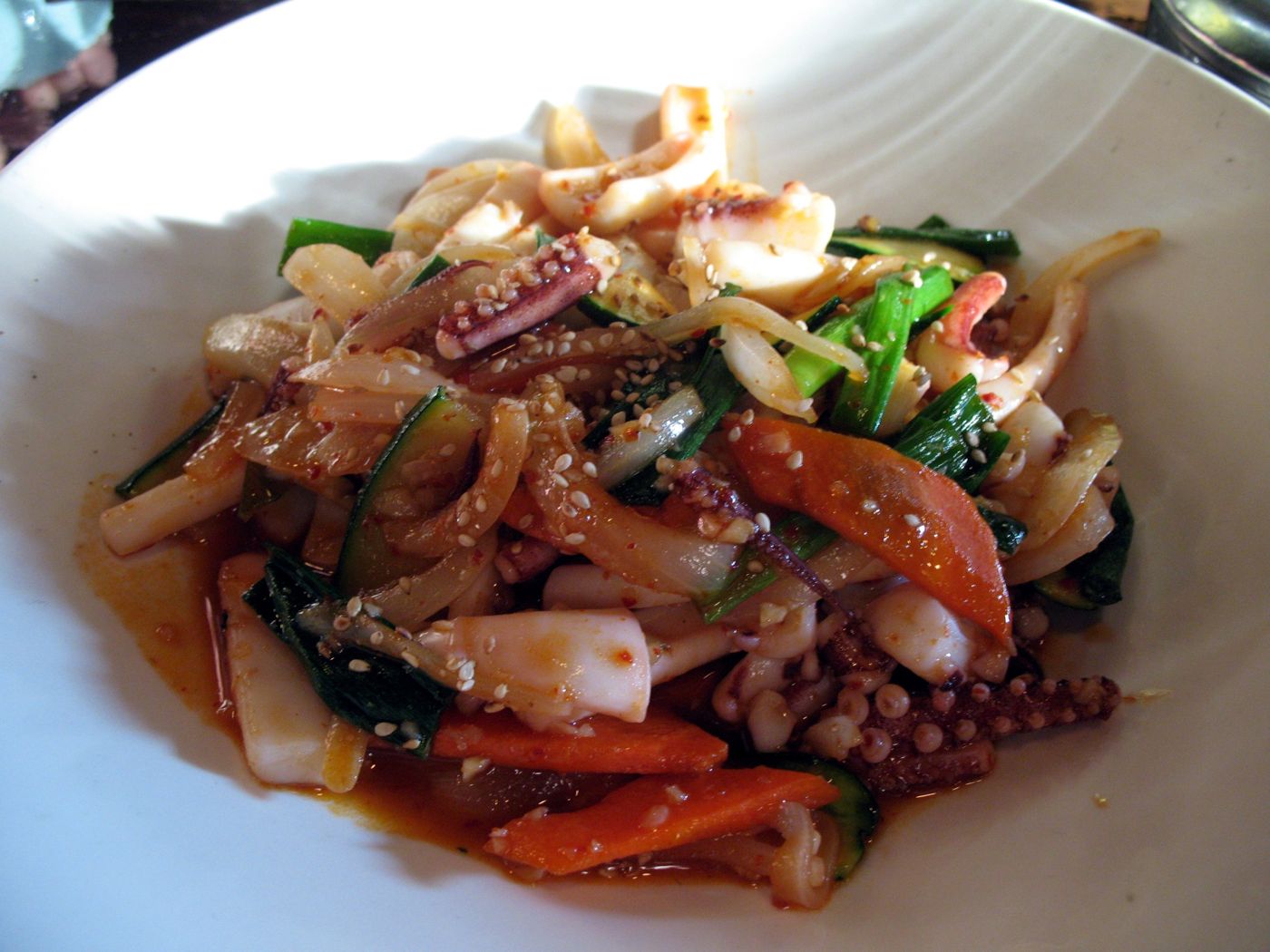 Ojingeo Bokkeum (Spicy Stir-Fried Squid)오징어볶음Scored squid stir-fried over high heat with onion, cabbage and a fiery gochujang-gochugaru sauce — tender, smoky and spicy, eaten with plenty of rice.
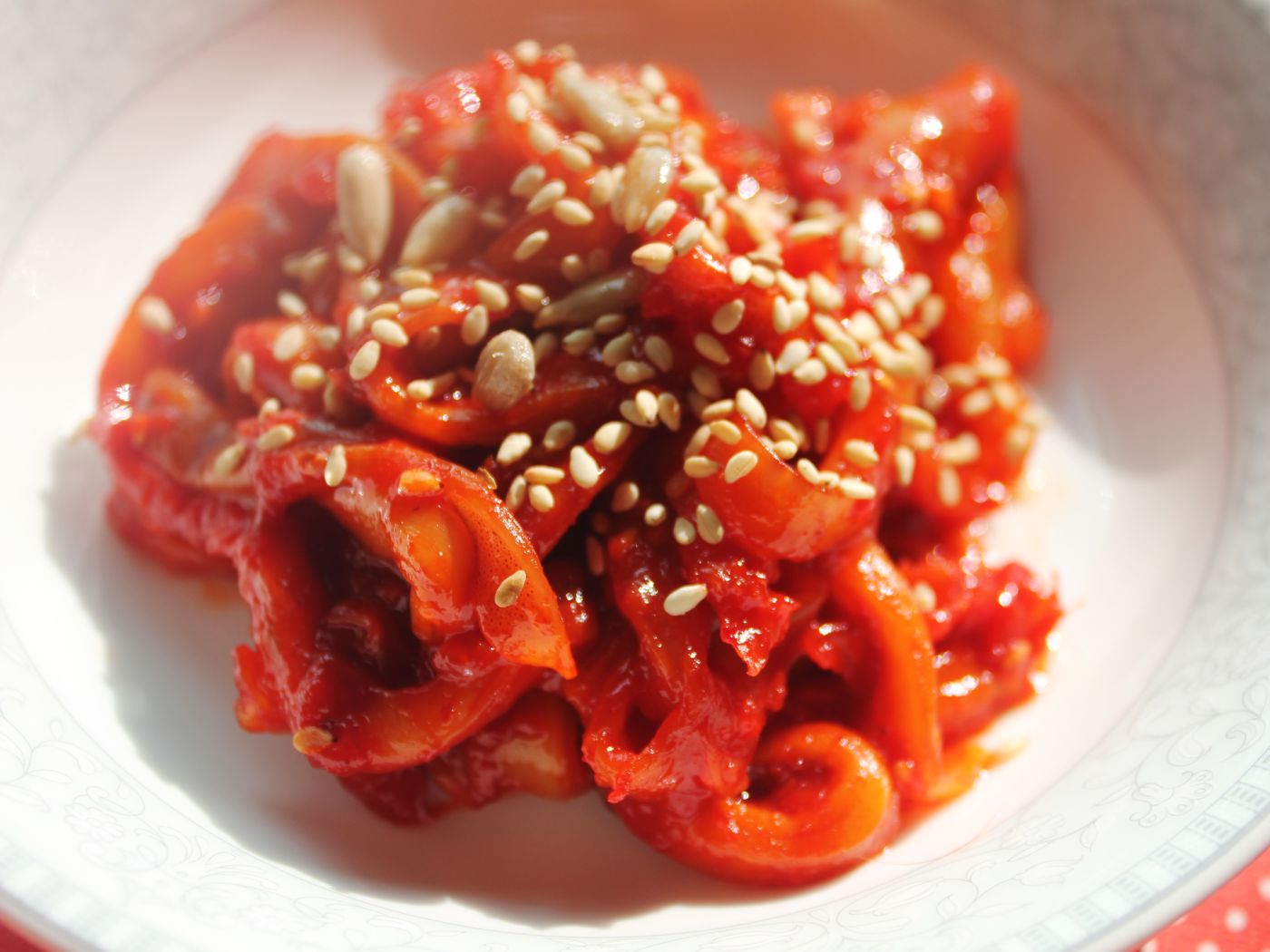 Salted Squid오징어젓Squid cured in salt, then sliced and tossed with chili, garlic and a touch of syrup — chewy, sweet-savory jeotgal from the East Sea coast.
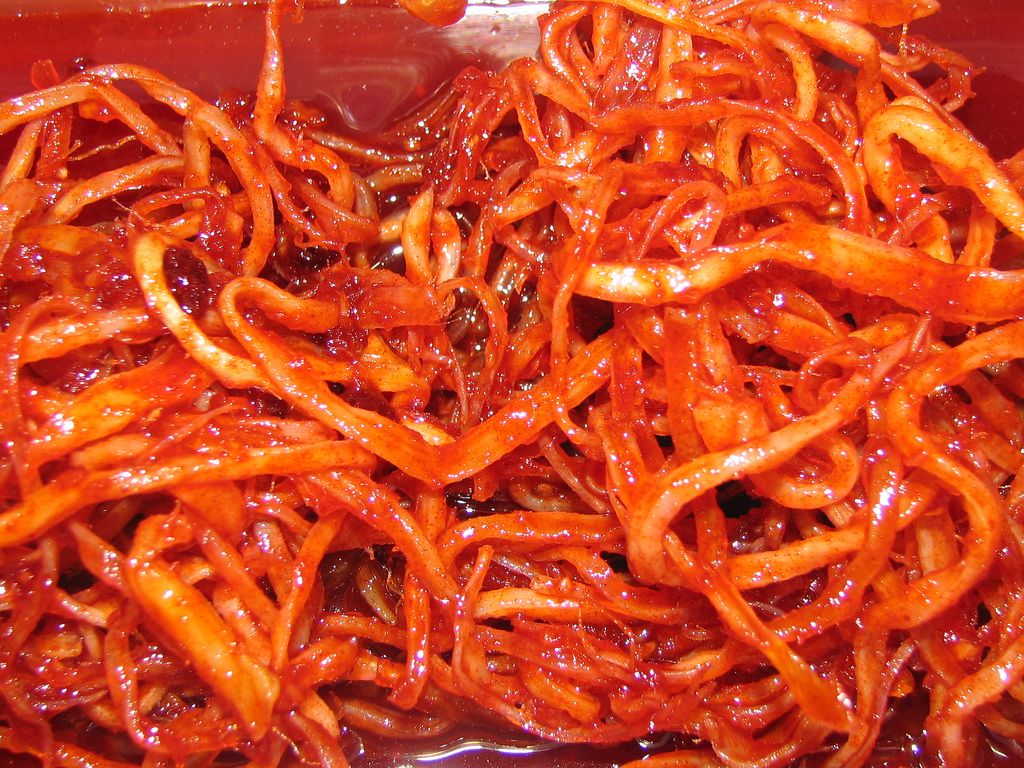 Ojingeochae Muchim오징어채무침Chewy shredded dried squid tossed raw in a glossy gochujang and syrup sauce — sweet, spicy and savory, and one of the best-keeping banchan.
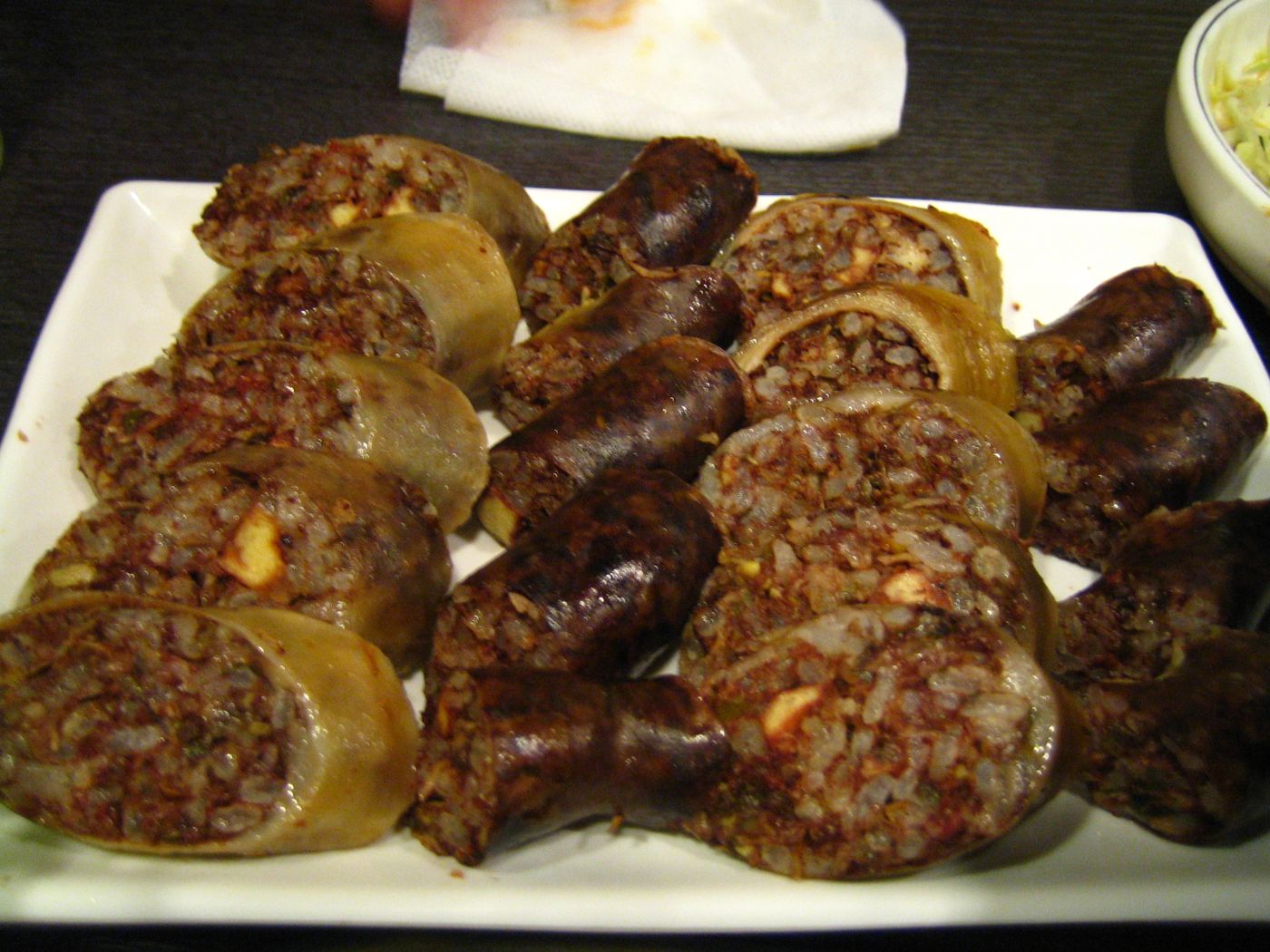 Sundae (Korean Blood Sausage)순대Pork intestine stuffed with pig's blood, glutinous rice, glass noodles and vegetables, then steamed — a northern farmhouse food that became a nationwide street snack.
Sources
- 01오징어 (Squid) — Encyclopedia of Korean Culture
- 02울릉도오징어 (Ulleungdo squid) — Encyclopedia of Korean Culture
- 03Korean Food Composition Table — Japanese flying squid, Raw
- 04Korean Food Composition Table — Squid, Dried, Shredded, Seasoned
- 05Advice about Eating Fish — U.S. Food and Drug Administration
- 06Food Allergies — U.S. Food and Drug Administration