Ingredient
Swimming crab (kkotge)
꽃게
Romanization: kkotge
Korea's everyday crab: a blue-green swimming crab from the West Sea, sweet-fleshed and rich with roe in season. It is steamed, cooked into stews, and steeped raw in soy sauce as ganjang-gejang.
Flavor
Sweet, delicate white meat with a briny edge; the roe and tomalley are rich and custardy, and in ganjang-gejang the raw flesh turns silky and deeply savory.
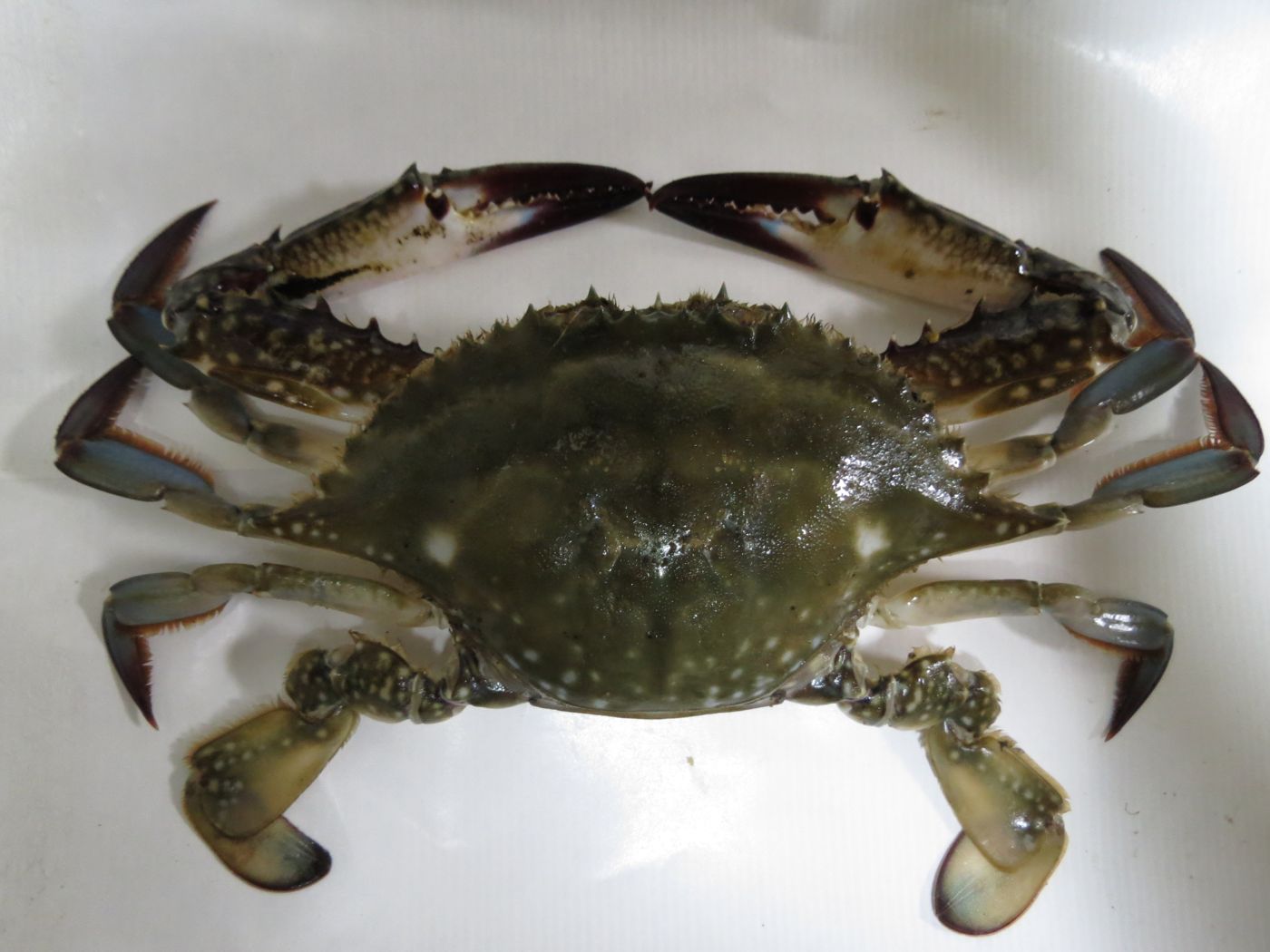 Photo: self, CC BY-SA 3.0, via Wikimedia Commons
Origin & History
Kkotge is the gazami or Japanese blue crab, Portunus trituberculatus, often sold in English as blue crab or swimming crab. Its shell is a wide, flattened diamond up to about 22 cm across, edged with saw-toothed spines, and its last pair of legs is flattened into paddles for swimming. It lives on sandy or muddy bottoms 20 to 30 m deep along every Korean coast except the northern East Sea, and is caught above all in the West Sea. Females spawn between May and October.
The 1814 natural history Jasan eobo describes it under the name sihae, noting its fan-like rear legs, its unusual ability to swim, and its sweet taste, and records that it was netted in the Chilsan sea off Yeonggwang. West-coast villagers once trapped the crabs with V-shaped stone weirs on the tidal flats, using the way they swim in on the flood tide and out on the ebb; today they are caught mostly with gillnets. The Encyclopedia of Korean Culture calls kkotge the most widely eaten crab in Korea and an important live export.
Kkotge is steamed, cooked into jjigae, and made into gejang. Korean cookbooks record soy- and brine-cured crab from the 1600s, and the Encyclopedia of Korean Culture describes the classic method: live crabs are cleaned, covered with soy sauce, and every few days the sauce is drained, boiled, cooled and poured back, three or four times. In Gyeongsang, households made gejang each autumn from the freshwater mitten crab (cham-ge), while Jeolla's quick beolddeok-gejang steeps cut-up sea crab in seasoning for just a day or two before eating. Cham-ge, once Korea's most famous edible crab, has become hard to find, which leaves kkotge, already listed by the encyclopedia among the main gejang crabs, in its place.
Nutrition
| Calories | 77 kcal |
|---|---|
| Protein | 16.19 g |
| Fat | 0.7 g |
| Carbohydrates | 0.43 g |
| Fiber | 0 g |
| Sodium | 418 mg |
Notable forCopper (1.08 mg) · Zinc (2.05 mg) · Calcium (127 mg)
Values copied from the Korean Food Composition Table (Rural Development Administration / National Institute of Crop Science) for this exact food, per 100 g edible portion. The table's English name is "Blue crab"; its Korean name confirms it is kkotge (Portunus trituberculatus), not the American blue crab. Actual values vary with ingredients, portion size and preparation.
Health Benefits
- Lean protein with minerals: Kkotge supplies about 16 g of protein per 100 g, with useful copper and zinc.
- Crustacean allergy: Crab is a crustacean shellfish, one of the nine major food allergens under U.S. law.
- Raw gejang is raw seafood: Ganjang-gejang is not cooked. CDC links most vibriosis to raw or undercooked shellfish, and the FDA advises pregnant women, young children, older adults and people with weakened immunity to avoid raw shellfish.
- Freshwater crabs and lung flukes: CDC warns that paragonimiasis comes from raw, pickled or salted freshwater crabs and crayfish, notes that pickling and salting do not kill the parasite, and lists South Korea among affected countries. The Encyclopedia of Korean Culture notes that cham-ge is an intermediate host of the lung fluke, so much so that catching and trading it was banned in 1924. Kkotge is a sea crab, but gejang made from freshwater crabs carries this risk.
- Sodium: Soy-cured gejang is salty; small portions alongside plain rice are traditional.
Informational, not medical advice. Talk to a qualified professional about your own health and diet.
Dishes with Swimming crab (kkotge)
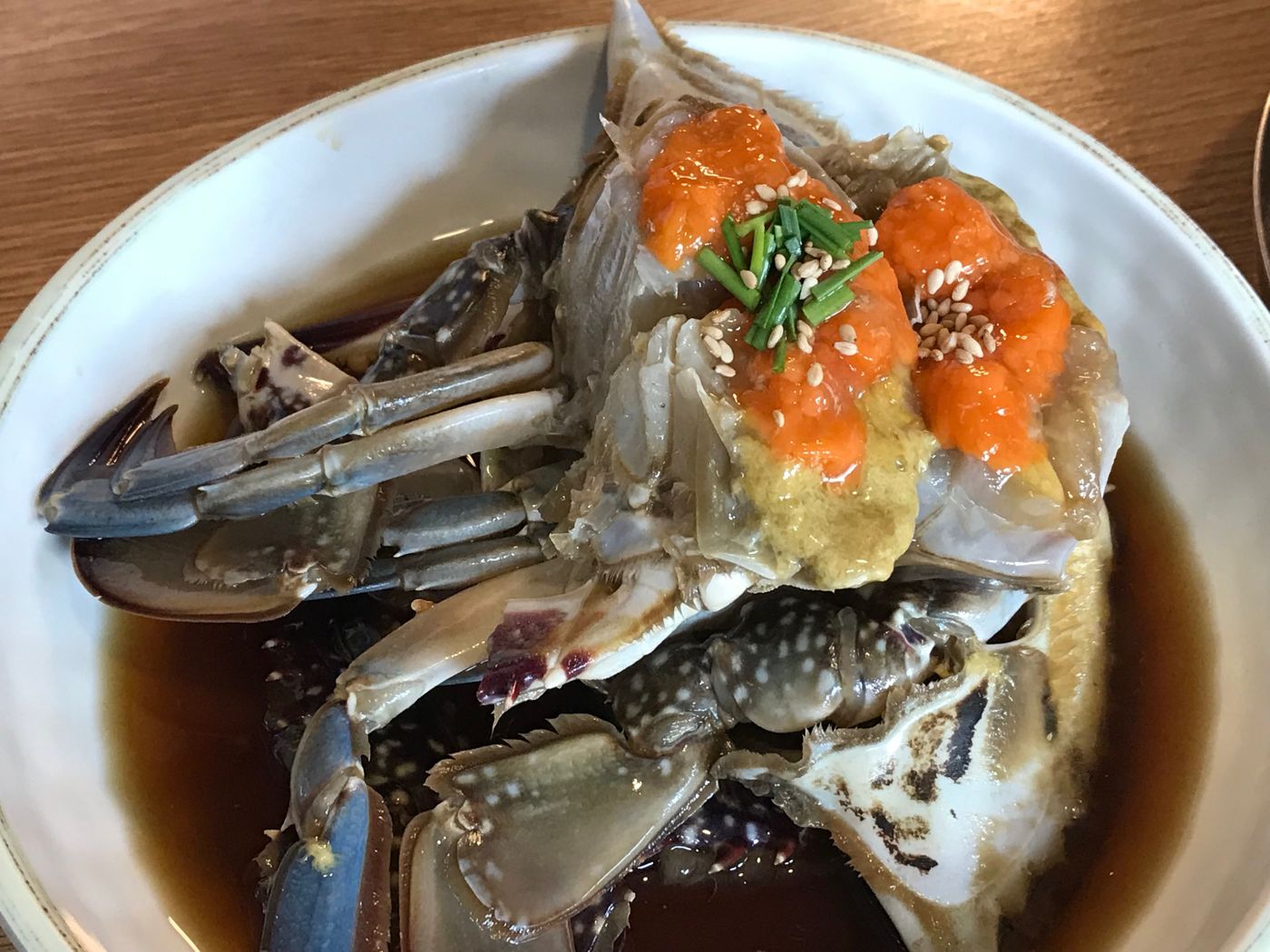 Soy-Marinated Raw Crab간장게장Raw crabs steeped in a boiled-and-cooled soy marinade until silky and savory — a centuries-old preserve, eaten by spooning rice into the shell.
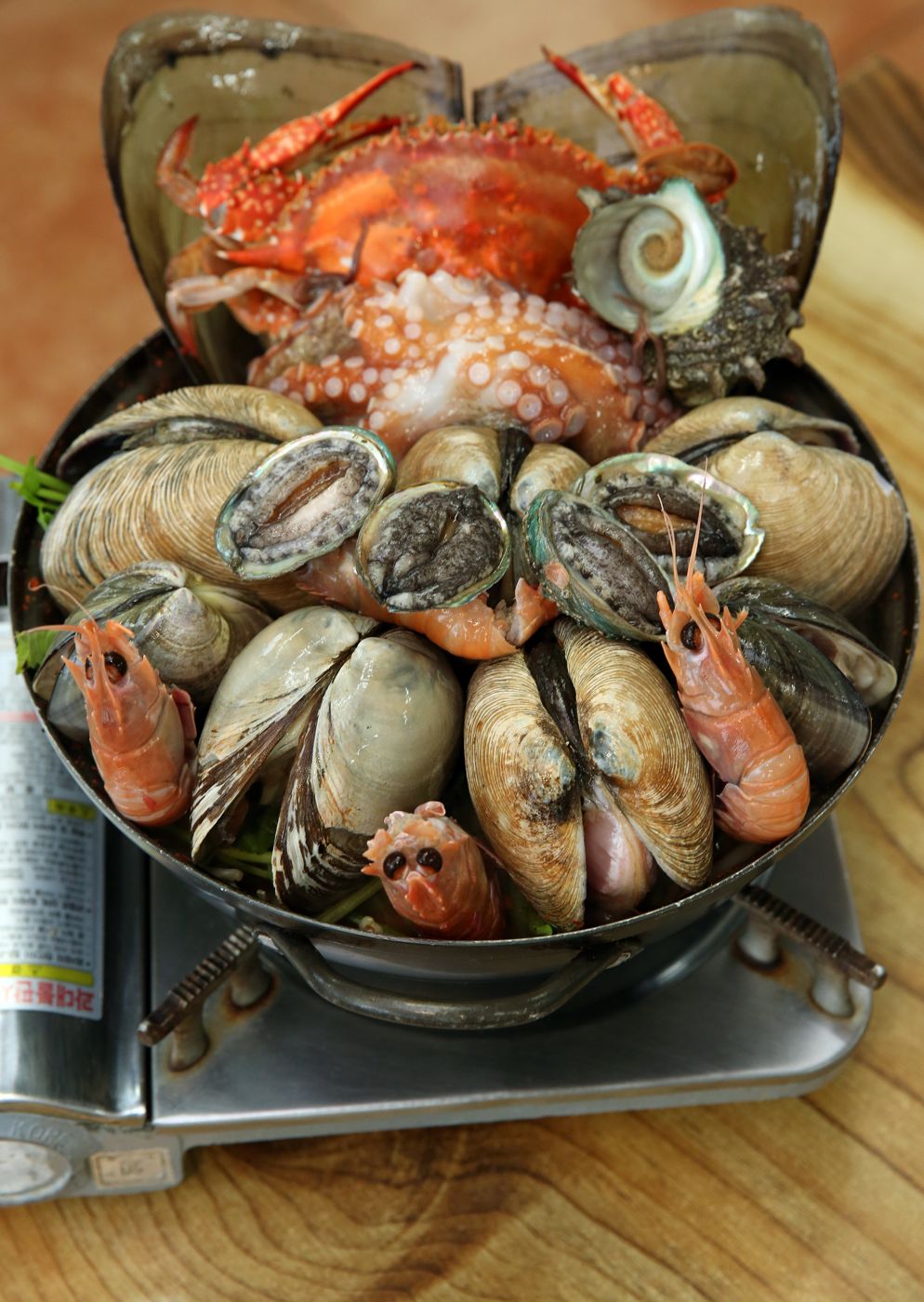 Haemul Tang (Spicy Seafood Hot Pot)해물탕Blue crab, octopus, shrimp, clams and sea squirt simmered with radish and water dropwort in a bright, spicy gochujang broth — a seafood feast in one pot.
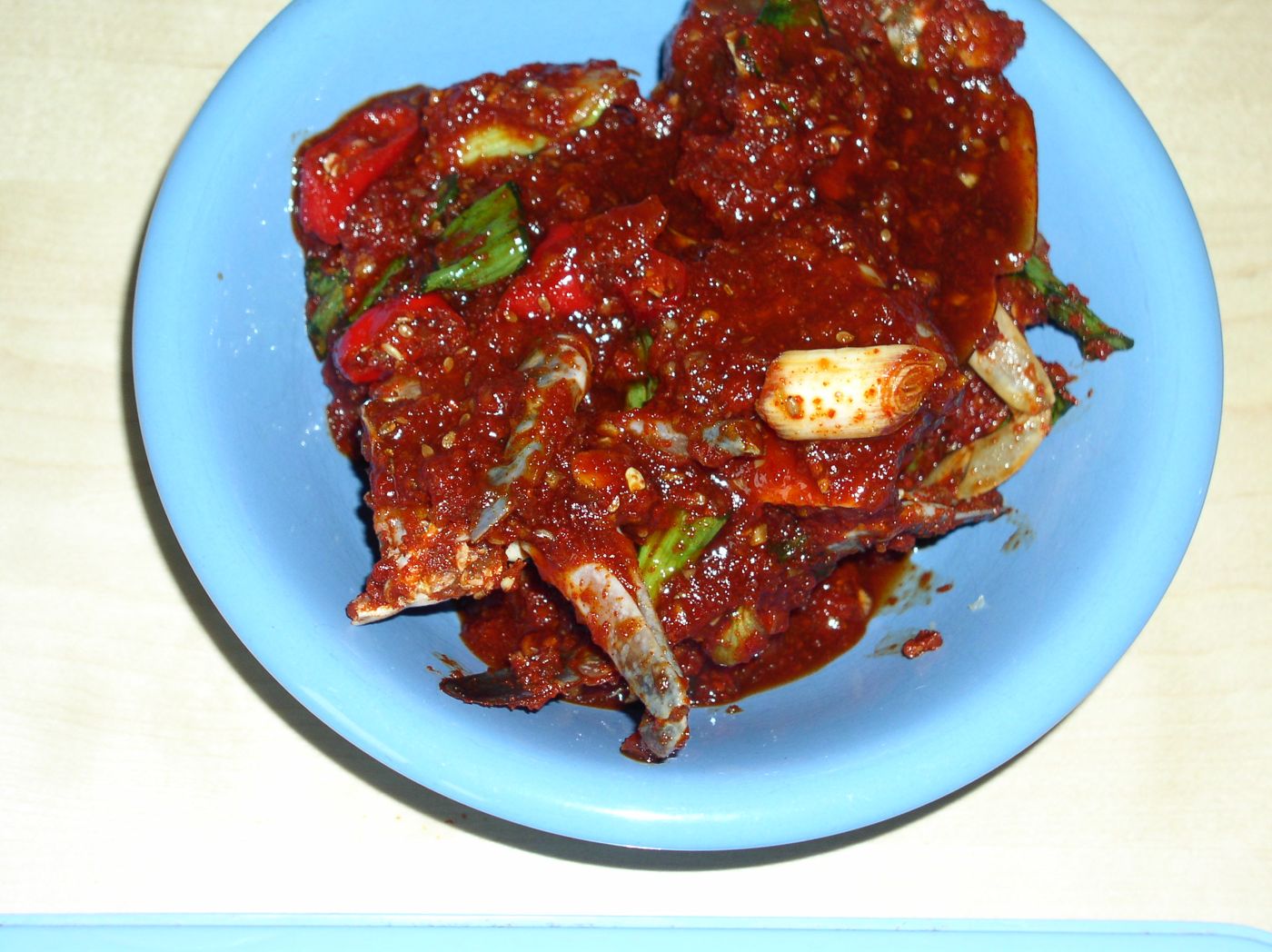 Spicy Marinated Raw Crab양념게장Raw crab pieces tossed in a glossy chili, garlic and soy dressing and eaten within days — sweet, fiery and a specialty of Yeosu's gejang restaurants.
Sources
- 01꽃게 (Swimming crab) — Encyclopedia of Korean Culture
- 02게장 (Gejang) — Encyclopedia of Korean Culture
- 03참게 (Mitten crab) — Encyclopedia of Korean Culture
- 04Korean Food Composition Table — Blue crab, Raw
- 05About Vibrio Infection — U.S. Centers for Disease Control and Prevention
- 06About Paragonimiasis — U.S. Centers for Disease Control and Prevention