Ingredient
Shrimp (saeu)
새우
Romanization: saeu
Shrimp in every size, from the tiny jeotsaeu salted to season kimchi to the large daeha. Mostly a West Sea catch, shrimp turn up across the Korean table, fresh, fried, braised and dried.
Flavor
Sweet and lightly briny with a springy, snapping bite; the shells and heads give broths a rich, roasted sea flavor, and dried shrimp are intensely savory.
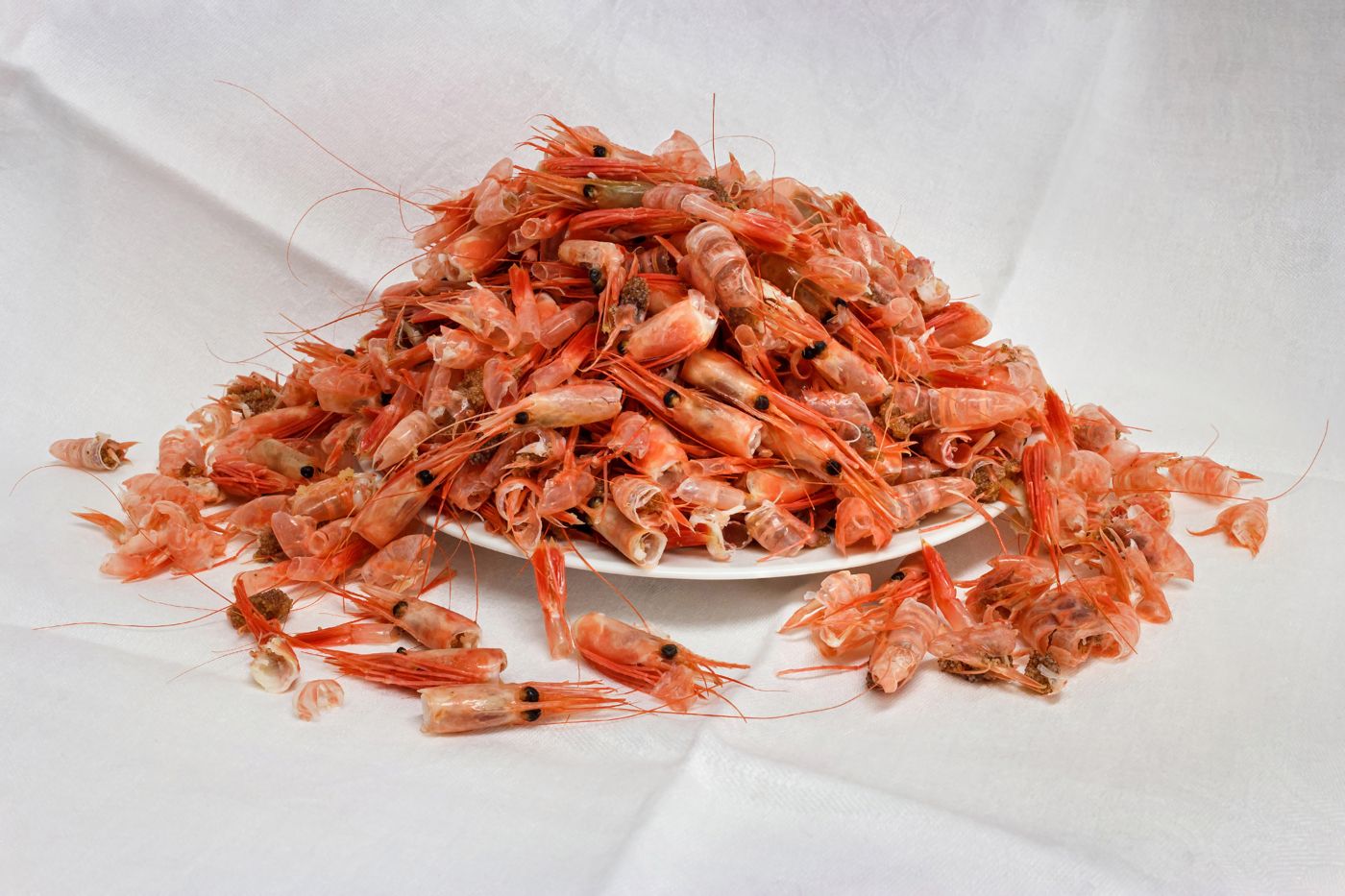 Photo: W.carter, CC BY-SA 4.0, via Wikimedia Commons
Origin & History
Saeu is the general Korean word for shrimp and prawns. The Encyclopedia of Korean Culture counts about 90 species in Korean waters. Temperate species dominate the West and South Seas, among them the large daeha (fleshy prawn), the smaller jungha and the tiny jeotsaeu used for salting. Cold-water shrimp such as the dohwa-saeu live only in the East Sea, while warm-water kinds such as the kuruma prawn (bori-saeu) are found around Jeju and the south coast.
The West Sea has always been shrimp country. The 16th-century gazetteer Dongguk yeoji seungnam lists daeha as a local product of sixteen districts, from Jeolla up to Pyeongan, and a 19th-century fisheries text records that the East Sea had neither shrimp nor salted shrimp, while West Sea fishermen set nets for small shrimp every year from the fifth to the eighth lunar month and salted the catch for sale across the country. The household manual Gyuhap chongseo gives recipes for skewered fresh shrimp and for drying shrimp so they keep their red color, and names daeha as an ingredient of the elaborate hot pot yeolgujatang. Kuruma prawns have been farmed profitably for decades.
Much of the small catch becomes saeujeot, the salted shrimp that seasons kimchi, stews and boiled pork. Larger shrimp are cooked fresh in many dishes, and the Korean Food Composition Table lists steamed, breaded and deep-fried, and soy-braised shrimp; small shrimp are boiled and dried, then stir-fried as a side dish.
Nutrition
| Calories | 82 kcal |
|---|---|
| Protein | 18.1 g |
| Fat | 0.6 g |
| Carbohydrates | 0.1 g |
| Fiber | 0 g |
| Sodium | 120 mg |
Notable forProtein (18.1 g) · Potassium (340 mg) · Phosphorus (210 mg)
Values copied from the Korean Food Composition Table (Rural Development Administration / National Institute of Crop Science) for this exact food, per 100 g edible portion. The table leaves dietary fiber blank; it is shown as 0 because fish and shellfish contain none. Values differ by species; salted jeotsaeu (saeujeot) is a very different, high-sodium food with its own entry. Actual values vary with ingredients, portion size and preparation.
Health Benefits
- Lean protein: Daeha supplies about 18 g of protein per 100 g with well under 1 g of fat.
- Crustacean allergy: Crustacean shellfish such as shrimp are one of the nine major food allergens under U.S. law. Shrimp also hides in less obvious foods, from saeujeot in kimchi to seafood pancakes and broths.
- Low in mercury: Shrimp is on the FDA/EPA "Best Choices" list.
- Salted and dried forms: Saeujeot and seasoned dried shrimp are concentrated sources of sodium and are best used sparingly.
Informational, not medical advice. Talk to a qualified professional about your own health and diet.
Dishes with Shrimp (saeu)
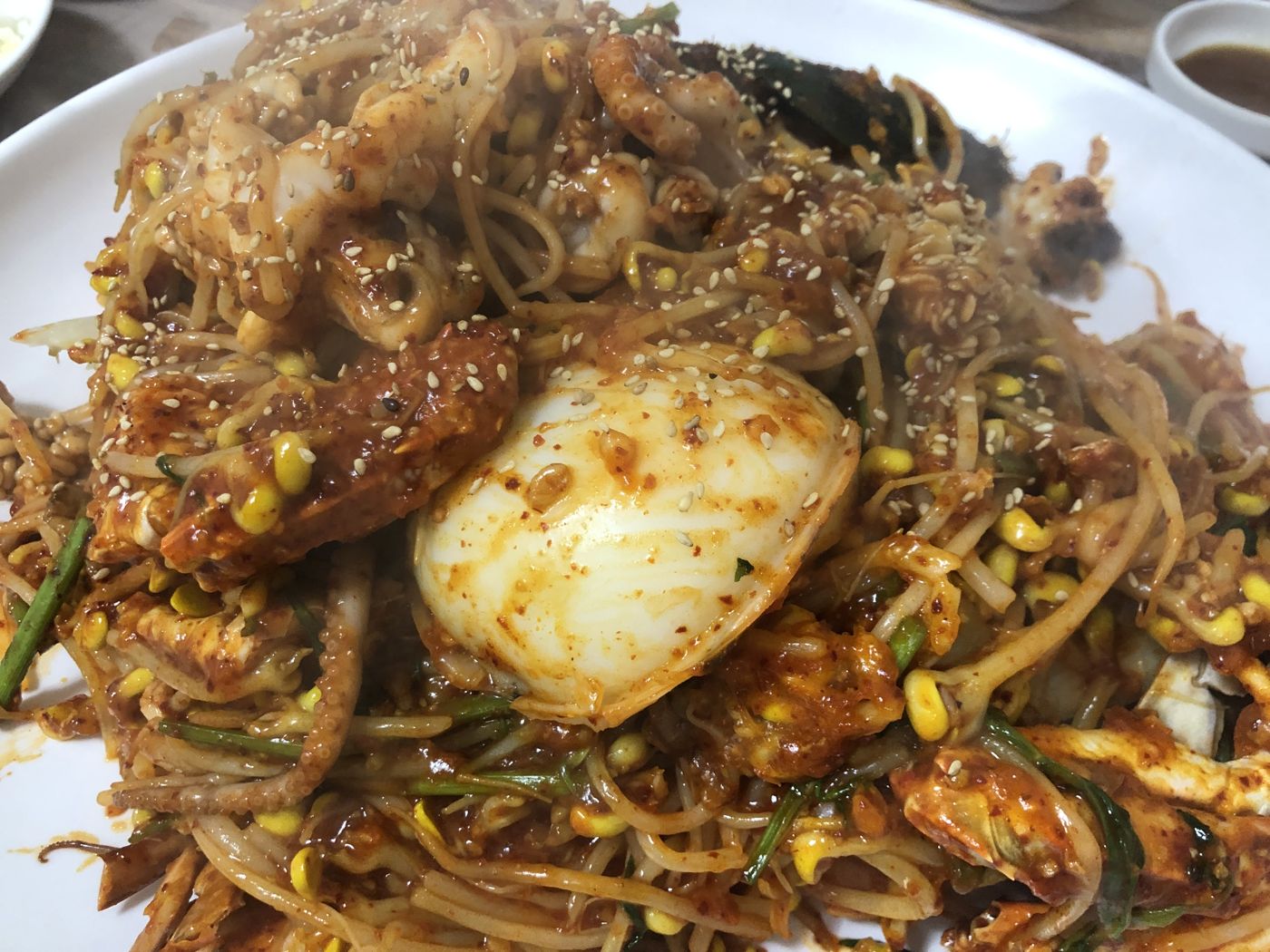 Haemul-jjim (Spicy Braised Seafood with Bean Sprouts)해물찜Squid, shrimp and shellfish piled over crisp bean sprouts and simmered in a thick, fiery red sauce — a modern Gyeongsang coastal dish now served at restaurants nationwide.
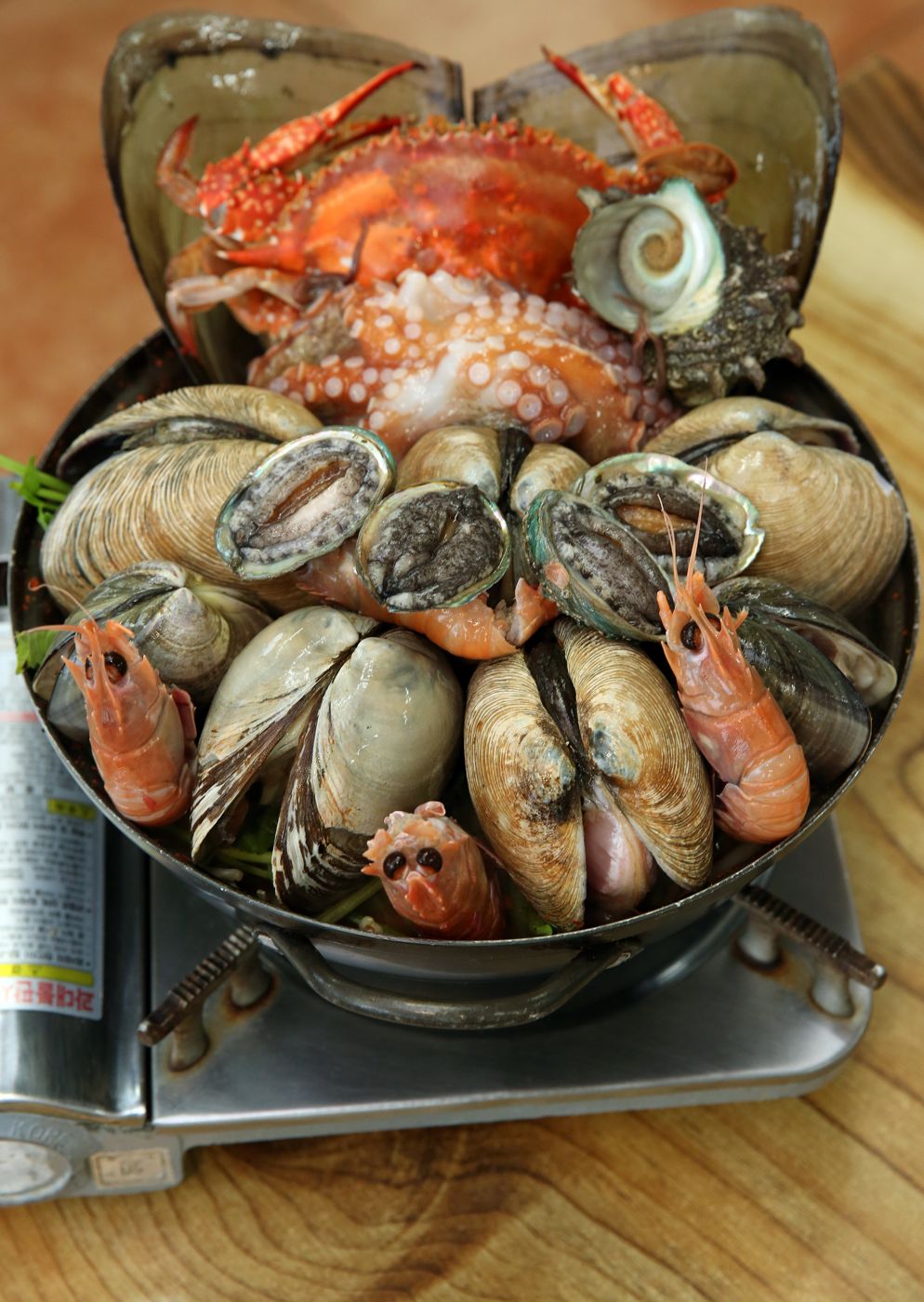 Haemul Tang (Spicy Seafood Hot Pot)해물탕Blue crab, octopus, shrimp, clams and sea squirt simmered with radish and water dropwort in a bright, spicy gochujang broth — a seafood feast in one pot.
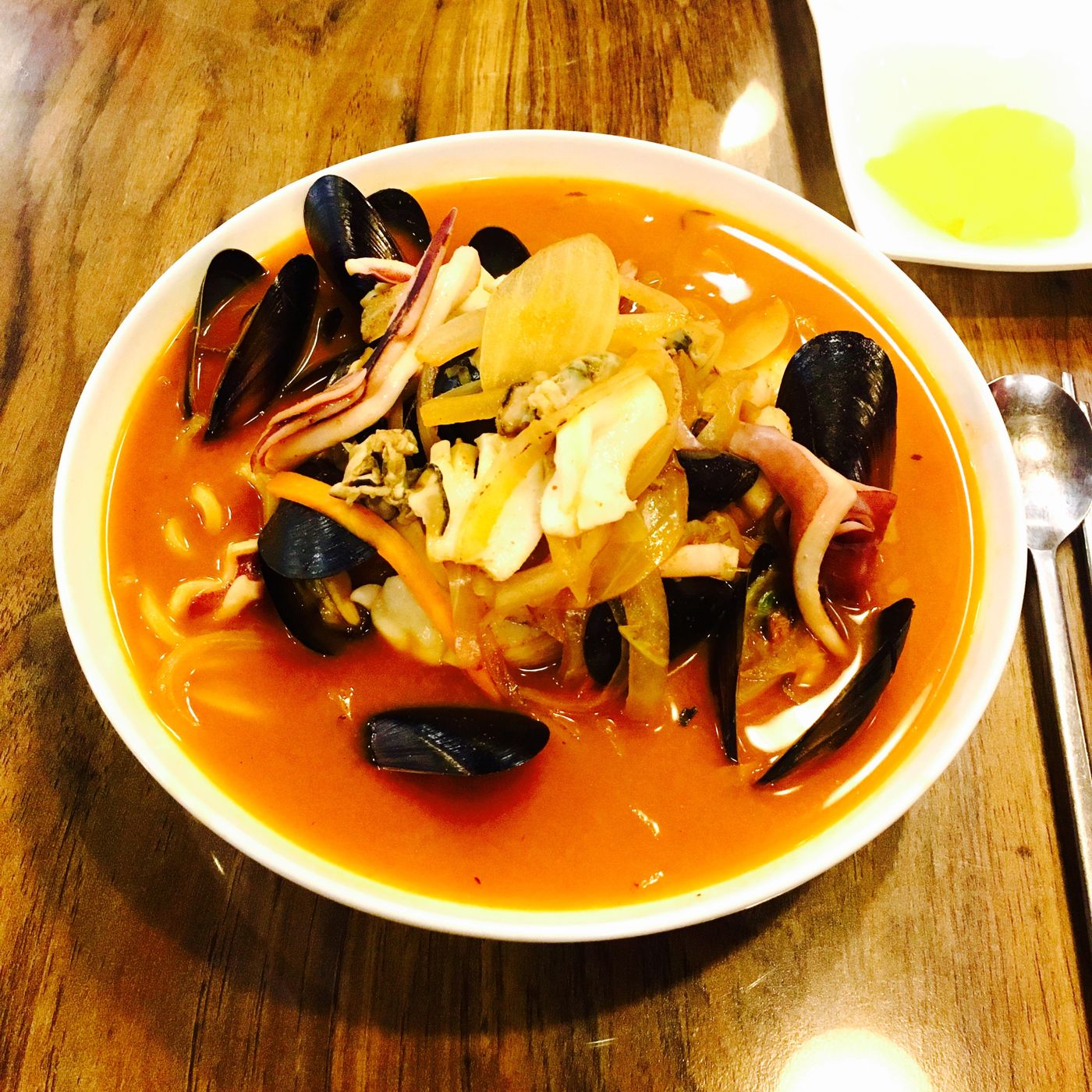 Jjamppong (Spicy Seafood Noodle Soup)짬뽕Thick wheat noodles in a fiery red broth of stir-fried pork, squid, shellfish and vegetables — the Korean-Chinese restaurant's spicy counterpart to jajangmyeon.
- Mareun Saeu Bokkeum (Stir-Fried Dried Shrimp)마른새우볶음Small dried shrimp toasted in a dry pan, then glazed with soy sauce, rice syrup and garlic — a sweet-savory, crunchy banchan that keeps for days.