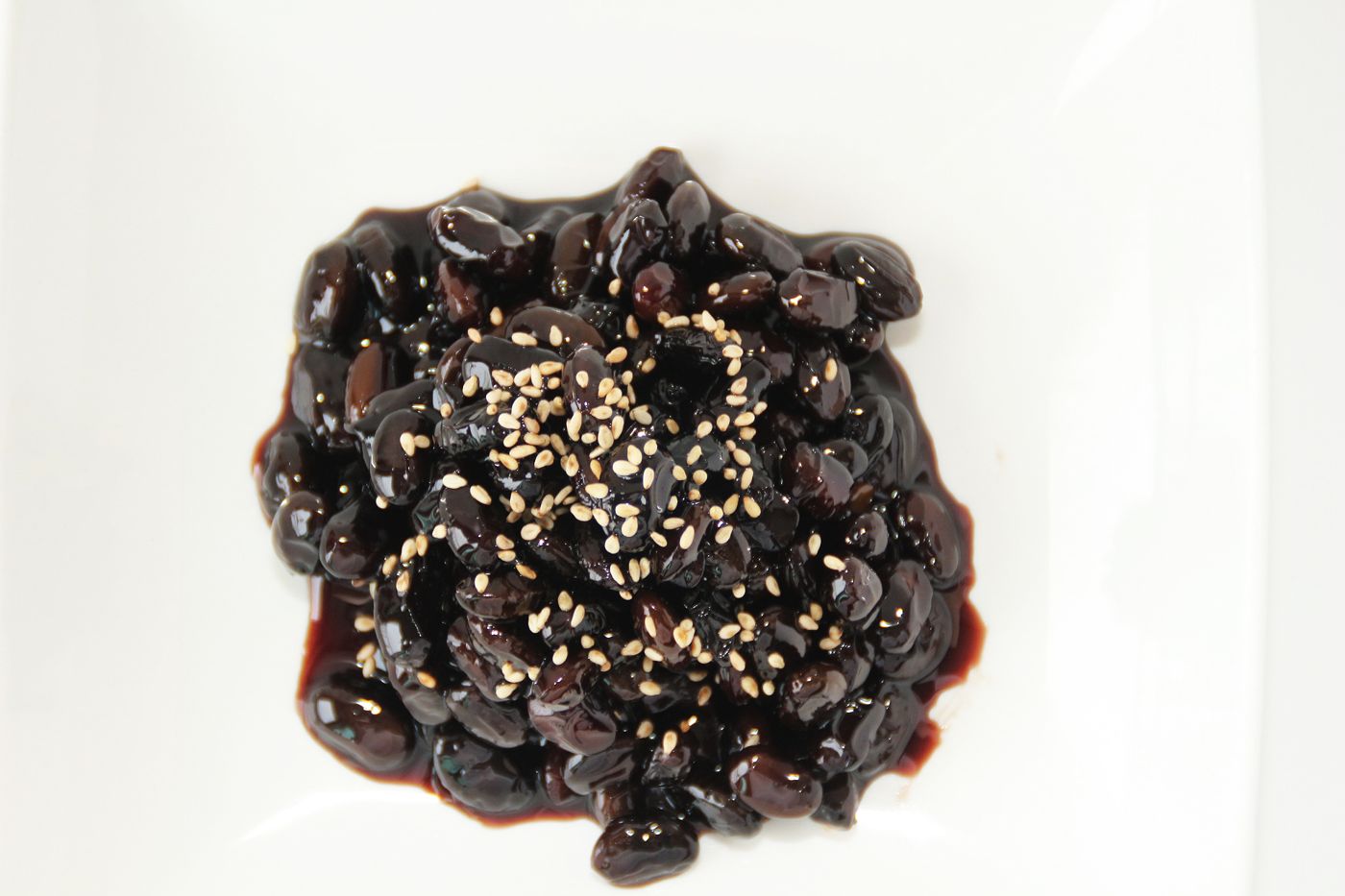
 Photo: Hyeon-Jeong Suk, CC BY 2.0, via Wikimedia Commons
Jorim · Braised 조림
Kongjaban
콩자반
Romanization: kongjaban
Black soybeans simmered in soy sauce until wrinkled and glossy, then finished with syrup and sesame — a sweet-salty, chewy keeping banchan.
- Serves
- 8
- Prep
- 10 min
- Cook
- 45 min
Recipe
Ingredients · Serves 8
- 200 gDried black soybeansrinsed; soak 2–3 hours for a softer bean (optional)
- 500 mlWater
- 4 tbspSoy sauce
- 2 tbspSugar
- 3 tbspMulyeot (rice or corn syrup)or honey
- 1 tspToasted sesame oil
- 1 tbspToasted sesame seeds
Method
Technique: Jorim: Braising in Seasoned Liquid
Step 1: Rinse the beans and pick out any broken or discolored ones. If you soaked them, drain and measure the water fresh.
Step 2: Put the beans and 500 ml water in a wide pot and bring to a boil. Simmer uncovered over medium heat for about 10 minutes, skimming off any foam.
Step 3: Add the soy sauce and sugar. Simmer over medium-low heat for 25–30 minutes, stirring now and then, until the beans are tender and only a few spoonfuls of liquid remain. Add a splash of water if the pot dries out before the beans soften.
Step 4: Add the syrup and keep stirring over medium heat for 3–5 minutes, until the beans look glossy and slightly wrinkled and the glaze clings to them.
Step 5: Turn off the heat and stir in the sesame oil and sesame seeds.
Step 6: Cool completely, then store in an airtight container in the refrigerator. The beans firm up as they cool.
Origin & History
The name comes from kong (soybean) and jaban, an older word for salty foods served alongside rice. The Encyclopedia of Korean Culture explains jaban (also written jwaban, 佐飯) as something that "accompanies the rice," a label attached to well-salted side dishes. Depending on the region, the same dish is also called kongjorim or kongjang.
Soybeans themselves have deep roots in the region. The encyclopedia notes that the prevailing view places the crop's origin in Manchuria — the old Goguryeo lands — and that soybeans have been excavated from a Bronze Age site in North Hamgyeong Province. Black soybeans are among the many named types grown in Korea.
The late-Joseon cookbook Siuijeonseo describes beans boiled until soft and then braised with soy sauce, green onion, ginger, oil, sesame, chili powder, honey and minced meat. Modern cooks usually keep it simpler, simmering black beans in a mix of water and soy sauce until the liquid is gone and the skins wrinkle, then seasoning with sugar or syrup and oil. Kongjaban is listed among the classic mitbanchan — side dishes made in a batch and kept on hand.
Key Ingredients
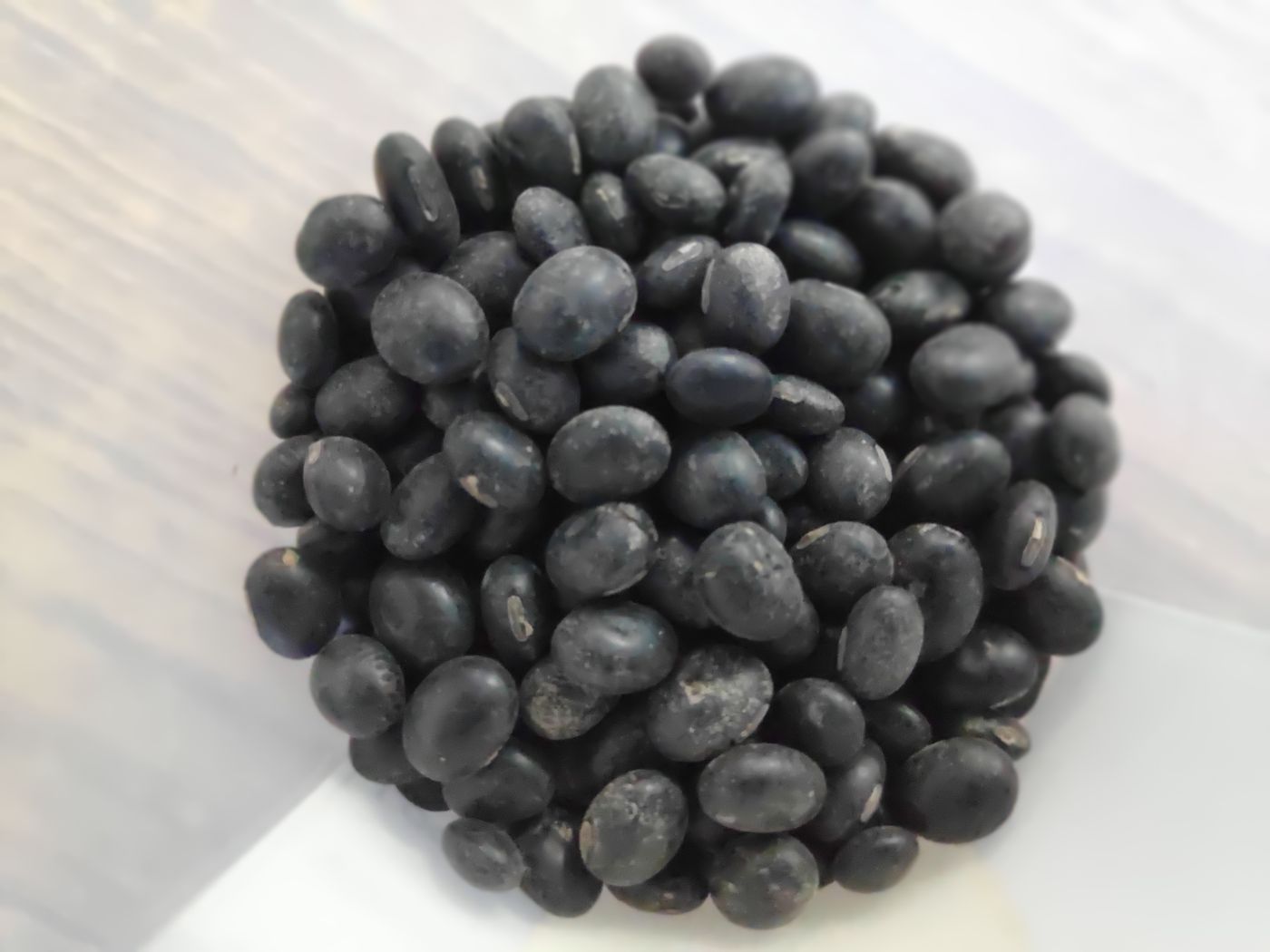 Black soybeans검정콩Glossy black soybeans, led by large, green-hearted seoritae. Simmered in soy sauce and syrup they become the shiny side dish kongjaban; they are also steamed, roasted or ground.
 Soy sauce간장Korean soy sauce, in two main kitchen forms: pale, salty guk-ganjang (soup soy sauce) brewed the traditional way from meju, and darker, sweeter jin-ganjang for braises and marinades.
 Korean grain syrup물엿A clear, glossy syrup used to sweeten and glaze braised and stir-fried banchan. Its traditional relative, jocheong, is a darker malt syrup made by slowly boiling down saccharified rice.
 Sesame참깨Toasted sesame seeds and sesame oil (chamgireum) finish countless Korean dishes, adding a nutty aroma and gloss.
Nutrition
| Calories | ~150 kcal |
|---|---|
| Protein | ~9.8 g |
| Fat | ~4.9 g |
| Carbohydrates | ~17.7 g |
| Fiber | ~5.6 g |
| Sodium | ~445 mg |
Notable forProtein · Fiber · Iron · Potassium
Estimated by summing ingredient values and dividing by eight servings, assuming the braising liquid is fully absorbed. Dried black soybeans: Korean Food Composition Table entry 대두, 검은색, 흑태, 말린것 (via the MFDS K-FIND database); soy sauce: USDA FDC 174277; corn syrup, light: FDC 168837; sugar, sesame oil and sesame seeds from USDA. The Korean table's analysis of prepared kongjaban (239 kcal and about 1,000 mg sodium per 100 g) is in the same range. Actual values vary with ingredients, portion size and preparation.
Health Benefits
- Soybeans are a complete plant protein, supplying all nine essential amino acids, and black soybeans are also rich in dietary fiber.
- The beans contribute iron, potassium and magnesium, making a small serving more nourishing than its size suggests.
- Soy contains isoflavones, plant compounds whose effects on health are still being studied, with mixed results so far.
Regional Variations
- Kongjaban vs. kongjang: the encyclopedia distinguishes the braised dish from a version in which beans are first roasted, soaked in soy sauce and then dressed with seasonings — a method often called kongjang.
- Soft or chewy: soaking the beans first gives a softer, plumper result; cooking them from dry and reducing the glaze longer gives a firmer, chewier bean.
- Glaze: cooks finish with sugar, mulyeot, rice syrup or honey; some add a few nuts or a splash of sesame oil at the end.
Pairings
 Myeolchi Bokkeum멸치볶음Small dried anchovies stir-fried until crisp, then glazed in a sweet soy and garlic syrup — a keeping banchan found in refrigerators across Korea.
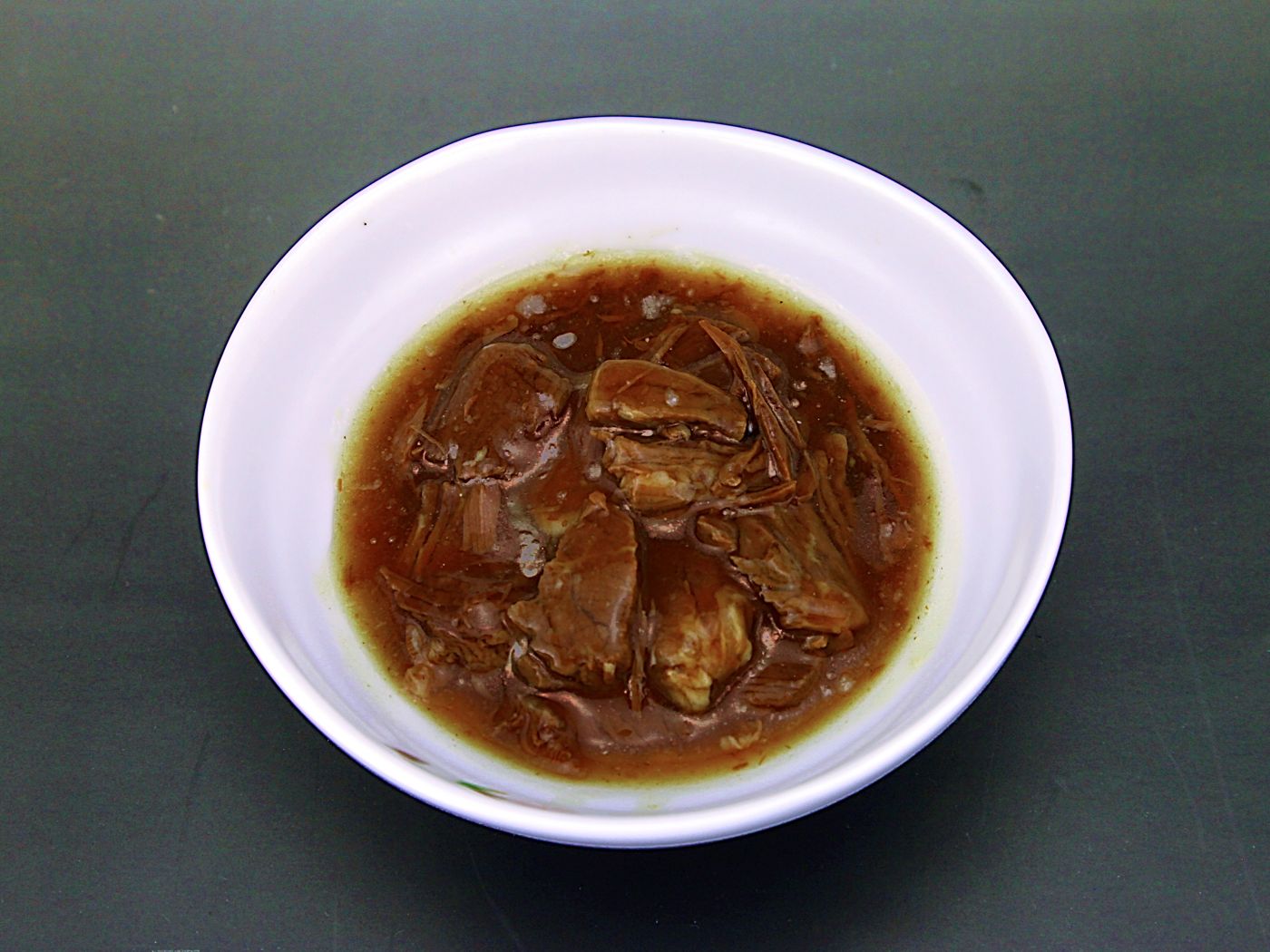 Jangjorim장조림Lean beef simmered in soy sauce until tender, then torn into strands and served in its savory broth, often with eggs, garlic and mild peppers.
 Kongnamul Muchim콩나물무침Soybean sprouts cooked under a lid until just tender, then tossed with garlic, green onion and sesame oil — crisp, nutty and on tables across Korea.
- Gim Gui (Seasoned Roasted Laver)김구이Sheets of laver brushed with sesame or perilla oil, sprinkled with salt and toasted until crisp — eaten wrapped around spoonfuls of rice.
Sources
- 01콩자반 (Kongjaban) — Encyclopedia of Korean Culture
- 02콩 (Soybean) — Encyclopedia of Korean Culture
- 03밑반찬 (Mitbanchan, keeping side dishes) — Encyclopedia of Korean Culture
- 04대두, 검은색, 흑태, 말린것 (Black soybean, dried) — MFDS K-FIND / Korean Food Composition Table
- 05Straight Talk About Soy — The Nutrition Source, Harvard T.H. Chan School of Public Health
- 06Sodium reduction — World Health Organization fact sheet
Last updated