Ingredient
Garaetteok (Cylinder Rice Cake)
가래떡
Romanization: garaetteok
Long, white cylinders of pounded non-glutinous rice, also called huin-tteok (white rice cake). Sliced into ovals it becomes tteokguk; cut into fingers it goes into tteokbokki and skewers.
Flavor
Mild and faintly sweet, tasting of plain steamed rice, with a dense, springy chew. Warm and fresh, it is good on its own or with honey; in soups and sauces it softens and soaks up the flavors around it.
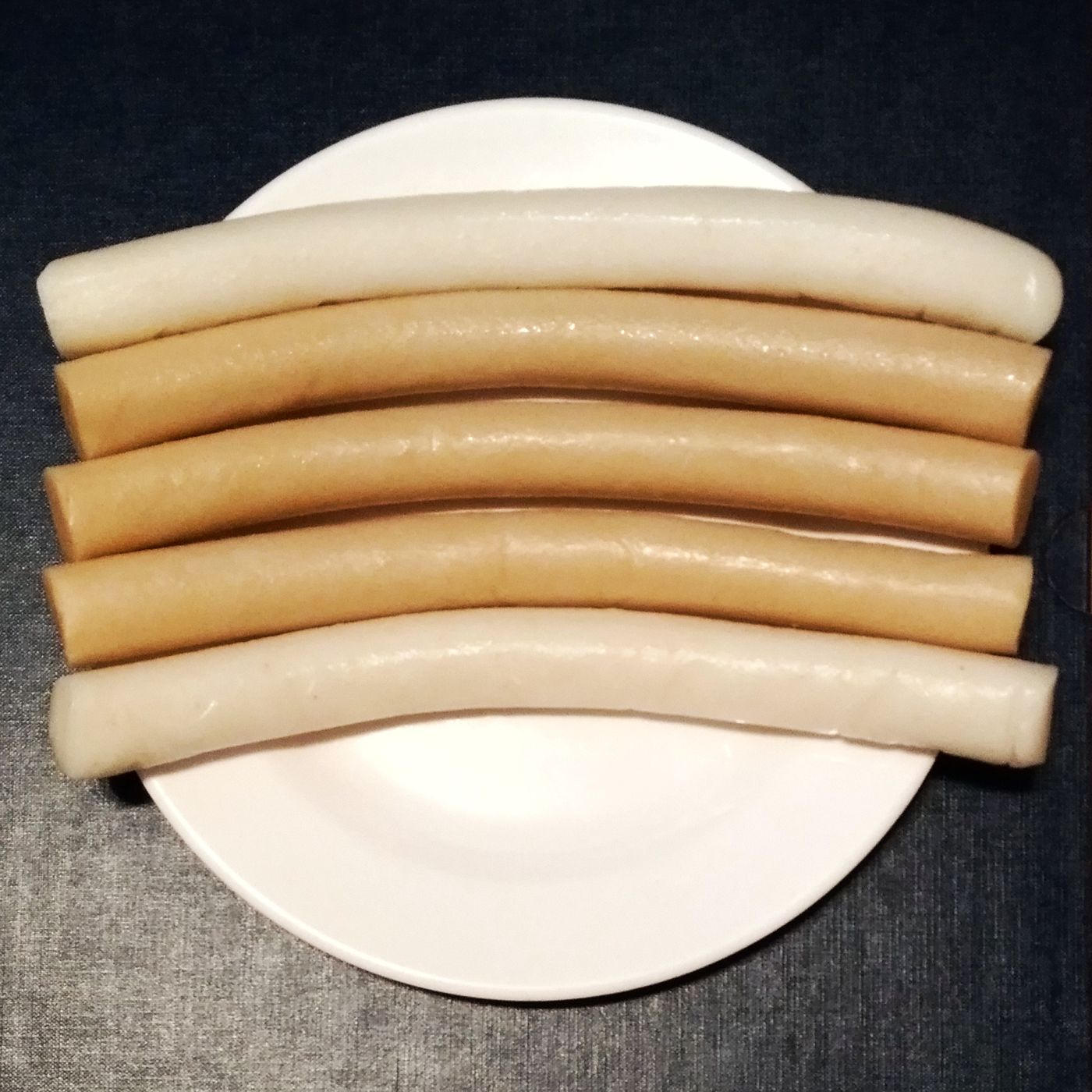 Photo: Sulkkun, CC BY-SA 4.0, via Wikimedia Commons
Origin & History
Garaetteok is made from mepssal, ordinary non-glutinous rice. The Encyclopedia of Korean Culture notes that its older name, huin-tteok, appears in the late-Joseon almanacs Gyeongdo japji and Dongguk sesigi, the first describing rice dough pounded and rolled into a single strand. Traditionally, rice flour was steamed in an earthenware steamer, pounded on a wooden board, then rolled under both palms into long ropes. Today mills extrude it by machine.
It is above all the rice cake of the New Year. Tteokguk, soup of thinly sliced white rice cake in clear broth, was recorded in Joseon seasonal almanacs as indispensable for New Year rites and gifts, and the Encyclopedia of Korean Culture describes how, until fairly recently, families lined up at neighborhood mills before dawn two or three days before the holiday to have their garaetteok pressed. The encyclopedia records the scholar Choe Nam-seon's view that the plain white cake fit a day meant to begin clean and pure.
Fresh garaetteok is soft and chewy; left a day it firms up enough to slice. Thin coin- or oval-shaped slices go into soup, thinner ropes into tteokbokki, skewered rice cake and braised dishes, and fishing villages once had extra-long, thick ‘dragon rice cakes’ (yongtteok) made for rites to the sea. In Gaeseong, the dough is rolled thin and pinched into little snowman shapes for joraengi-tteokguk.
Nutrition
| Calories | 213 kcal |
|---|---|
| Protein | 3.71 g |
| Fat | 0.37 g |
| Carbohydrates | 48.8 g |
| Fiber | 0.7 g |
| Sodium | 261 mg |
Values from the Korean Food Composition Table (RDA), which lists about 46 g water per 100 g. The sodium reflects salt worked into the rice dough. The table also lists brown-rice and black-rice versions. Actual values vary with ingredients, portion size and preparation.
Health Benefits
- Simple starch: Garaetteok is mostly rice starch and water, with very little fat. It is filling energy rather than a meaningful source of vitamins or minerals.
- Concentrated carbohydrate: Because it is pounded and dense, gram for gram rice cake carries more carbohydrate than cooked rice (about 49 g per 100 g in the Korean table), worth knowing for anyone managing blood sugar.
- Salt and sauces: Plain garaetteok has some salt, and the dishes it goes into, especially tteokbokki and seasoned broths, add much more.
- Chew carefully: Dense, chewy rice cakes can be a choking hazard for young children and older adults; cut them small and serve them warm and soft.
- Naturally gluten-free: Plain rice cake contains no wheat, but check sauces and commercial blends, some of which add wheat flour.
Informational, not medical advice. Talk to a qualified professional about your own health and diet.
Dishes with Garaetteok (Cylinder Rice Cake)
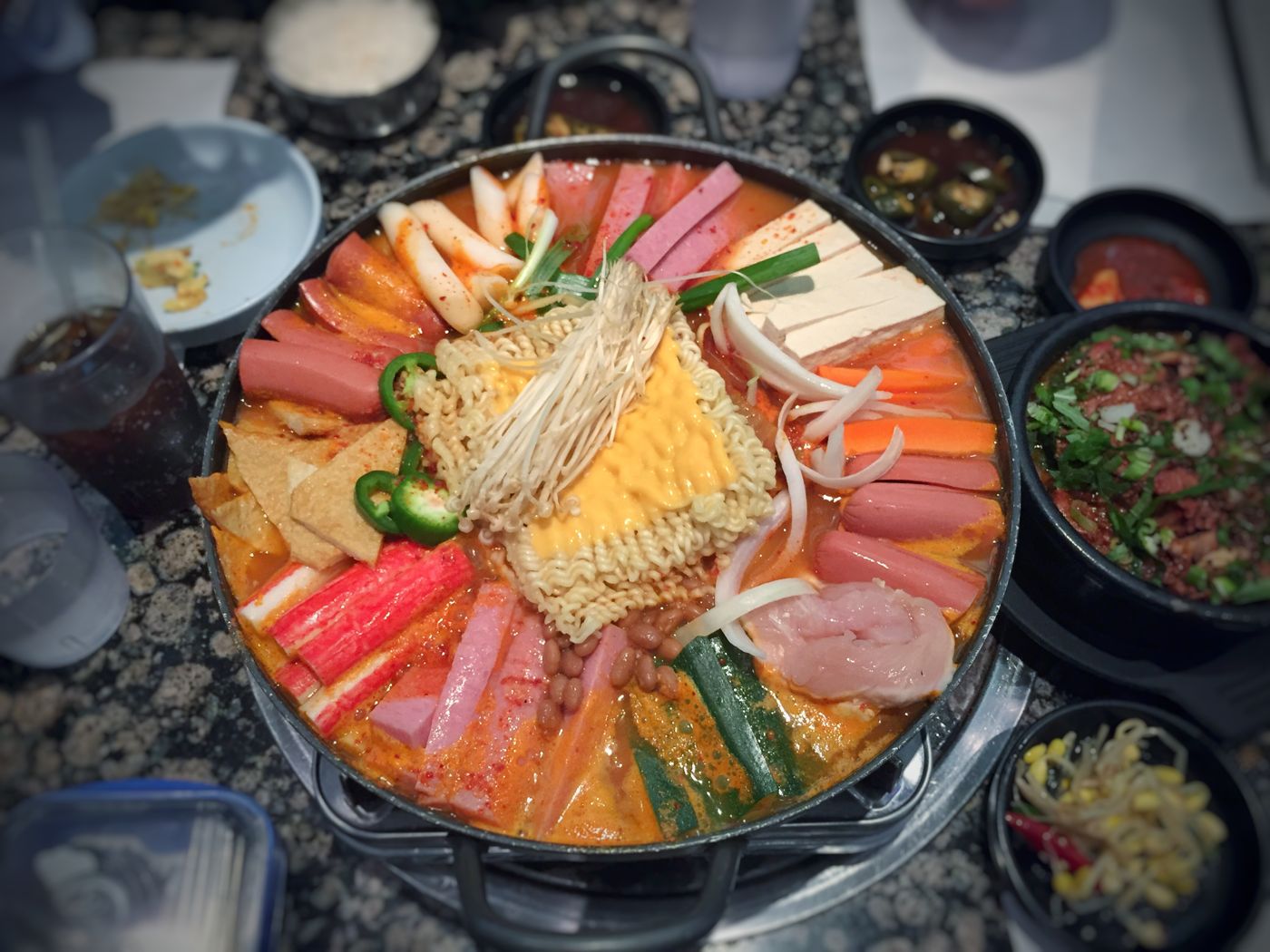 Budae Jjigae (Army Base Stew)부대찌개Ham, sausages and canned beans simmered with kimchi, tofu and a gochujang-chili broth, usually finished with instant noodles — a postwar stew born around US Army bases.
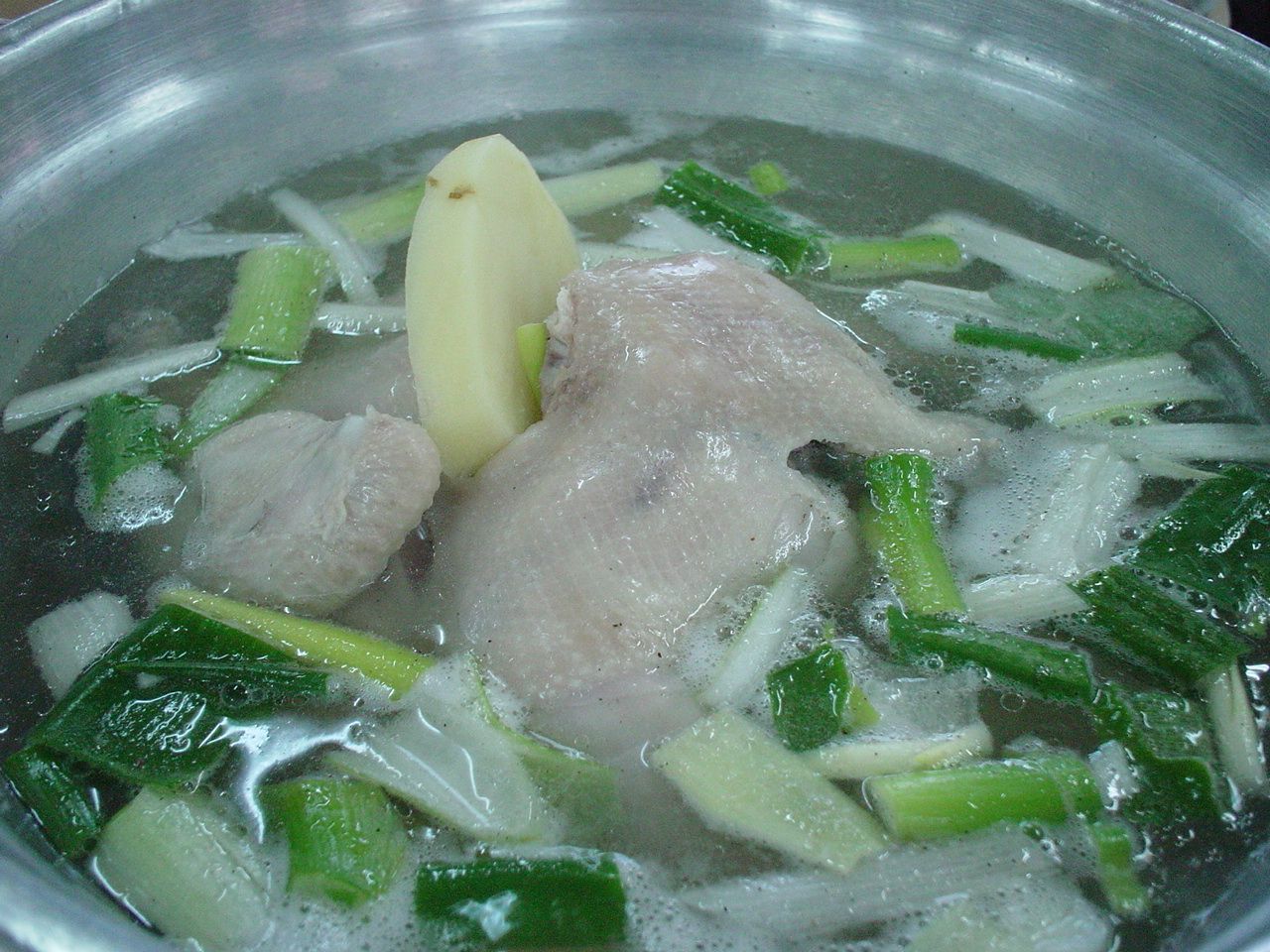 Dak Hanmari ("One Whole Chicken" Hot Pot)닭한마리A whole chicken simmered at the table with potatoes, rice cakes and green onion, dipped in a vinegar-mustard sauce, then finished with noodles in the broth — a Dongdaemun original.
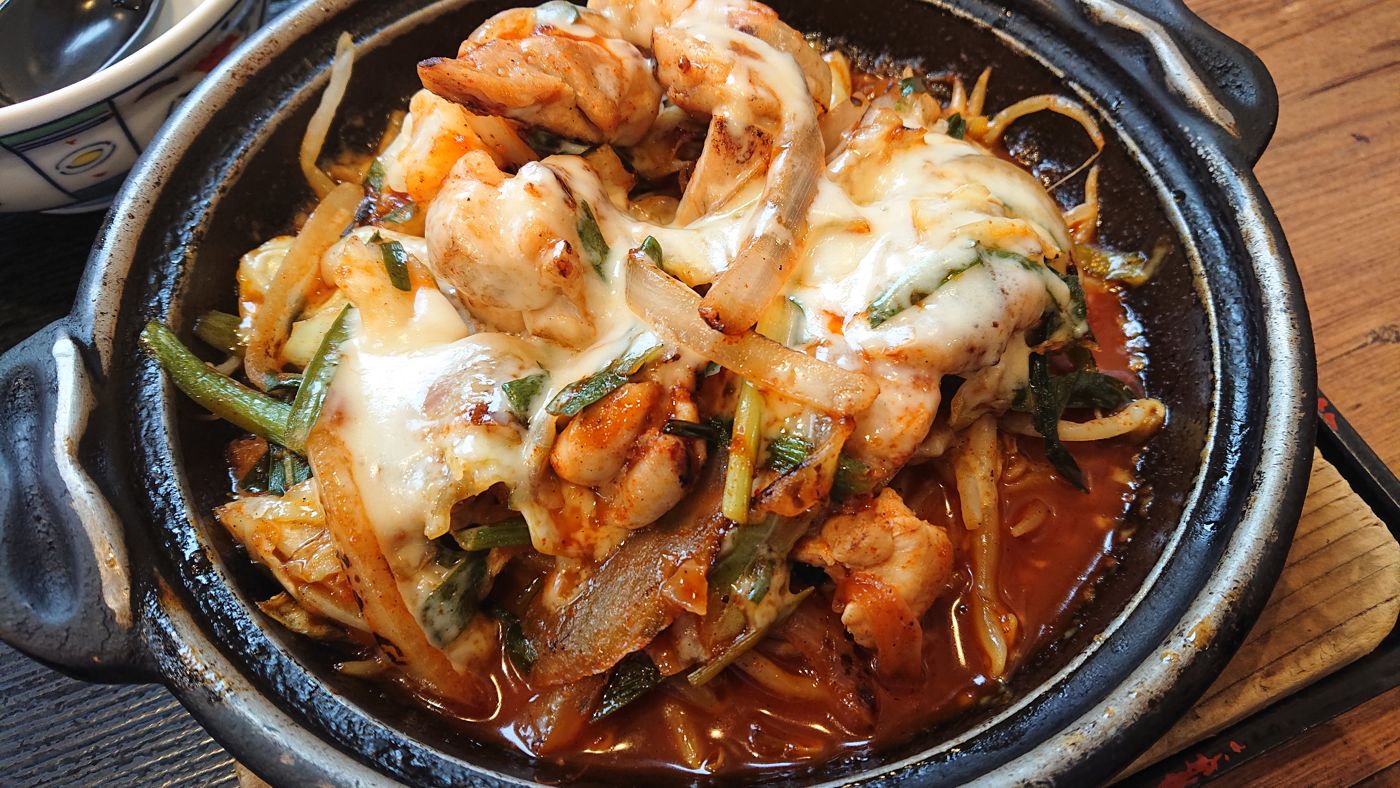 Dakgalbi (Spicy Stir-Fried Chicken)닭갈비Chicken marinated in a fiery gochujang sauce and cooked on a big iron pan with cabbage, sweet potato and rice cakes — Chuncheon's signature dish, finished with fried rice.