Ingredient
Gyeojja (Korean Mustard)
겨자
Romanization: gyeojja
Korean mustard, ground from the seeds of mustard greens (gat) and mixed into a sharp, nose-tingling paste. It seasons cold noodles, dresses the mixed cold salad gyeoja-chae and sharpens dipping sauces for raw fish and boiled meat.
Flavor
A sharp, clean heat that rushes up the nose and fades fast, unlike the lingering burn of chili. Mixed with vinegar, sugar and salt or soy sauce, it becomes sweet-sour-hot and cuts through fatty meat and the fishiness of seafood.
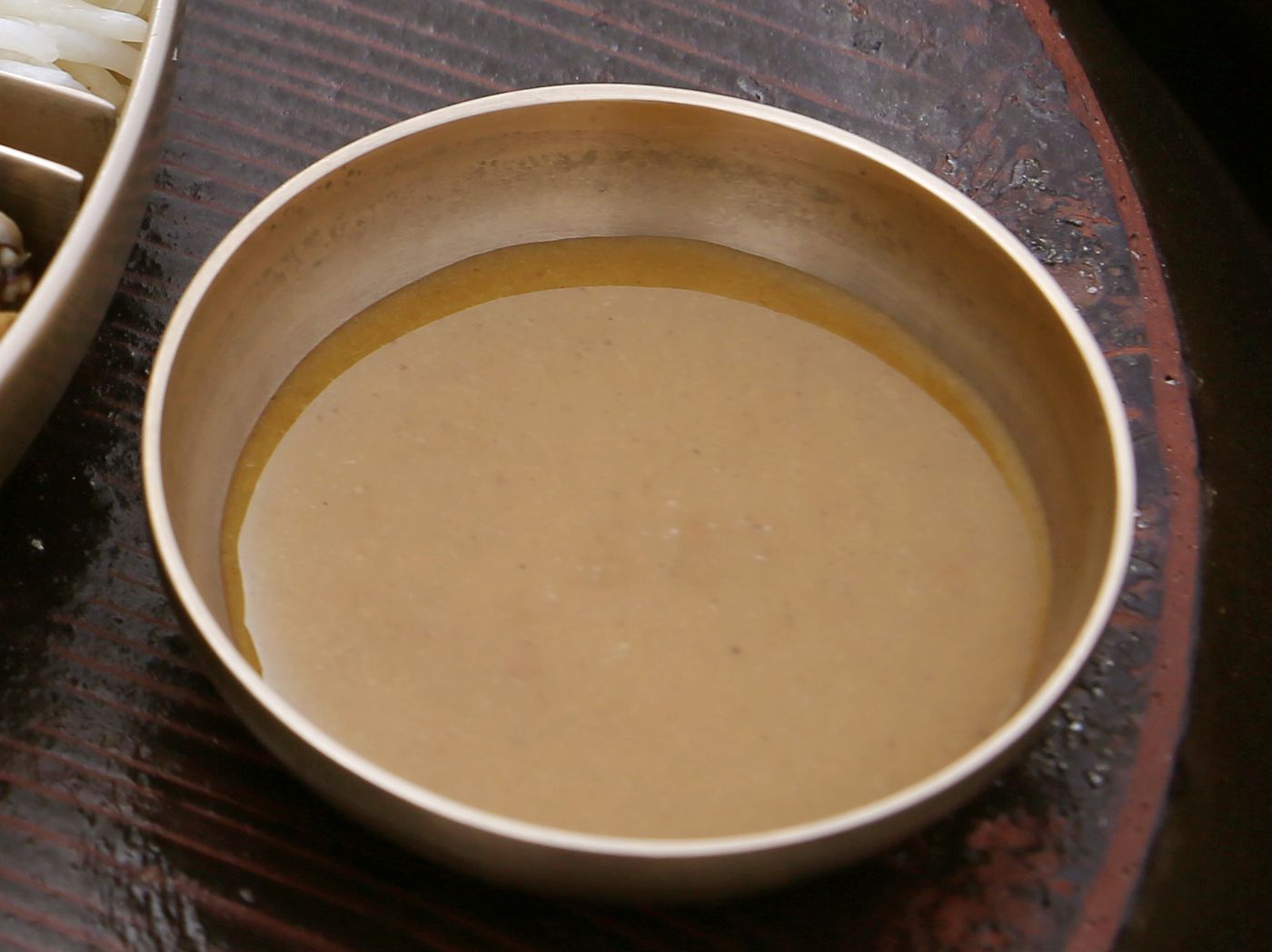 Photo: Korea.net / Korean Culture and Information Service (Jeon Han), CC BY-SA 2.0, via Wikimedia Commons
Origin & History
Mustard is one of the oldest seasonings on the Korean table. According to the Encyclopedia of Korean Folk Culture, Korean mustard is powder made from the seeds of mustard greens (gat): autumn plants go into namul and kimchi, while spring plants are left to set seed. The powder has no heat until it is mixed with water. The folk encyclopedia explains that its pungent compound, sinigrin, is broken down by heat above about 50–60 °C, leaving only bitterness. So cooks always mix it with lukewarm water. In the old method the bowl of paste was set on a warm pot lid until the sting rose.
Joseon records show mustard sauce (gyeoja-jang) used far beyond raw fish. The folk encyclopedia cites a 1609 envoy-reception record in which it was served with pressed pig's head and pickles. Records of King Jeongjo's 1795 procession pair it with raw mandarin fish, dumplings and bellflower namul. A 1902 court banquet record gives a recipe of yellow mustard with honey, vinegar and salt. The 17th-century Eumsik dimibang dresses blanched wax gourd with mustard, vinegar and soy sauce. Mustard sauce had been paired with raw fish since ancient times, and Korean cooks extended it to meat, vegetables and namul.
Mustard's classic dish is gyeoja-chae, a New Year cold salad. It began as stir-fried bellflower root dipped in mustard and became an arrangement of cucumber, cabbage, carrot, pear, chestnut, egg strips, sliced meat and seafood dressed in mustard sauce. At the table, mustard and vinegar are added to taste to mul-naengmyeon and bibim-naengmyeon, and to cold chicken soup chogyetang. Jellyfish naengchae, a familiar banquet cold dish, is also commonly dressed with mustard. Today most cooks buy mustard paste in tubes or mix it from powder.
Nutrition
| Calories | 413 kcal |
|---|---|
| Protein | 18.35 g |
| Fat | 22.68 g |
| Carbohydrates | 49.97 g |
| Fiber | 37.8 g |
| Sodium | 1 mg |
Notable forDietary fiber · Selenium · Iron · Magnesium
Values from the Korean Food Composition Table (RDA) for dry mustard powder. The table's entry for prepared mustard paste (겨자 페이스트) lists 296 kcal and 1,423 mg sodium per 100 g, because salt is added. A serving is usually well under a teaspoon, so mustard contributes little nutrition. Actual values vary with ingredients, portion size and preparation.
Health Benefits
- Flavor without much salt: Plain mustard powder is almost sodium-free in the Korean Food Composition Table. Mixed with vinegar, it adds strong flavor to salads and cold dishes without relying on salt. Prepared pastes are salted.
- Tiny amounts: The powder is rich in fiber and minerals per 100 g, but a dab of mustard supplies very little of anything.
- Traditional uses: Old texts paired mustard with raw fish and fatty meats, and the folk encyclopedia credits its heat with cutting greasiness and fishy odors. Old medical texts also used it as medicine; these are traditional beliefs, not established treatments.
Informational, not medical advice. Talk to a qualified professional about your own health and diet.
Dishes with Gyeojja (Korean Mustard)
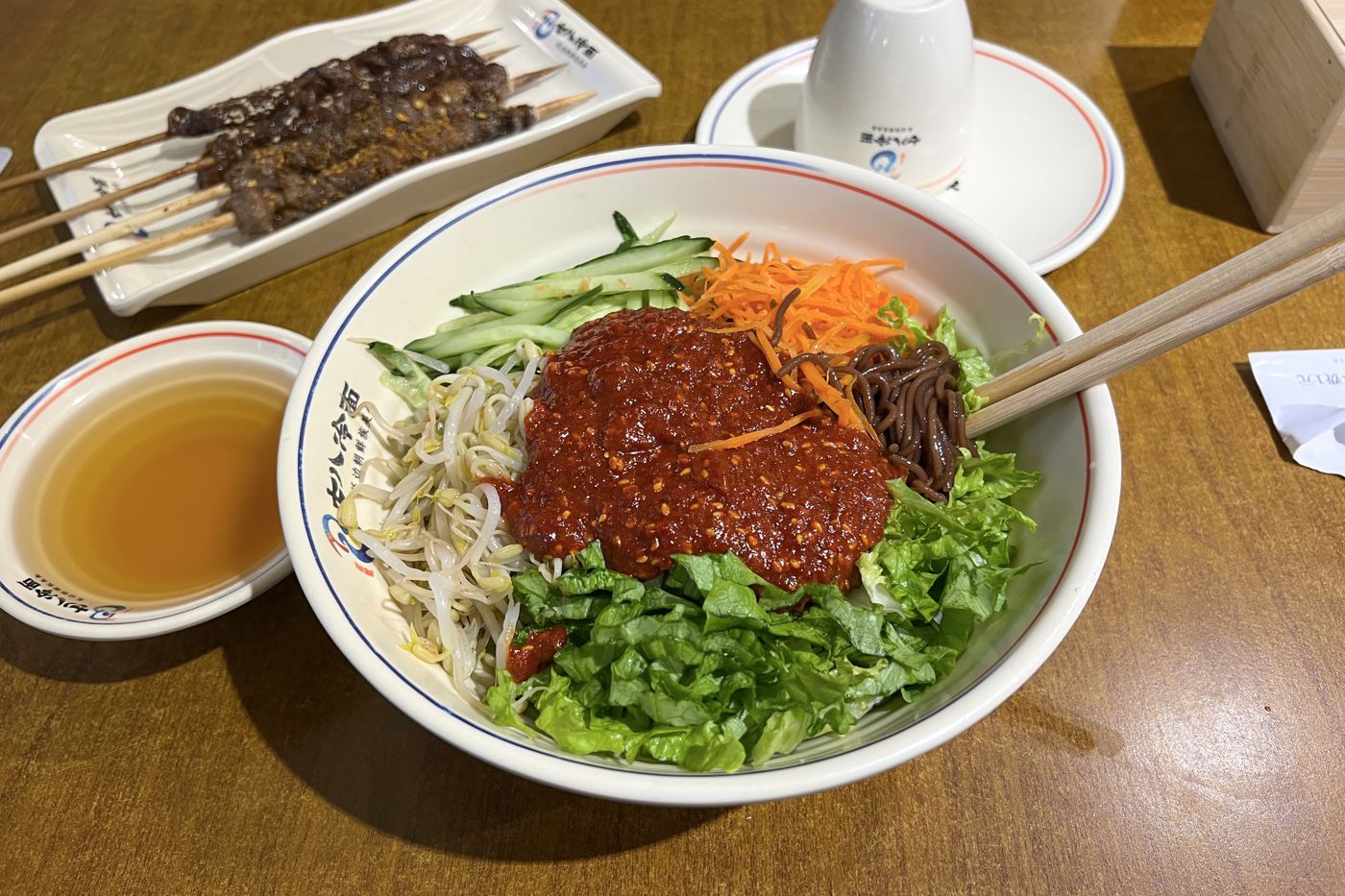 Bibim-naengmyeon (Spicy Mixed Cold Noodles)비빔냉면Chewy starch noodles tossed in a sweet, vinegary chili sauce, topped with cucumber, pear and egg — the Hamheung tradition of hoe-naengmyeon, carried south by refugees.
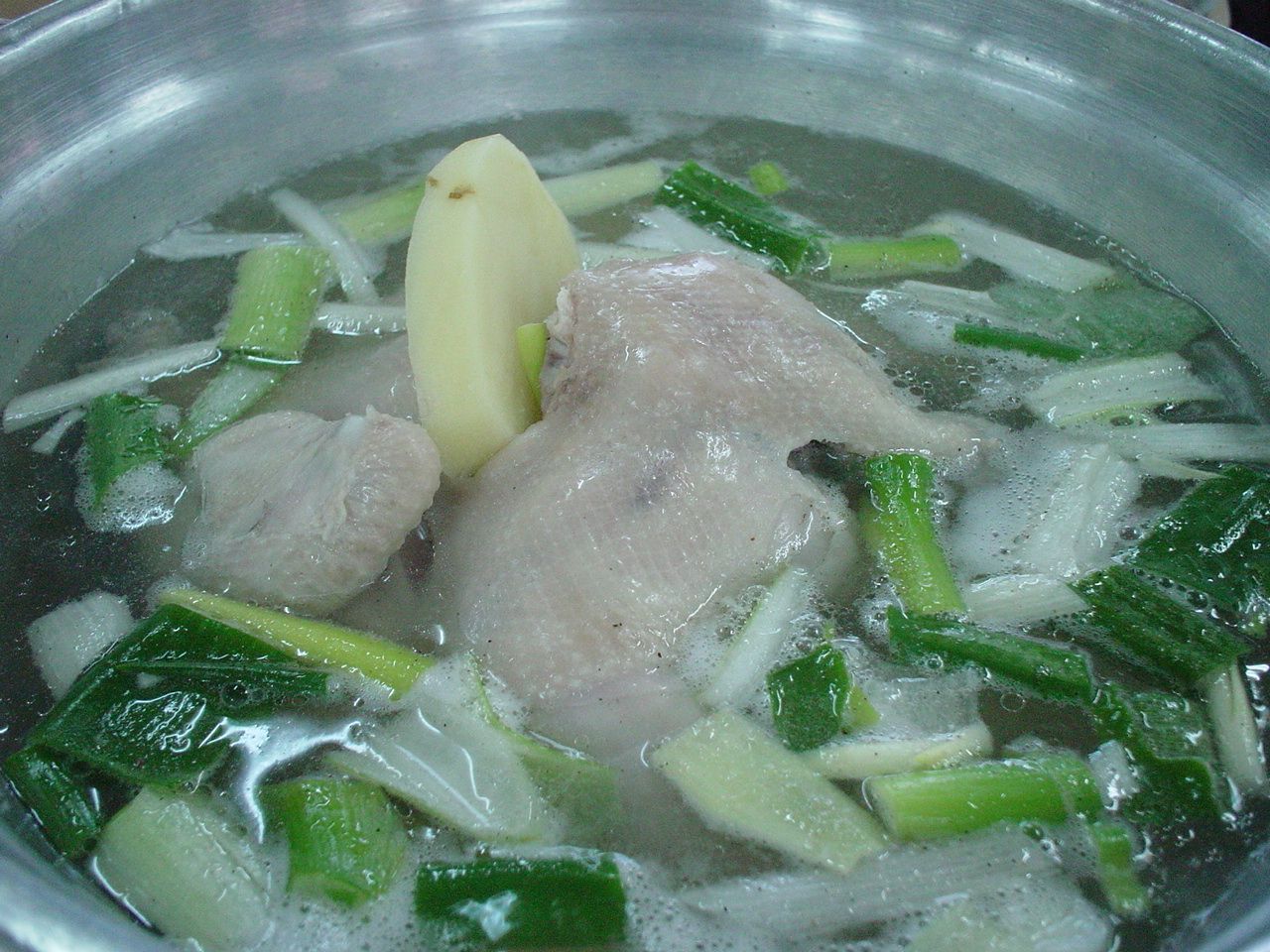 Dak Hanmari ("One Whole Chicken" Hot Pot)닭한마리A whole chicken simmered at the table with potatoes, rice cakes and green onion, dipped in a vinegar-mustard sauce, then finished with noodles in the broth — a Dongdaemun original.
Sources
- 01겨자 (Gyeoja, mustard) — Encyclopedia of Korean Folk Culture (한국의식주생활사전)
- 02겨자채 (Gyeoja-chae) — Encyclopedia of Korean Folk Culture (한국의식주생활사전)
- 03냉면 (Naengmyeon) — Encyclopedia of Korean Culture
- 04해파리 (Jellyfish) — Encyclopedia of Korean Culture
- 05겨자, 가루 (Mustard, powder) — Korean Food Composition Table, RDA
- 06겨자 페이스트 (Mustard paste) — Korean Food Composition Table, RDA