Ingredient
Potato
감자
Romanization: gamja
A relatively recent arrival that became a mainstay of the mountain provinces. Braised in soy sauce as gamja-jorim, stir-fried in fine matchsticks, grated into crisp gamja-jeon and simmered in countless soups.
Flavor
Mild, earthy and slightly sweet. Floury types like *Sumi* turn fluffy when steamed, while firmer potatoes hold their shape in braises and stir-fries; grated raw potato fries up crisp and lacy.
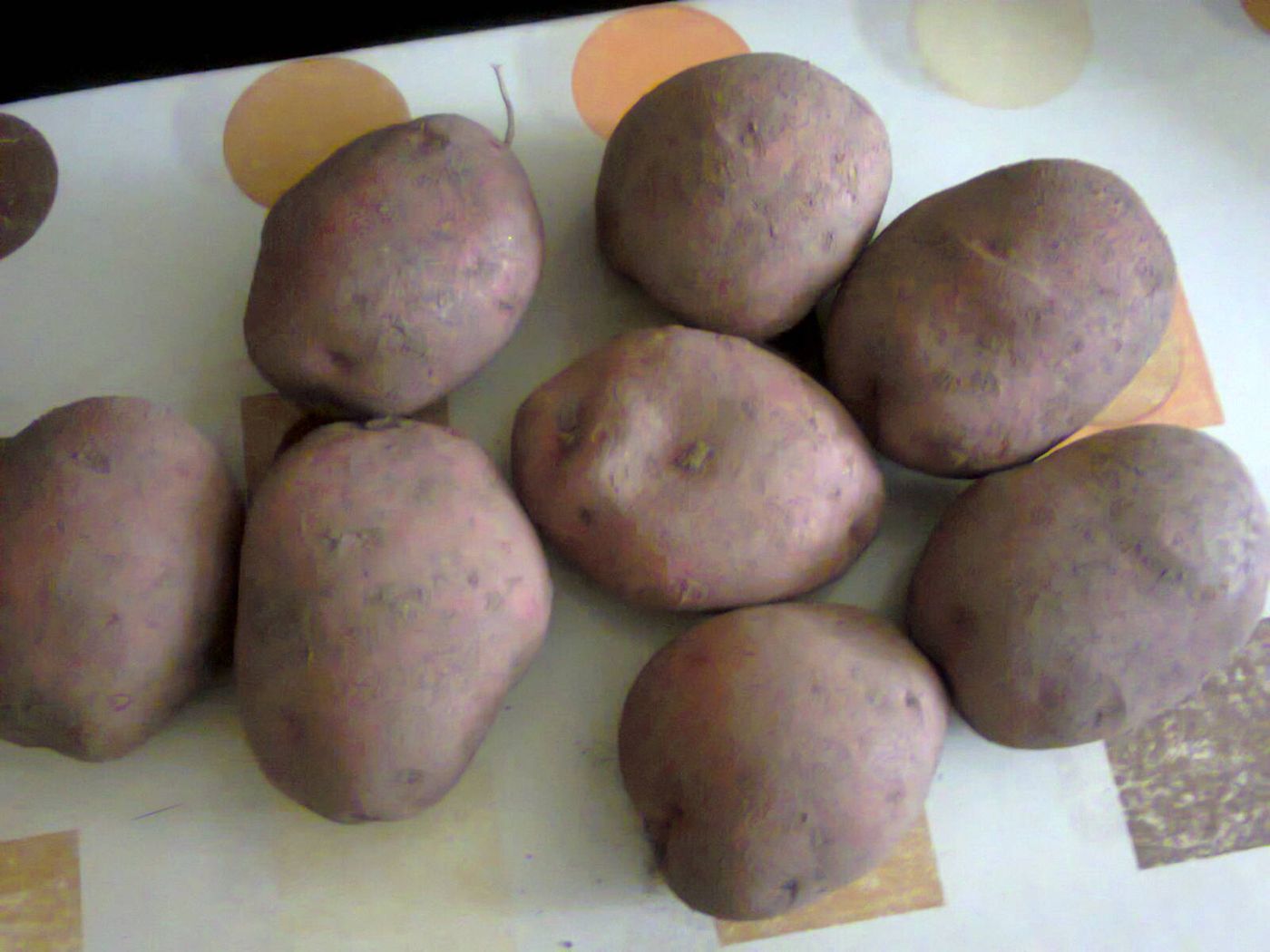 Photo: DenesFeri, CC BY-SA 4.0, via Wikimedia Commons
Origin & History
The potato (Solanum tuberosum) is a perennial of the nightshade family, grown as an annual for its starchy tubers. It originated in the high Andes of South America, in present-day Peru and Chile, where it had long been a staple before spreading around the world.
It reached Korea only in the nineteenth century. Yi Gyu-gyeong's encyclopedic Oju yeonmun jangjeon sango records that potatoes first came into the far north (Gwanbuk, today's North Hamgyong region) in 1824–1825, by one account brought in by Qing ginseng diggers who crossed the border; for this reason early names included bukjeo, "northern tuber." Kim Chang-han's Wonjeobo adds that in 1832, seven or eight years after that northern arrival, a missionary aboard a British merchant ship anchored off the Jeolla coast handed out seed potatoes and taught local people how to grow them. Hardy in drought and heavy rain and undemanding of fertilizer, the crop spread within decades, reportedly reaching Jeolla, Gyeonggi, Chungcheong and Gangwon by 1847, and helped people in places such as Wonju and Cheorwon survive lean years. New varieties followed in the twentieth century, including the Irish Cobbler type (namjak) brought in from Hokkaido, and today Sumi, a variety introduced from the United States in 1978, dominates the market.
Potatoes are grown throughout South Korea, with Gangwon Province the largest and best-known producer. Cool highland fields supply the summer crop and the healthy seed potatoes growers depend on, a highland research station has worked on potatoes at Daegwallyeong since 1961, and staggered spring, summer, autumn and winter plantings keep them in markets year-round. Mountain communities once ate potatoes as a staple, while lowland households treated them as a supplementary food.
Gangwon cooking is especially rich in potato dishes: rice cooked with potatoes (gamja-bap), hand-torn dough soup, starch dumplings (ongsimi), potato rice cakes and grated potato pancakes. Across the country potatoes are braised as gamja-jorim, stir-fried as gamjachae-bokkeum, added to stews and soups, and processed into starch, noodles and syrup.
Nutrition
| Calories | 77 kcal |
|---|---|
| Protein | 2.05 g |
| Fat | 0.09 g |
| Carbohydrates | 17.5 g |
| Fiber | 2.1 g |
| Sodium | 6 mg |
Notable forPotassium · Vitamin C · Vitamin B6
Values from USDA FoodData Central (SR Legacy), "Potatoes, flesh and skin, raw" (FDC ID 170026): also 425 mg potassium, 19.7 mg vitamin C and 0.3 mg vitamin B6 per 100 g. The entry covers potatoes generally rather than Korean varieties; the Korean Food Composition Table lists raw Sumi potato at 70 kcal and 335 mg potassium per 100 g. Actual values vary with ingredients, portion size and preparation.
Health Benefits
- Energy food: Potatoes are mainly starch and supply more energy than most vegetables, which is why they served as a staple and famine food in Korea's mountain regions.
- Nutrients: They are a source of potassium, vitamin C and vitamin B6, and the skin adds fiber.
- Green or sprouted potatoes: Potatoes naturally contain glycoalkaloids (solanine and chaconine), which concentrate in sprouts, eyes and green skin and can be toxic in high amounts; cooking does not destroy them. Cut away sprouts and any green parts generously, and discard potatoes that are deeply green, shriveled, heavily sprouted or bitter.
- Storage: Keep potatoes in a cool, dark, dry, well-ventilated place; light exposure triggers greening.
- Cooking method matters: Pan-fried gamja-jeon and braised gamja-jorim add oil, soy sauce and sugar to an otherwise plain food.
Informational, not medical advice. Talk to a qualified professional about your own health and diet.
Dishes with Potato
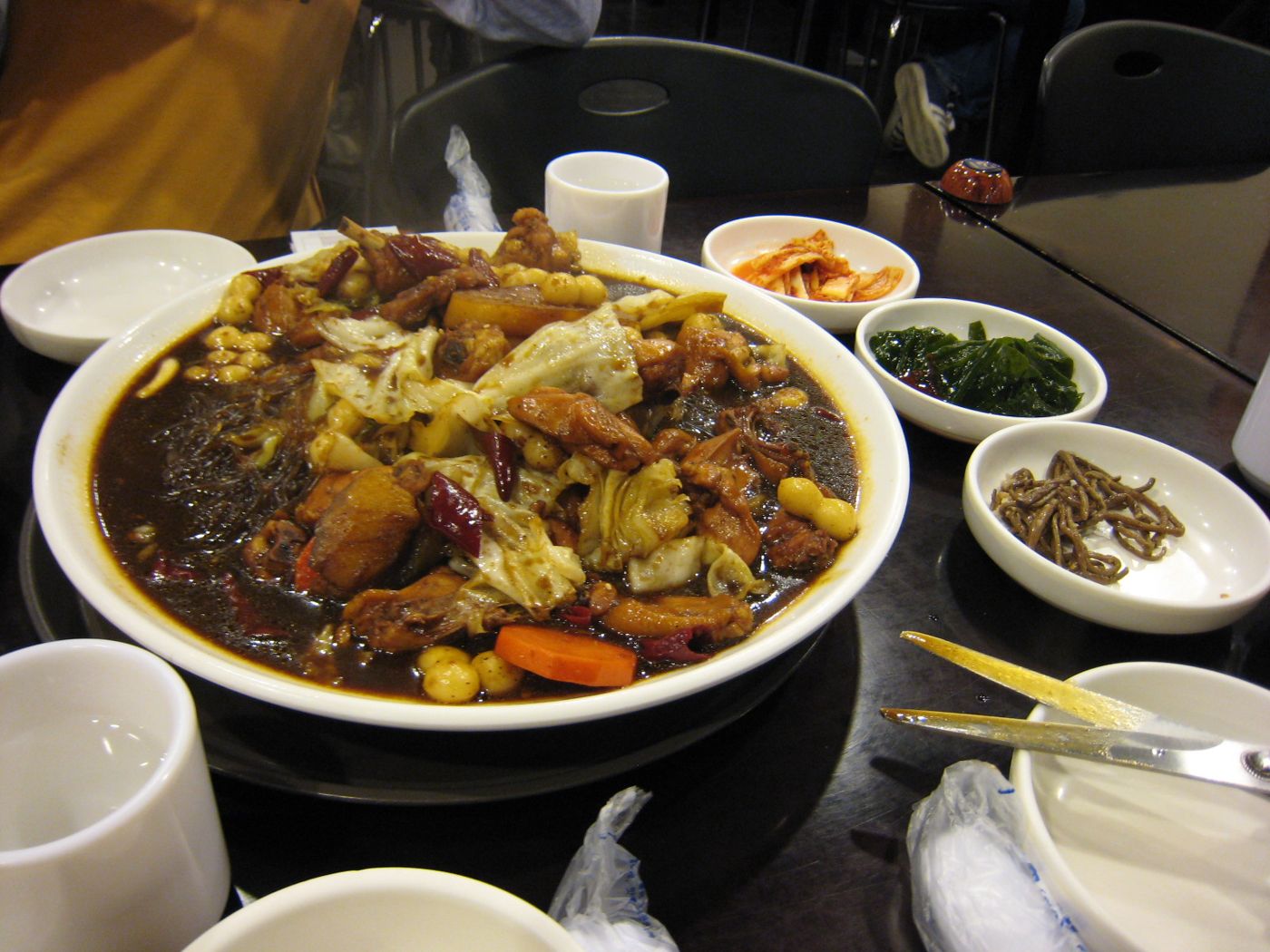 Andong Jjimdak (Soy-Braised Chicken with Glass Noodles)안동찜닭Chicken braised hard in a sweet soy sauce with potatoes, vegetables, dried chilies and glass noodles — a 1980s invention of Andong's old market, not a yangban heirloom.
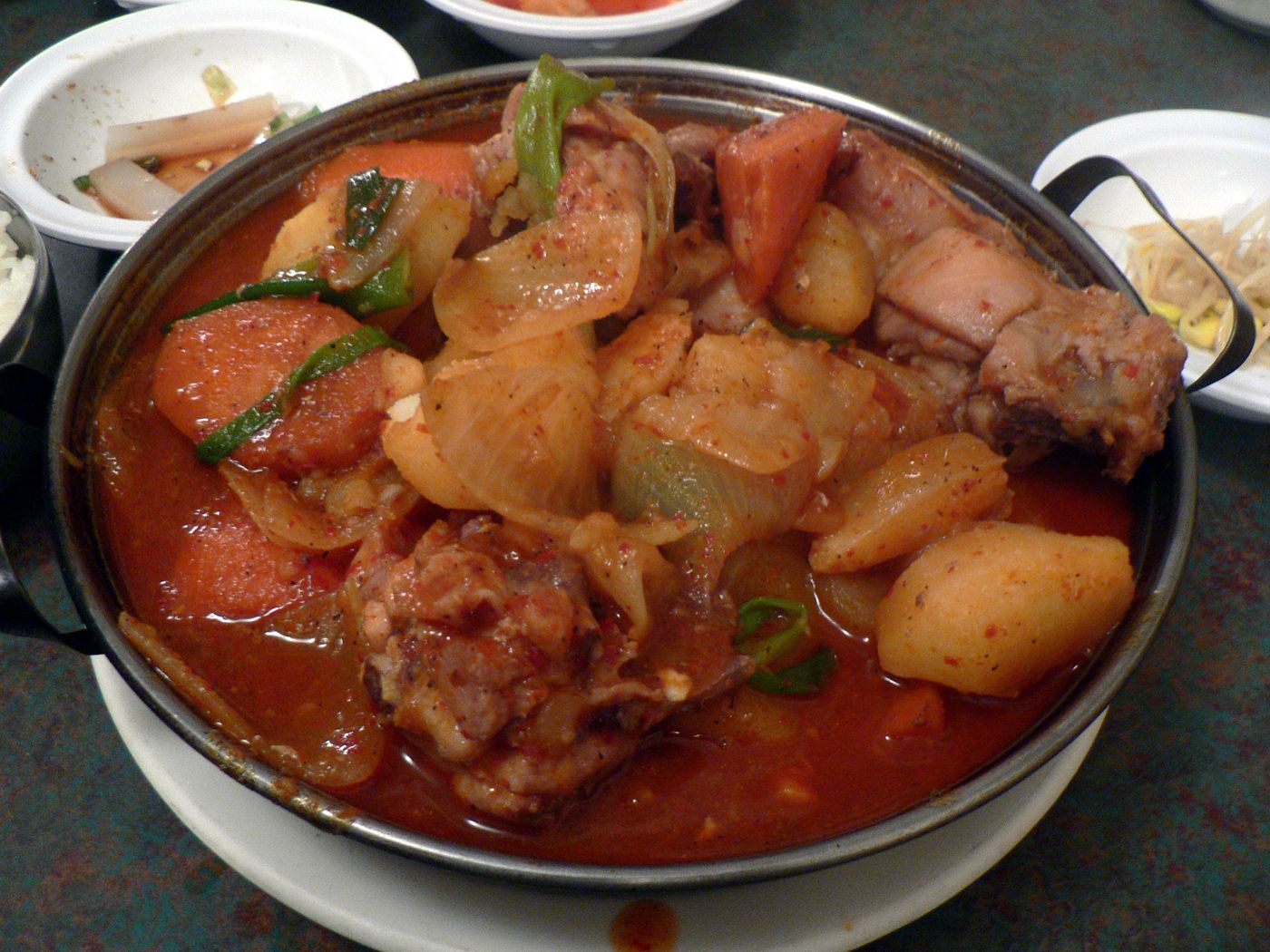 Dak-bokkeumtang (Spicy Braised Chicken)닭볶음탕Bone-in chicken and potatoes braised in a red chili sauce until it thickens and clings — long known as dakdoritang, a name whose origin is still debated.
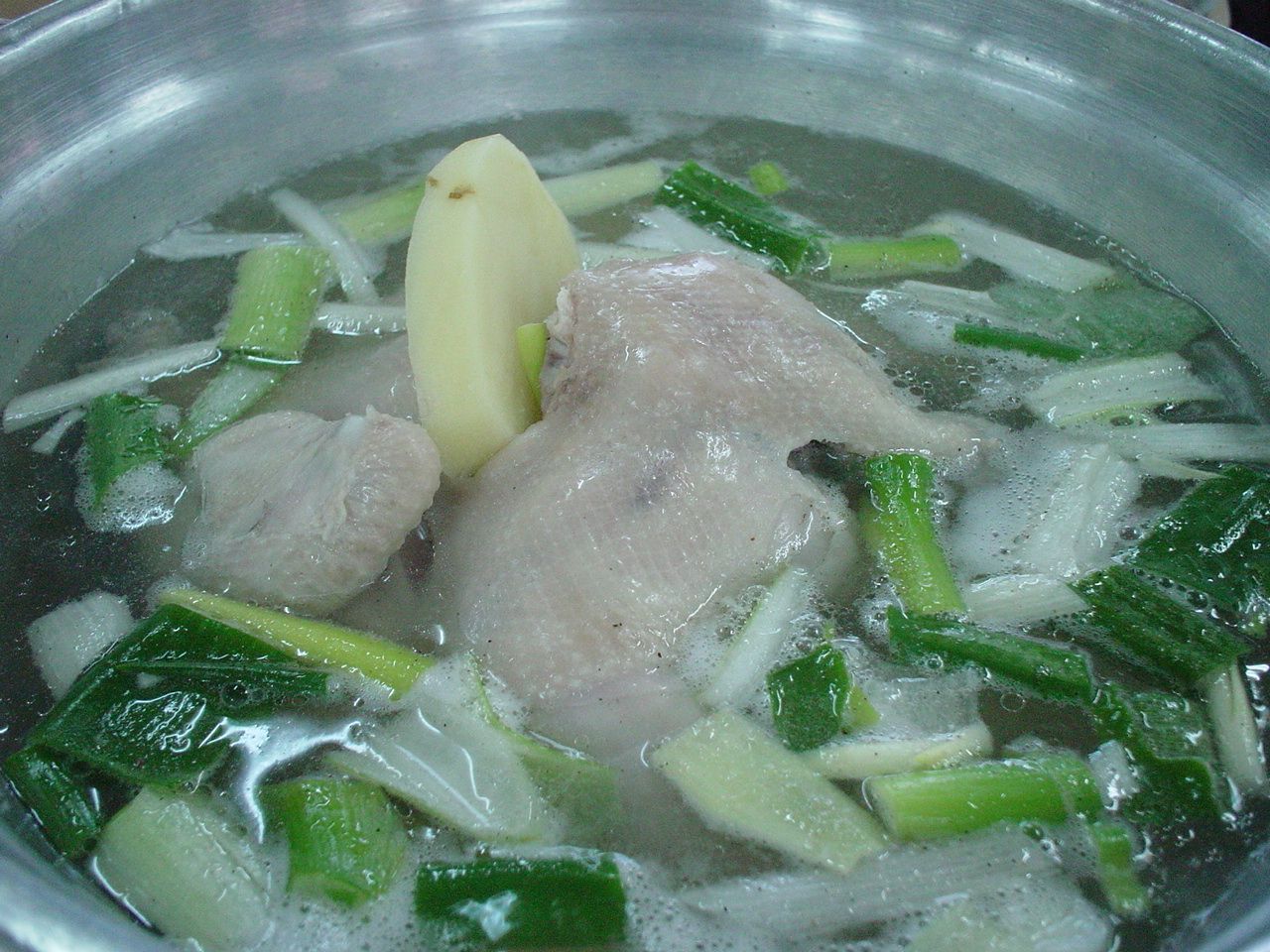 Dak Hanmari ("One Whole Chicken" Hot Pot)닭한마리A whole chicken simmered at the table with potatoes, rice cakes and green onion, dipped in a vinegar-mustard sauce, then finished with noodles in the broth — a Dongdaemun original.
 Doenjang Jjigae (Soybean Paste Stew)된장찌개A thick, savory stew of fermented soybean paste with tofu, zucchini and whatever the season offers — the everyday pot at the center of the Korean table.
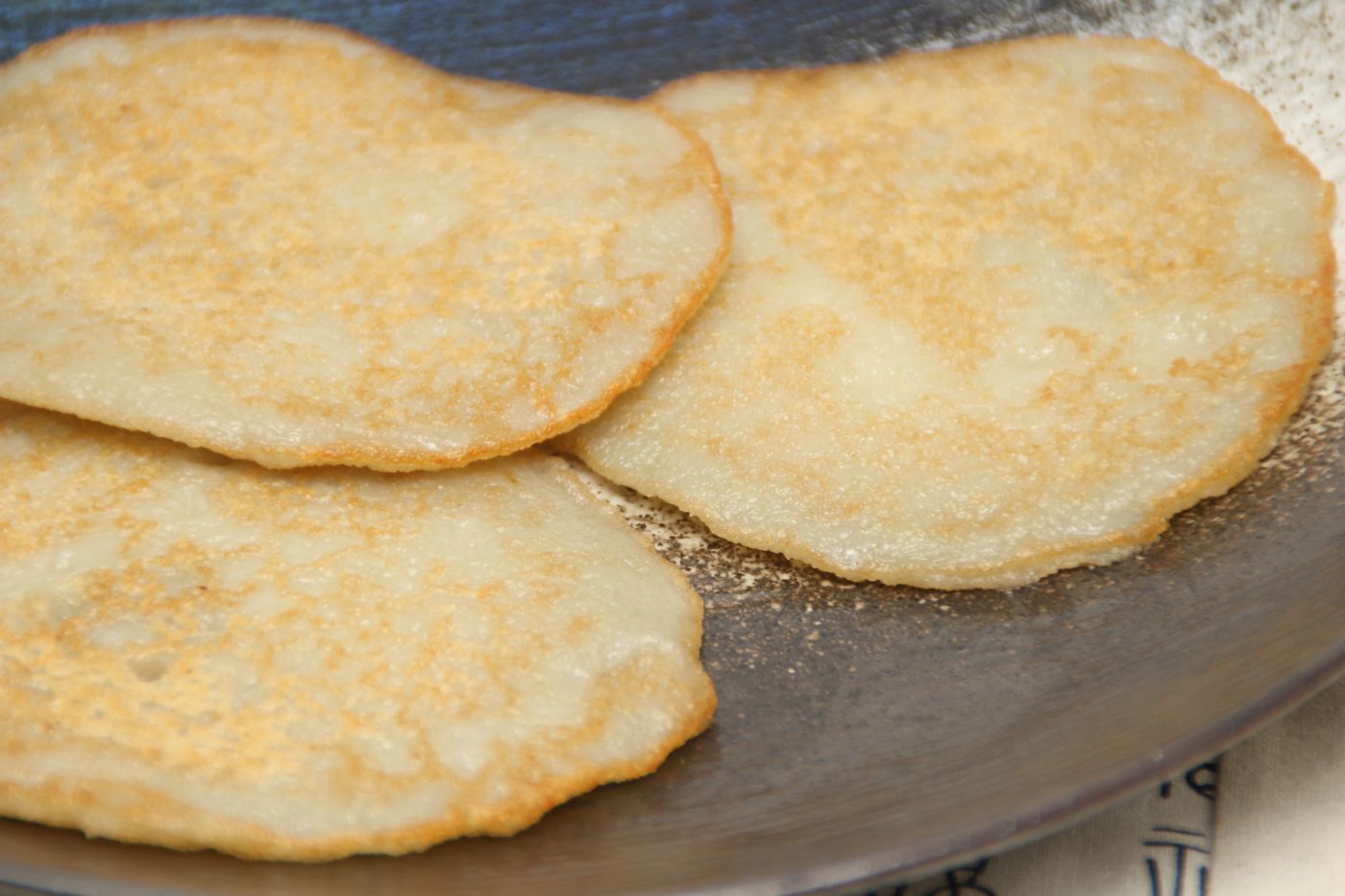 Gamja Jeon (Potato Pancake)감자전Finely grated potato, bound only by its own starch, pan-fried into crisp-edged, chewy rounds — a simple Gangwon-style jeon.
- Gamja Salad (Korean Potato Salad)감자샐러드Mashed boiled potato folded with egg, cucumber, carrot and mayonnaise — a soft, mildly sweet modern banchan served alongside rice, kimchi and namul.
- Gamjachae Bokkeum감자채볶음Thin matchsticks of potato stir-fried with onion and carrot and seasoned simply with salt and sesame — tender-crisp, mild and endlessly familiar.
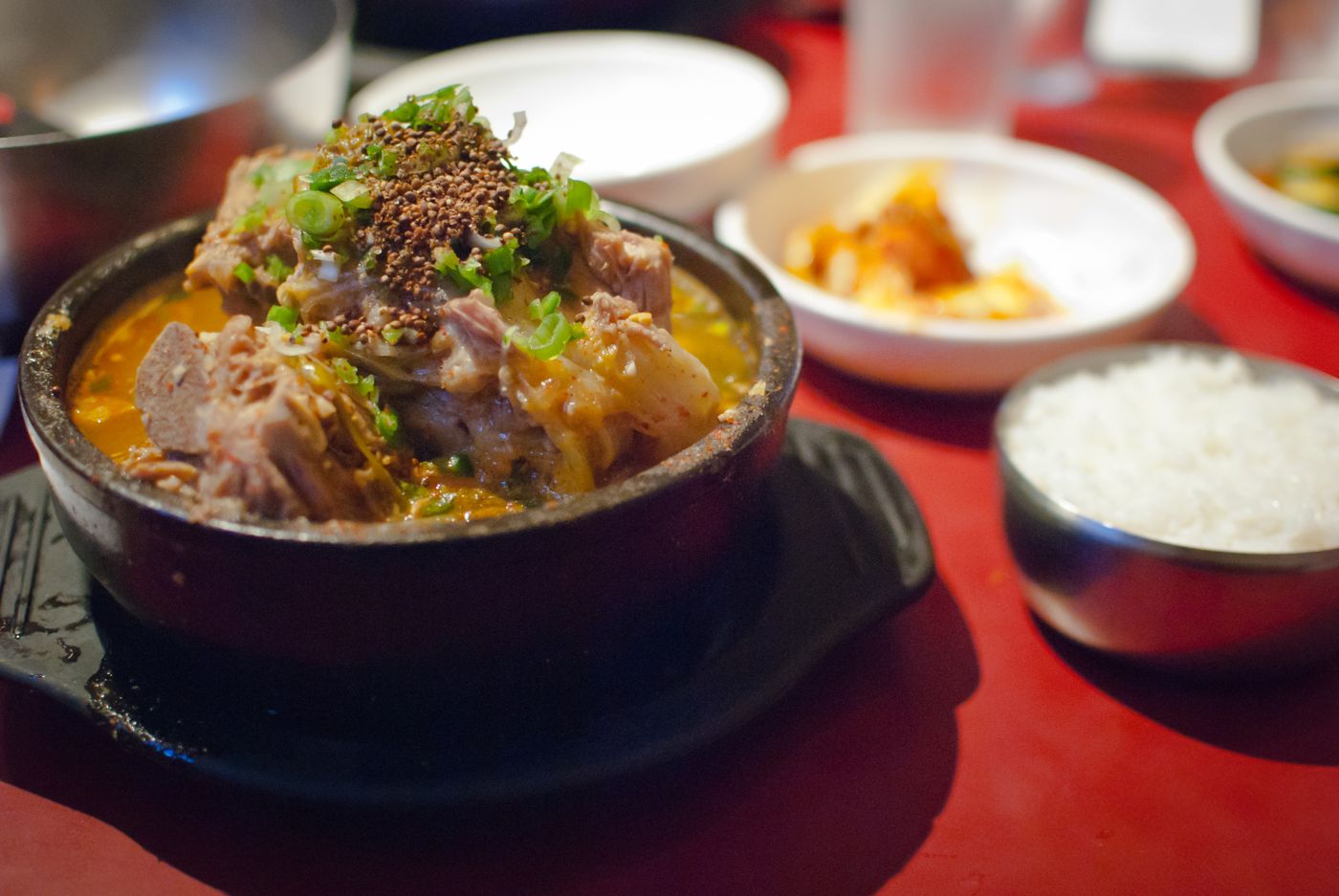 Gamjatang (Pork Bone and Potato Stew)감자탕Meaty pork spine simmered with potatoes, cabbage greens and perilla in a spicy doenjang-chili broth — a big shared pot of picking meat off the bones.
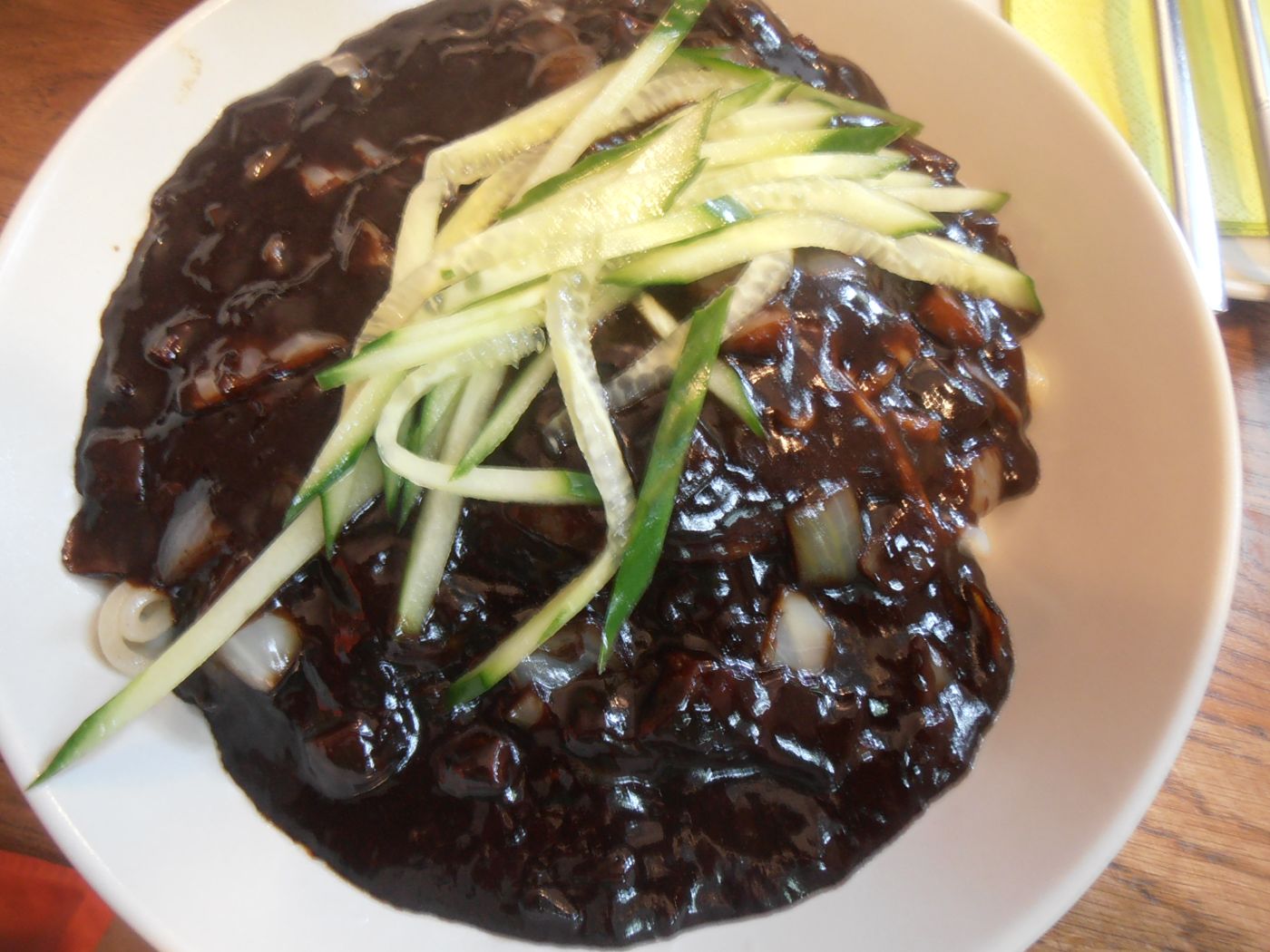 Jajangmyeon (Noodles in Black Bean Sauce)자장면Wheat noodles under a glossy sauce of chunjang fried with pork, onion and potato — the Korean-Chinese dish born among Shandong migrants in Incheon, contested origin claims and all.
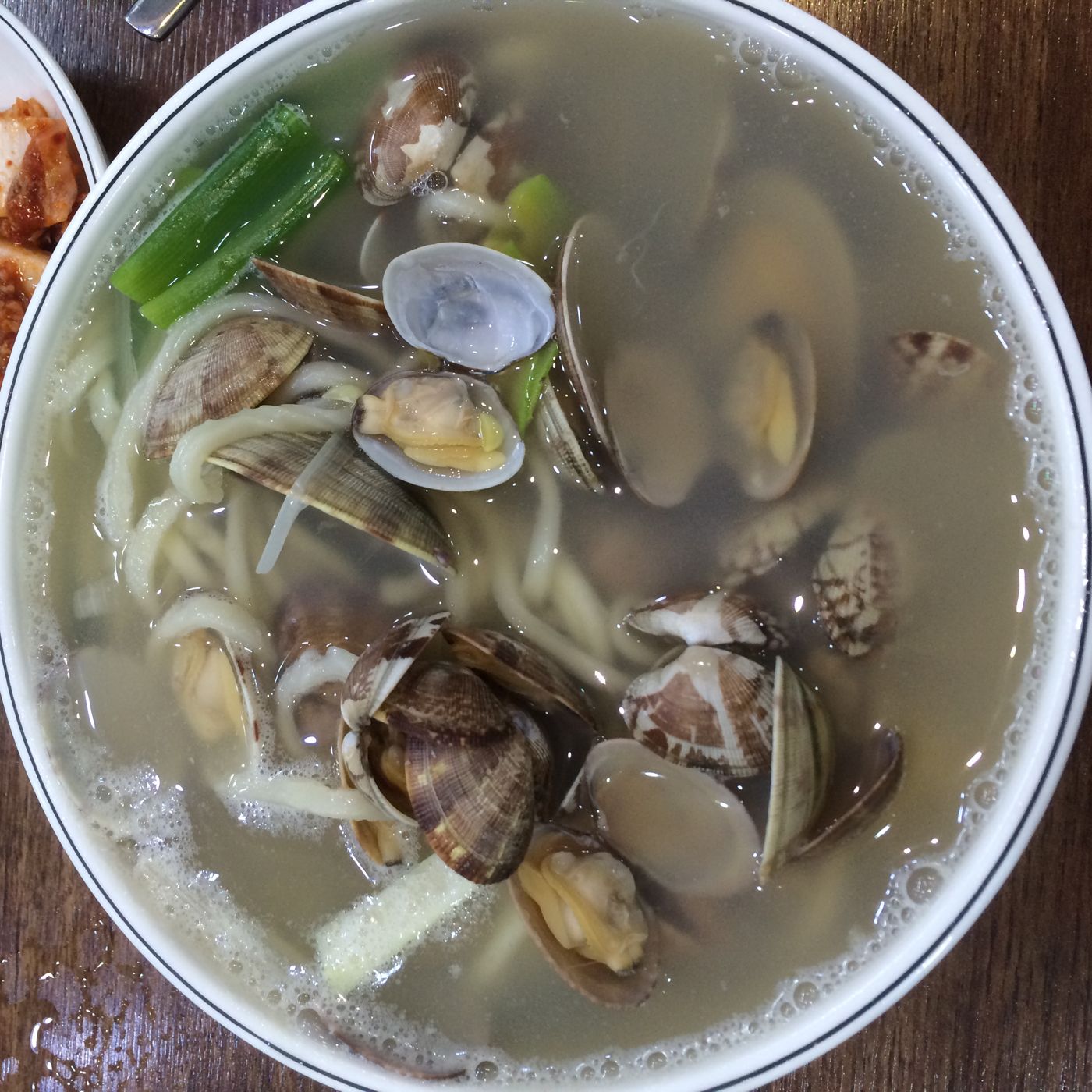 Kalguksu (Knife-Cut Noodle Soup)칼국수Hand-rolled wheat dough cut into ribbons with a knife and cooked right in anchovy, chicken or clam broth with potato and zucchini — Korea's homely noodle soup.
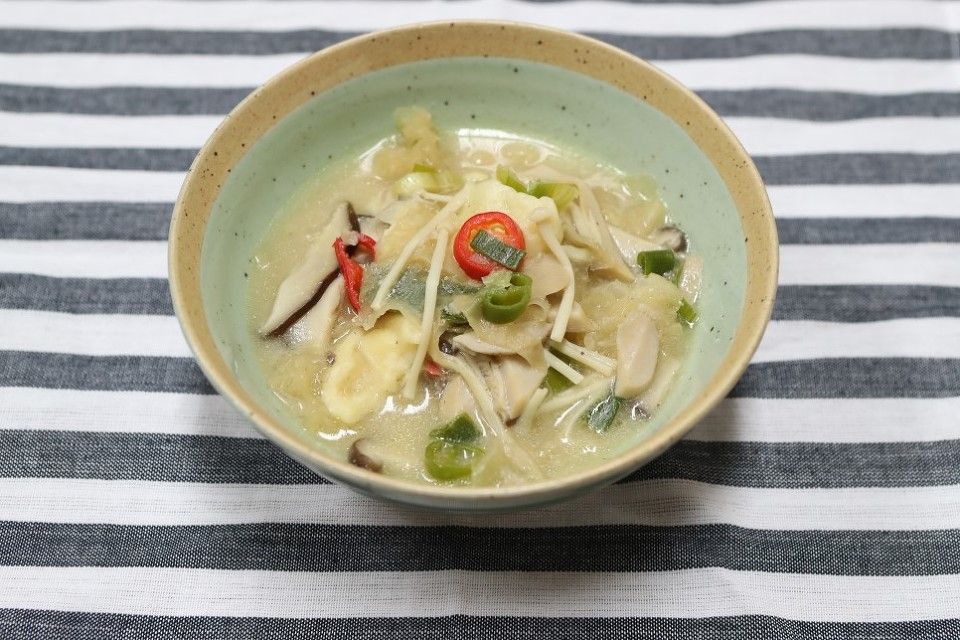 Sujebi (Hand-Torn Dough Soup)수제비Thin pieces of wheat dough pulled by hand into a simmering anchovy broth with zucchini and potato — a cozy, inexpensive one-pot meal, traditionally a summer staple.
Sources
- 01감자 — Encyclopedia of Korean Culture
- 02감자밥 — Encyclopedia of Korean Culture
- 03감자 — Encyclopedia of Korean Folk Culture (한국생업기술사전)
- 04감자 — Encyclopedia of Korean Folk Culture (한국의식주생활사전)
- 05Potatoes, flesh and skin, raw — USDA FoodData Central
- 06Spouting or Greening Potatoes . . . Keep or Toss? — AnswerLine, Iowa State University Extension and Outreach