Ingredient
Chicken (dak)
닭
Romanization: dak
Chicken appears in Korea's founding legends and on its summer tables: young birds simmered whole with ginseng in samgyetang, chili-marinated pieces stir-fried as Chuncheon's dakgalbi, and the fried chicken of modern takeout culture.
Flavor
Mild and clean-tasting, with tender, fine-grained meat; long simmering gives a milky, savory broth, while marinades of gochujang, soy and garlic carry most of the flavor in stir-fries and braises.
Origin & History
Dak is the domestic chicken, descended from wild junglefowl of India and Southeast Asia. In Korea it enters history early: the Samguk sagi and Samguk yusa tell how a Silla king heard a white rooster crowing beneath a golden chest in a forest, found a baby boy inside, and named the forest Gyerim ("chicken forest"), a name later used for the kingdom itself. Chinese chronicles mention long-tailed chickens among the Han peoples of the southern peninsula, and the 16th-century Chinese pharmacopeia Bencao gangmu praised Joseon's long-tailed chickens as the tastiest and richest of all. Those old native breeds have largely disappeared, replaced by imported egg and meat breeds.
According to the Encyclopedia of Korean Culture, chicken became the most eaten meat after beef and pork, and Koreans cook it as plain boiled baeksuk, braises, grilled dishes and even raw, along with the gizzards, liver and feet. The Dongui bogam assigned different medicinal virtues to red, white and black roosters and to the black-boned ogolgye, and chicken was a fixture of folk remedies. The best-known chicken soup, samgyetang, grew out of yeongye-baeksuk, a young hen simmered with glutinous rice, chestnuts, jujubes and garlic. The Encyclopedia of Korean Folk Culture notes that classic Joseon cookbooks record young-chicken soups and braises but no ginseng chicken soup; it describes the dish spreading in the 20th century as a summer alternative to dog-meat soup, first as gyesamtang ("chicken-ginseng soup") and then renamed with ginseng first as the root grew popular and prized abroad.
Modern chicken dishes are younger still. Dakgalbi began in Chuncheon in the late 1960s, when a tavern owner marinated chicken like pork ribs and grilled it over charcoal; by the 1970s cheap "college student galbi" restaurants had clustered downtown, and the dish evolved into chicken stir-fried on an iron griddle with gochujang sauce, cabbage, sweet potato and rice cakes. Rotisserie chicken was the rage in 1960s Seoul, imported pressure fryers spread "American-style" fried chicken in the 1970s, and the sweet-spicy glazed yangnyeom chicken of the mid-1980s turned fried chicken into a Korean dish in its own right. Braised andong-jjimdak and spicy dak-bokkeumtang are other home and restaurant staples.
Nutrition
| Calories | 119 kcal |
|---|---|
| Protein | 21.4 g |
| Fat | 3.08 g |
| Carbohydrates | 0 g |
| Fiber | 0 g |
| Sodium | 77 mg |
Notable forNiacin (8.24 mg) · Vitamin B6 (0.43 mg) · Selenium (15.7 µg) · Phosphorus (173 mg)
Values copied from USDA FoodData Central for raw broiler chicken meat without skin; skin-on cuts and dark meat are higher in fat. The Korean Food Composition Table entry for raw lean chicken (115 kcal, 24 g protein) is broadly similar. Actual values vary with ingredients, portion size and preparation.
Health Benefits
- Lean protein: Skinless chicken supplies about 21 g of protein per 100 g with about 3 g of fat, plus niacin, vitamin B6 and selenium.
- Traditional beliefs: Korean medicine long treated chicken, and especially chicken with ginseng, as restorative food for hot summer days; these are cultural traditions rather than proven health effects.
- Cook poultry thoroughly: The FDA lists 165°F (74°C) for all poultry, whole, in parts, ground or stuffed. Color and texture are unreliable, so use a thermometer, especially for whole birds like samgyetang where the stuffing must also reach temperature.
- Keep raw chicken separate: The FDA advises separate cutting boards for raw meat and poultry and never returning cooked food to a plate that held raw poultry.
- Watch the coating and sauce: Fried and glazed chicken adds oil, sugar and salt that plain boiled or braised chicken does not.
Informational, not medical advice. Talk to a qualified professional about your own health and diet.
Dishes with Chicken (dak)
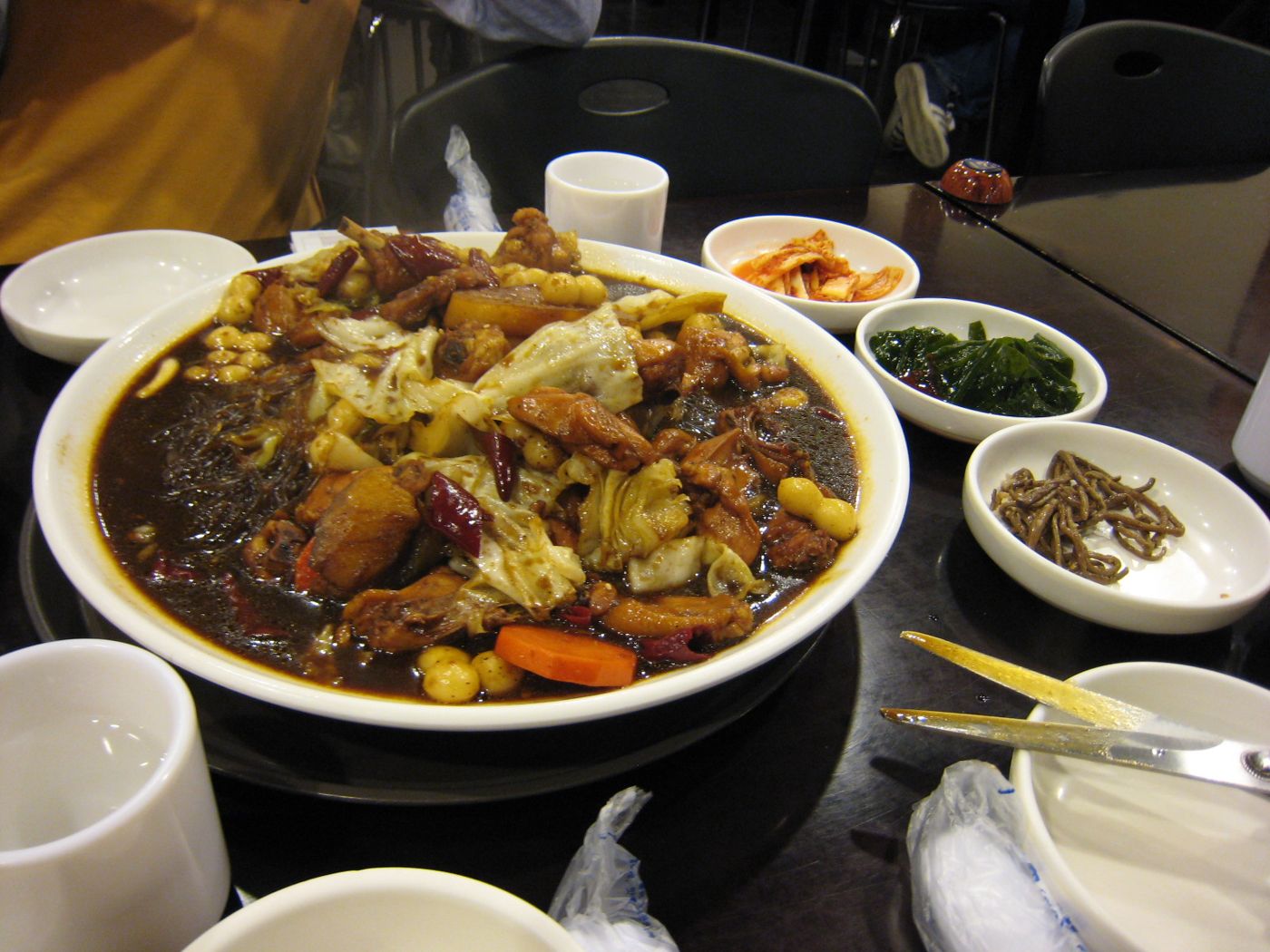 Andong Jjimdak (Soy-Braised Chicken with Glass Noodles)안동찜닭Chicken braised hard in a sweet soy sauce with potatoes, vegetables, dried chilies and glass noodles — a 1980s invention of Andong's old market, not a yangban heirloom.
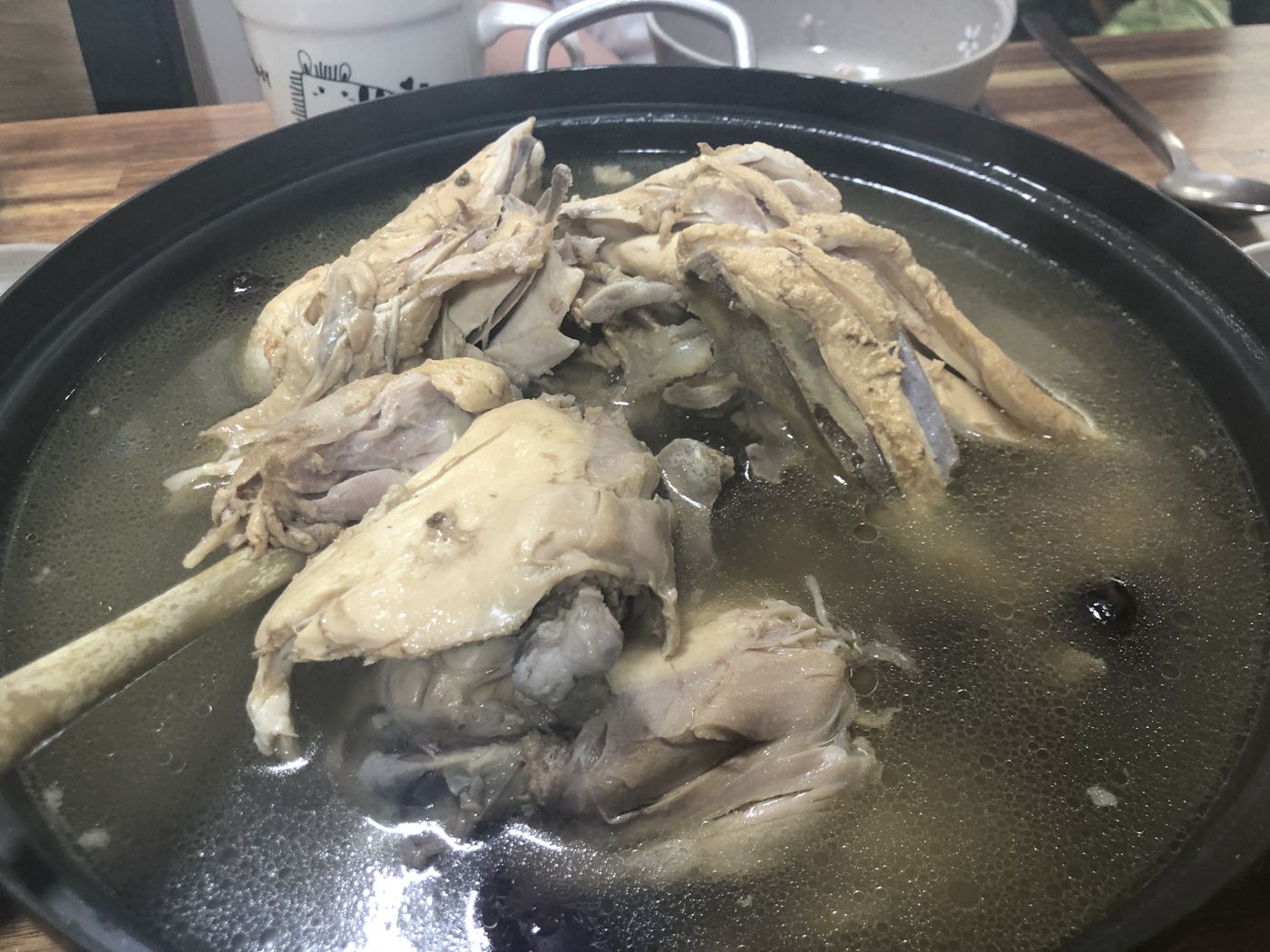 Baeksuk (Plain Whole Boiled Chicken)백숙A whole chicken simmered in plain water with garlic until falling-apart tender, eaten with salt and pepper, then followed by rice porridge cooked in the broth.
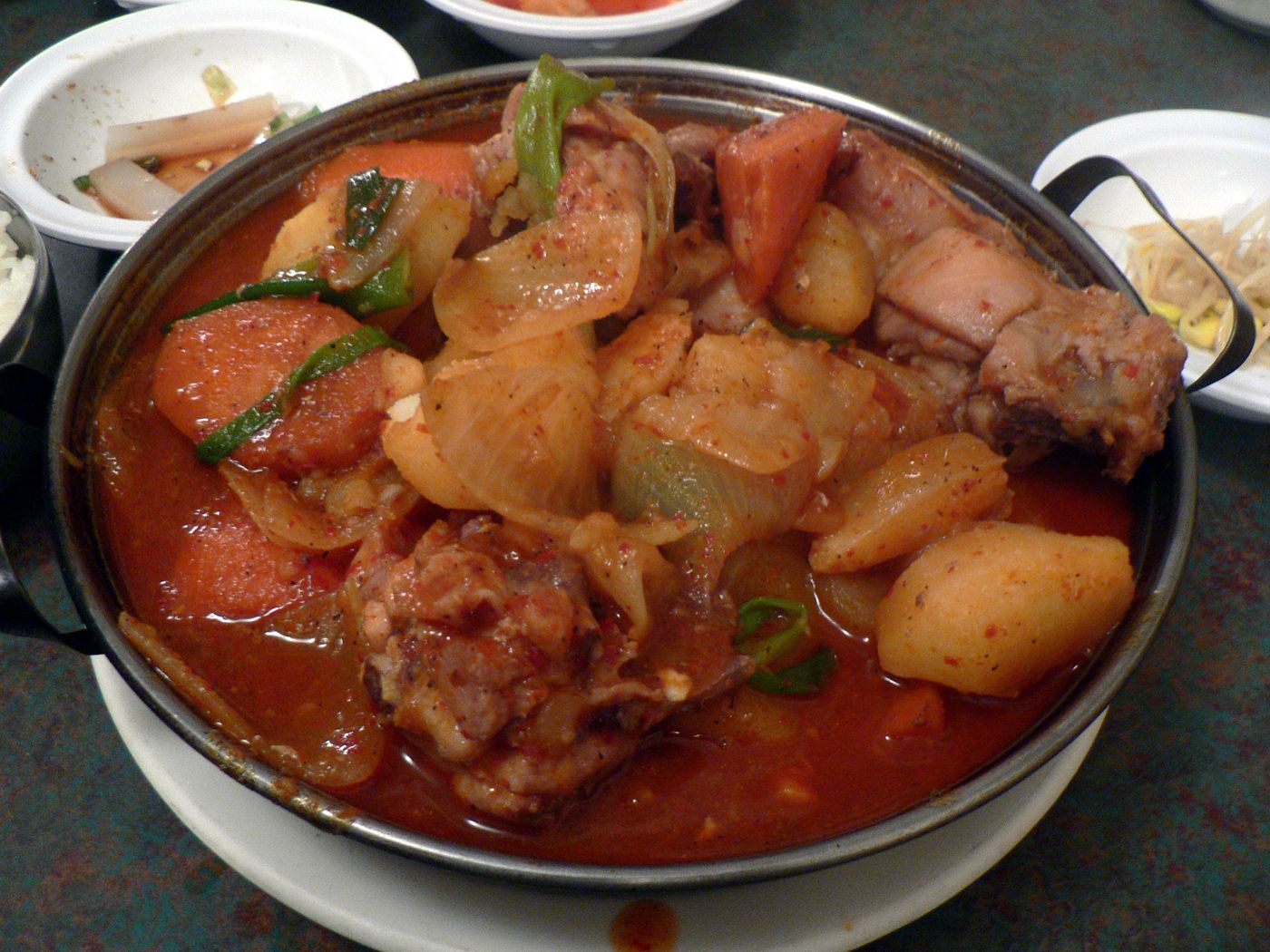 Dak-bokkeumtang (Spicy Braised Chicken)닭볶음탕Bone-in chicken and potatoes braised in a red chili sauce until it thickens and clings — long known as dakdoritang, a name whose origin is still debated.
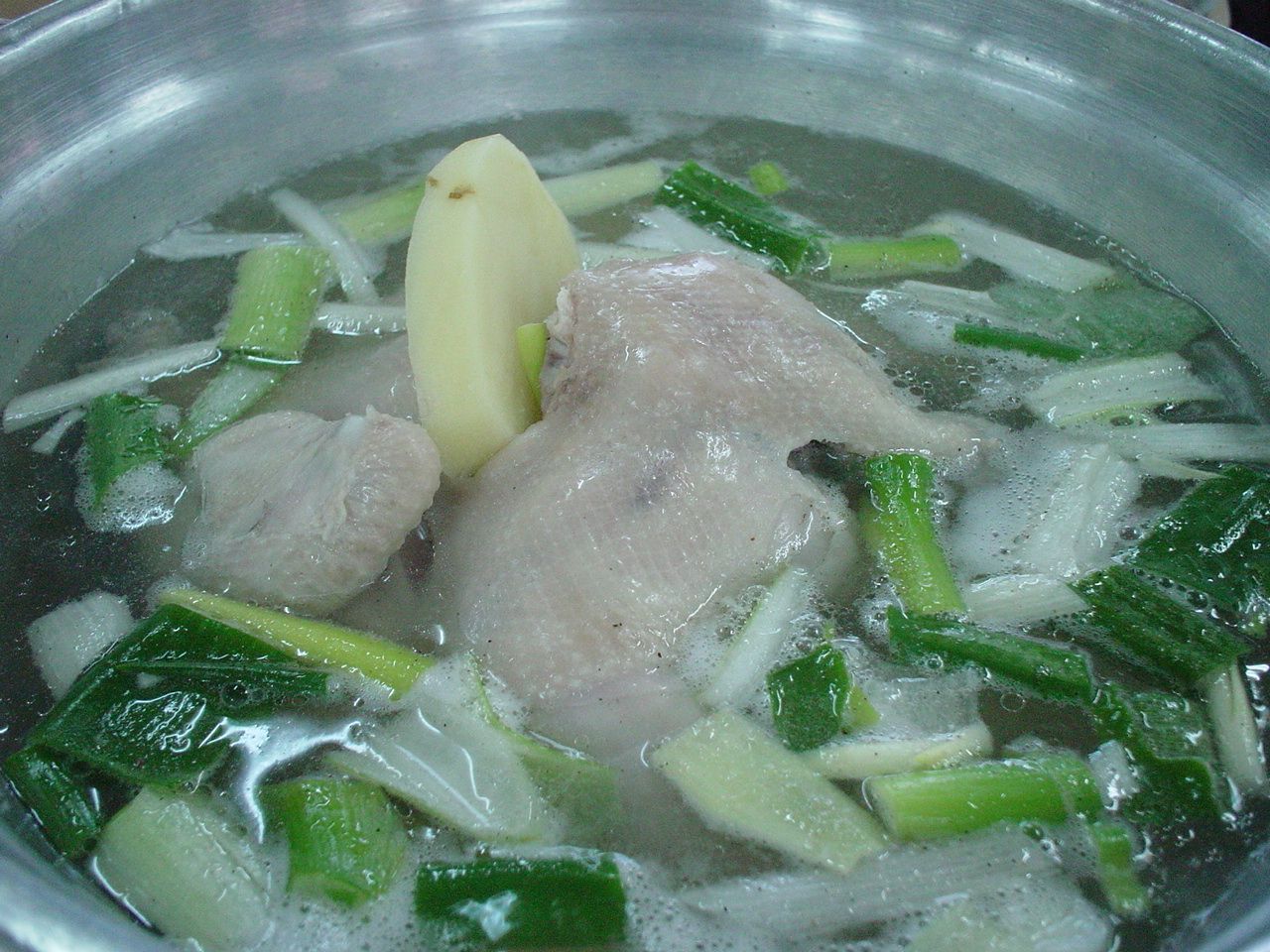 Dak Hanmari ("One Whole Chicken" Hot Pot)닭한마리A whole chicken simmered at the table with potatoes, rice cakes and green onion, dipped in a vinegar-mustard sauce, then finished with noodles in the broth — a Dongdaemun original.
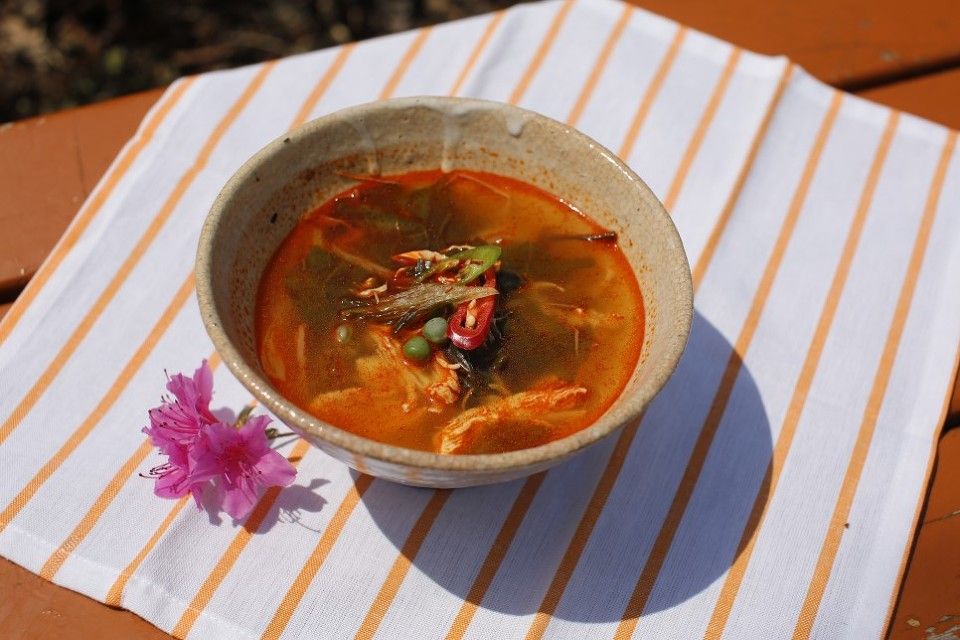 Dakgaejang (Spicy Chicken Soup)닭개장Shredded chicken simmered with bracken, taro stems and plenty of green onion in a fiery chili-oil broth — the chicken cousin of yukgaejang.
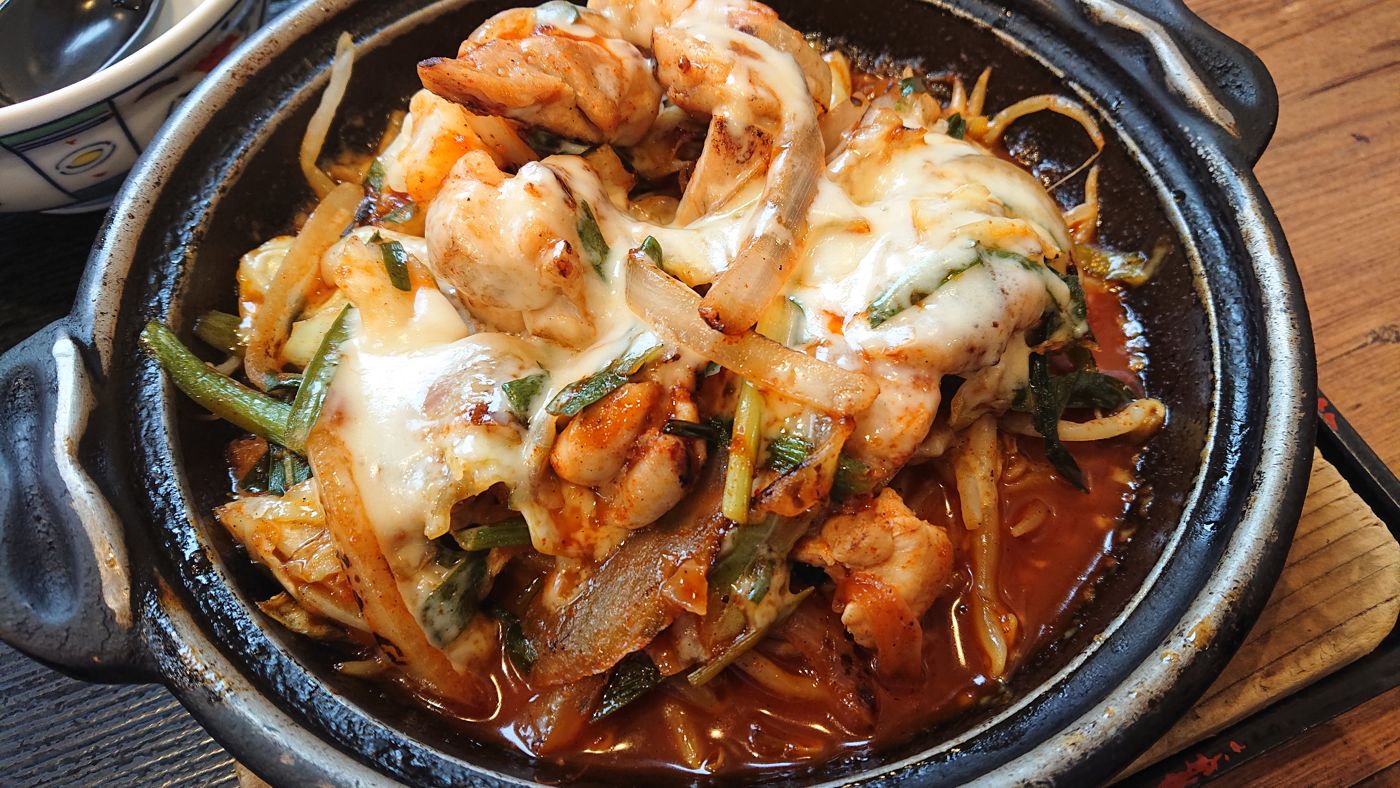 Dakgalbi (Spicy Stir-Fried Chicken)닭갈비Chicken marinated in a fiery gochujang sauce and cooked on a big iron pan with cabbage, sweet potato and rice cakes — Chuncheon's signature dish, finished with fried rice.
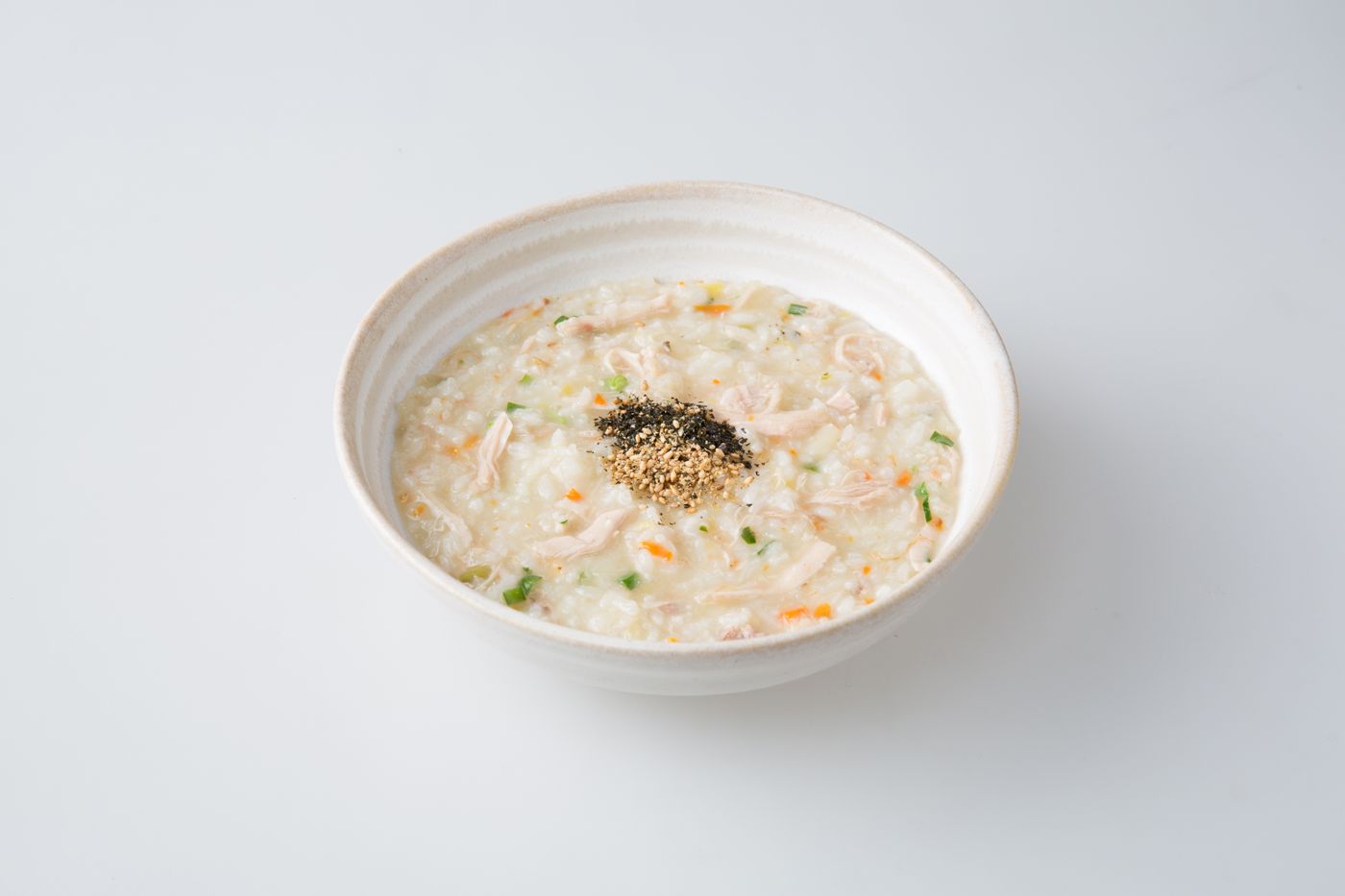 Dakjuk (Chicken Rice Porridge)닭죽Soft rice simmered in a clear chicken broth with shredded meat — a gentle, easy-to-digest porridge long served as summer restorative and sick-day food.
Sources
- 01닭 (Chicken) — Encyclopedia of Korean Culture
- 02삼계탕 (Samgyetang) — Encyclopedia of Korean Folk Culture (한국세시풍속사전)
- 03닭갈비 (Dakgalbi) — Encyclopedia of Korean Culture
- 04치킨 (Fried chicken) — Encyclopedia of Korean Culture
- 05USDA FoodData Central — Chicken, broilers or fryers, meat only, raw
- 06Safe Food Handling — U.S. Food and Drug Administration