Ingredient
Loach (chueo)
추어
Romanization: chueo
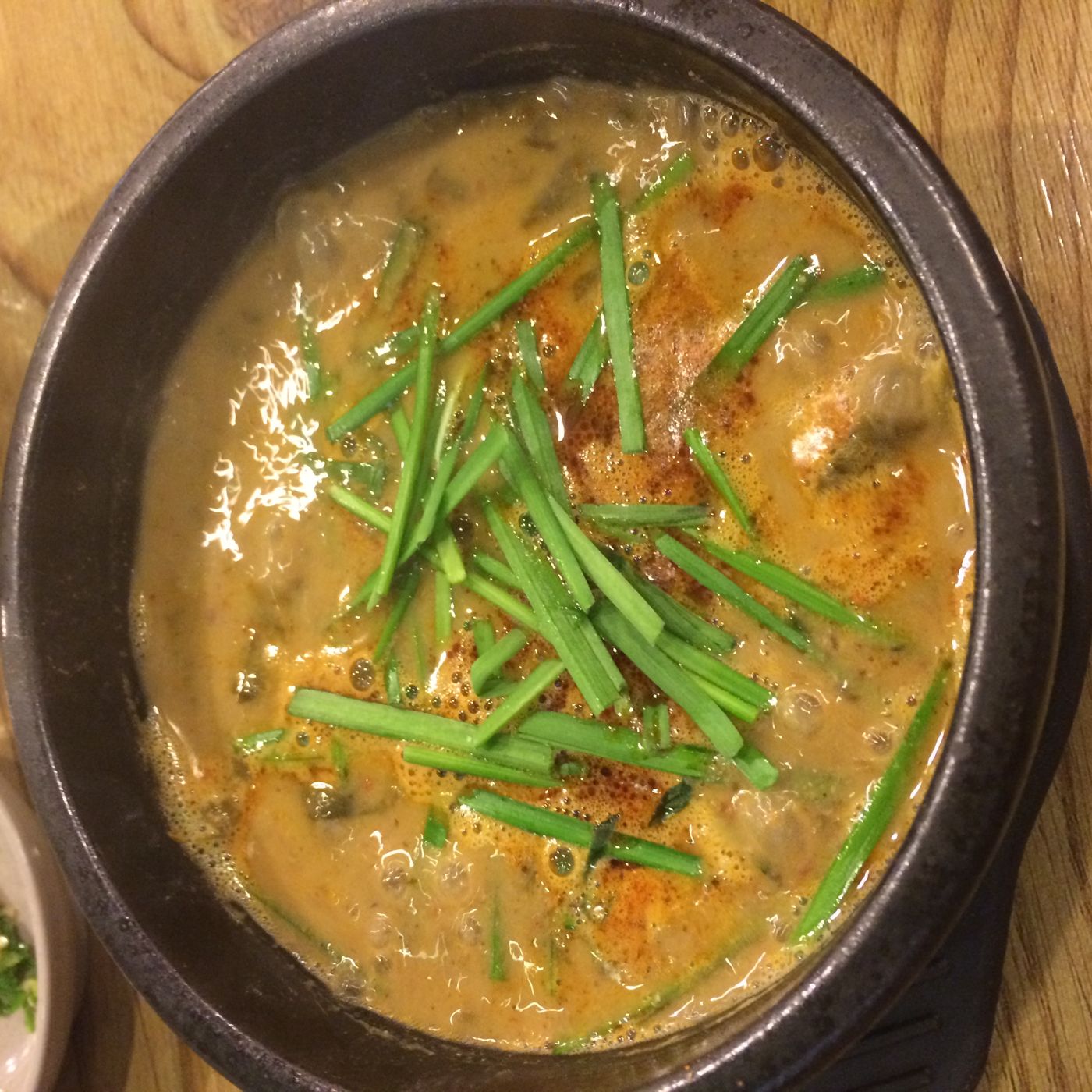
A small, whiskered freshwater fish of rice paddies and muddy ditches, eaten in autumn as chueotang, a thick, peppery soup made from loaches simmered and ground with greens and doenjang.
Flavor
Rich, savory and slightly earthy; ground into soup it gives a thick, nutty body, and the numbing citrus bite of sancho pepper is its classic counterpoint.
Origin & History
Chueo is the culinary name for the mikkuraji, a slim, whiskered freshwater loach about 20 cm long with five pairs of barbels and scales buried in its skin. The Encyclopedia of Korean Culture identifies it as Misgurnus mizolepis and notes that the closely related mikkuri is a separate species, though both are sold and cooked as loach. It lives in still, muddy shallows such as ponds, paddy margins and irrigation ditches, can gulp air through its gut, and burrows into the mud to overwinter. The character for chu combines "fish" and "autumn," and the folk encyclopedia calls it the autumn fish: it is fattest from about July to November.
Loach is an old food of ordinary people. The Song envoy Xu Jing's Gaoli tujing lists it among the cheap aquatic foods of poor Goryeo households, and the Dongui bogam described it as warming and good for settling diarrhea. Seo Yu-gu's Nanho eomokji recorded that country people kept live loaches in clean water to purge the mud before making porridge of them. In the mid-19th century, Yi Gyu-gyeong described chudubutang, in which live loaches were heated with blocks of tofu and burrowed into them; a 1924 cookbook, Joseon musang sinsik yori jejeop, was skeptical, noting the fish die in the hot water before they can. Farm villages had their own custom: after the autumn equinox, when paddies were drained and ditched, fat loaches were dug from the mud and cooked into soup for a village feast honoring the elders.
Today most loaches are farmed, so chueotang is eaten year-round. Styles differ by region, according to the Encyclopedia of Korean Folk Culture. Jeolla cooks rub the fish with salt and pumpkin leaves, boil and mash them, and simmer the purée with doenjang and ground perilla. Gyeongsang versions add blanched cabbage, gosari, taro stems and bangat (Korean mint). In Seoul and Wonju the loaches go in whole: Seoul cooks use a tripe or beef-bone broth reddened with gochugaru, while Wonju's version is a gochujang broth loaded with vegetables. Nearly every bowl is finished with ground sancho (Korean prickly ash) to cut any muddy taste.
Health Benefits
- Whole-fish nutrition: Loaches are cooked and ground bones and all. The Korean Food Composition Table has no entry for mikkuraji, but for the closely related mikkuri (미꾸리, 생것) it lists about 16 g of protein and an unusually high 736 mg of calcium per 100 g raw.
- Restorative tradition: Chueotang is a classic stamina food; such reputations come from tradition, not clinical studies.
- Cook thoroughly: Like other fish, loach should be fully cooked. The FDA recommends an internal temperature of 145°F (63°C) for most seafood.
- Fish allergy and sodium: Fish is a major U.S. food allergen, and restaurant chueotang is seasoned with doenjang and gochujang, which add sodium.
Informational, not medical advice. Talk to a qualified professional about your own health and diet.
Sources
- 01미꾸라지 (Loach) — Encyclopedia of Korean Culture
- 02추어탕 (Chueotang) — Encyclopedia of Korean Culture
- 03추어탕 (Chueotang) — Encyclopedia of Korean Folk Culture, National Folk Museum of Korea
- 04Korean Food Composition Table — Pond loach (mikkuri), Raw
- 05Selecting and Serving Fresh and Frozen Seafood Safely — U.S. Food and Drug Administration
- 06Food Allergies — U.S. Food and Drug Administration