Techniques
Drying and Rehydrating Vegetables
채소 말리기와 불리기
Sun-dried greens, radish strips and bracken carried Korean households through winter. How vegetables are dried, stored and brought back to life for namul.
Before refrigeration, Korean households preserved the harvest in three main ways: salting and fermenting it as kimchi and jang, pickling it as jangajji, and drying it. Dried vegetables, collectively mareun namul or mallin namul, are light, keep for months and, once soaked and cooked, take on a chewy, savory character quite different from the fresh vegetable. Many of them are still preferred dried even now that fresh produce is available year-round.
What gets dried
- Siraegi: the Standard Korean Language Dictionary defines siraegi as dried radish greens or napa cabbage leaves, typically strung together to dry and later stir-fried or cooked into soup. The radish tops trimmed off during kimjang are the classic source. See siraegi-namul.
- Mu-mallaengi: Korean radish cut into strips or slices and dried. Drying concentrates the radish's sweetness, and the strips are rehydrated and dressed with chili as mu-mallaengi-muchim.
- Gosari: young bracken shoots, picked in late April and early May according to the Encyclopedia of Korean Culture. They are boiled, traditionally with wood ash and now with salt or baking soda, which the encyclopedia says removes bitterness and destroys an enzyme that breaks down vitamin B1, and are then sun-dried. Rehydrated gosari becomes gosari-namul.
- Squash, eggplant and more: strips of squash (hobak-goji), eggplant, gourd, mushrooms such as shiitake, and spring mountain greens like chwinamul were all dried in season.
Mungnamul and the first full moon
Dried greens are also called mungnamul (or mugeun namul), "aged greens," and they have a fixed place in the ritual year. The Encyclopedia of Korean Culture quotes the nineteenth-century almanac Dongguk sesigi: on Jeongwol Daeboreum, the first full moon of the lunar year, households cooked the dried gourd, mushrooms, radish and other vegetables they had put away, and ate them as namul, believing it would keep them from suffering in the summer heat. In some areas people tried to make nine or more kinds. The custom continues today, with plates of dried namul served alongside five-grain rice. See seasonal foods.
Drying
Traditional drying was done in sun and wind: radish greens strung up in bundles, as the dictionary definition of siraegi describes, and other vegetables spread out to dry. Some, like gosari, are boiled first; blanching before preservation generally helps set color and slow the enzymes that dull flavor.
Modern food-preservation guidance in the United States is more cautious about outdoor drying. The National Center for Home Food Preservation advises drying vegetables, which are low in sugar and acid, indoors in an oven or dehydrator where heat and humidity can be controlled, and drying them until brittle, at roughly 10 percent moisture. If you dry vegetables at home, aim for that crisp, fully dry stage.
Storing
The same guidance recommends keeping dried foods in airtight containers in a cool, dry, dark place, and notes that dried vegetables keep about half as long as dried fruit, with heat shortening storage time. Check stored vegetables now and then: anything that has reabsorbed moisture, smells musty or shows mold should be discarded.
Rehydrating
Bringing dried vegetables back is a two-stage process, soaking and then cooking, and tougher vegetables need both.
- Rinse and soak. Cover with plenty of cool water. Thin radish strips may need only a short soak; siraegi and gosari are usually soaked for several hours or overnight. Soaking longer than a few hours is best done in the refrigerator.
- Boil until tender. Siraegi and gosari are then simmered until the stems give easily under a fingernail, which can take a long time for thick stems. Many cooks let them cool in their cooking water.
- Soak again and trim. A final soak in fresh water removes any lingering bitterness or grassy smell. Peel off the tough outer membrane of siraegi stems, and cut away woody gosari ends.
- Squeeze and season. Press out the water, then season, as with any namul. Rehydrated vegetables are usually stir-fried with soy sauce, garlic and perilla or sesame oil, often with a splash of broth, rather than simply dressed; see blanching and seasoning namul and stir-frying.
Why it still matters
Dried vegetables carry the logic of the Korean pantry: harvest in abundance, waste nothing, eat through the lean season. Radish tops that would otherwise be discarded become siraegi; a surplus of spring greens becomes the dried namul of the next winter. Siraegi in particular is treasured in doenjang soups and stews, where its chewy texture holds up to long simmering.
Dishes using this technique
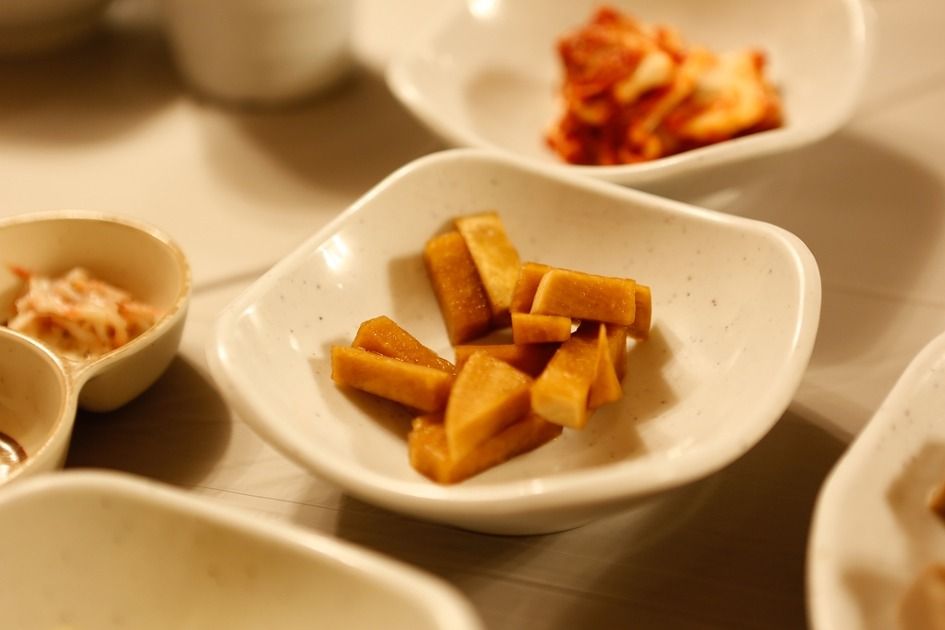 Chili Paste–Cured Radish무장아찌Korean radish salted, dried until leathery and buried in gochujang for weeks, then sliced thin with sesame oil — chewy, savory and deeply seasoned.
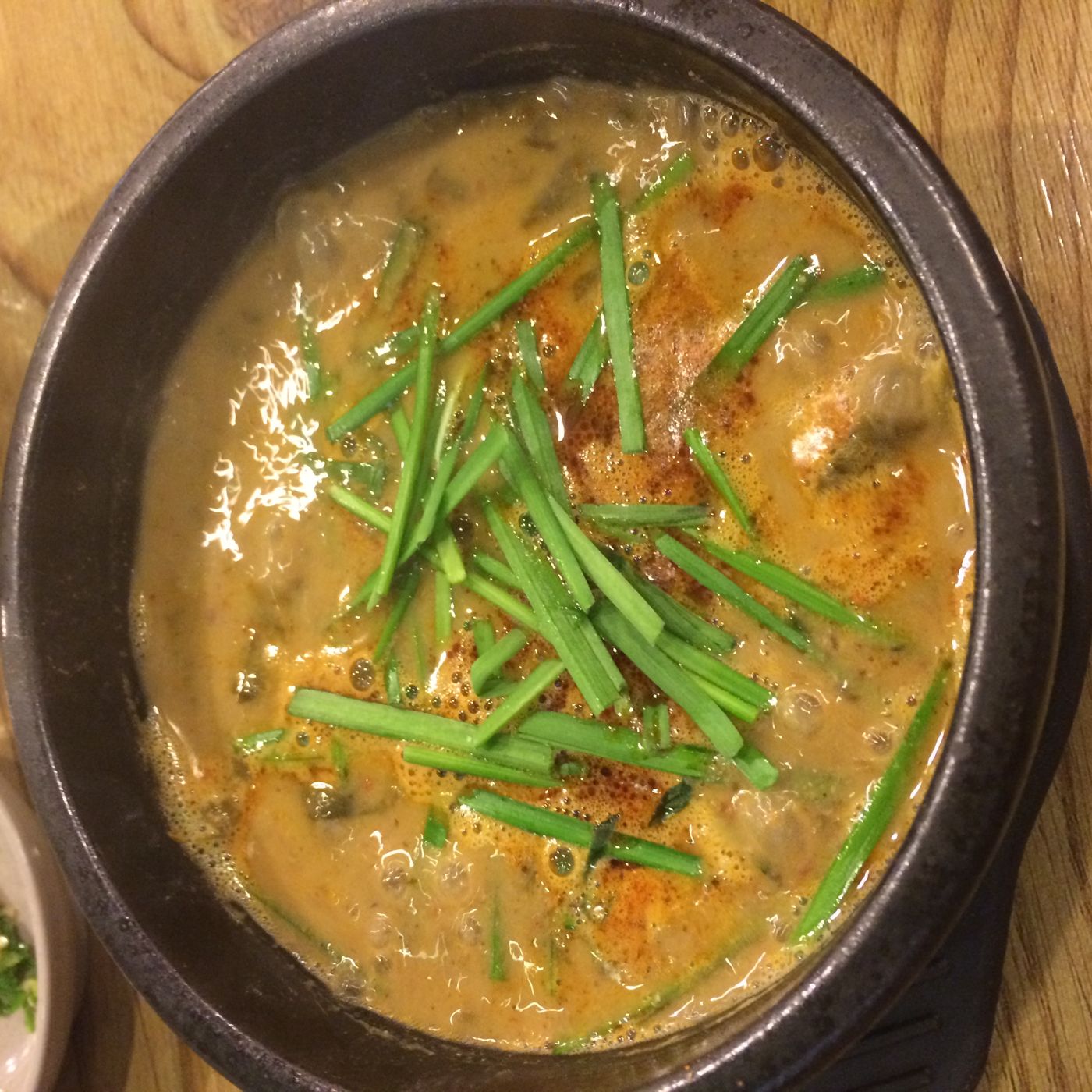 Chueotang (Loach Soup)추어탕Pond loaches simmered and ground into a thick, earthy soup with dried greens, doenjang and perilla, sharpened with chopi pepper — an autumn harvest dish turned year-round restorative.
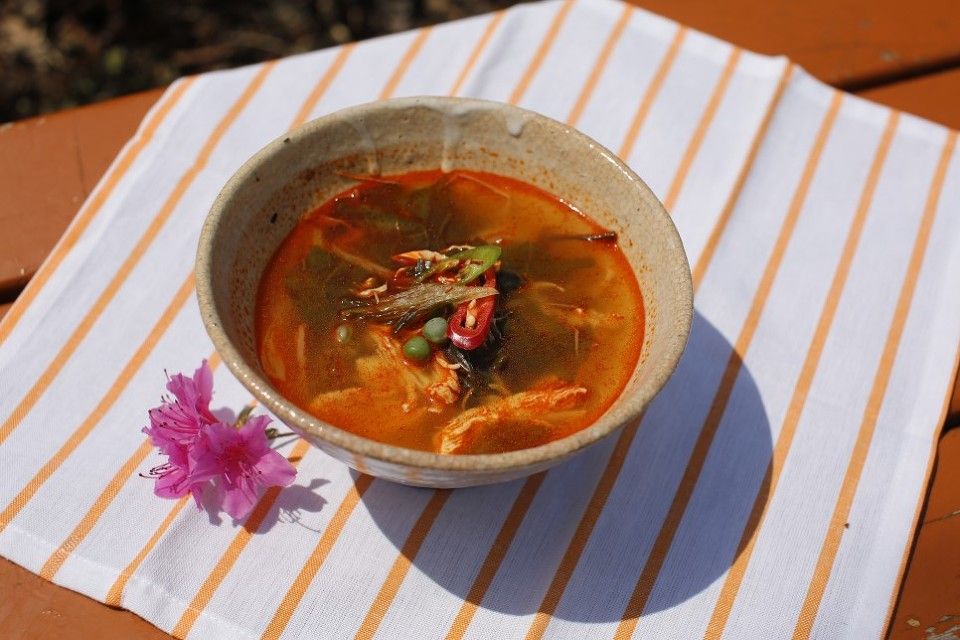 Dakgaejang (Spicy Chicken Soup)닭개장Shredded chicken simmered with bracken, taro stems and plenty of green onion in a fiery chili-oil broth — the chicken cousin of yukgaejang.
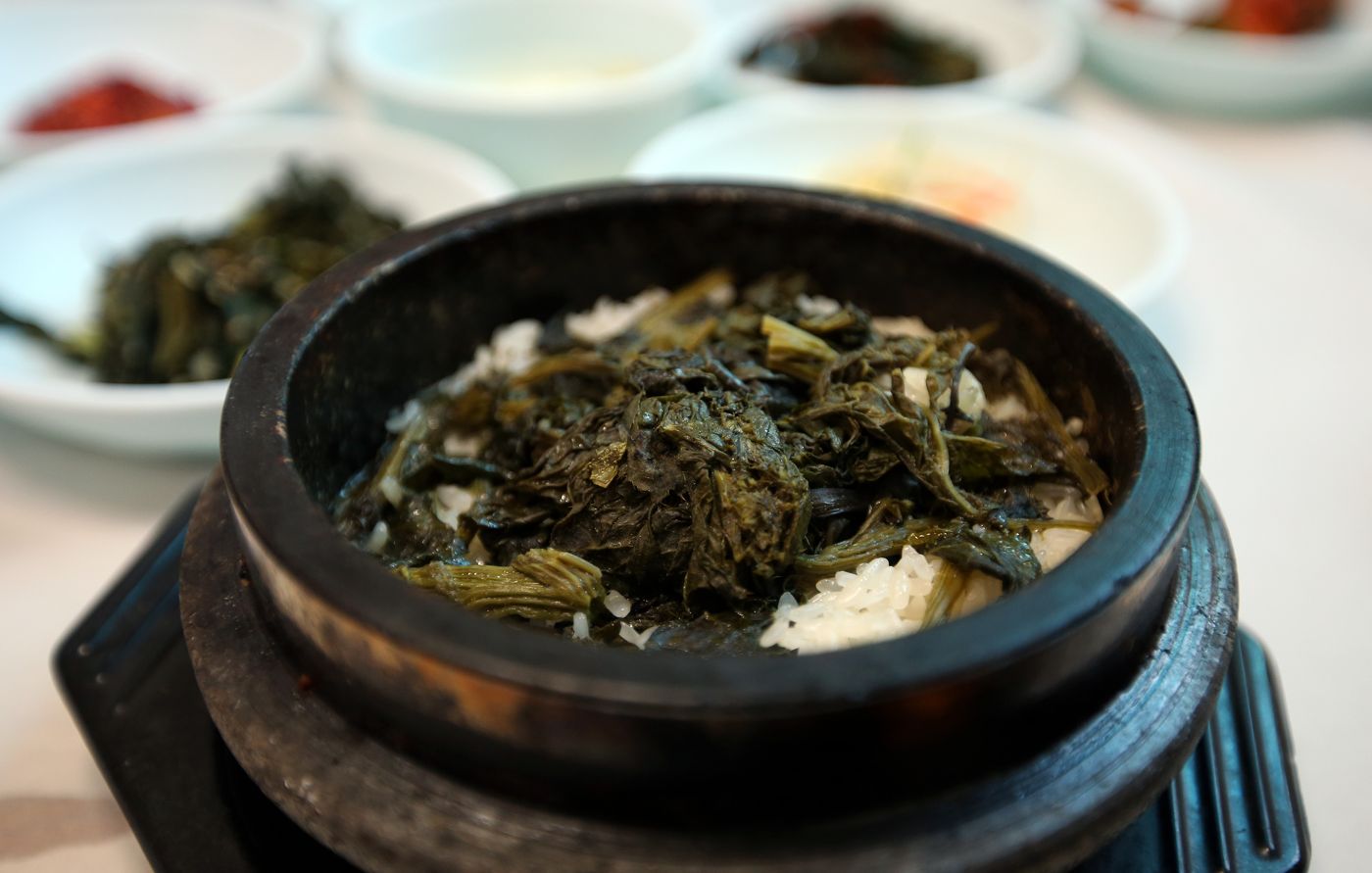 Gondeure-bap (Thistle Rice)곤드레밥Rice steamed with dried-and-rehydrated gondeure, a soft mountain thistle, then stirred with a soy-sauce dressing — the signature dish of Gangwon's highlands, especially Jeongseon.
- Mareun Hobak Namul (Dried Squash Namul)호박고지나물Sun-dried strips of young squash soaked and stir-fried with perilla oil and soy sauce — chewy and sweet, one of the stored "old greens" eaten on the first full moon.
- Miyeok Muchim미역무침Rehydrated wakame seaweed and cucumber in a light sweet-and-sour soy dressing — cool, slippery and refreshing, especially in summer.
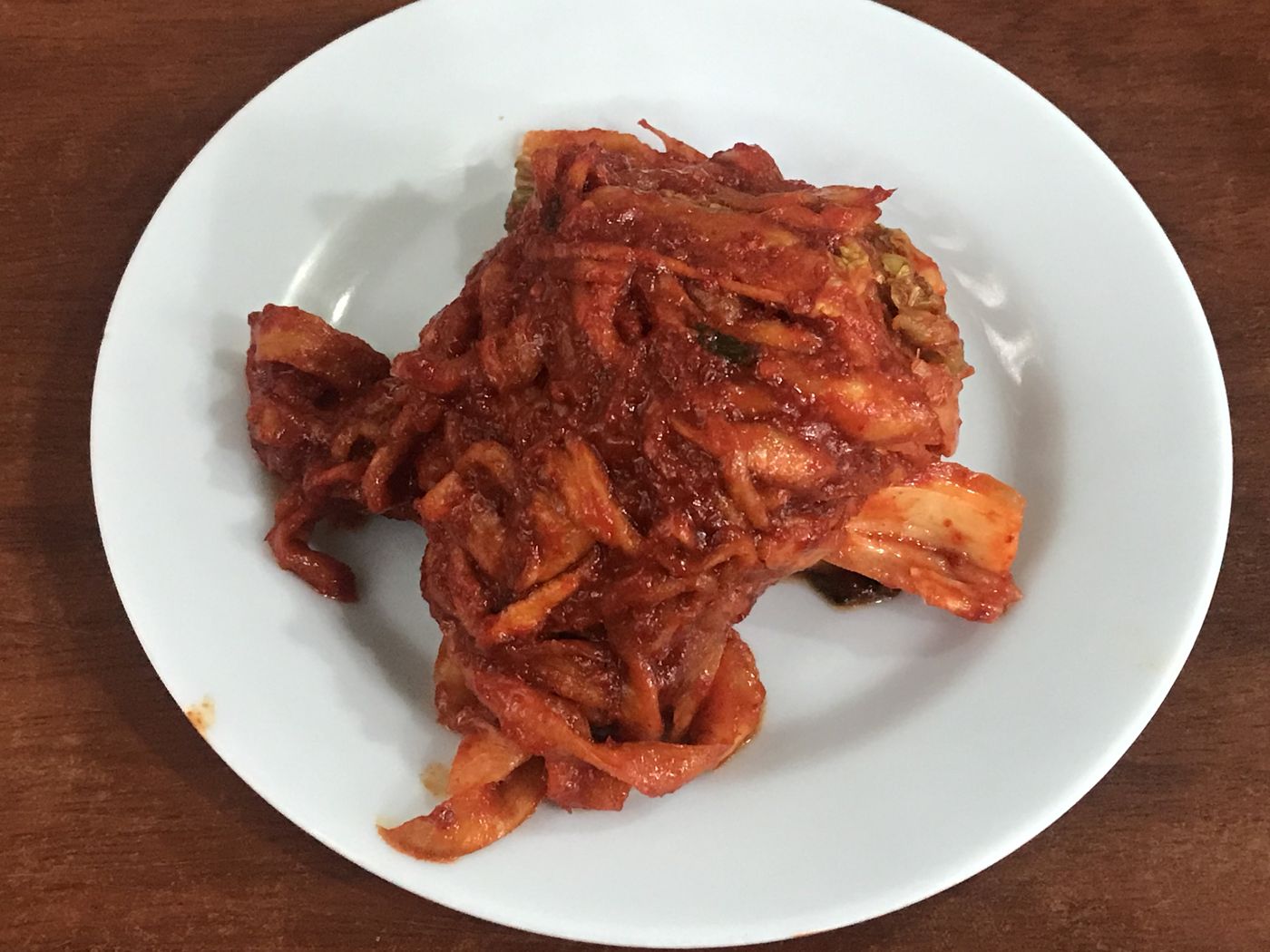 Mu Mallaengi Muchim무말랭이무침Sun-dried radish strips soaked until springy and tossed in a sweet, spicy chili dressing — crunchy, chewy and a long-keeping winter staple.
- Siraegi Namul시래기나물Dried radish greens soaked, simmered until tender and seasoned with doenjang and perilla or sesame oil — a deep, earthy winter namul.
Sources
- 01묵은나물 (Mugeun namul) — Encyclopedia of Korean Culture
- 02진채식 (Jinchaesik) — Encyclopedia of Korean Culture
- 03고사리 (Gosari) — Encyclopedia of Korean Culture
- 04시래기 (Siraegi) — Standard Korean Language Dictionary, National Institute of Korean Language
- 05Packaging and Storing Dried Foods — National Center for Home Food Preservation
- 06Sun Drying — National Center for Home Food Preservation