Ingredient
Perilla
깻잎
Romanization: kkaennip
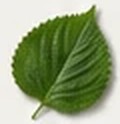
Perilla leaves have a bold, minty-herbal scent. They are eaten fresh as a wrap, pickled in soy sauce, or layered with seasoning as kkaennip-jangajji.
Flavor
Aromatic and herbaceous, somewhere between mint, basil and anise, from aroma compounds such as perillaldehyde and perilla ketone.
Origin & History
Perilla (deulkkae, Perilla frutescens) is an annual of the mint family (Lamiaceae), thought to have originated in India and China. The 15th-century Korean medical compendium Hyangyak jipseongbang records it under the name imja. It grows readily in cool conditions and poor soil, and was traditionally planted at the edge of vegetable plots or alongside beans and grains.
Koreans use the whole plant. The leaves (kkaennip) are eaten raw as ssam wraps, steamed with seasoning, fried as bugak and pickled as jangajji or kimchi. The seeds are toasted and ground into deulkkae-garu, which thickens soups and namul, or pressed into perilla oil (deulgireum), used mainly in central and southern Korea for sautéing namul and brushing laver. In Joseon court cooking perilla seasoned most soups.
In English the leaves are sometimes called “sesame leaves,” but perilla is not a sesame plant: sesame belongs to a different botanical family (Pedaliaceae).
Nutrition
| Calories | 47 kcal |
|---|---|
| Protein | 4.5 g |
| Fat | 0.5 g |
| Carbohydrates | 8.9 g |
| Fiber | 5.7 g |
| Sodium | 1 mg |
Notable forVitamin K · Vitamin A (as beta-carotene) · Calcium · Folate
Values from the Korean Food Composition Table (RDA, 2021 data). The same table lists dried perilla seed at about 40 g fat per 100 g, roughly 25 g of it alpha-linolenic acid. Actual values vary with ingredients, portion size and preparation.
Health Benefits
- Leafy-green nutrients: Per 100 g, raw perilla leaves are notably high in vitamin K and beta-carotene and are a source of calcium and folate.
- Plant omega-3 in the seeds: Korean food-composition data show perilla seed fat is dominated by alpha-linolenic acid (ALA), a plant omega-3 fatty acid; the oil is correspondingly prone to oxidation and is best kept cool.
- Vitamin K and warfarin: People taking warfarin are advised to keep vitamin K intake consistent from week to week rather than suddenly eating large amounts of leafy greens; check with a doctor or pharmacist.
- Pickled forms: Soy-pickled perilla (kkaennip-jangajji) carries much of its brine's sodium.
Informational, not medical advice. Talk to a qualified professional about your own health and diet.
Dishes with Perilla
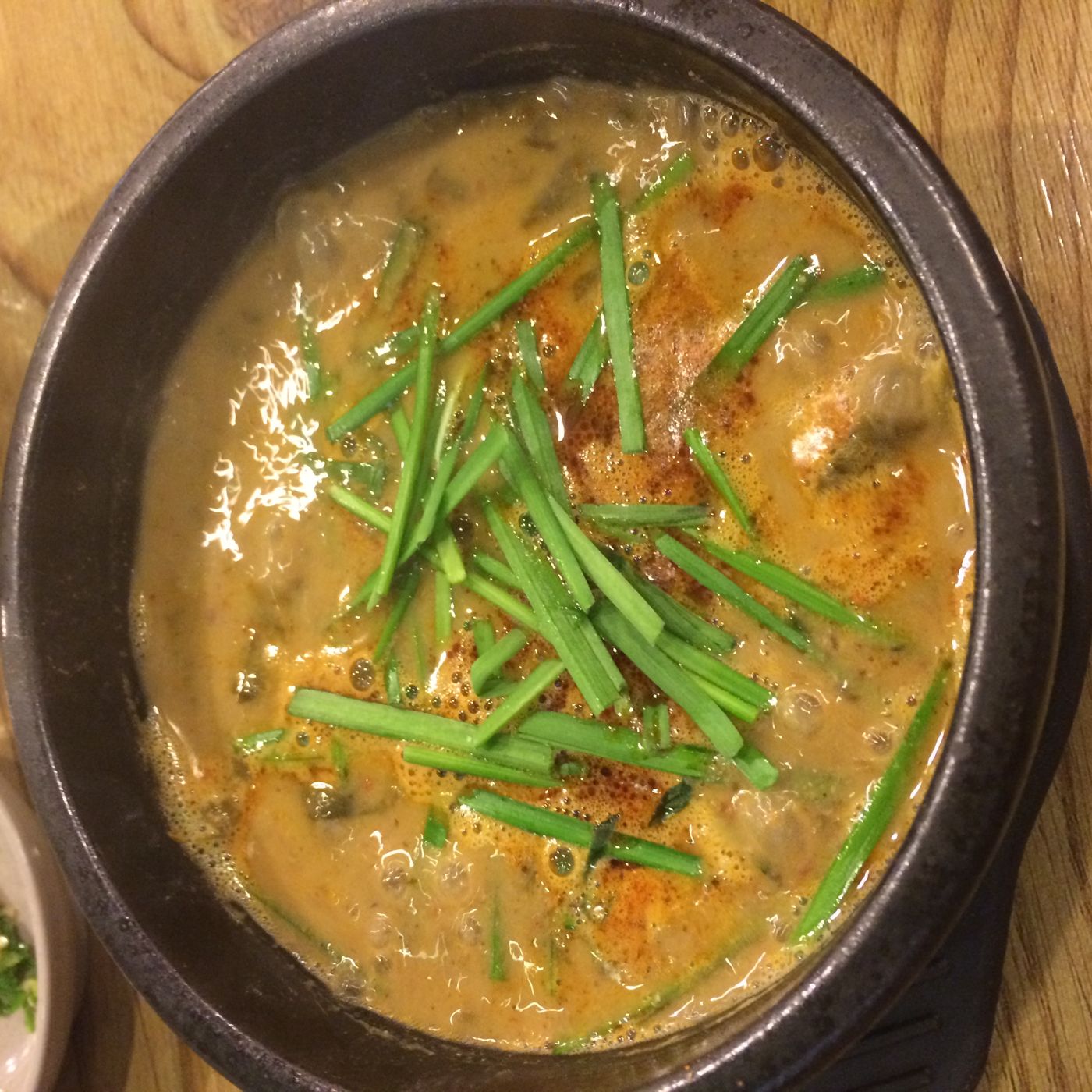 Chueotang (Loach Soup)추어탕Pond loaches simmered and ground into a thick, earthy soup with dried greens, doenjang and perilla, sharpened with chopi pepper — an autumn harvest dish turned year-round restorative.
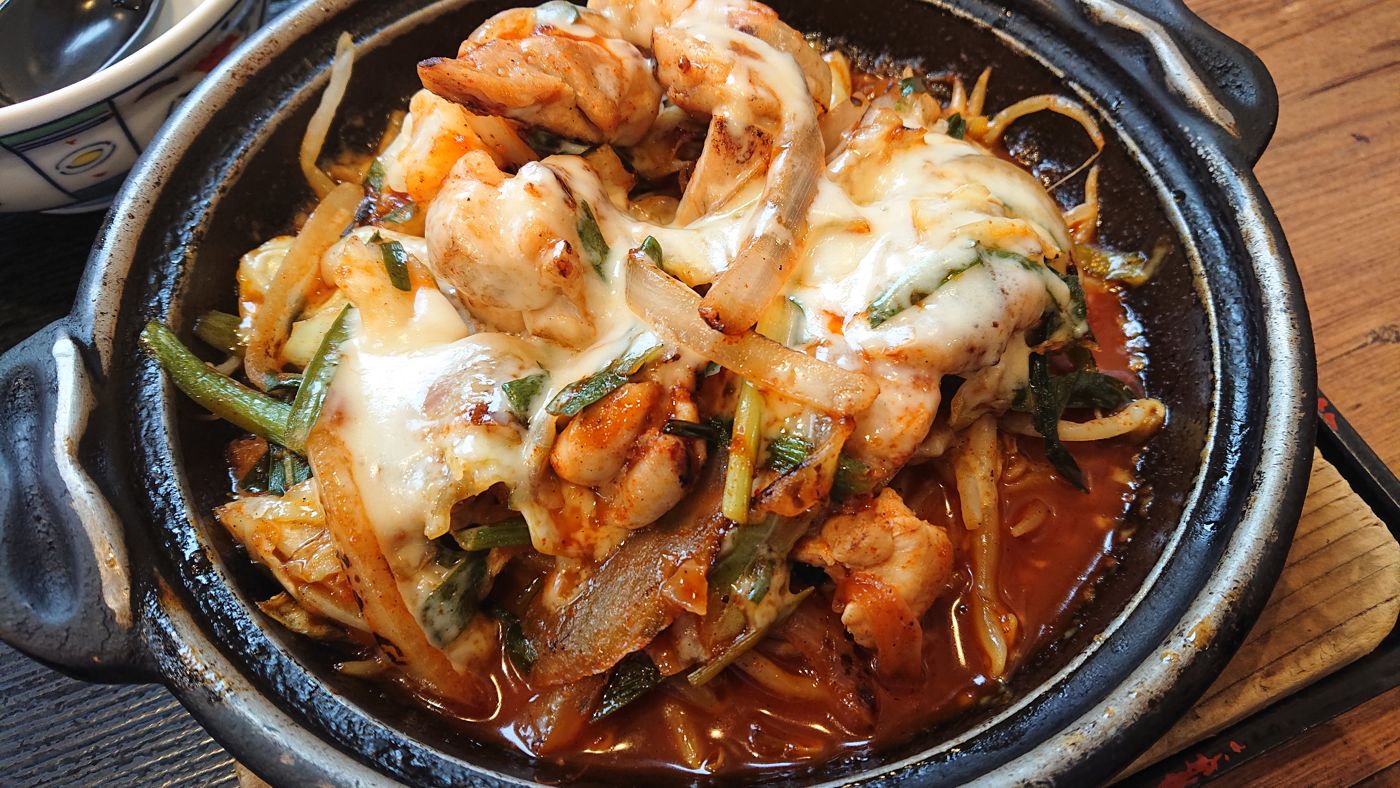 Dakgalbi (Spicy Stir-Fried Chicken)닭갈비Chicken marinated in a fiery gochujang sauce and cooked on a big iron pan with cabbage, sweet potato and rice cakes — Chuncheon's signature dish, finished with fried rice.
- Doraji Namul도라지나물Shredded bellflower root rubbed with salt to tame its bitterness, then gently stir-fried — the ivory-white member of the three-colored namul.
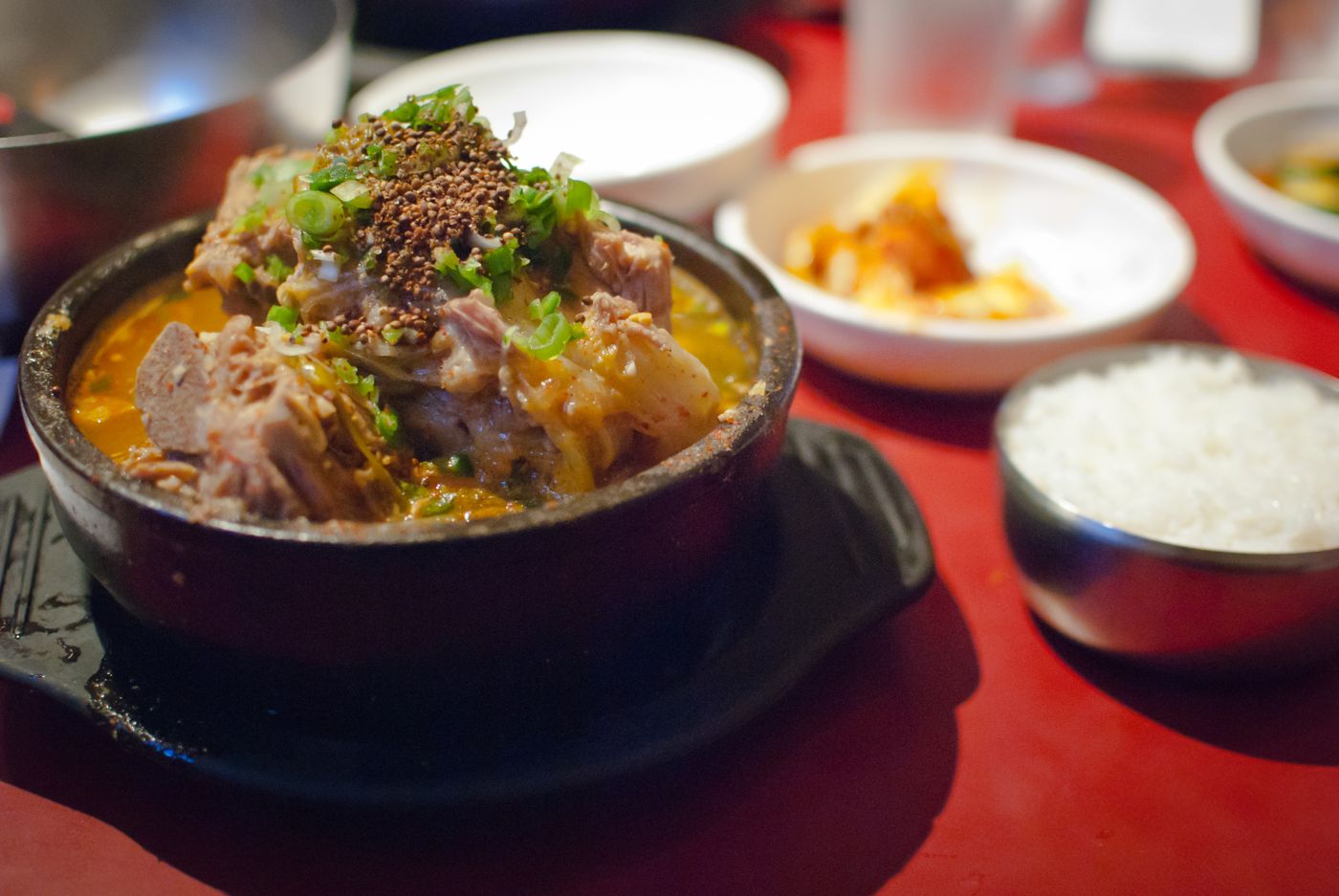 Gamjatang (Pork Bone and Potato Stew)감자탕Meaty pork spine simmered with potatoes, cabbage greens and perilla in a spicy doenjang-chili broth — a big shared pot of picking meat off the bones.
- Gim Gui (Seasoned Roasted Laver)김구이Sheets of laver brushed with sesame or perilla oil, sprinkled with salt and toasted until crisp — eaten wrapped around spoonfuls of rice.
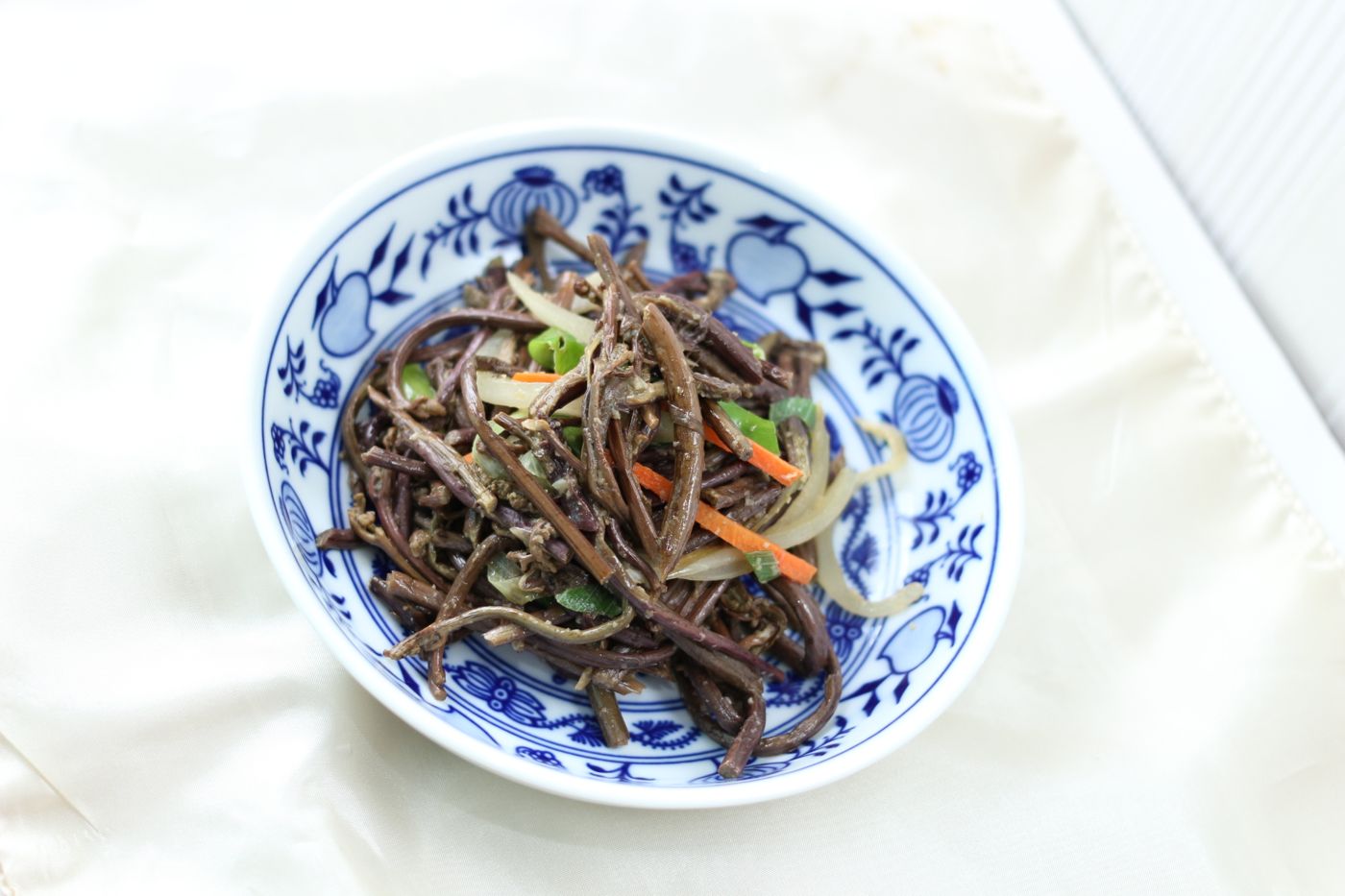 Gosari Namul고사리나물Dried bracken fern soaked, boiled and slowly stir-fried with soup soy sauce, garlic and perilla oil — chewy, earthy and central to holiday tables.
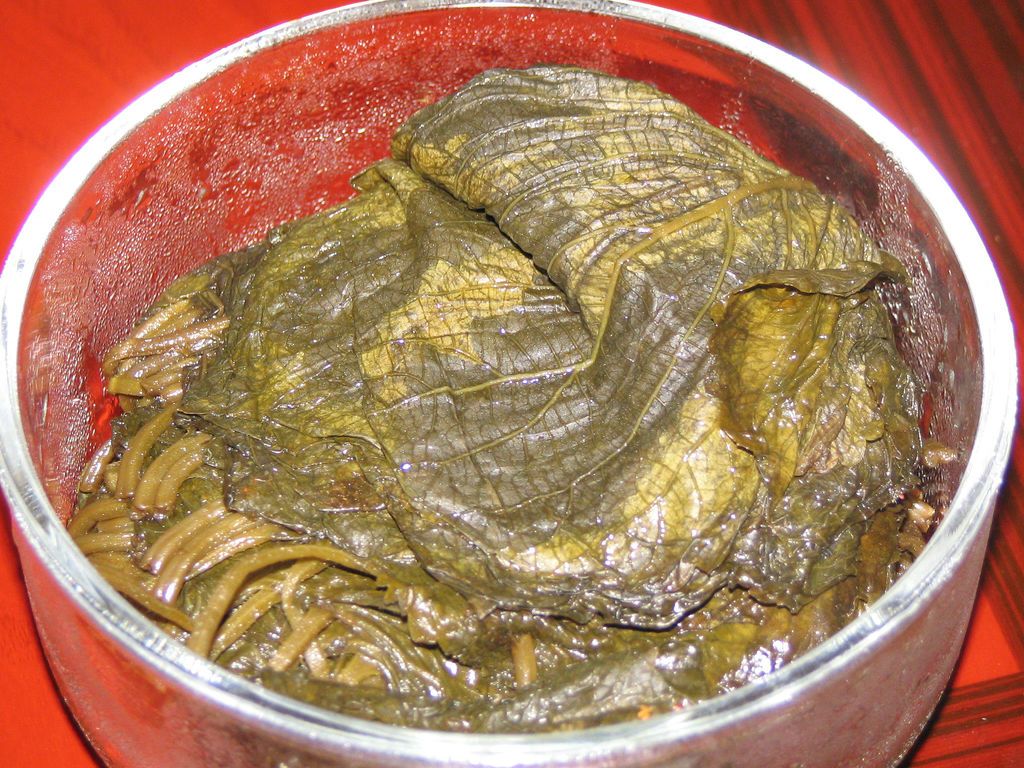 Soy-Pickled Perilla Leaves깻잎장아찌Fragrant perilla leaves steeped in a sweet-salty soy brine — peeled off one at a time and wrapped around a spoonful of rice.
- Kkaennip Jjim (Steamed Seasoned Perilla Leaves)깻잎찜Perilla leaves layered with a garlicky soy-chili sauce and steamed until soft — a fragrant banchan for wrapping around spoonfuls of rice.
- Perilla Leaf Kimchi깻잎김치Stacks of perilla leaves layered with a soy, fish-sauce and chili seasoning — fragrant, slightly bitter summer kimchi peeled off one leaf at a time over rice.
- Kkaennip Namul (Seasoned Perilla Leaves)깻잎나물Young perilla leaves and tender tips, blanched and sautéed in perilla oil with garlic and soup soy sauce — a soft, deeply aromatic summer namul.
- Mu Namul (Stir-Fried Radish Namul)무나물Julienned Korean radish stir-fried in perilla oil, then steamed in a splash of water until sweet and translucent — a soft, mild namul for rites and everyday rice.
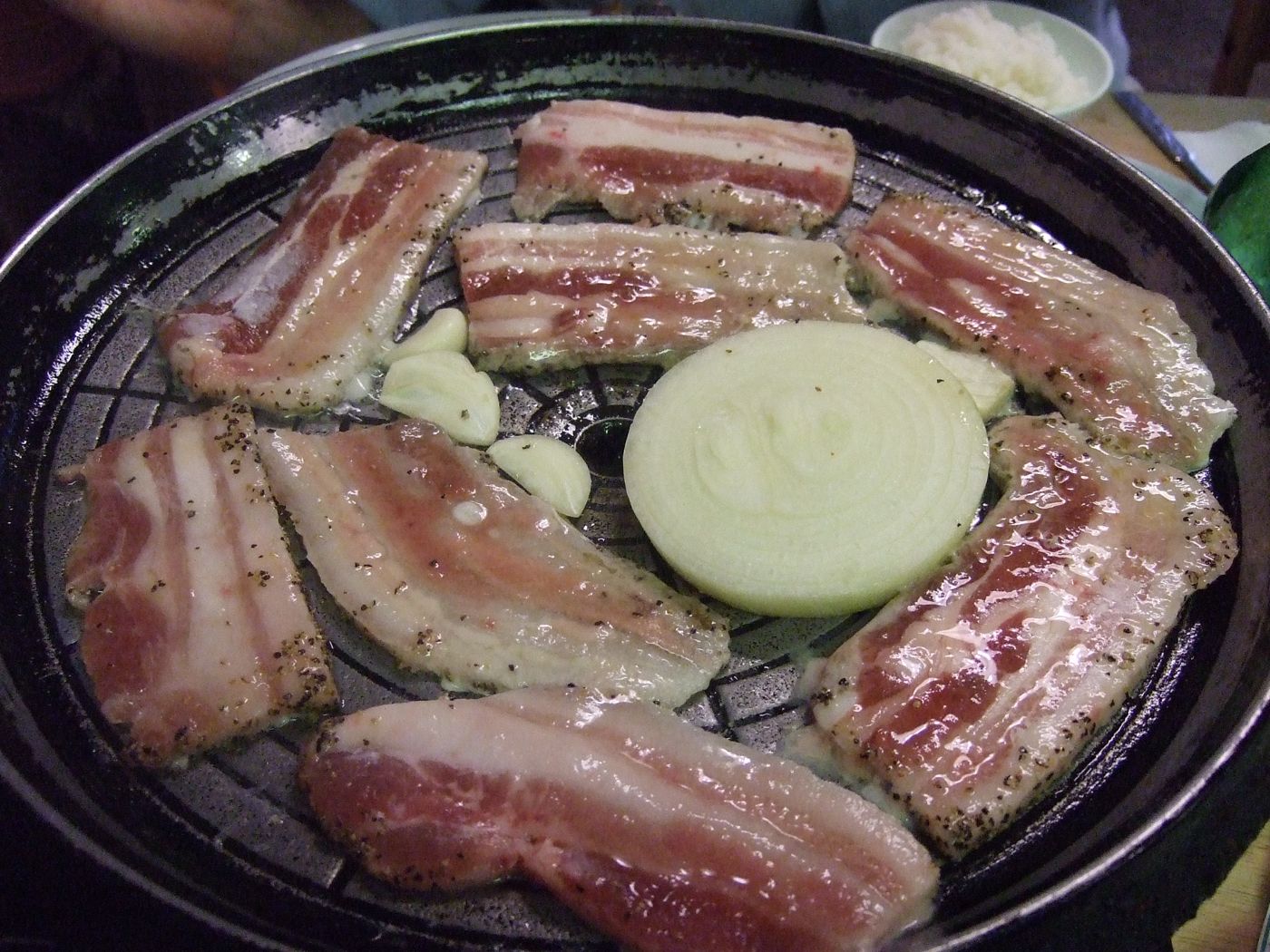 Samgyeopsal-gui (Grilled Pork Belly)삼겹살구이Thick, unseasoned slices of pork belly grilled at the table and wrapped in lettuce with garlic and ssamjang — Korea's favorite barbecue, though only since the late 1970s.
- Siraegi Namul시래기나물Dried radish greens soaked, simmered until tender and seasoned with doenjang and perilla or sesame oil — a deep, earthy winter namul.
Sources
- 01들깨 (Perilla) — Encyclopedia of Korean Culture
- 02들기름 (Perilla oil) — Encyclopedia of Korean Culture
- 03참깨 (Sesame) — Encyclopedia of Korean Culture
- 04Warfarin — MedlinePlus Drug Information
- 05Korean Food Composition Table (National Standard Food Composition Table) search — Rural Development Administration