Ingredient
Perilla Seed Powder
들깨가루
Romanization: deulkkae-garu
Roasted perilla seeds ground to a coarse, oily powder, sold whole or hulled. Stirred into soups and stews it makes them creamy and nutty; tossed with namul it adds body and fragrance.
Flavor
Deeply nutty and toasty, with a distinctive herbal, slightly minty perilla fragrance quite unlike sesame. In soup it gives a creamy, almost milky body; whole-seed powder is earthier and grittier than hulled.
Origin & History
Perilla (Perilla frutescens) is grown across Korea for both its leaves and its small seeds. The Encyclopedia of Korean Culture notes that the seeds are roasted and ground to use as a seasoning or pressed for oil, which was once burned in lamps as well as used for cooking. Korea's agrifood information service lists October as the seed harvest and Gapyeong, Yangpyeong, Chuncheon, Wonju and Hongcheon among the growing areas.
Deulkkae-garu comes in two styles: whole-seed powder, darker and more rustic, including the husks, and hulled powder (geopi deulkkae-garu), paler, smoother and creamier, with most of the husk removed. Both are roasted first, since raw perilla seed tastes flat.
Its signature use is in tang and stews. A few spoonfuls thicken and enrich broths such as perilla soup with taro stems or mushrooms, loach soup (chueotang), dumpling soups and perilla sujebi, and they soften the bite of pork and duck dishes. In namul, perilla powder is tossed with braised dried vegetables such as gosari, taro stems and siraegi along with a splash of perilla oil, and it is a common addition to soups for new mothers. The agrifood service suggests roasting and grinding small amounts as needed, since the powder loses its aroma over time.
Health Benefits
- Plant omega-3: Perilla seeds are one of the richest plant sources of alpha-linolenic acid (ALA). The Korean Food Composition Table lists roasted perilla seed at about 24 g ALA, 36 g fat and 22 g fiber per 100 g (530 kcal). It does not list perilla powder separately, and hulled powders will have less fiber.
- Minerals: The same entry lists roasted seed as a source of calcium (about 416 mg), magnesium (315 mg), iron (7.5 mg) and zinc (6.8 mg) per 100 g. A spoonful in soup contributes a modest share.
- Energy-dense: Like other seeds, perilla powder is high in calories, so generous scoops add up in a stew.
- Allergy: Perilla seed can cause immediate allergic reactions. A Korean study of 21 children with perilla seed allergy found that nearly 29 percent had experienced anaphylaxis. Families managing seed allergies should check soups, namul and porridges.
- Freshness: The unsaturated fats that make perilla valuable also oxidize quickly; buy small packages, keep the powder airtight and refrigerated or frozen, and discard it if it smells rancid.
Informational, not medical advice. Talk to a qualified professional about your own health and diet.
Dishes with Perilla Seed Powder
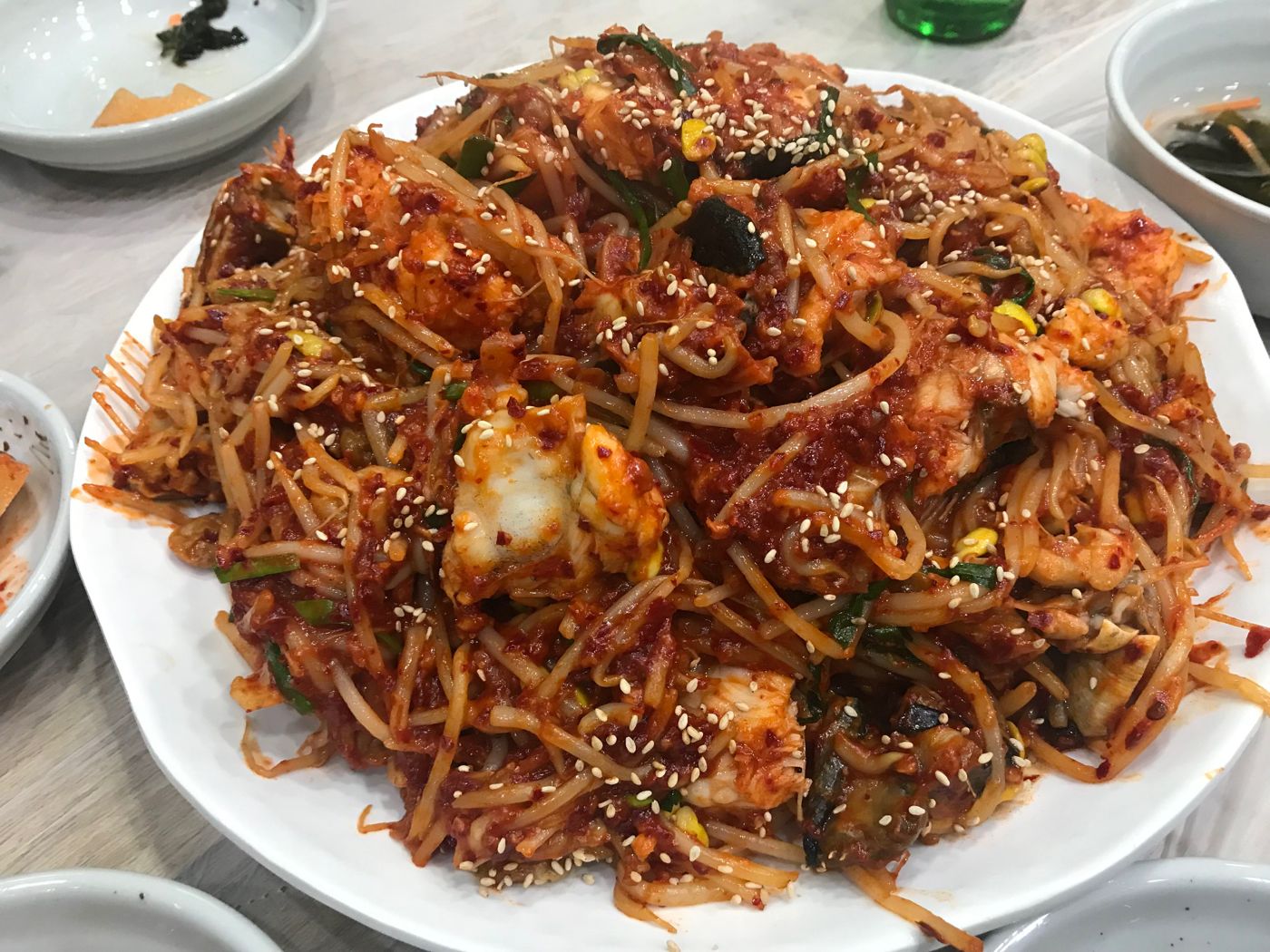 Agu-jjim (Spicy Braised Monkfish)아귀찜Monkfish braised with a mountain of soybean sprouts and minari in a fiery chili sauce thickened with starch — a Masan specialty now eaten across Korea.
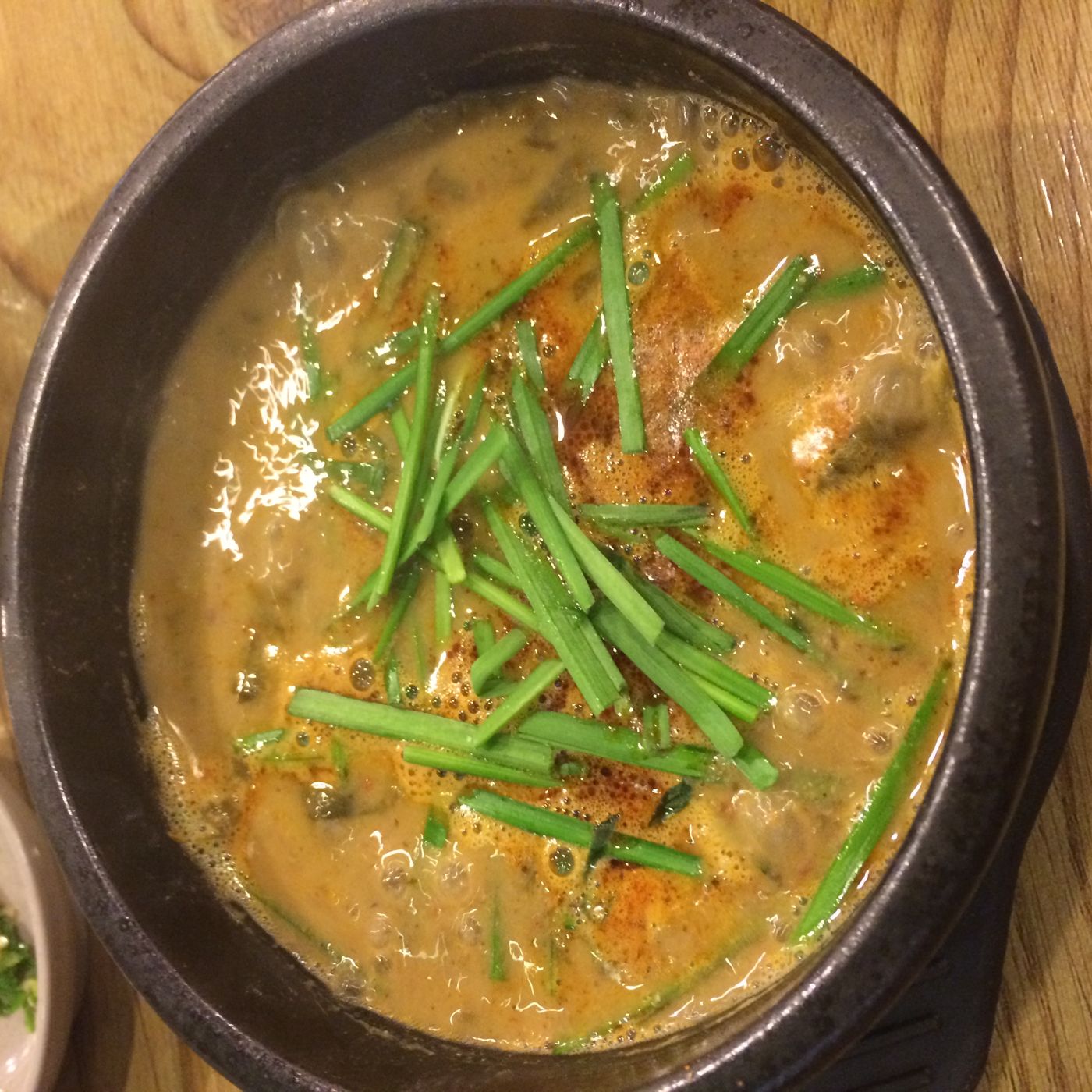 Chueotang (Loach Soup)추어탕Pond loaches simmered and ground into a thick, earthy soup with dried greens, doenjang and perilla, sharpened with chopi pepper — an autumn harvest dish turned year-round restorative.
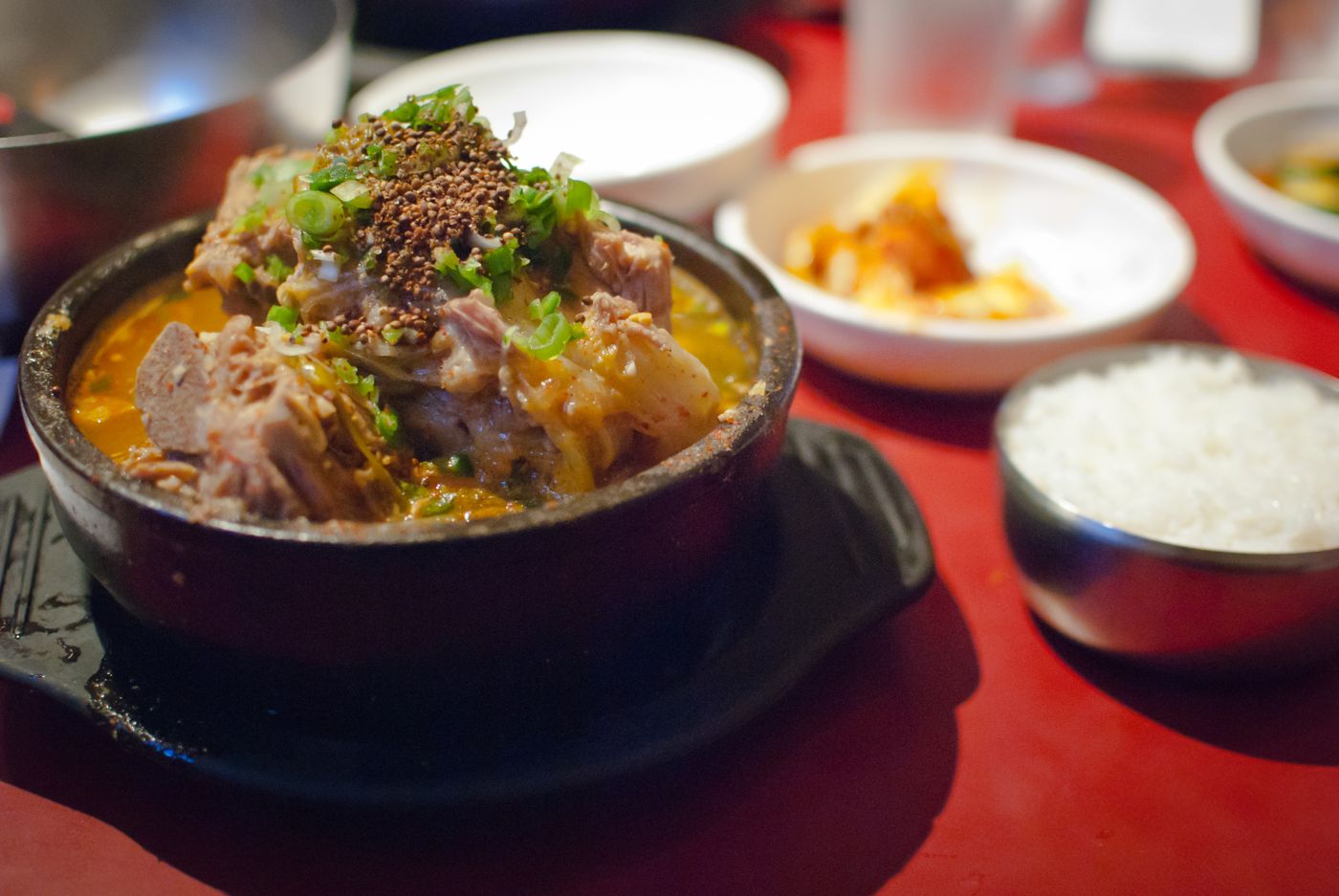 Gamjatang (Pork Bone and Potato Stew)감자탕Meaty pork spine simmered with potatoes, cabbage greens and perilla in a spicy doenjang-chili broth — a big shared pot of picking meat off the bones.
- Kkaennip Namul (Seasoned Perilla Leaves)깻잎나물Young perilla leaves and tender tips, blanched and sautéed in perilla oil with garlic and soup soy sauce — a soft, deeply aromatic summer namul.
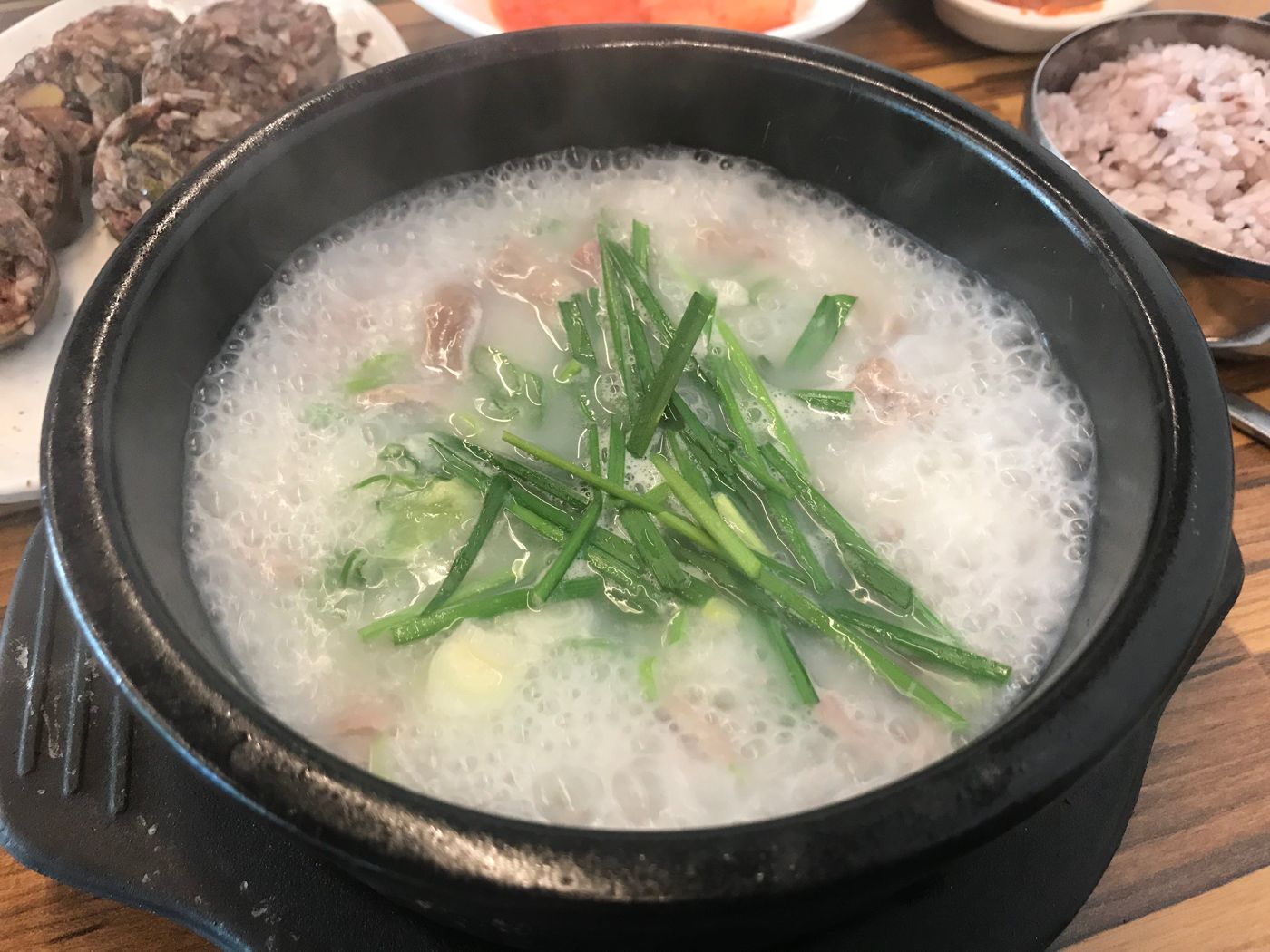 Sundaeguk (Blood Sausage Soup)순댓국Slices of Korean blood sausage and pork offal in a rich pork-bone broth, seasoned at the table with salted shrimp — a cheap, hearty market-day bowl served with rice.
- Yukjeon (Beef Jeon)육전Thin slices of lean beef, lightly marinated, dipped in flour and egg and pan-fried — an ancestral-rite jeon that Gwangju has made into a specialty.
Sources
- 01들깨 (Perilla) — Encyclopedia of Korean Culture
- 02제철농식품: 들깨 (Seasonal produce: perilla seed) — Foodnuri, Korea Agro-Fisheries & Food Trade Corporation
- 03들깨, 볶은것 (Perilla seed, roasted) — Korean Food Composition Table, RDA
- 04Clinical and Immunological Characterization of Perilla Seed Allergy in Children — J Investig Allergol Clin Immunol (2023)