Ingredient
Siraegi (dried radish greens)
시래기
Romanization: siraegi
Radish tops dried in the shade until dark and brittle, then soaked and simmered back to tenderness. A winter staple for earthy namul, doenjang soups and rice cooked with greens.
Flavor
Deep, earthy and savory, with a faintly hay-like aroma. Well-simmered siraegi is soft but still fibrous and chewy, and it carries the flavor of *doenjang* and broth beautifully.
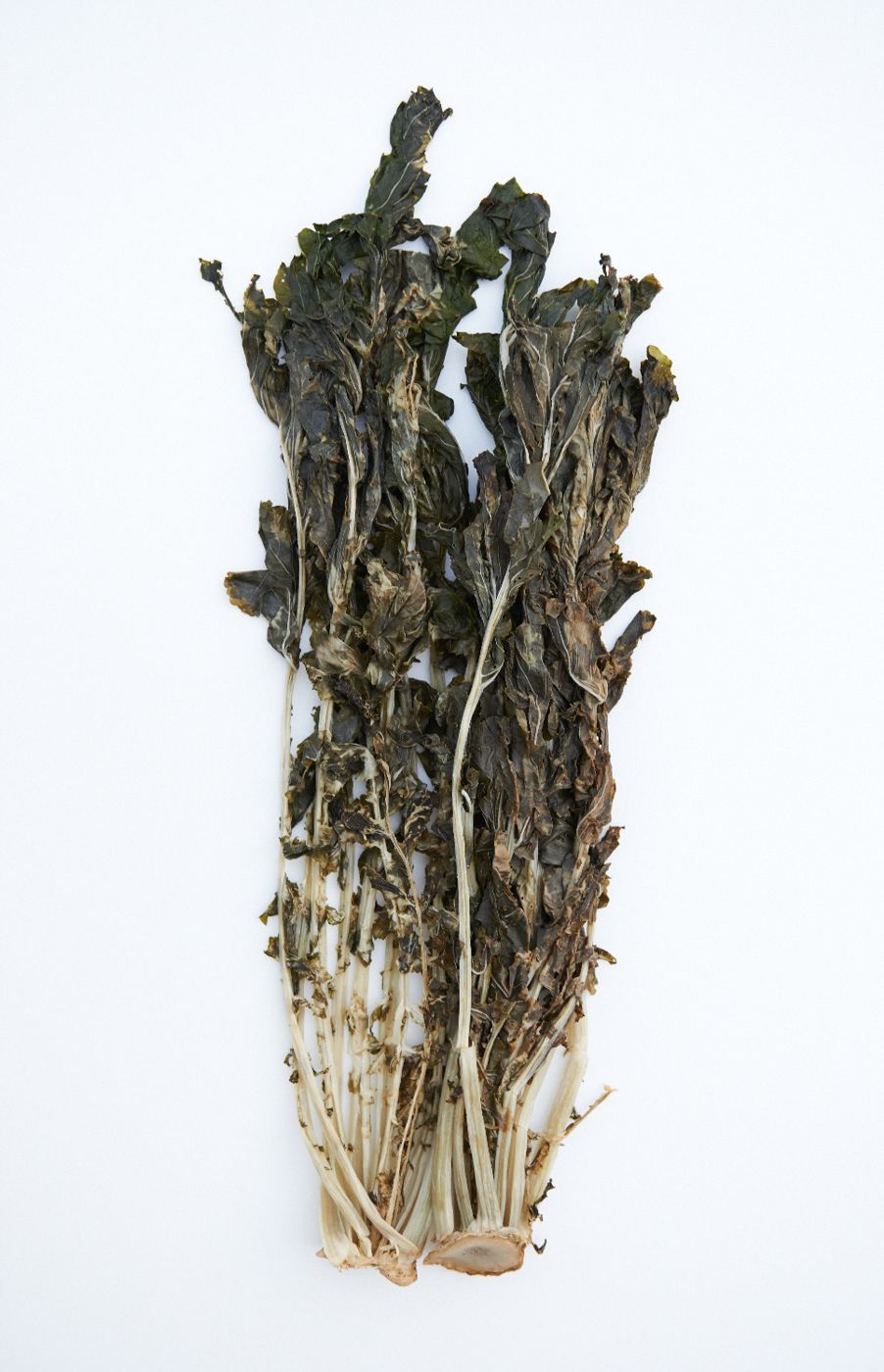 Photo: 국립국어원, CC BY-SA 2.0 kr, via Wikimedia Commons
Origin & History
Siraegi is not a separate plant but a preserved food: the leafy tops of the radish (mu), and sometimes outer napa cabbage leaves, dried for winter. Radish was a mainstay of the Korean kitchen and a famine food, and drying both the roots (mu-mallaengi) and the greens made it one of the most storable vegetables a household had.
Joseon writing records the method. Sallim gyeongje, an early-eighteenth-century household manual, advises storing large radishes pulled after the first frost in a pit to last until spring, and braiding the greens with straw rope to dry in the shade; before cooking, the dried leaves are soaked until they swell and then boiled. Siraegi was a winter namul above all. The writer Choe Yeong-nyeon, in Haedong jukji, listed it among the nine or more "old namul" eaten on Jeongwol Daeboreum, the first full moon of the lunar year, singling out the dark-green siraegi as especially wholesome. It still appears among the three- and five-color namul set out for ancestral rites and holidays, and on top of bibimbap.
Radish greens are usually dried in autumn, after the radish harvest, and eaten through the winter; today siraegi is also sold already boiled, and blanched siraegi can be frozen for long keeping.
In cooking, rehydrated siraegi is seasoned as namul, often with doenjang, soy sauce, garlic, chili powder and sesame oil (in North Gyeongsang it may be called siraegi doenjang-muchim); simmered in anchovy broth with doenjang and perilla seed for siraegi-guk, known in Gyeongsang dialect as sirak-guk; braised; and cooked with rice as siraegi-bap.
Nutrition
| Calories | 249 kcal |
|---|---|
| Protein | 18.46 g |
| Fat | 5.04 g |
| Carbohydrates | 45.41 g |
| Fiber | 30.5 g |
| Sodium | 100 mg |
Notable forDietary fiber · Vitamin K · Calcium · Iron
Korean Food Composition Table entry "Radish leaf, Dried" (무청, 시래기, 말린것): 18.2 g water, 984 µg vitamin K, 1,140 mg calcium, 16.5 mg iron and 5,065 mg potassium per 100 g. Dried siraegi absorbs a great deal of water when soaked and boiled, so a cooked serving contains far less of everything per 100 g. For comparison, fresh Korean radish leaves (무청, 생것) provide 23 kcal per 100 g. Actual values vary with ingredients, portion size and preparation.
Health Benefits
- Concentrated greens: Because it is dried, siraegi is dense in fiber, minerals and vitamin K by weight (Korean Food Composition Table); soaking and cooking dilute these considerably.
- Winter vegetable: Traditionally it supplied greens through months when little fresh produce was available.
- Vitamin K and warfarin: As a concentrated leafy green, siraegi is very high in vitamin K; people taking warfarin are advised to keep their intake of such foods consistent and to consult their doctor.
- Sodium caveat: Siraegi itself is low in sodium, but soups and namul seasoned with doenjang and soy sauce can be salty.
Informational, not medical advice. Talk to a qualified professional about your own health and diet.
Dishes with Siraegi (dried radish greens)
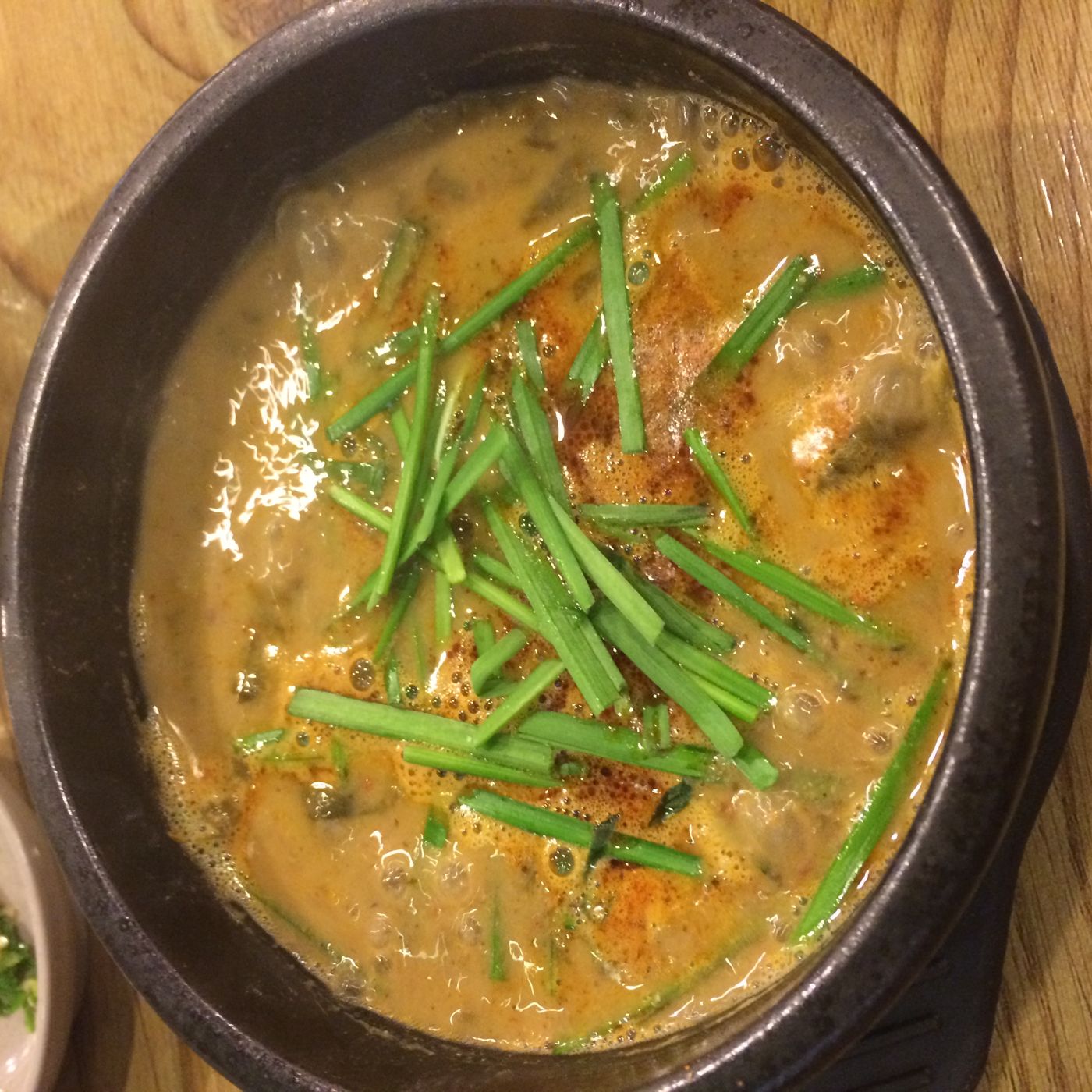 Chueotang (Loach Soup)추어탕Pond loaches simmered and ground into a thick, earthy soup with dried greens, doenjang and perilla, sharpened with chopi pepper — an autumn harvest dish turned year-round restorative.
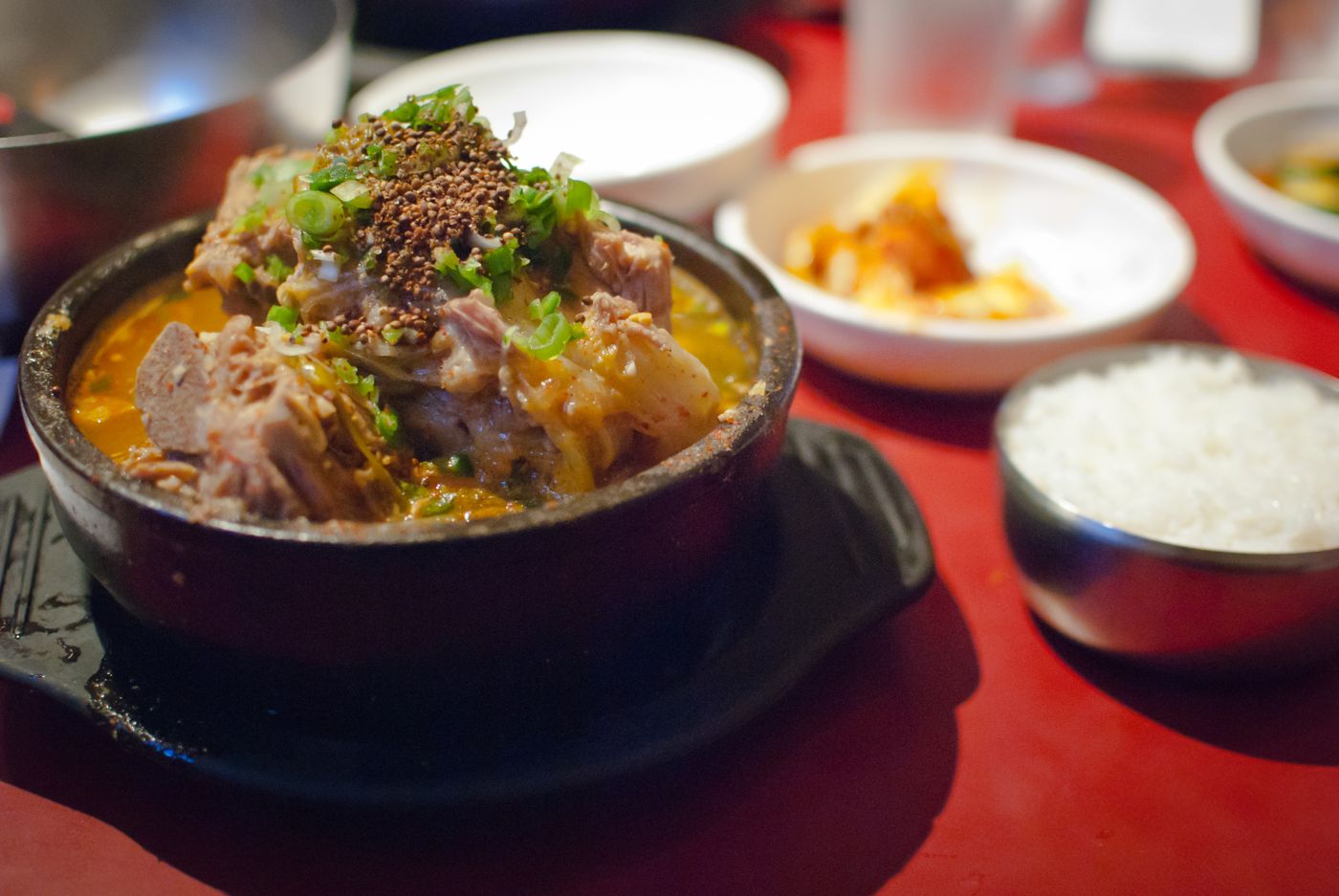 Gamjatang (Pork Bone and Potato Stew)감자탕Meaty pork spine simmered with potatoes, cabbage greens and perilla in a spicy doenjang-chili broth — a big shared pot of picking meat off the bones.
- Siraegi Namul시래기나물Dried radish greens soaked, simmered until tender and seasoned with doenjang and perilla or sesame oil — a deep, earthy winter namul.
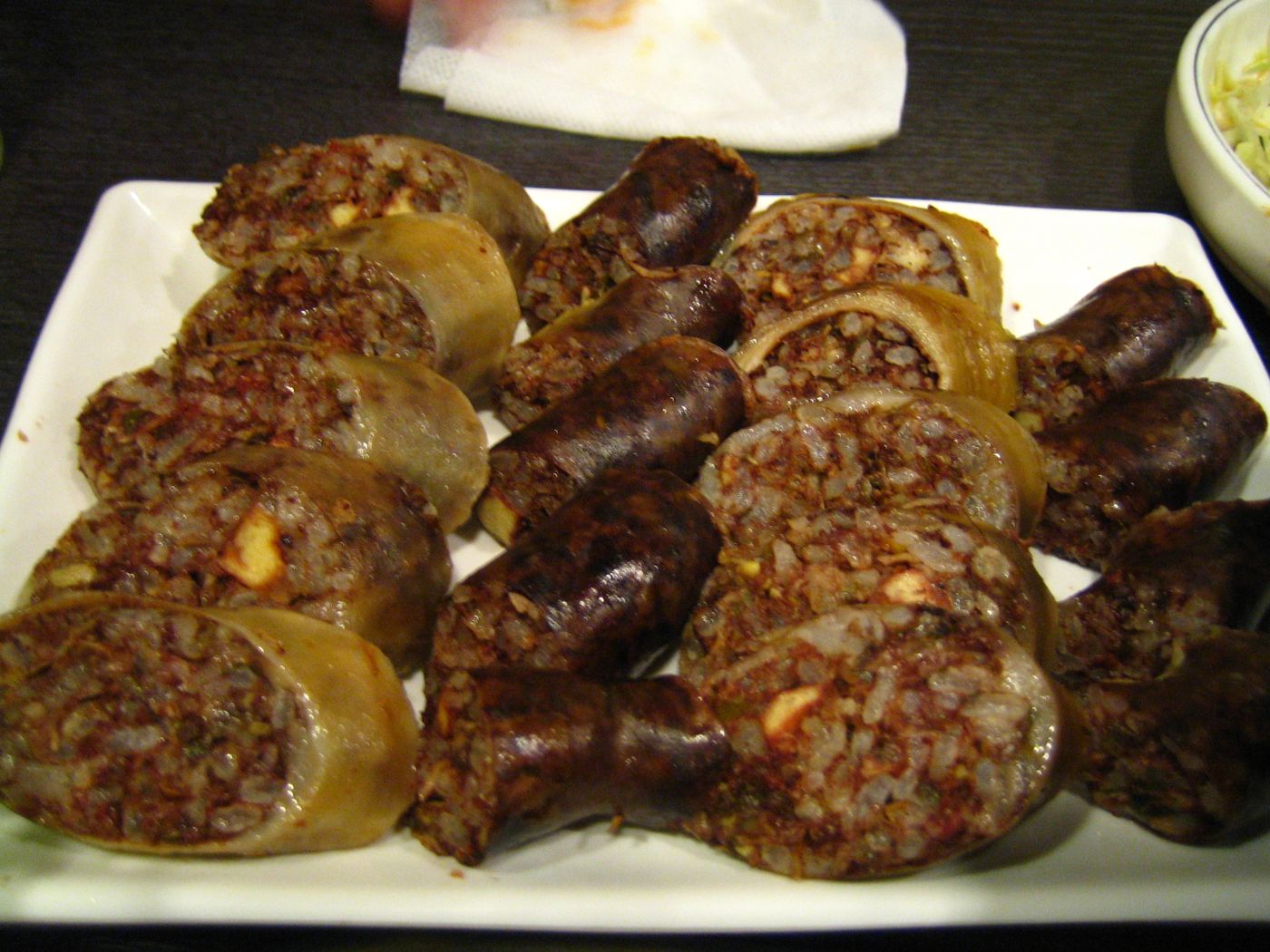 Sundae (Korean Blood Sausage)순대Pork intestine stuffed with pig's blood, glutinous rice, glass noodles and vegetables, then steamed — a northern farmhouse food that became a nationwide street snack.
Sources
- 01시래기 — Encyclopedia of Korean Folk Culture (한국의식주생활사전)
- 02Korean Food Composition Table: Radish leaf, Dried (무청, 시래기, 말린것) — National Institute of Agricultural Sciences
- 03Korean Food Composition Table: Radish (Mu), Korean radish, Leaf, Raw — National Institute of Agricultural Sciences
- 04Warfarin — MedlinePlus Drug Information