Ingredient
Toran (taro)
토란
Romanization: toran
Small, hairy brown corms with slippery white flesh, harvested just in time for Chuseok. Simmered in clear beef broth as toran-guk, they are a defining taste of the autumn harvest festival, especially in Seoul and Gyeonggi.
Flavor
Mild, starchy and faintly nutty, somewhere between potato and water chestnut, with a creamy, slippery texture when cooked. Raw or undercooked taro has an acrid, prickly bite.
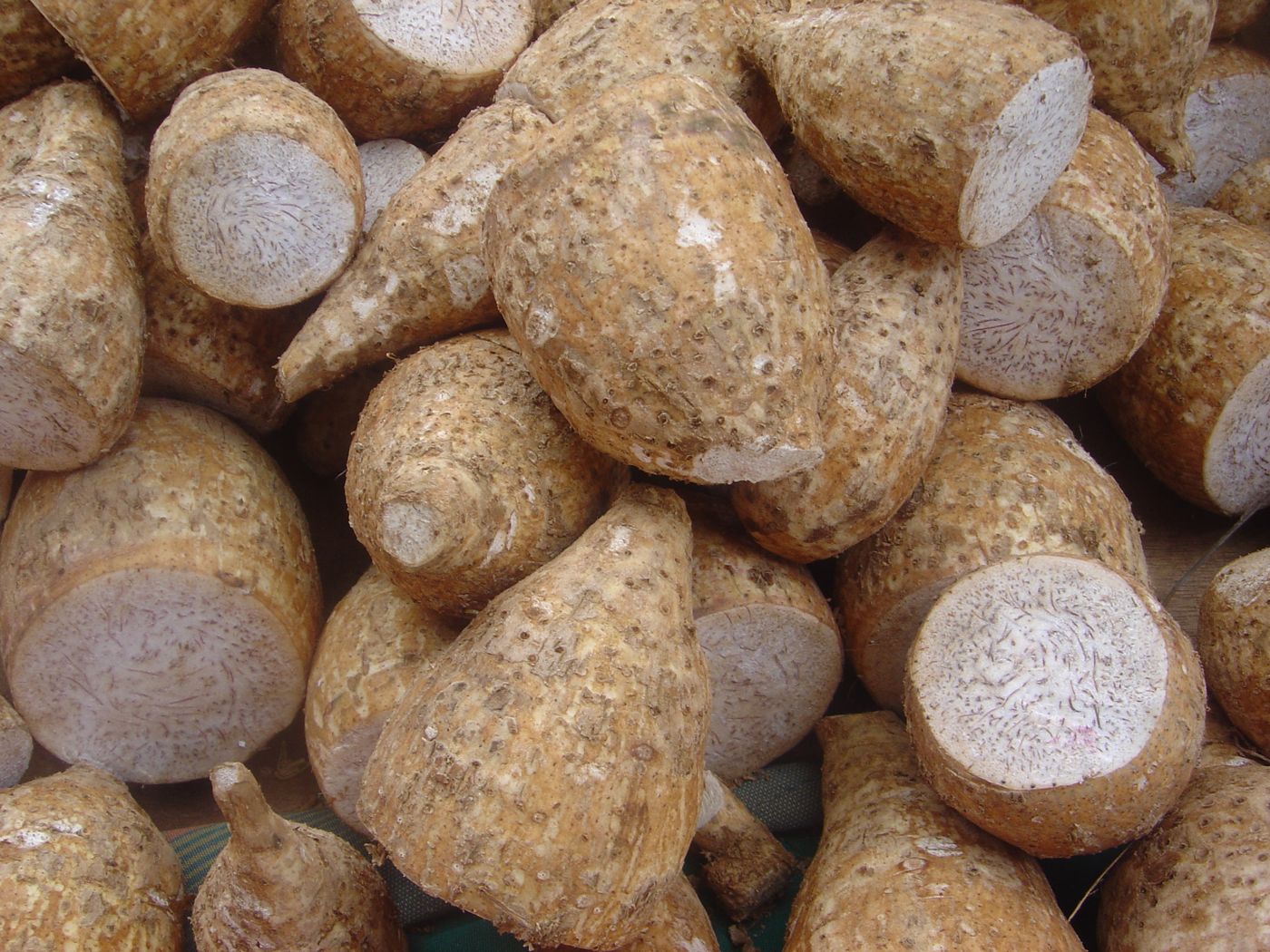 Photo: Unknown author, CC BY-SA 3.0, via Wikimedia Commons
Origin & History
Toran is taro (Colocasia esculenta), a perennial of the arum family (Araceae) native to hot, humid South and Southeast Asia. Its huge leaves, shaped like elephant ears, rise on long stalks from an underground corm covered in fibrous skin and ringed with smaller daughter corms. The Korean name is usually written 土卵, "egg of the earth," for the egg-shaped corms; an older name, toryeon (土蓮, "earth lotus"), refers to the lotus-like leaves. A plump, solid corm is an altoran, and the expression altoran gatda ("like a good taro") still means something substantial and full of value.
Taro reached China in antiquity. In Korea it is recorded in the thirteenth-century medical text Hyangyak gugeup bang, so it was known by the Goryeo period, though its exact arrival is unclear. Joseon writers including Heo Gyun described how to store seed corms over winter and transplant them into moist, rich soil. It was valued as a famine crop as much as a vegetable. Farmers planted it in damp kitchen gardens in spring and dug the corms in early autumn.
Toran is tied above all to Chuseok. Goryeo poet Yi Gyu-bo mentions taro soup cooked in the countryside, and the nineteenth-century song-calendar Nongga wollyeongga lists toran-guk among the foods offered at ancestral graves and shared with neighbors at the harvest festival. The corms are freshest and tastiest then, and toran-guk (also torantang) remains a Chuseok soup, especially in Seoul and Gyeonggi-do. Other regions lean instead on the dried stalks, torandae, which go into yukgaejang and stews.
For toran-guk, peeled corms are first parboiled in salted rice-washing water and rinsed, which removes much of their sliminess and acrid bite. They are then simmered in a clear broth of beef and dashima, seasoned with soy sauce and finished with green onion. A nineteenth-century cookbook, Siui jeonseo, suggests adding chicken. Taro is also pan-fried, and taro flour goes into songpyeon-style rice cakes.
Nutrition
| Calories | 71 kcal |
|---|---|
| Protein | 2.08 g |
| Fat | 0.14 g |
| Carbohydrates | 15.77 g |
| Fiber | 2.8 g |
| Sodium | 2 mg |
Notable forPotassium · Fiber · Folate
Korean Food Composition Table entry "Taro (Toran), Raw" (토란, 생것): also 520 mg potassium and 37 µg folate per 100 g. Actual values vary with ingredients, portion size and preparation.
Health Benefits
- Starchy staple: Per the Korean Food Composition Table, taro is a source of starch, fiber and potassium; it was long valued as a famine food for that reason.
- Never eat it raw: Taro contains needle-shaped calcium oxalate crystals (raphides). They are concentrated in the leaves, stalks and corm skin, though some occur in the flesh, and they can injure the lining of the mouth and throat and irritate the skin. Long, thorough cooking reduces the number and sharpness of the crystals.
- Prepare with care: Korea's food-safety ministry advises boiling taro for at least five minutes and then soaking it in water before using it in soup. Korean folk references also recommend not touching raw taro with bare skin while peeling, so wear gloves if your hands itch.
- Traditional beliefs: Taro soup is traditionally said to cool and settle the stomach. This is a traditional belief, not an established health effect.
Informational, not medical advice. Talk to a qualified professional about your own health and diet.
Dishes with Toran (taro)
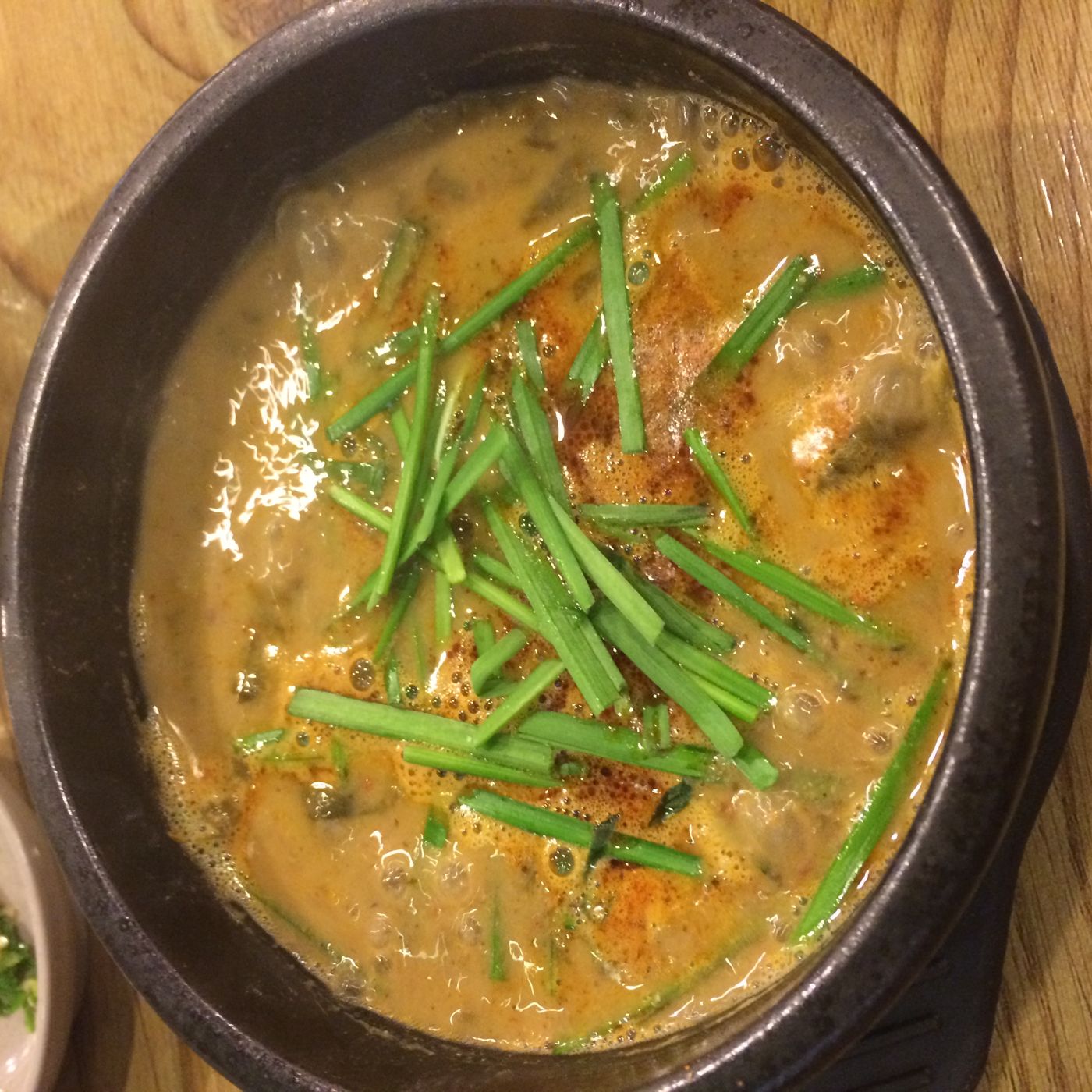 Chueotang (Loach Soup)추어탕Pond loaches simmered and ground into a thick, earthy soup with dried greens, doenjang and perilla, sharpened with chopi pepper — an autumn harvest dish turned year-round restorative.
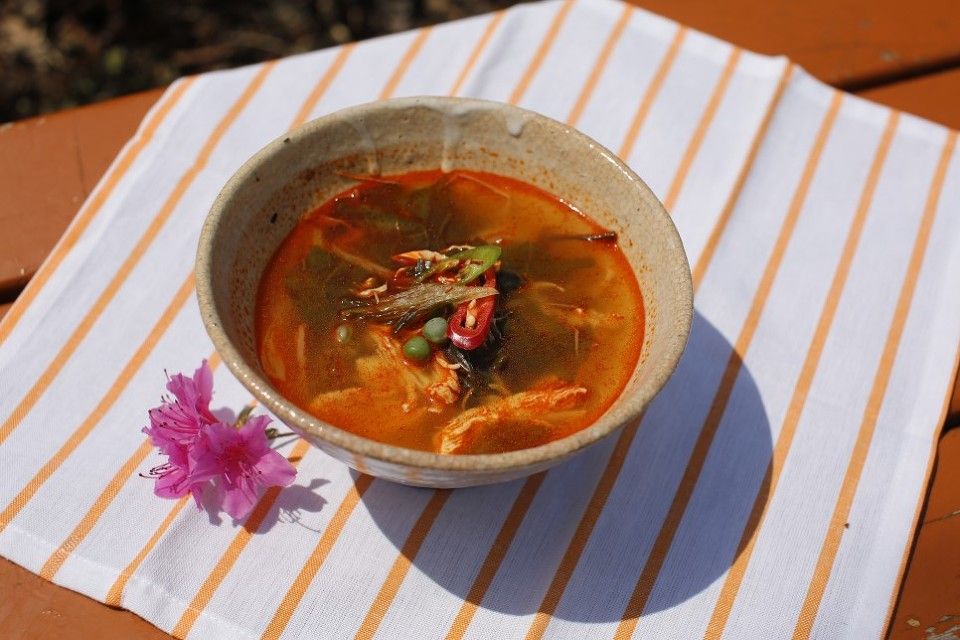 Dakgaejang (Spicy Chicken Soup)닭개장Shredded chicken simmered with bracken, taro stems and plenty of green onion in a fiery chili-oil broth — the chicken cousin of yukgaejang.
- Toran Guk (Taro Soup)토란국Parboiled taro simmered in a clear beef-and-kelp broth seasoned with soup soy sauce — a soft, gently slippery soup made for the Chuseok harvest table.
Sources
- 01토란 — Encyclopedia of Korean Culture
- 02토란국 — Encyclopedia of Korean Culture
- 03토란 — Encyclopedia of Korean Folk Culture (한국의식주생활사전)
- 04Impact of Cooking Duration on Calcium Oxalate Needle-like Crystals in Plants: A Case Study of Vegetable Taro Flowers in Yunnan — Foods (2024)
- 05위해성분 포함 ‘토란·고사리·콩류’ 어떻게 조리해야 할까 — 소셜타임스 (2023, reporting MFDS guidance)
- 06Korean Food Composition Table: Taro (Toran), Raw — National Institute of Agricultural Sciences