Techniques
Steaming and Jjim
찜
In Korean cooking, jjim means both true steaming and slow cooking in a little liquid. How gyeran-jjim, galbi-jjim and fish jjim fit under one word.
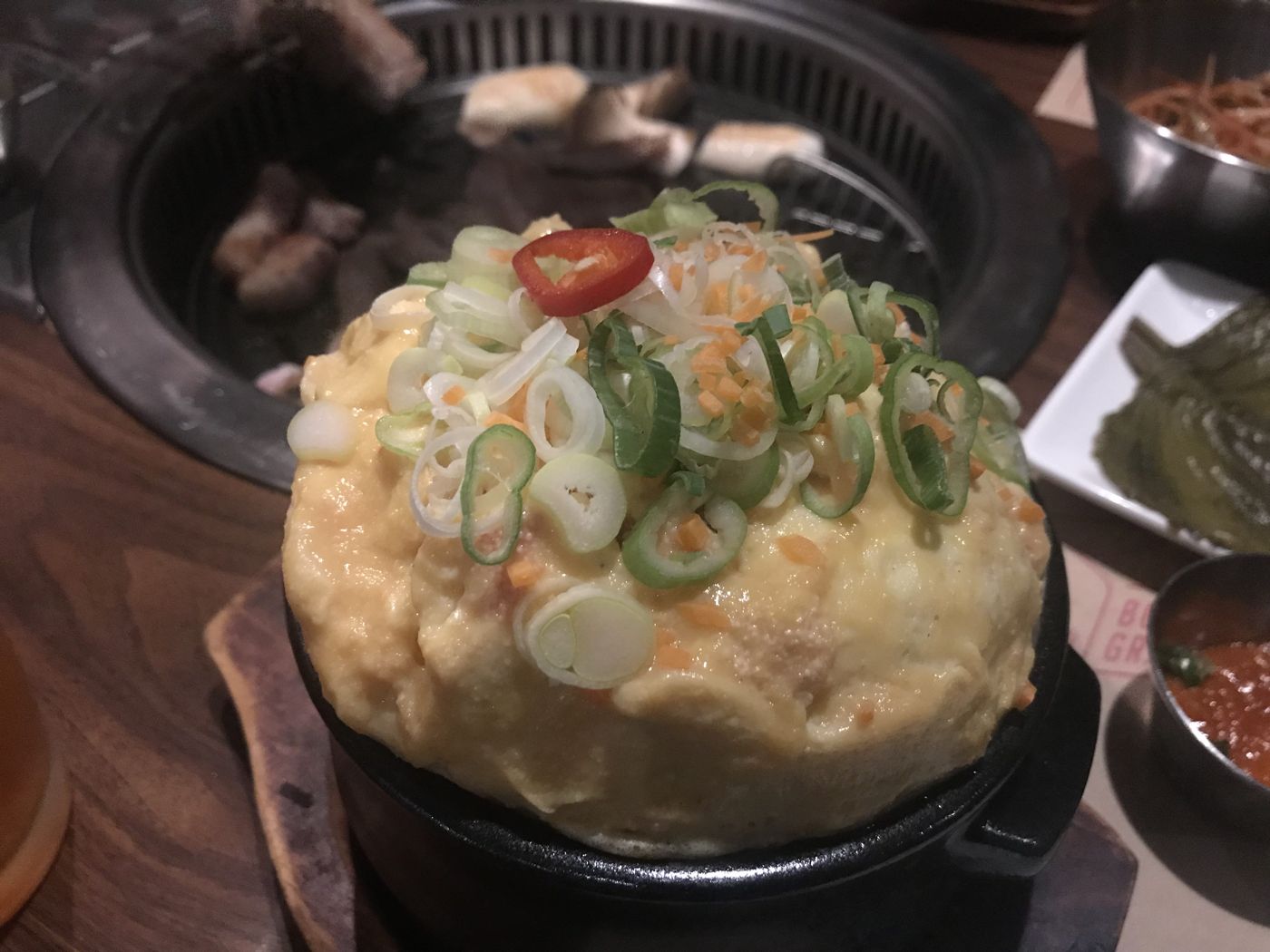 Photo: lazy fri13th, CC BY 2.0, via Wikimedia Commons
Jjim comes from the verb jjida, to steam, and some jjim dishes are steamed in the plainest sense. But many of the best-known ones, such as braised short ribs (galbi-jjim), are cooked in a pot with a modest amount of liquid. Understanding that double meaning is the key to the whole category.
What the word means
The Encyclopedia of Korean Culture explains that jjim was originally made by steaming in a siru, the perforated earthenware steamer still used for rice cakes. As cookware changed, the name stayed while most recipes shifted to simmering ingredients in a covered pot until little sauce remains. Joseon cookbooks support this broader sense. The encyclopedia cites the Jeungbo sallim gyeongje on beef cooked with wine, vinegar and jang in a sealed vessel set in a water bath; the Imwon gyeongjeji, which treats steamed dishes as a kind of soup with only a little liquid left; and the Gyuhap chongseo, whose quail jjim should end with just enough sauce to keep the meat moist.
Its conclusion is that jjim names a finished state more than a single method: food cooked until tender in its own trapped steam, with a small amount of rich sauce clinging to it. Jjim dishes appear on everyday tables, banquet tables and drinking tables alike.
Jjim versus jorim
Both jjim and jorim are braises, and the line between them is soft. In general usage:
- Jorim reduces a soy-based liquid hard, so the food is glazed and saltier, and often keeps well as a side dish, as in gamja-jorim or jangjorim.
- Jjim is usually a main dish, cooked longer and more gently, with larger pieces, more vegetables and a softer sauce, and is eaten hot.
Some modern dishes stretch the word further. The Encyclopedia of Korean Culture notes that Andong jjimdak is actually cooked over high heat in a large pan rather than steamed.
True steaming: gyeran-jjim
Gyeran-jjim, the soft egg custard served bubbling in an earthenware pot, is the clearest example of steaming in the everyday kitchen. Old texts record an al-jjim in which eggs were beaten with water, seasoned with salted shrimp and set in a small earthenware bowl on top of the rice as it cooked, letting the rice pot double as a steamer.
- Ratio: many home cooks use roughly equal volumes of beaten egg and water or anchovy broth, more liquid for a looser custard.
- Seasoning: saeujeot or salt, plus chopped green onion.
- Two styles: steamed gently in a steamer or water bath, the custard sets smooth and silky; cooked directly in a covered ttukbaegi over the flame, it puffs up above the rim.
Fish were also steamed in the old sense. For ancestral-rite meals, the Encyclopedia of Korean Culture describes sea bream, croaker or tonguefish, sometimes partly dried first, being cooked in a steamer once the steam is rising.
Braised jjim: galbi-jjim
Galbi-jjim, beef short ribs braised with soy sauce, is the showpiece of the category; the Encyclopedia of Korean Culture describes it as a festive, expensive dish that sometimes replaced chicken jjim at Chuseok. Its account of the technique is a good guide to braised jjim in general:
- Prepare the meat. Cut ribs into short pieces and score the meat to the bone so the seasoning can penetrate. Trim or skim heavy fat, or simmer once, chill and lift off the fat.
- Season in stages. Mix soy sauce, sesame oil, sesame, pepper, sugar, green onion and garlic. Add about half at the start and the rest partway through, so the flavors meld rather than sit on the surface.
- Simmer, don't boil hard. Cook at a steady bubble over medium heat. Too fierce and the liquid evaporates before the meat softens; too long and the bones slip out.
- Time the garnishes. Chestnuts and ginkgo go in partway through; jujubes (daechu) and mushrooms near the end so they don't fall apart.
- Finish with gloss. Raise the heat at the end and add a final touch of soy, oil and sugar to glaze the meat.
The encyclopedia adds that a pressure cooker makes ribs tender quickly but does not give the same depth as a long, gentle braise.
Other jjim to know
The encyclopedia's lists of regional foods include Gyeongsang's monkfish (agu-jjim) and sea squirt (mideodeok-jjim) dishes, and it records chicken jjim (dak-jjim) as a traditional Chuseok food. Most follow the same idea: cook gently, covered, until tender, with just enough sauce to coat.
Dishes using this technique
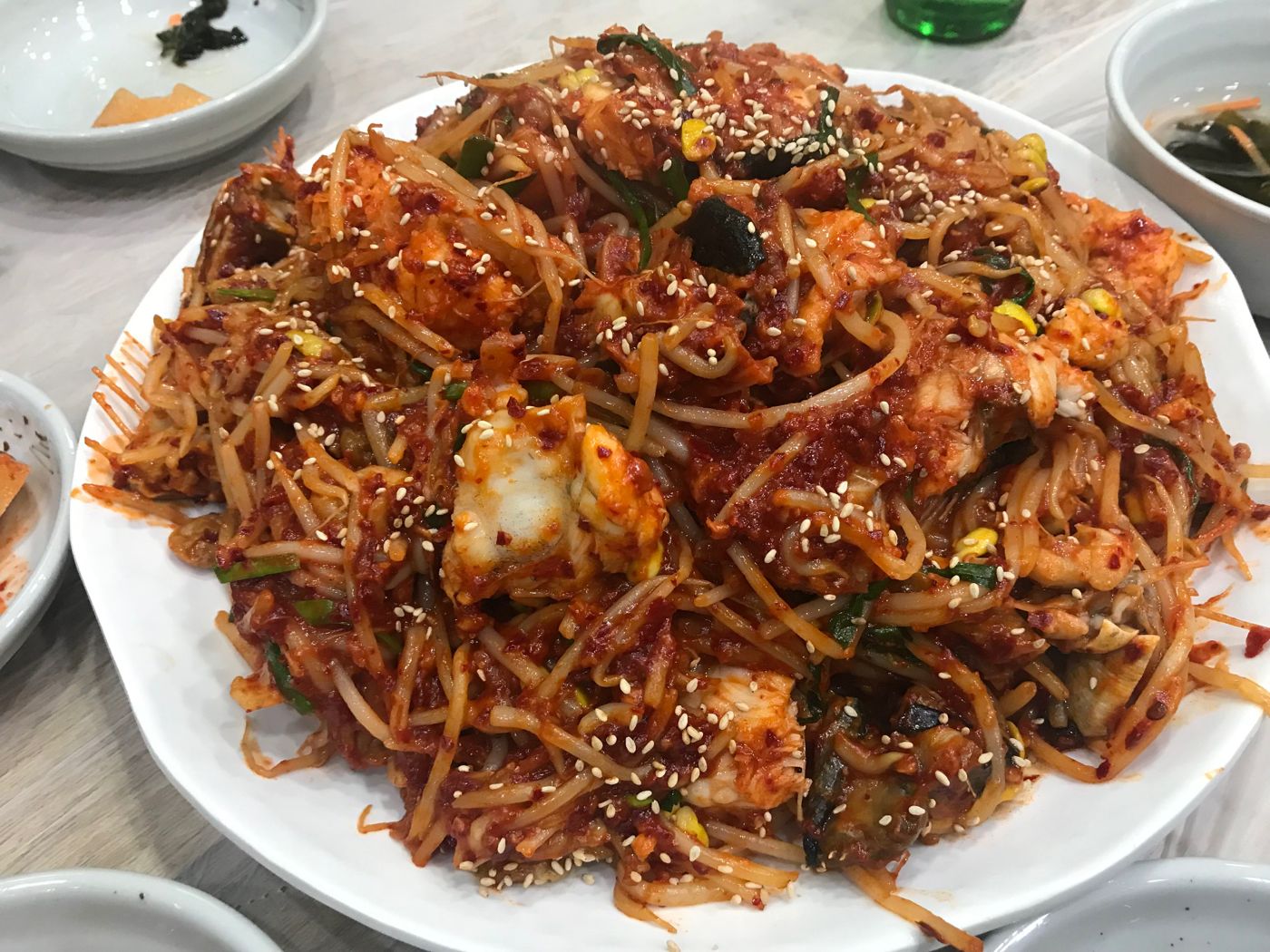 Agu-jjim (Spicy Braised Monkfish)아귀찜Monkfish braised with a mountain of soybean sprouts and minari in a fiery chili sauce thickened with starch — a Masan specialty now eaten across Korea.
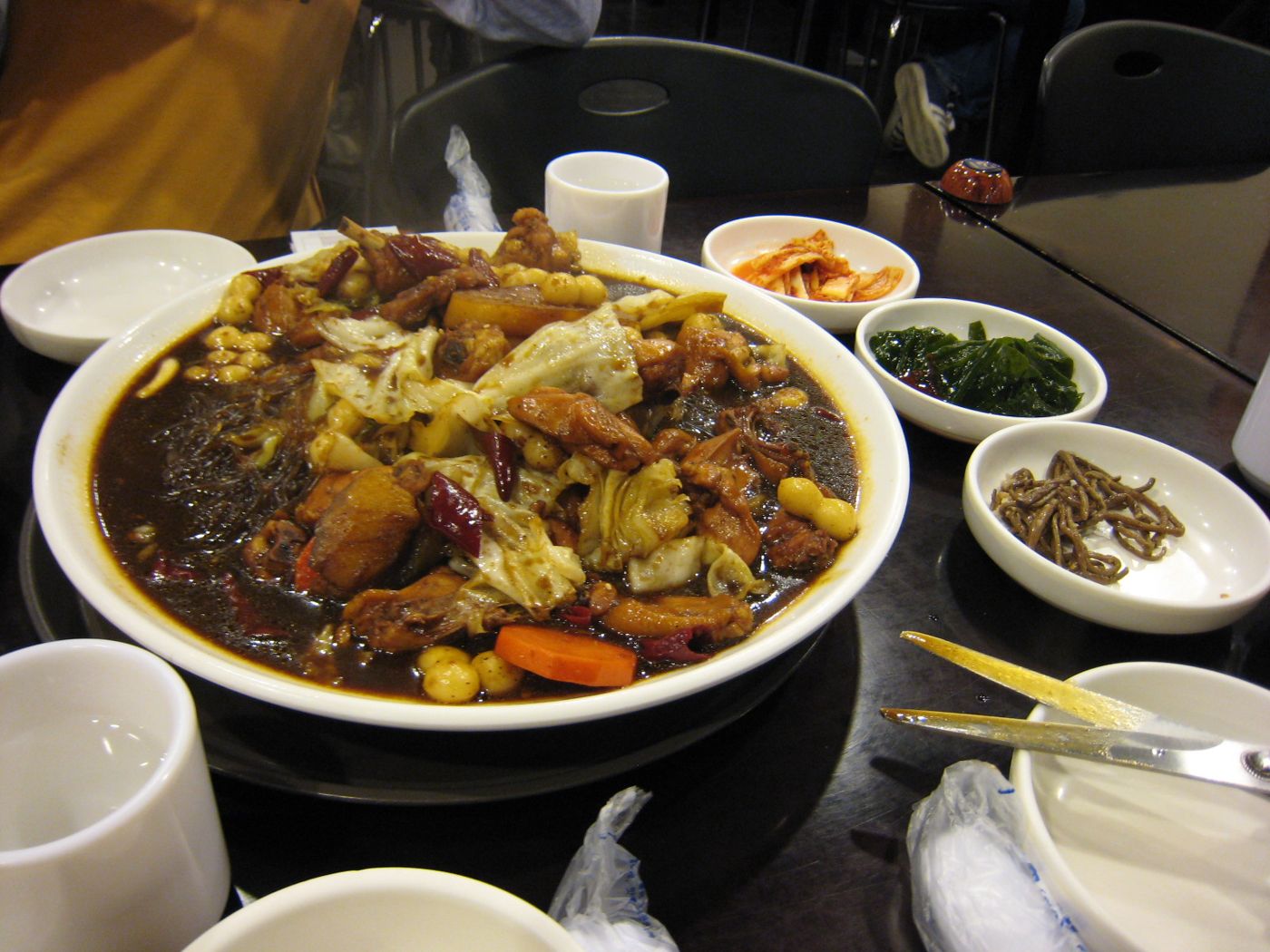 Andong Jjimdak (Soy-Braised Chicken with Glass Noodles)안동찜닭Chicken braised hard in a sweet soy sauce with potatoes, vegetables, dried chilies and glass noodles — a 1980s invention of Andong's old market, not a yangban heirloom.
- Gaji Jjim (Steamed Stuffed Eggplant)가지찜Short lengths of eggplant slit and packed with seasoned beef and mushroom, steamed until silky and dressed with a light soy sauce — a refined summer banchan.
- Gaji Namul가지나물Eggplant steamed until silky, torn into strips and dressed with soy sauce, garlic and sesame — a soft, savory summer namul.
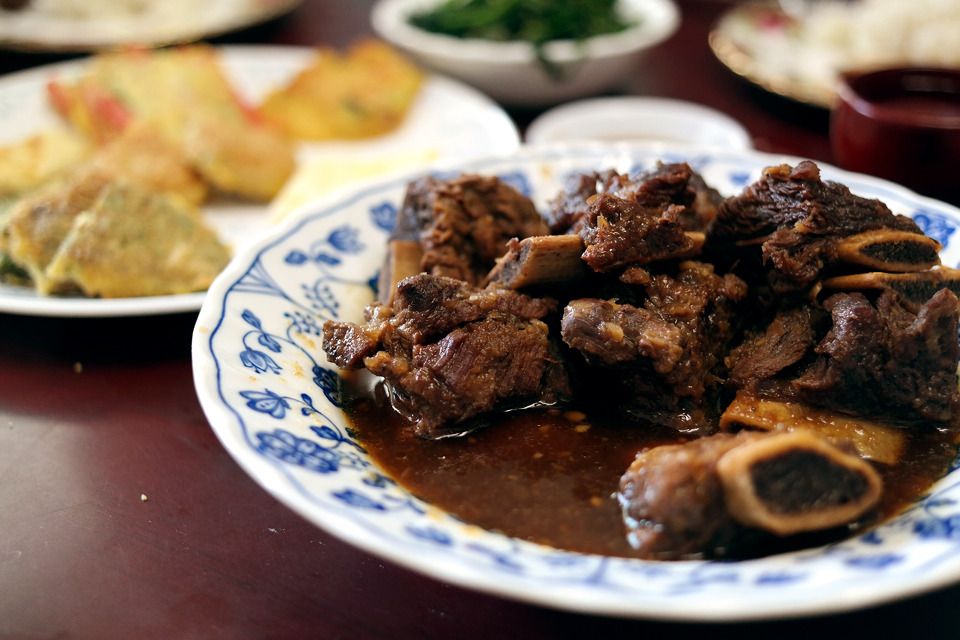 Galbi-jjim (Braised Beef Short Ribs)갈비찜Beef short ribs simmered slowly in soy sauce, pear and garlic with radish, carrot, chestnuts and jujubes until glossy and tender — a dish for holidays and honored guests.
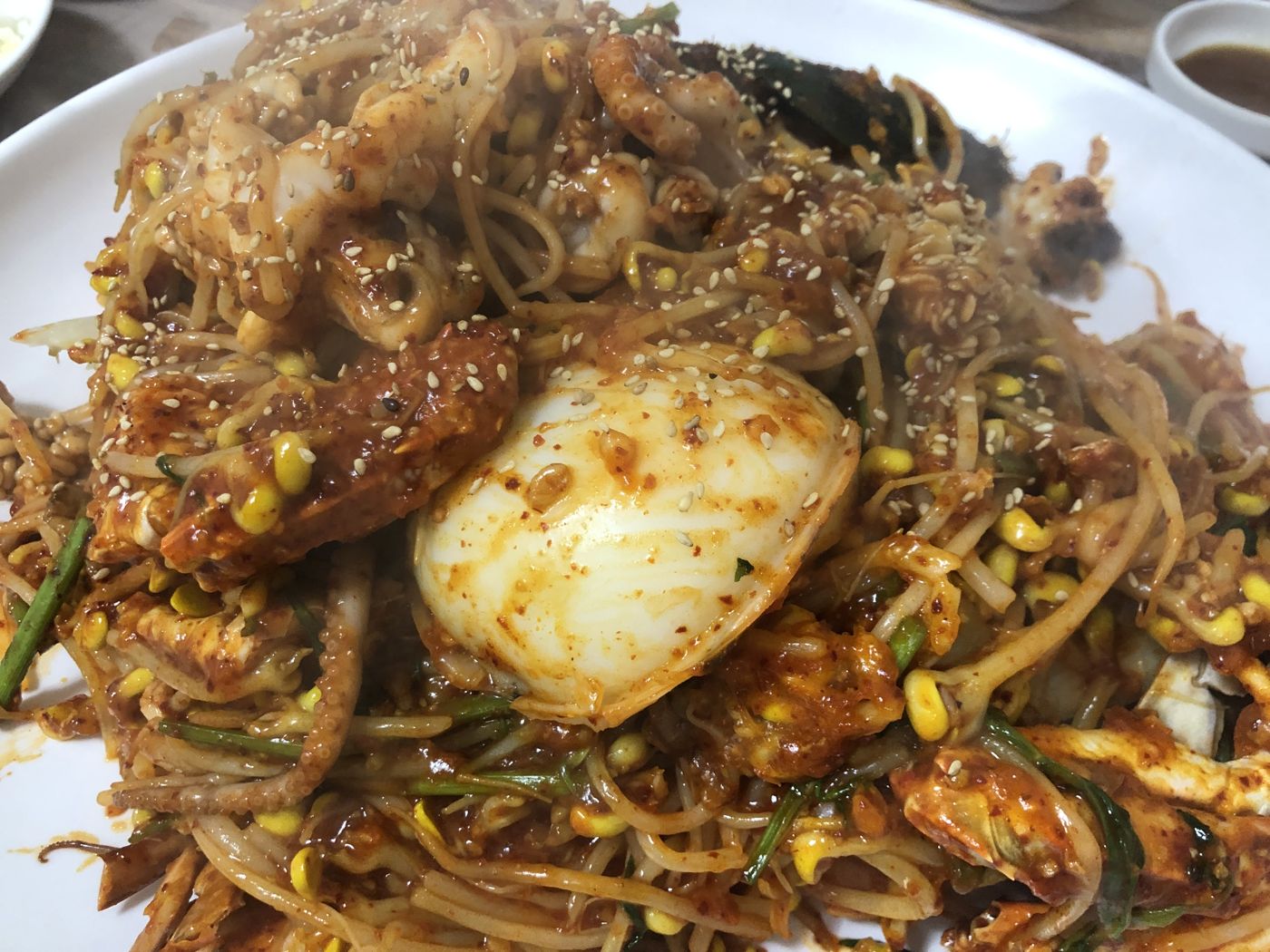 Haemul-jjim (Spicy Braised Seafood with Bean Sprouts)해물찜Squid, shrimp and shellfish piled over crisp bean sprouts and simmered in a thick, fiery red sauce — a modern Gyeongsang coastal dish now served at restaurants nationwide.
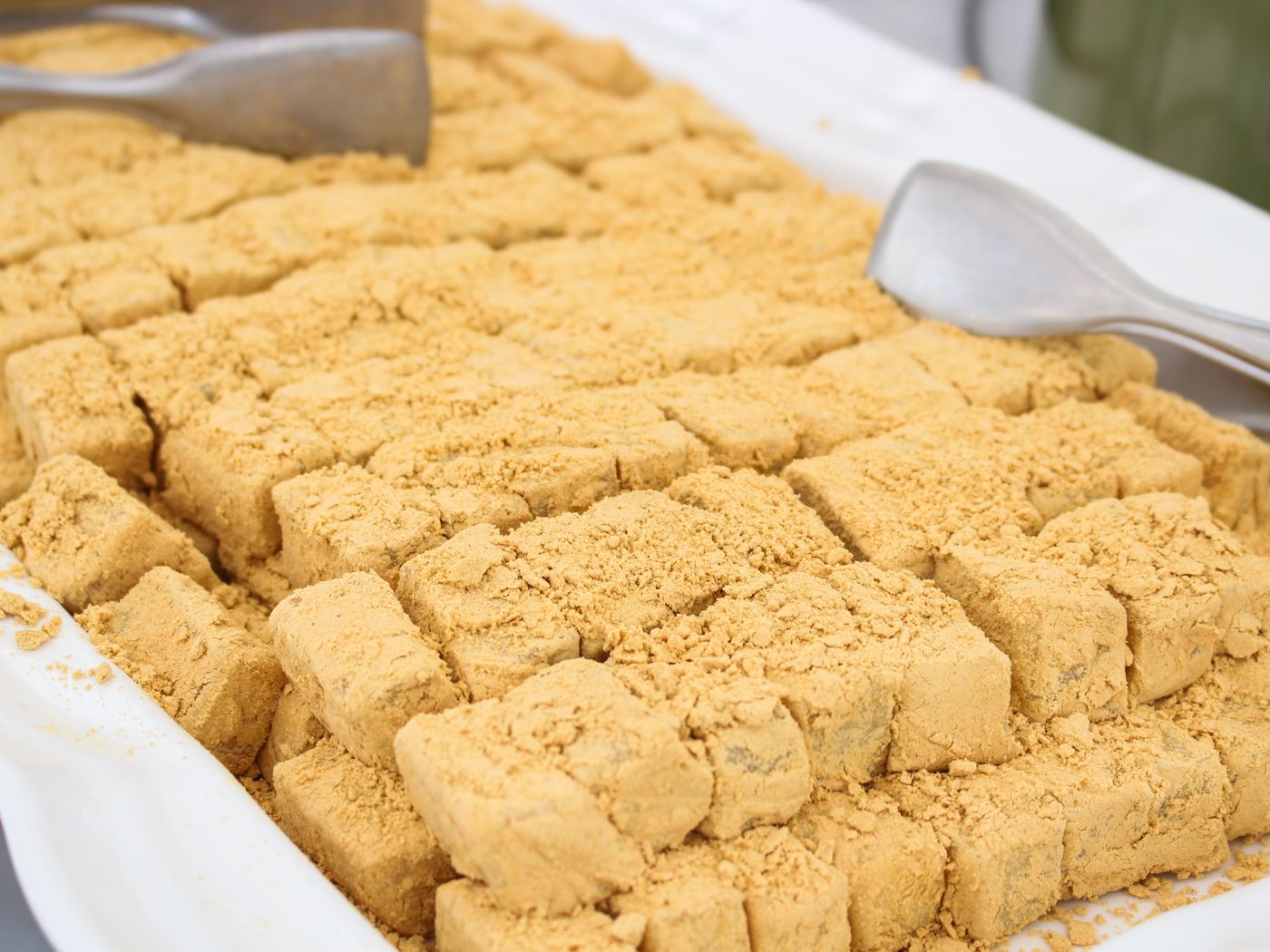 Injeolmi (Pounded Sticky Rice Cake with Bean Powder)인절미Steamed glutinous rice pounded until smooth and elastic, cut into pieces and rolled in roasted soybean powder — the chewy, nutty rice cake of markets, weddings and harvest time.
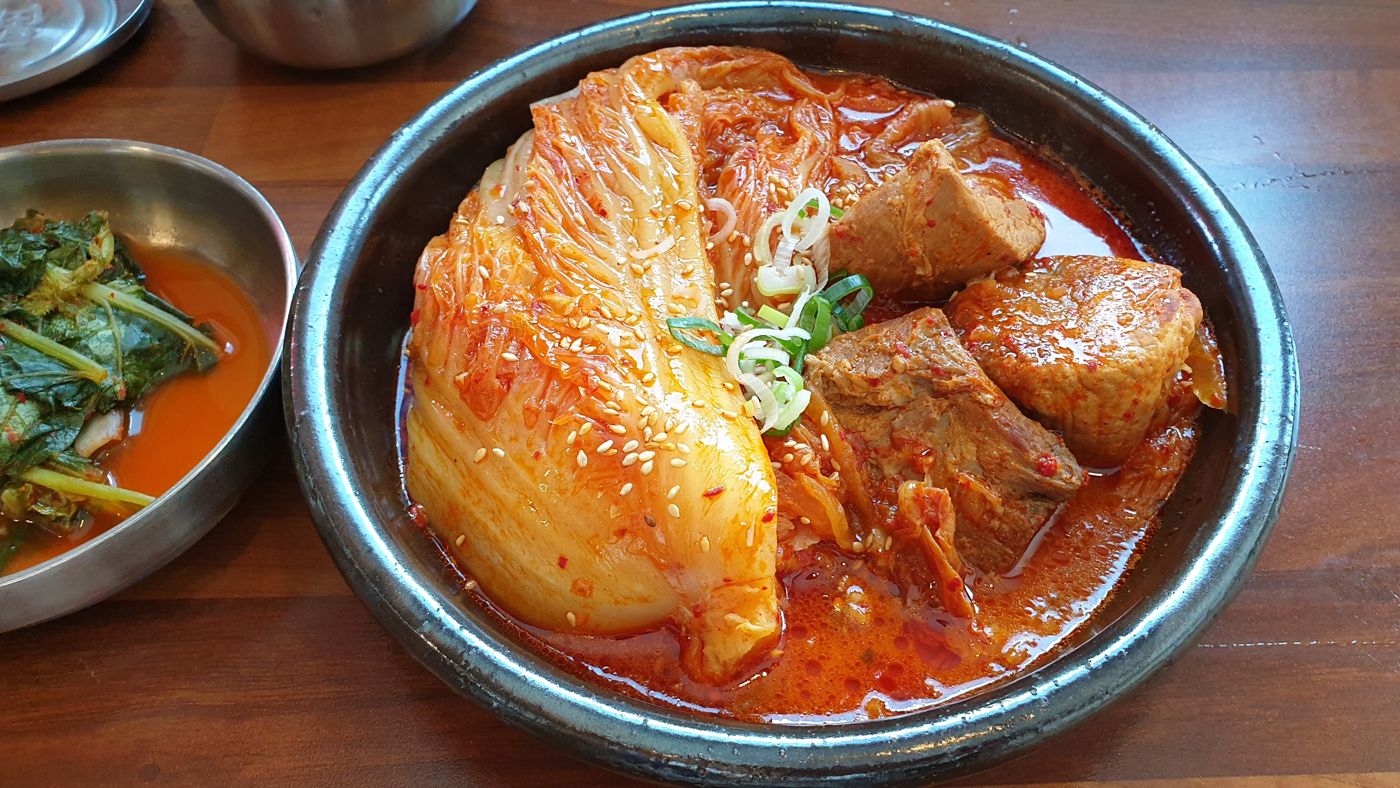 Kimchi-jjim (Braised Aged Kimchi with Pork)김치찜Well-fermented kimchi braised slowly with pork until the sourness mellows and the meat turns tender, with only a little liquid left in the pot. A hearty dish for a bowl of rice.
- Kkaennip Jjim (Steamed Seasoned Perilla Leaves)깻잎찜Perilla leaves layered with a garlicky soy-chili sauce and steamed until soft — a fragrant banchan for wrapping around spoonfuls of rice.
 Mandu (Korean Dumplings)만두Thin wrappers folded around pork, tofu, kimchi and sprouts, then steamed or boiled — a Goryeo-era arrival from China that became a winter staple of the North.
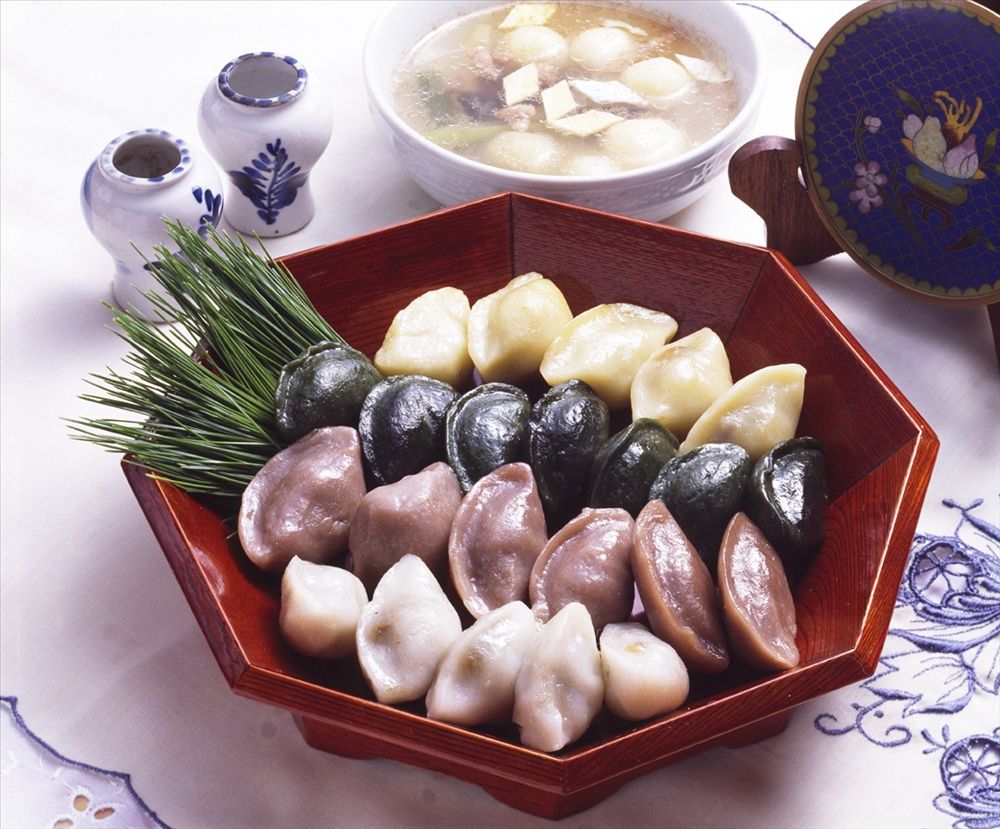 Songpyeon (Half-Moon Rice Cakes)송편Small half-moon cakes of rice dough filled with sweet sesame, beans or chestnut and steamed on a bed of pine needles — the rice cake of Chuseok, made with the new harvest.
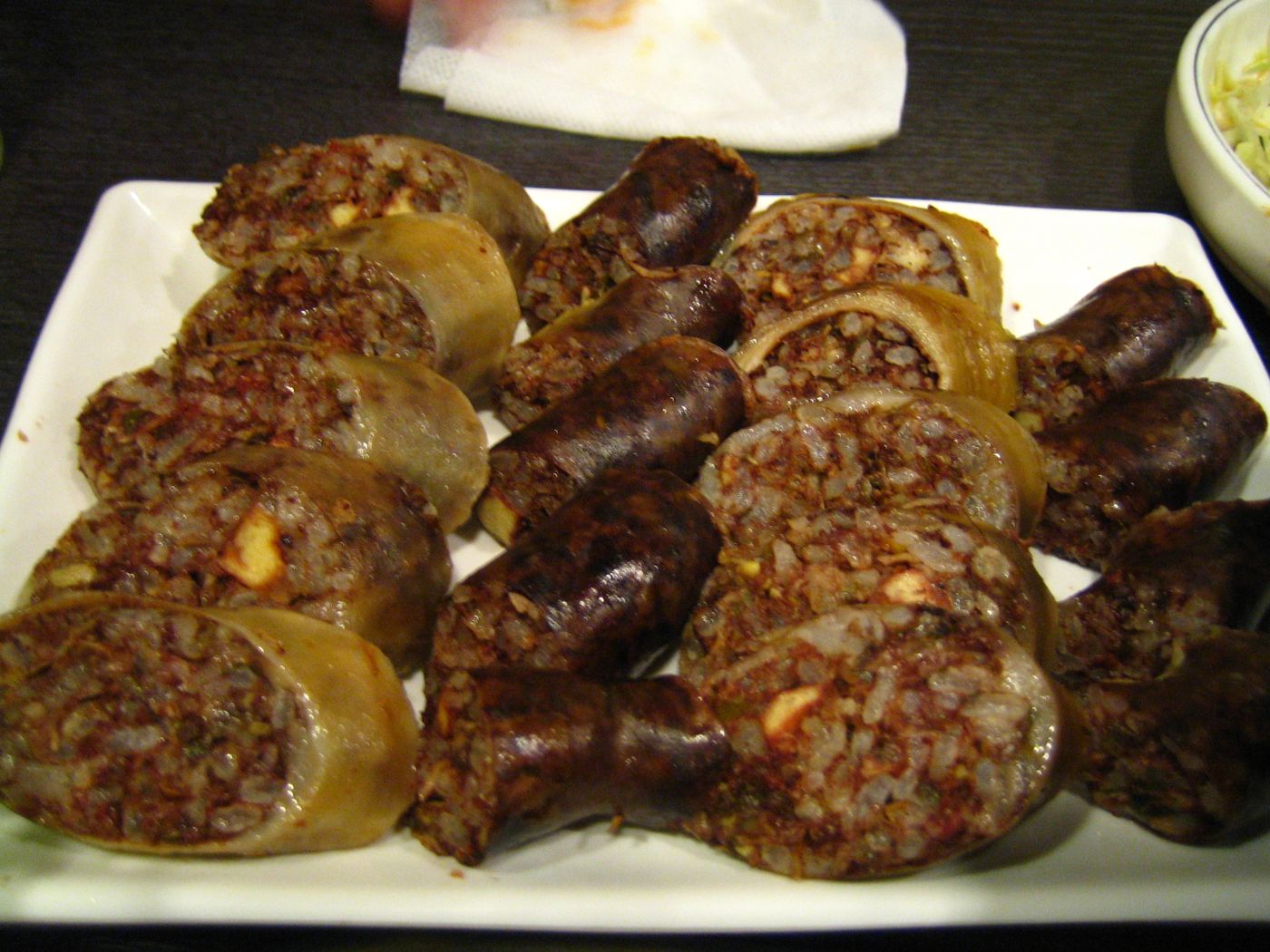 Sundae (Korean Blood Sausage)순대Pork intestine stuffed with pig's blood, glutinous rice, glass noodles and vegetables, then steamed — a northern farmhouse food that became a nationwide street snack.
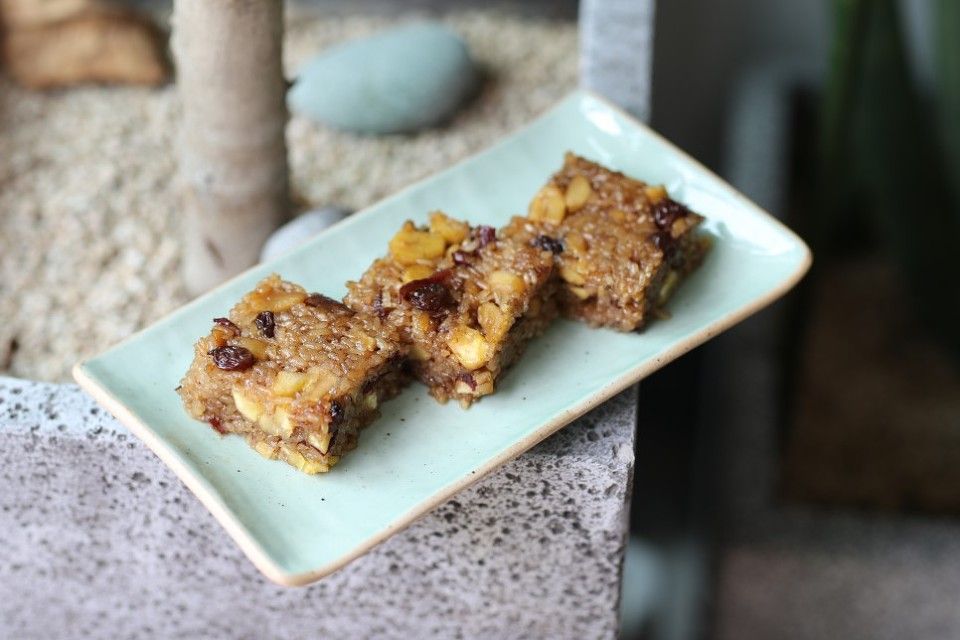 Yaksik (Sweet Rice with Chestnuts, Jujubes and Pine Nuts)약식Steamed glutinous rice darkened with soy sauce, brown sugar and honey and studded with chestnuts, jujubes and pine nuts — a full-moon festival food also called yakbap.