Jjim · Steamed 찜
Gaji Jjim (Steamed Stuffed Eggplant)
가지찜
Romanization: gaji-jjim
Short lengths of eggplant slit and packed with seasoned beef and mushroom, steamed until silky and dressed with a light soy sauce — a refined summer banchan.
- Serves
- 4
- Prep
- 30 min
- Cook
- 15 min
Recipe
Ingredients · Serves 4
- 3 Korean eggplantsslender, about 450 g
- 1 tspSaltfor lightly salting the eggplant
- 100 gGround beef
- 2 Dried shiitake mushroomssoaked, squeezed and finely chopped
- 1 tspSoy saucefor the filling
- 2 tspGarlicminced, divided
- 2 tbspGreen onionfinely chopped, divided
- 2 tspToasted sesame oildivided
- 1 tspSugardivided
- 1 pinchGround black pepper
- 1 Eggfor yellow and white egg garnish (jidan)
- 1 tbspSoy saucefor the sauce
- 2 tbspWater
- 1 tspVinegar
- 1 tspGochugaru
- 1 tspToasted sesame seeds
Method
Technique: Steaming and Jjim, Gomyeong: Korean Garnishes
Step 1: Trim the eggplants and cut them into 5 cm lengths. Make two deep cross-shaped cuts down each piece, stopping 1 cm from the bottom so it holds together. Sprinkle the cuts with salt and leave 10 minutes, then rinse and gently squeeze out the moisture.
Step 2: Mix the beef with the shiitake, 1 tsp soy sauce, 1 tsp garlic, 1 tbsp green onion, 1 tsp sesame oil, ½ tsp sugar and pepper.
Step 3: Separate the egg, fry the yolk and white into thin sheets in a lightly oiled pan, and cut into fine strips.
Step 4: Open the cuts in each eggplant piece and press in the beef mixture, filling them evenly.
Step 5: Steam the stuffed eggplant over boiling water for 10–12 minutes, until the eggplant is soft and the filling is cooked through (ground beef should reach 160 °F / 71 °C).
Step 6: Meanwhile, stir together 1 tbsp soy sauce, water, vinegar, gochugaru, the remaining garlic, green onion, sesame oil and sugar, and the sesame seeds.
Step 7: Arrange the eggplant on a plate, tuck the egg strips into the tops, and spoon the sauce over just before serving.
Origin & History
Eggplant has grown in Korea for well over a millennium. The Encyclopedia of Korean Folk Culture says it reached the peninsula from India by way of China around the fifth or sixth century, cites a Song-dynasty Chinese herbal praising the glossy purple, egg-shaped eggplants of Silla, and quotes the Goryeo poet Yi Gyu-bo on eating them raw or cooked. Most often it was steamed or boiled and seasoned as namul, but the encyclopedia also lists rice dishes, grilling, stir-frying, frying, kimchi and jjim.
Jjim originally meant food cooked by steam. The folk-culture encyclopedia notes that the word appears in late-Joseon vernacular cookbooks such as Jubangmun and Siuijeonseo, while texts in classical Chinese used the character jeung (蒸), and that clay steamers (siru) were already in use on the peninsula between the Neolithic and Bronze Ages. Over time the word widened to include dishes braised in seasoned liquid, but steamed vegetables kept the older sense.
Stuffed eggplant belongs to the family of seon (膳) — vegetables, tofu or fish filled with seasoned meat, mushrooms and egg garnish, then steamed or stir-fried. The folk-culture encyclopedia records six such dishes in Siuijeonseo, including gaji-seon, and explains that for squash or eggplant seon the vegetable is cut into cylinders, hollowed or slit, filled and steamed. The National Institute of Korean Language defines gaji-jjim in just those terms: eggplant split open, stuffed and steamed as a side dish. The folk-culture encyclopedia observes that Joseon-era seon used almost only vegetables, and that versions built on meat and fish appear in colonial-era cookbooks.
Key Ingredients
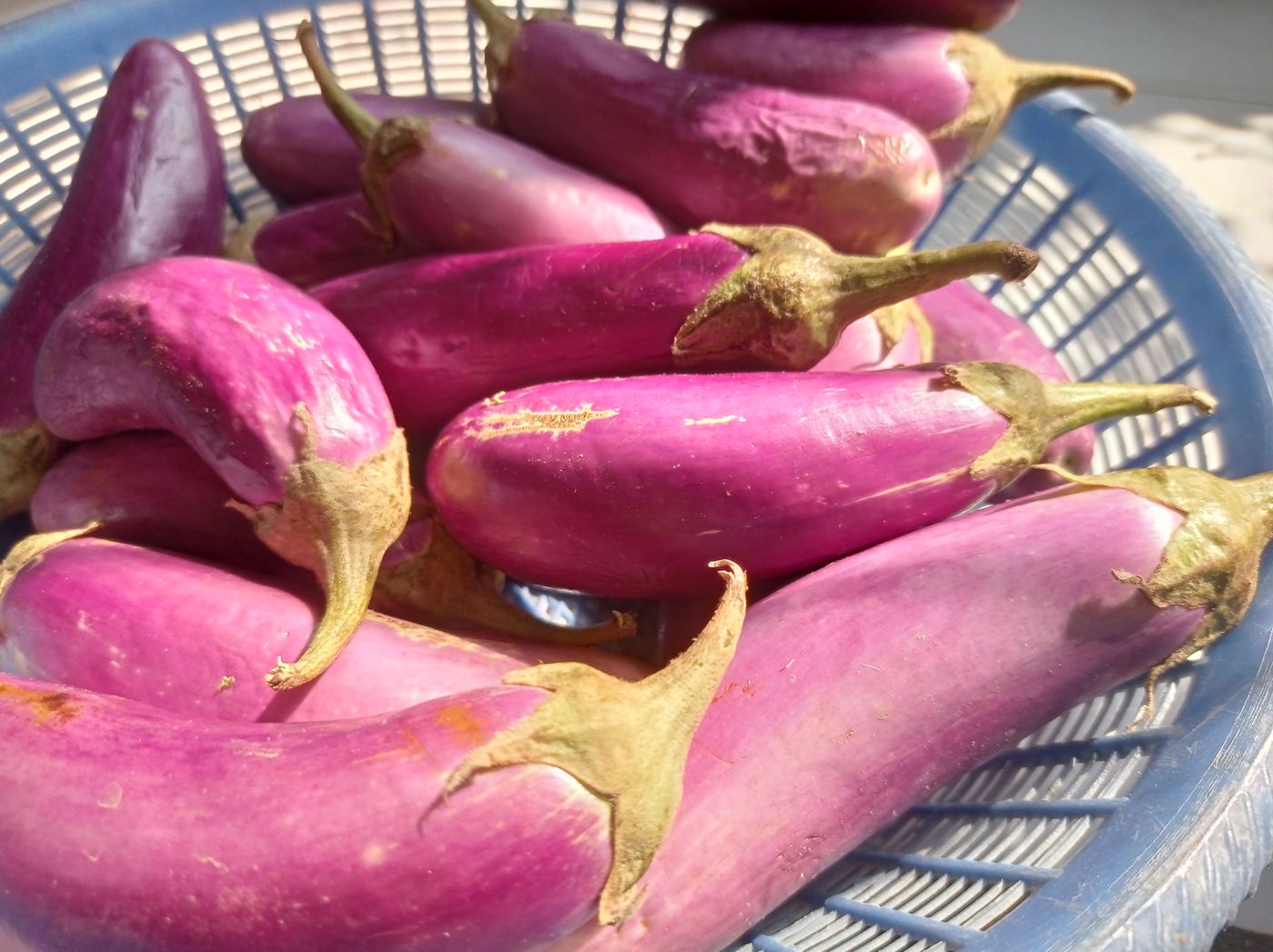 Eggplant가지Slender, glossy purple eggplant, steamed until silky and torn into strips for gaji-namul, one of the gentlest summer banchan. It is also pan-fried, braised, stir-fried and, in the past, sun-dried for winter.
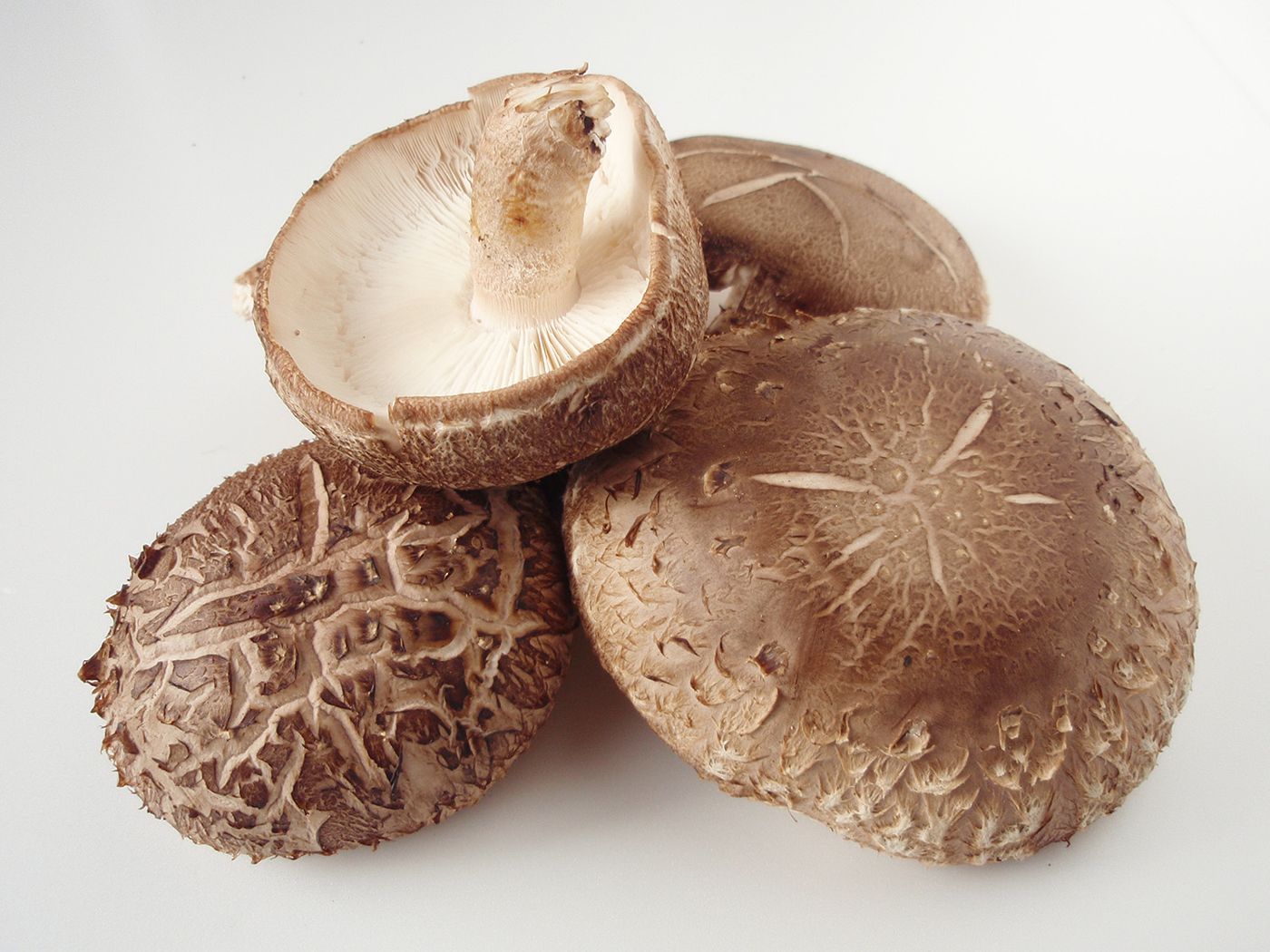 Shiitake mushroom표고Dark-capped, meaty mushrooms known in Korean as pyogo or pyogo-beoseot. Used fresh in stir-fries and pan-fried dishes, and dried for a deeply savory broth and an intensely aromatic bite.
 Soy sauce간장Korean soy sauce, in two main kitchen forms: pale, salty guk-ganjang (soup soy sauce) brewed the traditional way from meju, and darker, sweeter jin-ganjang for braises and marinades.
 Garlic마늘Used raw, minced, pickled and roasted, garlic is one of the essential aromatics of Korean food — in seasonings, marinades, kimchi and namul.
 Green onion파Korean green onion (pa), from thick-stemmed daepa to slender scallions — chopped into nearly every seasoning sauce, soup and kimchi, and the star of pa-kimchi.
- Egg (gyeran)계란The everyday protein of the Korean table: rolled into gyeran-mari, steamed into puffy gyeran-jjim, simmered in soy for gyeran-jangjorim, and cut into thin yellow and white ribbons of jidan to garnish soups and noodles.
 Gochugaru고춧가루Korean red chili powder, made from dried red peppers ground coarse or fine. It gives kimchi, gochujang and countless banchan their color and warmth.
 Sesame참깨Toasted sesame seeds and sesame oil (chamgireum) finish countless Korean dishes, adding a nutty aroma and gloss.
Nutrition
| Calories | ~153 kcal |
|---|---|
| Protein | ~8.3 g |
| Fat | ~9.4 g |
| Carbohydrates | ~9.9 g |
| Fiber | ~3.8 g |
| Sodium | ~468 mg |
Notable forProtein · Vitamin B12 · Potassium
Eggplant uses the Korean Food Composition Table entry “Eggplant (Gaji), Raw” (19 kcal, 232 mg potassium per 100 g); soy sauce and gochugaru also use Korean table values. Ground beef uses USDA FoodData Central “Beef, ground, 80% lean meat / 20% fat, raw”; dried shiitake, egg and other seasonings use USDA values. About a third of the salt used on the eggplant is counted, since most is rinsed off. Totals divided by four, assuming all the sauce is eaten. Actual values vary with ingredients, portion size and preparation.
Health Benefits
- Light cooking: steaming adds no oil, so the eggplant stays far leaner than fried or stir-fried versions, which soak up oil readily.
- Protein and B12: a small amount of beef makes the dish a modest source of protein and vitamin B12.
- Fiber and potassium: eggplant contributes fiber and potassium for very few calories.
Regional Variations
- Gaji-seon style: neat cylinders with crosswise slits, stuffed with beef, mushroom and shredded egg garnish in contrasting colors and served with vinegared soy sauce — the refined banquet version.
- Simple seasoned jjim: whole or halved eggplants steamed, then dressed with a soy, garlic and chili sauce, without stuffing — close to gaji-namul.
- Braised jjim: eggplant simmered with seasoned sauce in a covered pan rather than steamed, following the broader modern meaning of jjim.
- Meatless: shiitake, tofu and vegetables in place of beef for a temple-style or vegetarian filling.
Pairings
- Gaji Namul가지나물Eggplant steamed until silky, torn into strips and dressed with soy sauce, garlic and sesame — a soft, savory summer namul.
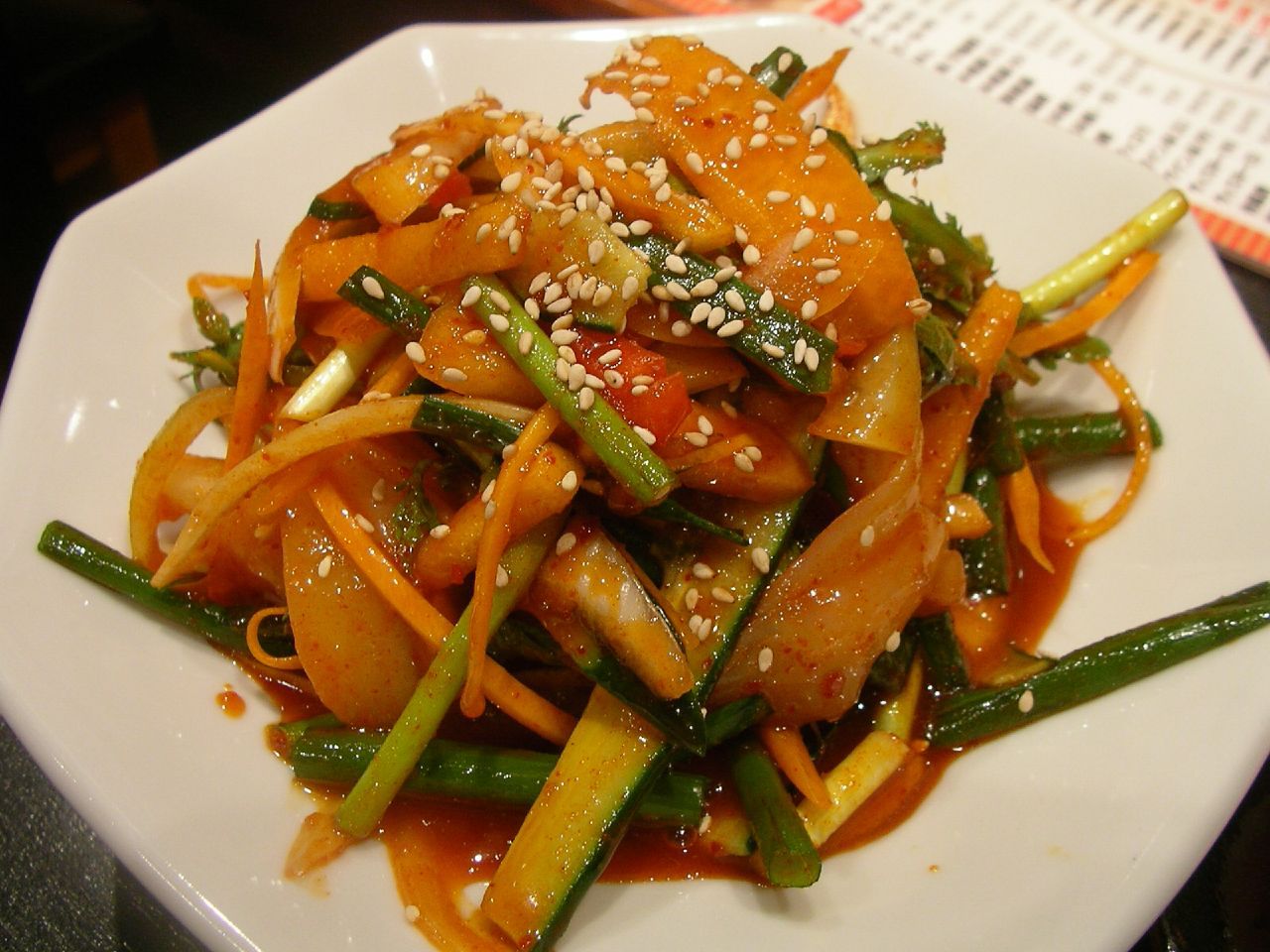 Oi Muchim오이무침Thin-sliced cucumber, briefly salted and tossed with chili flakes, vinegar and garlic — a cool, crunchy quick salad made in minutes, especially in summer.
 Doenjang Jjigae (Soybean Paste Stew)된장찌개A thick, savory stew of fermented soybean paste with tofu, zucchini and whatever the season offers — the everyday pot at the center of the Korean table.
Sources
- 01가지찜 (Gaji-jjim) — Urimalsaem (National Institute of Korean Language)
- 02선 (Seon, stuffed vegetables) — Encyclopedia of Korean Folk Culture (National Folk Museum of Korea)
- 03찜 (Jjim) — Encyclopedia of Korean Folk Culture (National Folk Museum of Korea)
- 04가지 (Gaji, eggplant) — Encyclopedia of Korean Folk Culture (National Folk Museum of Korea)
- 05Korean Food Composition Table: Eggplant (Gaji), Raw — National Institute of Agricultural Sciences
- 06Safe Food Handling — U.S. Food and Drug Administration
Last updated