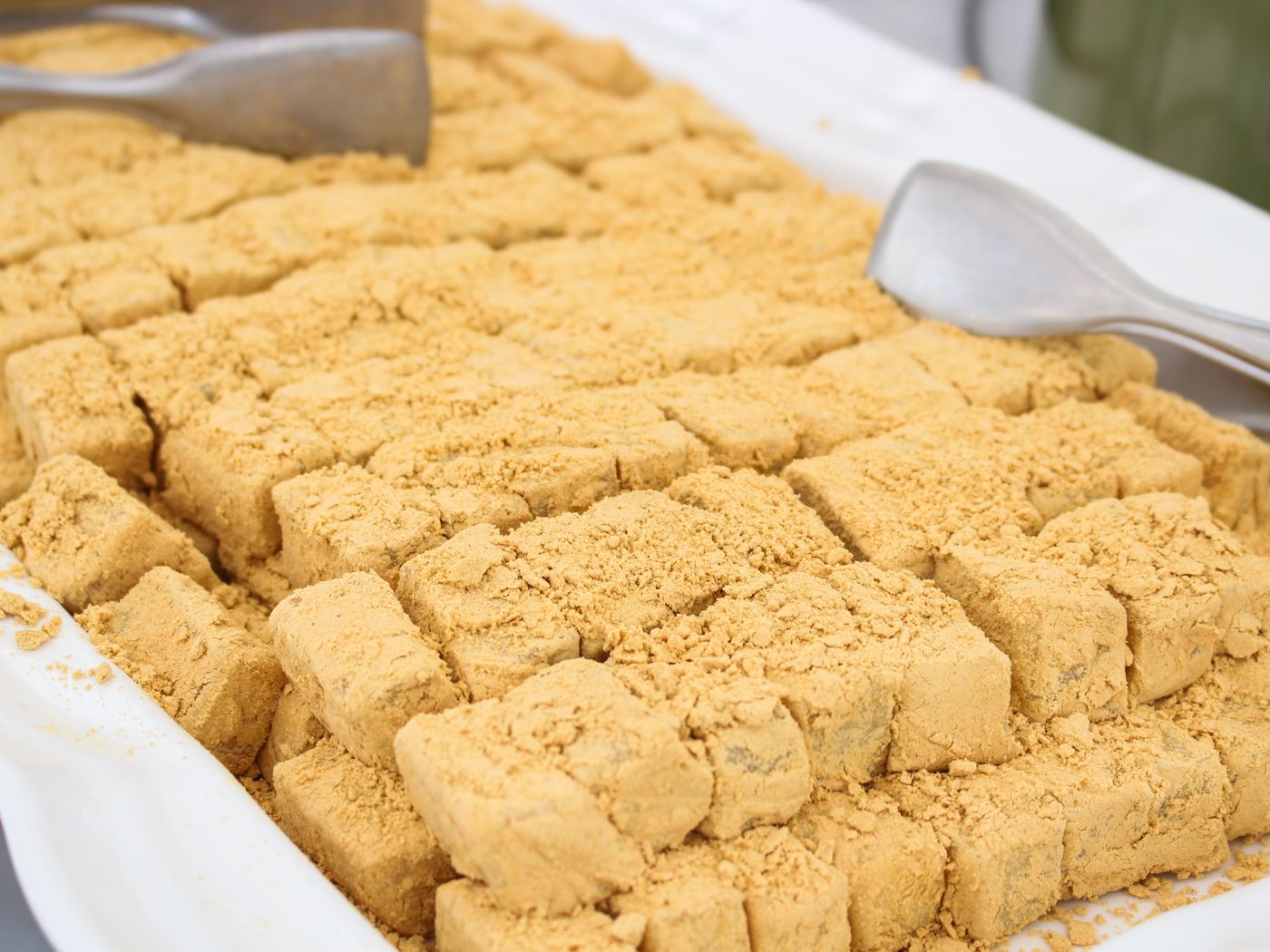
 Photo: ally j, CC0, via Wikimedia Commons
Tteok & Sweets 떡·과자
Injeolmi (Pounded Sticky Rice Cake with Bean Powder)
인절미
Romanization: injeolmi
Steamed glutinous rice pounded until smooth and elastic, cut into pieces and rolled in roasted soybean powder — the chewy, nutty rice cake of markets, weddings and harvest time.
- Serves
- 10
- Prep
- 30 min
- Cook
- 45 min
RegionNorthern Provinces (Hwanghae, Pyeongan, Hamgyeong)
Jump to recipeRecipe
Ingredients · Serves 10
- 600 gGlutinous (sweet) riceabout 3⅓ cups, soaked 6–8 hours
- 1 tspSaltdissolved in 100 ml water
- 100 gRoasted soybean powder (konggaru)about 1 cup
- 2 tbspSugarmixed into the soybean powder, optional
- 1 pinchSaltfor the powder
Method
Technique: Making Tteok, Steaming and Jjim
Step 1: Drain the soaked rice well. Line a steamer with a damp cloth, spread the rice in it and steam over vigorously boiling water for 40–45 minutes, sprinkling with the salted water and turning the rice over halfway, until every grain is soft and translucent.
Step 2: Mix the soybean powder with the sugar and a pinch of salt and spread half of it on a tray.
Step 3: Transfer the hot rice to a sturdy bowl or mortar. Pound it with a wooden pestle or the end of a rolling pin dipped in salted water, folding it over as you go, for 10–15 minutes, until the grains disappear into a smooth, stretchy mass. (A stand mixer with a dough hook on low speed works in about 8 minutes.)
Step 4: Turn the dough onto the floured tray and, with wet hands, pat it into a slab about 2 cm thick. Cut into 3 cm pieces with a knife or a dough scraper dipped in water.
Step 5: Roll each piece in the remaining soybean powder while still warm. Eat the same day; injeolmi hardens overnight but can be frozen and thawed at room temperature.
Origin & History
Injeolmi belongs to the family of pounded rice cakes (dobyeong): glutinous rice is soaked, steamed into firm sticky rice, beaten on a wooden board or in a mortar with a heavy mallet until no grain remains, then cut and coated. The Encyclopedia of Korean Folk Culture explains the name as a cake that is pulled and cut, and lists older written forms such as injeolbyeong. The nineteenth-century encyclopedia Imwon gyeongjeji, quoting an earlier source and Chinese classics on ritual offerings dusted with bean flour, went so far as to call it the oldest of all tteok; the almanac Dongguk sesigi lists it among the foods of the eighth lunar month and notes that it was sold in markets.
Everything depends on the rice. The Encyclopedia of Korean Culture warns that the rice must be pure glutinous rice with no ordinary rice mixed in, and cites Gyuhap chongseo's instructions to polish it white as jade, wash it a hundred times and soak it for four or five days so it steams through completely; any underdone grains leave lumps. Joseon writers agreed that the best injeolmi came from Yeonan in Hwanghae province, whose rice from the Yeonbaek plain was famous. Yeonan injeolmi was also called wedding injeolmi, because a bride's family sent it to the groom's house.
Injeolmi was a festive and practical food. At banquets and rites it crowned stacked rice cakes as a decorative top layer, and several Joseon cookbooks, including Eumsik dimibang, describe pushing a finger-length stick of grain syrup into a piece and toasting it over a low fire so the syrup melts, to eat for breakfast. See tteok and making tteok.
Key Ingredients
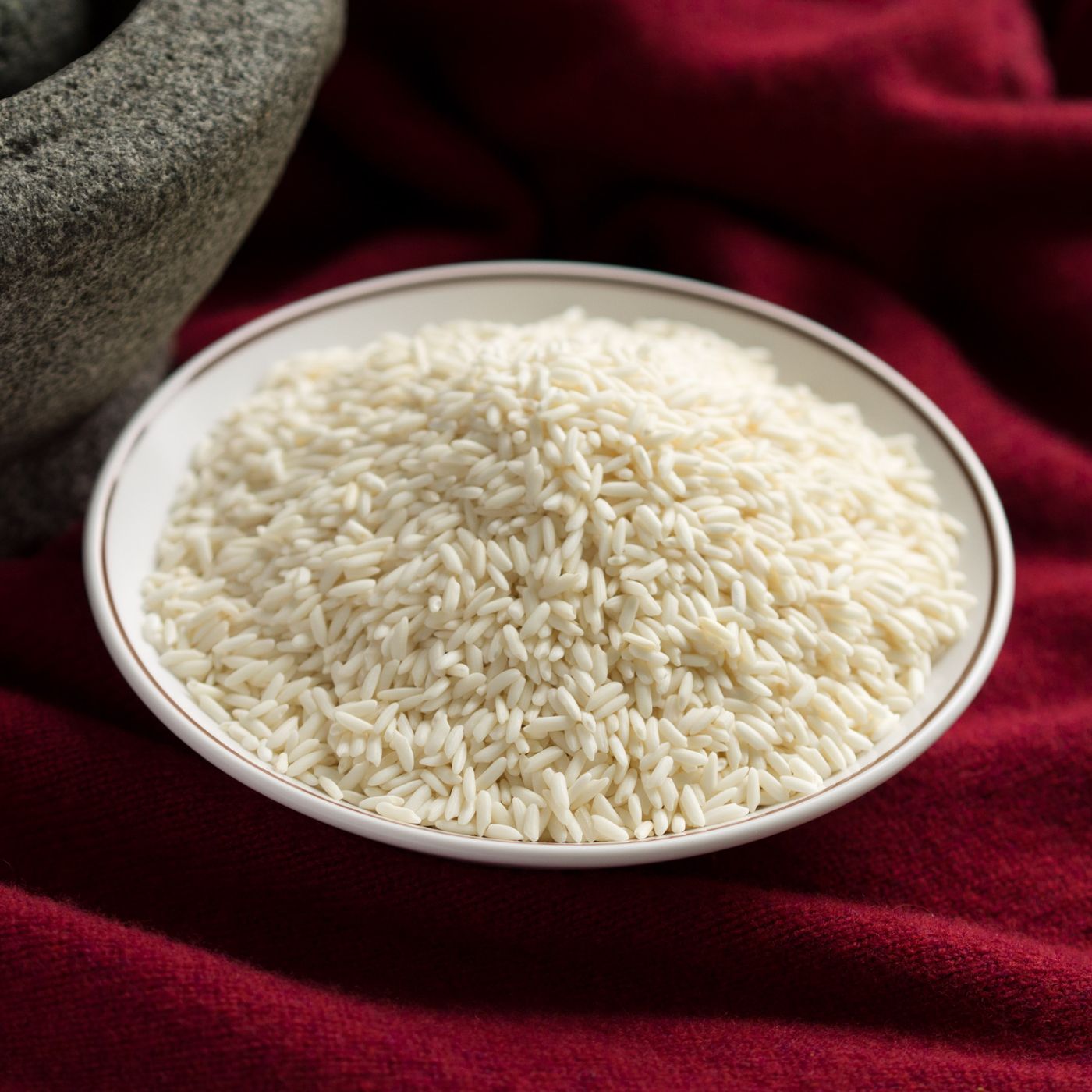 Glutinous rice (sweet rice)찹쌀Opaque, chalk-white grains of glutinous rice that steam into a chewy, elastic mass. Chapssal is the rice of festivals and comfort food: pounded into rice cakes, sweetened into yaksik, and tucked inside the chicken of samgyetang.
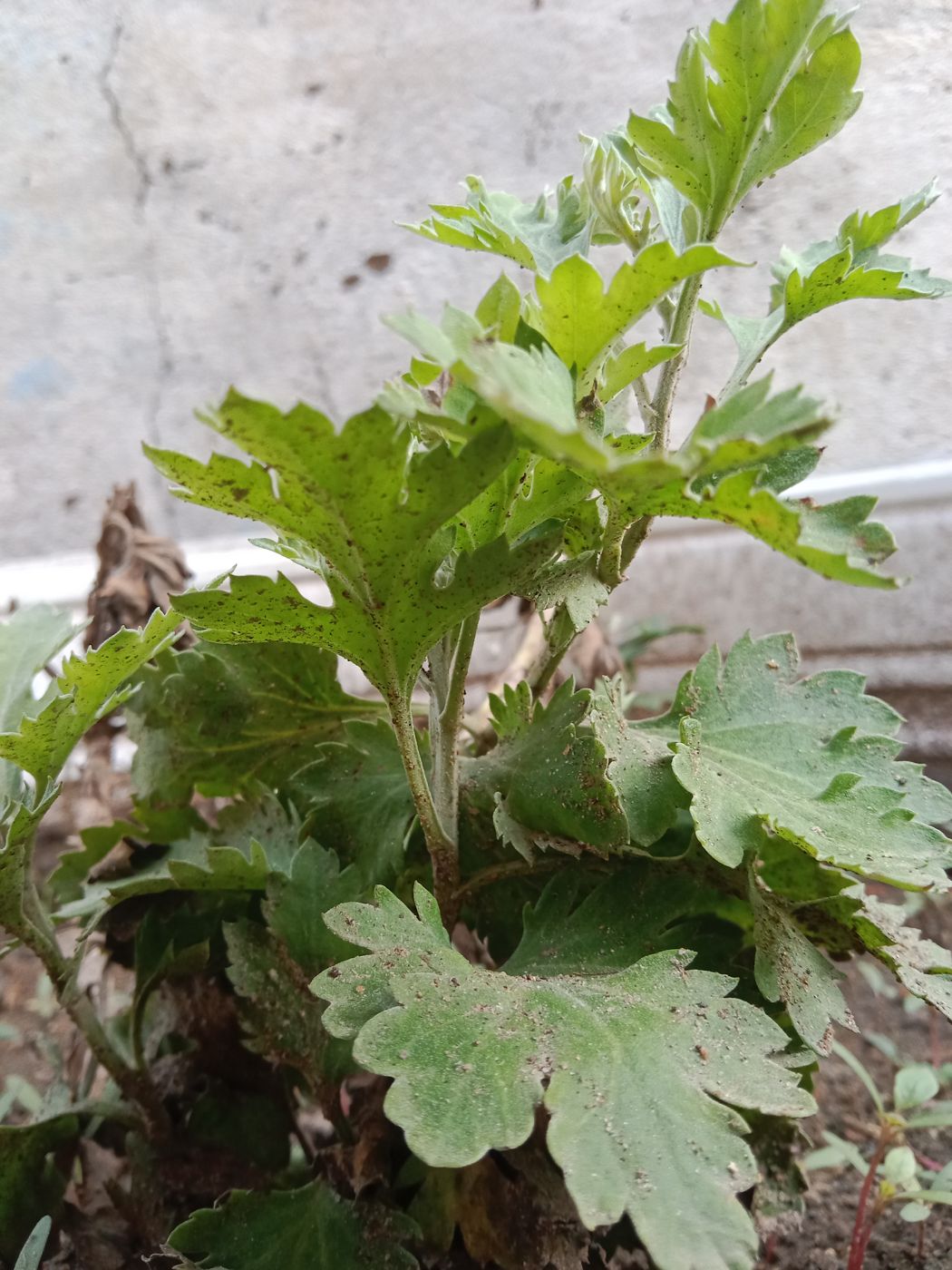 Ssuk (Korean mugwort)쑥A silvery-backed, intensely aromatic wild herb that colors rice cakes green and perfumes spring soups. Young leaves go into ssuk-tteok, ssuk-beomuri and ssuk-guk; dried mugwort has long served for moxibustion and smudging.
Nutrition
| Calories | 231 kcal |
|---|---|
| Protein | 5.5 g |
| Fat | 1.2 g |
| Carbohydrates | 50 g |
| Fiber | 2.1 g |
| Sodium | 337 mg |
Notable forManganese
From the Korean Food Composition Table entry “Glutinous rice cake, Injeolmi, Cubed, With soybean flour” (인절미, 콩고물; per 100 g: 231 kcal, 49.7 g carbohydrate including 2.8 g sugars, 2.1 g fiber, 337 mg sodium, 0.39 mg manganese). Homemade batches with sweetened powder will have somewhat more sugar. Actual values vary with ingredients, portion size and preparation.
Health Benefits
- Low in sugar and fat: the national food table records less than 3 g of sugars and about 1 g of fat per 100 g, making it one of the plainer Korean sweets.
- Soybean coating: the roasted soybean powder adds a little protein and fiber.
- Gluten-free grain: glutinous rice contains no gluten despite its name, though shop-made coatings should be checked. See gluten-free Korean eating.
Regional Variations
- North versus south: the Encyclopedia of Korean Culture notes that southern injeolmi is small and neat, while northern pieces are large and generous, with coarsely mashed red beans pressed on in thick clumps.
- Yeonan injeolmi (Hwanghae): the historic benchmark, made with the region's prized glutinous rice and sent as a wedding gift.
- Mugwort, surichwi and jujube injeolmi: blanched mugwort or the wild herb surichwi is pounded in for color and aroma; jujube versions add sweetness.
- Millet injeolmi: glutinous millet alone or half and half with rice, favored in the grain-growing north.
- Coatings: roasted yellow or green soybean powder is most common; red bean, mung bean, sesame and black sesame are alternatives.
Pairings
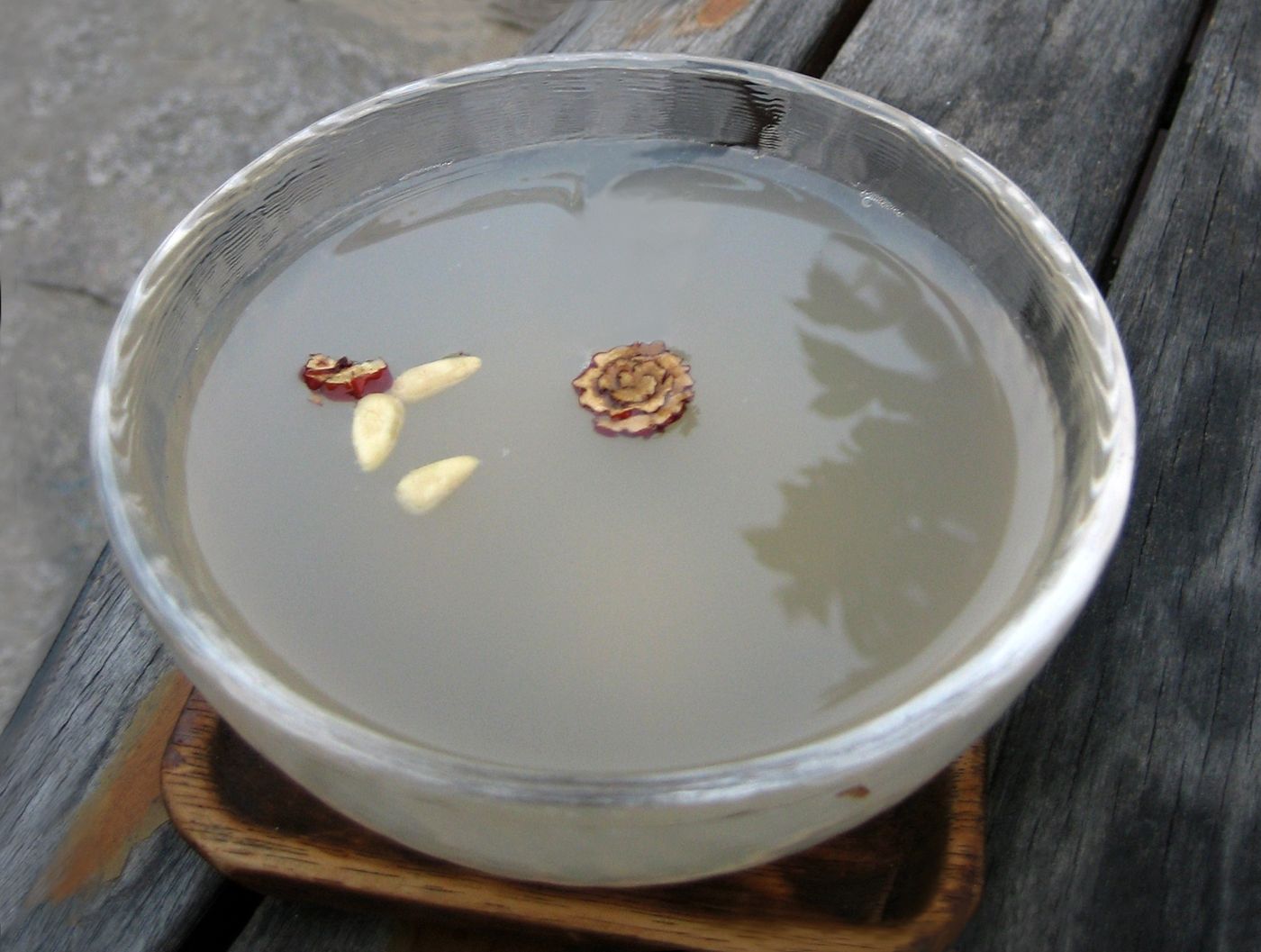 Sikhye (Sweet Malted Rice Drink)식혜Cooked rice steeped in barley-malt water until it sweetens and the grains float, then chilled — the traditional after-feast drink of Korean holidays.
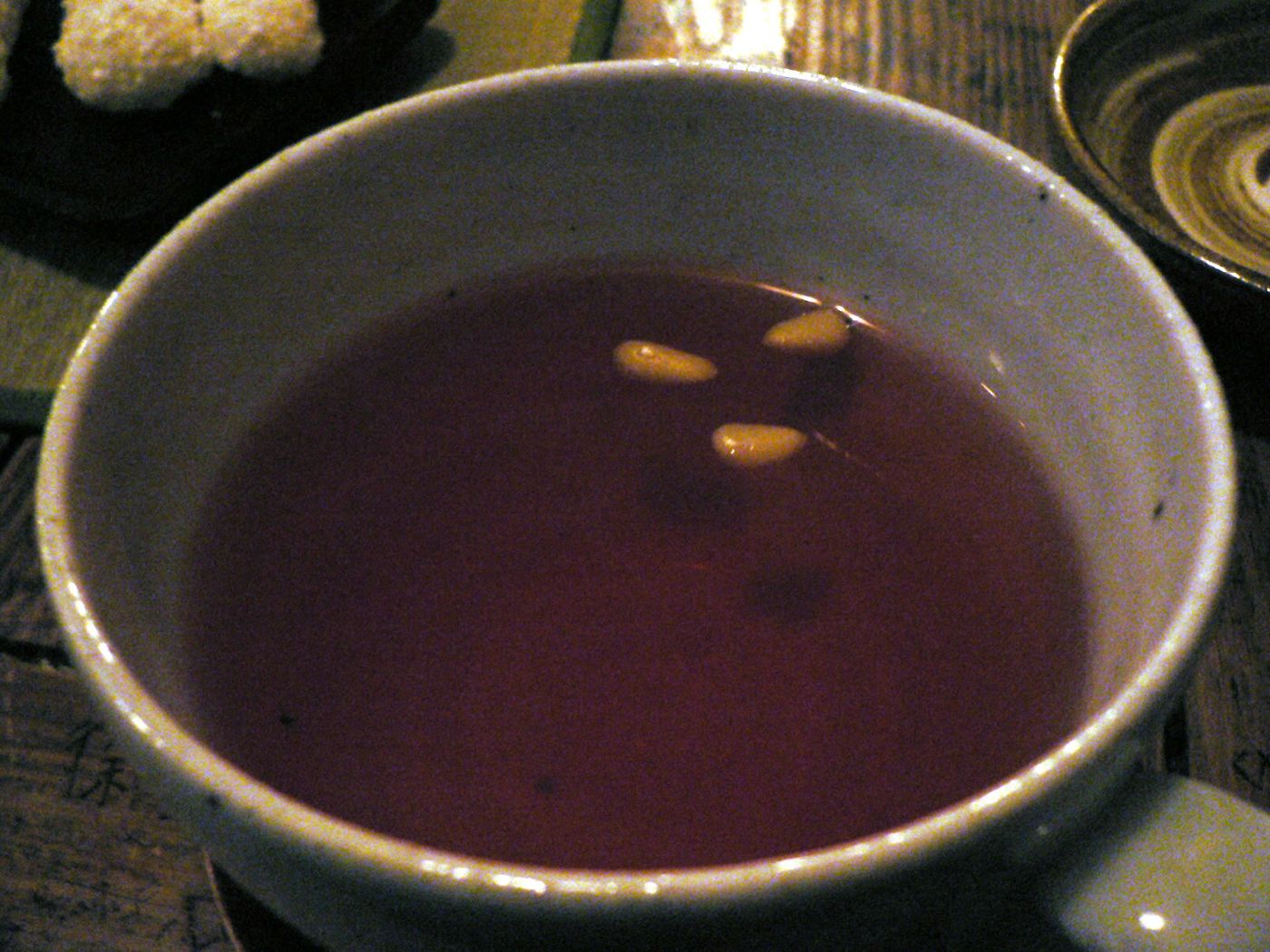 Sujeonggwa (Cinnamon-Ginger Punch with Dried Persimmon)수정과A cold, spicy-sweet punch of ginger and cinnamon simmered separately, sweetened, and served with softened dried persimmons and pine nuts — a New Year drink for guests.
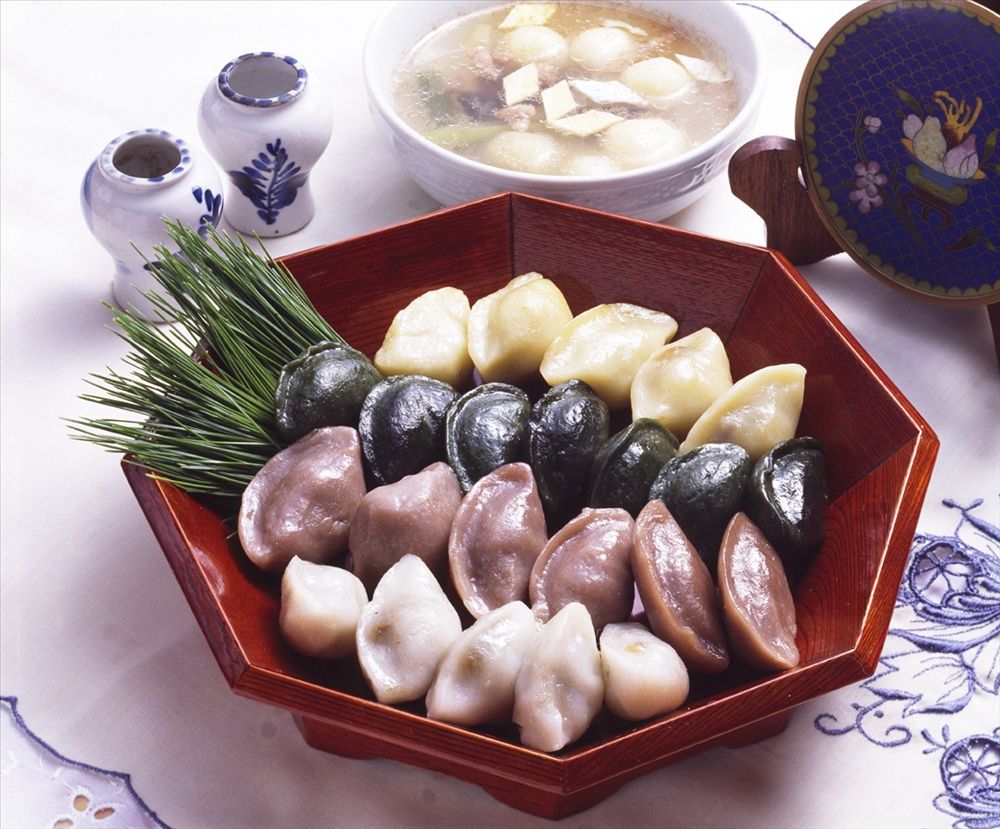 Songpyeon (Half-Moon Rice Cakes)송편Small half-moon cakes of rice dough filled with sweet sesame, beans or chestnut and steamed on a bed of pine needles — the rice cake of Chuseok, made with the new harvest.
Sources
- 01인절미 (Injeolmi) — Encyclopedia of Korean Culture
- 02인절미 (Injeolmi) — Encyclopedia of Korean Folk Culture: Korean Food and Dwelling Life
- 03Glutinous rice cake, Injeolmi, Cubed, With soybean flour (A0410040549a) — Korean Food Composition Table
- 04삼킴·질식 안전사고에 대한 소비자안전주의보 발령 (Consumer safety alert on swallowing and choking accidents, May 2026) — Korea Fair Trade Commission and Korea Consumer Agency
Last updated