Regions
Andong
안동
An inland Confucian town whose food grew from ancestral rites: 'fake' ritual rice, salted mackerel carried in from the coast, distilled soju and a modern jjimdak.
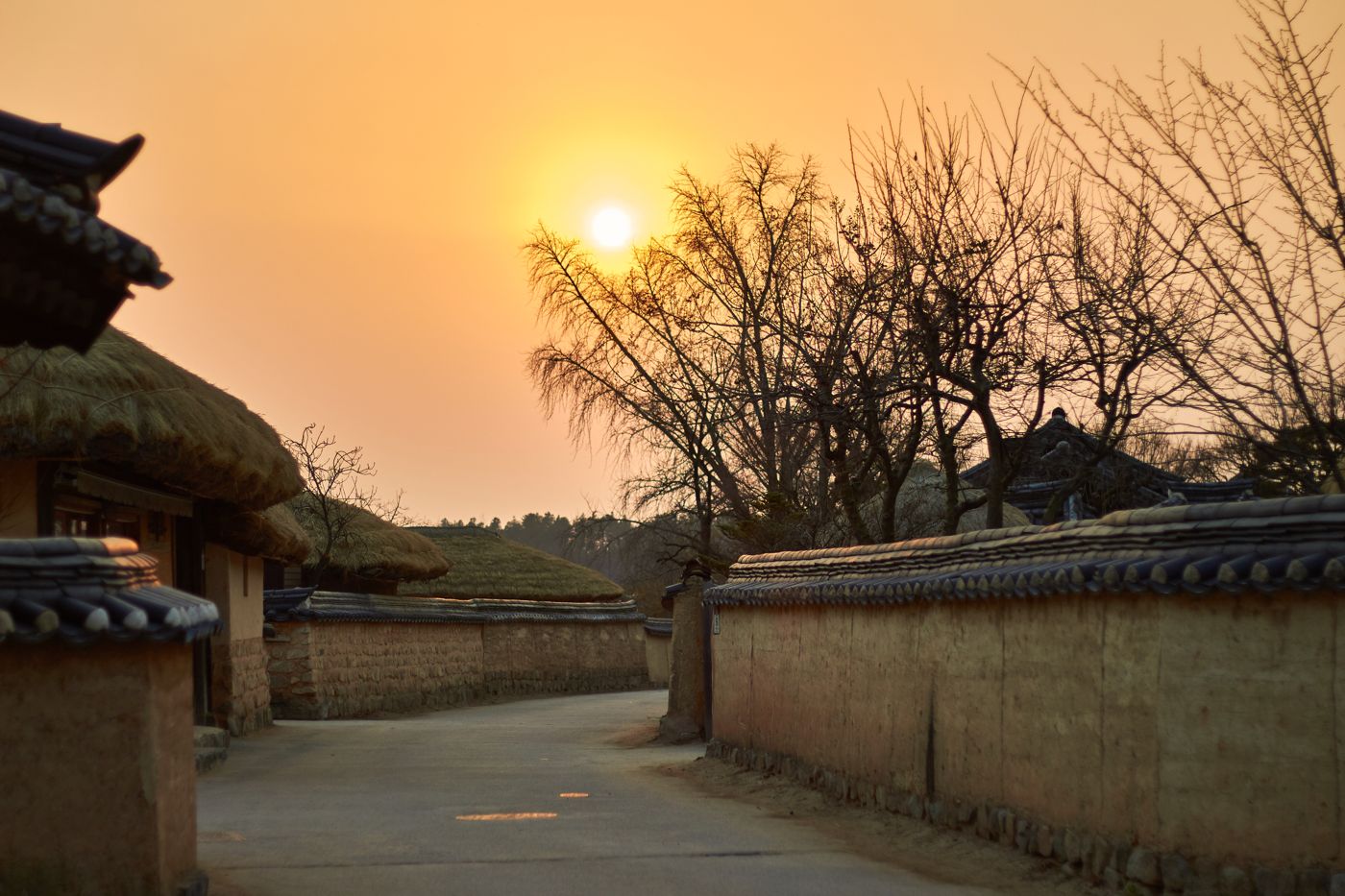 Photo: Mathew Schwartz, CC BY-SA 4.0, via Wikimedia Commons
Andong, in the hills of North Gyeongsang along the upper Nakdong River, is famous as a stronghold of Joseon Confucian culture, home to old lineage villages and academies. Its food reflects that heritage in a very direct way: several of its best-known dishes are tied to jesa, the ancestral rites that some Andong families performed many times a year. It also shows how a town far from the sea made the most of salted fish, and how a modern dish can become a regional emblem within a generation. For the province, see Gyeongsang.
Heotjesatbap: ritual food without the ritual
Heotjesatbap means, roughly, "fake ritual rice": the dishes of an ancestral-rite table, served when there has been no rite. The Encyclopedia of Korean Culture traces the idea to the custom of mixing leftover offering food into bibimbap after a ceremony. It cites an early twentieth-century source describing shops in Daegu selling an imitation version, and a folklore survey recalling restaurants in Jinju that served ritual-style food late at night as a pretext for a good midnight meal.
In Andong, where the encyclopedia notes some households held more than twenty rites a year, the dish became a scholar's late-night meal and is now the town's signature. A typical spread follows the ritual table: three kinds of namul (often mung bean sprouts, bracken and spinach), skewered and grilled beef, fish, jeon, a clear soup with seafood, radish and tofu, and rice. Salted mackerel and shark meat appear in the Andong version, and Andong sikhye is often served with it. See jesa food and gosari-namul.
Andong salted mackerel
Andong has no coast, yet salted mackerel (godeungeo) is one of its best-known foods. Before refrigeration, mackerel reached the town over long routes, overland from Yeongdeok on the east coast or up the Nakdong River from the south, and salting was the only way to keep it. The fish is gutted, rinsed and packed with coarse salt in the belly, then paired two to a bundle, called a son. The encyclopedia notes that salt levels began to fall once refrigeration spread in the 1970s, and that a company began selling vacuum-packed "Andong salted mackerel" in 1999. Locals still buy the unpackaged fish for everyday meals and rites. Traditionally it was grilled over charcoal, steamed in the rice pot or simmered with radish, much like godeungeo-jorim.
Andong soju
Andong soju is a distilled spirit made entirely from grain. Families brewed their own clear rice wine and distilled it in a traditional still, catching the condensed spirit beneath a lid cooled with cold water. The Encyclopedia of Korean Culture gives its strength as about 45 percent alcohol. It was produced commercially from 1915, nearly disappeared after 1962 rules restricted spirits made purely from grain, and revived in the 1990s. It was designated a North Gyeongsang intangible cultural heritage in 1987. See traditional liquor.
Andong jjimdak
Andong jjimdak, chicken with glass noodles (dangmyeon), potatoes and vegetables in a glossy soy sauce, is often assumed to be ancient. The Encyclopedia of Korean Culture says otherwise. It developed in the fried-chicken alley of Andong's old market in the 1980s, reached its current form late in that decade, spread to university neighborhoods in the 1990s and to Seoul in the early 2000s, after which the alley renamed itself "jjimdak alley." Despite the name, it is cooked over high heat in a large pan rather than steamed. It is cooked by the whole chicken and shared at the table; in Andong it was a snack or drinking food, while elsewhere it is usually eaten as a meal. See steaming and jjim.
Andong sikhye
Andong's sikhye is unlike the sweet rice punch found elsewhere. It combines cooked rice with radish, ginger and chili steeped in malt water, giving a cool, spicy, faintly sweet drink. The encyclopedia dates it to around the mid-eighteenth century and notes it is served at feasts and everyday meals alike.
Dishes from this region
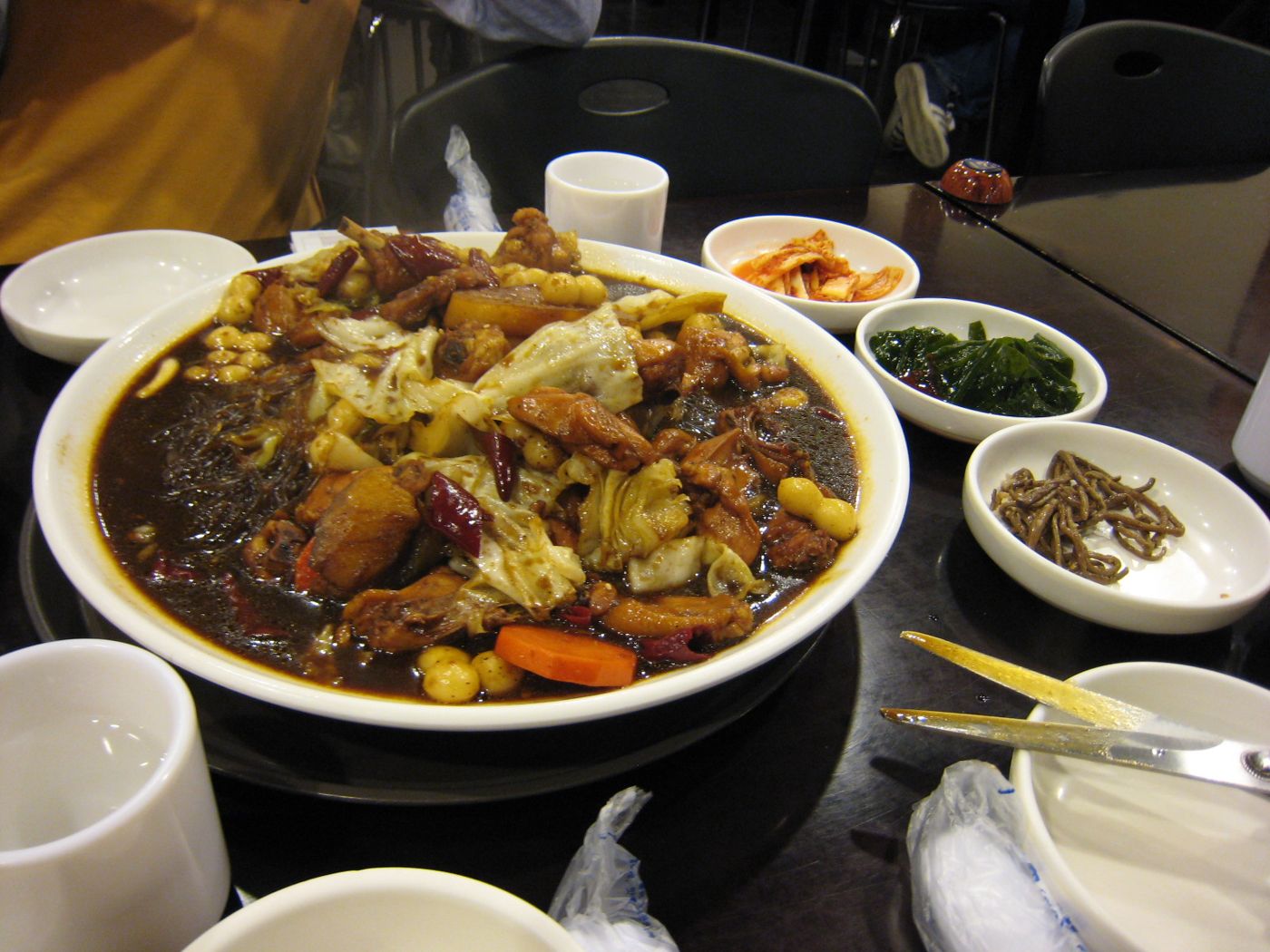 Andong Jjimdak (Soy-Braised Chicken with Glass Noodles)안동찜닭Chicken braised hard in a sweet soy sauce with potatoes, vegetables, dried chilies and glass noodles — a 1980s invention of Andong's old market, not a yangban heirloom.
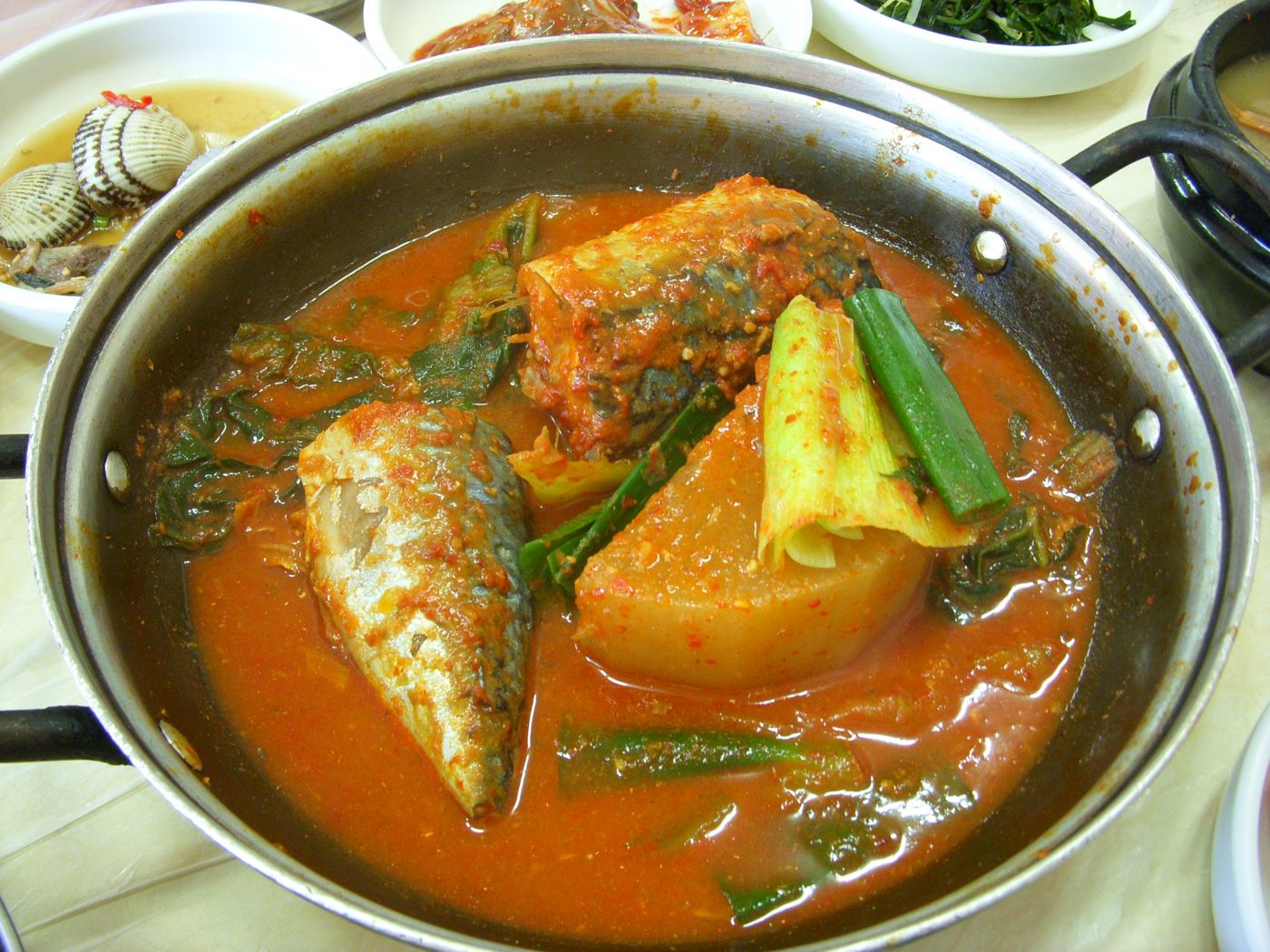 Godeungeo Jorim고등어조림Mackerel braised on a bed of Korean radish in a spicy soy and chili sauce — a warming, rice-friendly dish where the radish is often the best part.
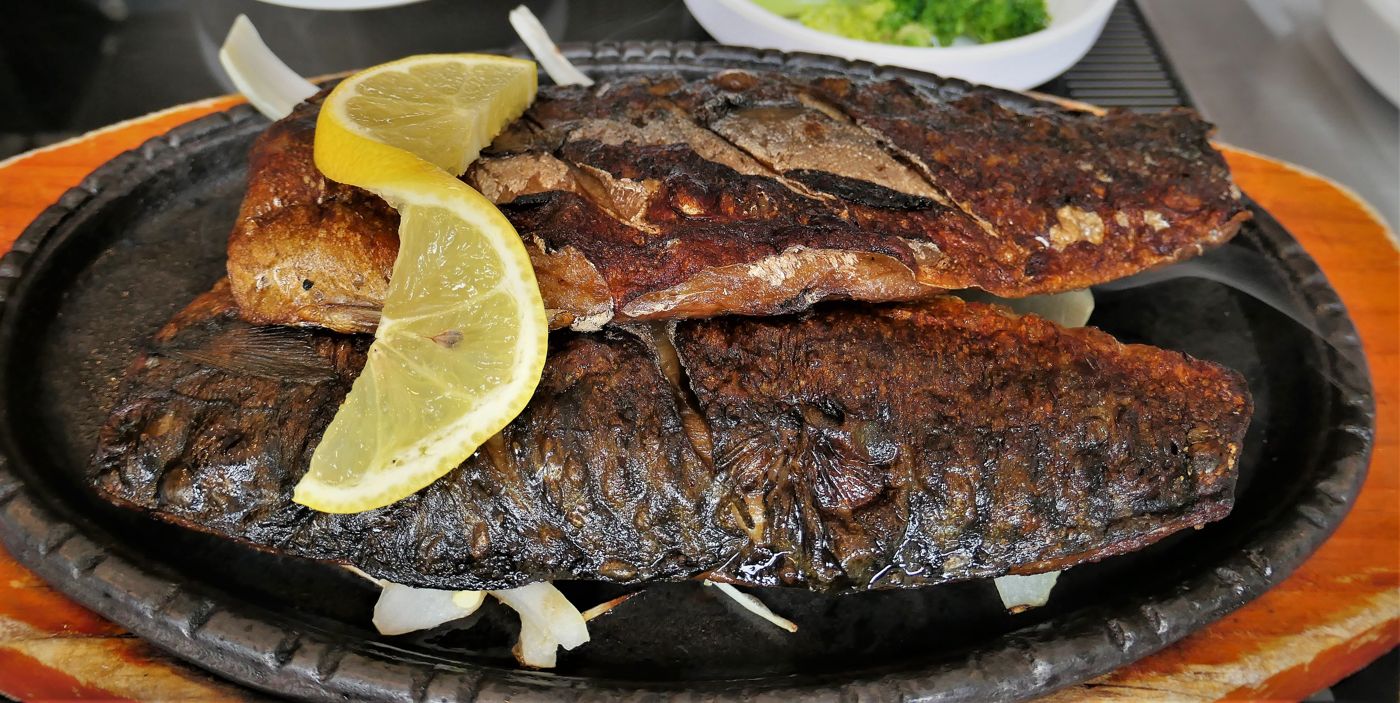 Godeungeo-gui (Grilled Mackerel)고등어구이Salted mackerel grilled or pan-fried until the skin crackles and the rich flesh flakes — one of the most common fish dishes on the Korean home table.
- Perilla Leaf Kimchi깻잎김치Stacks of perilla leaves layered with a soy, fish-sauce and chili seasoning — fragrant, slightly bitter summer kimchi peeled off one leaf at a time over rice.
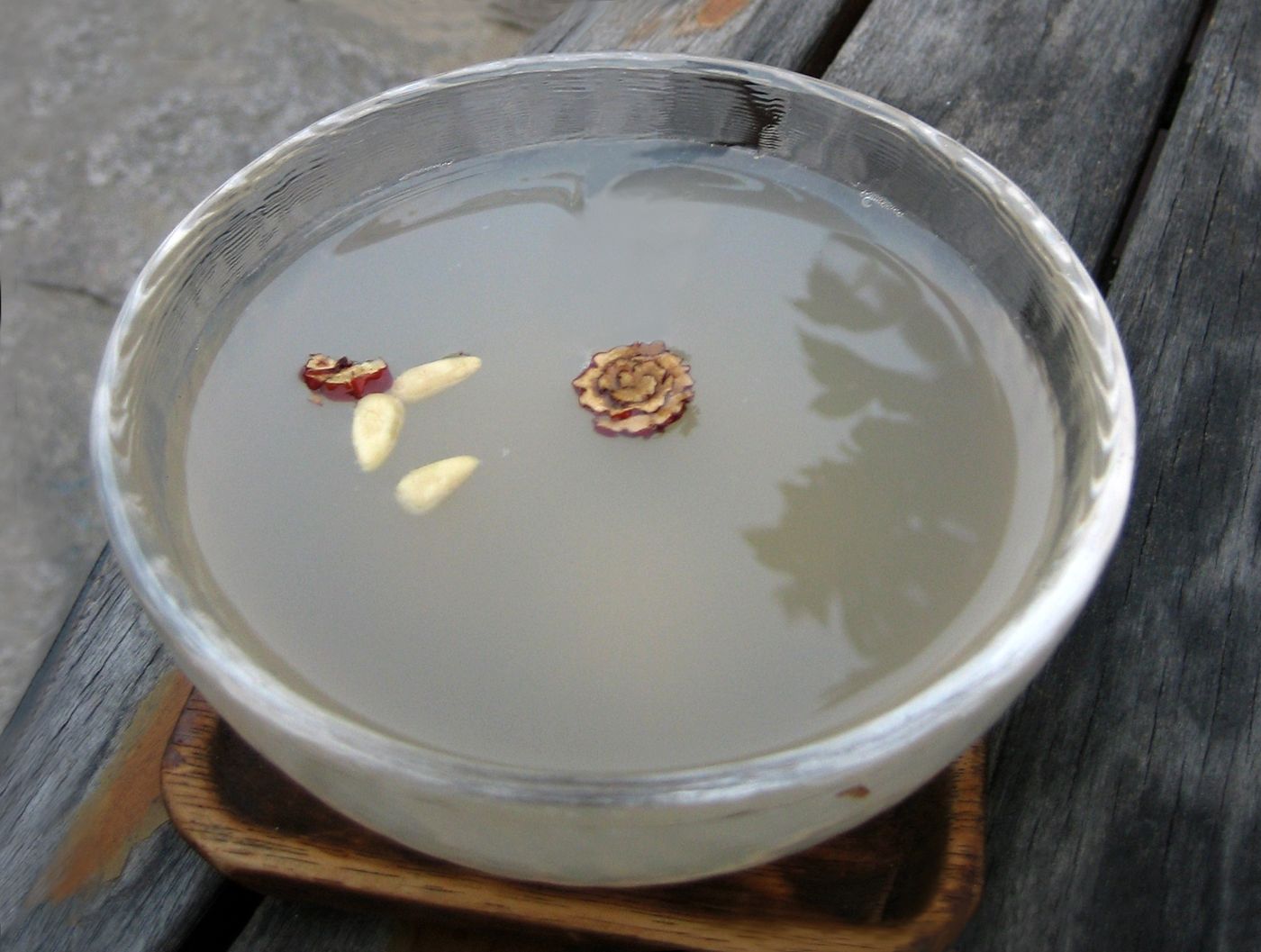 Sikhye (Sweet Malted Rice Drink)식혜Cooked rice steeped in barley-malt water until it sweetens and the grains float, then chilled — the traditional after-feast drink of Korean holidays.