Ingredient
Pork (dwaeji-gogi)
돼지고기
Romanization: dwaeji-gogi
Korea's most widely eaten meat, prized cut by cut: fatty belly for samgyeopsal, neck for the grill, lean legs for boiled suyuk and stir-fried jeyuk. Pork also anchors Jeju Island's feast cooking.
Flavor
Belly is rich and sweet-fatted, crisping at the edges on the grill; neck is juicy and marbled; leg and loin are lean and mild, taking on the flavor of soy, chili or doenjang marinades.
 Photo: lazy fri13th, CC BY 2.0, via Wikimedia Commons
Origin & History
Pigs have been raised on the Korean Peninsula for at least two thousand years. The Encyclopedia of Korean Culture points to the Chinese Sanguozhi (Records of the Three Kingdoms), whose account of the Eastern peoples records pig-keeping among the Buyeo, who named an official rank after the pig, and among the Yilou, who ate the meat, wore the hides and rubbed pork fat on their skin against the winter cold. The native Korean pig was small, black-haired and slow-growing, kept near the house and fed on grass, dishwater and farm scraps. Improved Western breeds arrived in the 20th century (Berkshire via Japan in 1905, Duroc in 1951, Landrace in 1962), and most commercial pork today comes from crosses of Landrace, Yorkshire and Duroc. The old black pig was later restored by the Rural Development Administration and registered as a native breed in 2008.
Korea's taste for particular cuts is surprisingly old. A 1931 edition of the cookbook Joseon yori jebeop already named belly, then called segyeopsal ("three-layer meat"), as the tastiest part of the pig, and a 1934 Dong-A Ilbo article ranked belly first and the neck second. Belly was long boiled, braised or sliced as pressed pyeonyuk; grilled belly restaurants seem to have appeared in the late 1970s, portable gas burners spread the habit in the 1980s, and by the late 1990s samgyeopsal with soju had become a national institution. Under the Korean standard, pork is divided into seven primary cuts (front leg apdari, neck moksim, ribs galbi, loin deungsim, tenderloin ansim, belly samgyeopsal and hind leg dwitdari). The Rural Development Administration suggests the leaner leg cuts for grilled dishes and minced fillings such as donggeurang-ttaeng, loin and tenderloin for jeon, and ribs for braises such as galbi-jjim.
On Jeju Island, where the native black pig is now protected as a natural monument, pork was the indispensable meat of weddings and funerals. Pigs were slaughtered and shared among neighbors and relatives, and the island developed its own dishes: dombe-gogi, boiled pork served on a wooden cutting board; gogi-guksu, noodles in pork broth; blood sausage; and momguk, a pork-broth soup thickened with mojaban seaweed. On the mainland, boiled pork appears as bossam wrapped in cabbage with kimchi, trotters become jokbal, and pork broth fills bowls of dwaeji-gukbap.
Nutrition
| Calories | 392 kcal |
|---|---|
| Protein | 13.27 g |
| Fat | 35.7 g |
| Carbohydrates | 0 g |
| Fiber | 0 g |
| Sodium | 55 mg |
Notable forThiamin (0.49 mg) · Selenium (14.1 µg) · Zinc (1.7 mg)
Values copied from the Korean Food Composition Table (Rural Development Administration / National Institute of Crop Science) for this exact food, per 100 g edible portion. Cuts differ widely: raw neck (목심 / moksim) in the same table has 227 kcal, 17.2 g protein, 16.4 g fat and 0.66 mg thiamin per 100 g. Actual values vary with ingredients, portion size and preparation.
Health Benefits
- Protein and B vitamins: The Encyclopedia of Korean Culture puts lean pork at about 20 percent protein and calls it a good source of B vitamins; the Korean Food Composition Table lists notable thiamin in both belly and neck.
- Cut matters: Raw belly in the Korean table carries almost 36 g of fat per 100 g, more than twice the fat of neck. The Rural Development Administration points to front and hind leg as low-fat, high-protein alternatives.
- Cook to a safe temperature: The FDA lists 145°F (63°C) with a 3-minute rest for whole pork chops and roasts, and 160°F (71°C) for ground pork, as in minced fillings for jeon and dumplings.
- Watch the seasoning: Grilled pork is usually eaten with salty dips such as ssamjang and salted shrimp, and marinated dishes like jeyuk-bokkeum add soy and chili paste; the sodium comes mostly from these, not the meat.
Informational, not medical advice. Talk to a qualified professional about your own health and diet.
Dishes with Pork (dwaeji-gogi)
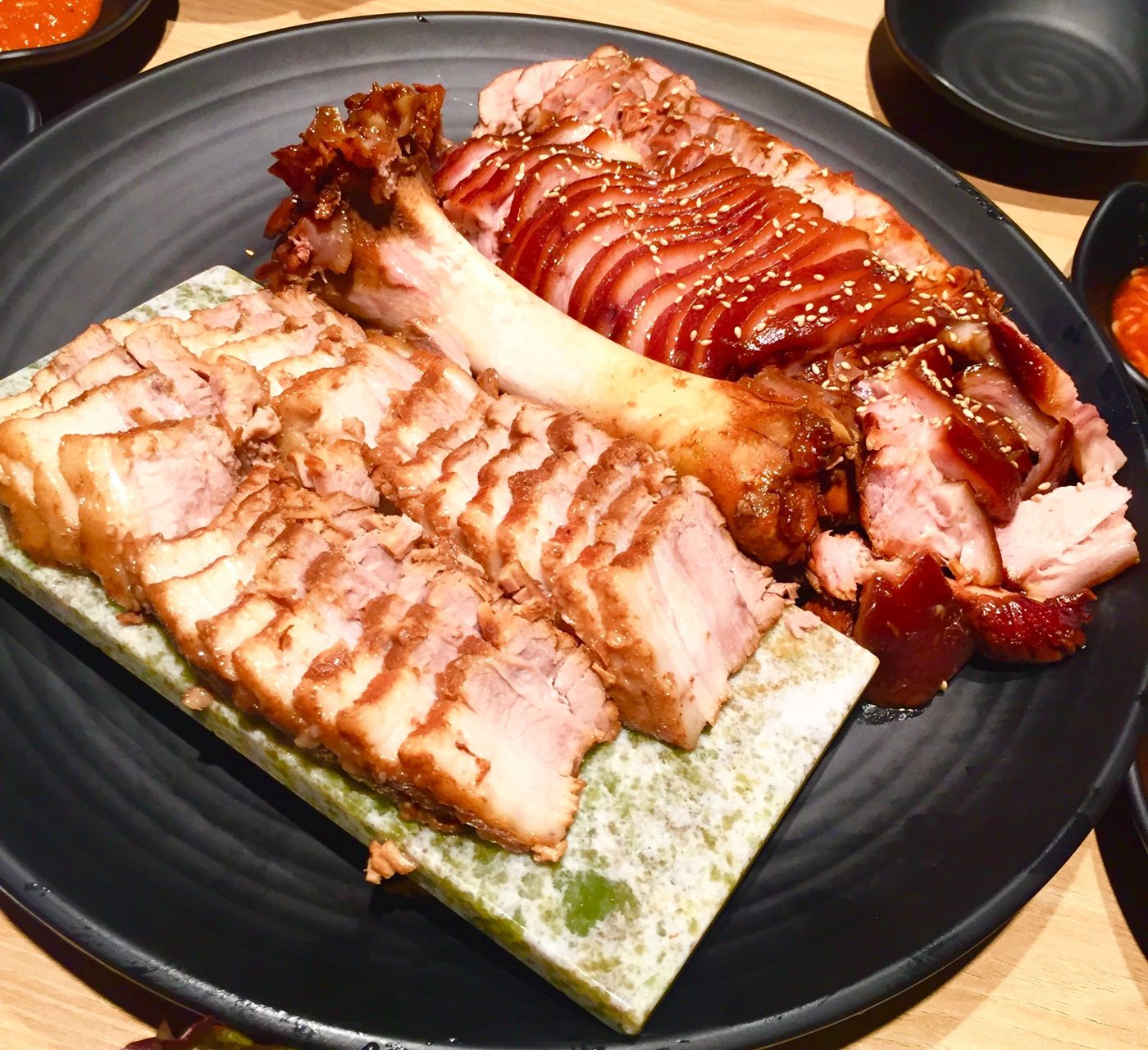 Bossam (Boiled Pork Wraps)보쌈Pork belly simmered with doenjang and aromatics, pressed and sliced, then wrapped in salted cabbage with spicy radish and salted shrimp — a feast dish built for sharing.
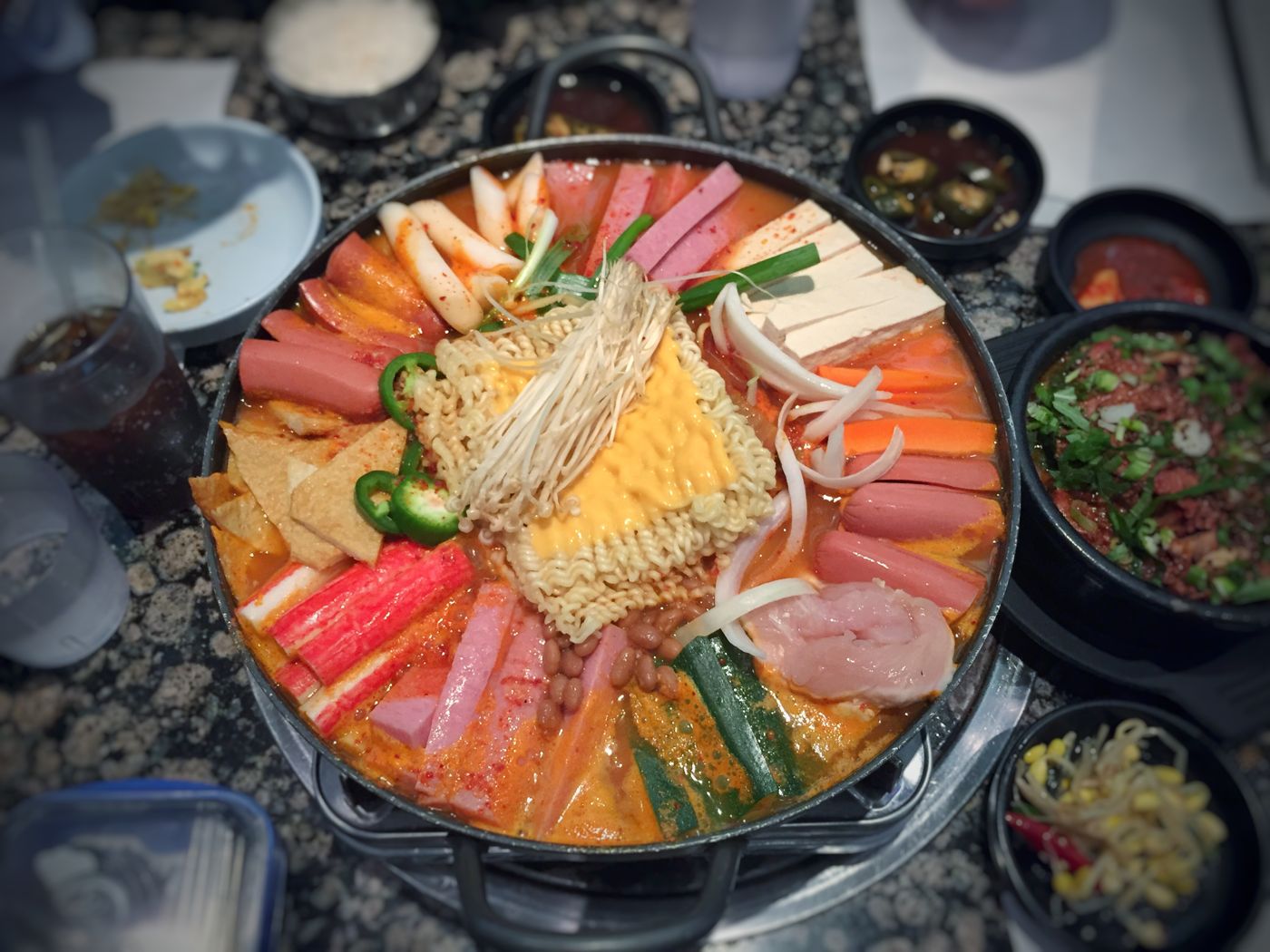 Budae Jjigae (Army Base Stew)부대찌개Ham, sausages and canned beans simmered with kimchi, tofu and a gochujang-chili broth, usually finished with instant noodles — a postwar stew born around US Army bases.
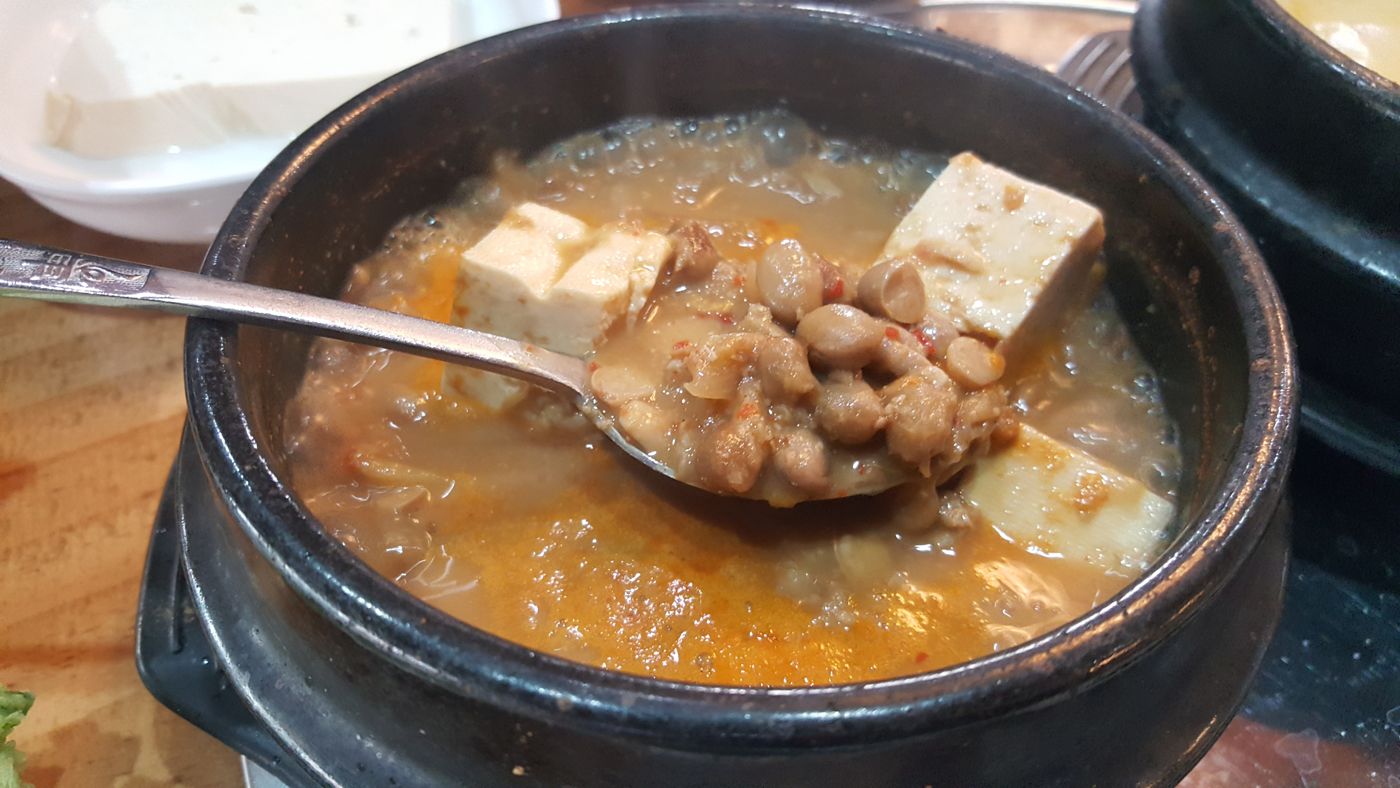 Cheonggukjang Jjigae (Quick-Fermented Soybean Stew)청국장찌개A thick, pungent winter stew of quick-fermented whole soybeans simmered with sour kimchi, tofu and a little pork or beef — loved for its earthy depth, notorious for its smell.
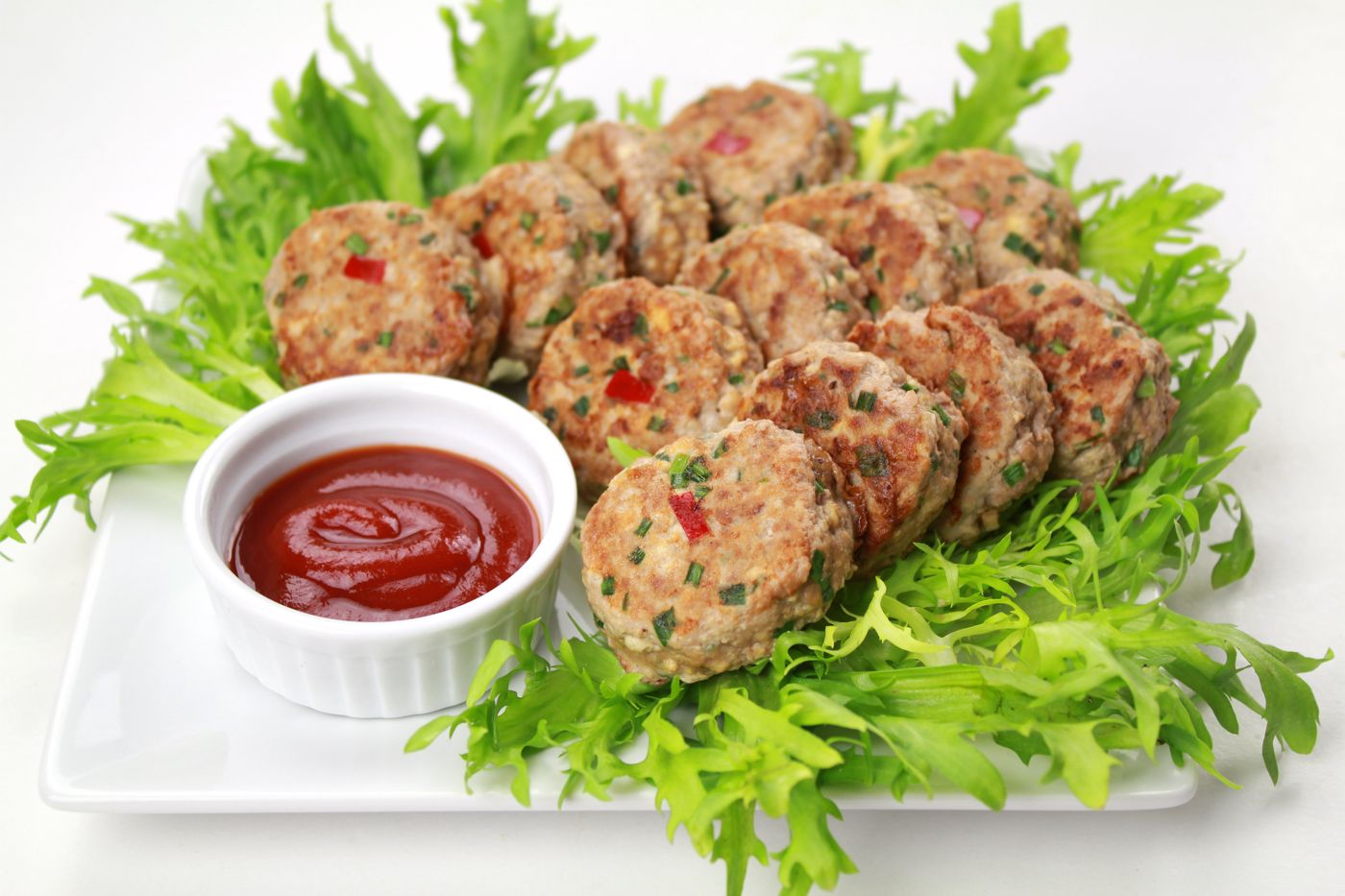 Donggeurang-ttaeng (Meat and Tofu Patties)동그랑땡Coin-sized patties of minced pork or beef and mashed tofu, dipped in flour and egg and pan-fried — a fixture of holiday jeon platters and lunchboxes.
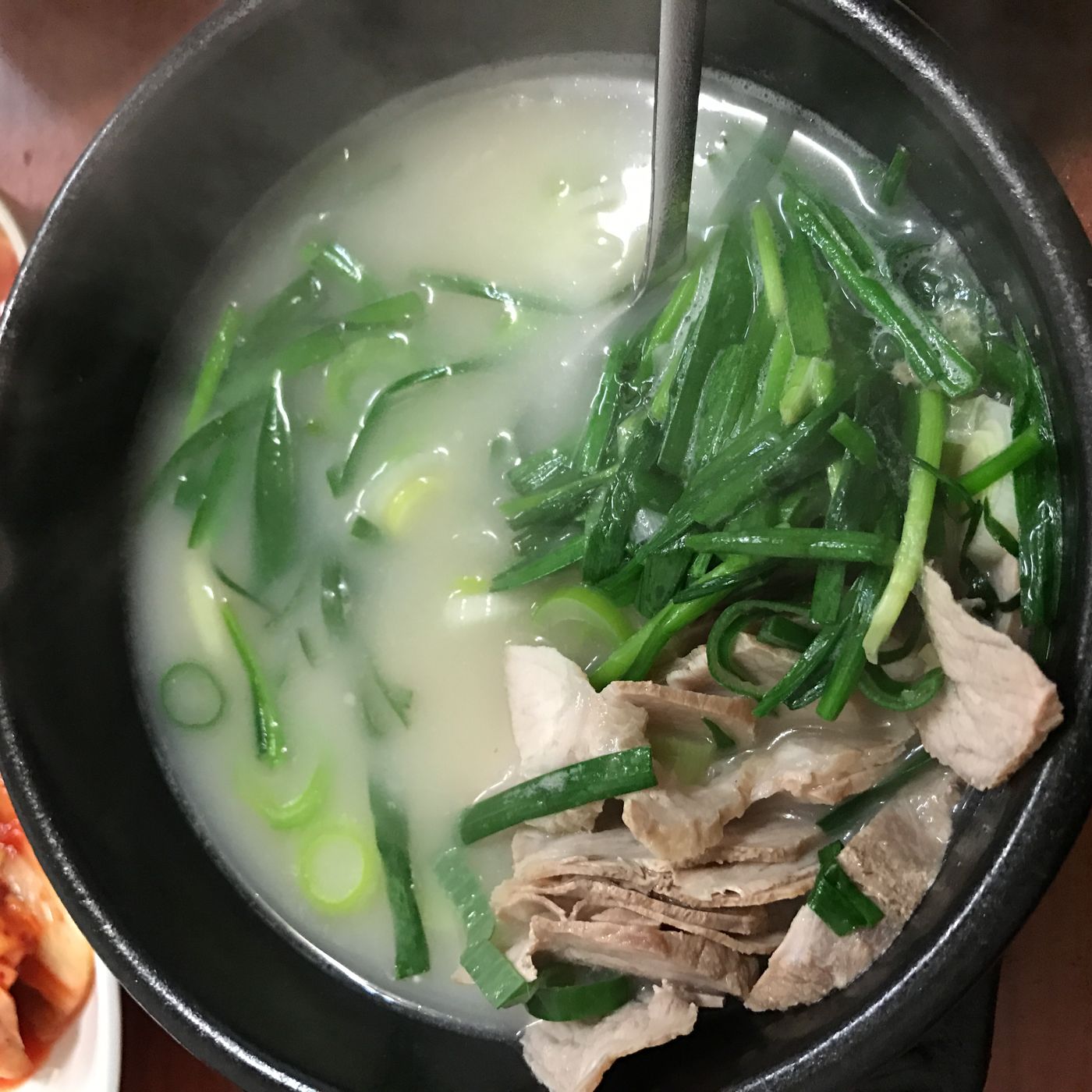 Dwaeji Gukbap (Busan Pork and Rice Soup)돼지국밥Slices of boiled pork in a milky pork-bone broth over rice, seasoned at the table with salted shrimp and garlic chives — Busan's signature everyday bowl.
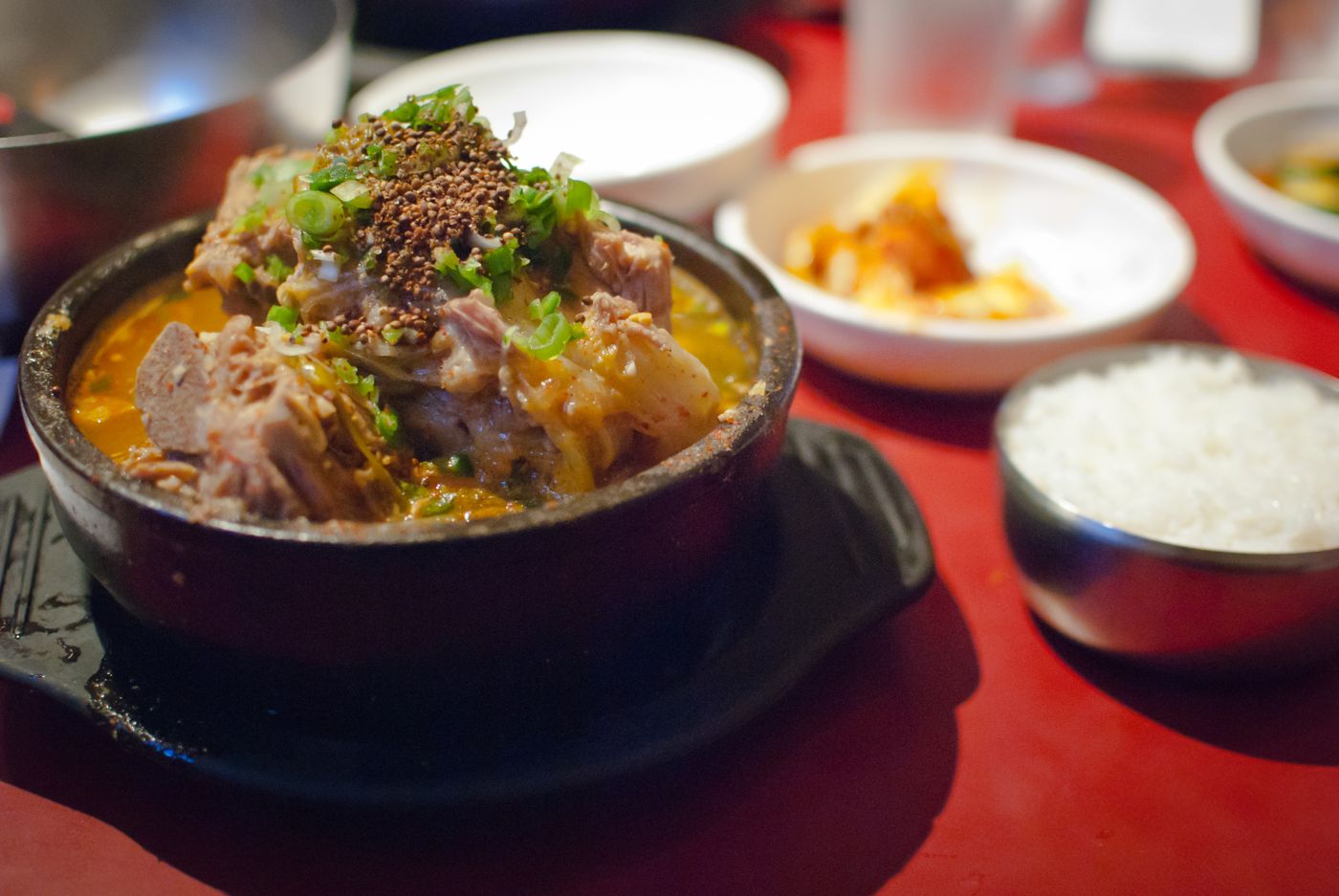 Gamjatang (Pork Bone and Potato Stew)감자탕Meaty pork spine simmered with potatoes, cabbage greens and perilla in a spicy doenjang-chili broth — a big shared pot of picking meat off the bones.
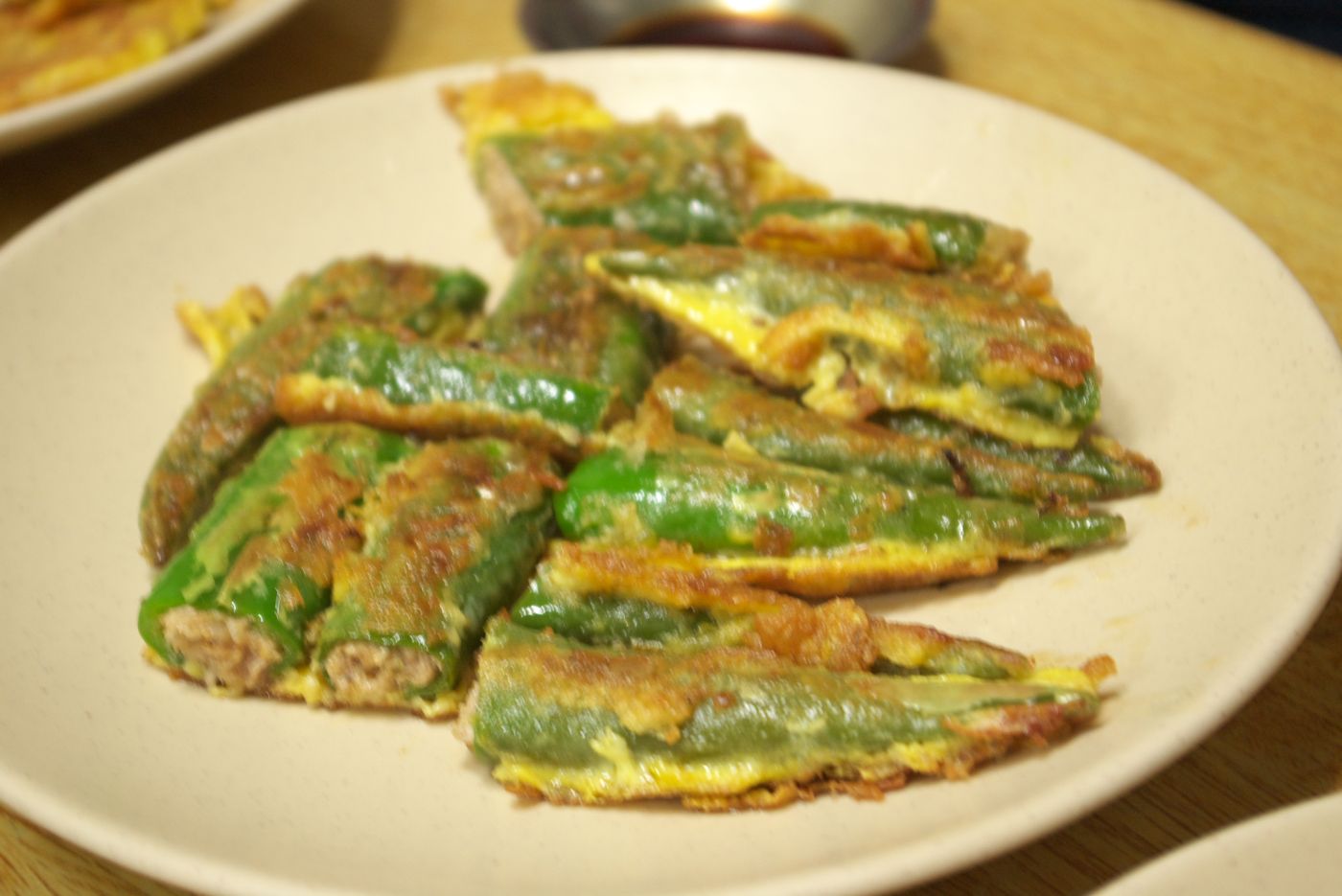 Gochu-jeon (Stuffed Green Chili Peppers)고추전Mild green chili peppers split, filled with seasoned meat and tofu, then coated in flour and egg and pan-fried — a bright green, gently spicy jeon.
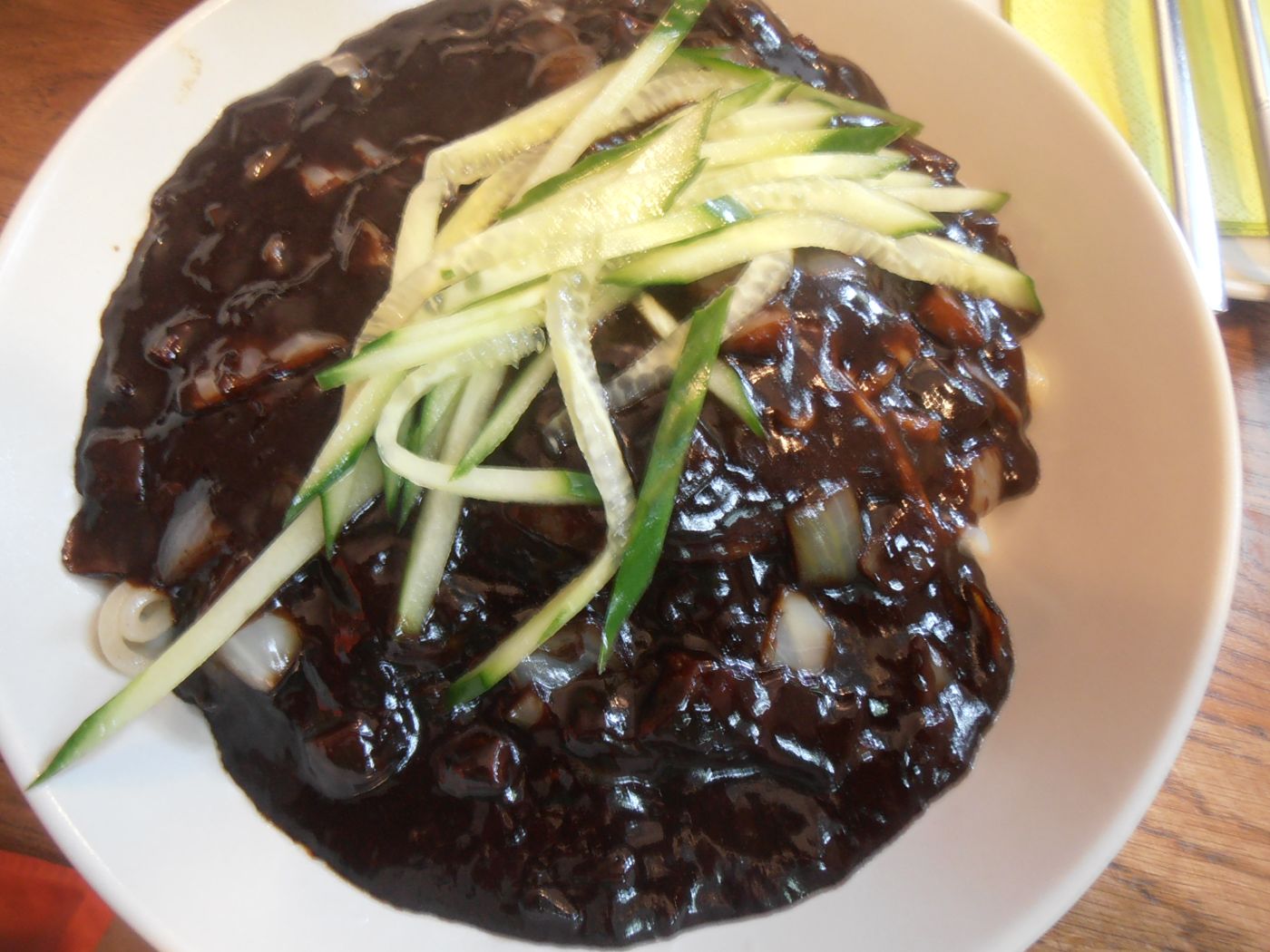 Jajangmyeon (Noodles in Black Bean Sauce)자장면Wheat noodles under a glossy sauce of chunjang fried with pork, onion and potato — the Korean-Chinese dish born among Shandong migrants in Incheon, contested origin claims and all.
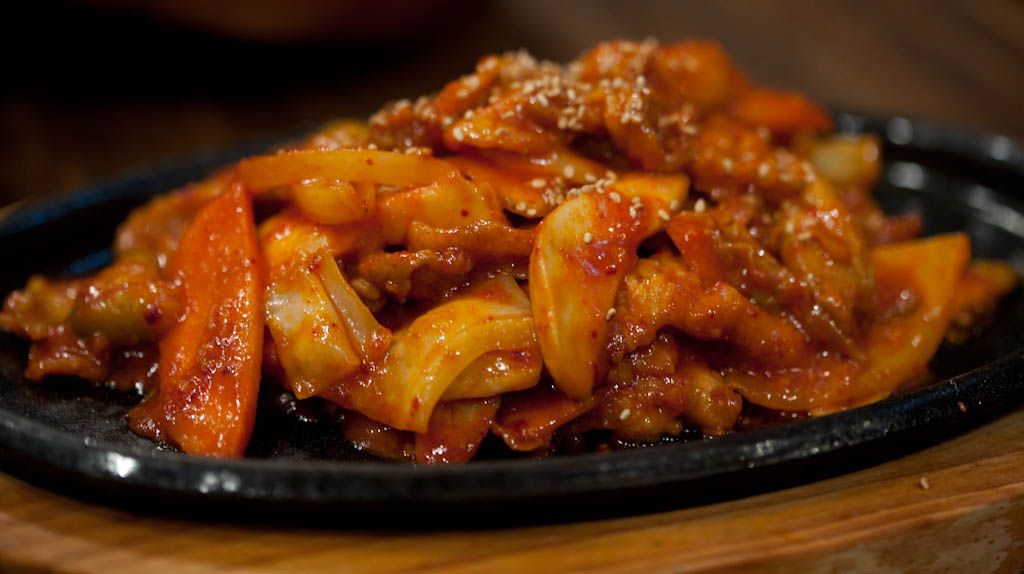 Jeyuk Bokkeum (Spicy Stir-Fried Pork)제육볶음Thin slices of pork marinated in gochujang, garlic and ginger, then stir-fried with onion and green onion — a hearty, spicy staple of home and diner tables.
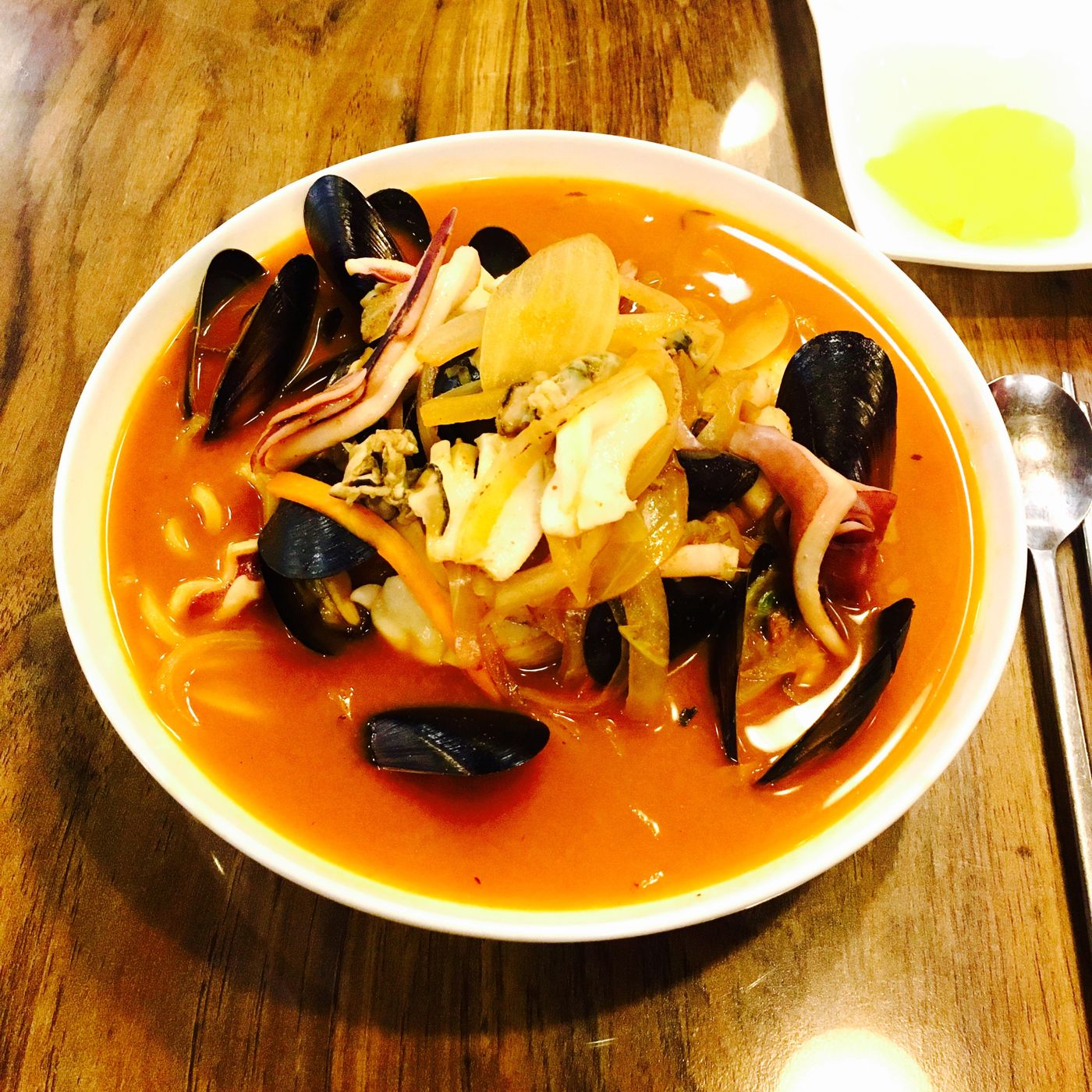 Jjamppong (Spicy Seafood Noodle Soup)짬뽕Thick wheat noodles in a fiery red broth of stir-fried pork, squid, shellfish and vegetables — the Korean-Chinese restaurant's spicy counterpart to jajangmyeon.
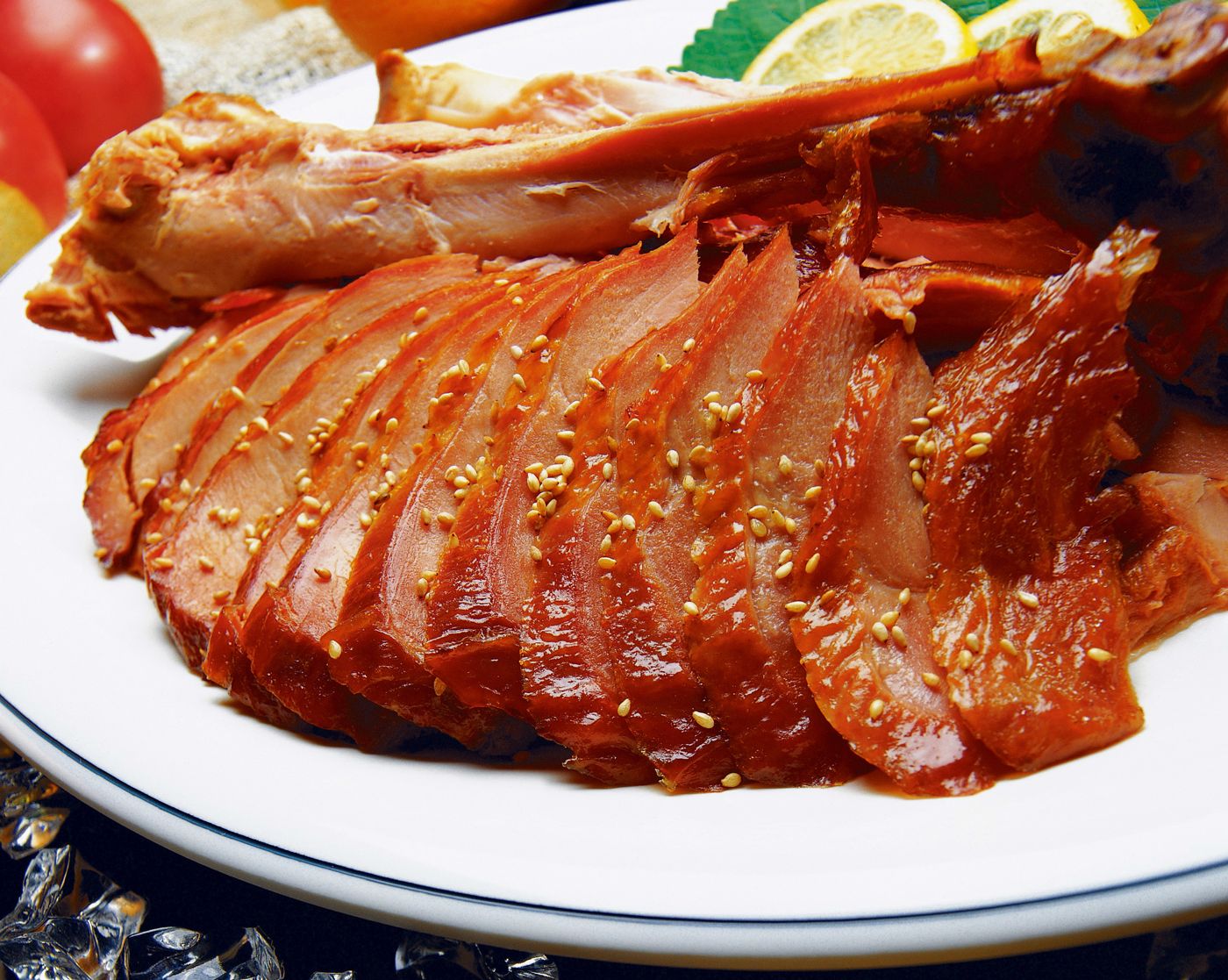 Jokbal (Braised Pig's Trotters)족발Pig's trotters simmered until tender, then braised in soy sauce and spices until glossy and sliced — a postwar Seoul specialty of Jangchung-dong.
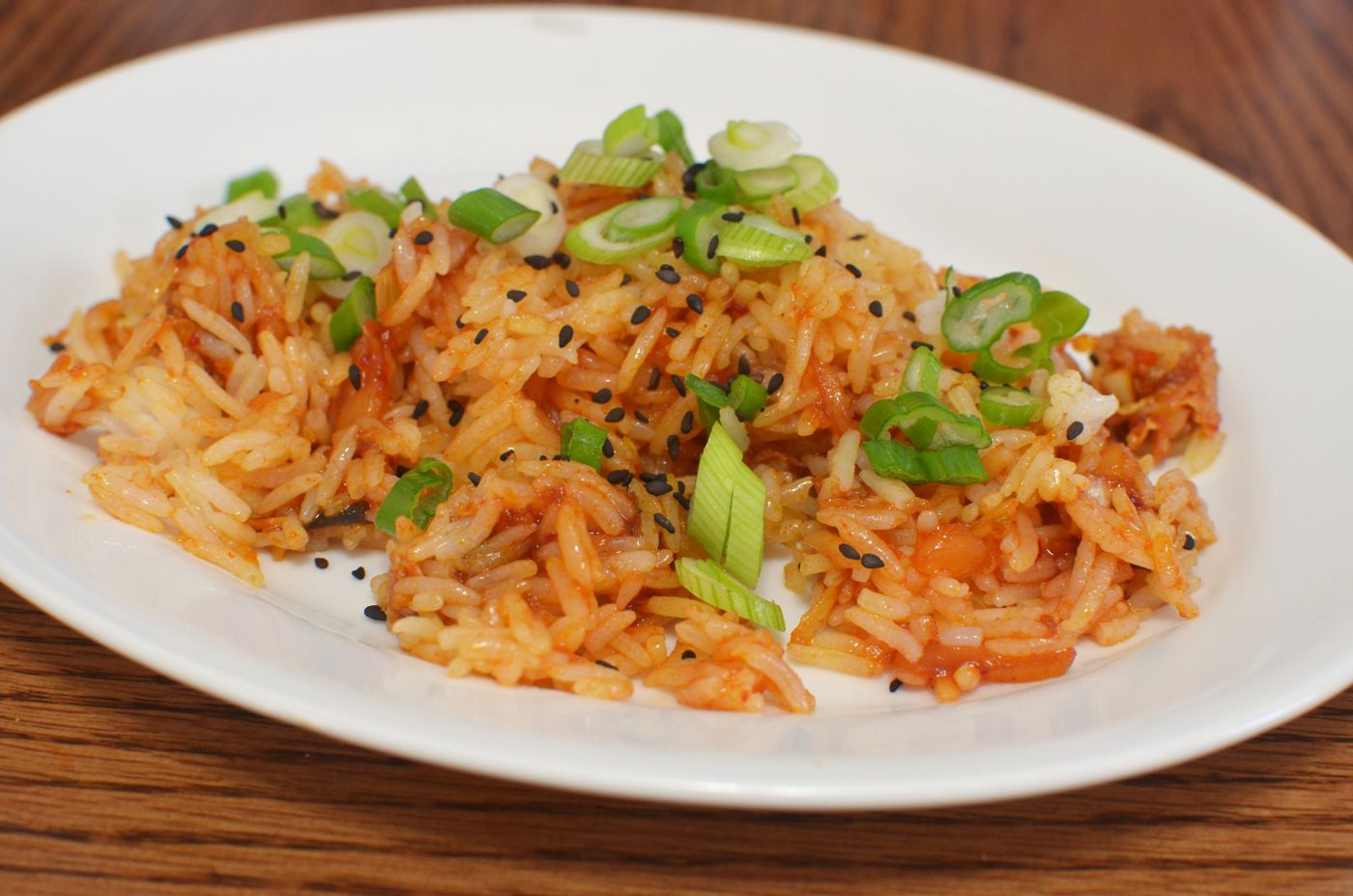 Kimchi-bokkeumbap (Kimchi Fried Rice)김치볶음밥Leftover rice stir-fried with sour, well-fermented kimchi and a little pork, usually topped with a fried egg — a home staple that spread with frying pans and cooking oil.
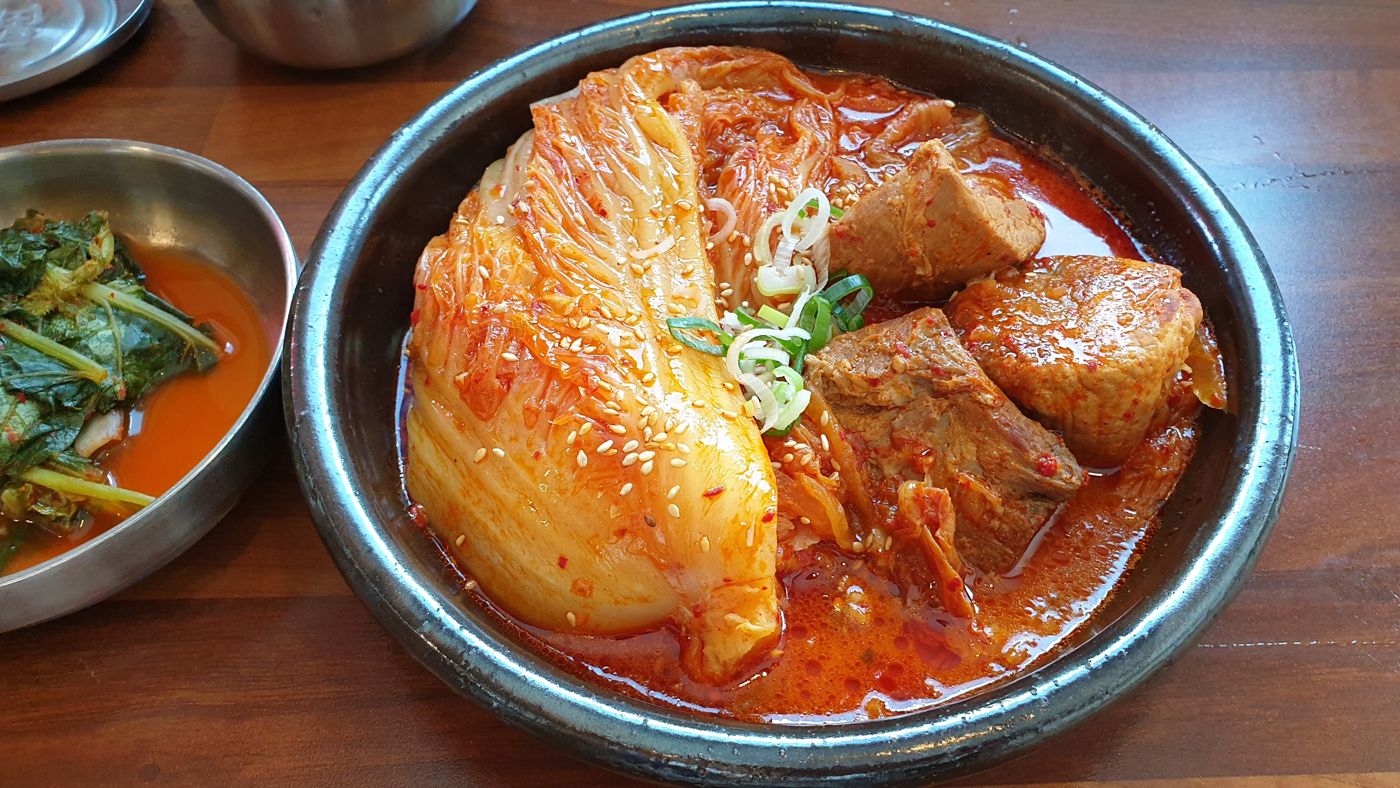 Kimchi-jjim (Braised Aged Kimchi with Pork)김치찜Well-fermented kimchi braised slowly with pork until the sourness mellows and the meat turns tender, with only a little liquid left in the pot. A hearty dish for a bowl of rice.
- Kongbiji Jjigae (Okara Stew)콩비지찌개Soybean pulp left from tofu-making — or freshly ground soaked soybeans — simmered thick with pork and sour kimchi and seasoned with salted shrimp; a nutty, homely winter stew.
 Mandu (Korean Dumplings)만두Thin wrappers folded around pork, tofu, kimchi and sprouts, then steamed or boiled — a Goryeo-era arrival from China that became a winter staple of the North.
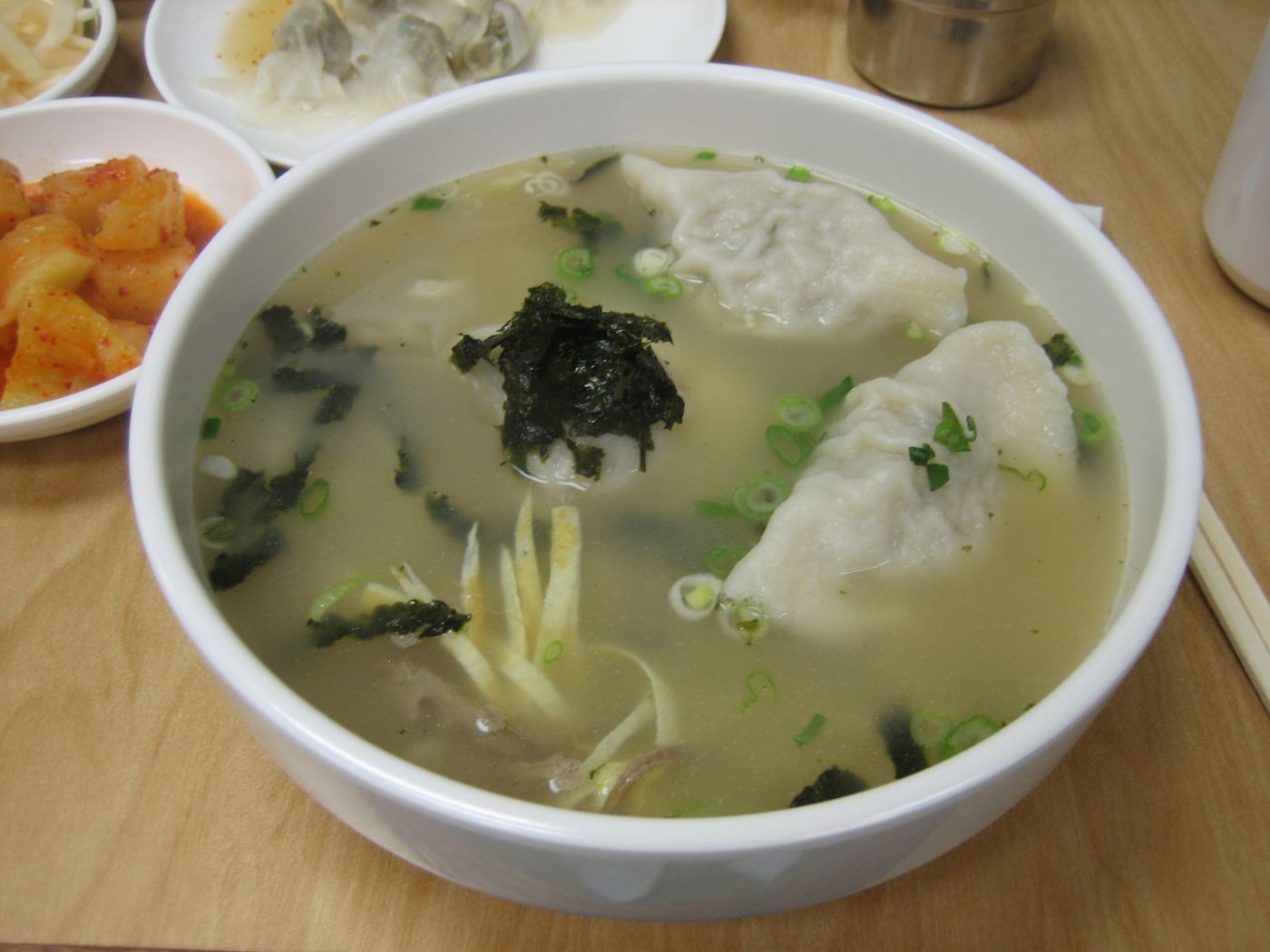 Manduguk (Dumpling Soup)만둣국Stuffed dumplings simmered in a clear, savory broth, usually beef-based and topped with egg strands and green onion. A winter and New Year dish with northern roots.
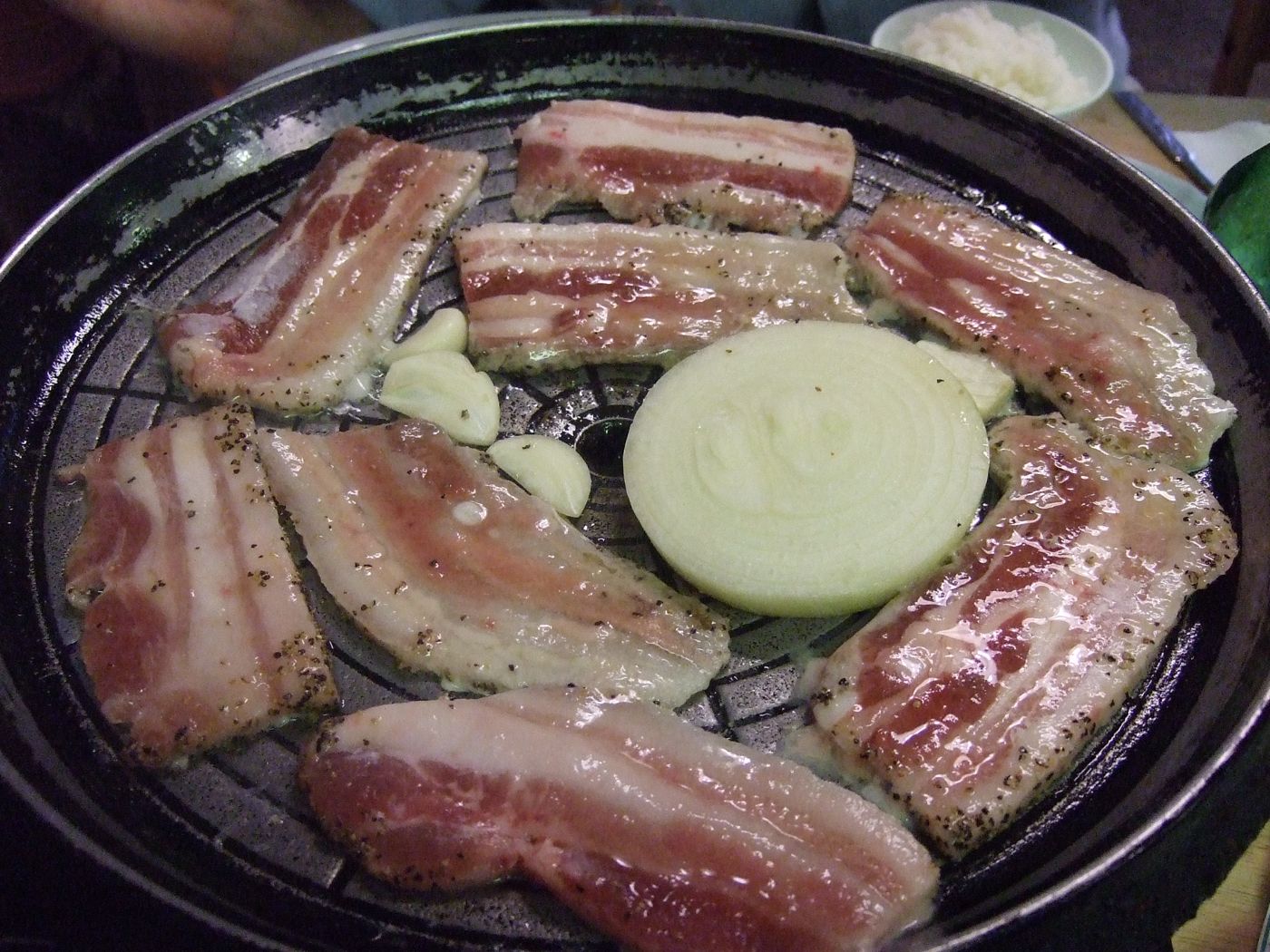 Samgyeopsal-gui (Grilled Pork Belly)삼겹살구이Thick, unseasoned slices of pork belly grilled at the table and wrapped in lettuce with garlic and ssamjang — Korea's favorite barbecue, though only since the late 1970s.
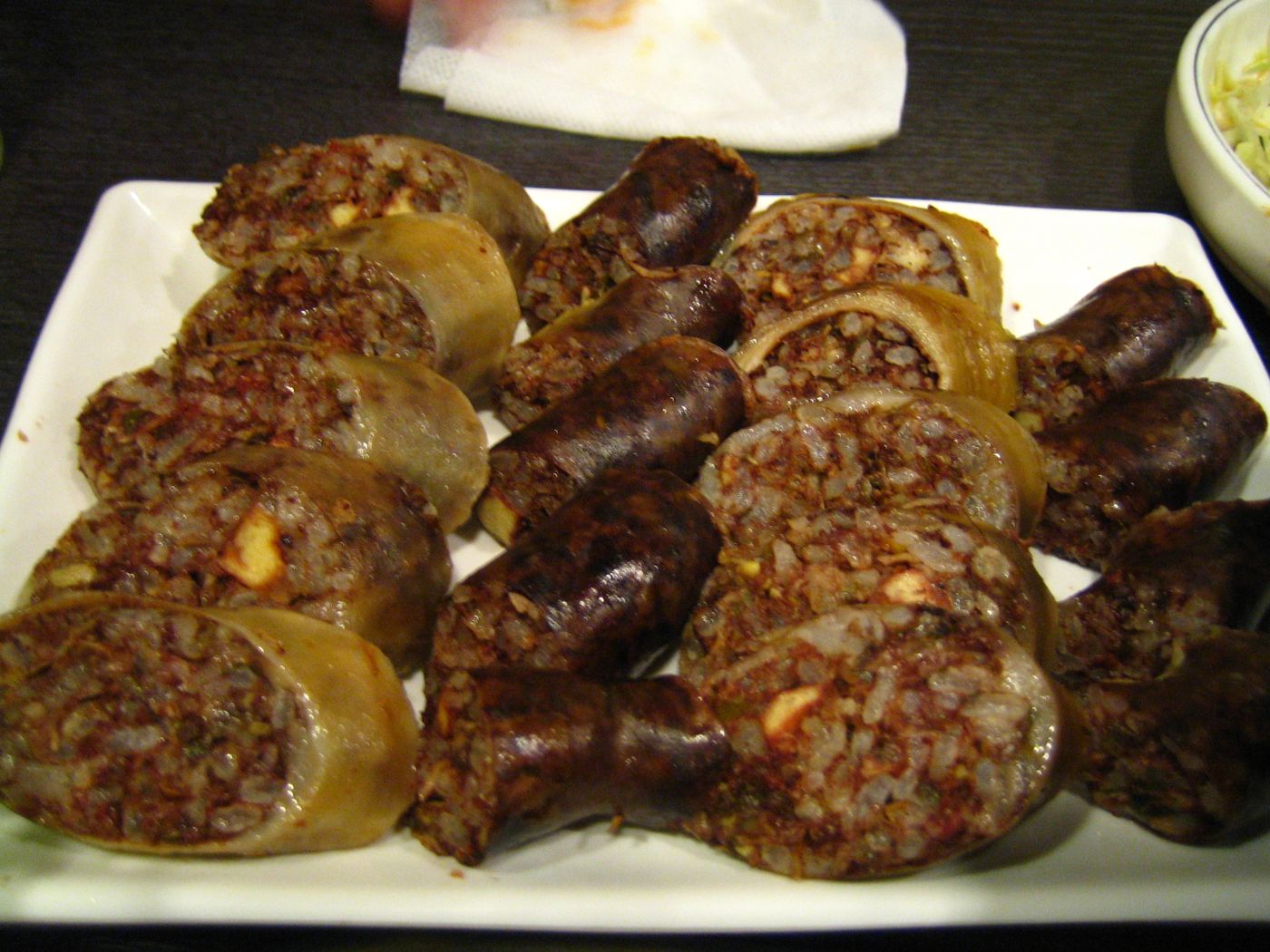 Sundae (Korean Blood Sausage)순대Pork intestine stuffed with pig's blood, glutinous rice, glass noodles and vegetables, then steamed — a northern farmhouse food that became a nationwide street snack.
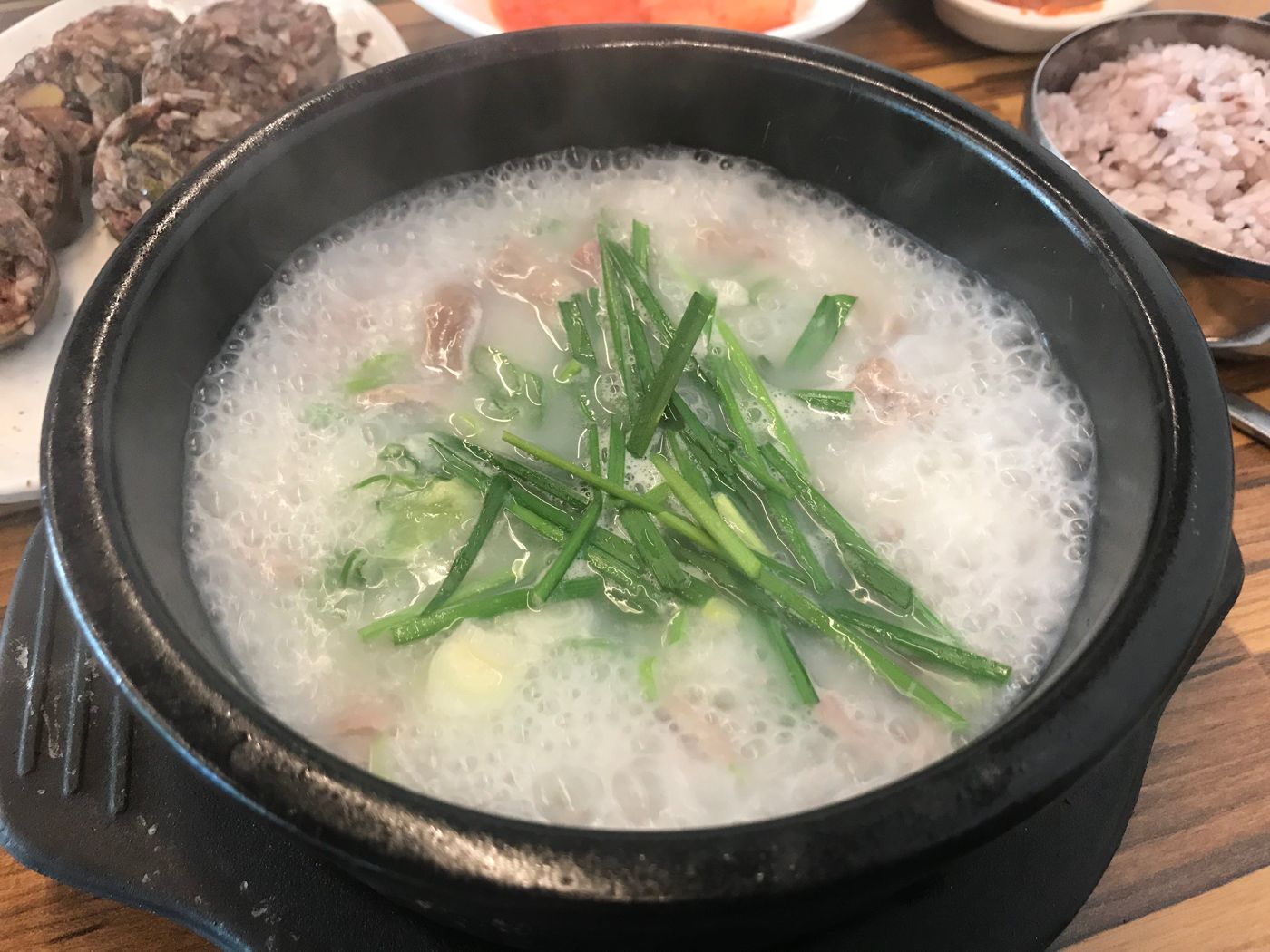 Sundaeguk (Blood Sausage Soup)순댓국Slices of Korean blood sausage and pork offal in a rich pork-bone broth, seasoned at the table with salted shrimp — a cheap, hearty market-day bowl served with rice.
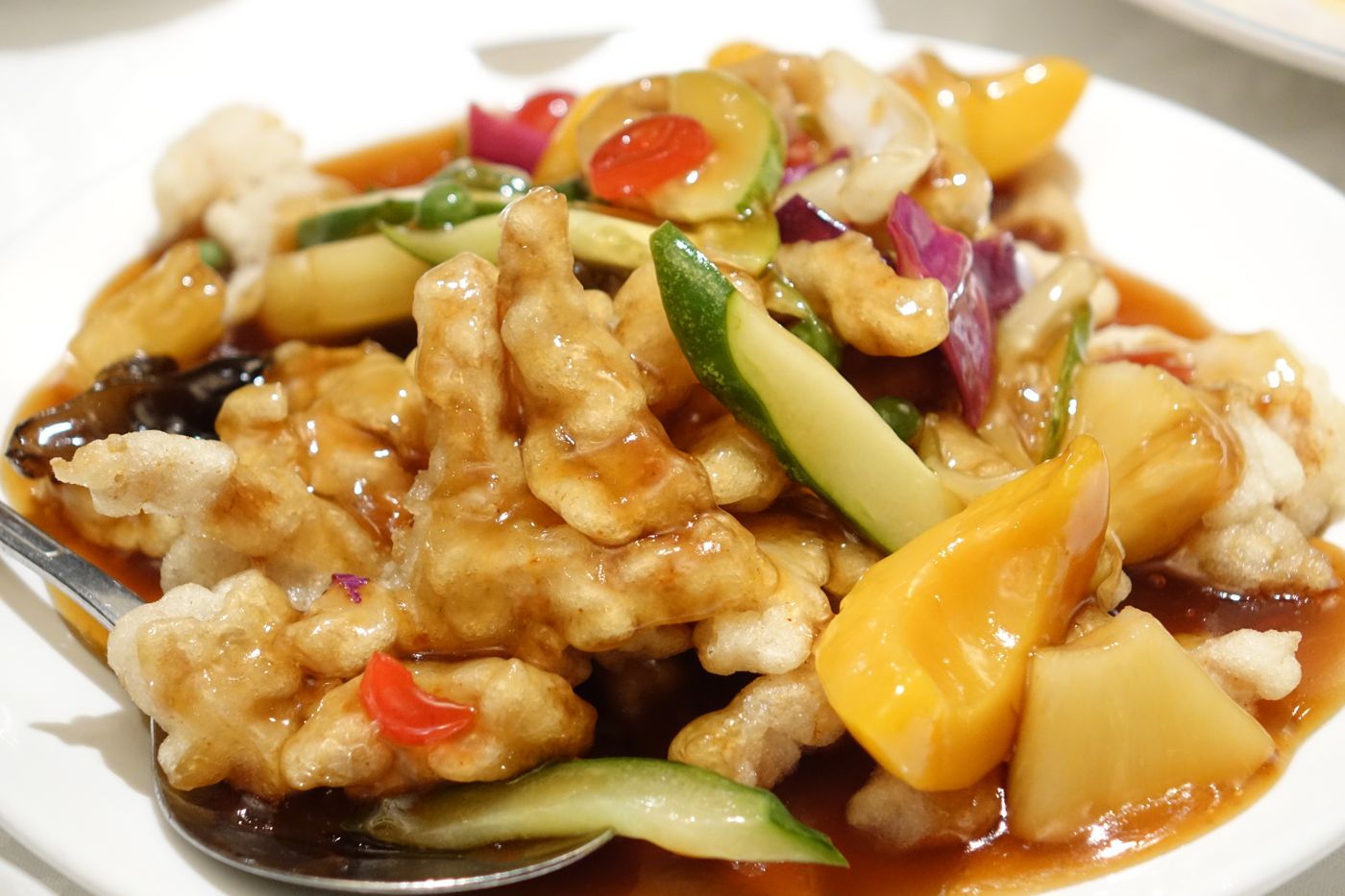 Tangsuyuk (Sweet and Sour Pork)탕수육Strips of pork in a crisp starch batter, fried twice and dressed with a glossy sweet-and-sour vegetable sauce — the shared platter of the Korean-Chinese restaurant.
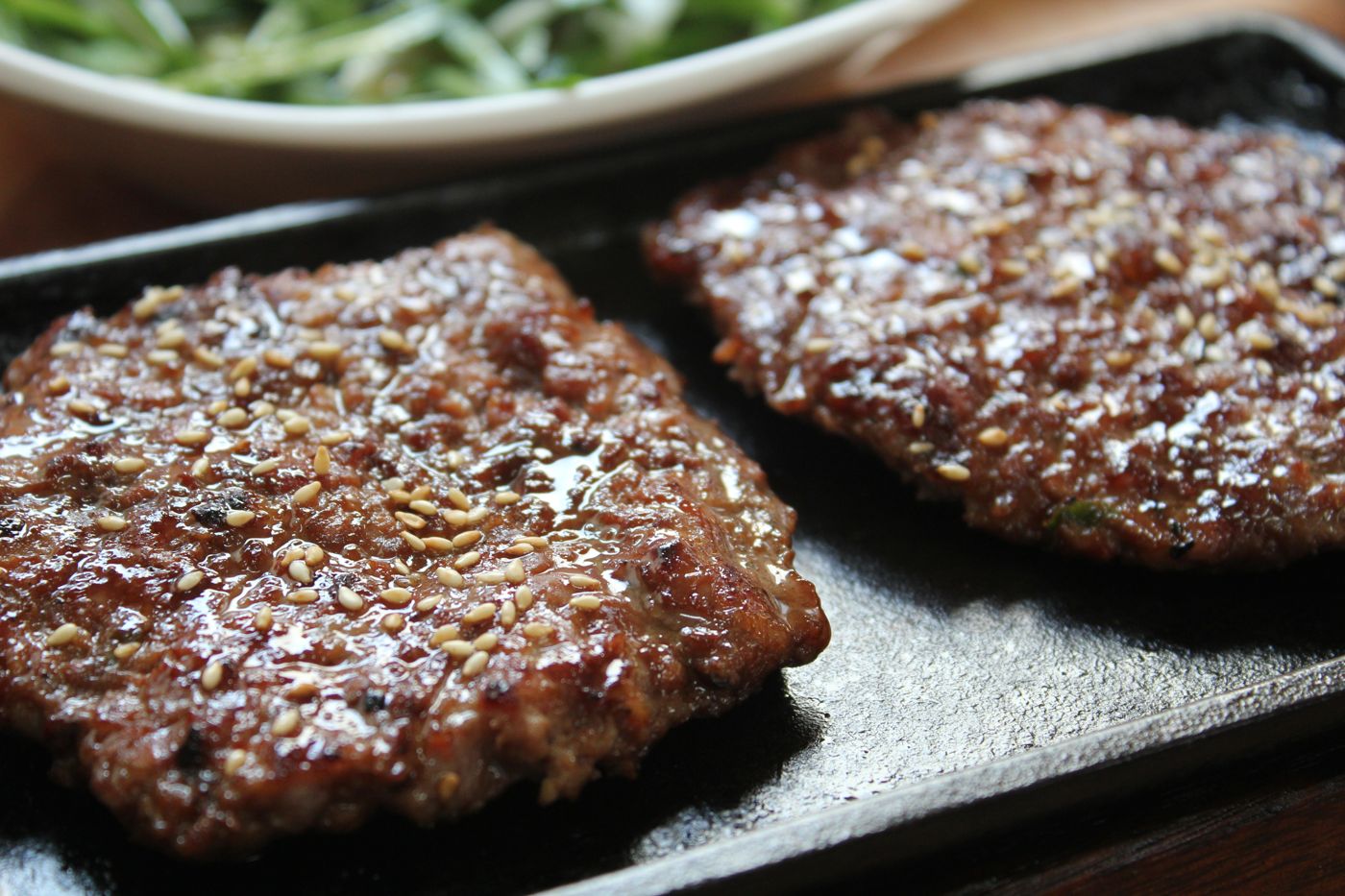 Tteokgalbi (Minced Short-Rib Patties)떡갈비Short-rib meat minced, seasoned sweet-savory and shaped into a patty, then grilled. Damyang presses it back onto the bone; Gwangju's Songjeong style is a flat boneless square.
Sources
- 01돼지 (Pig) — Encyclopedia of Korean Culture
- 02삼겹살구이 (Grilled pork belly) — Encyclopedia of Korean Culture
- 03제주 흑돼지 (Jeju black pig) — Encyclopedia of Korean Culture
- 04농진청, 부위별 맞춤형 돼지고기 활용법 제안 (RDA suggests uses for each pork cut) — Agriculture & Marine News (2026)
- 05Korean Food Composition Table — Pork meat, Belly side (Belly), Raw
- 06Safe Food Handling — U.S. Food and Drug Administration