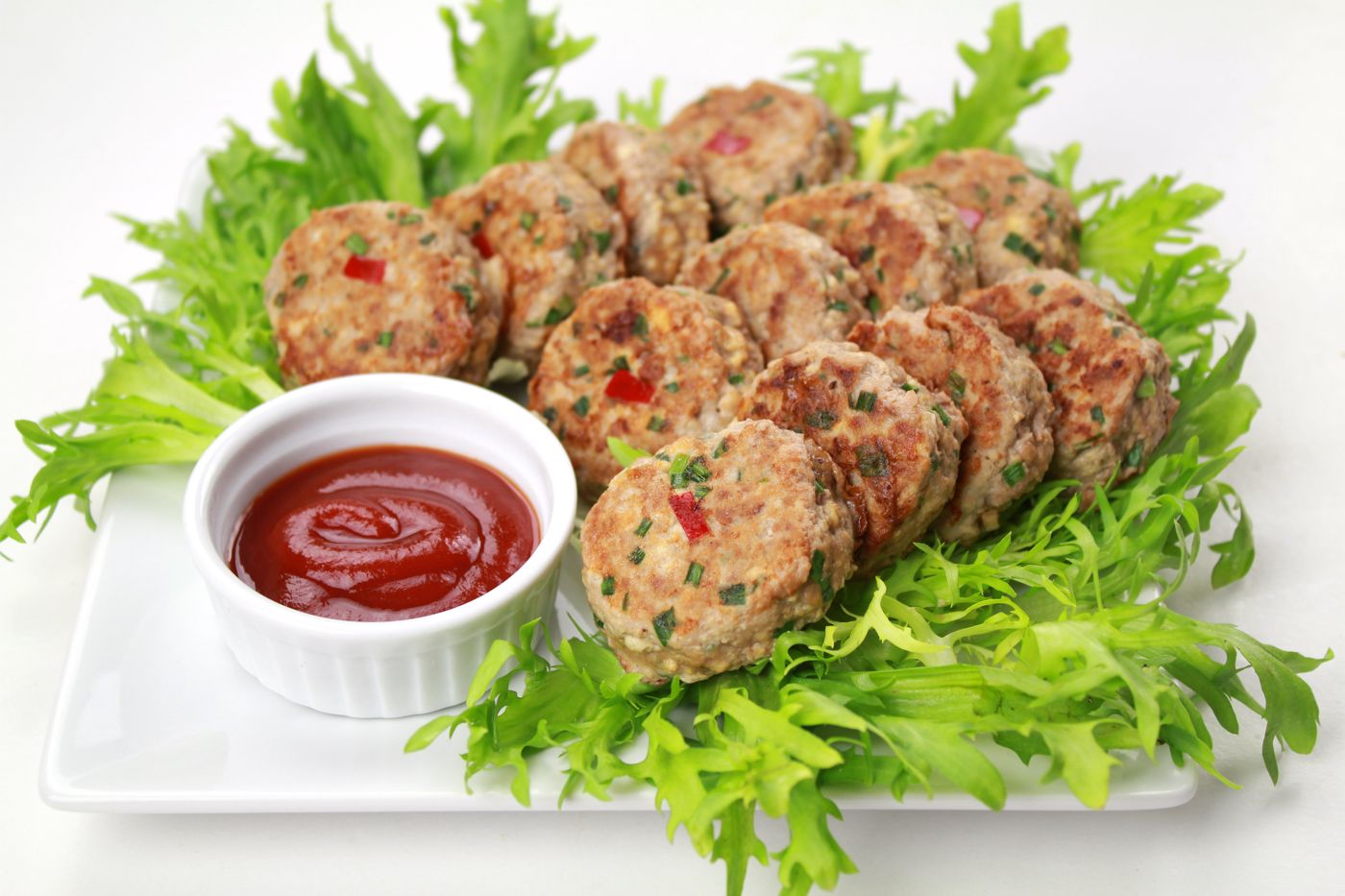
 Photo: Chloe Lim, CC BY 2.0, via Wikimedia Commons
Jeon · Pan-fried 전
Donggeurang-ttaeng (Meat and Tofu Patties)
동그랑땡
Romanization: donggeurang-ttaeng
Coin-sized patties of minced pork or beef and mashed tofu, dipped in flour and egg and pan-fried — a fixture of holiday jeon platters and lunchboxes.
- Serves
- 4
- Prep
- 30 min
- Cook
- 25 min
Recipe
Ingredients · Serves 4
- 300 gGround porkor half pork, half lean beef
- 150 gFirm tofuwrapped in a cloth and squeezed very dry
- 60 gOnionfinely chopped
- 40 gCarrotfinely chopped
- 2 stalksGreen onionfinely chopped (about 20 g)
- 2 clovesGarlicminced
- 3 largeEggs1 for the mixture, 2 beaten for coating
- ½ tspSaltplus a pinch for the coating egg
- 1 tspSoy sauce
- 1 tspToasted sesame oil
- ⅛ tspBlack pepper
- 40 gAll-purpose flourabout ⅓ cup, for dredging
- 3 tbspNeutral cooking oilfor frying, in batches
Method
Technique: Jeon: Pan-Frying in Flour and Egg
Step 1: Mash the squeezed tofu in a large bowl. Add the pork, onion, carrot, green onion, garlic, 1 egg, salt, soy sauce, sesame oil and pepper.
Step 2: Knead the mixture by hand for 2–3 minutes until it turns sticky and holds together; this keeps the patties from crumbling.
Step 3: With lightly oiled hands, shape heaped tablespoons into flat rounds about 4 cm across and 1 cm thick. You should get about 24.
Step 4: Beat the remaining 2 eggs with a pinch of salt. Dredge each patty in flour, tap off the excess, then dip it in the egg.
Step 5: Heat a thin film of oil in a skillet over medium-low heat. Fry the patties in batches for 3–4 minutes per side, pressing lightly, until golden and cooked through to the center (160 °F / 71 °C for ground meat). Add oil between batches.
Step 6: Drain on a rack or paper towel. Serve warm or at room temperature with soy sauce mixed with a little vinegar.
Origin & History
Donggeurang-ttaeng is the playful everyday name for a dish with an older, plainer one. The Standard Korean Language Dictionary of the National Institute of Korean Language lists it as another word for don-jeonya: a jeonya (jeon) made the size of an old brass coin, in which finely minced beef, pork or fish is mixed with tofu, chopped green onion and vegetables, shaped into small flat rounds, floured, coated in beaten egg and fried. The don in that definition is the coin.
The Encyclopedia of Korean Folk Culture describes the same food under the names wanja-jeon and yugwon-jeon ("round meat jeon"): seasoned minced meat mixed with tofu, pressed into rounds about 3 cm across and fried in flour and egg. It notes that the version made with pork instead of beef is sometimes called don-jeon, and that these patties never went missing from holiday and ancestral-rite tables. Its entry on beef jeon points to a 1948 cookbook, Uri eumsik, that already gives the modern method — minced beef and squeezed tofu, seasoned, shaped about 5 cm wide and 1 cm thick, then floured, egged and fried.
The patties belong to the larger family of jeon, which the Encyclopedia of Korean Culture defines as thinly cut or shaped ingredients coated in flour and egg and fried in oil, called jeonyuhwa or jeonyueo at court and jeonya or jijimgae in ordinary speech. Because oil was precious, the folk encyclopedia observes, the smell of frying jeon used to mean a holiday, wedding or memorial day. See jeon pan-frying and jesa food.
Key Ingredients
 Pork (dwaeji-gogi)돼지고기Korea's most widely eaten meat, prized cut by cut: fatty belly for samgyeopsal, neck for the grill, lean legs for boiled suyuk and stir-fried jeyuk. Pork also anchors Jeju Island's feast cooking.
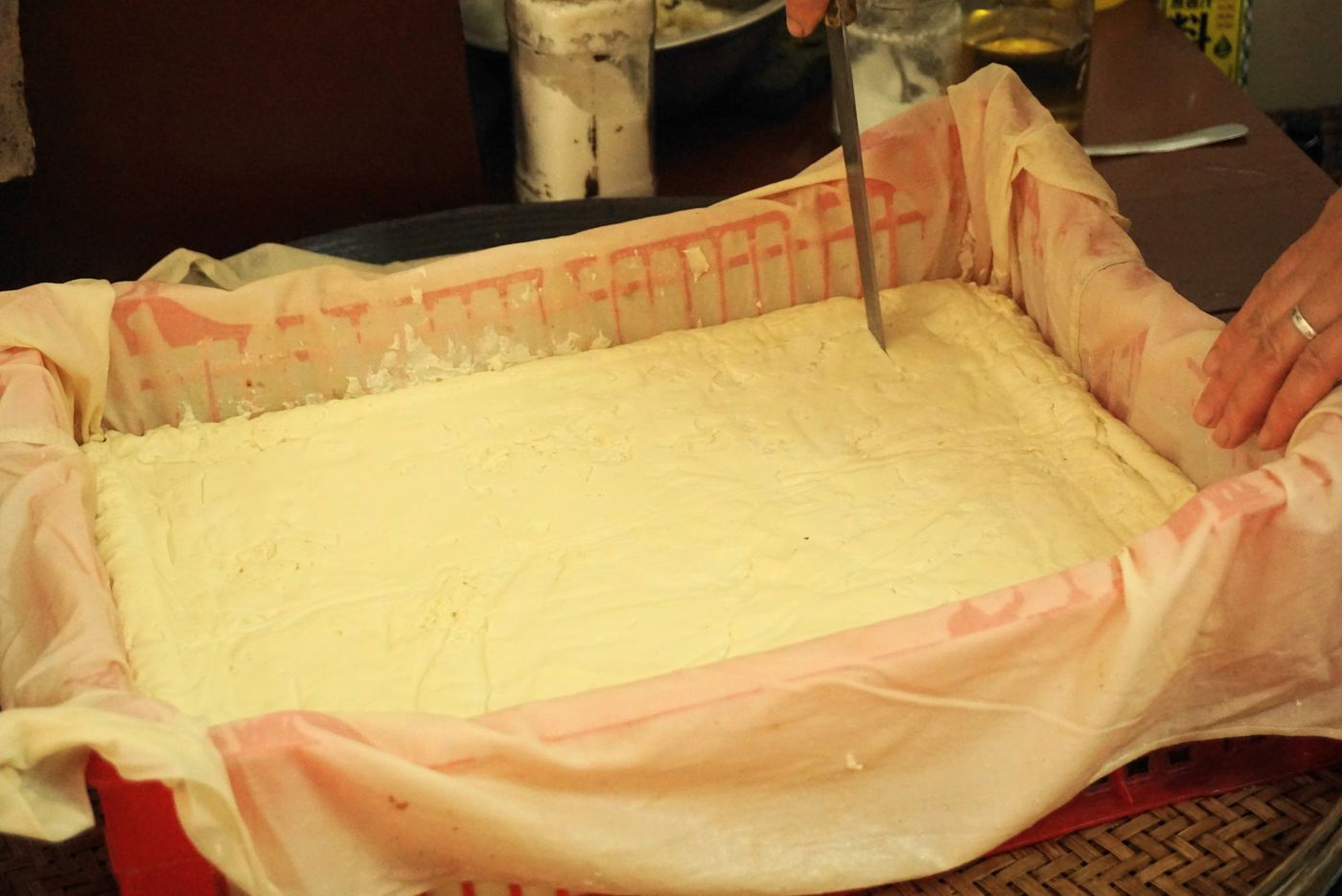 Tofu두부Fresh bean curd made by coagulating soy milk and pressing the curds. A quiet staple of Korean cooking since at least the late Goryeo period, it is pan-fried, braised in spicy soy glaze, or simmered in stews.
- Egg (gyeran)계란The everyday protein of the Korean table: rolled into gyeran-mari, steamed into puffy gyeran-jjim, simmered in soy for gyeran-jangjorim, and cut into thin yellow and white ribbons of jidan to garnish soups and noodles.
 Green onion파Korean green onion (pa), from thick-stemmed daepa to slender scallions — chopped into nearly every seasoning sauce, soup and kimchi, and the star of pa-kimchi.
 Garlic마늘Used raw, minced, pickled and roasted, garlic is one of the essential aromatics of Korean food — in seasonings, marinades, kimchi and namul.
 Soy sauce간장Korean soy sauce, in two main kitchen forms: pale, salty guk-ganjang (soup soy sauce) brewed the traditional way from meju, and darker, sweeter jin-ganjang for braises and marinades.
 Sesame참깨Toasted sesame seeds and sesame oil (chamgireum) finish countless Korean dishes, adding a nutty aroma and gloss.
Nutrition
| Calories | ~405 kcal |
|---|---|
| Protein | ~25 g |
| Fat | ~29 g |
| Carbohydrates | ~11 g |
| Fiber | ~1.8 g |
| Sodium | ~530 mg |
Notable forProtein · Thiamin (vitamin B1) · Selenium
Estimated by summing USDA FoodData Central (SR Legacy) values for raw ground pork (FDC 167902), firm tofu (FDC 172475), whole egg (FDC 171287), all-purpose flour (FDC 168894, assuming 30 g clings to the patties), onion, carrot, scallions, garlic, soy sauce (FDC 174277), sesame oil, table salt and soybean oil (assuming 20 g of the frying oil is absorbed), divided by 4. Excludes the dipping sauce. Using leaner pork lowers the fat noticeably. Actual values vary with ingredients, portion size and preparation.
Health Benefits
- Protein from two sources: pork, tofu and egg together make a small serving fairly high in protein; pork is also a good source of thiamin.
- Tofu stretches the meat: replacing part of the meat with tofu lowers saturated fat and adds plant protein, the reason folk cooks mixed it in to keep the patties tender.
- Easy to vary: chopped vegetables can make up a larger share of the mixture without changing the method.
Regional Variations
- Pork and tofu: minced pork, firm tofu, onion, carrot and green onion — the everyday version; the folk encyclopedia calls the pork form don-jeon.
- Beef wanja-jeon: lean minced beef with tofu, seasoned with soy sauce, garlic and sesame; the older court-and-household style the folk encyclopedia describes.
- Lunchbox size: made a little thicker and eaten cold or reheated as a dosirak side dish.
- Same filling, other shapes: the folk encyclopedia notes the meat-and-tofu mixture is also stuffed into shiitake caps, lotus root and green chilies for the holiday platter (see gochu-jeon).
Pairings
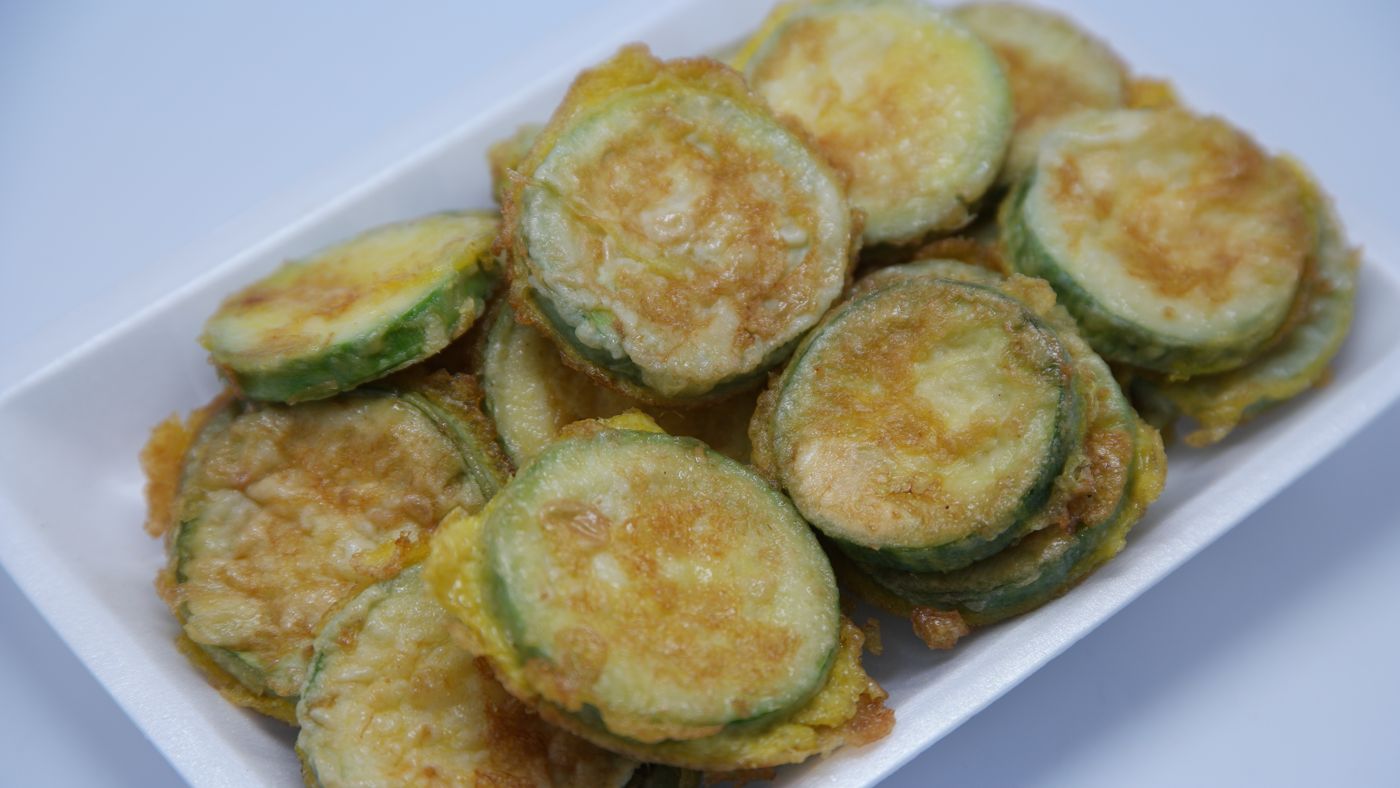 Hobak Jeon (Pan-Fried Zucchini)호박전Rounds of Korean zucchini dusted with flour, dipped in egg and pan-fried until golden — a soft, sweet jeon for holidays and everyday meals.
 Saengseon Jeon (Pan-Fried Fish)생선전Thin slices of mild white fish dusted with flour, dipped in egg and gently pan-fried — a classic of holiday and ancestral-rite tables.
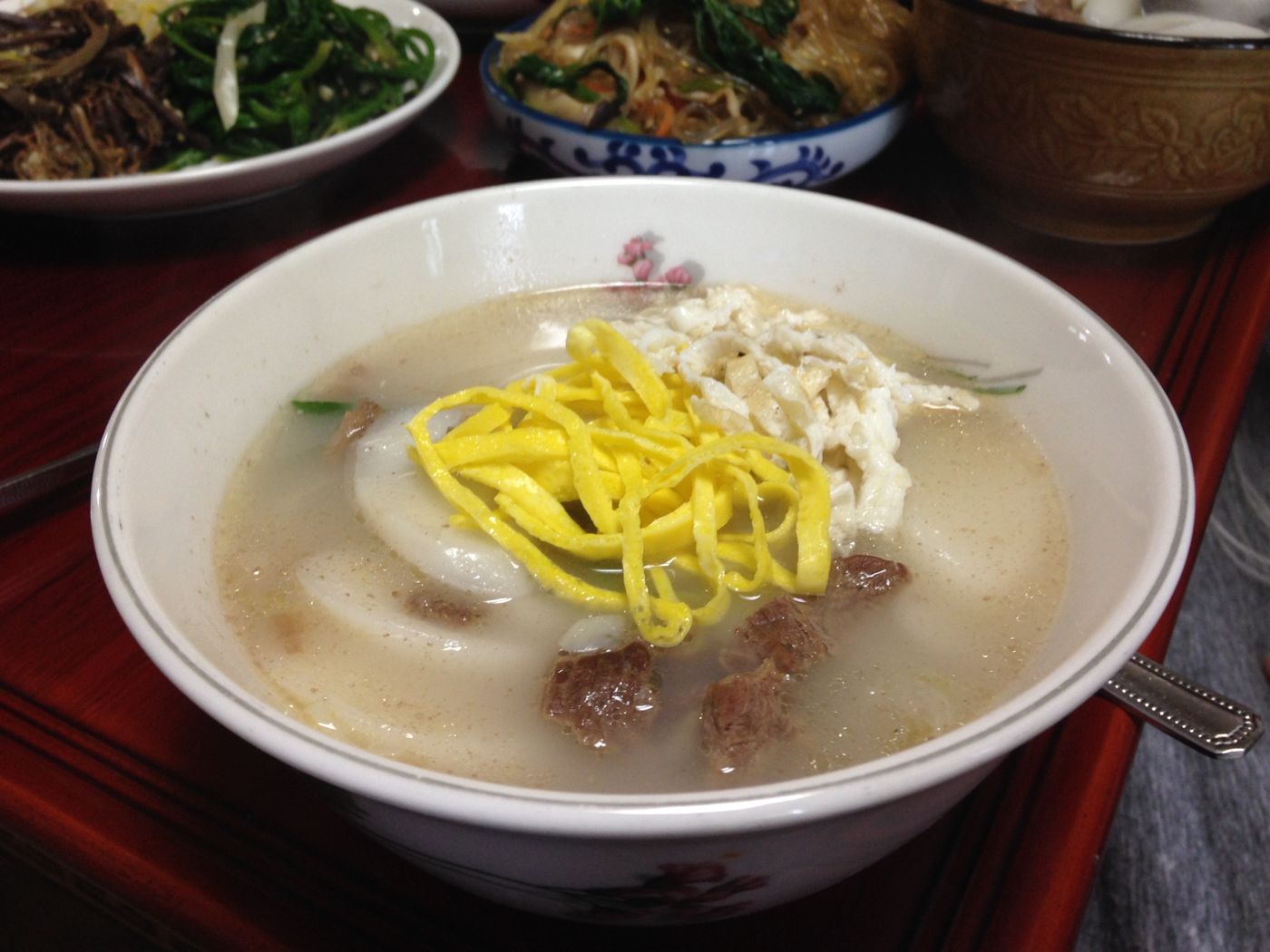 Tteokguk (Rice Cake Soup)떡국Thin ovals of white rice cake in clear beef broth, topped with egg ribbons and seaweed — the soup eaten on Seollal morning to greet the new year.
 Napa Cabbage Kimchi배추김치Salted napa cabbage layered with a red paste of chili, garlic, ginger and fermented seafood, then left to ripen: the kimchi most people picture first.
Sources
- 01완자 (Wanja) — Encyclopedia of Korean Folk Culture, National Folk Museum of Korea
- 02전 (Jeon) — Encyclopedia of Korean Folk Culture, National Folk Museum of Korea
- 03육전 (Yukjeon) — Encyclopedia of Korean Folk Culture, National Folk Museum of Korea
- 04돈저냐 (Don-jeonya) — Standard Korean Language Dictionary, National Institute of Korean Language
- 05전 (煎, Jeon) — Encyclopedia of Korean Culture
- 06Safe Food Handling — U.S. Food and Drug Administration
Last updated