Techniques
Making Mandu
만두 빚기
Wheat or buckwheat skins, fillings squeezed dry, half-moons, pleats and squares: how Korean dumplings are shaped, then boiled in broth, steamed or served in chilled soup.
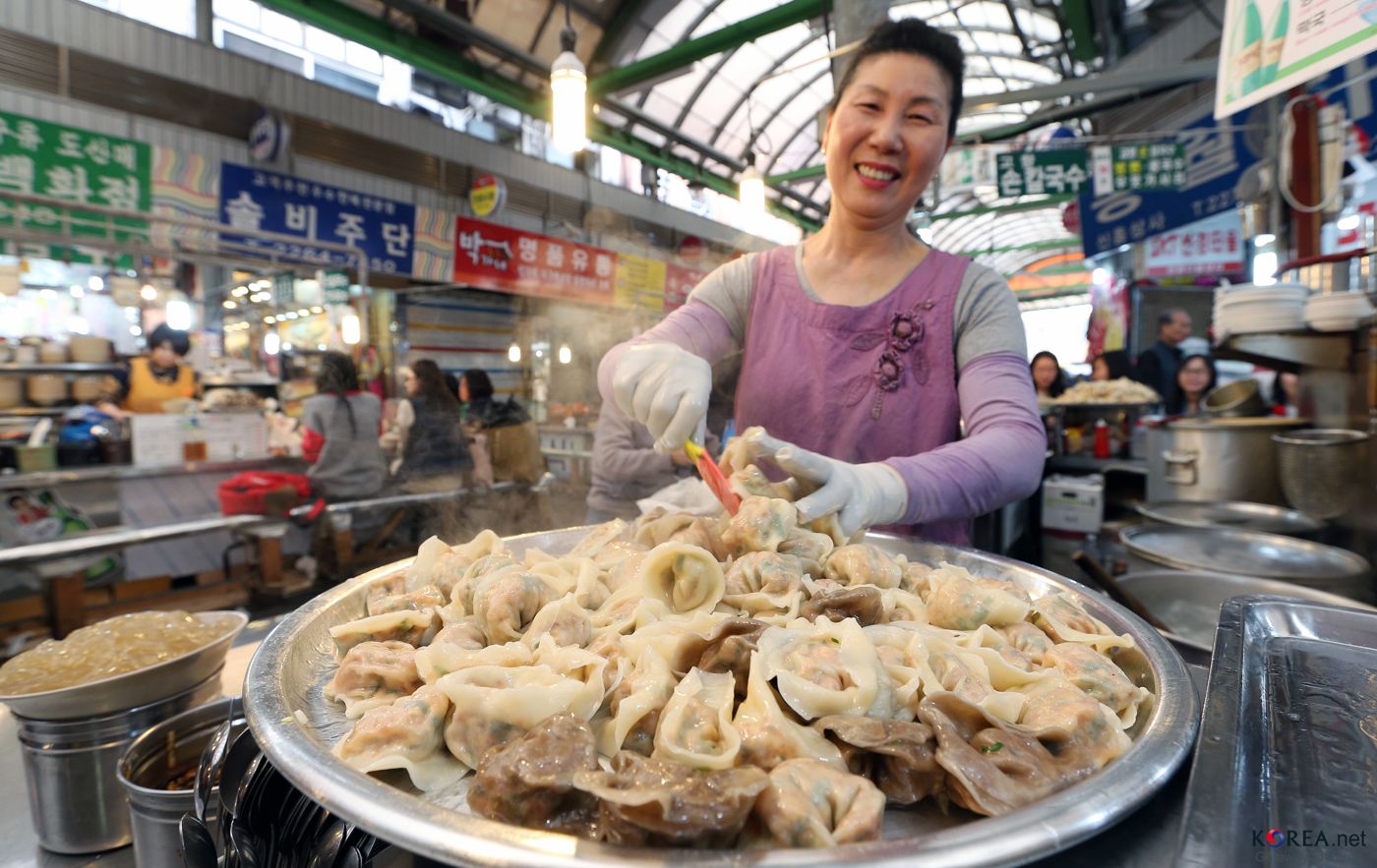 Photo: Republic of Korea from Seoul, Republic of Korea, CC BY-SA 2.0, via Wikimedia Commons
Mandu are Korean dumplings: a dough of wheat or buckwheat flour wrapped around a filling, shaped by hand and cooked. The Encyclopedia of Korean Culture traces them to China and notes a Goryeosa record of people punished for stealing mandu from the palace kitchen, evidence that they had arrived by the Goryeo period. For that longer story, see the history of mandu; this page is about the making. For the finished dish, see mandu.
Doughs and wrappers
The encyclopedia sorts mandu first by what the skin is made of: wheat, buckwheat or, in court and aristocratic cooking, thin slices of fish. Most home mandu today use wheat flour, with buckwheat more at home in the north where it grew well.
Old recipes treat the dough with care. The encyclopedia's entry on somandu, the vegetable dumpling, says the flour should be kneaded for a long time until it is elastic and then kept somewhere cool. For gyuasang, a court dumpling, the dough is mixed with hot water and chilled before use; the entry adds that a stint in the refrigerator makes the dough stretchier, so the dumplings can be shaped more easily and neatly. For everyday manduguk, by contrast, it describes a cold-water dough pinched into rounds about 6 to 7 centimeters across. Thin, even skins are the goal whichever way the dough is made: rolled out large and cut into squares, or rolled into individual circles.
One style skips the wrapper entirely. Gullin mandu, "rolled mandu," are balls of filling rolled in flour, dipped briefly in boiling water and rolled again until a thin coat forms. The encyclopedia calls them soft and easy to make, if less elegant than hand-wrapped dumplings, and links the method to a Pyeongan-style regional dish.
Fillings: the drier the better
A typical filling, as the encyclopedia describes it for rolled mandu, combines finely minced pork and beef with blanched mung bean sprouts, tofu and sliced napa cabbage kimchi, each squeezed hard to remove water before seasoning. That squeezing is the most important habit in mandu-making: a wet filling softens the skin and makes the dumplings burst as they cook.
Vegetable fillings have their own tradition. The encyclopedia connects somandu, made without meat, to Buddhist monasteries, probably in the Goryeo era when Buddhism was at its height, and describes a filling of shredded summer squash salted and wrung dry, blanched mung bean sprouts and pressed tofu (korean-zucchini). It was cooked in anchovy broth and eaten hot in summer. Gyuasang uses minced beef with shiitake, cucumber peel and ground pine nuts; the encyclopedia notes the cucumber helped the dumplings keep in hot weather. See also temple food.
Folding styles
Shape tells you a good deal about a mandu's history. The encyclopedia records:
- Half-moon without pleats: the court called these byeongsi when cooked in broth, and the encyclopedia's manduguk entry describes the same simple fold for everyday dumpling soup.
- Round: the seventeenth-century Eumsik dimibang describes dumplings shaped like small pomegranates and floated in clear broth, a dish called seongnyutang.
- Sea-cucumber shape: gyuasang are folded in half and pleated along the back into ridges, then steamed on ivy leaves and brushed with sesame oil.
- Square: Gaeseong's pyeonsu, wrapped so that the four corners meet or folded flat.
- Triangle and giant: triangular byeonssi mandu, and daemandu, a large dumpling holding several small ones.
Boiling, steaming and chilling
The encyclopedia names mandu by how they are served. Dumplings simmered in hot broth are manduguk, traditionally a beef-brisket broth finished with egg garnish (gomyeong) and vinegar-soy dipping sauce. Steamed dumplings eaten without soup are jjin-mandu; line the steamer with leaves or cloth so they do not stick. Pyeonsu, the summer dumpling of Gaeseong, can be boiled and dipped in vinegar soy sauce or floated in chilled brisket broth, which the encyclopedia compares to the Korean taste for cold noodles. Pan-fried dumplings (gun-mandu), browned in a little oil, are also everyday fare today. See steaming (jjim) and making yuksu broth.
Mandu through the year
Mandu were dishes for feasts, ancestral tables and winter. The encyclopedia notes that in the north, centered on Pyeongan Province, dumpling soup was an essential New Year food, and that once the winter kimchi had ripened, families made kimchi mandu in quantity, froze them and boiled them in broth whenever they liked. That is still the best home strategy: shape a large batch together, freeze the dumplings in a single layer, then cook from frozen. Make sure meat fillings are cooked all the way through; see food safety at home and kimjang.
Dishes using this technique
 Mandu (Korean Dumplings)만두Thin wrappers folded around pork, tofu, kimchi and sprouts, then steamed or boiled — a Goryeo-era arrival from China that became a winter staple of the North.
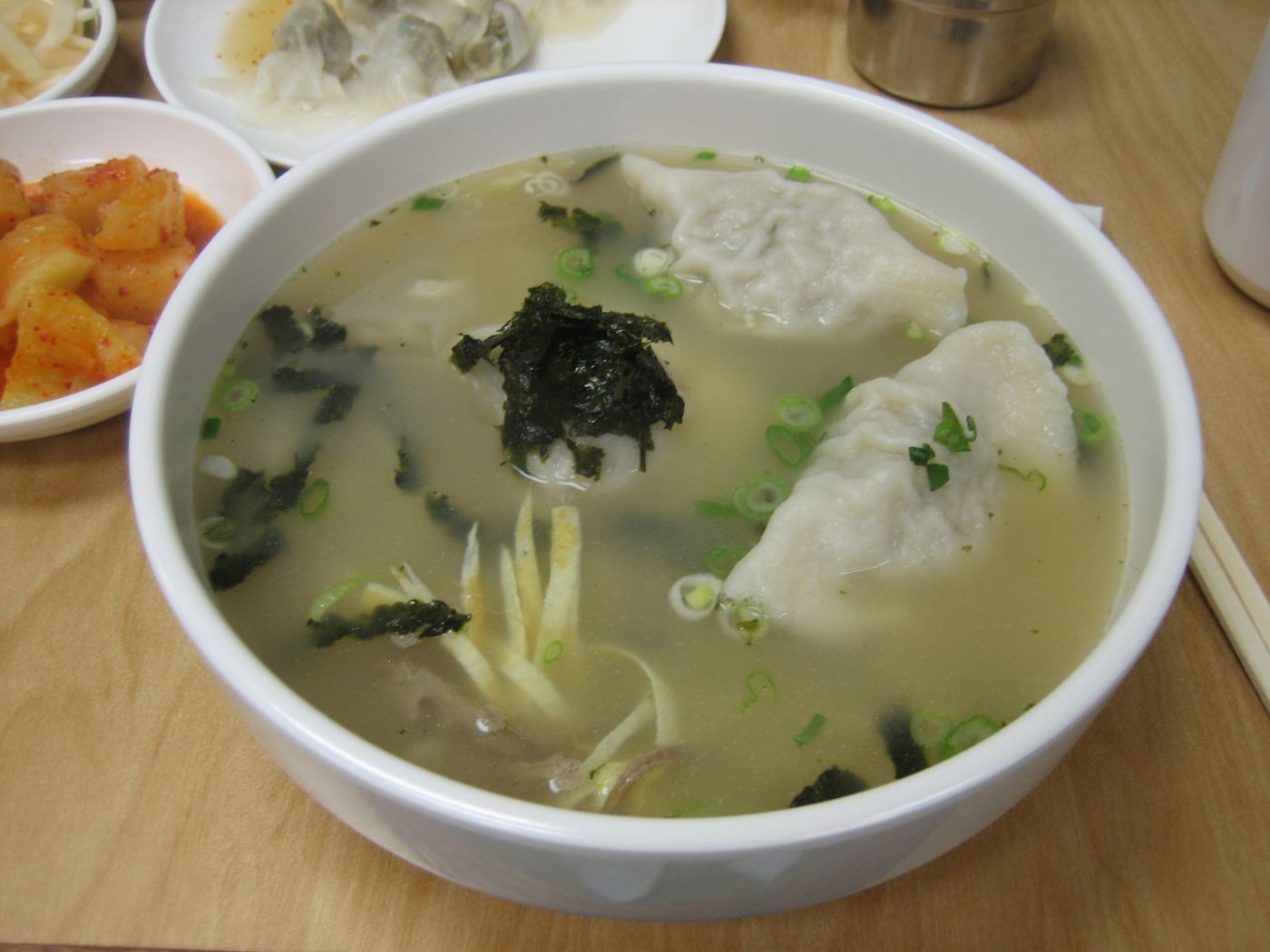 Manduguk (Dumpling Soup)만둣국Stuffed dumplings simmered in a clear, savory broth, usually beef-based and topped with egg strands and green onion. A winter and New Year dish with northern roots.
Sources
- 01만두 (Mandu) — Encyclopedia of Korean Culture
- 02만둣국 (Manduguk) — Encyclopedia of Korean Culture
- 03규아상 (Gyuasang) — Encyclopedia of Korean Culture
- 04편수 (Pyeonsu) — Encyclopedia of Korean Culture
- 05소만두 (Somandu, vegetable dumplings) — Encyclopedia of Korean Culture
- 06굴린만두 (Gullin mandu) — Encyclopedia of Korean Culture