History & Culture
Mandu: A History of Korean Dumplings
만두의 역사
From a Goryeo song about a dumpling shop to court fish dumplings, northern winter mandu and supermarket freezers: how dumplings settled into the Korean table.
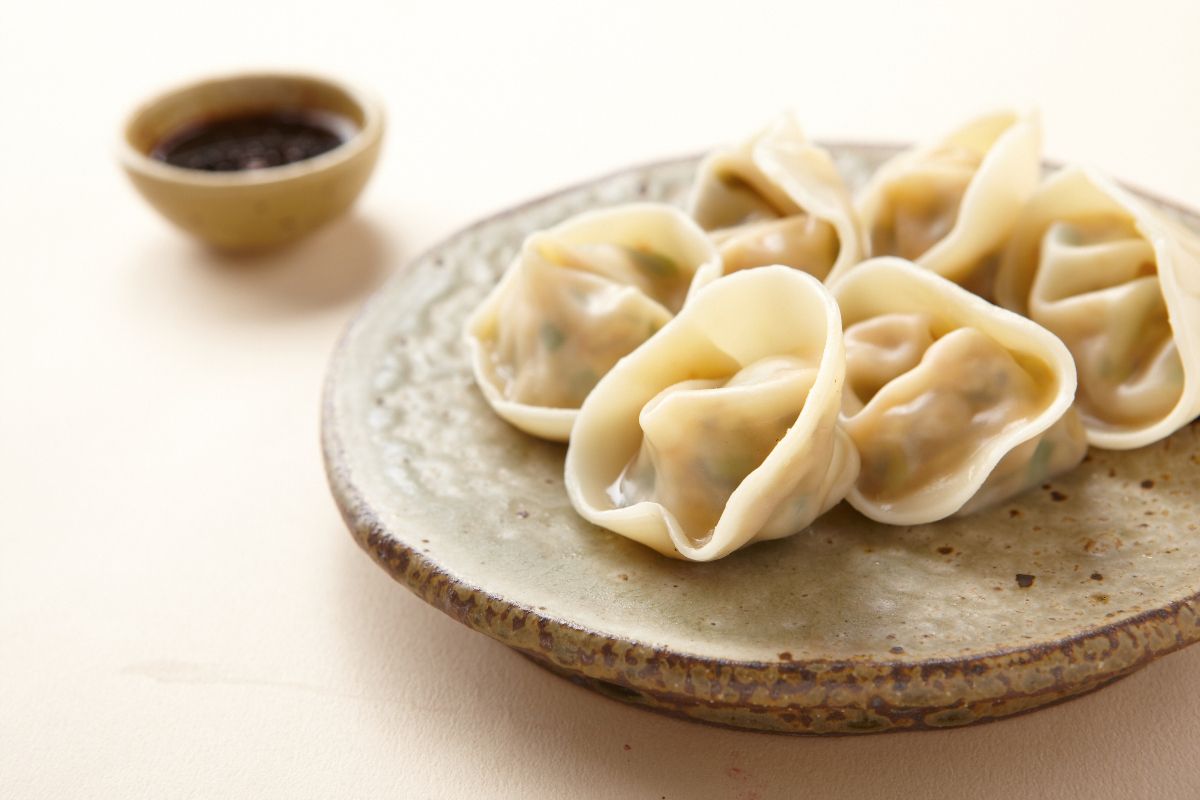 Photo: 국립국어원, CC BY-SA 2.0 kr, via Wikimedia Commons
Mandu (만두) are Korean dumplings: thin wrappers of wheat or buckwheat dough folded around fillings of meat, tofu, vegetables or kimchi, then steamed, boiled, pan-fried or simmered in soup. They are an everyday food today, sold frozen in every supermarket, but they arrived as a foreign novelty and long remained a dish of the court, the wealthy and the north.
Arrival in Goryeo
The Encyclopedia of Korean Culture says mandu came from China but that exactly when is unclear. The first clear Korean record is in the Goryeosa, the official history of Goryeo, which notes that in the reign of King Chunghye (fourteenth century) people were punished for taking mandu from the royal kitchen.
An earlier hint comes from a song. Ssanghwajeom (쌍화점, "The Ssanghwa Shop") is a Goryeo song performed before King Chungnyeol around 1279. Its first verse tells of a woman who goes to a shop to buy ssanghwa and has her wrist grabbed by the shopkeeper, a hoehoe abi, usually understood as a Central Asian Muslim merchant of the kind active under Mongol rule. Ssanghwa, also written sanghwa (상화), was a steamed bun of wheat dough leavened with alcohol and stuffed with vegetables or sweet bean paste, a food that came to Goryeo from Yuan China. Some scholars see it as an early name for mandu; others treat it as a separate, bun-like food closer to Chinese baozi. Either way, the song shows that stuffed, steamed wheat foods were being sold in Goryeo's capital in the late thirteenth century, and that they arrived through the cosmopolitan world of the Mongol empire. The text survives in the Joseon music collections Akjang gasa and Siyong hyangakbo, and in part in the Goryeosa.
Joseon: court and yangban mandu
In Joseon, sanghwa remained a ceremonial food that the court served to visiting Chinese envoys, and recipes for it appear in seventeenth- and nineteenth-century cookbooks such as Eumsik dimibang and Gyuhap chongseo. Over time, the encyclopedia explains, the name mandu came to mean thin-skinned boiled dumplings like Chinese jiaozi, while the bun form faded; a Jeju bun of wheat dough leavened with rice wine is thought to preserve it.
Wheat was scarce and costly in the south, so early mandu were often made with buckwheat. Eumsik dimibang, written in the 1670s by a noblewoman of Gyeongsang province, describes a buckwheat wrapper around a filling of minced radish and pheasant. Court and yangban kitchens developed refined forms (see royal court cuisine and Joseon cookbooks):
- Eomandu (어만두): thin slices of white fish used as the wrapper instead of dough.
- Gyuasang (규아상): a summer court dumpling folded with ridges to resemble a sea cucumber, filled with cucumber and beef.
- Pyeonsu (편수): a summer dumpling often eaten chilled, long associated with Gaeseong.
The northern heartland
Mandu flourished above all in the northern provinces, where wheat, buckwheat and millet grew better than rice. Pyongyang and Gaeseong were famous for large dumplings, and northern households traditionally ate mandu in winter and especially at the New Year, often in soup. In the south, the New Year bowl was more often tteokguk, rice-cake soup. When northerners moved south around the Korean War, they brought their mandu customs with them, and in the central regions the two traditions merged in tteok-manduguk, rice cakes and dumplings in one broth. Fillings range from pumpkin, meat and mushrooms to chopped sour kimchi with tofu and pork, and kimchi mandu is now a national favorite.
Wheat flour and the frozen aisle
Mandu became truly everyday food in the second half of the twentieth century, when imported wheat flour made dumpling wrappers cheap and noodle and dumpling shops multiplied (see noodles in Korean history and Korean-Chinese food). Industrial frozen mandu followed. Haitai's Gohyang Mandu, launched in 1987 and marketed as the country's first frozen dumpling, took off as more homes acquired freezers ahead of the 1988 Seoul Olympics, and led the market for decades. In 2013 CJ CheilJedang's Bibigo Wanggyoja, larger dumplings with chopped rather than ground pork, overtook it within about a year, and Bibigo dumplings have since become one of Korea's most visible food exports.
Homemade mandu remains a family event, especially before the Lunar New Year, when relatives fold dumplings together around one table. For methods and folds, see making mandu.