Ingredient
Sweet potato glass noodles
당면
Romanization: dangmyeon
Chewy, translucent noodles made from sweet potato starch. Introduced from China in the late Joseon period and mass-produced from 1919, they became the heart of modern japchae.
Flavor
Nearly neutral in taste; prized for its slippery, bouncy chew and its ability to soak up soy sauce, sesame oil and broth without falling apart.
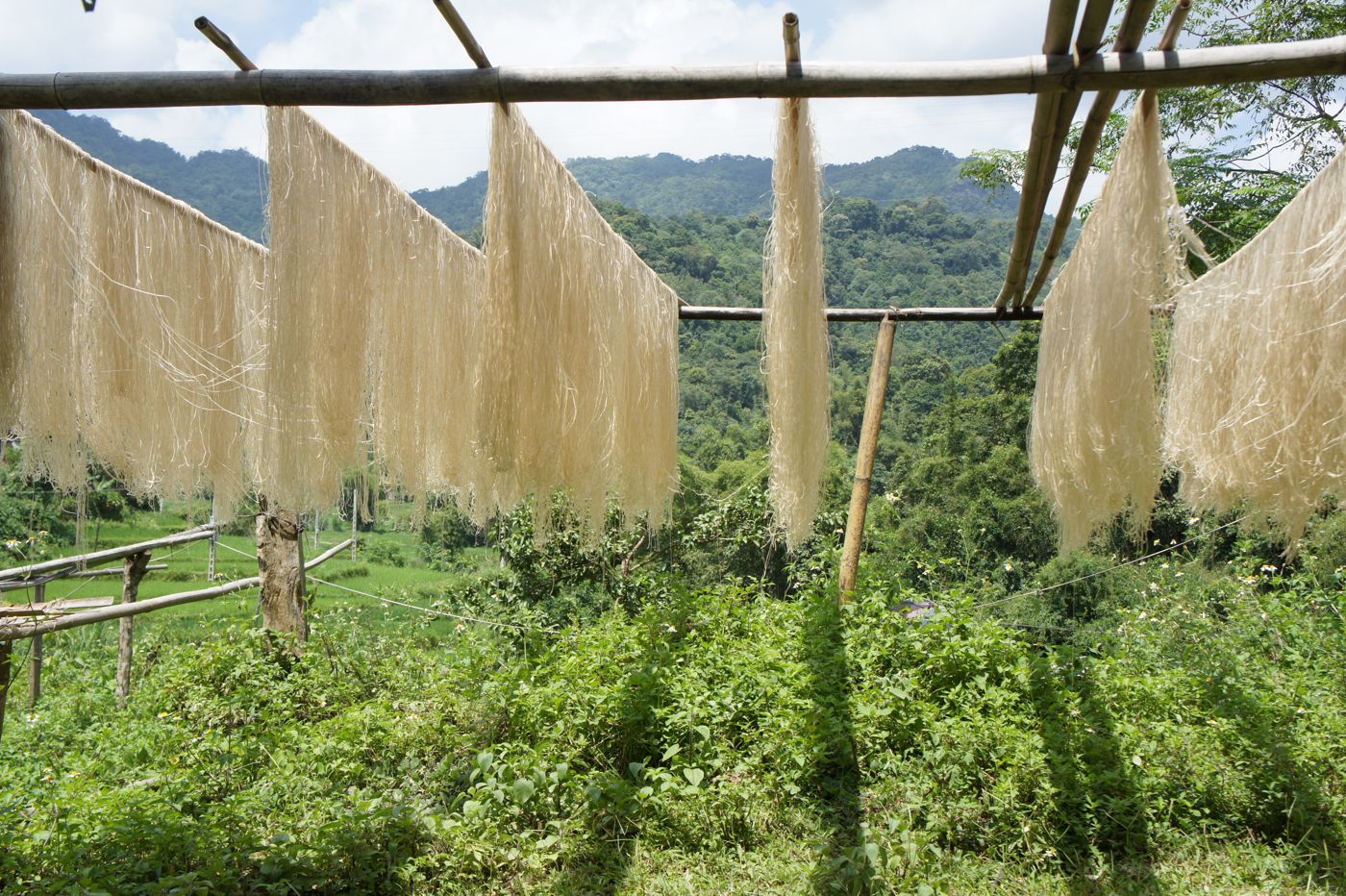 Photo: Michael Hermann, CC BY-SA 3.0, via Wikimedia Commons
Origin & History
Dangmyeon are glass noodles made from starch — in Korea most often sweet potato starch, sometimes blended with potato starch. Dry, they are gray and brittle; cooked, they turn glossy, springy and nearly transparent. The name means 'Chinese noodles,' and they were also once called homyeon.
The noodles came to Korea from Qing China in the late Joseon period. Large-scale production began in 1919, when a Korean entrepreneur, Yang Jae-ha, built a dangmyeon factory in Sariwon, Hwanghae Province, reportedly big enough to export to Japan.
Factory-made noodles changed Korean cooking. Japchae in Joseon-era cookbooks was a dish of shredded, stir-fried vegetables and mushrooms with no noodles at all; dangmyeon entered the recipe during the colonial period and appears as a japchae ingredient in cookbooks from 1934 onward. To make the noodles, part of the starch is cooked into a paste, kneaded with the rest and warm water, pressed through a perforated mold into boiling water, then cooled, frozen, thawed and sun-dried.
Beyond japchae, dangmyeon holds its chew in hot pots and stews, fills fried seaweed rolls (gimmari), bulks up jjimdak, and stars in Busan's bibim-dangmyeon, a market snack of noodles tossed with spicy sauce.
Nutrition
| Calories | 358 kcal |
|---|---|
| Protein | 0.08 g |
| Fat | 0.07 g |
| Carbohydrates | 88.75 g |
| Fiber | 1.7 g |
| Sodium | 8 mg |
Notable forCarbohydrate (89 g, almost entirely starch)
Values copied from the Korean Food Composition Table (Rural Development Administration / National Institute of Crop Science) for this exact food, per 100 g edible portion. Noodles roughly triple in weight when boiled; the same table lists boiled dangmyeon at 123 kcal per 100 g. Actual values vary with ingredients, portion size and preparation.
Health Benefits
- Mostly starch: Dangmyeon is essentially pure carbohydrate with almost no protein or fat, so its nutritional value comes from what it is cooked with — in japchae, the vegetables, mushrooms and meat.
- Naturally wheat-free: Pure sweet potato starch noodles contain no wheat, but recipes vary by brand, so people avoiding gluten should check the ingredient list.
- Portion and seasoning: Because the noodles absorb soy sauce and oil readily, dishes like japchae can be richer in sodium and fat than the plain noodles suggest.
Informational, not medical advice. Talk to a qualified professional about your own health and diet.
Dishes with Sweet potato glass noodles
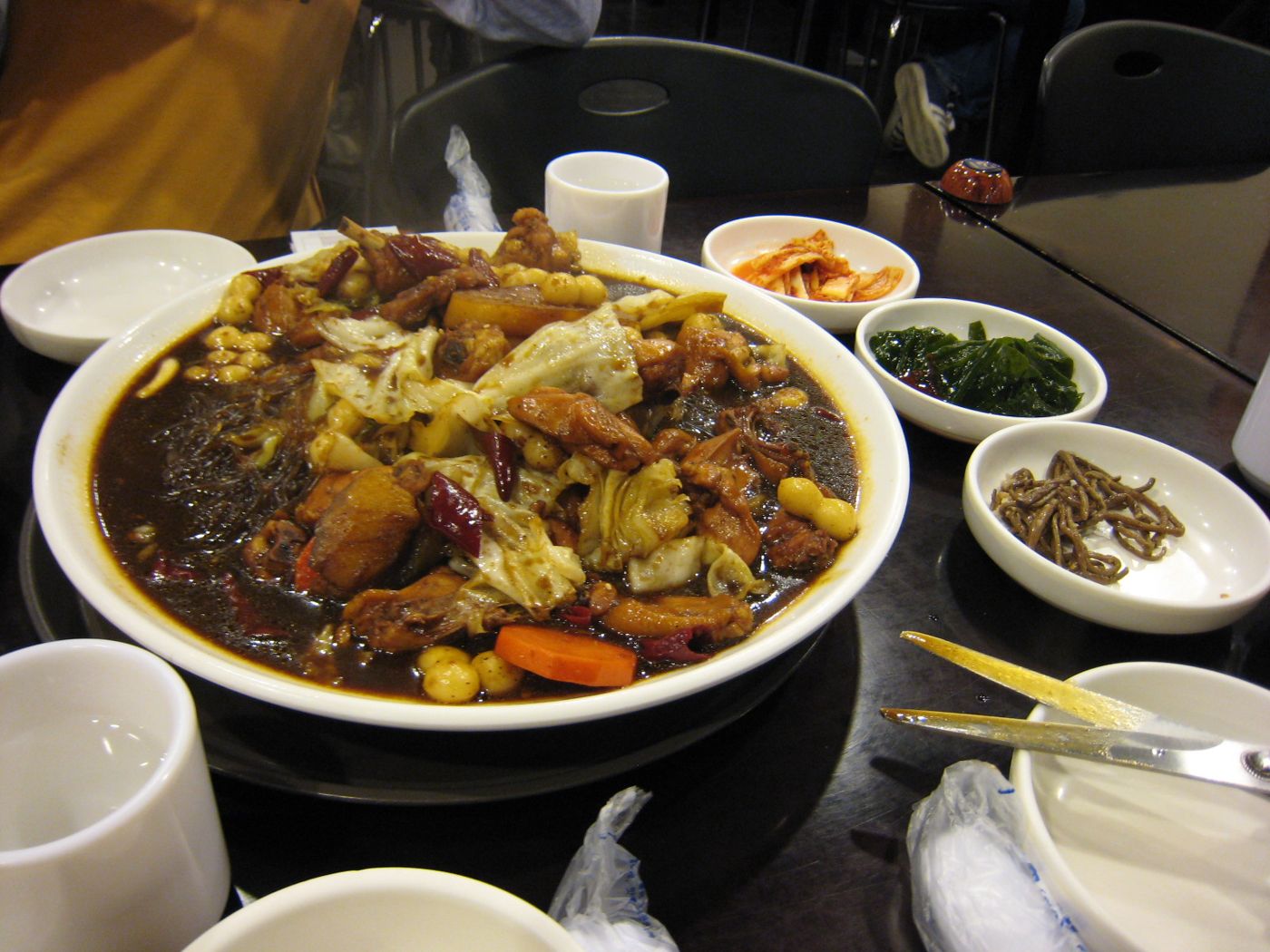 Andong Jjimdak (Soy-Braised Chicken with Glass Noodles)안동찜닭Chicken braised hard in a sweet soy sauce with potatoes, vegetables, dried chilies and glass noodles — a 1980s invention of Andong's old market, not a yangban heirloom.
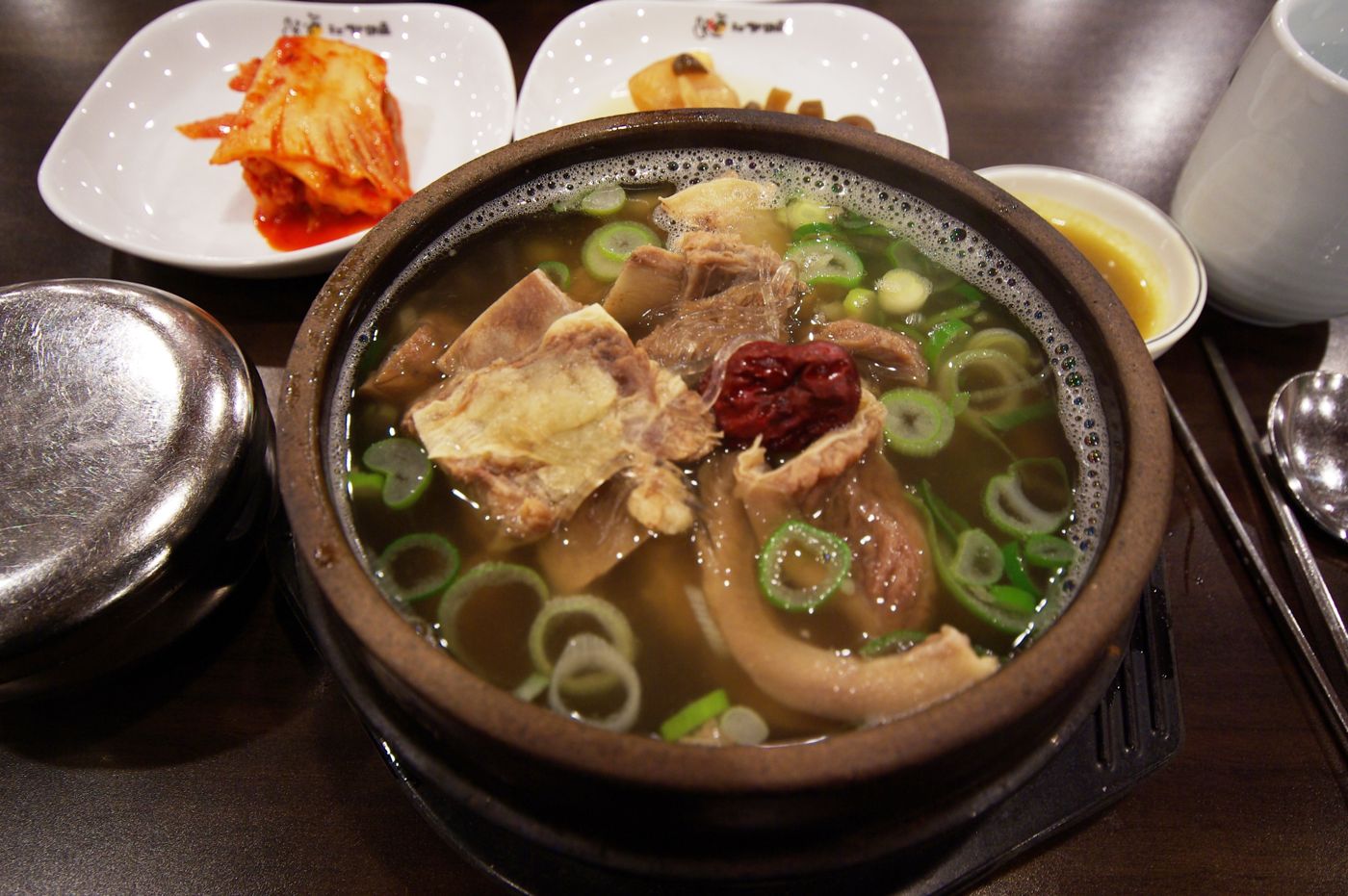 Galbitang (Beef Short Rib Soup)갈비탕Beef short ribs simmered until the meat slips from the bone, served in a clear, soy-seasoned broth with radish — a court banquet soup turned everyday restaurant bowl.
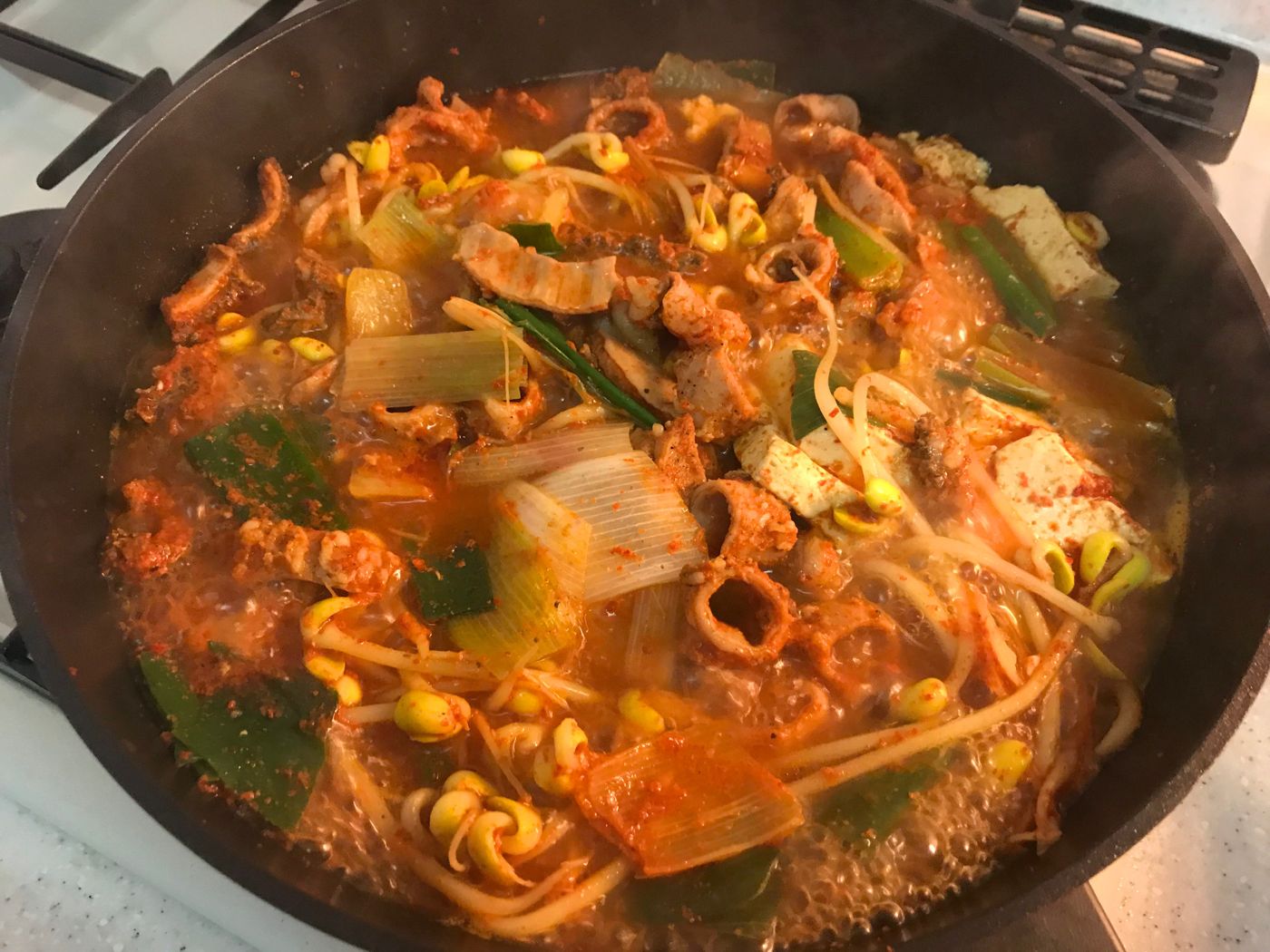 Gopchang Jeongol (Beef Intestine Hot Pot)곱창전골Cleaned beef small intestine and tripe simmered at the table with vegetables, mushrooms and glass noodles in a spicy broth — a rich, chewy hot pot for cold nights.
 Japchae (Glass Noodles with Vegetables)잡채Chewy sweet potato glass noodles tossed with stir-fried vegetables, mushrooms and beef in soy sauce and sesame oil — Korea's essential celebration dish.
 Mandu (Korean Dumplings)만두Thin wrappers folded around pork, tofu, kimchi and sprouts, then steamed or boiled — a Goryeo-era arrival from China that became a winter staple of the North.
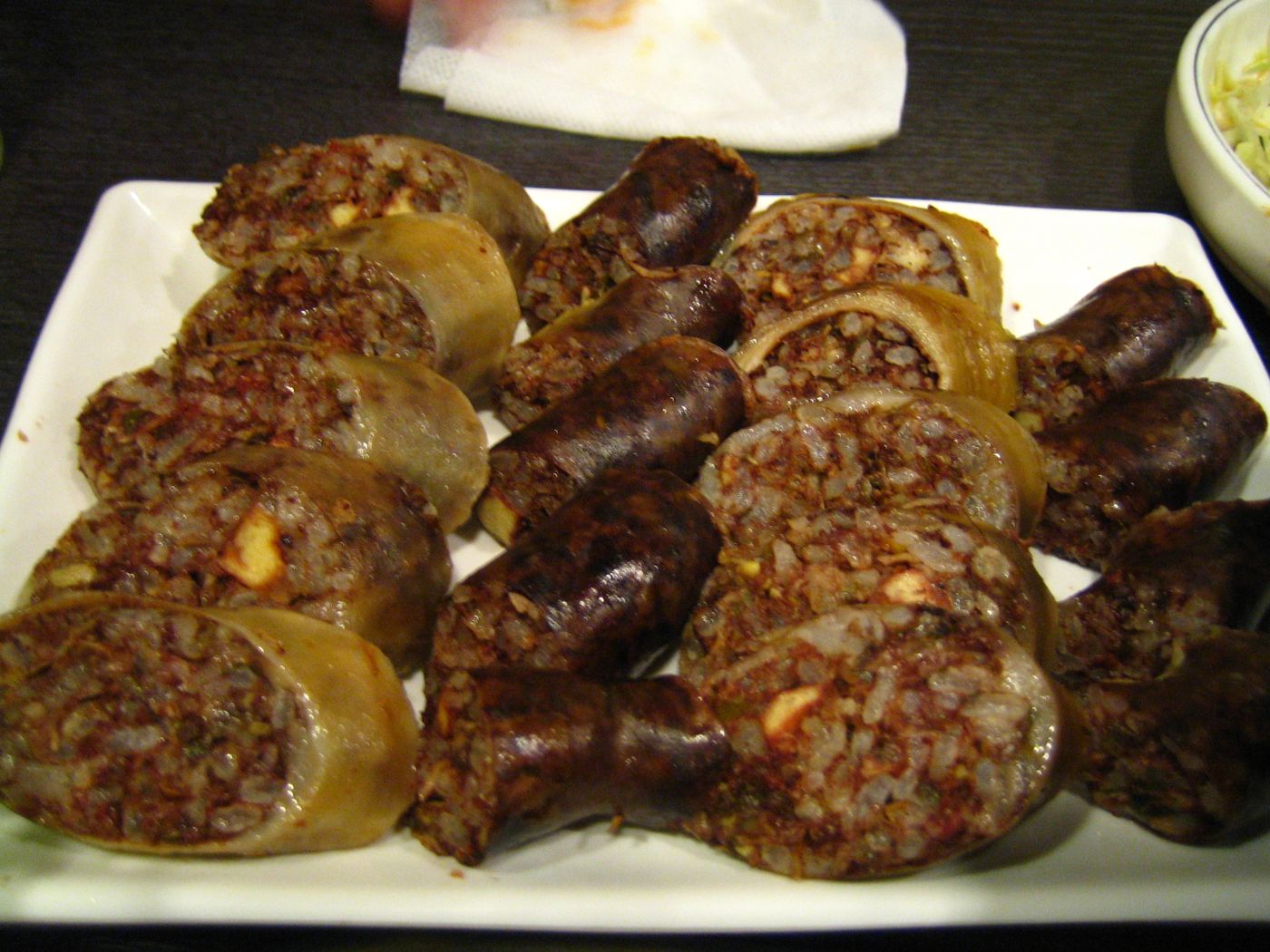 Sundae (Korean Blood Sausage)순대Pork intestine stuffed with pig's blood, glutinous rice, glass noodles and vegetables, then steamed — a northern farmhouse food that became a nationwide street snack.
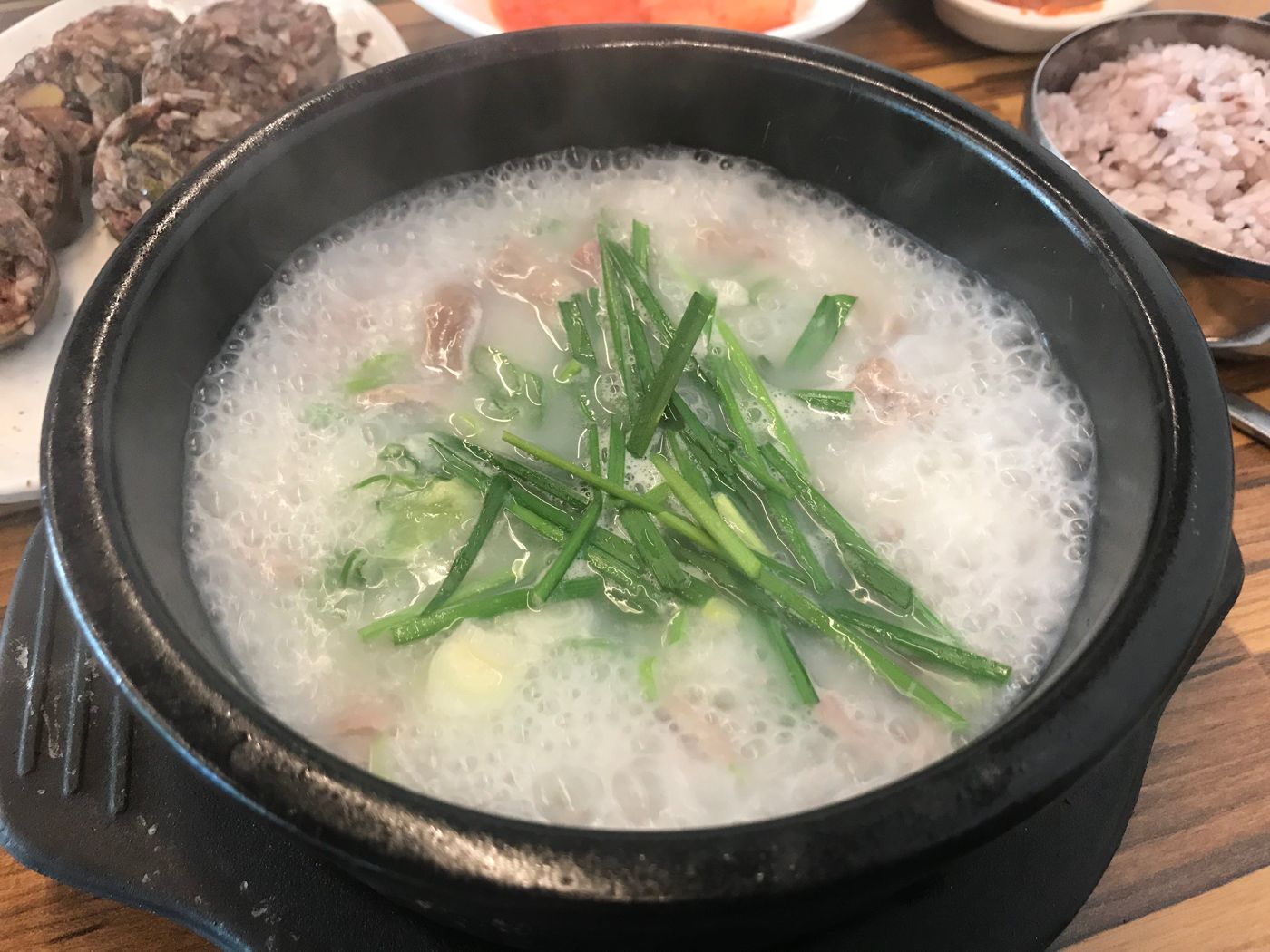 Sundaeguk (Blood Sausage Soup)순댓국Slices of Korean blood sausage and pork offal in a rich pork-bone broth, seasoned at the table with salted shrimp — a cheap, hearty market-day bowl served with rice.