Ingredient
Ssukgat (crown daisy)
쑥갓
Romanization: ssukgat
An edible chrysanthemum grown for its feathery, deeply lobed leaves and tender stems. Its bold, resinous perfume finishes spicy fish stews and hot pots, and it is a classic leaf for the ssam basket and quick namul.
Flavor
Strongly aromatic, green and slightly bitter, with a resinous, herbal perfume reminiscent of chrysanthemum tea. Stems are juicy and crisp; the leaves wilt within seconds in hot broth.
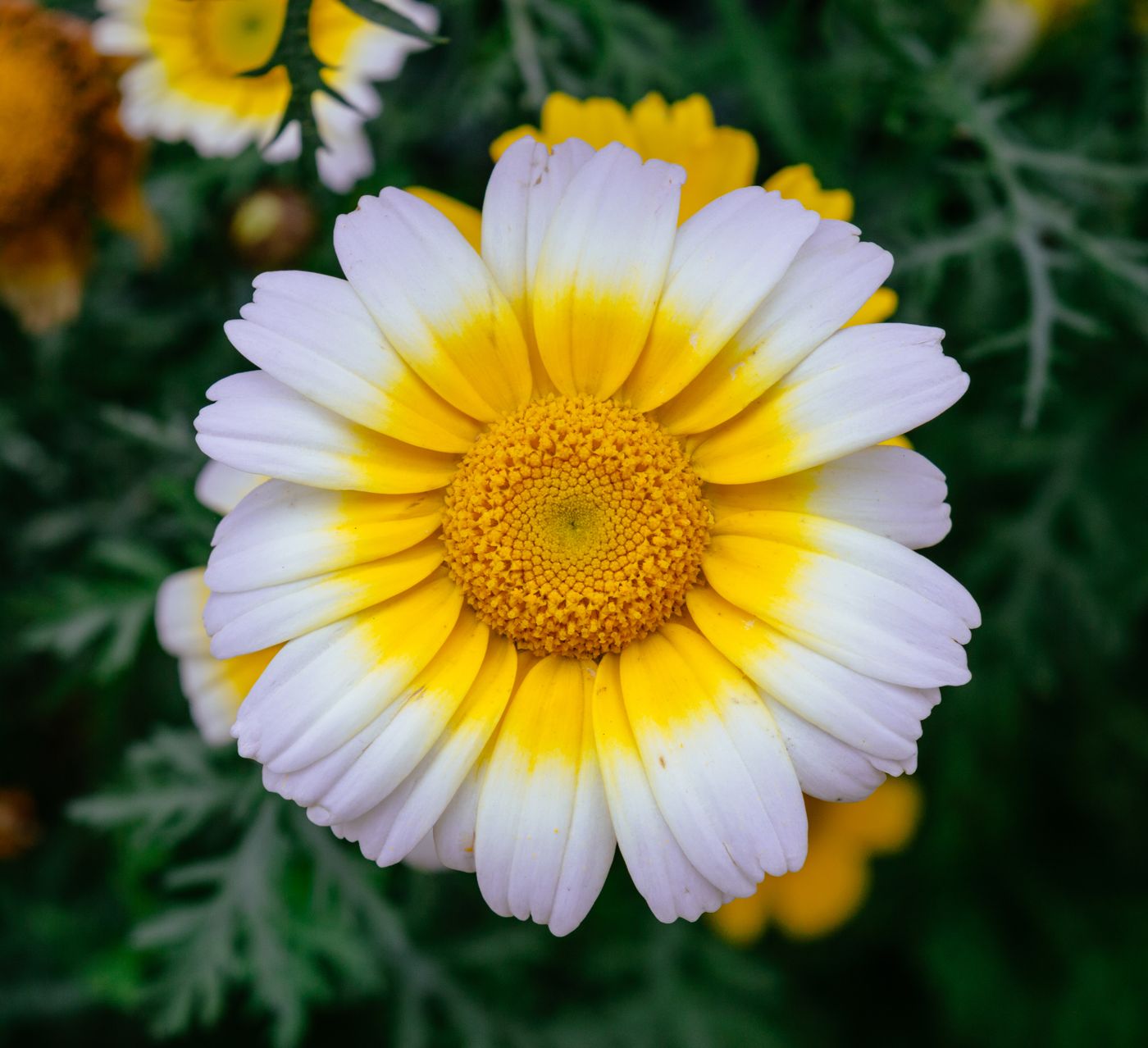 Photo: Subhrajyoti07, CC BY-SA 4.0, via Wikimedia Commons
Origin & History
Ssukgat is the garland chrysanthemum, or crown daisy (Chrysanthemum coronarium), an annual or biennial of the daisy family (Asteraceae). The Encyclopedia of Korean Culture describes a hairless plant 30 to 60 centimeters tall with a distinctive scent and alternate leaves cut twice into deep, feather-like lobes; left to flower, it bears yellow or white daisy-like heads. In older texts it appears under the Sino-Korean names dongho and aeguk. Korea's Rural Development Administration gives its homeland as the Mediterranean coast.
How and when it reached Korea is not documented, but the Encyclopedia of Korean Culture suggests it arrived during the Goryeo period. It is counted among Korea's long-established (jaerae) vegetables. Large-, medium- and small-leaved types exist, and Korean growers mostly plant the medium-leaved kind, which branches freely and grows vigorously. Ssukgat is sown in spring and autumn and can be grown year-round; it is cut when the plants carry roughly five to ten true leaves.
In the kitchen ssukgat is valued more for aroma than bulk. It is tucked into lettuce wraps alongside grilled meat, eaten raw or blanched for a few seconds in salted water and dressed as namul, and added at the very end to spicy fish stews such as maeuntang, to jjigae and to hot pots, where its scent is said to cut the richness of meat and fish. Raw leaves are also tossed with acorn jelly in dotori-muk-muchim.
Nutrition
| Calories | 15 kcal |
|---|---|
| Protein | 1.93 g |
| Fat | 0.17 g |
| Carbohydrates | 2.35 g |
| Fiber | 2.4 g |
| Sodium | 145 mg |
Notable forVitamin K · Vitamin A (as beta-carotene) · Folate · Calcium
Korean Food Composition Table entry "Crown daisy (Ssukgat), Raw" (쑥갓, 생것): also 191.37 µg vitamin K, 2,472 µg beta-carotene (206 µg RAE vitamin A), 115 µg folate, 91 mg calcium, 239 mg potassium and 10.4 mg vitamin C per 100 g. Actual values vary with ingredients, portion size and preparation.
Health Benefits
- Leafy green: Per the Korean Food Composition Table, ssukgat is very low in calories and a source of vitamin K, beta-carotene, folate and calcium.
- Traditional beliefs: Korean farm references describe its aroma as warming the stomach and stirring the appetite, and list folk uses for everything from night vision to blood pressure. These are traditional ideas, not established effects of eating it.
- Sodium in stews: The vegetable itself is modest in sodium, but it is usually eaten in salty stews and hot pots, so the dish, not the green, sets the salt level.
- Vitamin K and warfarin: Ssukgat is high in vitamin K. MedlinePlus advises people taking warfarin to keep their intake of vitamin K–rich greens consistent from week to week; talk with your doctor before changing your diet.
- Daisy-family allergy: As a member of the daisy family, it may be worth caution for people with known allergies to related plants.
Informational, not medical advice. Talk to a qualified professional about your own health and diet.
Dishes with Ssukgat (crown daisy)
- Dongtae-jjigae (Frozen Pollack Stew)동태찌개A spicy, clean-tasting stew of frozen Alaska pollack with radish, tofu and fresh greens in a gochugaru-and-jang broth — a winter staple at the Korean table.
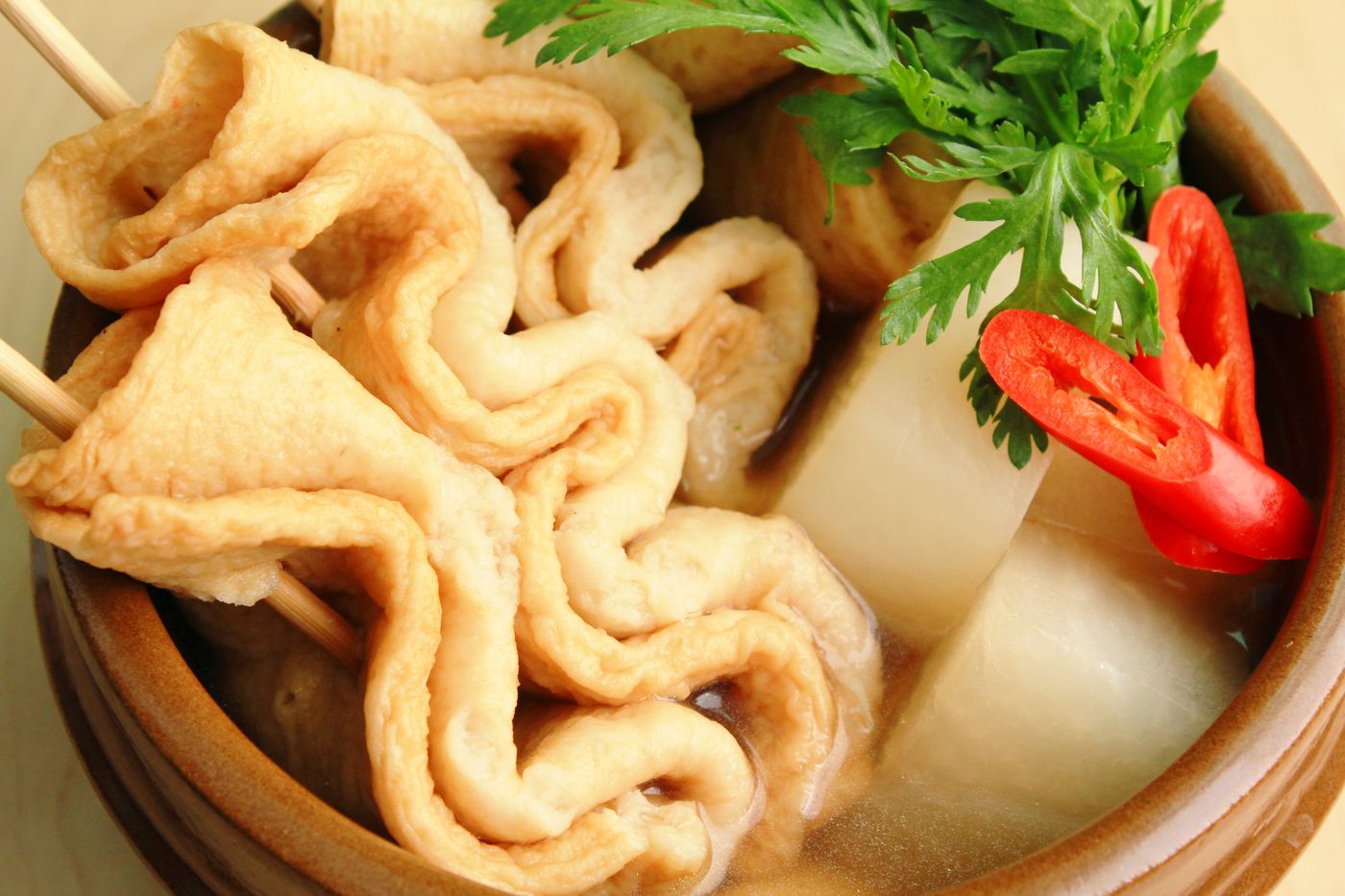 Eomuk Tang (Fish Cake Soup)어묵탕Fish cakes, often threaded on skewers, simmered in a clear anchovy, kelp and radish broth — Busan's winter street-stall soup and a quick home dish.
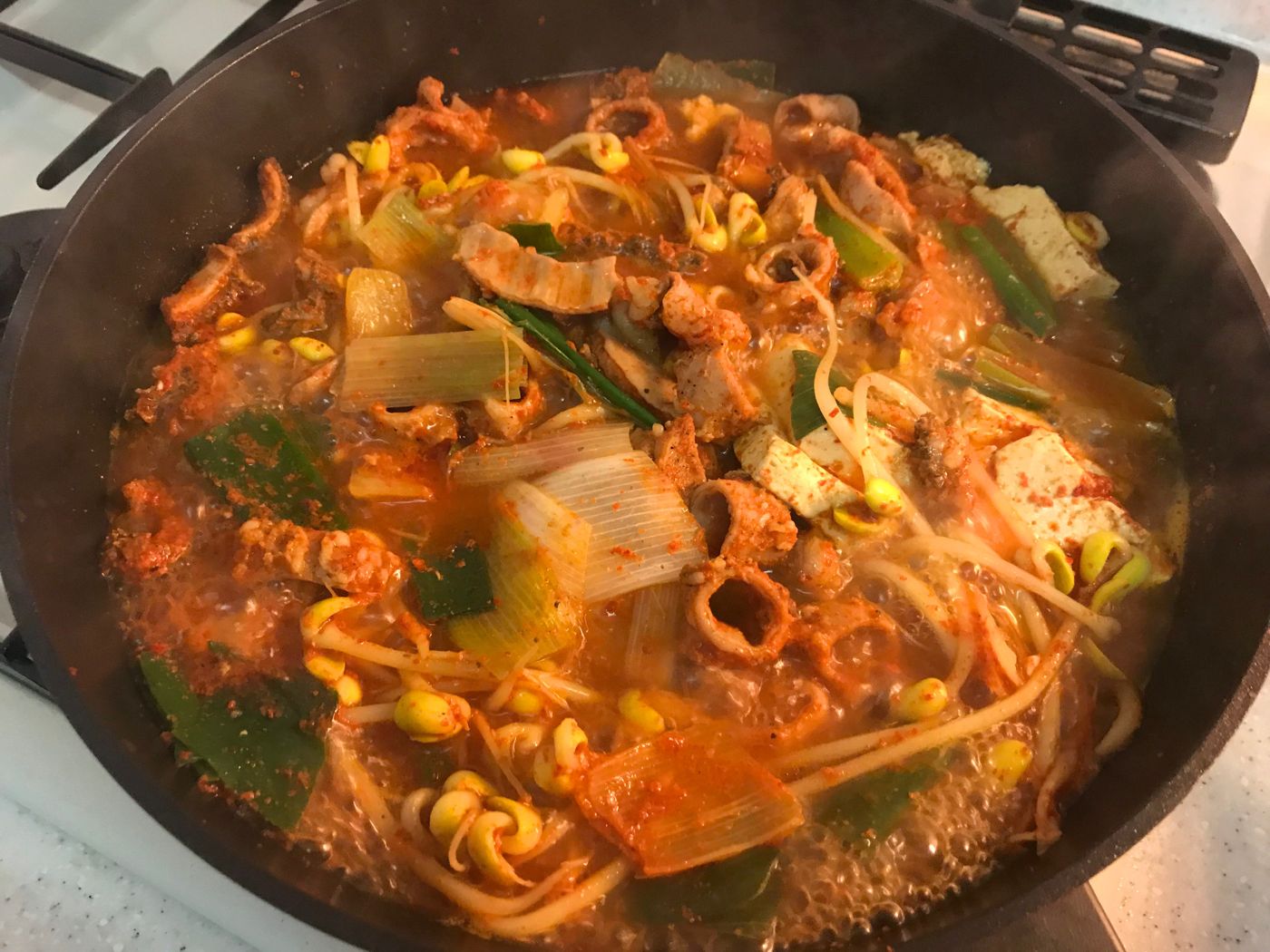 Gopchang Jeongol (Beef Intestine Hot Pot)곱창전골Cleaned beef small intestine and tripe simmered at the table with vegetables, mushrooms and glass noodles in a spicy broth — a rich, chewy hot pot for cold nights.
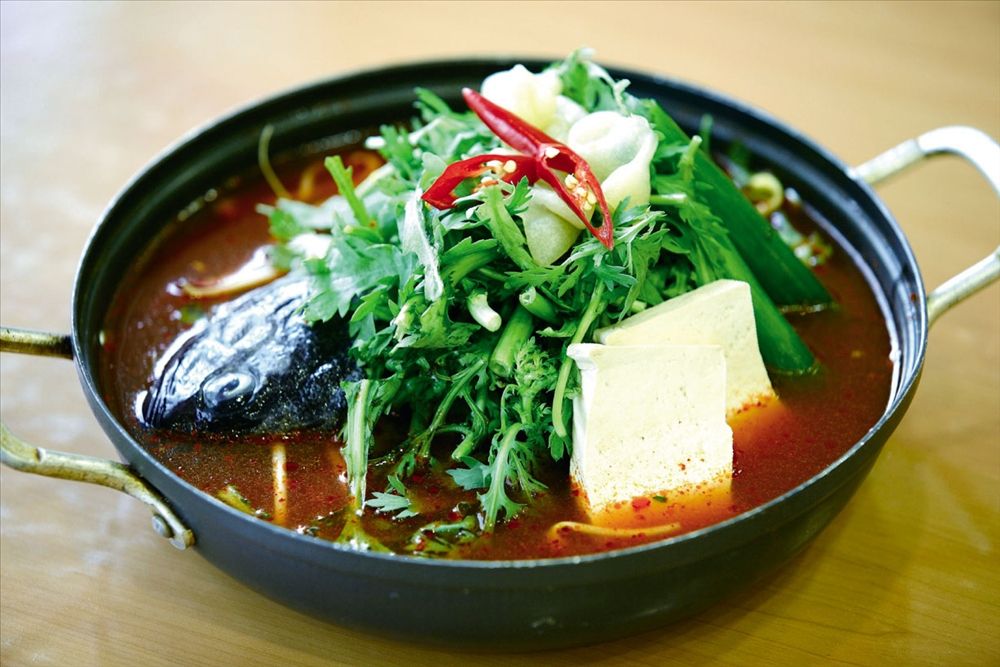 Maeuntang (Spicy Fish Stew)매운탕Fish — freshwater or sea — simmered with radish, tofu and fragrant greens in a fiery gochugaru and gochujang broth; the stew that follows sashimi and fills riverside restaurants.
- Saengtae Jjigae (Fresh Pollock Stew)생태찌개Chunks of fresh, never-frozen pollock simmered with radish, tofu and a red chili broth, finished with water dropwort and crown daisy — a winter stew prized for its clean, bracing taste.
- Ssukgat Muchim (Seasoned Crown Daisy)쑥갓무침Crown daisy greens blanched for a few seconds and dressed with soy sauce, a touch of vinegar, garlic and sesame — a soft namul with a distinctive herbal fragrance.