Ingredient
Korean rockfish (ureok)
우럭
Romanization: ureok
A dark, big-headed rockfish and one of Korea's most farmed fish. Its firm white flesh is a favorite for raw hoe, and its bones make a rich, spicy maeun-tang.
Flavor
Clean and mildly sweet, with firm, slightly chewy white flesh when raw; the head and bones give a rich, savory broth with a little fat.
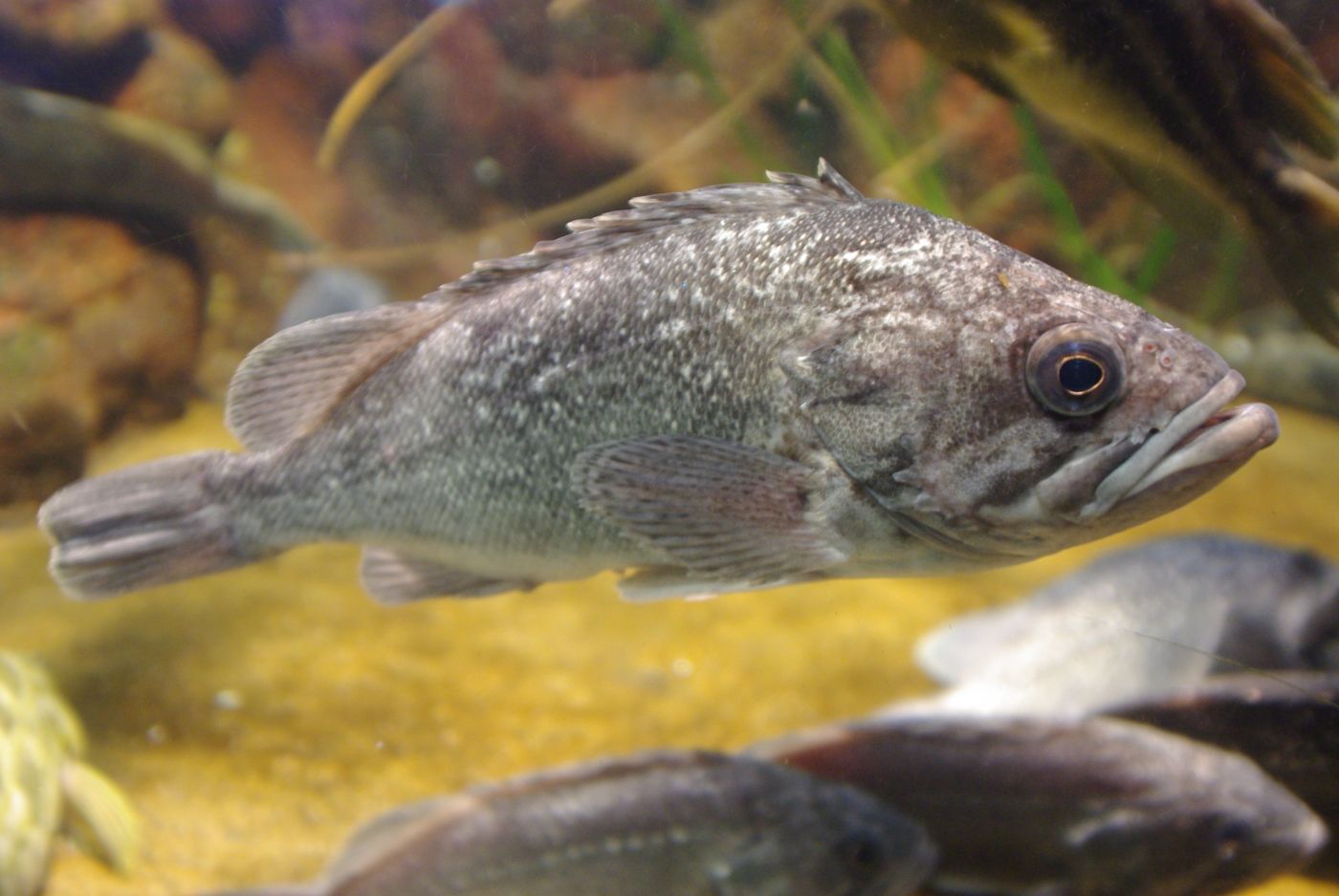 Photo: Tomarin, CC BY-SA 2.1 jp, via Wikimedia Commons
Origin & History
Almost everyone in Korea calls this fish ureok, but its standard name is jopi-bollak, Sebastes schlegelii. The Encyclopedia of Korean Culture describes it as the largest of the Korean rockfishes, often over 60 cm, dark gray-brown with faint dark bands and two distinct black stripes slanting back from each eye. It lives along all Korea's coasts, northern China and Japan south of Hokkaido, and is especially plentiful in the Yellow Sea and Bohai Bay. Strictly speaking, the standard Korean name ureok belongs to a clam, the softshell clam Mya arenaria of west- and south-coast estuaries, which can confuse searches and food databases.
Young rockfish drift near the surface after birth, move into shallow seaweed beds, and head for deeper water as they grow, becoming voracious hunters of shrimp, crabs and small fish such as sand lance. Like other Korean rockfishes, jopi-bollak is ovoviviparous: eggs hatch inside the mother, who releases live young. Fisheries reporting citing the National Institute of Fisheries Science credits its fast growth, easy handling and tolerance of cold water for making it, after olive flounder, the most farmed fish in Korea, raised on every coast and typically harvested at about 30 cm and 700 to 800 g.
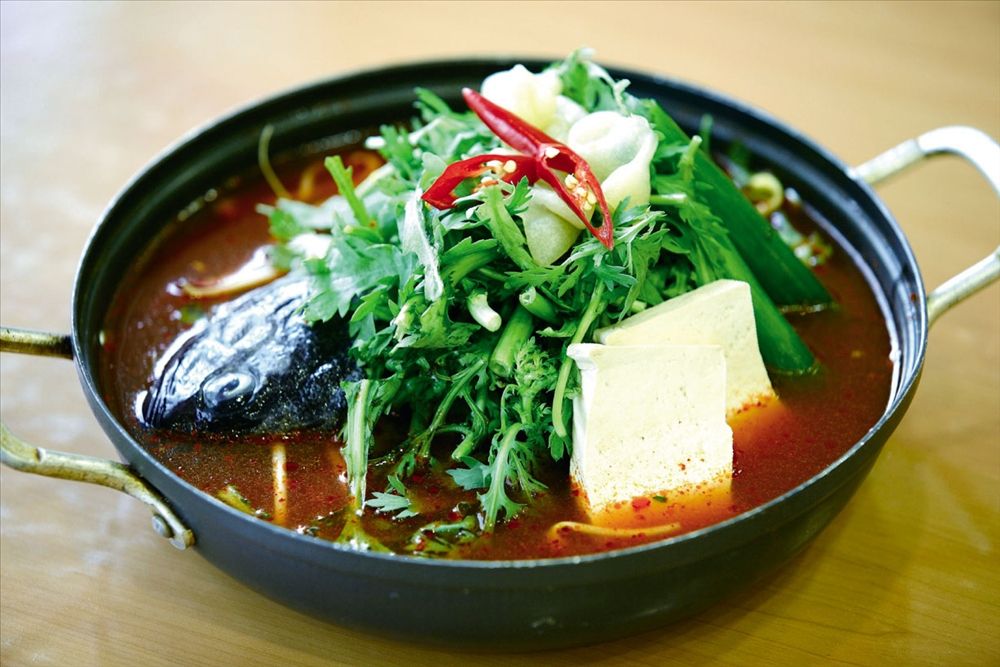
Ureok is eaten mostly as raw slices (hoe) and in spicy maeun-tang, prized for the savory broth its head and bones release; it is also steamed and grilled.
Nutrition
| Calories | 92 kcal |
|---|---|
| Protein | 18.41 g |
| Fat | 2.26 g |
| Carbohydrates | 0 g |
| Fiber | 0 g |
| Sodium | 47 mg |
Notable forVitamin D (4.58 µg) · Potassium (435 mg) · Phosphorus (243 mg)
Values copied from the Korean Food Composition Table (Rural Development Administration / National Institute of Crop Science) for this exact food, per 100 g edible portion. Actual values vary with ingredients, portion size and preparation.
Health Benefits
- Lean protein with vitamin D: Raw rockfish has about 18 g of protein per 100 g, with notable vitamin D, potassium and phosphorus.
- Mercury: The FDA/EPA advice on eating fish lists rockfish as a "Good Choice," one serving a week during pregnancy and breastfeeding.
- Fish allergy: Fish is one of the nine major food allergens under U.S. law.
- Raw versus cooked: The FDA advises cooking fin fish to 145°F (63°C). For raw fish, it notes that freezing kills parasites but not all germs, and says pregnant women, children, older adults and people with weakened immunity should avoid raw fish altogether.
Informational, not medical advice. Talk to a qualified professional about your own health and diet.
Sources
- 01조피볼락 (Korean rockfish) — Encyclopedia of Korean Culture
- 02우럭 (Softshell clam) — Encyclopedia of Korean Culture
- 03국민생선 조피볼락의 오해와 진실 — Suhyup News (2023)
- 04내가 먹었던게 우럭이 아니라고? 사실은 표준명 '조피볼락' — Suhyup News
- 05Korean Food Composition Table — Korean rockfish, Raw
- 06Advice about Eating Fish — U.S. Food and Drug Administration / EPA