History & Culture
Hoe: Raw Fish and Meat in Korea
회 문화
Korea's long tradition of eating fish and meat raw or lightly blanched: what old texts record, how hoe differs from sashimi, and the regional styles from icy mulhoe to fermented skate.
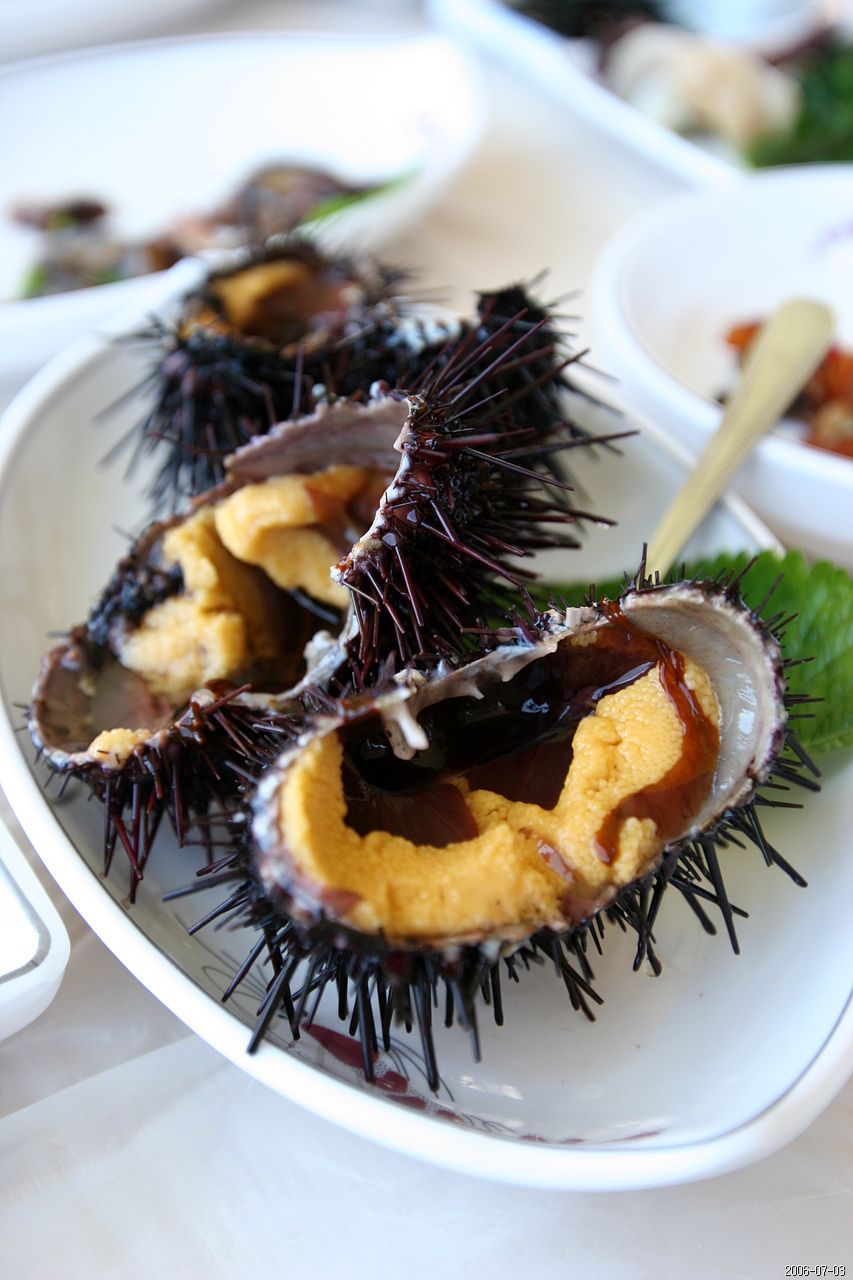 Photo: Junho Jung at Flickr from South Korea, CC BY-SA 3.0, via Wikimedia Commons
Hoe (회, 膾) is the Korean word for fish or meat eaten raw, or only lightly blanched, sliced and served with a dipping sauce. Today most people think first of sliced raw fish with chogochujang, but the word is broader and older than the seafood restaurant: it covers beef yukhoe, blanched vegetable bundles, even mushrooms.
What the records say
The Encyclopedia of Korean Culture links the spread of hoe to the late Goryeo period, when meat eating revived after centuries of Buddhist restraint. In the Joseon dynasty hoe carried an extra endorsement: the Confucian Analects describe Confucius as not tiring of finely sliced hoe, and scholars note that this reverence for the sage helped make raw dishes respectable at yangban tables. Royal banquet records (uigwe) list hoe among court dishes, including a version made from beef tripe, and later cookbooks such as Jeungbo sallim gyeongje and the late-nineteenth-century Siui jeonseo give detailed directions (see Joseon cookbooks). Before chili peppers spread, hoe was usually dipped in mustard sauce; chili-based sauces came later (see chili peppers in Korea).
Kinds of hoe
Korean reference works sort hoe into two families:
- Saenghoe (생회, raw): fish eohoe, made with sea bass, croaker, carp, pufferfish or oysters, and beef yukhoe, lean meat sliced into fine strips, cleaned of blood and seasoned.
- Sukhoe (숙회, cooked): briefly blanched foods such as ganghoe, small bundles of blanched minari or green onion tied around strips of meat, egg and pepper; blanched dureup shoots; and parboiled squid or octopus.
All are typically dipped in chogochujang, mustard sauce, or soy sauce with wasabi, and eaten with lettuce or perilla leaves, garlic and green chili in the manner of ssam.
Hoe and sashimi
Korean hoe and Japanese sashimi overlap, but diners on both sides tend to describe a difference in emphasis. Many Korean seafood restaurants have built their trade on hwareo-hoe (활어회), fish kept alive in tanks and sliced immediately, prized for a firm, springy chew. Japanese practice more often favors fish that has been killed and rested for hours or days, which softens the flesh and deepens its flavor. Korea's fisheries information service describes the same trade-off in its own terms: live-fish hoe for texture, rested seoneo-hoe (선어회) for taste. Rested and aged hoe have become fashionable in Korea in recent years, and historians caution that older Korean practice also included chilling, drying and fermenting fish, so the contrast is a tendency, not a rule. Korean hoe is also more often eaten with chogochujang and wrapped in leaves, and a meal at a coastal hoe house usually ends with a spicy fish-bone stew, maeuntang.
Mulhoe: hoe in ice water
Mulhoe (물회), literally "water hoe," is the summer form. In the east coast port of Pohang, the dish is traced to fishermen of the 1960s and 1970s who sliced fresh catch at sea and seasoned it with gochujang and vinegar to eat quickly. Restaurants turned it into a bowl of raw fish and shredded vegetables in a sweet, sour and spicy chilled broth with shaved ice, often finished with rice or thin noodles. Mulhoe is also associated with Sokcho and the Gangwon coast, and Jeju has its own versions based on doenjang rather than chili paste, made with damselfish or squid.
Fermented skate
Not all hoe is fresh. In South Jeolla, hongeo-hoe is made from skate that has been left to ferment until it gives off a powerful smell of ammonia. The Encyclopedia of Korean Culture ties the custom to the river port of Yeongsanpo, in today's Naju: skate caught around Heuksando island fermented naturally during the long voyage upriver, and locals came to prefer it that way. The former wharf is now a street of skate restaurants. Fermented skate is eaten sliced with pork and aged kimchi, a combination called samhap, or dressed with minari and chili, as in hongeo-hoe-muchim; outside Jeolla, fresh skate is more often used. It remains an essential dish at Jeolla feasts and funerals.
Eating hoe safely
Raw fish and meat carry real risks of parasites and bacteria, particularly freshwater fish and raw shellfish in warm months. For buying, handling and slicing, see preparing hoe, food safety at home and seafood, omega-3 and mercury.