Ingredient
Yangbaechu (cabbage)
양배추
Romanization: yangbaechu
The round, tightly headed European cabbage — the "Western baechu." Crunchy and sweet, it is shredded raw, made into quick kimchi, steamed as a wrap and stir-fried into dakgalbi and tteokbokki.
Flavor
Crisp, juicy and mildly sweet with a faint peppery, mustardy edge when raw; cooking brings out its sweetness and softens the leaves to silky ribbons.
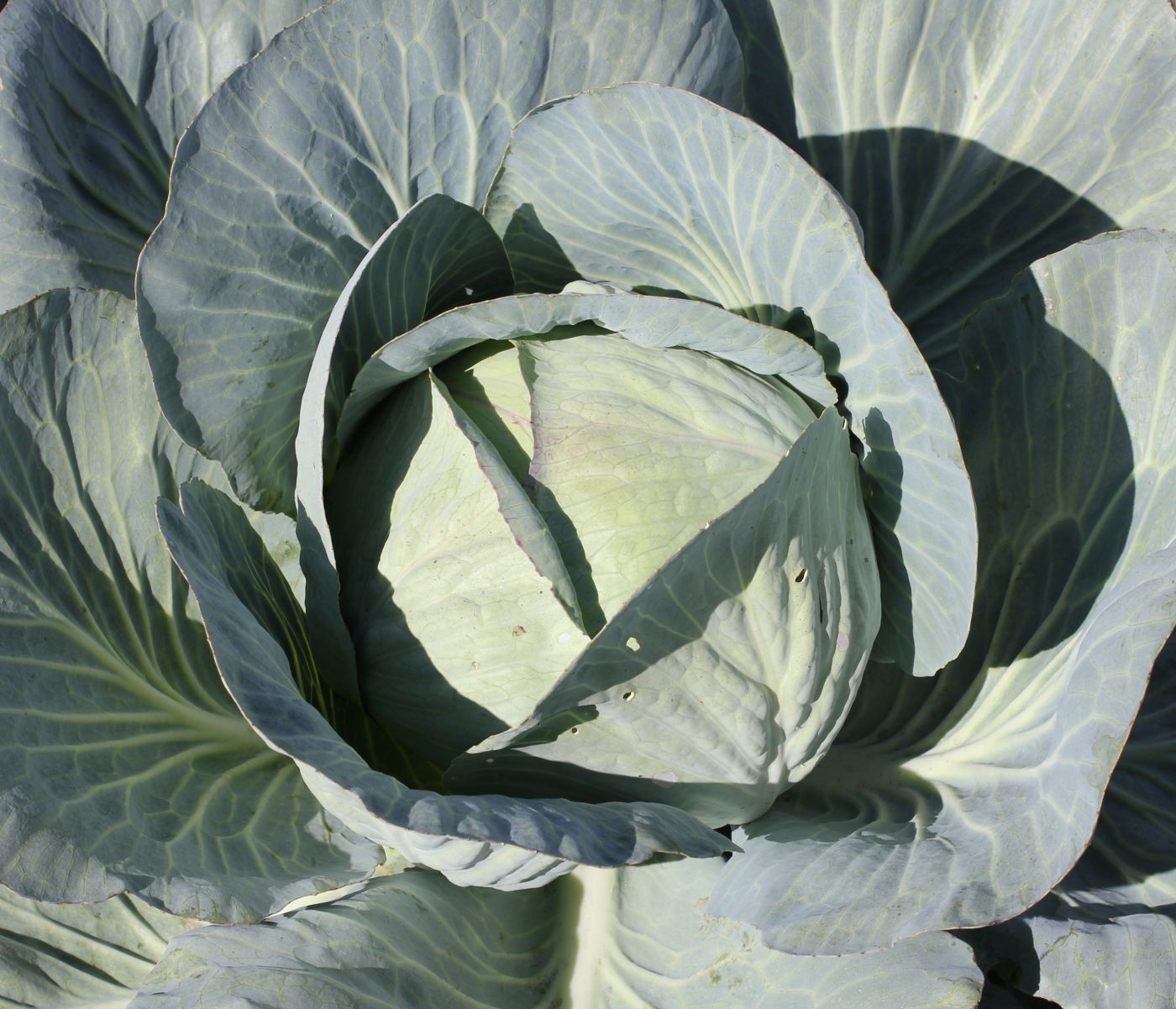 Photo: George Chernilevsky, Public domain, via Wikimedia Commons
Origin & History
Cabbage (Brassica oleracea var. capitata) descends from wild, non-heading plants of coastal Europe and the eastern Mediterranean, which also gave rise to kale, cauliflower, broccoli, kohlrabi and Brussels sprouts. Greek writers mentioned it as a medicinal plant around 400 BCE, but tight-headed cabbages appeared in Europe only around the thirteenth century.
Korea came to it late, which is why it is called yangbaechu, "Western cabbage," to set it apart from native napa cabbage (baechu). The Encyclopedia of Korean Culture records that the experimental farm founded in Seoul in 1884 by Choe Gyeong-seok, after his return from the United States, listed cabbage, kohlrabi and kale among its test crops, but cabbage did not spread at that time and is absent from the agricultural books of the 1880s. It was grown on a small scale through Japanese contacts in the 1930s and 1940s, and cultivation expanded sharply after the Korean War to supply United Nations forces.
Today it is available year-round. Korean cooks eat it raw, shredded as a side salad with dressing, make it into kimchi, and boil or stir-fry it. Lightly steamed leaves are used as a soft wrap for rice and ssamjang, and cabbage is a standard vegetable in Chuncheon dakgalbi, where it cooks down with the spicy chicken and rice cakes.
Nutrition
| Calories | 29 kcal |
|---|---|
| Protein | 1.36 g |
| Fat | 0.12 g |
| Carbohydrates | 6.98 g |
| Fiber | 2.5 g |
| Sodium | 9 mg |
Notable forVitamin C · Vitamin K · Potassium · Calcium
Korean Food Composition Table entry "Cabbage (Yangbaechu), Raw" (양배추, 생것): also 28.79 mg vitamin C, 74.28 µg vitamin K, 252 mg potassium, 45 mg calcium and 24 µg folate per 100 g. Actual values vary with ingredients, portion size and preparation.
Health Benefits
- Vitamin C and K: Per the Korean Food Composition Table, raw cabbage is a source of vitamin C and vitamin K, with fiber and potassium, for few calories.
- Traditional beliefs: Korean references describe cabbage as good for the stomach, citing so-called "vitamin U." This is a popular belief rather than an established treatment; anyone with stomach complaints should see a doctor.
- Eat it raw too: Shredded raw cabbage keeps more of its vitamin C than long-cooked cabbage.
- Vitamin K and warfarin: Cabbage contains a moderate amount of vitamin K. People taking warfarin are advised to keep their intake of vitamin K–rich vegetables consistent from week to week and to talk with their doctor before changing their diet.
Informational, not medical advice. Talk to a qualified professional about your own health and diet.
Dishes with Yangbaechu (cabbage)
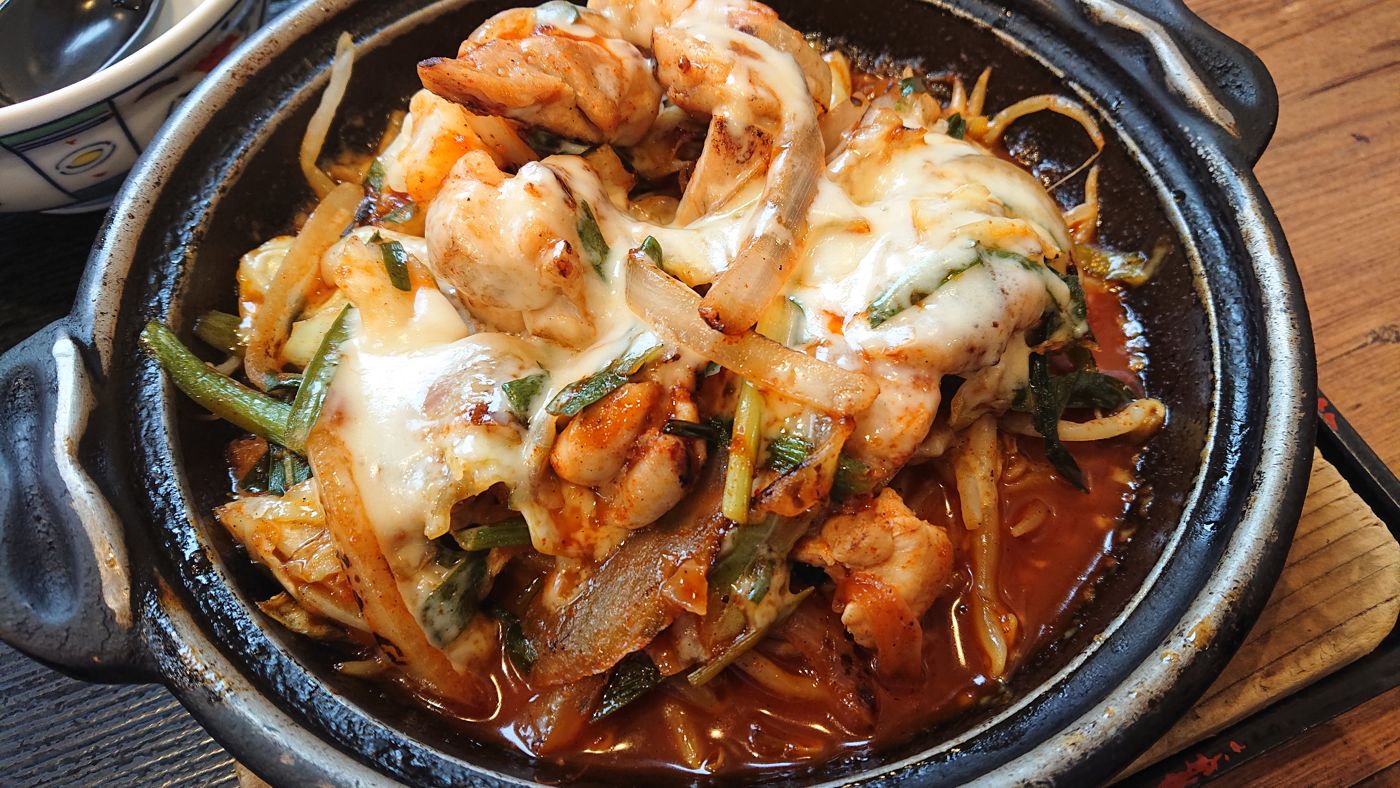 Dakgalbi (Spicy Stir-Fried Chicken)닭갈비Chicken marinated in a fiery gochujang sauce and cooked on a big iron pan with cabbage, sweet potato and rice cakes — Chuncheon's signature dish, finished with fried rice.
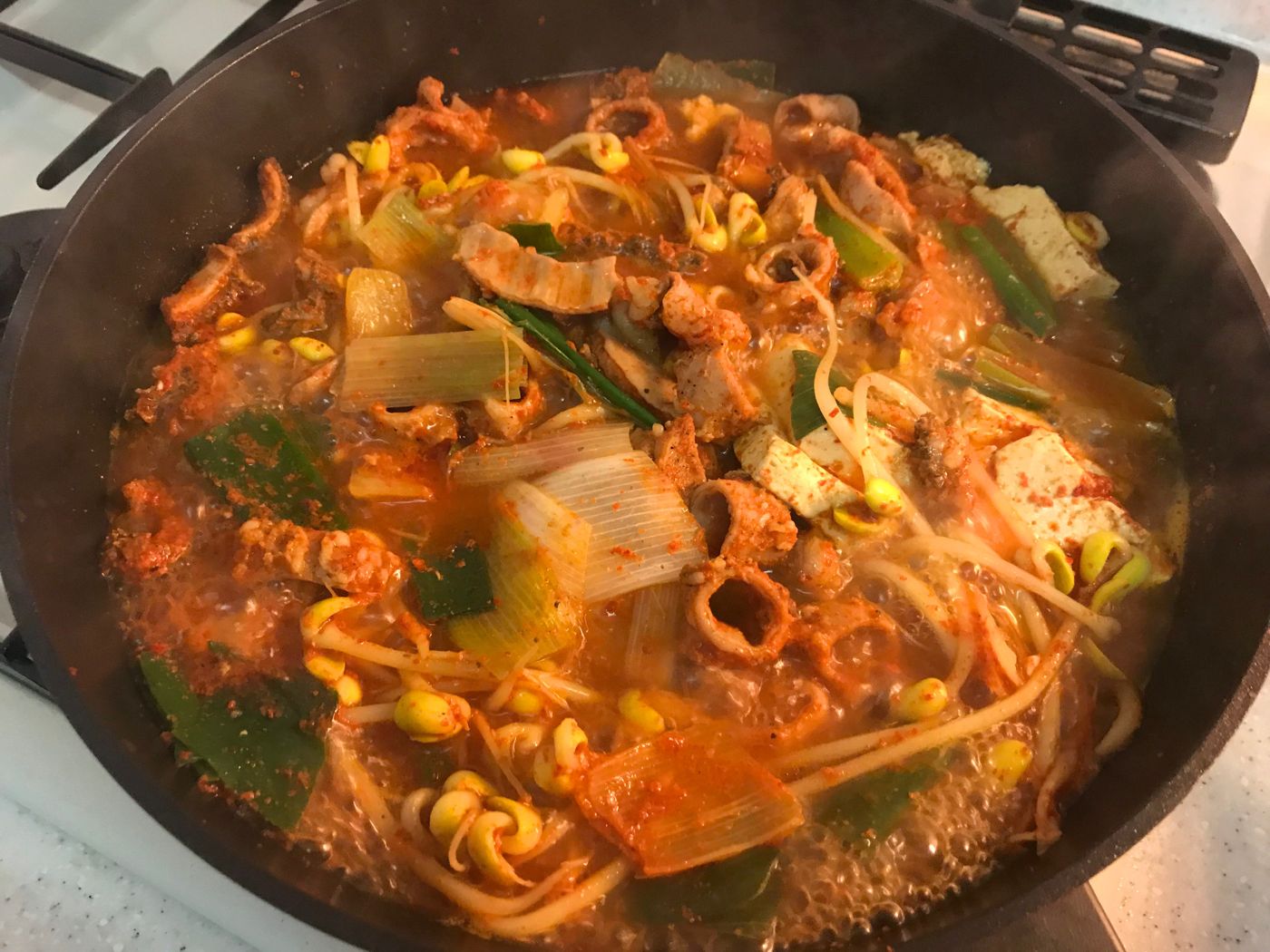 Gopchang Jeongol (Beef Intestine Hot Pot)곱창전골Cleaned beef small intestine and tripe simmered at the table with vegetables, mushrooms and glass noodles in a spicy broth — a rich, chewy hot pot for cold nights.
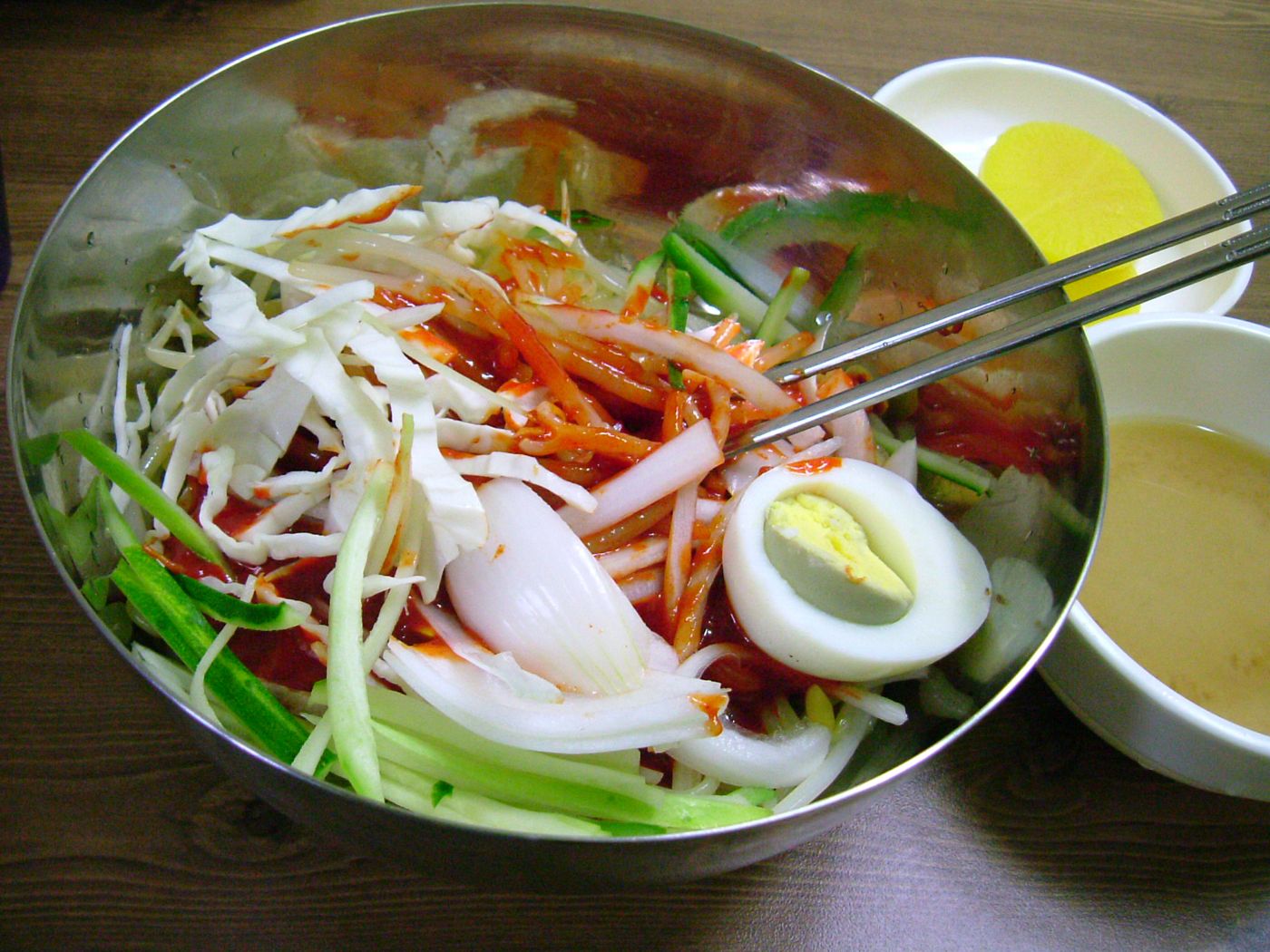 Jjolmyeon (Chewy Spicy Noodles)쫄면Thick, rubbery-chewy wheat noodles tossed cold in a sweet-sour gochujang sauce with cabbage, sprouts and egg — a snack-bar classic invented in 1970s Incheon.
- Green Cabbage Kimchi양배추김치Crisp, quick kimchi of round green cabbage — once South Korea's stand-in when napa ran short, and still an everyday summer kimchi in North Korea.