History & Culture
Anju: Food for the Drinking Table
안주와 술자리 문화
From the guest's juansang to tented pojangmacha and pork belly with soju, Korean drinking has always been about the food served alongside, the dishes called anju.
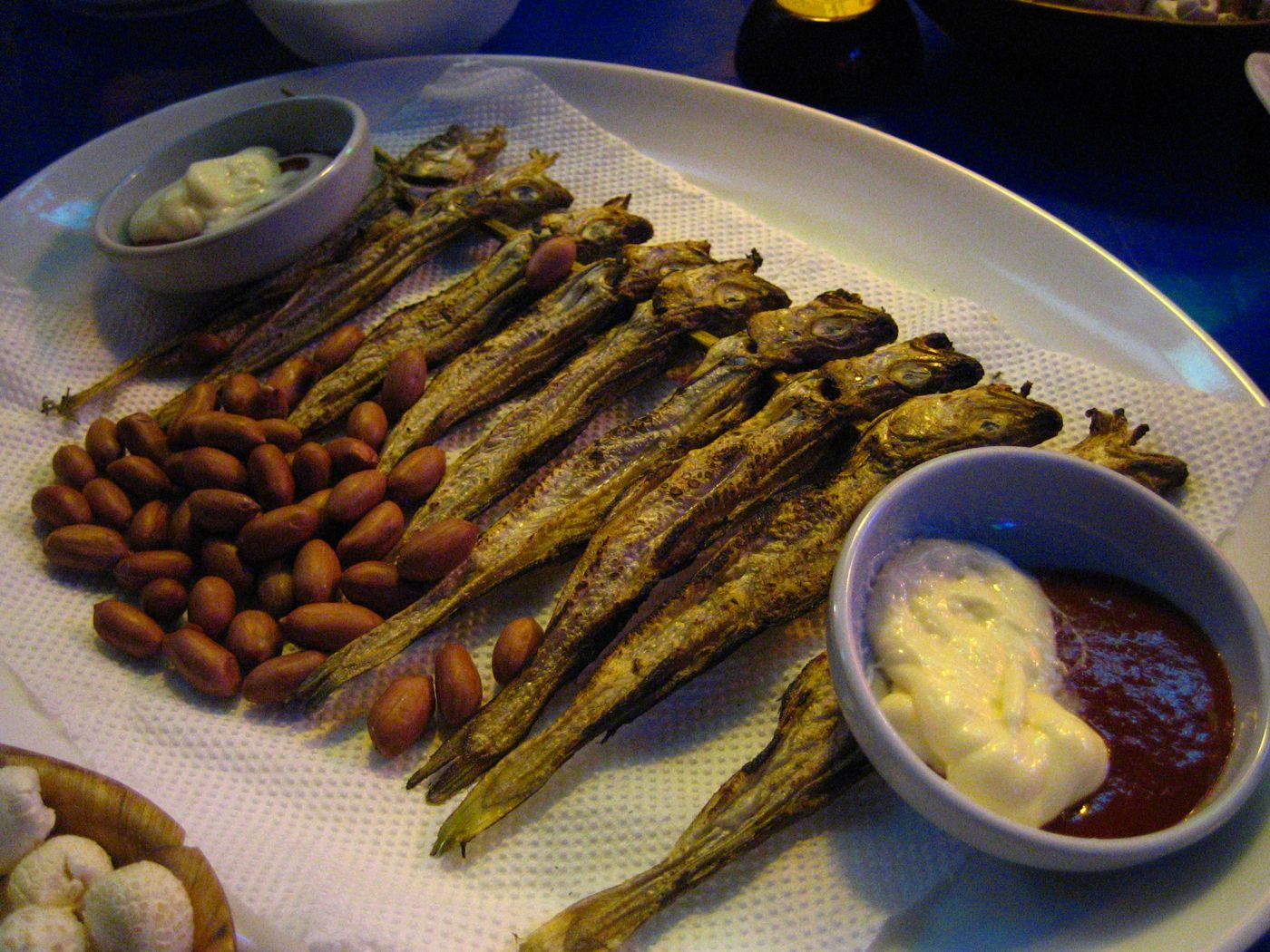
In Korea, drink is rarely served on its own. Anju (안주, 按酒) is the word for food eaten with alcohol, and the Encyclopedia of Korean Culture defines it simply as dishes served alongside a drink. Choosing the right anju for a given liquor has long been treated as part of hospitality. This page describes that food culture; it takes no position on drinking, and every dish here is just as good with rice or tea.
The juansang
In a traditional household, a guest who called was offered a juansang (주안상), a table set with liquor and anju. Older Korean houses brewed their own liquors through the year, often seasonal clear brews (see traditional liquor), so a juansang could be assembled whenever someone arrived. According to the encyclopedia, a typical table combined dried snacks, such as cured beef, dried fish and octopus, mullet roe, pine nuts, walnuts and ginkgo; spicy fermented seafood for warmed clear liquor; pan-fried jeon of fish, meat and vegetables, which it calls the most common anju of all; raw or lightly poached fish chosen by season; and a jeongol hot pot simmering at the center to warm the gathering. Gujeolpan, wheat crepes with fillings, chilled salads and dumplings also suited the table. For two or more guests it was set on a larger shared table.
The encyclopedia's general advice is that anju should be lightly seasoned and protein-rich, balanced with fresh vegetables such as tangpyeongchae or blanched scallion and minari rolls. It matched food to drink: dried fish, sliced pressed meat and jeon for fragrant clear liquors; hot vegetable skewers, boiled pork and a peppery gochujang stew for cloudy makgeolli.
Taverns and the first chilies
Outside the home, travelers drank at jumak, roadside inns that sold liquor, soup and rice. The encyclopedia's anju entry reads the 1614 miscellany Jibong yuseol as recording that green chilies were eaten with soju at taverns soon after the plant arrived, and notes that raw green chili remains a plain drinking snack. The same passage is more often read as saying that tavern keepers added chili to the liquor itself; see chili peppers in Korea. Early-morning hangover-soup shops serving blood-sausage soup and boiled beef head, the encyclopedia adds, also made fine places for makgeolli.
Pojangmacha
After liberation in 1945, the tented pojangmacha cart became the city's cheapest place to drink, serving workers and students from vacant lots and roadsides. The menu began with grilled sparrow, chicken feet, liver and tripe, and boiled squid, and grew to include refugee dishes from the North and seafood from Busan; the history is told in Korean street food. Today's pojangmacha sells soju, makgeolli and beer with anju such as jokbal, sundae, sliced boiled pork, chicken gizzards, grilled hagfish, live octopus, sea squirt, cockles, fishcake soup and mussel soup, along with snacks such as tteokbokki and gimbap.
Jeon and makgeolli on rainy days
One of the most widely shared Korean food customs is reaching for jeon and makgeolli when it rains. The habit is popular rather than ancient, and retail data show it is real. In July 2020, the GS25 convenience-store chain reported makgeolli sales up 30.1 percent and frying-flour sales up 61.4 percent on the previous year, and CU reported similar rises. Popular explanations, from the sizzle of batter sounding like rain to mood effects of carbohydrates, are speculative. Tastes also shift: a 2026 Hankyung analysis of search and sales data found that rainy-day interest had begun moving toward hot pot, while searches for jeon and makgeolli barely changed. Classic partners include haemul pajeon, kimchi jeon, nokdu bindaetteok and dubu kimchi.
Soju and samgyeopsal
The pairing most associated with modern Korea is grilled pork belly with green-bottled soju. Grilling pork belly at the table dates only from the late 1970s and 1980s, and the cheap meal became a symbol of hard times during the 1997 financial crisis; the full story is in Korean barbecue culture. The soju in those bottles is mostly diluted neutral spirit, a product of 1960s grain-saving rules, rather than the older distilled liquor.
Banchan as anju
The line between banchan and anju is thin. A plate of dried shrimp stir-fry, squid stir-fry or jeyuk bokkeum serves equally well at either table. Anju tends to be saltier and richer, so for anyone watching sodium, see sodium in Korean food.