Regions
Gwangju
광주
The southwest's largest city brands itself on five flavors: Songjeong tteokgalbi, Mudeungsan barley rice, duck stew with perilla, Gwangju kimchi and the full hanjeongsik table.
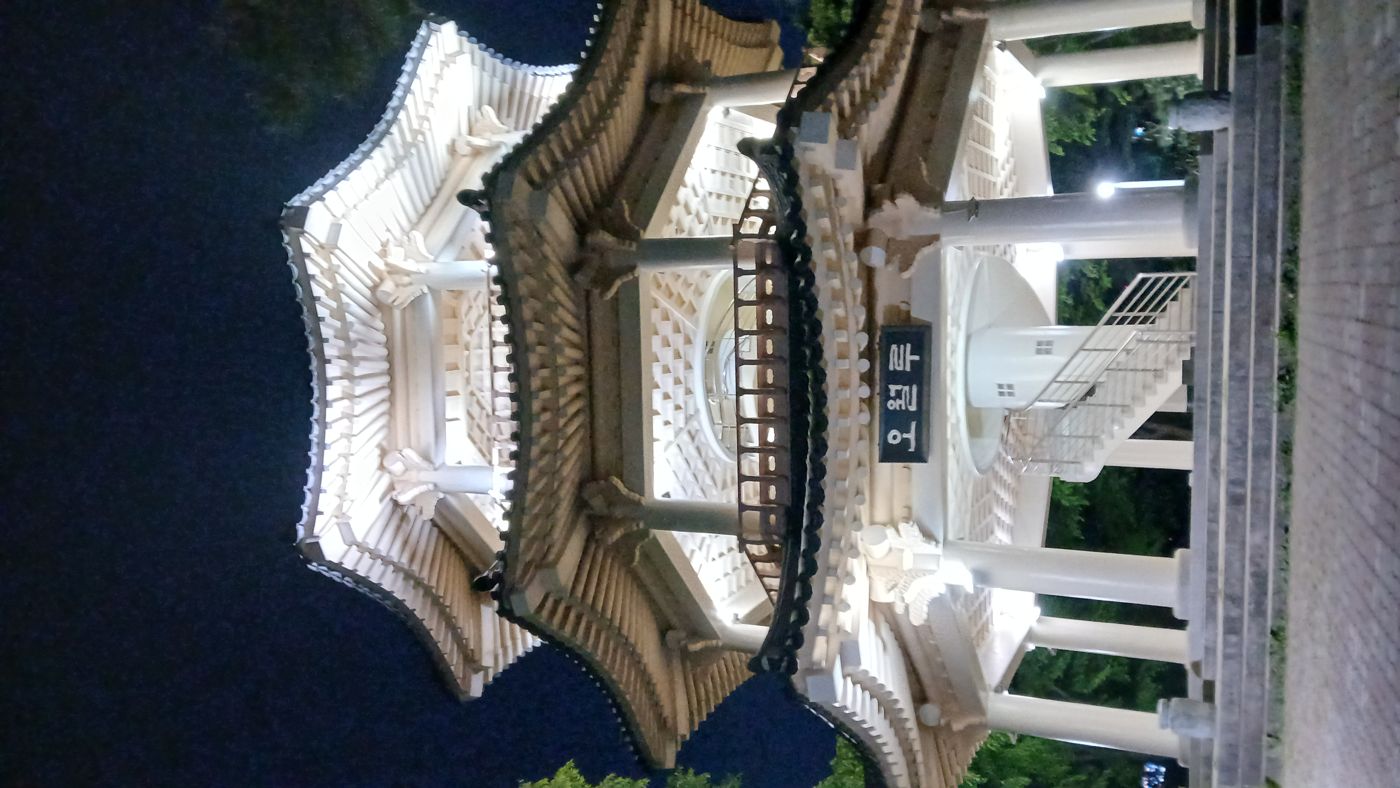
Gwangju, the largest city in Korea's southwest, sits at the foot of Mudeungsan with the farmland of the Honam plain around it and the islands and tidal flats of the southwest coast within reach. The Digital Gwangju Culture Encyclopedia credits that abundance for a food culture the city promotes under the name mihyang, "home of good taste." For the surrounding food region, see Jeolla.
The five flavors
In 2003, after a citizens' idea contest, the city selected five representative foods to promote as tourism products: Gwangju hanjeongsik, Gwangju duck stew, Mudeungsan barley rice, Songjeong tteokgalbi and Gwangju kimchi. They are known as Gwangju 5-mi. In 2019 the city named a broader list of seven representative foods, which adds newer favorites such as sangchu-twigim (fried snacks eaten wrapped in lettuce) and jumeokbap rice balls. These lists are branding, but each dish has a real local story.
Songjeong tteokgalbi
Tteokgalbi is minced rib meat, seasoned, pressed into a patty and grilled. The Digital Gwangju Culture Encyclopedia sets Gwangju's version apart from the two other famous styles. In Damyang and Gyeonggi, tteokgalbi is traced to court cooking and to the story that a king could not be seen gnawing on a rib; both claims are told as traditions. Damyang's all-beef version is shaped round and thick and pressed back onto the bone, while Gyeonggi's is flat and square like a rice cake.
Songjeong's origin is more modest and better documented. In the 1950s Choe Cheo-ja, who ran a small eatery near the Songjeong five-day market, minced and seasoned meat and grilled it thin and wide for in-laws whose teeth were poor. Over some forty years, staff who had worked for her opened their own restaurants, and a tteokgalbi alley grew up near what is now the Gwangsan District office, designated Songjeong Tteokgalbi Street in 2004. Songjeong tteokgalbi has no bone and is square. It started as beef, but during the late-1990s financial crisis cooks began mixing in pork to hold prices down, and the softer, cheaper result stuck. A free bowl of pork-bone soup before the meat is part of the ritual. The encyclopedia records three explanations for the name: the meat is beaten like tteok, shaped like tteok, or cut square like injeolmi. For the wider story, see Korean BBQ culture.
Mudeungsan barley rice
Barley-rice restaurants began appearing near Jeungsimsa temple, on the slopes of Mudeungsan, roughly three decades before the local encyclopedia's entry was written, feeding hikers on their way down. They now cluster in the Jeungsimsa valley and around the Jisan resort area. A table brings barley rice, doenjang stew and ten or more seasonal namul, such as bracken, taro stem, bellflower root, soybean sprouts and spinach, plus kimchi, salted anchovies and leaves for wrapping. Diners mix rice and namul with gochujang and sesame oil as bibimbap, then wrap spoonfuls of it in radish, napa cabbage or lettuce leaves. The encyclopedia calls this wrapping of an already mixed bibimbap unusual, and links it, with sangchu-twigim, to a local love of ssam. See also ssam culture.
Duck stew in perilla broth
Gwangju oritang is thick and nutty with ground perilla seed or strained perilla liquid, chili and plenty of vegetables, and simmers at the table like a hot pot. Fresh water dropwort is dipped briefly in the bubbling broth and eaten with the duck, both dipped in chogochujang mixed with perilla powder. The duck street at Yu-dong in Buk District formed in the 1970s, the encyclopedia says, after a young duck farmer from neighboring Naju began supplying restaurants in quantity. Around ten restaurants keep the tradition going there, some in their third generation.
Kimchi and the full table
Gwangju has held a kimchi festival since 1994, when it began as the Gwangju Kimchi Festival to promote the city's food culture and keep kimchi-making alive as Western eating spread; since 2015 it has been called the Gwangju World Kimchi Festival. It is held each autumn, with exhibitions of regional and head-family kimchi, competitions, classes and a public kimjang event. For technique, see making kimchi.
The fifth flavor is hanjeongsik, the full-course set table. The encyclopedia describes Gwangju's version as a gathering of everything the region's mountains, sea and plains produce, led by salted seafood and many kinds of kimchi. It is the city's showpiece and, in banchan terms, a demonstration of how far the southwestern table can go. For comparison, see Jeonju and Mokpo.
Dishes from this region
- Spicy Skate Salad홍어회무침Strips of raw or lightly fermented skate, firmed in vinegar and tossed with minari, radish and a sweet-sour gochujang dressing — Jeolla's feast-day salad.
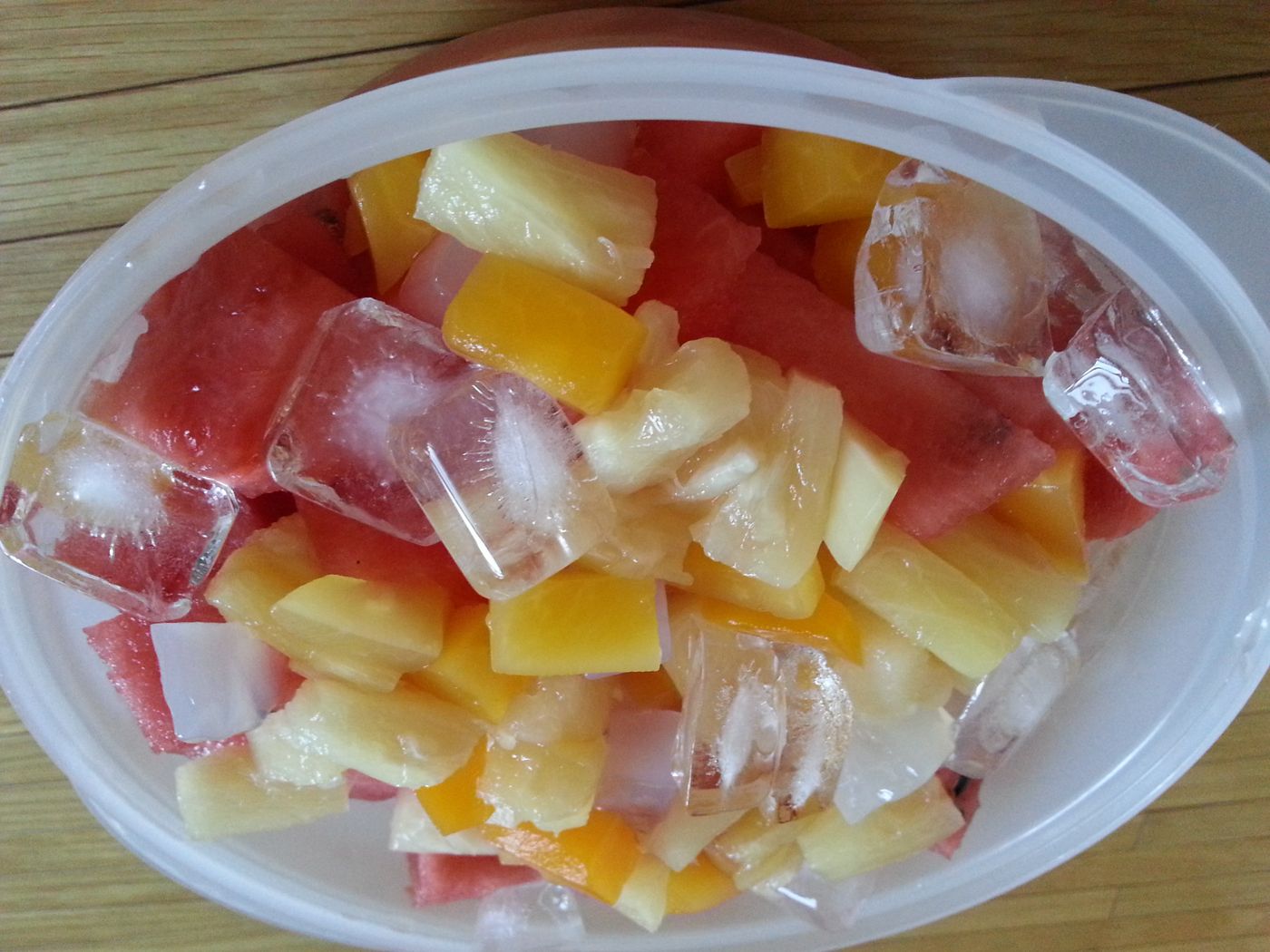 Subak-hwachae (Watermelon Punch)수박화채Scooped watermelon floating in its own sweetened juice, or in fizzy soda over ice — the most familiar member of the hwachae family of cold fruit punches.
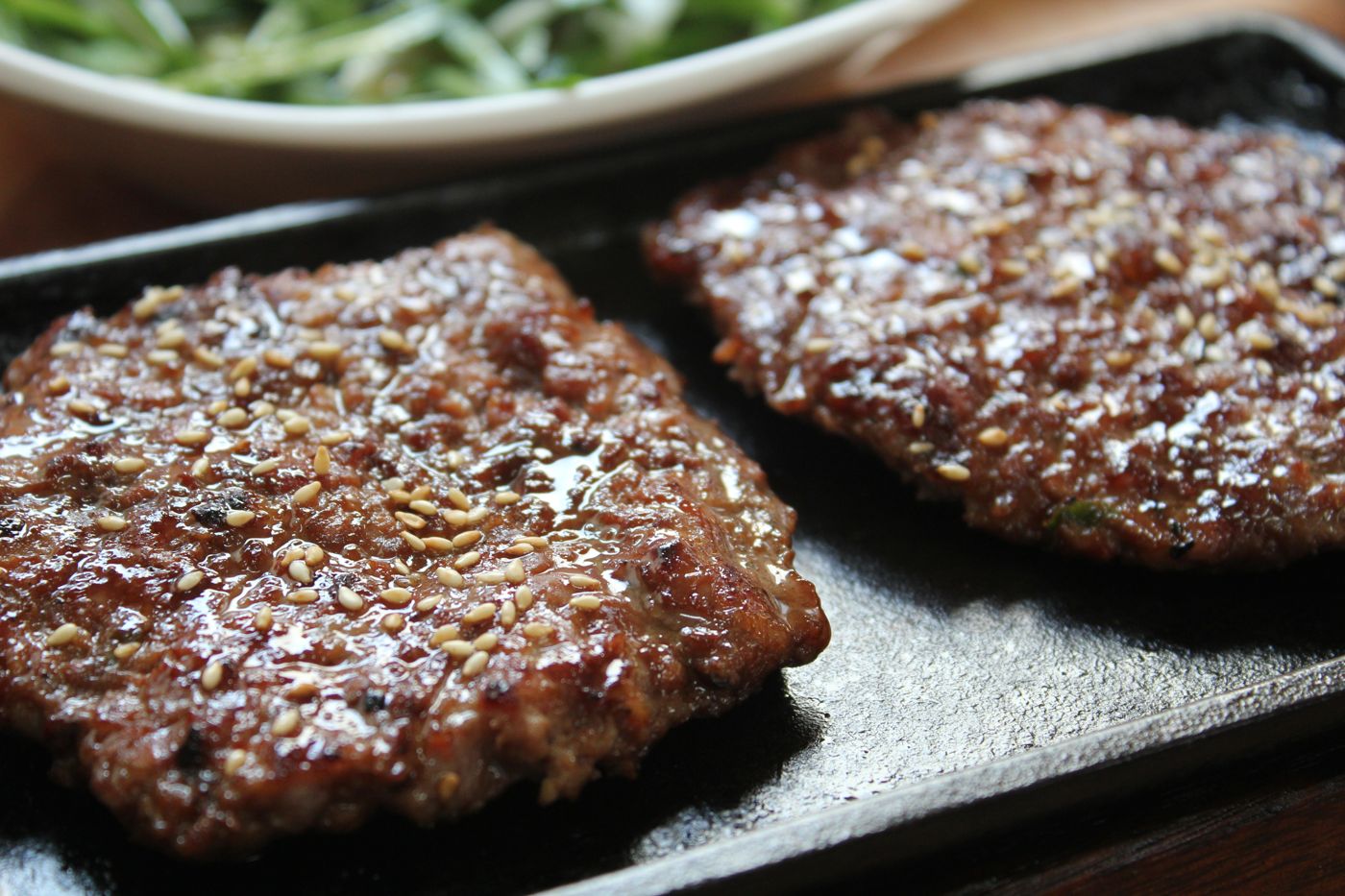 Tteokgalbi (Minced Short-Rib Patties)떡갈비Short-rib meat minced, seasoned sweet-savory and shaped into a patty, then grilled. Damyang presses it back onto the bone; Gwangju's Songjeong style is a flat boneless square.
- Yukjeon (Beef Jeon)육전Thin slices of lean beef, lightly marinated, dipped in flour and egg and pan-fried — an ancestral-rite jeon that Gwangju has made into a specialty.
Sources
- 01광주 5미 (Gwangju's Five Flavors) — Digital Gwangju Culture Encyclopedia: Gwangsan-gu
- 02맛있고 가격도 저렴한 송정리 떡갈비 (Songjeong-ri tteokgalbi) — Digital Gwangju Culture Encyclopedia: Gwangsan-gu
- 03무등산보리밥 (Mudeungsan barley rice) — Digital Gwangju Culture Encyclopedia: Buk-gu
- 04오리탕 (Oritang) — Digital Gwangju Culture Encyclopedia
- 05광주세계김치축제 (Gwangju World Kimchi Festival) — Digital Gwangju Culture Encyclopedia