History & Culture
Ssam: Korea's Culture of Wrapping
쌈 문화
Rice and seasoning folded into lettuce, perilla, pumpkin leaves or seaweed: a habit that Yuan-era poetry noticed, Joseon etiquette regulated and the barbecue table made famous.
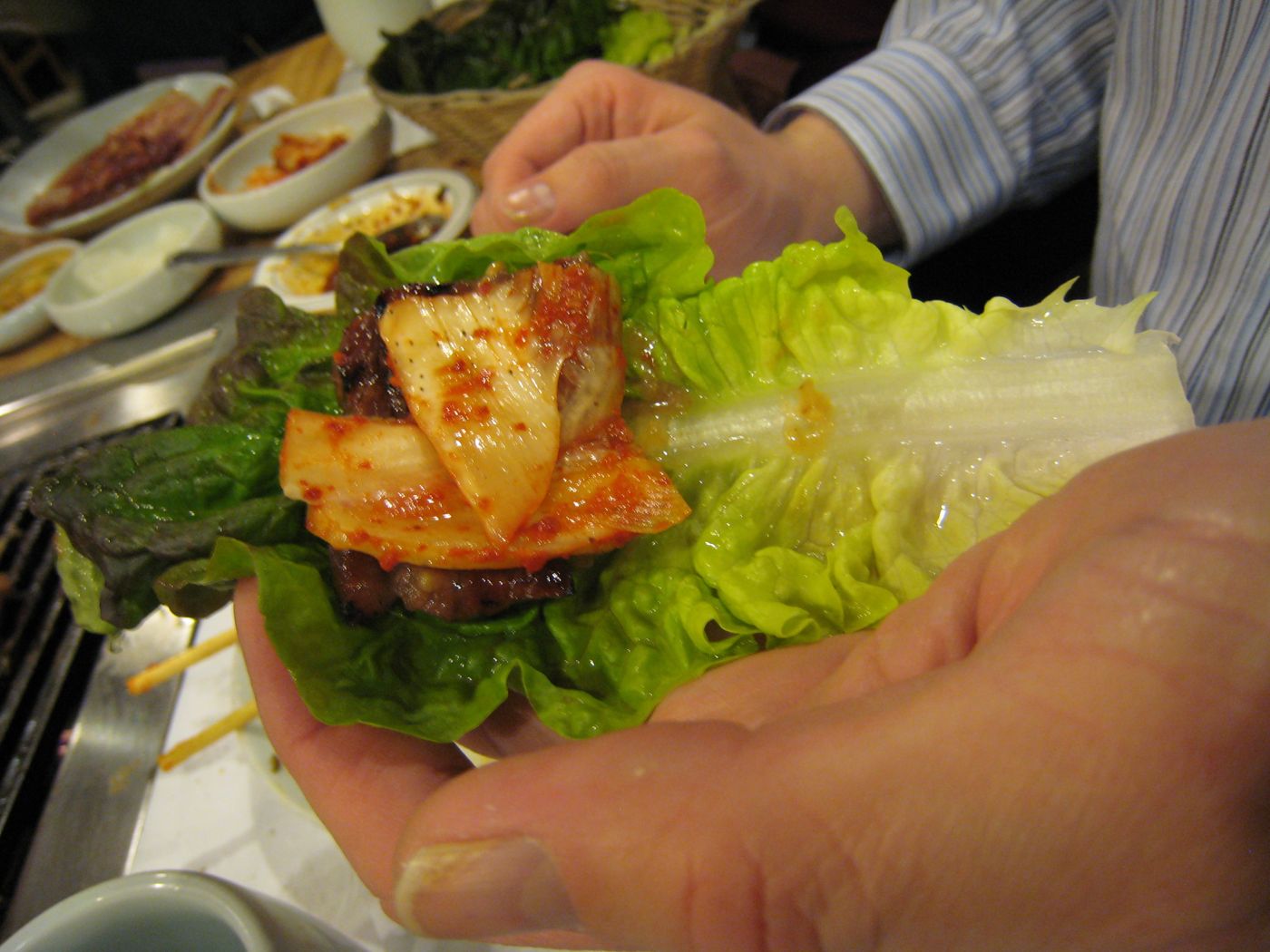 Photo: psd (flickr), CC BY 2.0, via Wikimedia Commons
Ssam (쌈) means a wrap, and by extension the whole habit of folding rice, seasoning paste and often meat or fish into a leaf and eating it in one bite. The Encyclopedia of Korean Culture defines it simply as greens wrapped around rice and seasoning sauce. It is one of the most distinctive gestures of the Korean table: the diner, not the cook, makes the final dish.
A habit noticed abroad
The best-known early reference comes from outside Korea. The Yuan dynasty poet Yang Yunfu, writing about the Mongol summer capital in the fourteenth century, praised the lettuce of Goryeo in a short poem and added a note that the people of Goryeo wrapped rice in raw greens. The late Joseon historian Han Chi-yun quoted the poem in his Haedong yeoksa, which is how it entered Korean food writing. Korean reference works add a story that Goryeo women taken to the Yuan court as palace attendants grew lettuce in the palace gardens and ate their rice wrapped in it to ease their homesickness, and that the Mongols took up the habit. The poem is a real text; the story around it is best read as tradition rather than documented fact.
Haedong yeoksa also repeats a Chinese anecdote that lettuce seed brought by envoys from the peninsula was so prized that it was called the thousand-gold vegetable. The sources disagree on which dynasties were involved, so the tale says more about lettuce's later reputation than about a particular date. Lettuce itself is thought to have reached Korea through China, though when is unknown.
Leaves raw and cooked
Almost any tender leaf can become ssam. The Encyclopedia of Korean Culture lists lettuce, soybean leaves, chwinamul, pumpkin leaves and the pale inner leaves of napa cabbage, along with miyeok and gim. Old texts divide them into leaves used raw and leaves blanched or steamed. The late-nineteenth-century cookbook Siui jeonseo describes raw lettuce and gomchwi wraps, while the eighteenth-century Gosa sibijip records gomchwi and perilla leaves that were boiled or steamed first. Spring cabbage, steamed cabbage leaves and kelp remain common choices. The name also attached to dishes in which egg is wrapped around fillings such as ox tongue, minced meat or sea cucumber.
The sauce and the setting
A wrap needs a sauce. Siui jeonseo gives a careful method: wash the lettuce, swirl it in fresh water with a little sesame oil so the oil clings to the leaves, then serve it with gochujang cooked down with minced beef and fish, and always set out young scallions and crown daisy alongside. Court recipes passed down by Han Hui-sun, a palace cook who served at the late Joseon court, set lettuce ssam with a thick beef-and-shiitake doenjang stew used as a spread, pomfret braised in gochujang, slivered braised beef, stir-fried dried shrimp and a sweetened, beef-enriched gochujang, followed by a warm cinnamon tea to balance the cooling greens. Today the usual partner is ssamjang, a blend of doenjang and gochujang with garlic and sesame.
Good luck and good manners
By the late Joseon period, wrapping had gained a symbolic meaning. The 1849 almanac Dongguk sesigi records that on the first full moon of the lunar year people wrapped rice in leaves of greens and called it bok-ssam, a wrap of good fortune. The custom is described with other festival dishes in seasonal foods.
Etiquette writers also took an interest, because a good wrap demands a wide-open mouth. The eighteenth-century scholar Yi Deok-mu, in his conduct manual Sasojeol, advised against forming the wrap with bare hands: lift rice with the spoon and lay it across the bowl, pick up two or three lettuce leaves with chopsticks to wrap it, eat it, and only then take the doenjang. He warned women in particular against wraps so large that they forced the mouth open. Modern diners are less formal, but the instinct survives in the small, one-bite wrap. Utensil customs are covered in sujeo.
Ssam at the modern table
The modern restaurant table has given wrapping its widest audience. At a barbecue, lettuce and perilla leaves come stacked beside the grill with garlic, green chili and ssamjang, as described in Korean barbecue culture. Bossam, boiled pork eaten in cabbage leaves with radish salad and salted shrimp, takes its name from the same root, as does bossam kimchi, wrapped inside a large cabbage leaf. Leftover lettuce often becomes a quick sangchu geotjeori. How to assemble wraps well is covered in making ssam and wraps.