History & Culture
Kimjang: Making Kimchi Together
김장
The late-autumn gathering in which families and neighbors make winter kimchi together, recognized by UNESCO for both South and North Korea.
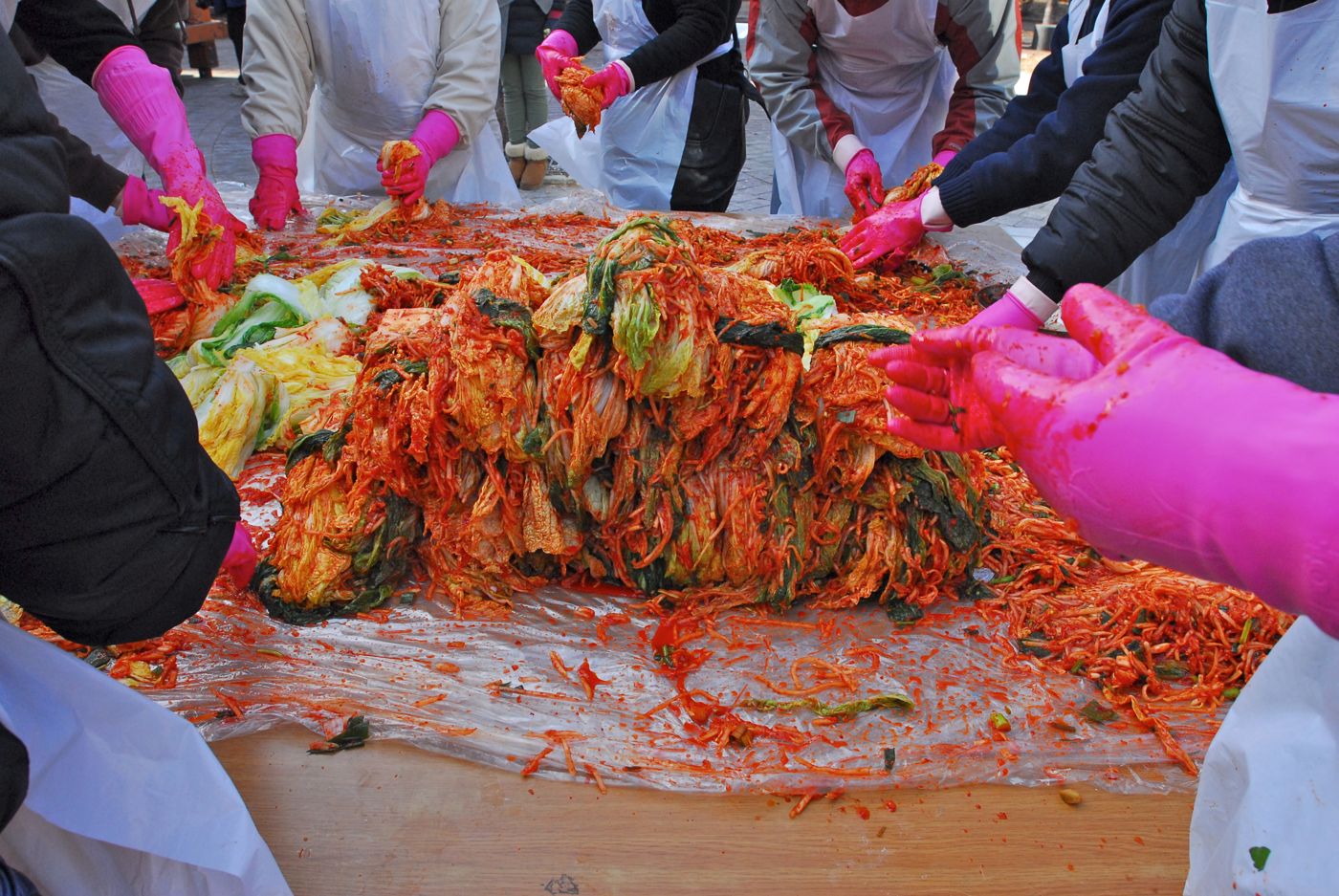 Photo: USAG- Humphreys, CC BY 2.0, via Wikimedia Commons
Kimjang (김장) is the communal making of kimchi in late autumn, enough to see a household through the winter and beyond. For generations it was one of the great events of the domestic year, and in many families it still is: relatives and neighbors gather over a weekend, salt cabbages by the hundred, mix the seasoning paste in huge basins and send one another home with containers of fresh kimchi.
A year-long cycle
Kimjang is the climax of a cycle that begins months earlier. UNESCO's description of the practice traces the sequence: in spring, households buy shrimp and anchovies to salt and ferment into jeotgal; in summer, they buy sea salt, often letting it drain for months to lose its bitterness; in late summer, red chili peppers are dried and ground into gochugaru. Then, in late autumn, when cabbages and radishes are at their best and the weather has turned cold enough for slow fermentation, the kimchi is made. Cooks traditionally watched the weather closely to choose the right days.
Historical roots
Preserving vegetables in salt for winter is very old on the peninsula, and the Goryeo poet Yi Gyu-bo already wrote of pickled radish in the late twelfth or early thirteenth century. By the nineteenth century, kimjang had become a fixture of the calendar: Hong Seok-mo's Dongguk sesigi (1849), a record of seasonal customs, names kimjang and the making of soy sauce as the two great household tasks of the year.
The kimchi made at kimjang has itself changed over time. Chili pepper entered kimchi recipes only in the eighteenth century (see chili peppers in Korea), and the tightly headed napa cabbage that now dominates baechu kimchi became common only in the early twentieth century. Before that, radish and other vegetables played a larger role, and winter staples like dongchimi and kkakdugi remain part of many families' kimjang today.
How the day unfolds
- Salting: cabbages are split and salted, by sprinkling or brining, until they turn pliable, then rinsed and drained.
- The seasoning: shredded Korean radish, gochugaru, garlic, ginger, green onion and salted shrimp or fish sauce are mixed into a paste. Recipes vary by region and by family.
- Stuffing: the paste is spread between every leaf, and each half-head is folded and packed tightly.
- Storage: traditionally, kimchi went into earthenware jars buried in the ground to hold a steady, cool temperature. Today most households use kimchi refrigerators.
See making kimchi for the method in detail.
Sharing and transmission
What UNESCO emphasized in its 2013 inscription was less the recipe than the social practice. Kimjang knowledge has traditionally passed within families, notably from mothers-in-law to new daughters-in-law, and the exchange of kimchi among households spreads ideas and techniques from one kitchen to the next. Kimjang also strengthens ties within communities, and today companies, local governments and charities hold large kimjang events to make kimchi for neighbors in need.
UNESCO recognition, North and South
In 2013, UNESCO inscribed "Kimjang, making and sharing kimchi in the Republic of Korea" on the Representative List of the Intangible Cultural Heritage of Humanity. Two years later, in 2015, it separately inscribed the "Tradition of kimchi-making in the Democratic People's Republic of Korea." The North Korean nomination highlights the hundreds of regional varieties of kimchi, transmission from mothers to daughters and between neighbors, and kimchi's place at weddings, holidays, memorial rites and state banquets as well as at everyday meals. Together the two inscriptions reflect a practice that predates the division of the peninsula and continues on both sides of it.