Regions
Busan
부산
Korea's great port: a seafood market run by women vendors, and dishes like fish cakes, wheat noodles and pork soup that grew out of the Korean War refugee years.
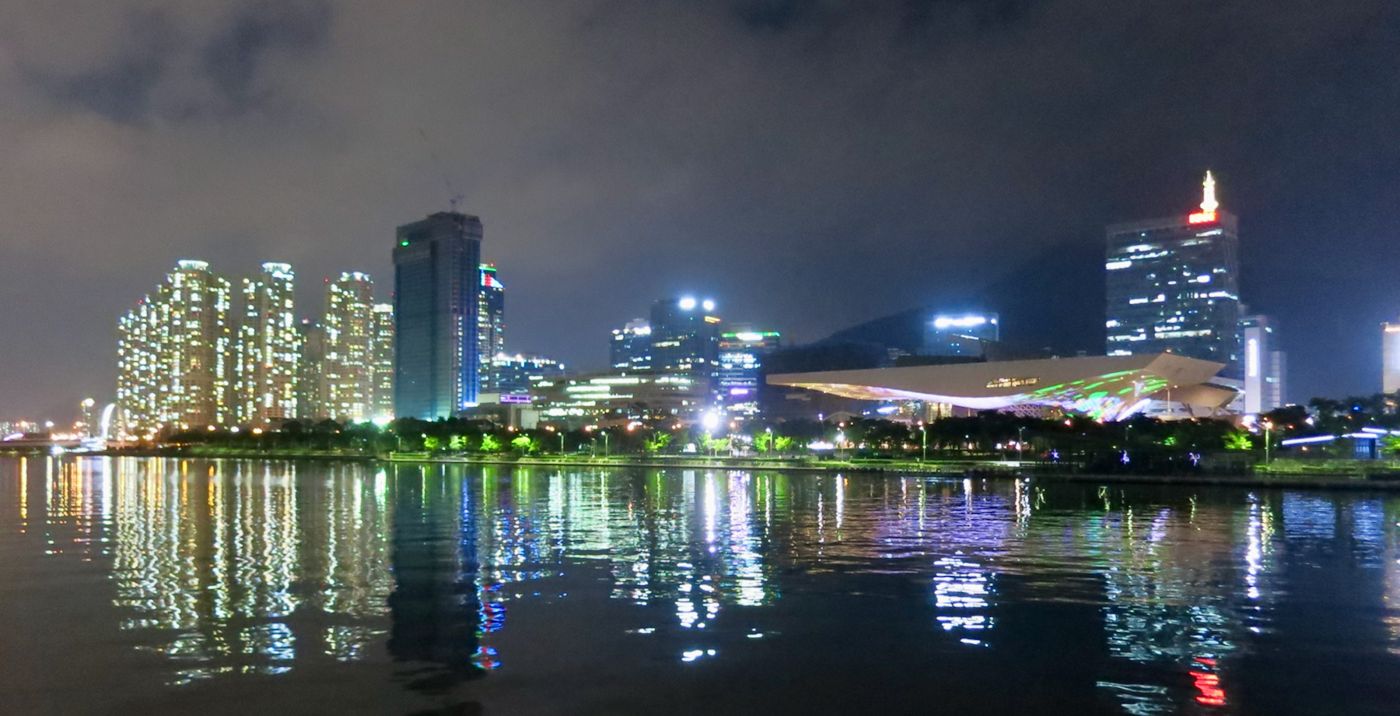 Photo: 399scout, CC BY-SA 4.0, via Wikimedia Commons
Busan, Korea's largest trading port, cooks with the sea at its door. But much of what the city is now known for, from fish cakes to cold wheat noodles and pork-bone soup, was shaped by one extraordinary period. From 1950 to 1953, during the Korean War, Busan served as South Korea's temporary capital, and refugees from across the peninsula crowded into the city. Their cheap, filling foods became Busan's signatures. For the province's broader cooking, see Gyeongsang.
Jagalchi Market
On the waterfront in Busan's Jung-gu district, Jagalchi is one of Korea's largest seafood markets. The Korea Tourism Organization notes that it established itself as a fish market after the Korean War, and that most of the sellers are women, known as Jagalchi ajumeoni, who traditionally sold from wooden boxes along the shore. Live and dried fish, mackerel and sea squirts are sold there, and visitors can buy raw fish and eat it on the spot. Fish like mackerel and hairtail from markets like this end up in home braises such as godeungeo-jorim and galchi-jorim.
Eomuk
Busan eomuk (fish cake) is the city's best-known food product. The Encyclopedia of Korean Culture traces it to the Japanese kamaboko sold by Japanese-run shops in Busan's Bupyeong market during the colonial period. After liberation the first Korean-owned fish-cake factory opened, and the wartime influx of refugees created a booming market for a cheap, protein-rich food. Early makers ground unsold or low-value fish whole in stone mortars and fried it in large vats. In 2007 the city added fish cake to its premium seafood brand program, and producers hold to a standard of at least 70 percent fish. Fish cake goes into soups, eomuk-bokkeum, kimbap and tteokbokki. See also eomuk.
Milmyeon
Milmyeon (wheat noodles) is Busan's answer to naengmyeon. According to the Encyclopedia of Korean Culture, refugees who could not find buckwheat after the war turned to wheat flour, abundant through American relief supplies, mixing it with sweet potato starch to make noodles in the style of northern cold noodles. The name settled as a shortening of mil-naengmyeon. The noodles are rinsed repeatedly in cold water for chewiness and served in a chilled broth of beef, pork or chicken bones, topped with seasoned radish, cucumber, pear, egg and pork, with a spicy seasoning paste. A bibim version comes dressed in chili sauce instead of broth.
Dwaeji-gukbap
Dwaeji-gukbap, pork soup with rice, is the dish Busan residents most often name as their own. The Korean Culture and Information Service's webzine describes it as a war-era refugee food made with pork meat and bones obtained from US military bases, and reports that there are now more than a thousand restaurants serving it across the city. The broth is milky from long-simmered pork bones and comes topped with sliced pork. A minced seasoning of chili powder, green onion, garlic, onion and soy sauce lets each diner adjust the heat and salt. Other origin stories circulate, so the refugee account is best read as the most widely told version.
Dongnae pajeon
Dongnae, an old fortress town now within Busan, gives its name to a celebrated green-onion pancake. The Encyclopedia of Korean Culture attributes its fame to geography: Miryang's green onions and Eonyang's minari were close by, and the sea supplied plenty of shellfish. Dongnae pajeon is distinguished by a batter of wheat and rice flour mixed with anchovy broth, and by an egg broken over the top as it finishes cooking. It is a cousin of the more widespread haemul-pajeon; see jeon pan-frying.
Other refugee-era foods
The same webzine describes bibim-dangmyeon, glass noodles (dangmyeon) tossed with chili paste, sugar and sesame oil, as another dish born of postwar hardship, sold today in markets such as Bupyeong Kkangtong Market. Together these dishes tell Busan's modern history in food: a port city that fed a flood of newcomers with whatever was cheap and plentiful, and turned it into tradition.
Dishes from this region
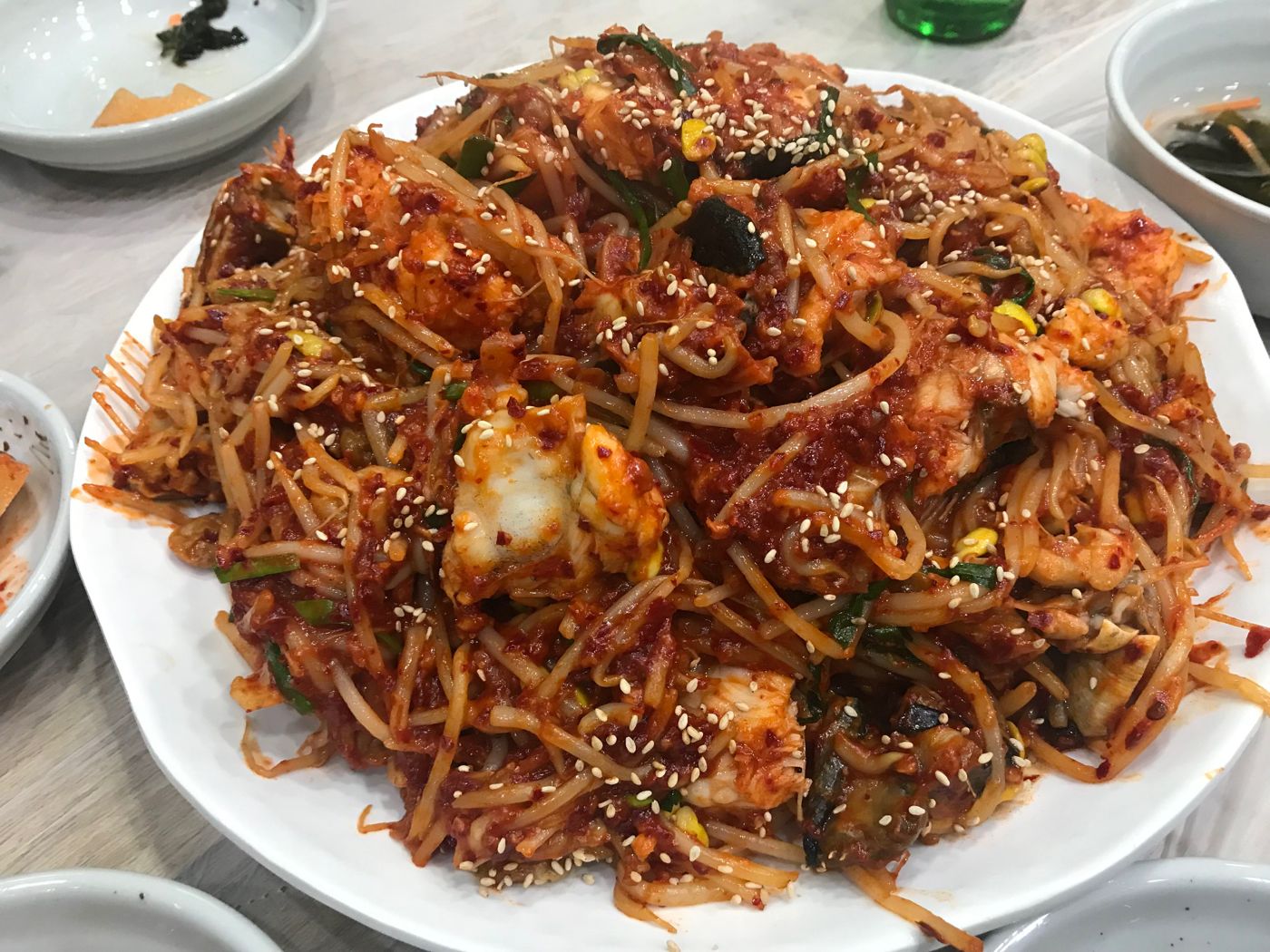 Agu-jjim (Spicy Braised Monkfish)아귀찜Monkfish braised with a mountain of soybean sprouts and minari in a fiery chili sauce thickened with starch — a Masan specialty now eaten across Korea.
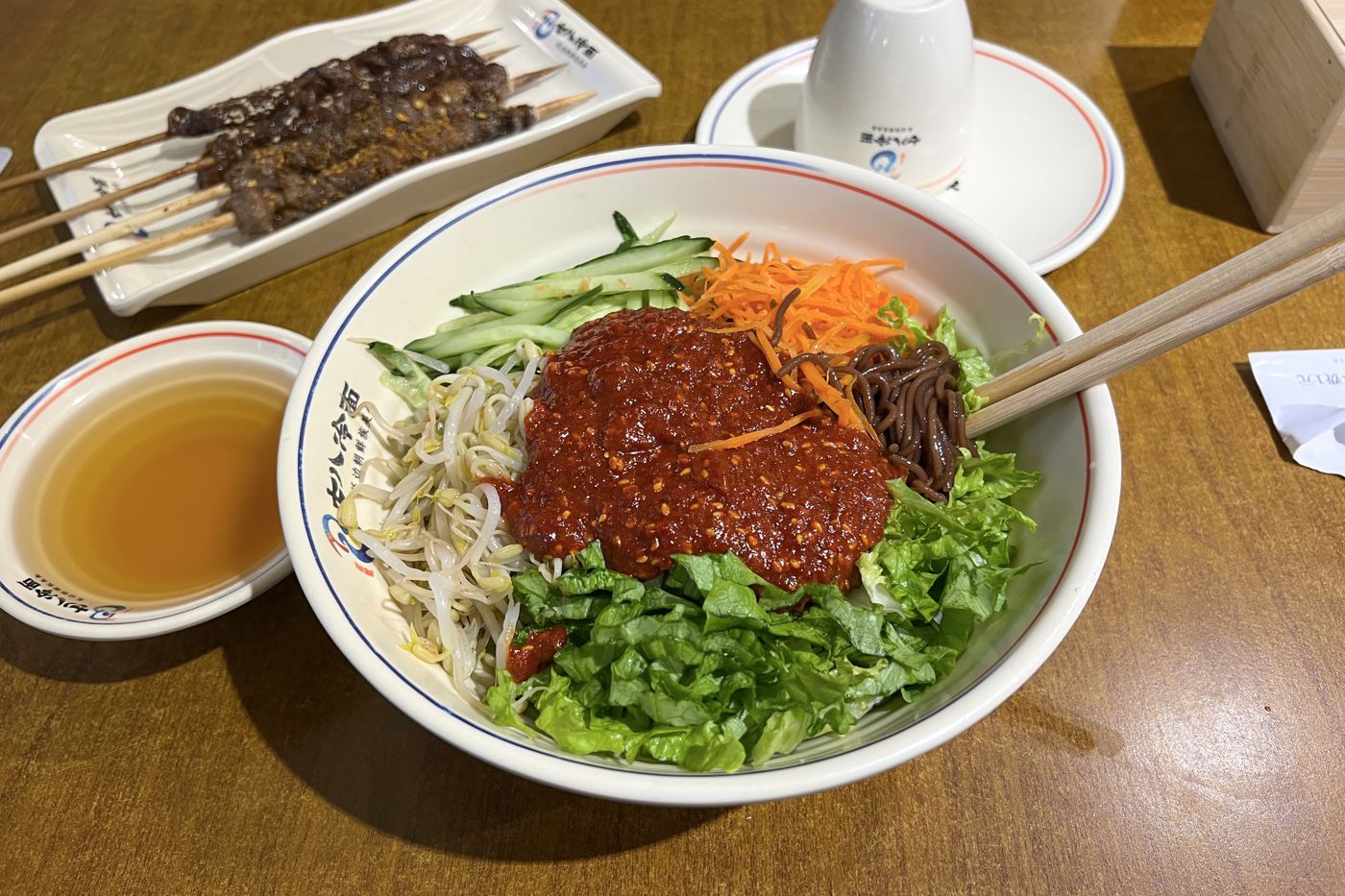 Bibim-naengmyeon (Spicy Mixed Cold Noodles)비빔냉면Chewy starch noodles tossed in a sweet, vinegary chili sauce, topped with cucumber, pear and egg — the Hamheung tradition of hoe-naengmyeon, carried south by refugees.
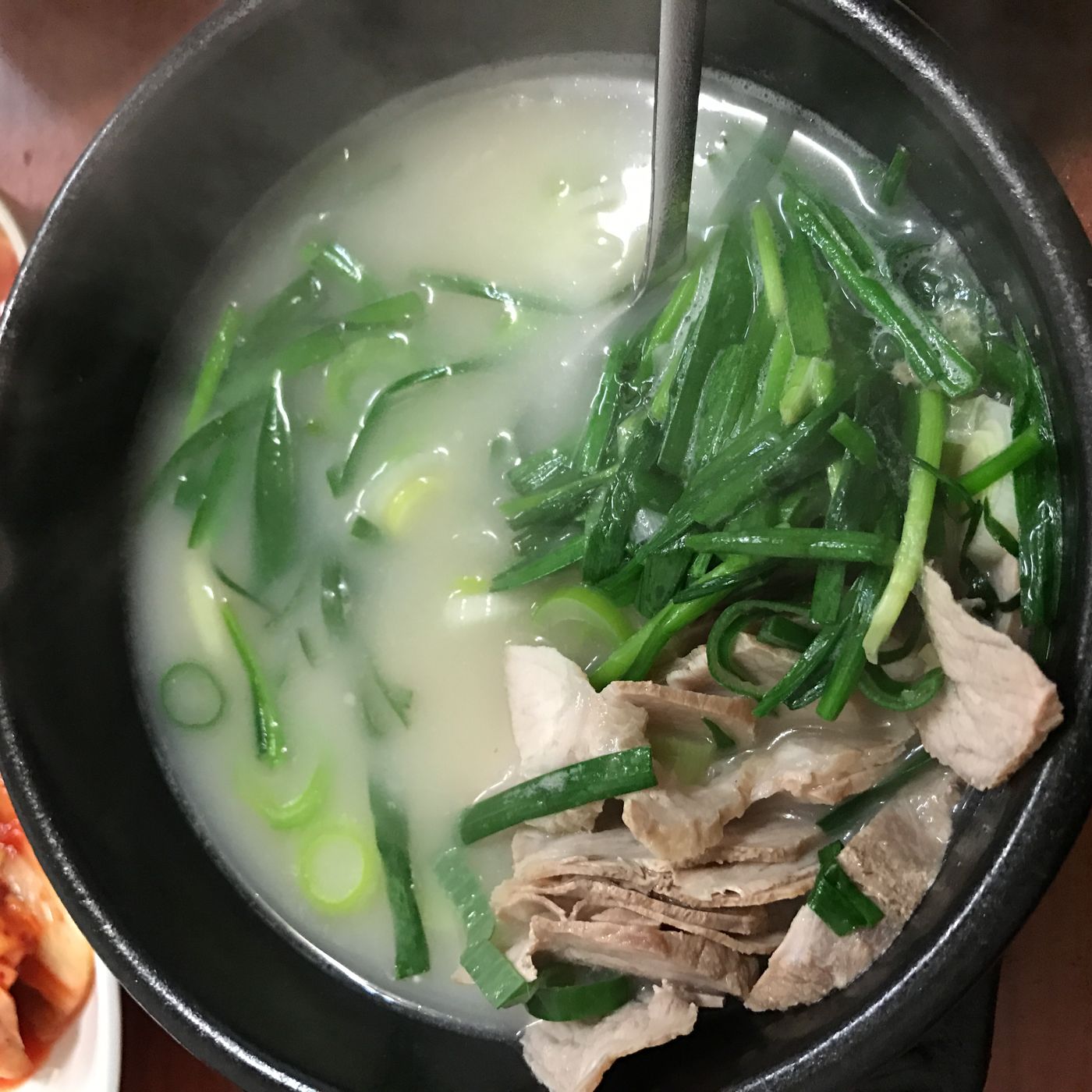 Dwaeji Gukbap (Busan Pork and Rice Soup)돼지국밥Slices of boiled pork in a milky pork-bone broth over rice, seasoned at the table with salted shrimp and garlic chives — Busan's signature everyday bowl.
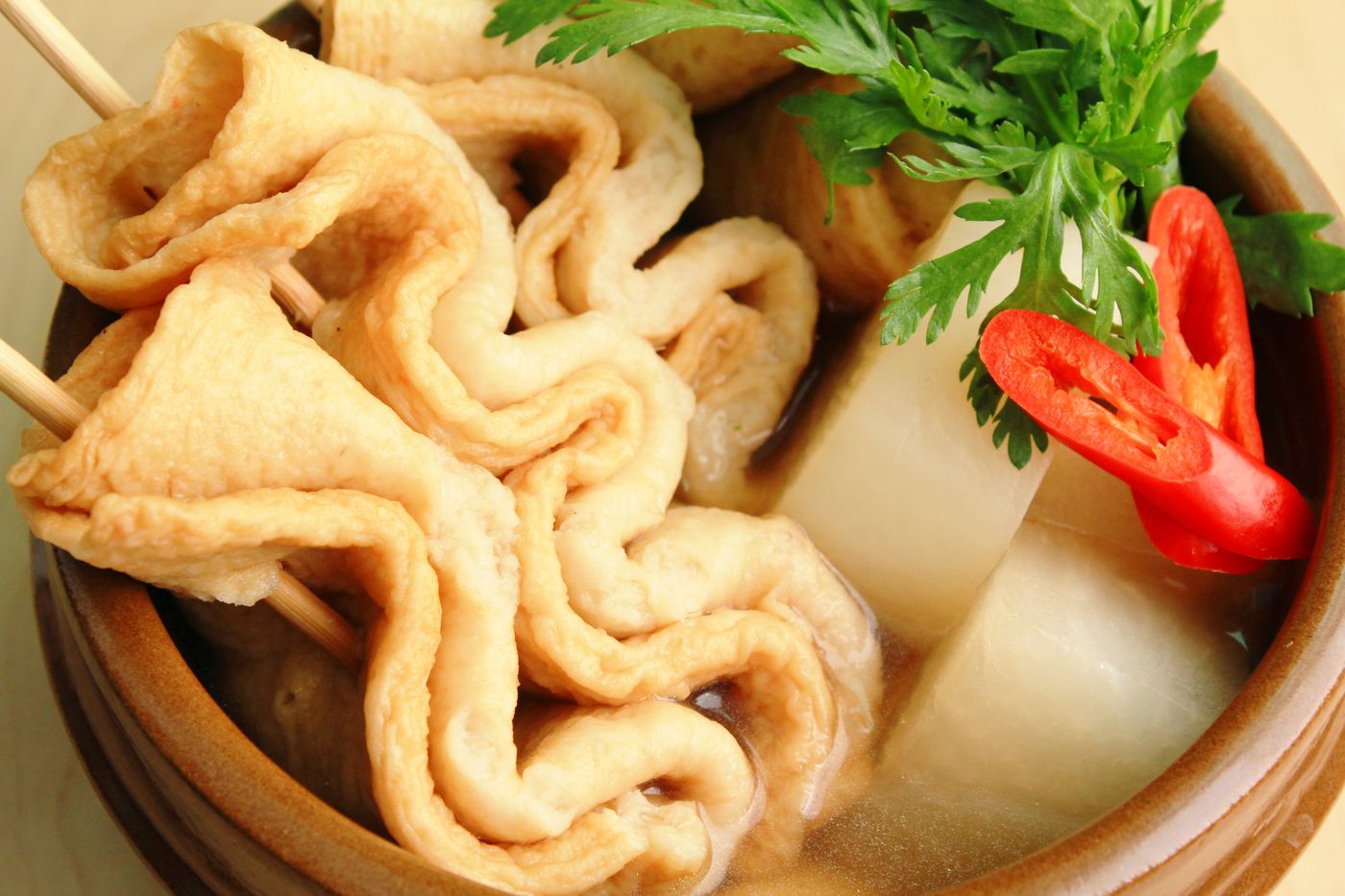 Eomuk Tang (Fish Cake Soup)어묵탕Fish cakes, often threaded on skewers, simmered in a clear anchovy, kelp and radish broth — Busan's winter street-stall soup and a quick home dish.
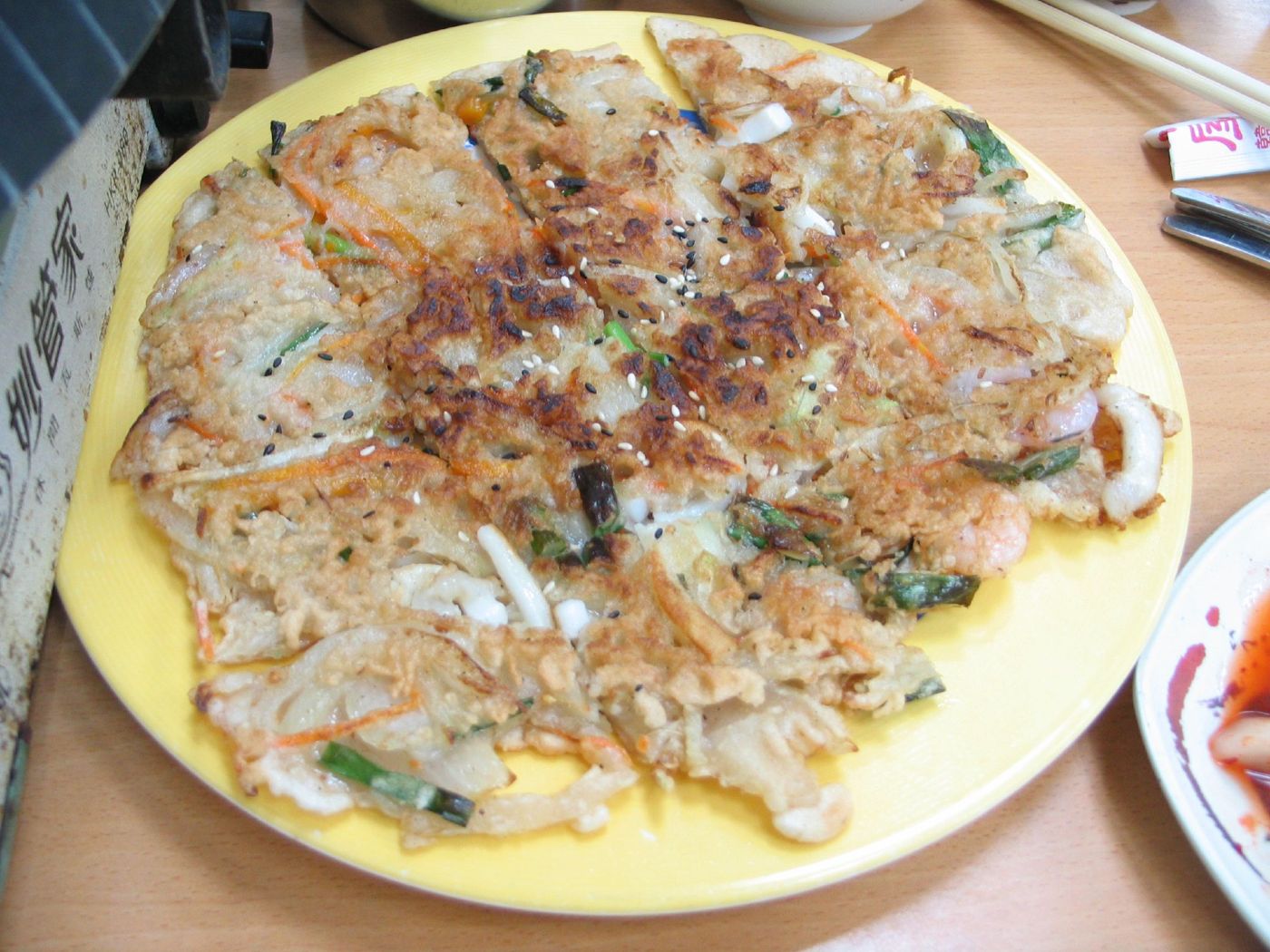 Haemul Pajeon (Seafood and Green Onion Pancake)해물파전Whole green onions bound in a light batter with squid, shrimp and clams, pan-fried until crisp — a generous jeon for sharing, closely tied to Busan's Dongnae.
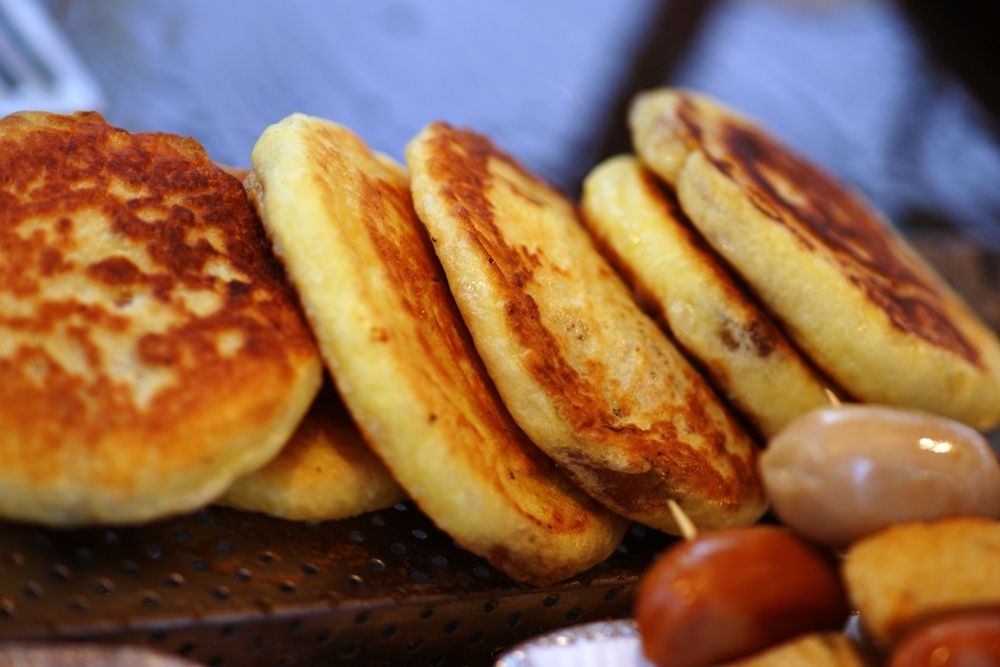 Hotteok (Sweet Filled Pancakes)호떡Yeasted dough wrapped around brown sugar, cinnamon and nuts and pressed flat on an oiled griddle — a winter street snack brought to Korea by Chinese immigrants.
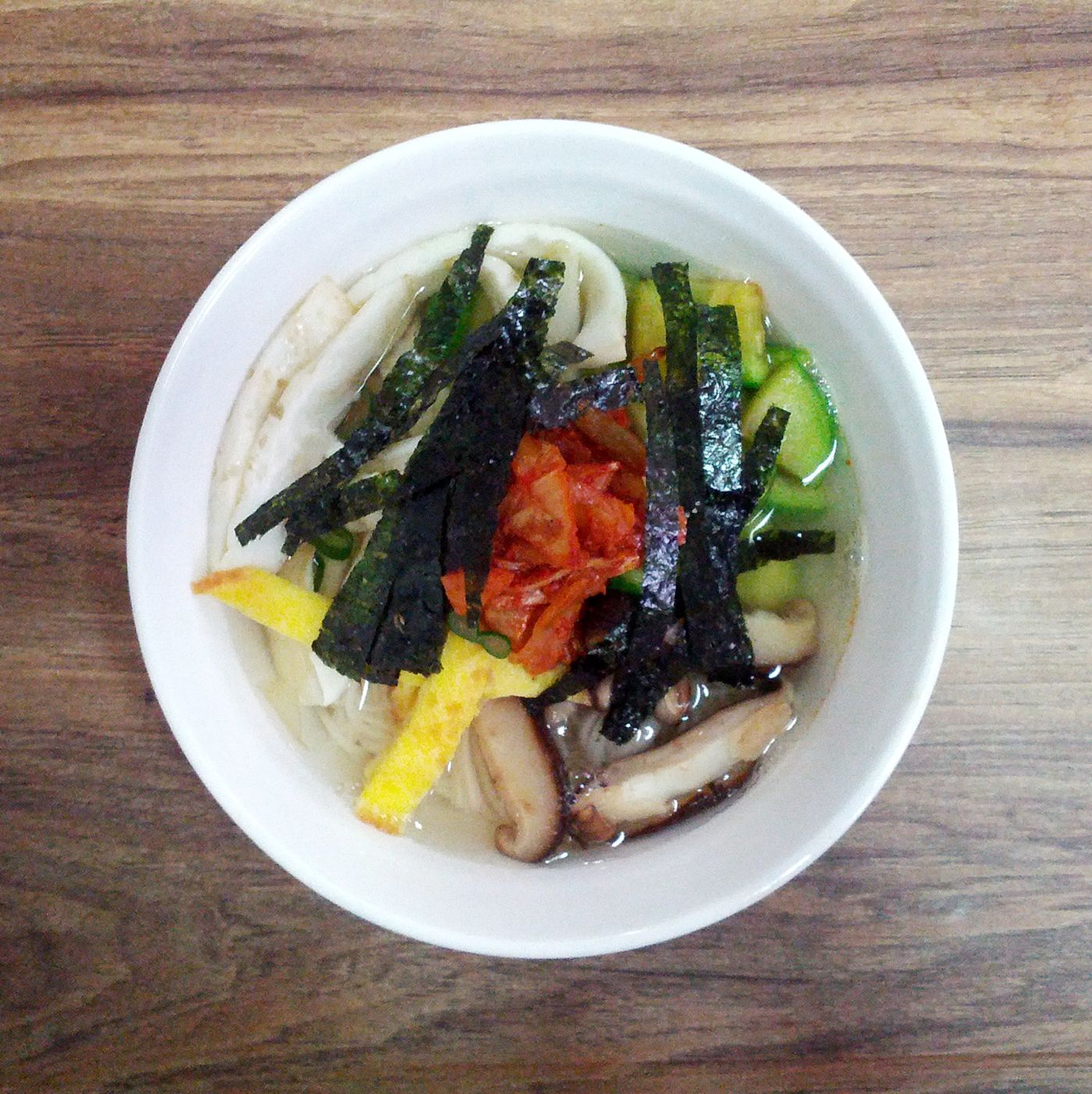 Janchi Guksu (Banquet Noodles)잔치국수Thin wheat noodles in a hot, clear anchovy or beef broth, topped with egg strips, zucchini and kimchi — the long-life noodles served at weddings and birthdays.
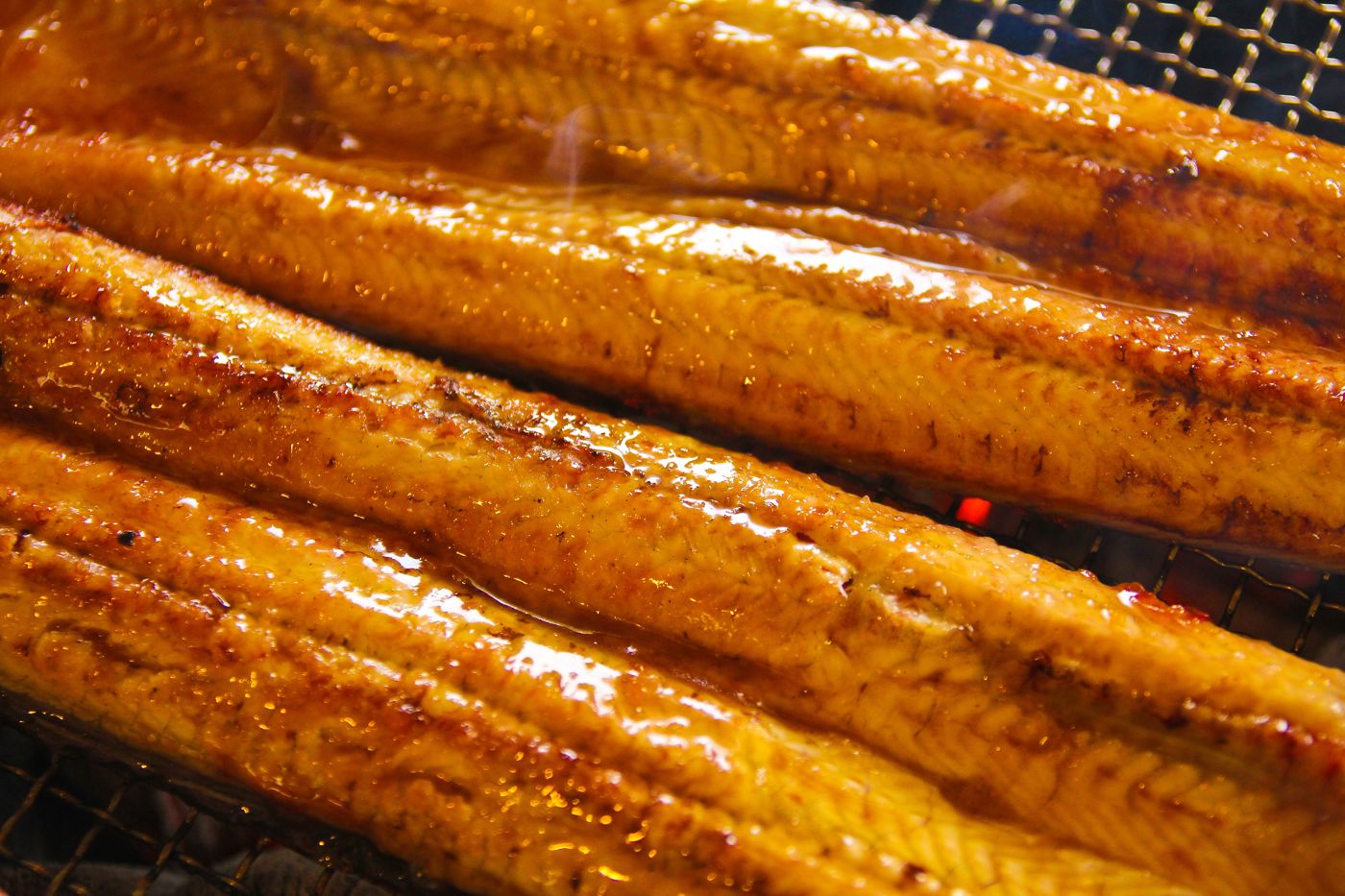 Jangeo-gui (Grilled Eel)장어구이Freshwater eel grilled over a flame, then brushed with a sweet-savory soy and gochujang glaze: a rich summer stamina dish tied to Gochang's pungcheon eel.
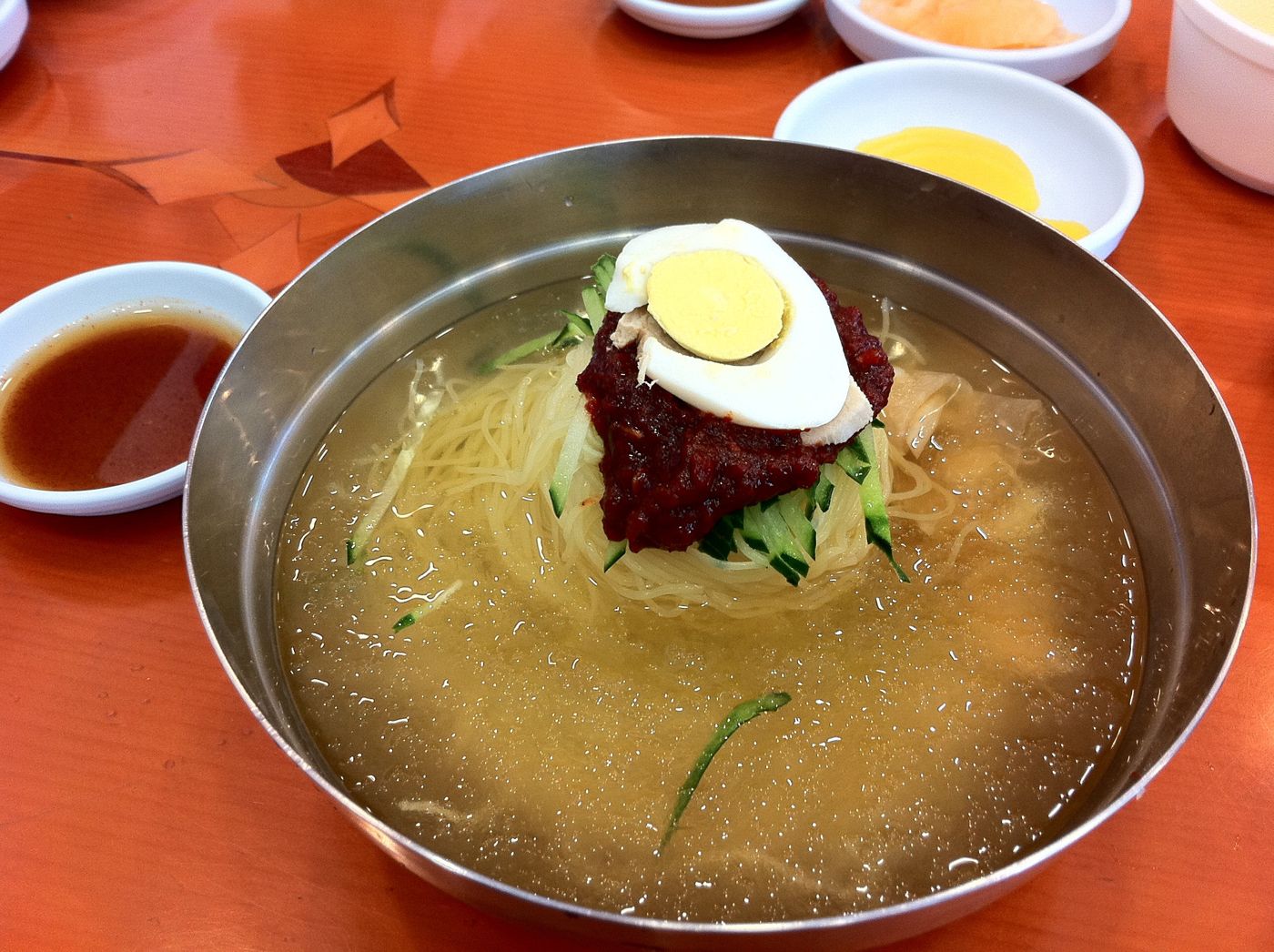 Milmyeon (Busan Wheat Cold Noodles)밀면Chewy wheat-and-starch noodles in an icy, sweet-sour beef broth or tossed in chili paste — Busan's refugee-era answer to northern naengmyeon.
- Miyeok Muchim미역무침Rehydrated wakame seaweed and cucumber in a light sweet-and-sour soy dressing — cool, slippery and refreshing, especially in summer.
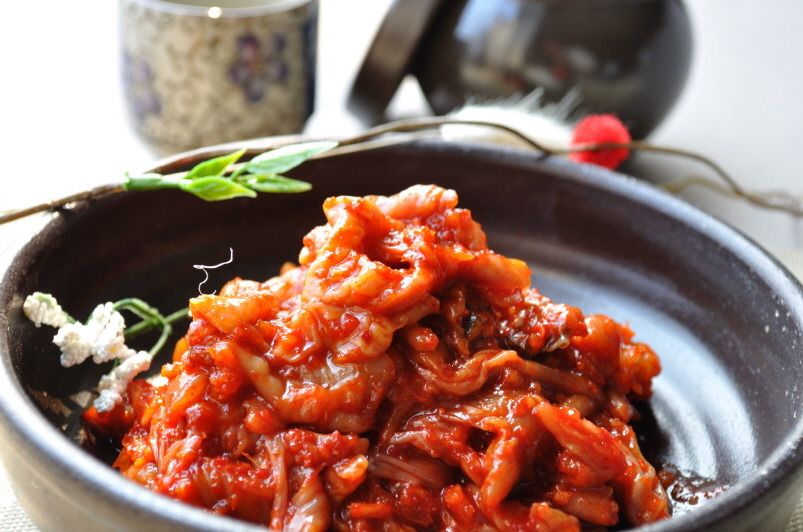 Salted Pollock Tripe창난젓Pollock intestines cured in salt, then cut and dressed with chili, garlic and green onion — a chewy, savory East Sea jeotgal, often mixed with radish.
Sources
- 01Jagalchi Market — VISITKOREA
- 02부산어묵 (Busan Eomuk) — Encyclopedia of Korean Culture
- 03부산밀면 (Busan Milmyeon) — Encyclopedia of Korean Culture
- 04파전 (Pajeon) — Encyclopedia of Korean Culture
- 05Historical Dishes (Local Dining, January 2023) — Korean Culture and Information Service webzine
- 06부산광역시 (Busan) — Encyclopedia of Korean Culture