Ingredient
Fish cake
어묵
Romanization: eomuk
A processed food of ground white fish, salt and starch, shaped into sheets, tubes or balls and then fried, steamed or grilled. Busan made it famous, and stir-fried eomuk is a common banchan.
Flavor
Mildly sweet and savory with a gentle fish flavor and a bouncy, chewy texture; fried types are richer and soak up sauces readily.
Origin & History
Eomuk is made by grinding white-fleshed fish into a paste with a little salt, sugar and starch, shaping it and heating it until it sets. The salt draws out the fish's muscle proteins, which form an elastic gel when heated — the source of eomuk's springy bite. It is also widely called odeng, a name borrowed from Japanese.
The modern product descends from Japanese kamaboko. A Korean interpreter, Yi Pyo, recorded a fish dish he called kamabokot in the 18th-century cookbook Somun saseol after tasting it in Japan, though his version — sliced fish layered with a minced meat and vegetable filling, rolled and boiled — was quite different. Japanese-style fish cake spread during the colonial period, when Japanese-run shops operated in Busan's markets.
After liberation, Korean-owned factories opened in Busan, and the Korean War, which swelled the city with refugees, turned fish cake into a cheap, filling protein. Busan makers have traditionally used small fish such as young croaker and cutlassfish, and the city's premium-brand standard calls for fish to make up at least 70% of the product.
Today eomuk goes into soups and stews, is stir-fried or braised as a side dish such as eomuk-bokkeum, and is added to tteokbokki and gimbap.
Nutrition
| Calories | 169 kcal |
|---|---|
| Protein | 11.44 g |
| Fat | 4.49 g |
| Carbohydrates | 20.69 g |
| Fiber | 0.3 g |
| Sodium | 699 mg |
Notable forProtein (11.4 g) · Selenium (37 µg)
Values copied from the Korean Food Composition Table (Rural Development Administration / National Institute of Crop Science) for this exact food, per 100 g edible portion. Brands vary widely in fish content, starch and salt; check the label. Actual values vary with ingredients, portion size and preparation.
Health Benefits
- A source of protein: Eomuk provides fish protein in an affordable, ready-to-cook form.
- A processed, salty food: Fried fish cake lists about 700 mg of sodium per 100 g in the Korean Food Composition Table, and braising it in soy-based sauce adds more.
- Starch and oil: Many products include a substantial share of starch, and fried types absorb oil, so eomuk is best treated as an occasional side rather than a main protein.
- Allergens: Eomuk contains fish, a major food allergen. Recipes vary by brand and may include other allergens, so read the ingredient list.
Informational, not medical advice. Talk to a qualified professional about your own health and diet.
Dishes with Fish cake
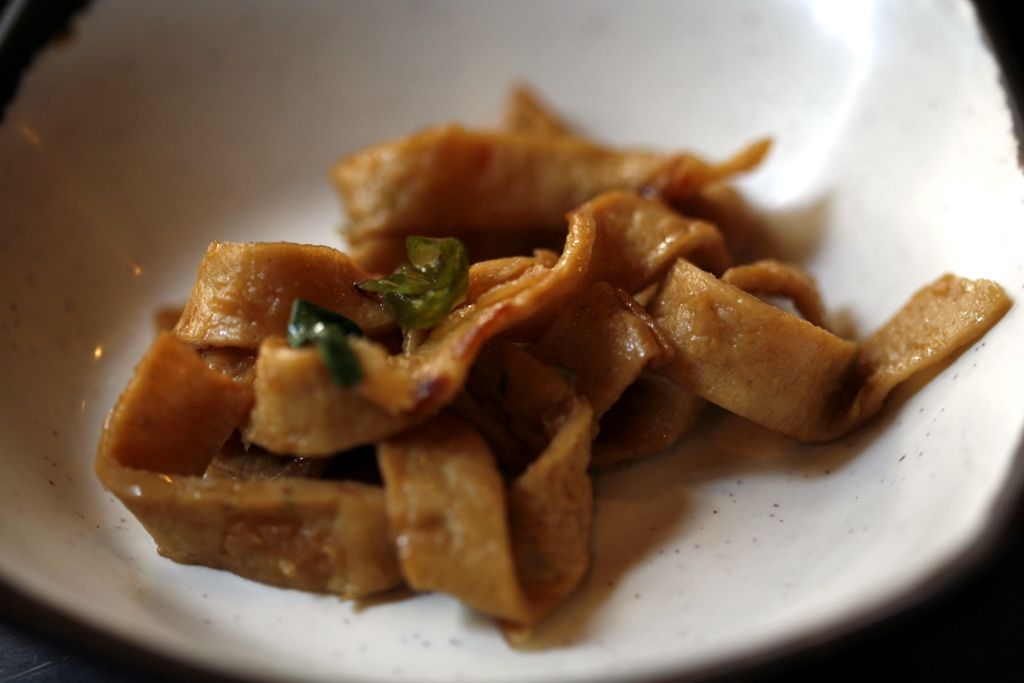 Eomuk Bokkeum어묵볶음Strips of Korean fish cake stir-fried with onion and carrot in a light soy glaze — quick, savory-sweet and one of the most familiar everyday banchan.
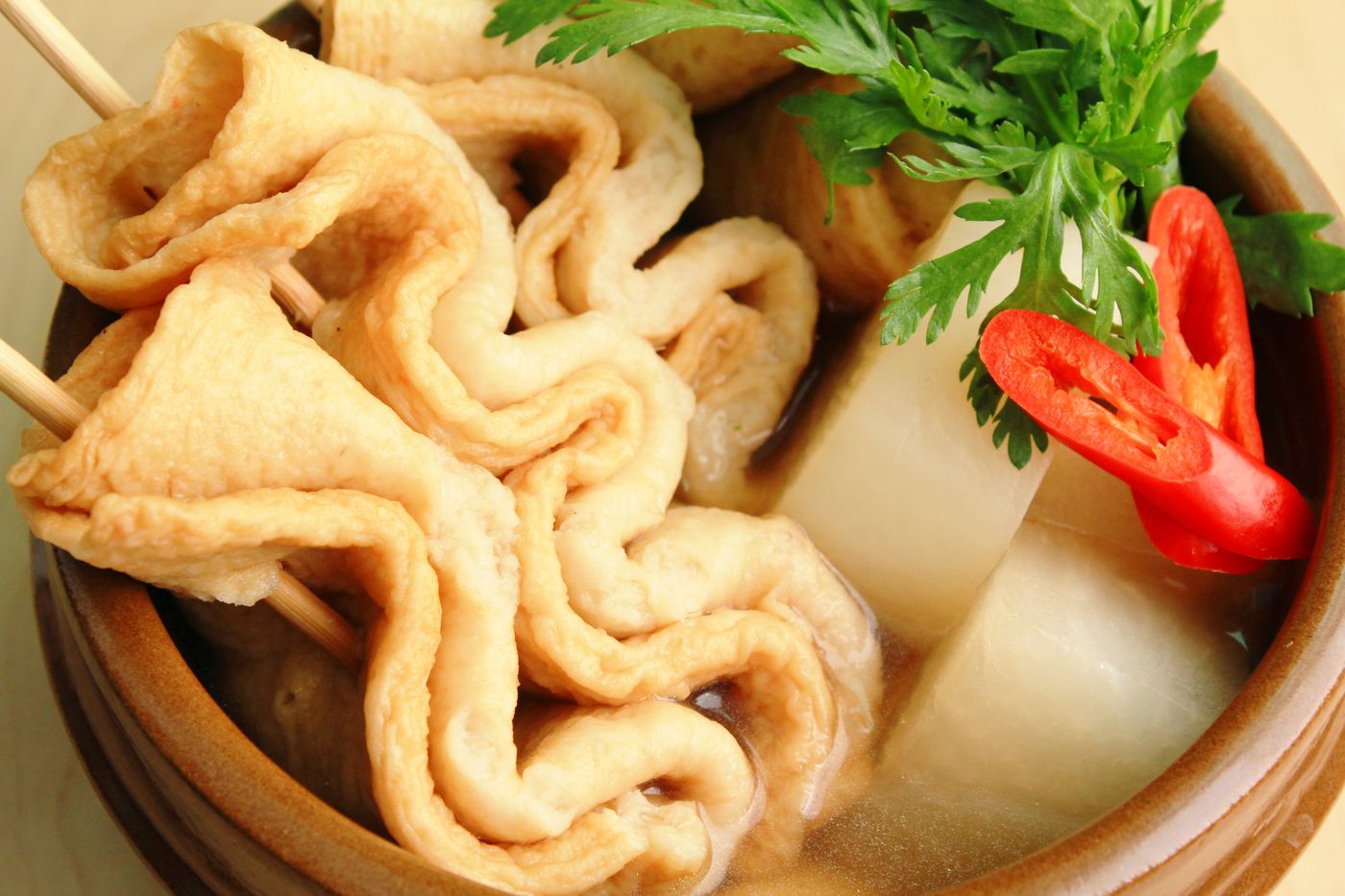 Eomuk Tang (Fish Cake Soup)어묵탕Fish cakes, often threaded on skewers, simmered in a clear anchovy, kelp and radish broth — Busan's winter street-stall soup and a quick home dish.
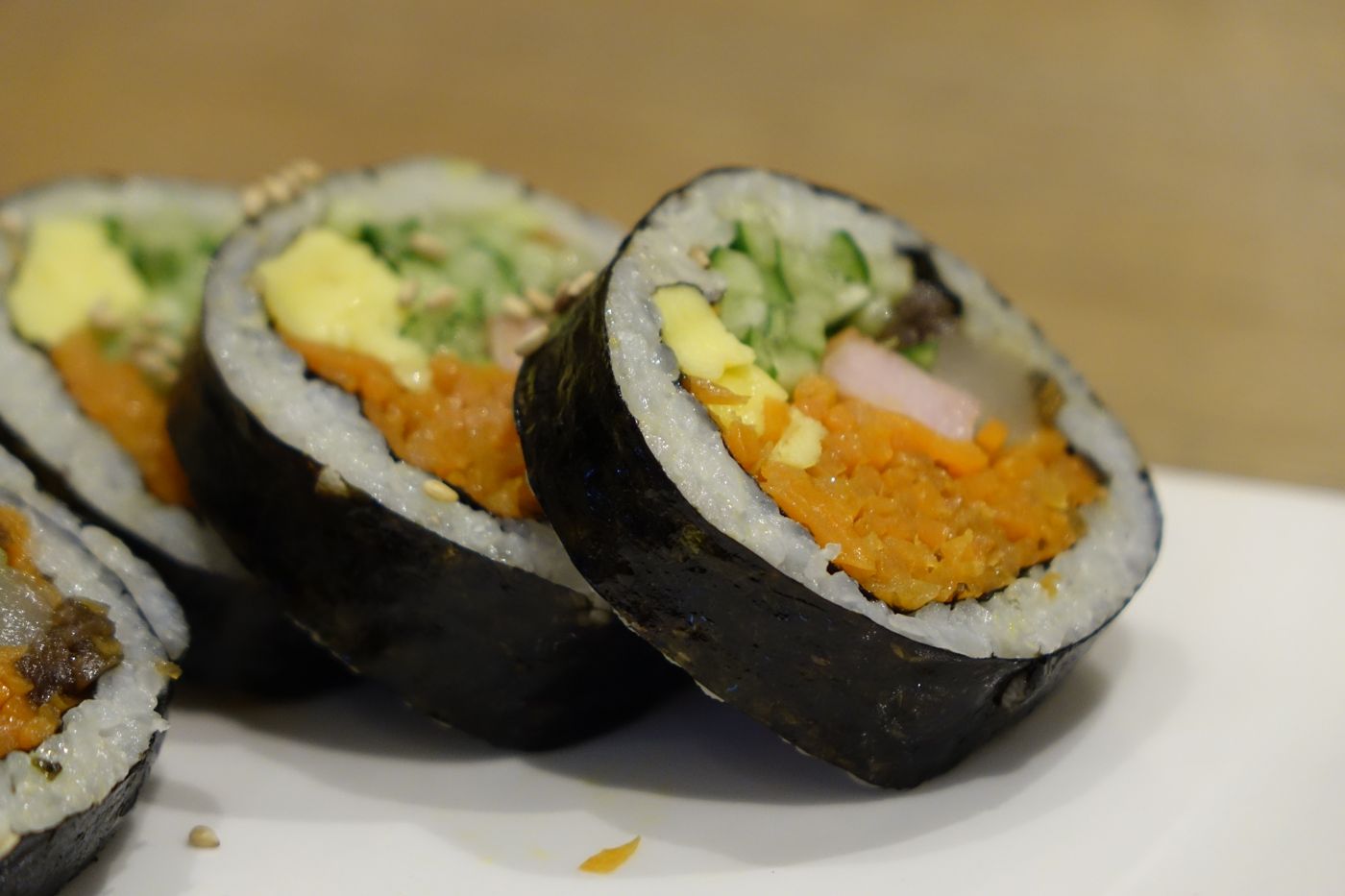 Gimbap (Seaweed Rice Rolls)김밥Rice seasoned with sesame oil and salt, rolled in laver around strips of spinach, egg, carrot and pickled radish, then sliced — Korea's classic picnic and lunchbox food.
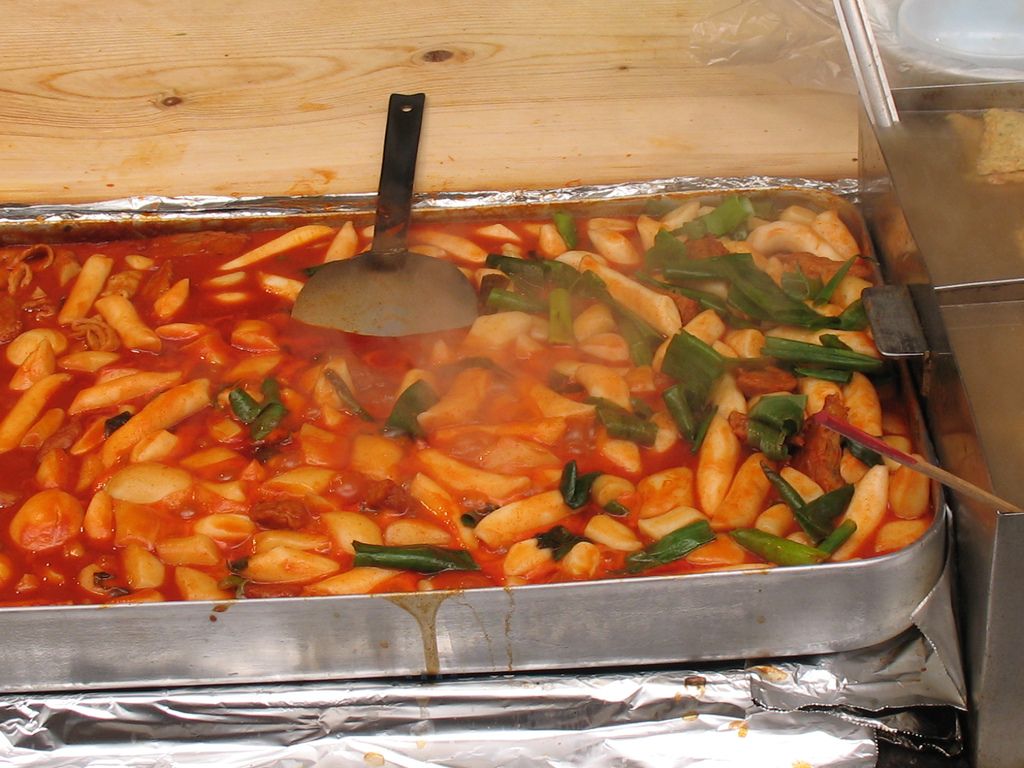 Tteokbokki (Spicy Stir-fried Rice Cakes)떡볶이Chewy rice cakes simmered in a sweet, fiery gochujang sauce with fish cake and green onion — a postwar street snack with roots in a refined soy-sauce court dish.