Ingredient
Mackerel
고등어
Romanization: godeungeo
Korea's everyday oily fish, blue-green and silver with dark wavy stripes. Grilled until the skin blisters or braised with radish and chili, it is one of the most familiar fish on the home table.
Flavor
Rich, oily and deeply savory with a pronounced 'sea' flavor; salted mackerel grills up crisp-skinned and well seasoned, while braising softens its strength with radish, chili and soy.
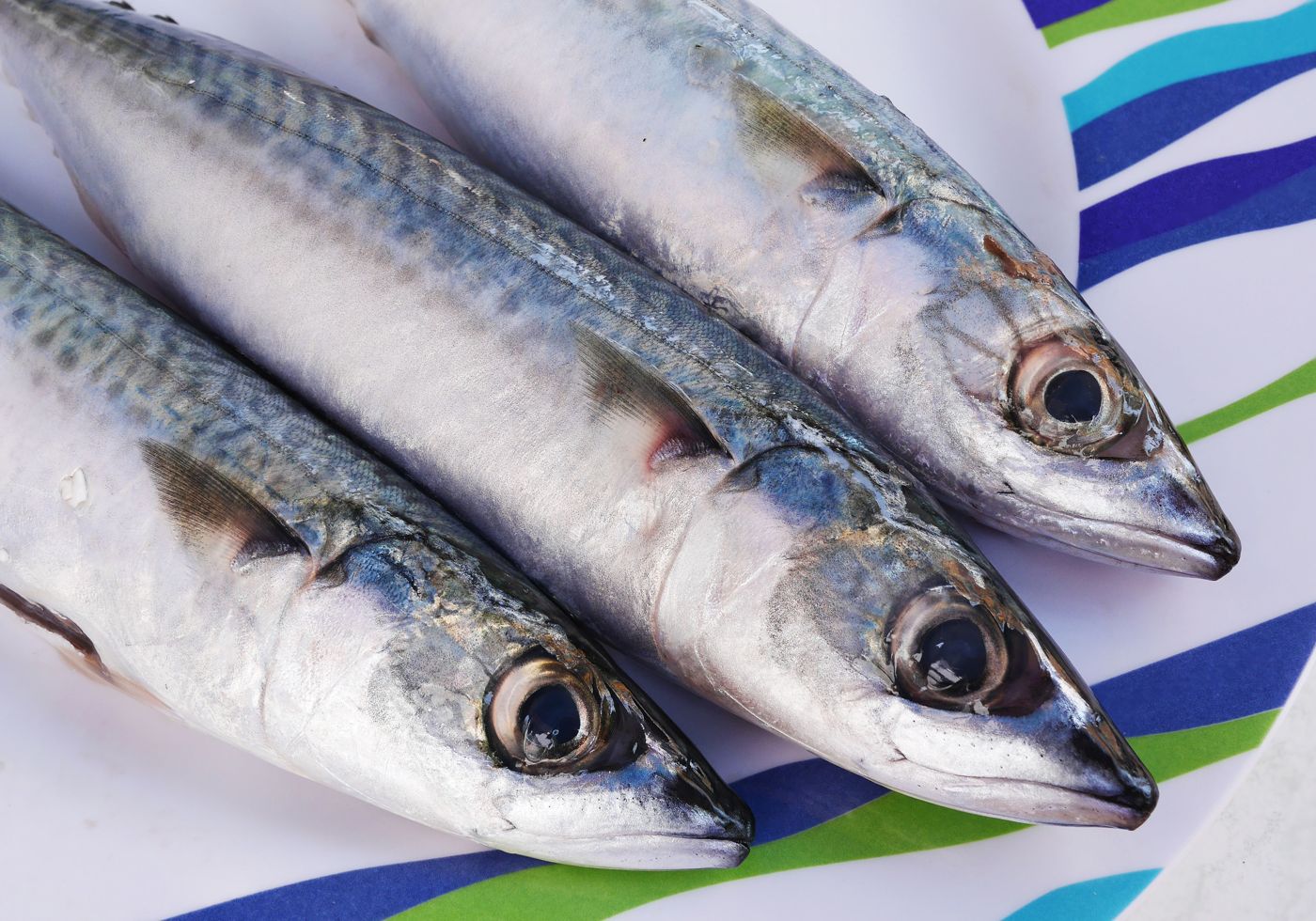 Photo: Petar Milošević, CC BY-SA 4.0, via Wikimedia Commons
Origin & History
Godeungeo is the chub mackerel (Scomber japonicus), a spindle-shaped fish about 40 cm long with a green back marked by black wavy lines and a silvery belly. It prefers water of roughly 10–22 °C and migrates around the peninsula: schools arrive off Jeju in late winter, move north up both the east and west coasts, and return south in autumn.
Mackerel has a long history in Korean waters. The 15th-century geography in the Sejong sillok lists it as a product of Hwanghae and Hamgyeong provinces, and later gazetteers add Gyeongsang, Jeolla and Gangwon. Jeong Yak-jeon's 1814 fish guide Jasan eobo calls it byeongmuneo, gives godeungeo as its common name, and describes fishermen luring it with fires at night, since the fish is drawn to light. In the Joseon period mackerel was split down the back and salted for sale, and its salted guts were prized as jeotgal.
Salting made mackerel a fish of the interior. In Andong, a landlocked city in North Gyeongsang, gan-godeungeo — mackerel gutted, packed with coarse salt, and sold in nested pairs called a son — arrived over days by road from the coast at Yeongdeok or by river up the Nakdong. Once a luxury, it became an everyday and ritual food there; refrigeration lowered its saltiness from the 1970s, and a vacuum-packed Andong brand was launched in 1999.
Fresh or salted mackerel is grilled as godeungeo-gui or braised as godeungeo-jorim, often over radish or aged kimchi, and simmered in stews.
Nutrition
| Calories | 214 kcal |
|---|---|
| Protein | 21.06 g |
| Fat | 13.34 g |
| Carbohydrates | 0 g |
| Fiber | 0 g |
| Sodium | 25 mg |
Notable forOmega-3 fats (2.96 g, incl. 2.06 g DHA) · Vitamin B12 (11 µg) · Vitamin D (2.1 µg)
Values copied from the Korean Food Composition Table (Rural Development Administration / National Institute of Crop Science) for this exact food, per 100 g edible portion. Salted mackerel is much higher in sodium; the same table's 'Mackerel, Salted' entry lists 340 mg per 100 g, and traditionally salted fish can be far saltier. Actual values vary with ingredients, portion size and preparation.
Health Benefits
- Omega-3 fats: Mackerel is an oily fish, and the Korean Food Composition Table lists nearly 3 g of omega-3 fatty acids per 100 g of raw fish, most of it DHA, along with protein and vitamin B12.
- A lower-mercury choice: The FDA and EPA list Pacific chub mackerel — the species sold as godeungeo — among their 'Best Choices' for low mercury. (King mackerel, a different fish, is on their list to avoid.)
- Salt in salted mackerel: Gan-godeungeo and other salted fish add sodium, and braising sauces add more; rinsing and portion size matter.
- Fish allergy: Fish is a major food allergen, and fish broths and sauces carry the same allergen.
Informational, not medical advice. Talk to a qualified professional about your own health and diet.
Dishes with Mackerel
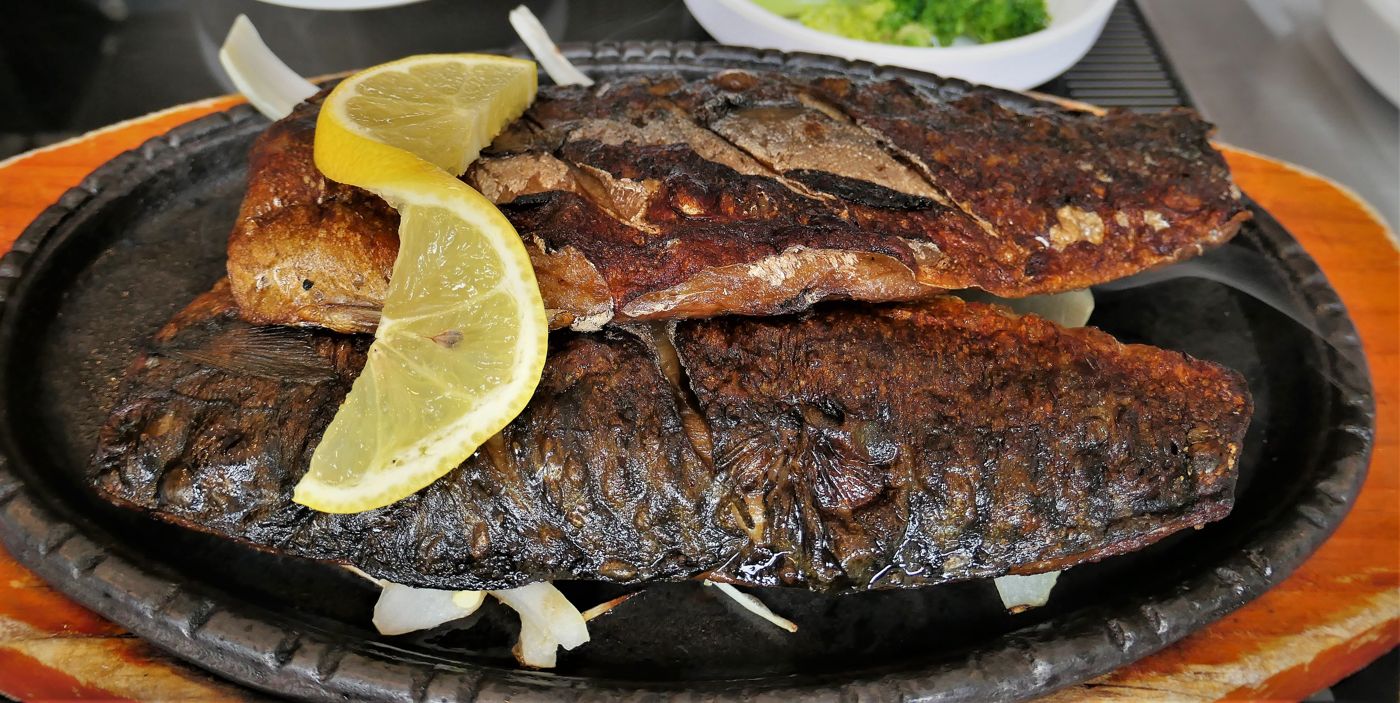 Godeungeo-gui (Grilled Mackerel)고등어구이Salted mackerel grilled or pan-fried until the skin crackles and the rich flesh flakes — one of the most common fish dishes on the Korean home table.
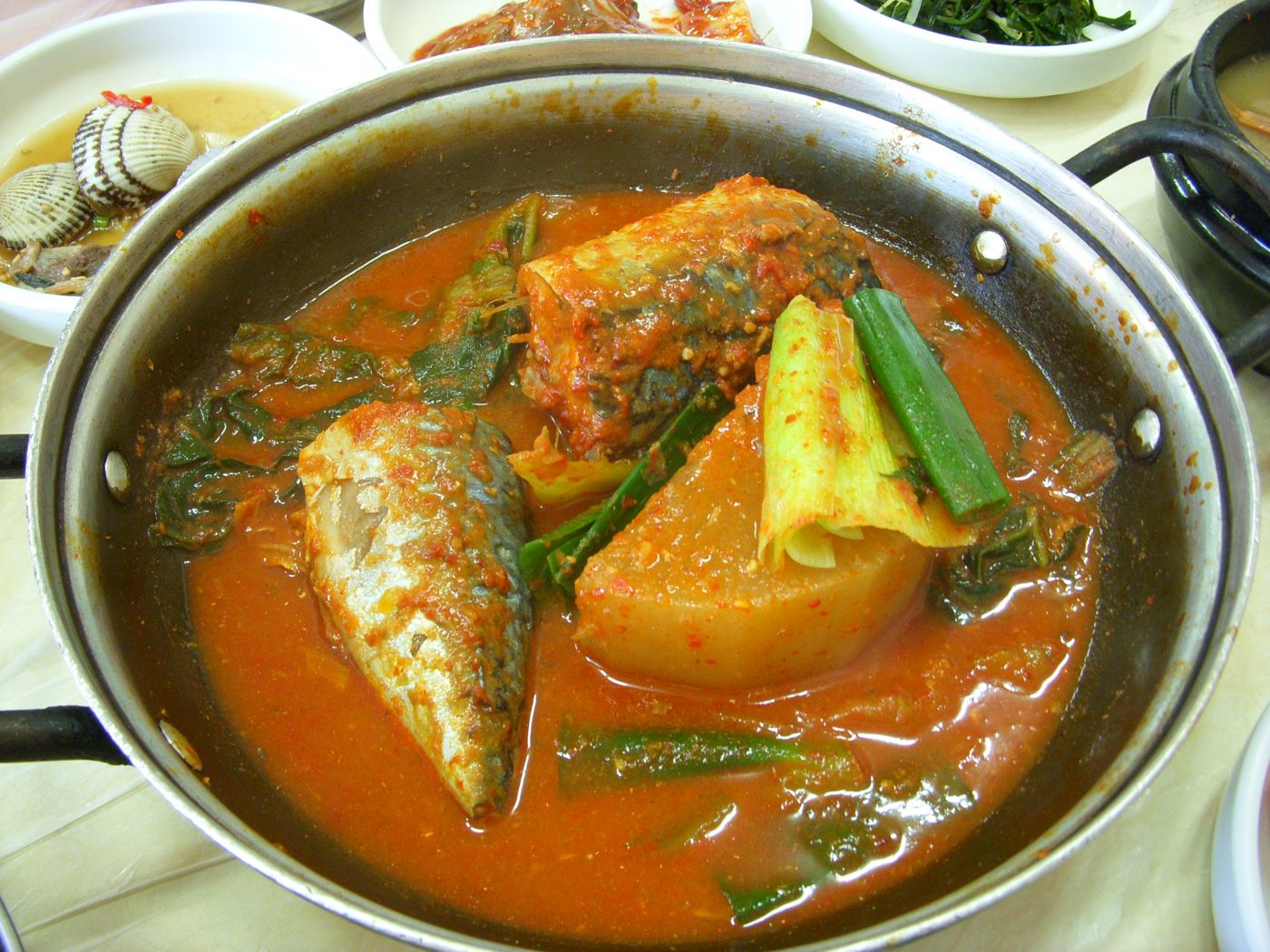 Godeungeo Jorim고등어조림Mackerel braised on a bed of Korean radish in a spicy soy and chili sauce — a warming, rice-friendly dish where the radish is often the best part.
Sources
- 01고등어 (Mackerel) — Encyclopedia of Korean Culture
- 02안동간고등어 (Andong salted mackerel) — Encyclopedia of Korean Culture
- 03Korean Food Composition Table — Mackerel, Southern ocean of Korea, Raw
- 04Advice about Eating Fish — U.S. Food and Drug Administration
- 05Food Allergies — U.S. Food and Drug Administration