Techniques
Jeon: Pan-Frying in Flour and Egg
전
Thin slices dusted in flour, dipped in egg and fried gently in oil: the method behind hobak-jeon and the jeon platters of Korean holidays.
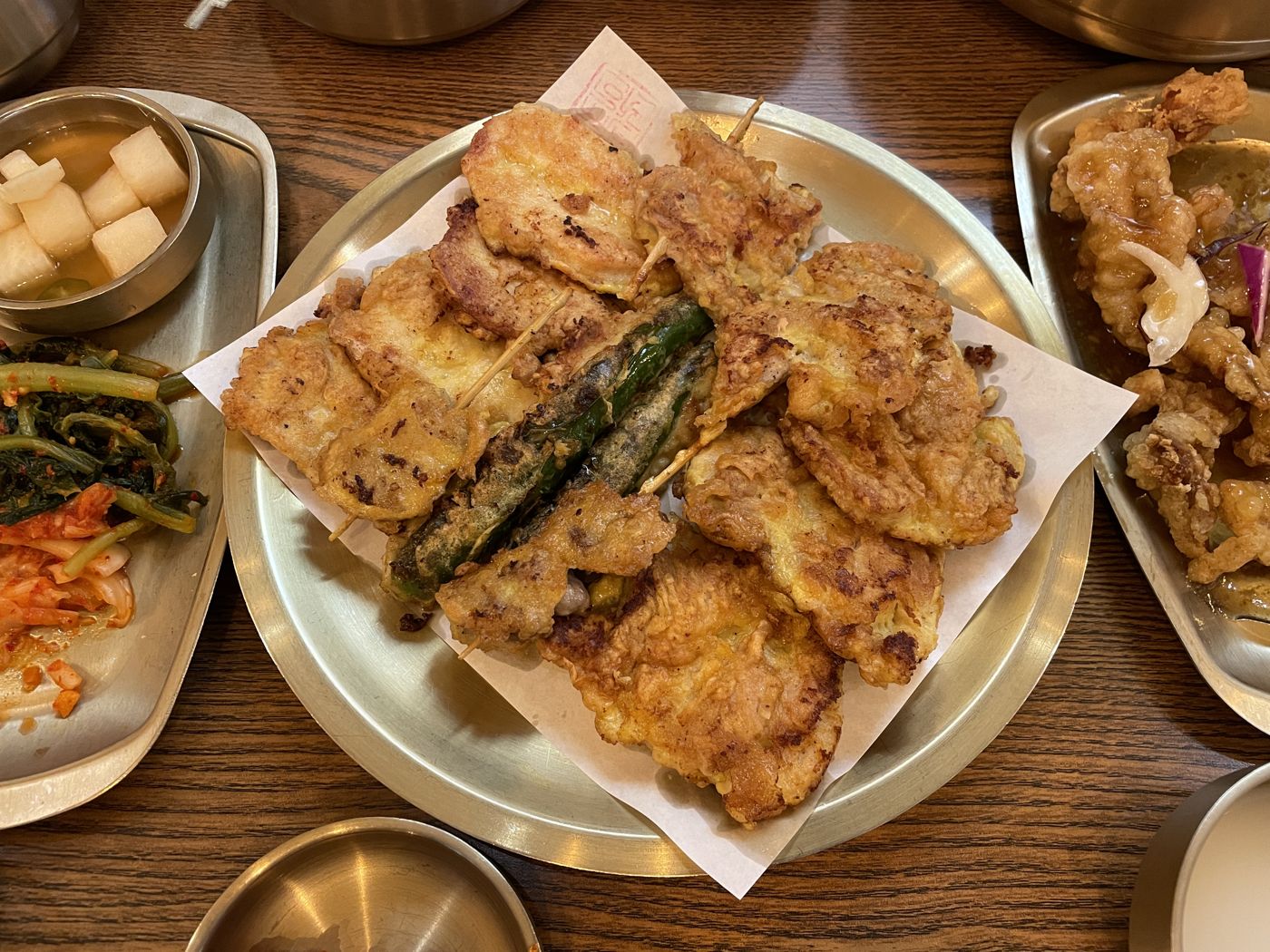 Photo: Jo Hanshin, CC0, via Wikimedia Commons
Jeon are thin pieces of fish, meat or vegetables coated in flour and egg and pan-fried in oil. The Encyclopedia of Korean Culture lists several older names for the same food: jeonyueo and jeonyuhwa in the royal court, and jeonya or jijimgae in everyday speech. When jeon were arranged on an ancestral-rite table they were called gannam. Jeon are served as banchan, as a course at feasts, with drinks, and in large quantities for holidays and jesa rites.
The basic method
- Slice thin and evenly. The encyclopedia emphasizes thin slices. Jeon cook quickly, and an even thickness means the inside is done by the time the coating sets. Zucchini and lotus root are cut into rounds; fish is cut into thin fillets; meat is sliced or minced into small patties.
- Season lightly. Sprinkle with salt (and often white pepper). With watery vegetables such as zucchini, a brief salting draws out surface moisture; pat the slices dry before coating.
- Dust with flour. A thin, even layer of flour gives the egg something to grip and absorbs surface moisture. Shake off the excess so the coating stays delicate.
- Dip in beaten egg. Season the egg with a pinch of salt. Let excess drip off.
- Fry gently. Heat a skillet over medium-low heat with a generous film of oil. The encyclopedia explains why: egg sets at fairly low temperatures and scorches easily, so moderate heat and ample oil keep the coating golden rather than brown. Fry until the underside is set and lightly colored, turn once, and finish the second side.
- Drain and serve. Rest the jeon briefly on a rack or paper, and serve warm with soy sauce or a vinegar-soy dipping sauce (chogajang).
Why the coating matters
The flour-and-egg jacket protects delicate fish and vegetables from direct heat, keeps them moist inside and gives jeon their characteristic soft, golden surface. It also lets jeon hold well at room temperature, which matters on holiday tables where dozens are fried in advance.
Common jeon
- Hobak-jeon: rounds of Korean zucchini, one of the simplest and most common vegetable jeon.
- Kimchi-jeon: chopped, well-fermented kimchi mixed into a flour batter and fried as a pancake. This batter style, sometimes called buchimgae, is closely related to jeon but mixes the ingredients into the batter rather than coating individual pieces.
- Fish jeon made with white fish such as pollock or cod, and meatball-style jeon, are standard on holiday platters.
The encyclopedia lists a wide range of other ingredients: shellfish such as oysters and clams; vegetables including eggplant, green onion, peppers, lotus root, bellflower root and tofu; and, for springtime hwajeon, edible flowers such as azalea pressed onto small rice-flour cakes.
Jeon and Korean rituals
Jeon have a fixed place on the ancestral-rite table. The encyclopedia notes that the name gannam referred to the dish's position in ritual table arrangements, and records from 19th-century sources such as Siui Jeonseo document its ceremonial use. Frying stacks of jeon remains a defining task of Seollal and Chuseok preparations in many households.
Related techniques
Rolled omelet, gyeran-mari, uses the same low, patient heat. For high-heat cooking with little oil, see stir-frying.
Tips
- Fry a test piece first to judge the heat; adjust before cooking the whole batch.
- Wipe out browned bits of egg between batches so they do not stick to later pieces.
- Jeon are richer in fat than most banchan; draining well and serving with plain vegetable sides keeps the meal balanced.
Dishes using this technique
- Buchu Jeon (Garlic Chive Pancake)부추전Fragrant garlic chives held together by a thin flour batter and fried until crisp — one of the quickest and most common jeon in Korean homes.
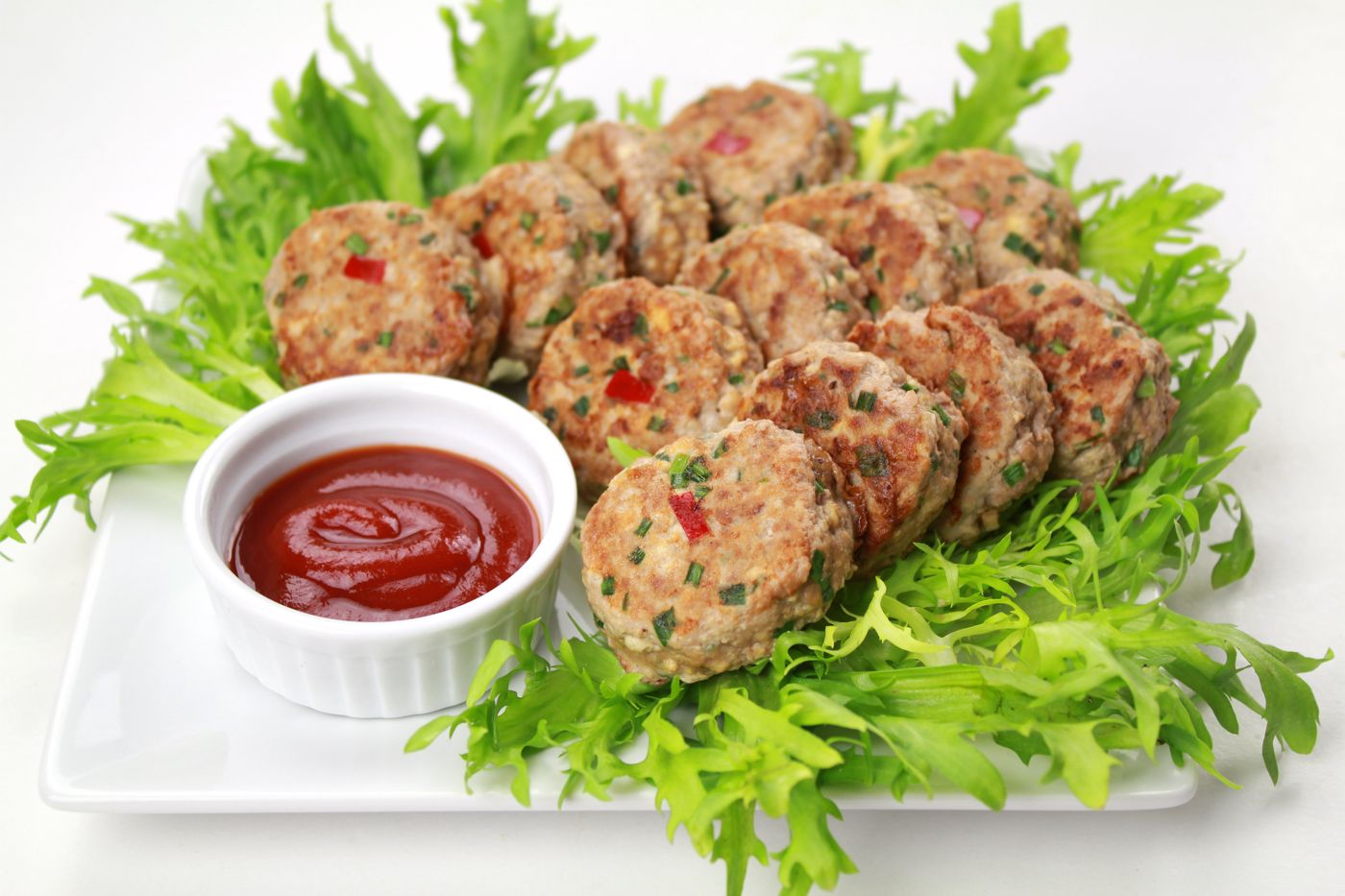 Donggeurang-ttaeng (Meat and Tofu Patties)동그랑땡Coin-sized patties of minced pork or beef and mashed tofu, dipped in flour and egg and pan-fried — a fixture of holiday jeon platters and lunchboxes.
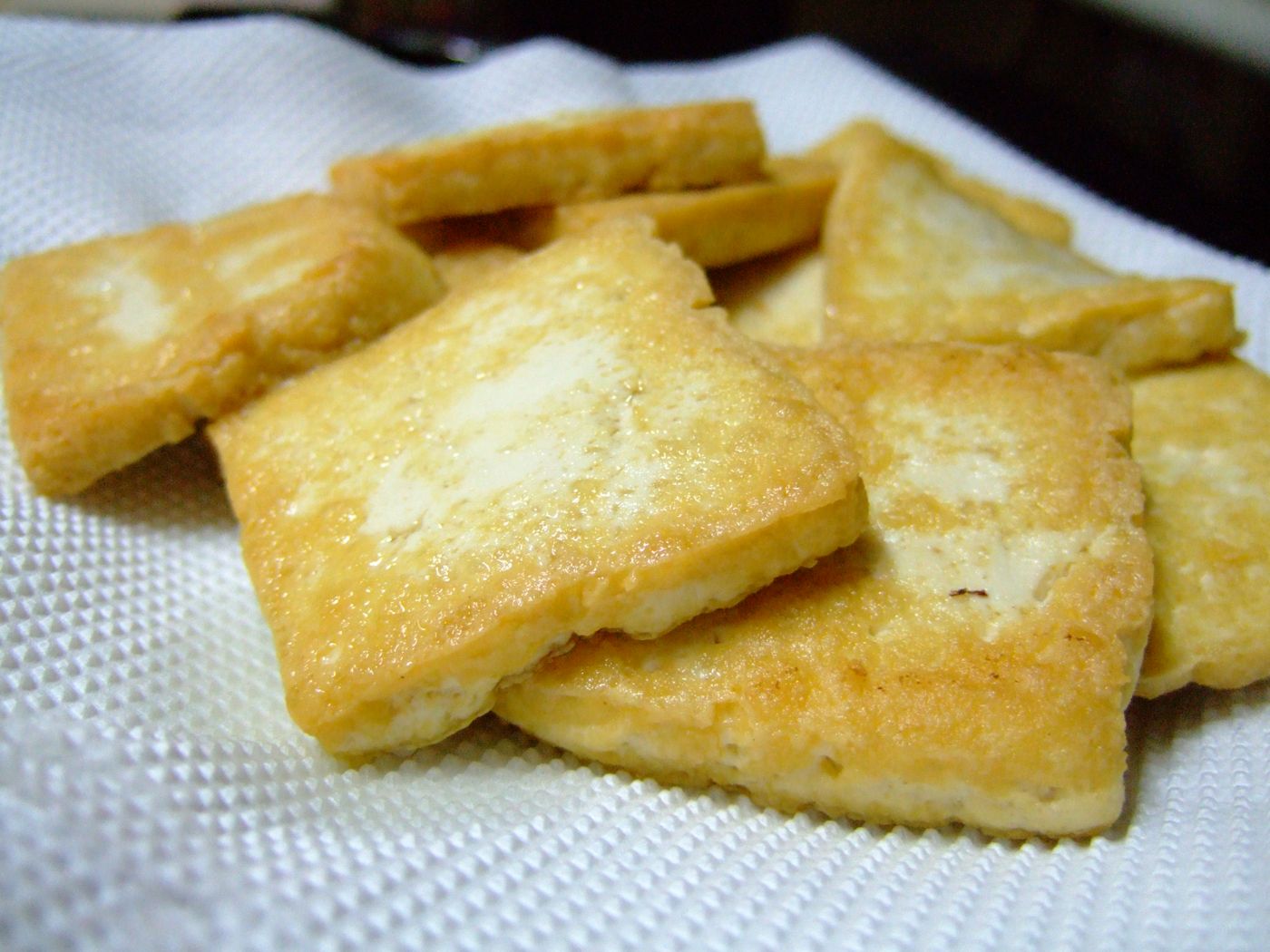 Dubu Buchim (Pan-Fried Tofu with Seasoning Sauce)두부부침Thick slices of firm tofu pan-fried until golden on both sides and spooned with a soy, chili and green-onion sauce — one of the simplest and most loved home banchan.
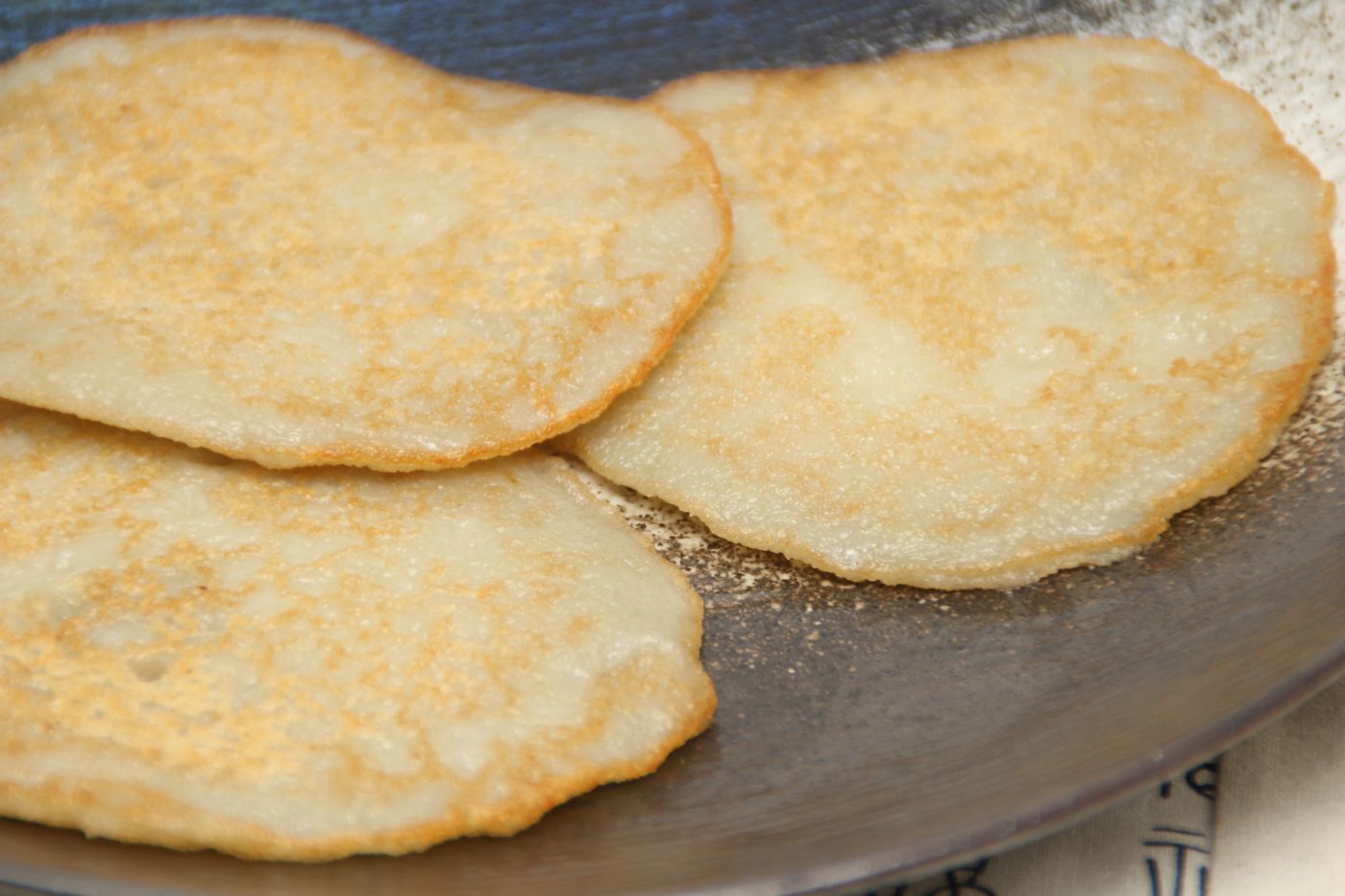 Gamja Jeon (Potato Pancake)감자전Finely grated potato, bound only by its own starch, pan-fried into crisp-edged, chewy rounds — a simple Gangwon-style jeon.
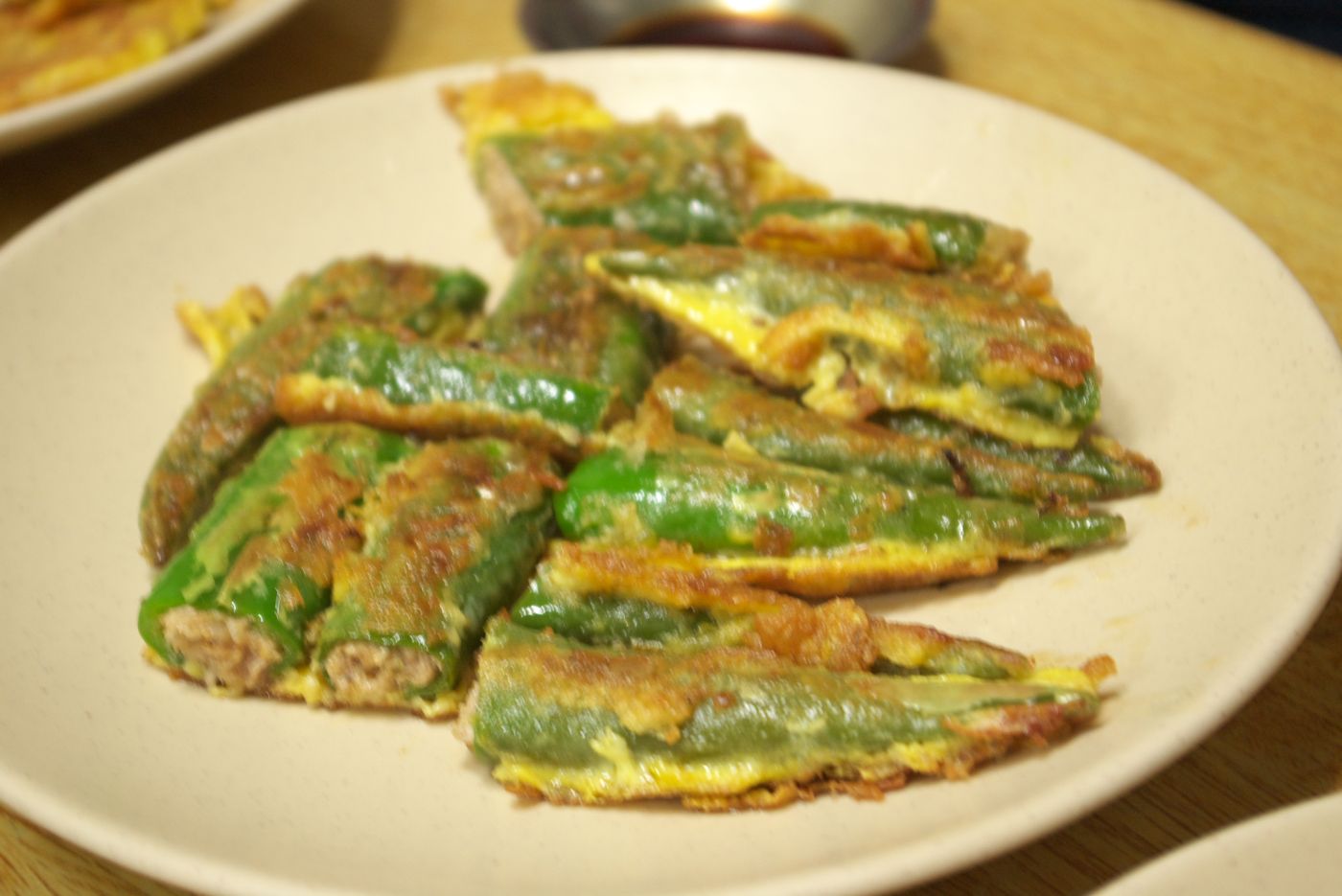 Gochu-jeon (Stuffed Green Chili Peppers)고추전Mild green chili peppers split, filled with seasoned meat and tofu, then coated in flour and egg and pan-fried — a bright green, gently spicy jeon.
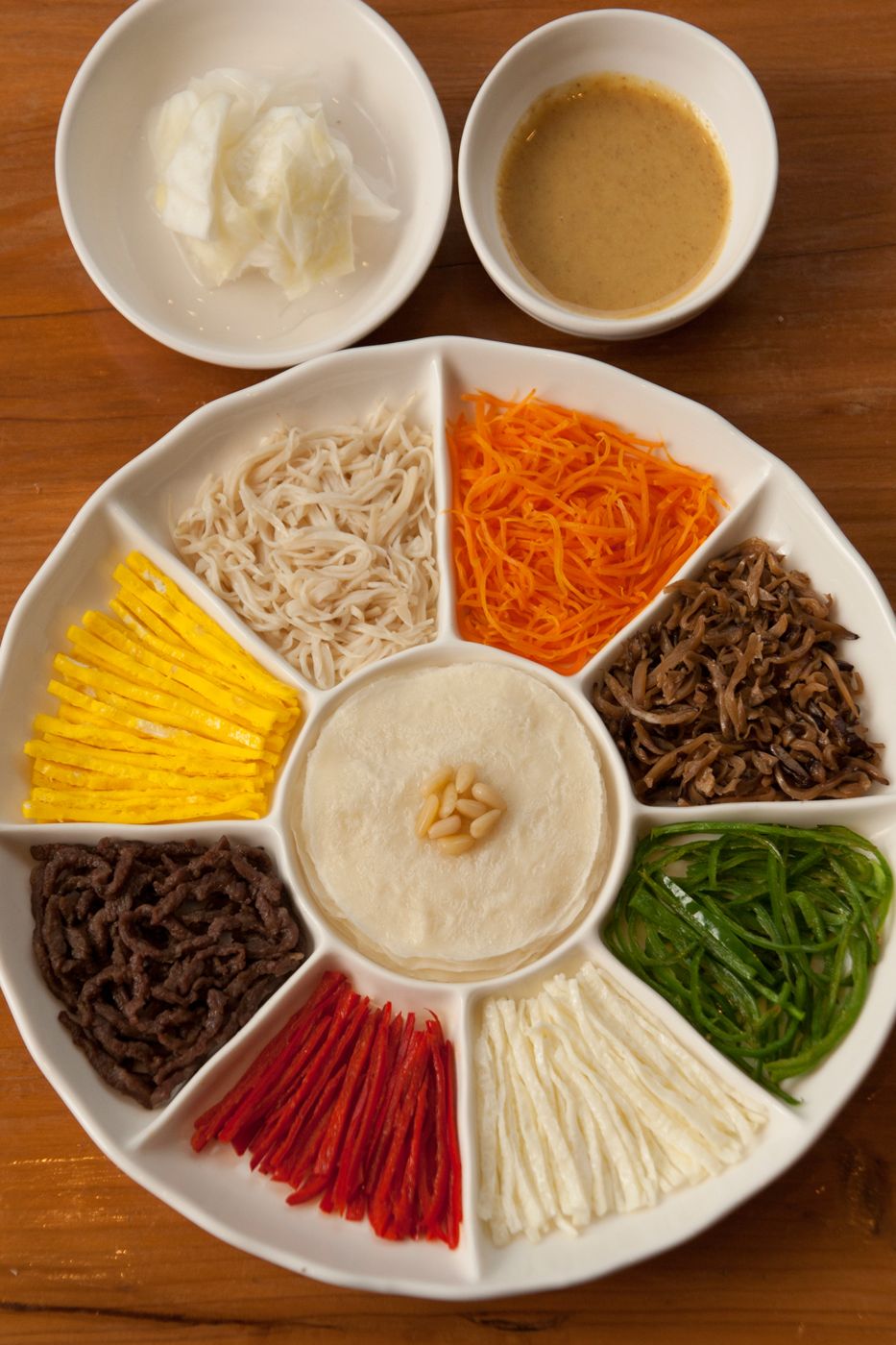 Gujeolpan (Platter of Nine Delicacies)구절판Eight finely cut fillings arranged by color around a stack of paper-thin crepes in a nine-compartment dish, wrapped at the table — an elegant banquet dish.
- Gul-jeon (Pan-Fried Oysters)굴전Plump oysters dusted with flour, dipped in beaten egg and pan-fried until golden: a briny, tender jeon for banquet tables and everyday banchan.
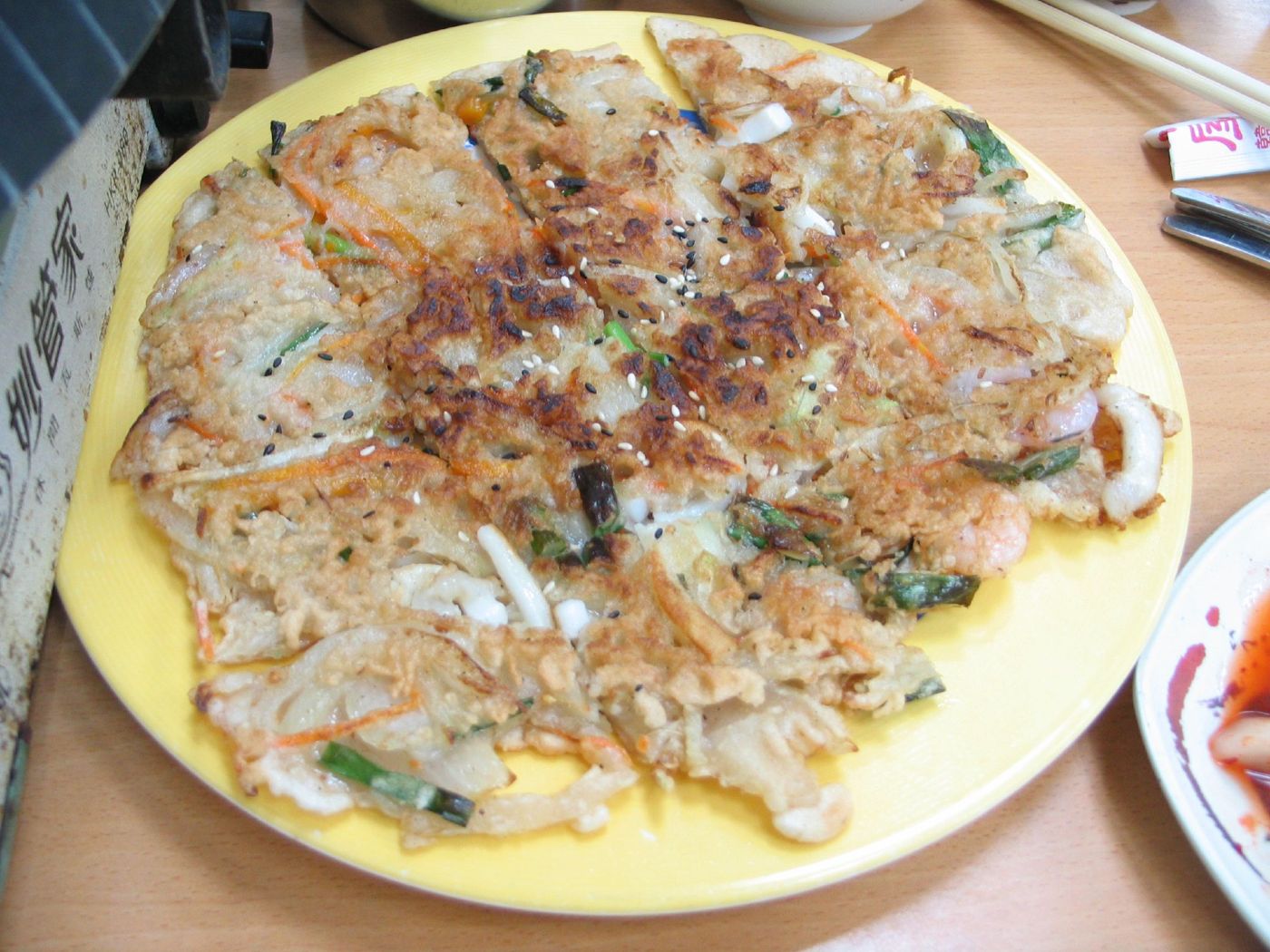 Haemul Pajeon (Seafood and Green Onion Pancake)해물파전Whole green onions bound in a light batter with squid, shrimp and clams, pan-fried until crisp — a generous jeon for sharing, closely tied to Busan's Dongnae.
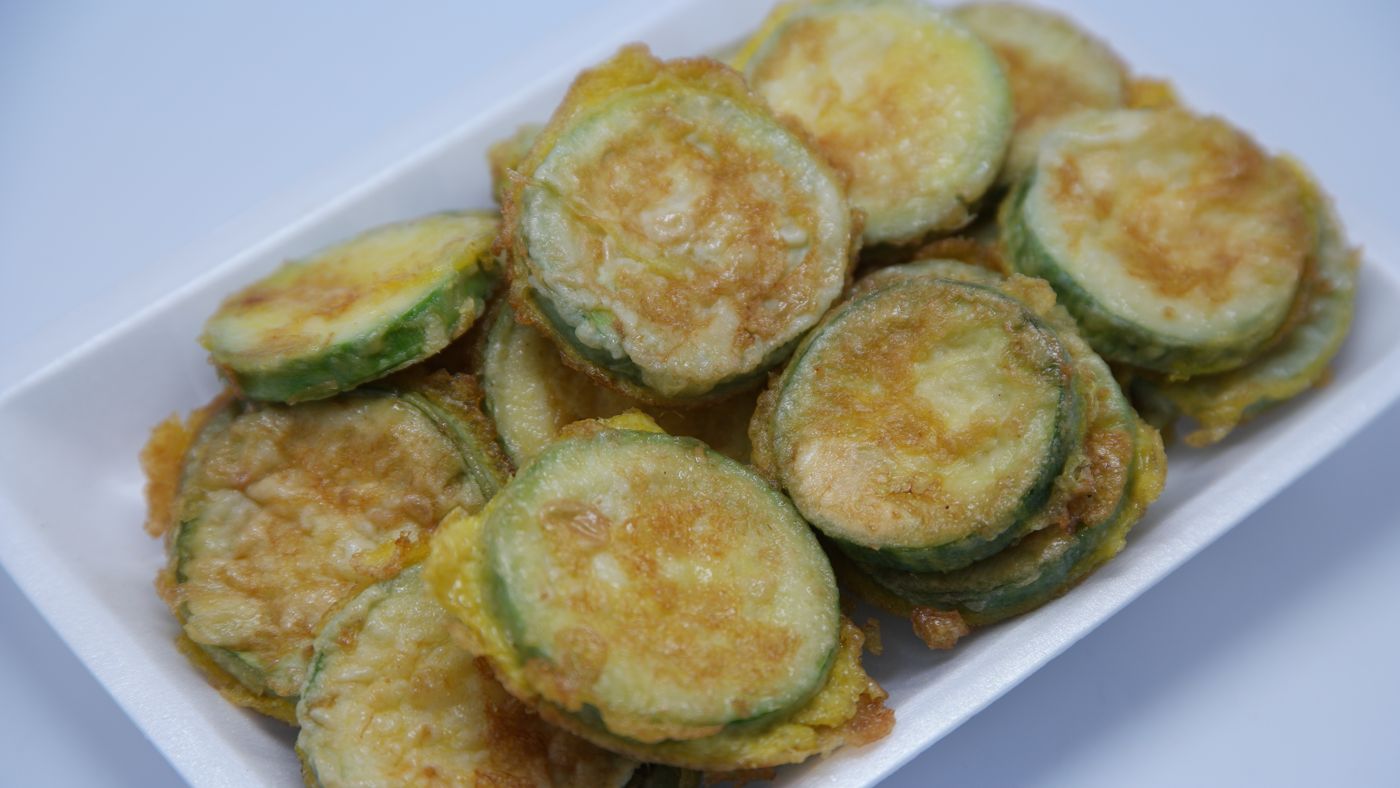 Hobak Jeon (Pan-Fried Zucchini)호박전Rounds of Korean zucchini dusted with flour, dipped in egg and pan-fried until golden — a soft, sweet jeon for holidays and everyday meals.
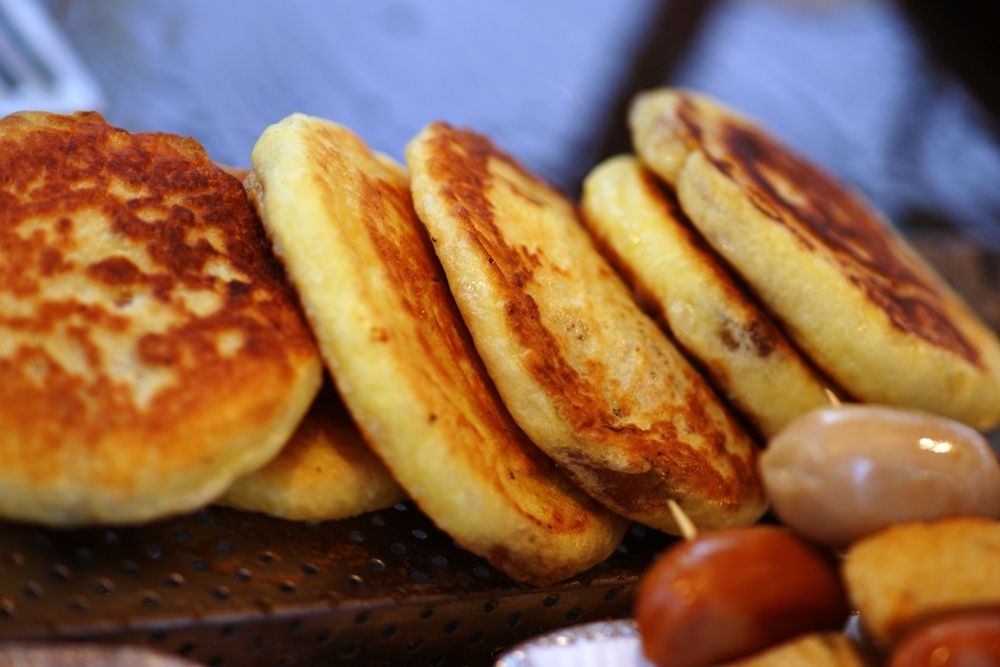 Hotteok (Sweet Filled Pancakes)호떡Yeasted dough wrapped around brown sugar, cinnamon and nuts and pressed flat on an oiled griddle — a winter street snack brought to Korea by Chinese immigrants.
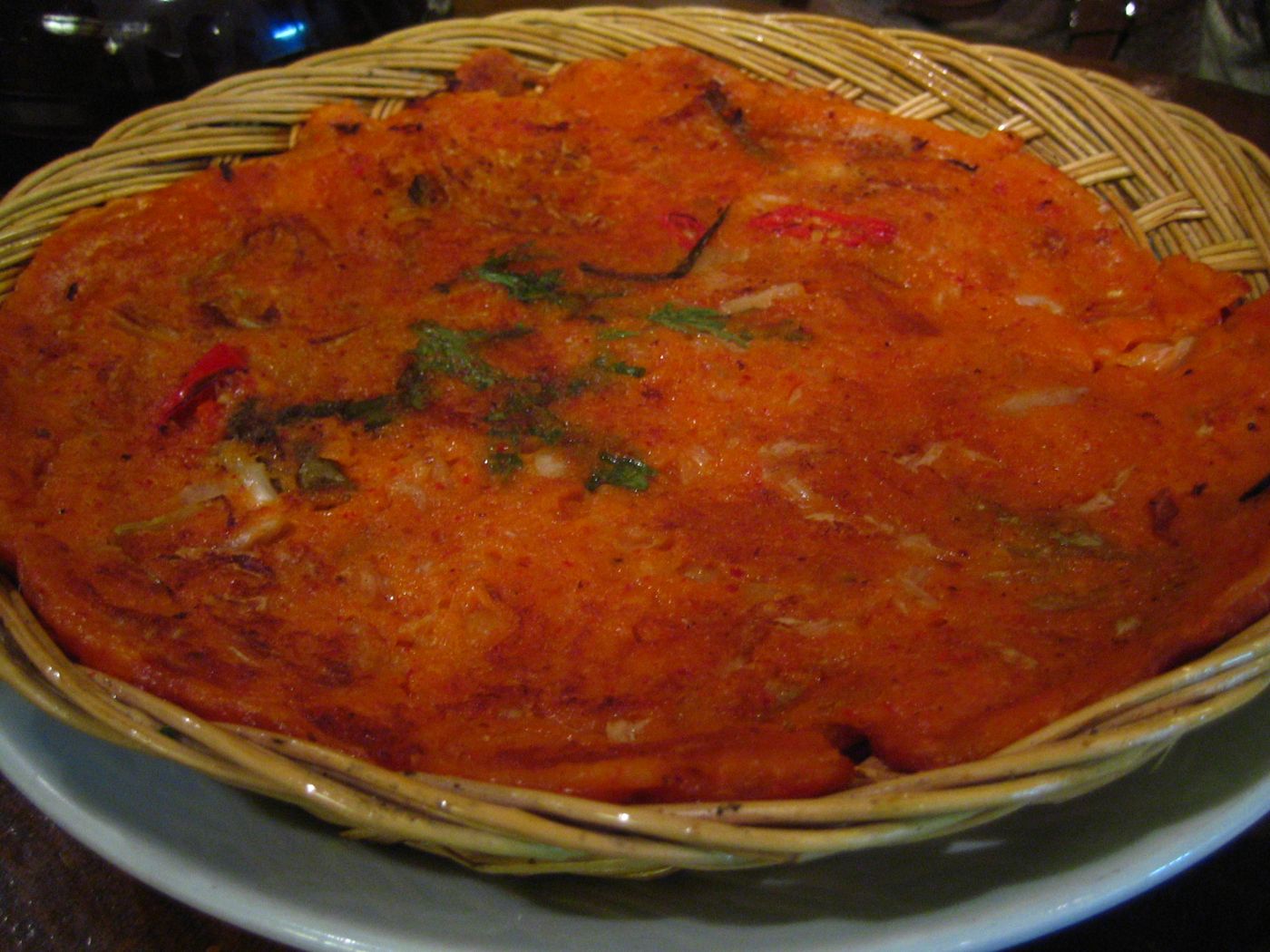 Kimchi Jeon (Kimchi Pancake)김치전Chopped, well-fermented kimchi folded into a thin flour batter and pan-fried until crisp at the edges — tangy, savory and quick to make.
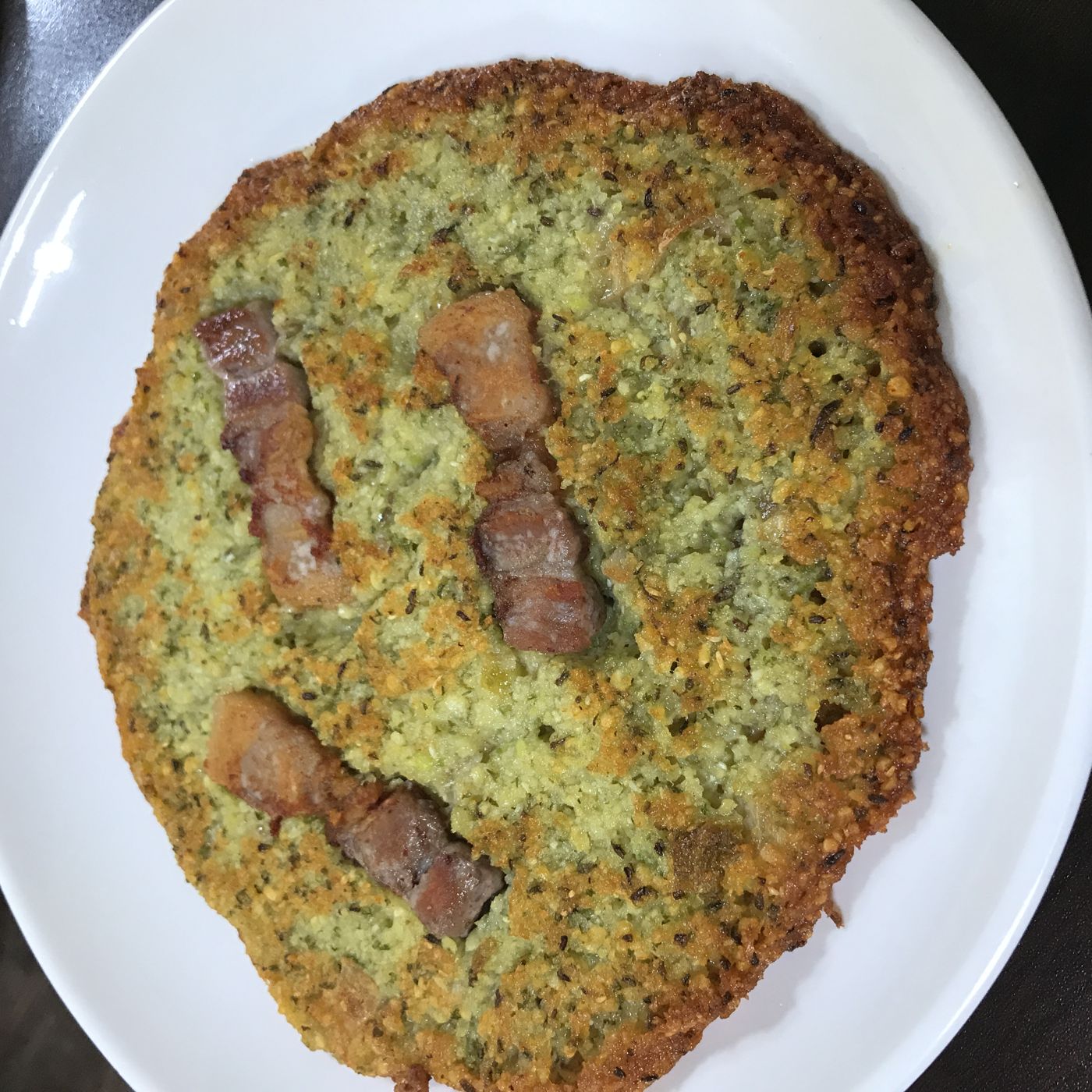 Nokdu Bindaetteok (Mung Bean Pancake)녹두빈대떡Soaked mung beans ground into a thick batter with kimchi, sprouts and pork, then fried crisp in generous oil — a northern specialty and a Seoul market favorite.
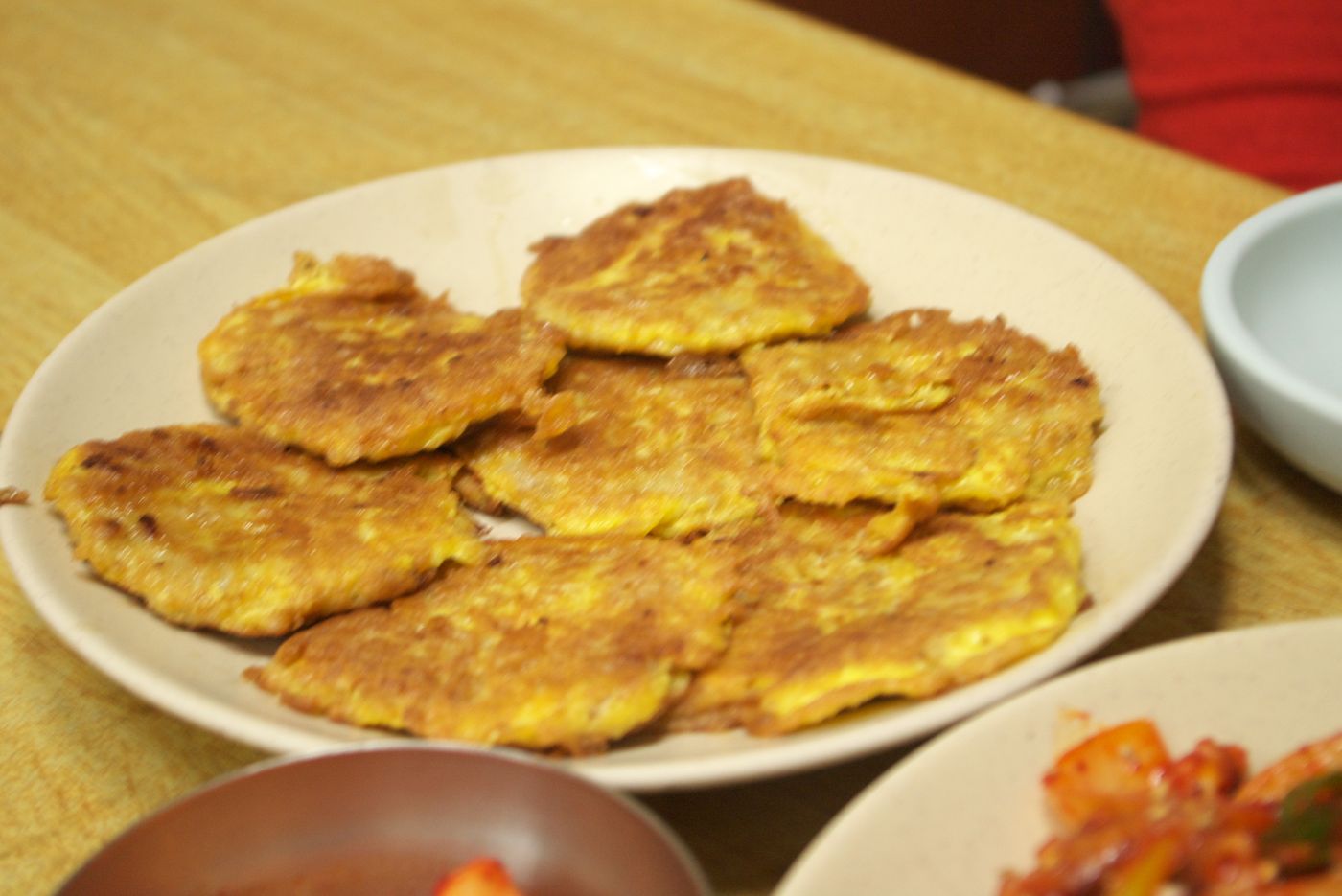 Saengseon Jeon (Pan-Fried Fish)생선전Thin slices of mild white fish dusted with flour, dipped in egg and gently pan-fried — a classic of holiday and ancestral-rite tables.
- Yukjeon (Beef Jeon)육전Thin slices of lean beef, lightly marinated, dipped in flour and egg and pan-fried — an ancestral-rite jeon that Gwangju has made into a specialty.