Ingredient
Hairtail (cutlassfish)
갈치
Romanization: galchi
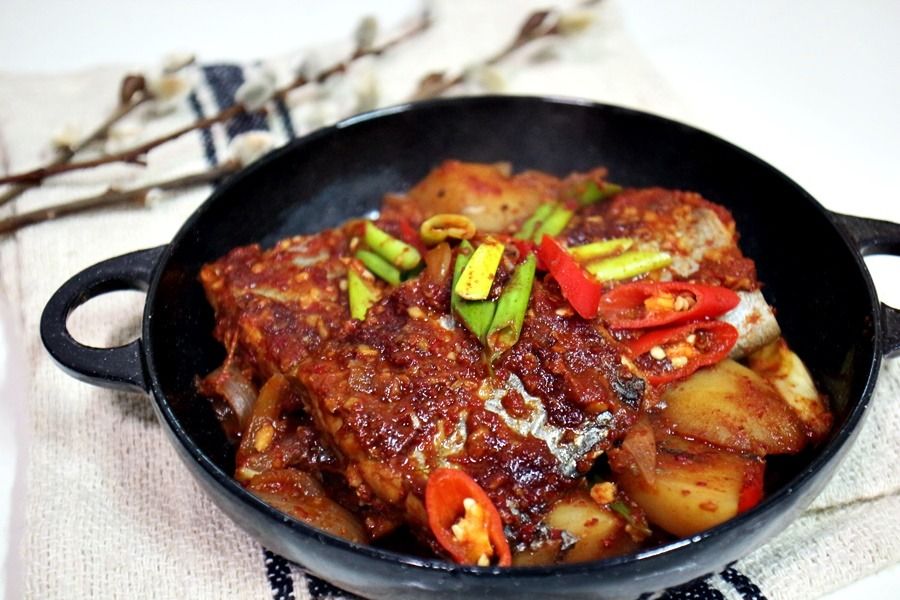
A long, scaleless, ribbon-like fish with a mirror-bright silver skin. Its soft, sweet flesh is grilled, braised with radish and chili, or — on Jeju — simmered into a clear soup with pumpkin.
Flavor
Delicate, sweet and mild, with soft, flaky white flesh and a fine layer of fat under the skin; grilling crisps the silvery surface, while braising soaks it in chili and soy.
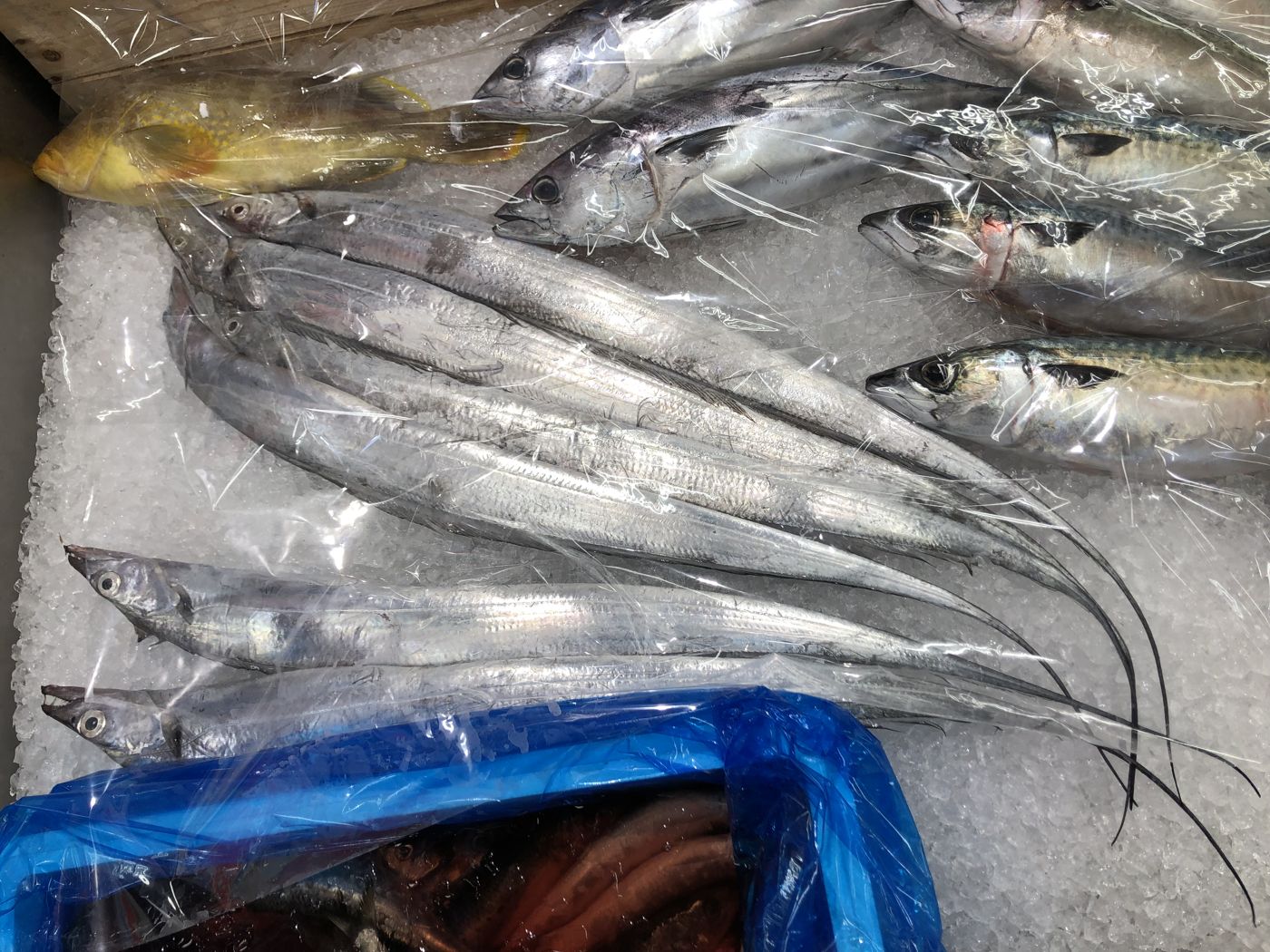 Photo: Totti, CC BY-SA 4.0, via Wikimedia Commons
Origin & History
Galchi is the largehead hairtail (Trichiurus lepturus), a laterally flattened fish that can reach about 150 cm. It has no scales, a vivid silver body, a jutting lower jaw with strong teeth, and a single dorsal fin running almost its whole length, but no tail fin. It lives fairly far offshore and moves into shallower water to spawn in late summer.
The name is usually explained by the fish's blade-like shape: the 17th-century glossary Yeogeo yuhae records it as galti, Jasan eobo gives the common name galchieo, and it is also called kalchi. The ichthyologist Jeong Mun-gi held that gal was an old Silla word for 'knife,' which is why former Silla areas still say galchi while other regions say kalchi. Hairtail has long been an abundant, affordable fish: the 19th-century Nanho eomokji notes it was salted and dried for sale in Seoul, tasty and cheap.
Most of the catch comes from the southwest seas. Koreans distinguish eun-galchi ('silver hairtail'), caught one by one on lines and famous from Jeju, from meok-galchi ('ink hairtail'), netted off Mokpo and the west coast, whose silver coating is rubbed off in the nets so it looks gray. They are the same species; line-caught fish command higher prices.
Hairtail is grilled as galchi-gui or braised as galchi-jorim, often over radish in a spicy soy-and-chili sauce. In Gyeongsang it has been made into soup, and on Jeju galchi-guk — fresh hairtail simmered with pumpkin and cabbage — is a regional specialty.
Nutrition
| Calories | 149 kcal |
|---|---|
| Protein | 18.5 g |
| Fat | 7.5 g |
| Carbohydrates | 0.1 g |
| Fiber | 0 g |
| Sodium | 100 mg |
Notable forProtein (18.5 g) · Phosphorus (191 mg)
Values copied from the Korean Food Composition Table (Rural Development Administration / National Institute of Crop Science) for this exact food, per 100 g edible portion. The table leaves dietary fiber blank for this entry; it is entered as 0 here because fish contains no dietary fiber. The same table lists salted hairtail at 2,056 mg sodium per 100 g. Actual values vary with ingredients, portion size and preparation.
Health Benefits
- Lean-to-moderate protein: Hairtail provides protein with a moderate amount of fat, according to the Korean Food Composition Table.
- Watch the bones: Hairtail has fine bones along its long dorsal fin, so eat carefully, especially when serving children.
- Salted and braised forms add sodium: Salted hairtail is high in sodium, and jorim sauces add soy sauce and chili paste.
- Fish allergy: Fish is a major food allergen. Hairtail is not covered in the FDA–EPA fish advice chart, so no mercury guidance from that source is offered here.
Informational, not medical advice. Talk to a qualified professional about your own health and diet.