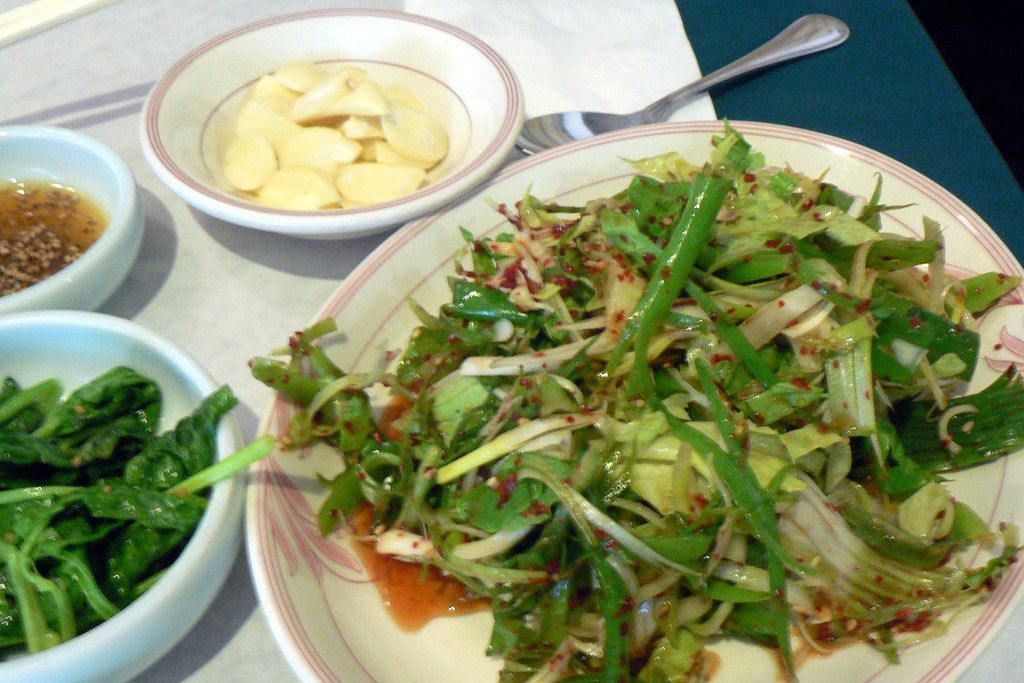
 Photo: stu_spivack, CC BY-SA 2.0, via Flickr
Muchim · Dressed side dish 무침
Pajeori (Green Onion Salad)
파절이
Romanization: pajeori
Fine shreds of Korean green onion tossed with chili flakes, soy sauce, vinegar and sesame oil — the sharp, bright salad that cuts the richness of grilled pork.
- Serves
- 4
- Prep
- 15 min
- Cook
- 0 min
Recipe
Ingredients · Serves 4
- 200 gKorean green onion (daepa) or thick scallionsabout 2–3 stalks
- 1 tbspGochugaru
- 1 tbspSoy sauce
- 1 tbspRice or apple vinegar
- 2 tspSugar
- 1 tbspToasted sesame oil
- 1 tspToasted sesame seeds
Method
Step 1: Cut the green onions into 7–8 cm lengths. Split each piece lengthwise, flatten it and slice into very fine threads (a *pachae* shredder makes this quick).
Step 2: Soak the shreds in cold water for 10 minutes to soften their bite and wash away the slippery juice; they will curl slightly.
Step 3: Drain thoroughly and spin or pat dry — water left on the onion dilutes the dressing.
Step 4: In a small bowl, mix the gochugaru, soy sauce, vinegar, sugar and sesame oil.
Step 5: Right before the meat comes off the grill, toss the onion with the dressing using your fingertips or chopsticks, sprinkle with sesame seeds and serve. Pajeori wilts within about 30 minutes, so do not dress it ahead.
Origin & History
Pajeori is a simple salad of green onion cut into fine threads and tossed with seasoning; the National Institute of Korean Language's dictionary gives pa-muchim and pa-jeorim as other names for it. It is made with daepa, the thick Korean green onion (Allium fistulosum) whose long white shaft and hollow leaves are a basic seasoning in Korean cooking. Traditional Korean food writing credits green onion's pungent sulfur compounds with masking the gamey or fishy smell of meat and fish and with sharpening the appetite — exactly the role pajeori plays at the grill.
The dish belongs to the modern history of Korean barbecue. Grilled pork belly (samgyeopsal-gui) spread through restaurants from the late 1970s, according to the Encyclopedia of Korean Culture, and became an everyday meal in the 1980s and 1990s as portable gas burners made grilling at the table easy. Shredded green onion salad became a standard side at these restaurants; the dictionary's usage example, from a 2006 regional newspaper, notes that when green onion prices rose, even pork-belly restaurants stopped putting out pajeori — a sign of how expected it had become.
Pajeori is eaten with the meat rather than on its own: a pinch is laid on a hot slice of pork, often wrapped in lettuce with ssamjang, so the onion's bite and the vinegar's acidity balance the fat.
Key Ingredients
 Green onion파Korean green onion (pa), from thick-stemmed daepa to slender scallions — chopped into nearly every seasoning sauce, soup and kimchi, and the star of pa-kimchi.
 Gochugaru고춧가루Korean red chili powder, made from dried red peppers ground coarse or fine. It gives kimchi, gochujang and countless banchan their color and warmth.
 Soy sauce간장Korean soy sauce, in two main kitchen forms: pale, salty guk-ganjang (soup soy sauce) brewed the traditional way from meju, and darker, sweeter jin-ganjang for braises and marinades.
- Korean Vinegar식초Vinegar in the Korean kitchen, from naturally fermented grain and fruit vinegars, such as persimmon vinegar, to everyday brewed vinegar. It sharpens muchim, pickles and the dipping sauce chogochujang.
 Sesame참깨Toasted sesame seeds and sesame oil (chamgireum) finish countless Korean dishes, adding a nutty aroma and gloss.
Nutrition
| Calories | ~65 kcal |
|---|---|
| Protein | ~1.6 g |
| Fat | ~4.1 g |
| Carbohydrates | ~6.4 g |
| Fiber | ~1.4 g |
| Sodium | ~216 mg |
Notable forVitamin K · Manganese
Green onion uses the Korean Food Composition Table entry for daepa (“Welsh onion, Spring onion, Raw”; per 100 g: 23 kcal, 1.6 g fiber, about 88 µg vitamin K). Soy sauce uses the Korean table's fermented soy sauce; gochugaru uses the USDA red pepper (cayenne) entry as a stand-in; vinegar uses USDA cider vinegar; sugar, sesame oil and sesame seeds use USDA FoodData Central. Totals divided by four. Actual values vary with ingredients, portion size and preparation.
Health Benefits
- Vegetables with the barbecue: a raw, vinegared salad adds crunch, freshness and some fiber to a meal built around grilled meat.
- Vitamin K: Korean green onion is a source of vitamin K.
- Allium compounds: green onion contains sulfur compounds such as allicin that are the subject of ongoing research; traditional Korean medicine has long valued the white part of the onion for colds, but these are traditional uses rather than proven effects.
Regional Variations
- Soy-vinegar-chili: the common restaurant style, with gochugaru, soy sauce, vinegar, a little sugar and sesame oil.
- Chogochujang dressing: some cooks use vinegared gochujang instead of soy sauce for a redder, sweeter salad.
- Pa-muchim with thin scallions: a home banchan in which thin green onions (silpa or jjokpa) are blanched briefly and dressed, rather than shredded raw.
Pairings
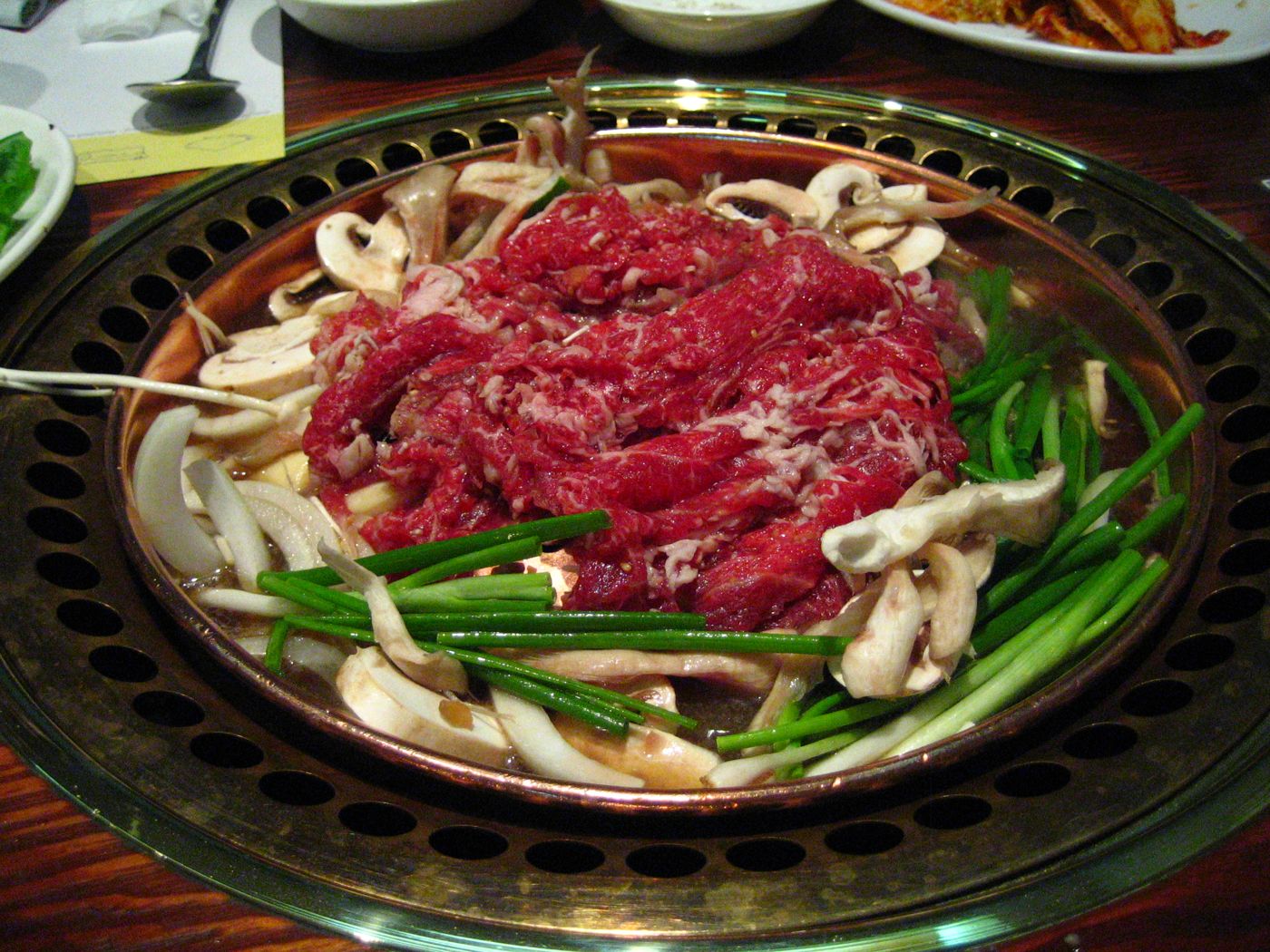 Bulgogi (Marinated Grilled Beef)불고기Thin slices of beef marinated in soy sauce, pear, garlic and sesame, then grilled or seared — descended from the court dish neobiani and Korea's best-known meat dish.
 Doenjang Jjigae (Soybean Paste Stew)된장찌개A thick, savory stew of fermented soybean paste with tofu, zucchini and whatever the season offers — the everyday pot at the center of the Korean table.
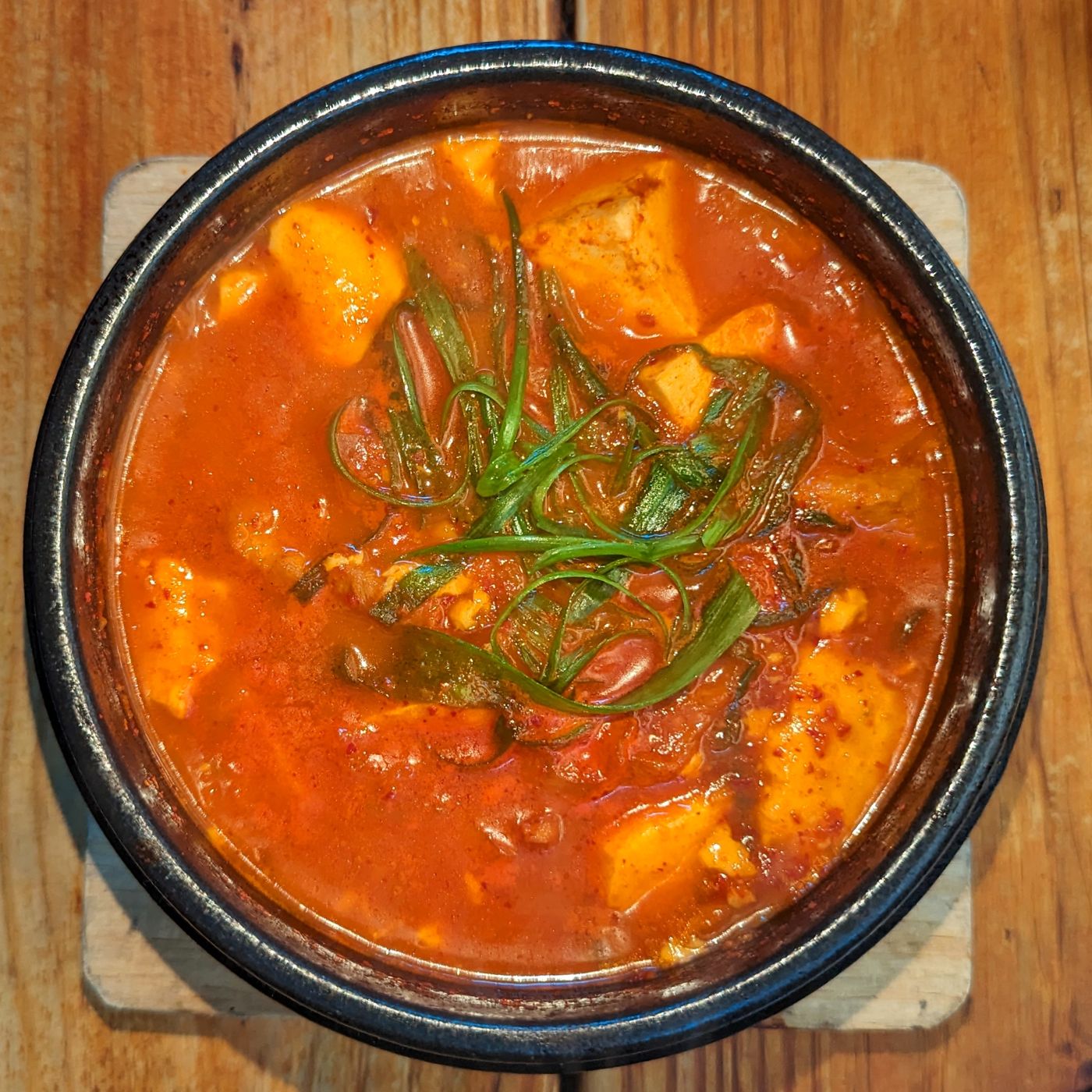 Kimchi Jjigae (Kimchi Stew)김치찌개Sour, well-aged napa cabbage kimchi simmered with pork and tofu into a tangy, spicy stew — the classic way to use up kimchi that has gone past its prime.
Sources
- 01파절이 (Pajeori) — Urimalsaem (National Institute of Korean Language)
- 02파무침 (Pa-muchim) — Urimalsaem (National Institute of Korean Language)
- 03삼겹살구이 (Samgyeopsal-gui) — Encyclopedia of Korean Culture
- 04파 (Green onion) — Encyclopedia of Korean Folk Culture (National Folk Museum of Korea)
- 05Korean Food Composition Table: Welsh onion, Spring onion, Raw — National Institute of Agricultural Sciences
Last updated