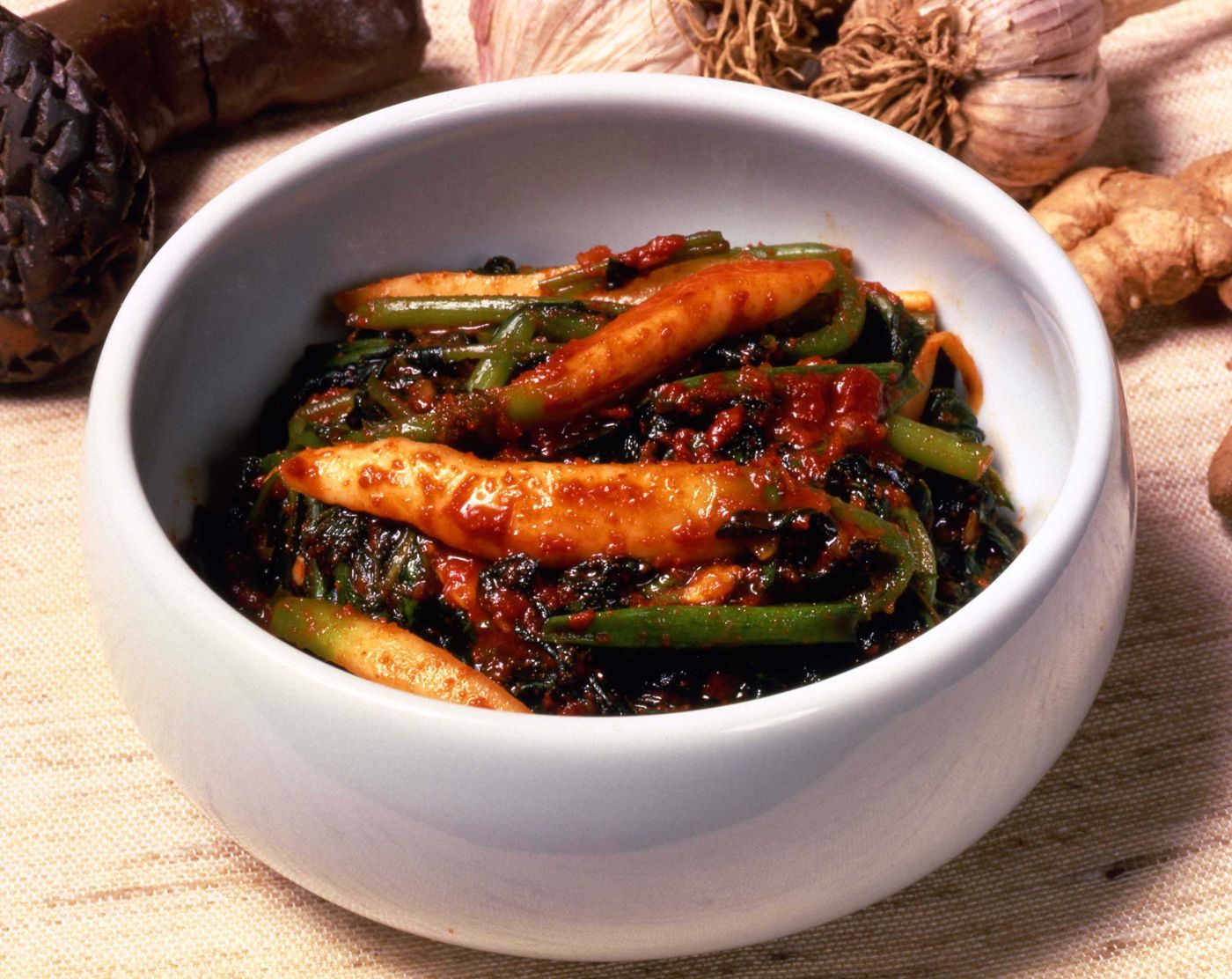
Ingredient
Yeolmu (young summer radish)
열무
Romanization: yeolmu
Young radish plants pulled for their tender greens and thin roots. The essential summer kimchi vegetable, made into tangy yeolmu-kimchi that is spooned over cold noodles and barley rice.
Flavor
Fresh, green and lightly peppery, with tender leaves and crisp little stems. As kimchi it turns bright, tangy and refreshing.
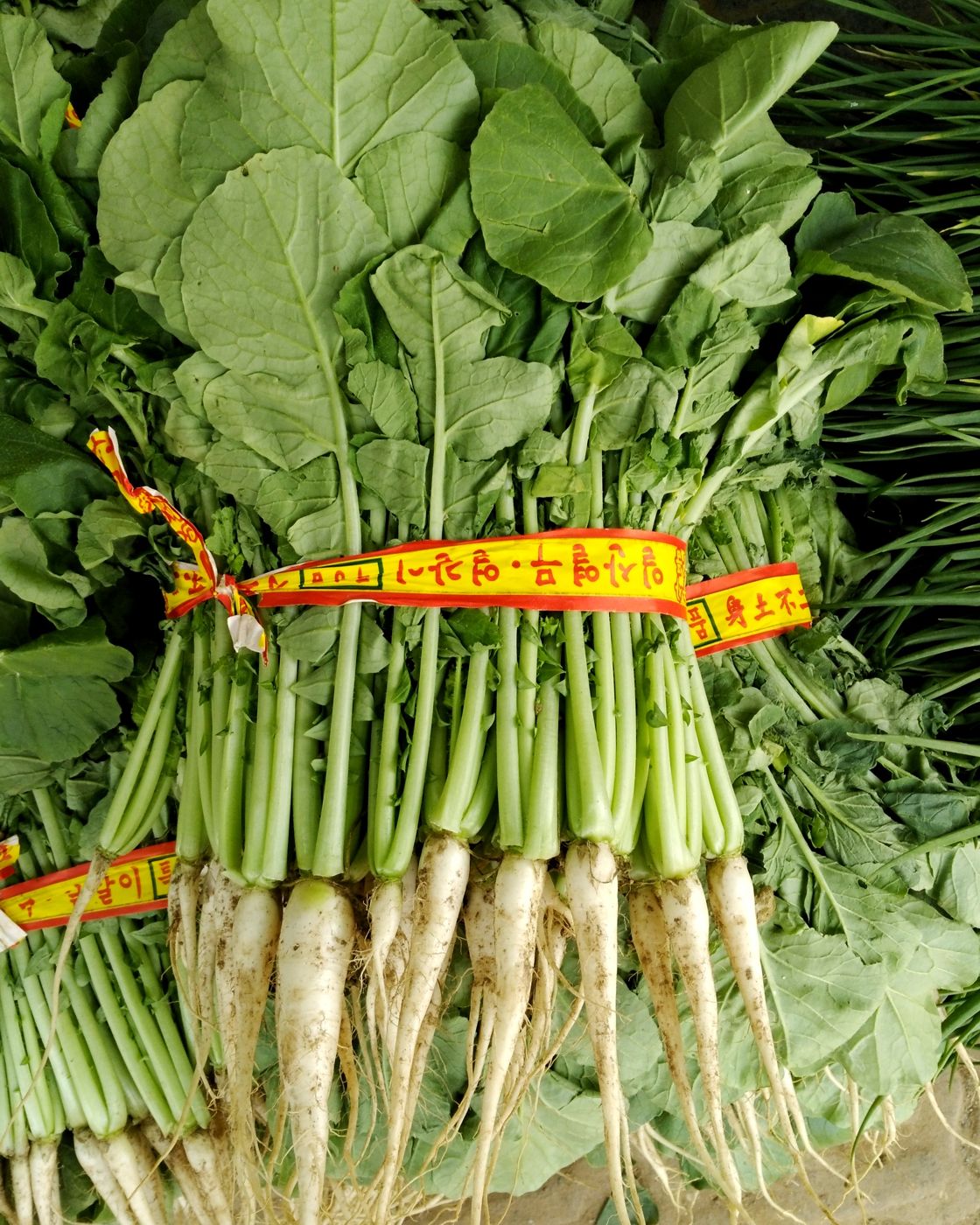 Photo: Herbeater, CC BY-SA 4.0, via Wikimedia Commons
Origin & History
Yeolmu is the young radish (Raphanus sativus), harvested while the plant is still small, with long, tender leaves and a slim, undeveloped root. The name itself means "young" or "tender" radish. It grows quickly, and in summer it was traditionally sown between rows of beans or chili peppers, so households could gather it easily through the hot months.
Yeolmu filled the gap after the winter kimchi ran out. From spring onward it was pickled, often together with young napa cabbage (eolgari), and in summer it became the everyday kimchi of almost every region. A 1924 cookbook, Joseon musang sinsik yori jebeop, already describes salting yeolmu with young cabbage and minari and adding a thin flour paste so the kimchi tastes mellow and loses its raw, grassy smell.
Styles vary by region. Northern cooks favor watery kimchi with plenty of brine; southern kimchi uses more chili and garlic, and Jeolla cooks add a range of other vegetables. In Jeonju, fresh red chilies, ginger and garlic are ground in a stone mortar with cooked rice before being mixed with the salted greens. On Jeju, where yeolmu is called chomagi, it is seasoned with anchovy sauce and thickened with ground barley rice or barley cooking water.
Because summer yeolmu is low in sugar, cooks add a starch paste of flour, rice or potato, which feeds fermentation and lends gentle sweetness, and they often use fresh ground chilies rather than chili powder. The finished kimchi is served with yeolmu-guksu (noodles) and mixed into barley-rice bibimbap, and yeolmu is also used in soups and stews. Handle it gently when washing and mixing, or it turns grassy.
Nutrition
| Calories | 14 kcal |
|---|---|
| Protein | 1.86 g |
| Fat | 0.22 g |
| Carbohydrates | 2.18 g |
| Fiber | 1.8 g |
| Sodium | 73 mg |
Notable forVitamin K · Vitamin A · Calcium · Vitamin C
Korean Food Composition Table entry "Radish, Young, Raw" (열무, 생것): also 379.7 µg vitamin K, 225 µg RAE vitamin A (2,698 µg beta-carotene), 127 mg calcium, 27.2 mg vitamin C and 71 µg folate per 100 g. Actual values vary with ingredients, portion size and preparation.
Health Benefits
- Leafy green: Per the Korean Food Composition Table, raw yeolmu is very low in calories and rich in vitamin K and beta-carotene (vitamin A).
- Other nutrients: It also provides calcium, vitamin C and folate.
- Fermented form: As kimchi it is a fermented food; research on the possible health effects of fermented vegetables is ongoing.
- Sodium and vitamin K: Yeolmu kimchi is salted, so portions matter for anyone watching sodium. People taking warfarin should keep their intake of vitamin K–rich greens consistent and talk with their doctor about diet changes.
Informational, not medical advice. Talk to a qualified professional about your own health and diet.