Regions
Suwon
수원
The fortress city south of Seoul is synonymous with galbi: oversized, salt-seasoned beef ribs that grew out of a famous cattle market and one 1940s restaurant.
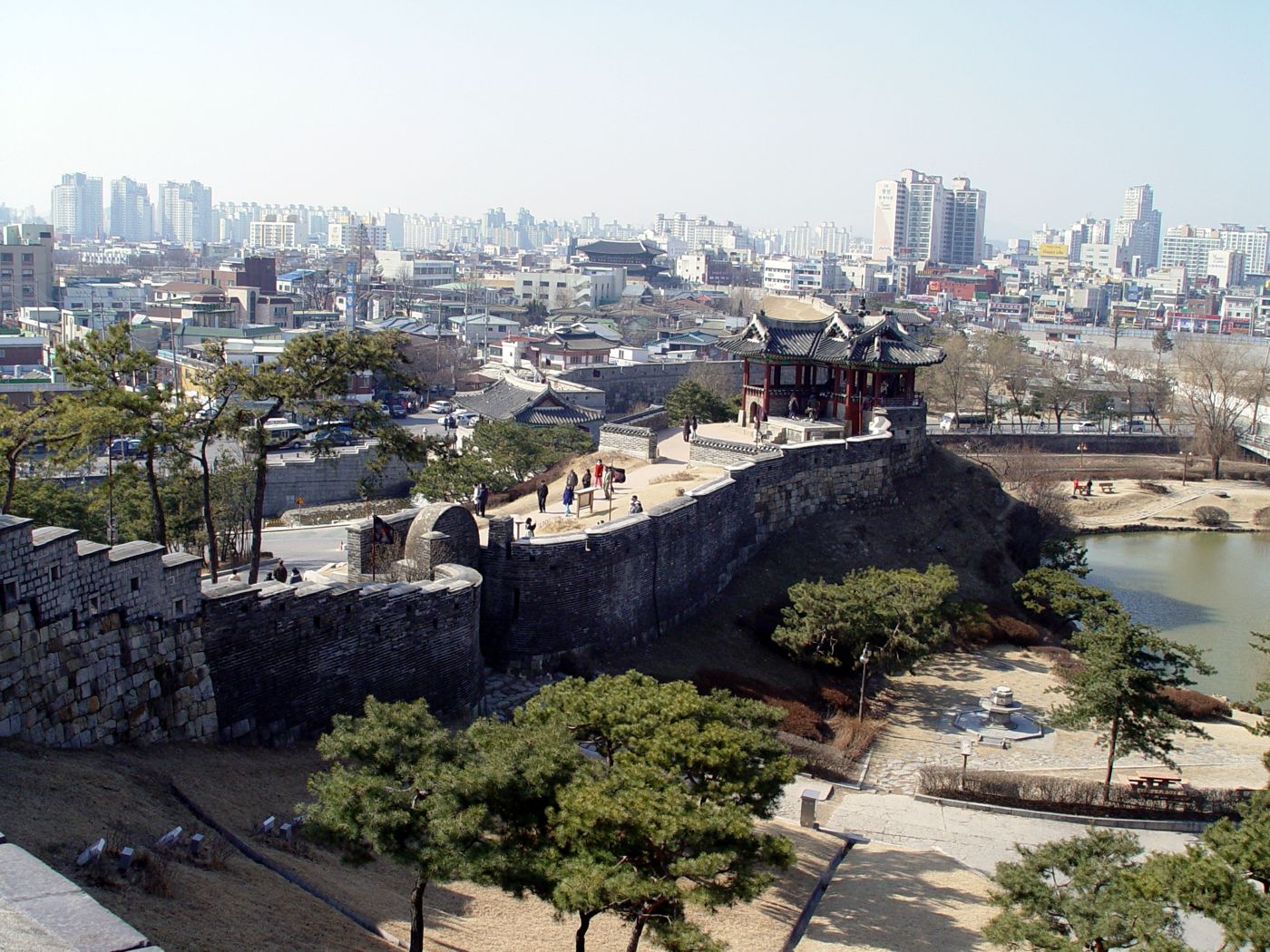 Photo: Jpbarrass, Public domain, via Wikimedia Commons
Suwon, the capital of Gyeonggi Province, just south of Seoul, is best known abroad for Hwaseong, the walled fortress that King Jeongjo built at the end of the eighteenth century. Inside Korea, the city's name is just as quickly linked to one dish: Suwon galbi, grilled beef short ribs. For the surrounding province, see Seoul and Gyeonggi.
A new town and its markets
In 1789 Jeongjo moved the tomb of his father, Crown Prince Sado, to a hill near the old Suwon seat and relocated the town to the foot of Mount Paldal. The Encyclopedia of Korean Culture records that construction of the fortress began in early 1794 and was finished in 1796. Jeongjo meant the new city to prosper. The National Institute of Korean History describes the incentives he offered, including relocation money for residents and tax relief for new farmers, and notes that Suwon, sitting on the road between Seoul and the three southern provinces, developed a network of periodic markets.
Among them, the cattle market was the one that mattered. The Institute calls it famous throughout the late Joseon period, held inside and outside the walls on alternating days, and says the volume of cattle trading drove the prosperity of the town's markets as a whole. A local history published by the Gyeonggi culture-center federation dates the market's founding to 1789, together with the new town, ranks it among the three largest cattle markets in the country at its height, and records its closure in 1998 after urban development pushed it out. The Encyclopedia of Korean Culture makes the culinary link explicit: because the market was nationally famous and among the top three in the colonial period, Korean beef ribs were easy to obtain in Suwon, and that is what made the city a galbi town. You may also hear that Jeongjo allowed cattle to be slaughtered to feed the fortress builders; that story is widely repeated, but it is better treated as local lore than documented history.
Hwachunok and the birth of Suwon galbi
The dish itself is younger than the fortress. According to the Encyclopedia of Korean Culture, Suwon galbi began at Hwachunok, opened in December 1945 by Lee Gwi-seong on the rice-sellers' street of Yeongdong Market. The hwa in its name came from Hwaseomun, the fortress's west gate. The restaurant first drew crowds with hangover soup (haejangguk) with a piece of rib in each bowl, and began grilling seasoned ribs over charcoal in 1956. Under the founder's son, Lee Yeong-geun, it became nationally famous, helped by a stream of well-known politicians; the founder's grandson later recalled radio reports noting that President Park Chung-hee had stopped there on the way back from regional tours.
Hwachunok closed in 1979, but the encyclopedia notes that cooks trained in its style were hired by galbi houses in east Suwon in the 1980s, which turned a single restaurant's specialty into a citywide one. It divides the history neatly: 1945 to 1979 as the original era, and the 1980s onward as the era of popularization.
What makes it Suwon galbi
- Size. The rib pieces are long, about 10 to 13 centimeters, and the encyclopedia files the dish alongside wang-galbi, "king ribs."
- Salt, not soy. The defining trait is a seasoning based on refined sea salt rather than ganjang, with sesame oil, green onion, garlic, black pepper, sugar and toasted sesame. The encyclopedia gives a salt-to-sugar ratio of about 6:1 and says the salt keeps the meat's natural color instead of darkening it.
- A recorded recipe. A 1973 Chosun Ilbo article quoted in the encyclopedia gave the proportions of a Hwachunok cook of thirty years: for 100 geun of ribs, sesame oil, a bottle of rice wine, two doe of sesame seeds, 10 kilograms of sugar, garlic, green onion, salt, pepper and "a few seasonings that cannot be named." The founder's grandson described resting the seasoned ribs in the freezer for at least a day before grilling over charcoal.
For the method behind salt grilling, see grilling gui. Suwon galbi belongs to the same family as soy-marinated bulgogi and braised galbi-jjim, and its rise is part of the wider story told in Korean BBQ culture.
At the table
A galbi meal in Suwon follows the familiar Korean barbecue pattern: ribs grilled at the table and cut with scissors, wrapped in lettuce (sangchu) with garlic and ssamjang, and a spread of banchan that usually includes kimchi, seasoned green onion (pajeori) and a few namul, often with a bowl of doenjang-jjigae alongside. Because Suwon galbi is seasoned with salt, the beef itself, usually hanu at the high end, carries the flavor, and the banchan do the work of balancing its richness.
Dishes from this region
- Chunky Radish and Cabbage Kimchi섞박지Big, flat-cut pieces of radish and cabbage mixed in one chili and jeotgal seasoning — a late-autumn “mixed” kimchi, and the name for big radish kimchi today.
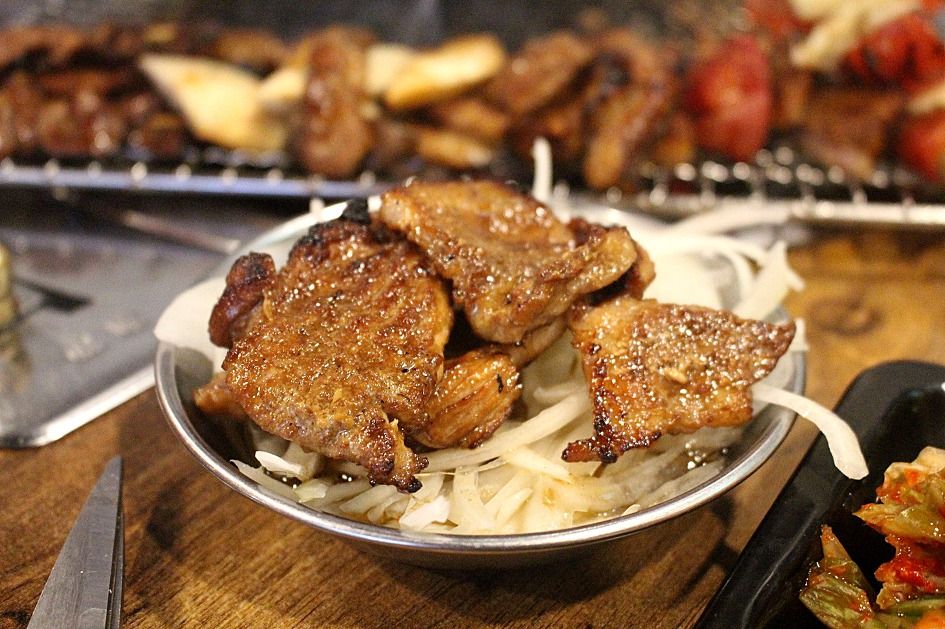 So-galbi-gui (Grilled Beef Short Ribs)소갈비구이Beef short ribs scored to the bone, marinated with soy, pear, garlic and sesame and grilled over charcoal — Korea's celebration barbecue, best known in Suwon's salt-seasoned style.
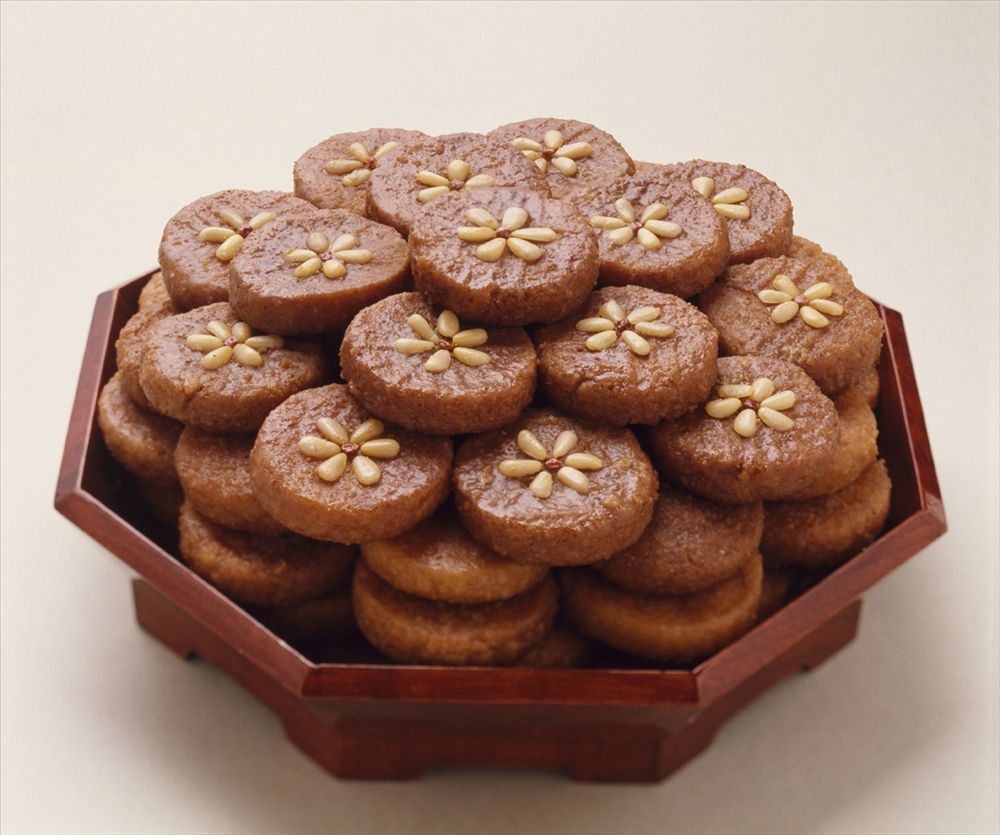 Yakgwa (Honey Cookies)약과Wheat dough rubbed with sesame oil and bound with honey, pressed into a carved mold, slow-fried and soaked in syrup — the best-known of Korea's honey-and-oil pastries.
Sources
- 01수원갈비 (Suwon Galbi) — Encyclopedia of Korean Culture
- 02수원 화성 (Suwon Hwaseong) — Encyclopedia of Korean Culture
- 03화성 건설과 함께 성장한 수원의 장시 (Suwon's markets and the building of Hwaseong) — Uri Yeoksa Net, National Institute of Korean History
- 04수원 우시장 (Suwon Cattle Market) — Gyeonggi Culture Centers Federation, Regional Culture Library