Ingredient
Napa cabbage
배추
Romanization: baechu
The tall, pale, tightly headed cabbage at the heart of Korea's best-known kimchi. Salted, layered with seasoning and left to ferment, it becomes baechu-kimchi; fresh, it goes into soups, wraps and quick salads.
Flavor
Mild, sweet and juicy, with crisp white ribs and tender, ruffled leaves. Salting softens it and concentrates its sweetness; fermentation turns it tangy and savory.
 Photo: Judgefloro, CC0, via Wikimedia Commons
Origin & History
Napa cabbage (Brassica rapa subsp. pekinensis) is a member of the mustard family that originated in China. It is a biennial grown as an annual leaf crop, and in Korea it is counted, with radish, chili pepper and garlic, among the country's four essential vegetables.
Cabbage has a long written history on the peninsula: it is first recorded in Hyangyak gugeupbang, a thirteenth-century Goryeo medical text. The early plants did not form heads at all and grew loose leaves more like lettuce. Semi-heading "Joseon cabbage" types appeared in the mid-1800s, and local cultivars such as Gaeseong and Seoul cabbage became prized. The fully headed type now sold everywhere, known at first as ho-baechu ("foreign cabbage"), arrived from China around the turn of the twentieth century. Cooks initially found it tougher and less flavorful, but its higher yields won out: it became the market standard in the 1970s and, by the 1980s, the cabbage used for kimchi almost everywhere.
Cabbage is grown across South Korea, traditionally in the river valleys of the Han, Nakdong and Yeongsan. Production follows the seasons. Summer cabbage comes from cool highland fields in Gangwon Province, including farms at more than 1,000 meters around Anbandegi near Gangneung. Winter cabbage is grown in the warm far south, especially around Haenam in South Jeolla, where it stays in the field through the cold months and is harvested in spring.
Its central role is kimchi. Every late autumn, families and communities gather for kimjang, the collective making of large batches of kimchi to last through winter, a practice UNESCO inscribed on its Representative List of the Intangible Cultural Heritage of Humanity in 2013. An 1816 farming calendar already describes autumn kimchi-making from freshly harvested radish and cabbage seasoned with chili, garlic and ginger. Beyond kimchi, napa cabbage is simmered in soups, blanched for wraps, and dressed raw as geotjeori, a fresh, unfermented kimchi.
Nutrition
| Calories | 16 kcal |
|---|---|
| Protein | 1.2 g |
| Fat | 0.2 g |
| Carbohydrates | 3.23 g |
| Fiber | 1.2 g |
| Sodium | 9 mg |
Notable forVitamin C · Folate · Vitamin K
Values from USDA FoodData Central (SR Legacy), "Cabbage, chinese (pe-tsai), raw" (FDC ID 169979). Salted cabbage and kimchi are much higher in sodium. Actual values vary with ingredients, portion size and preparation.
Health Benefits
- Low in calories: Raw napa cabbage is mostly water and provides very little energy per serving.
- Vitamins: It is a source of vitamin C and folate, and also provides vitamin K.
- Fermented form: As kimchi it is a fermented food; research on the possible health effects of fermented vegetables is ongoing.
- Sodium caveat: Kimchi and salted cabbage are high in salt, so people watching their sodium intake should keep portions modest.
Informational, not medical advice. Talk to a qualified professional about your own health and diet.
Dishes with Napa cabbage
 Napa Cabbage Kimchi배추김치Salted napa cabbage layered with a red paste of chili, garlic, ginger and fermented seafood, then left to ripen: the kimchi most people picture first.
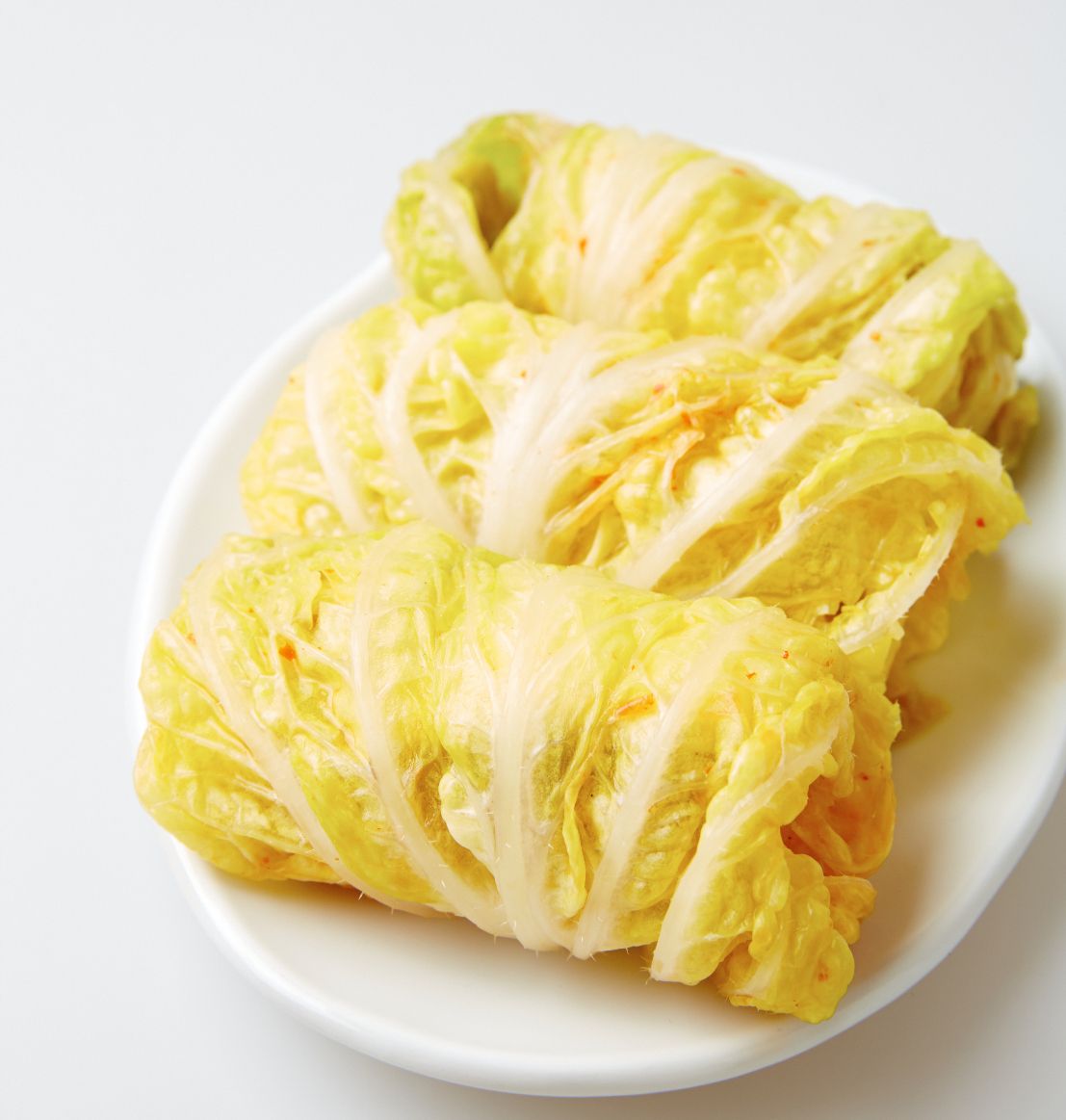 White Kimchi백김치Napa cabbage stuffed with radish, pear, chestnut and jujube and ripened in a clear, cool brine — kimchi with no chili flakes, mild and refreshing.
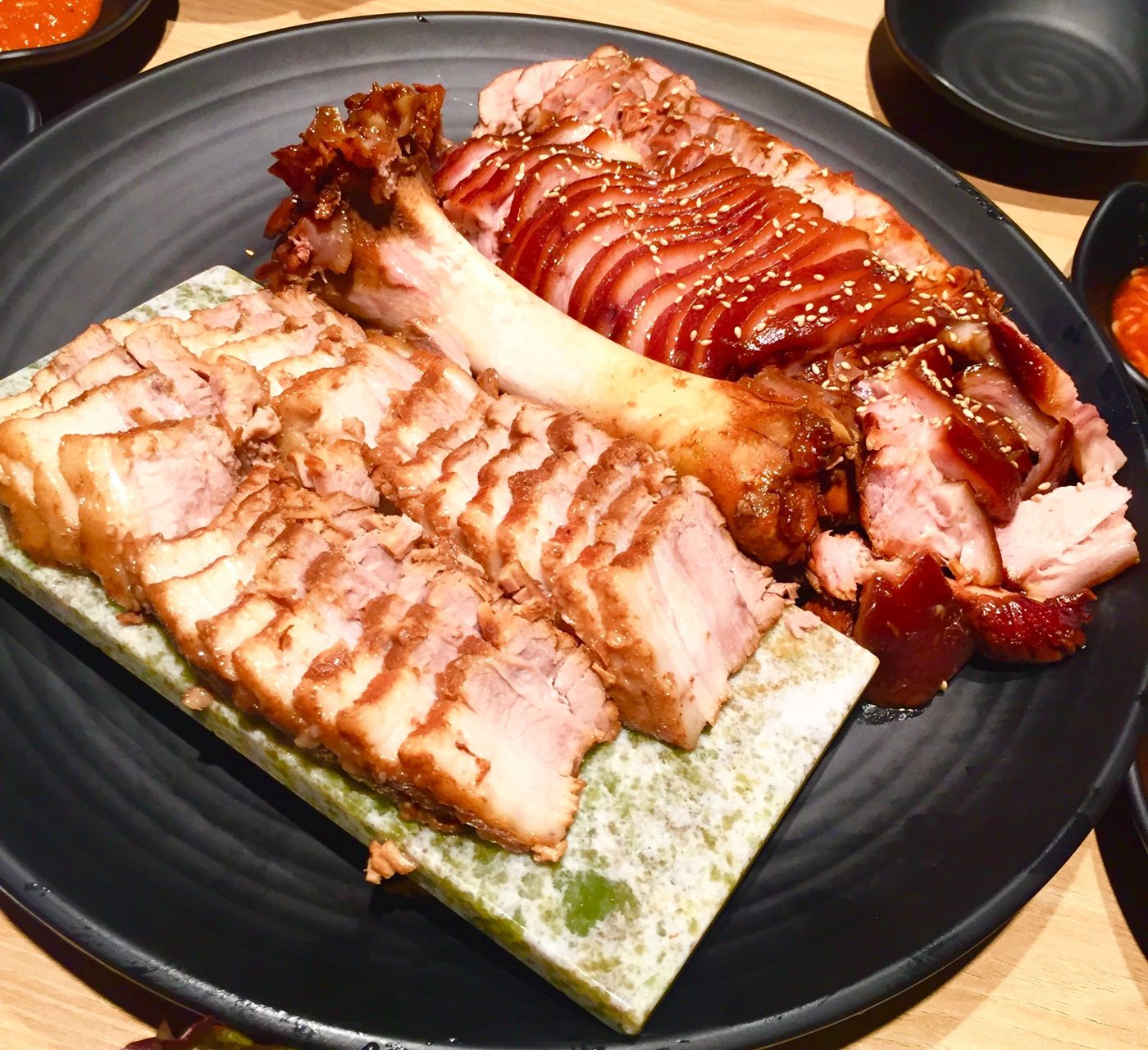 Bossam (Boiled Pork Wraps)보쌈Pork belly simmered with doenjang and aromatics, pressed and sliced, then wrapped in salted cabbage with spicy radish and salted shrimp — a feast dish built for sharing.
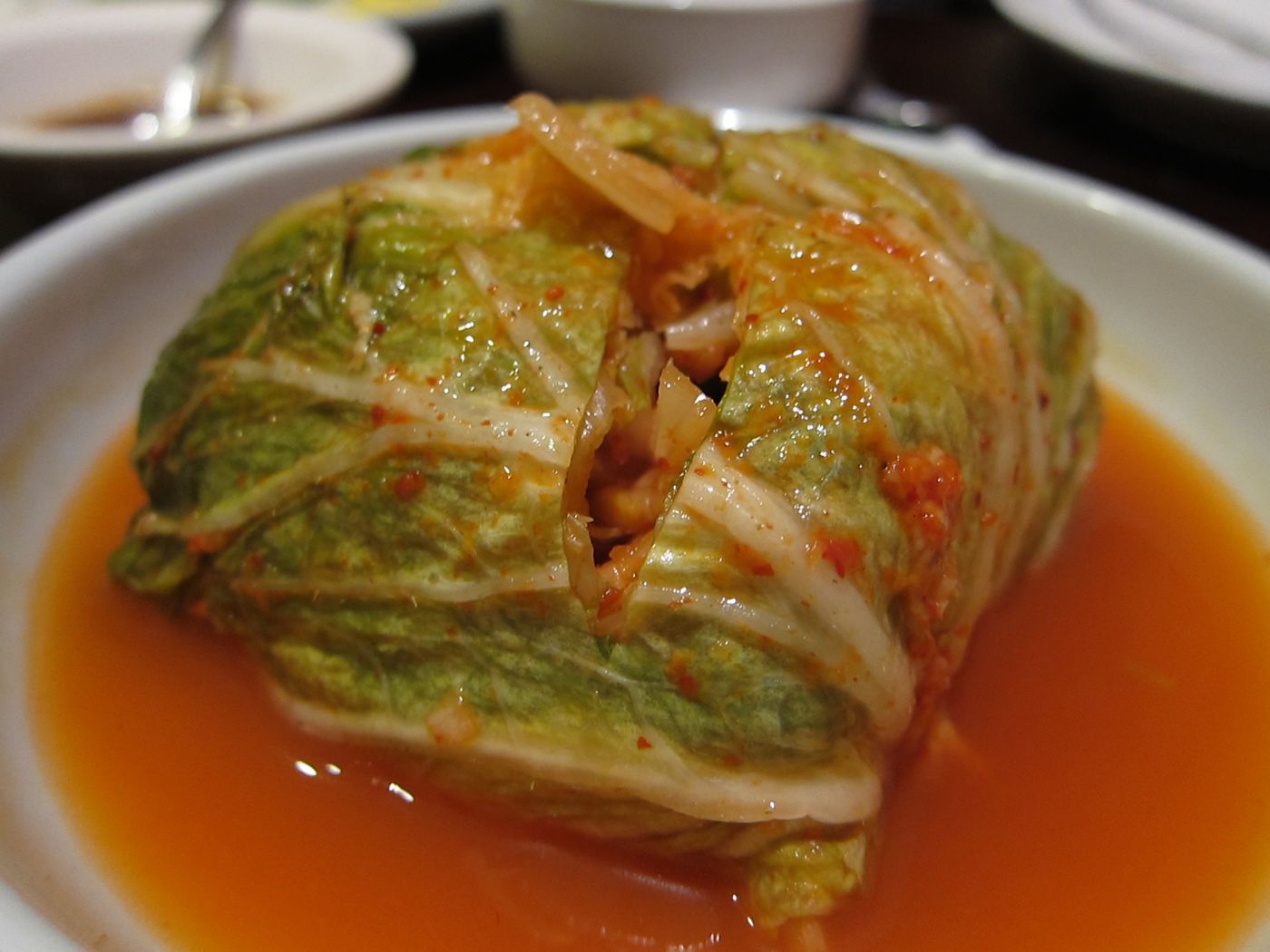 Wrapped Kimchi보쌈김치Cabbage, radish, fruit, nuts and seafood bundled inside whole cabbage leaves — the lavish wrapped kimchi of Gaeseong, made for honored guests.
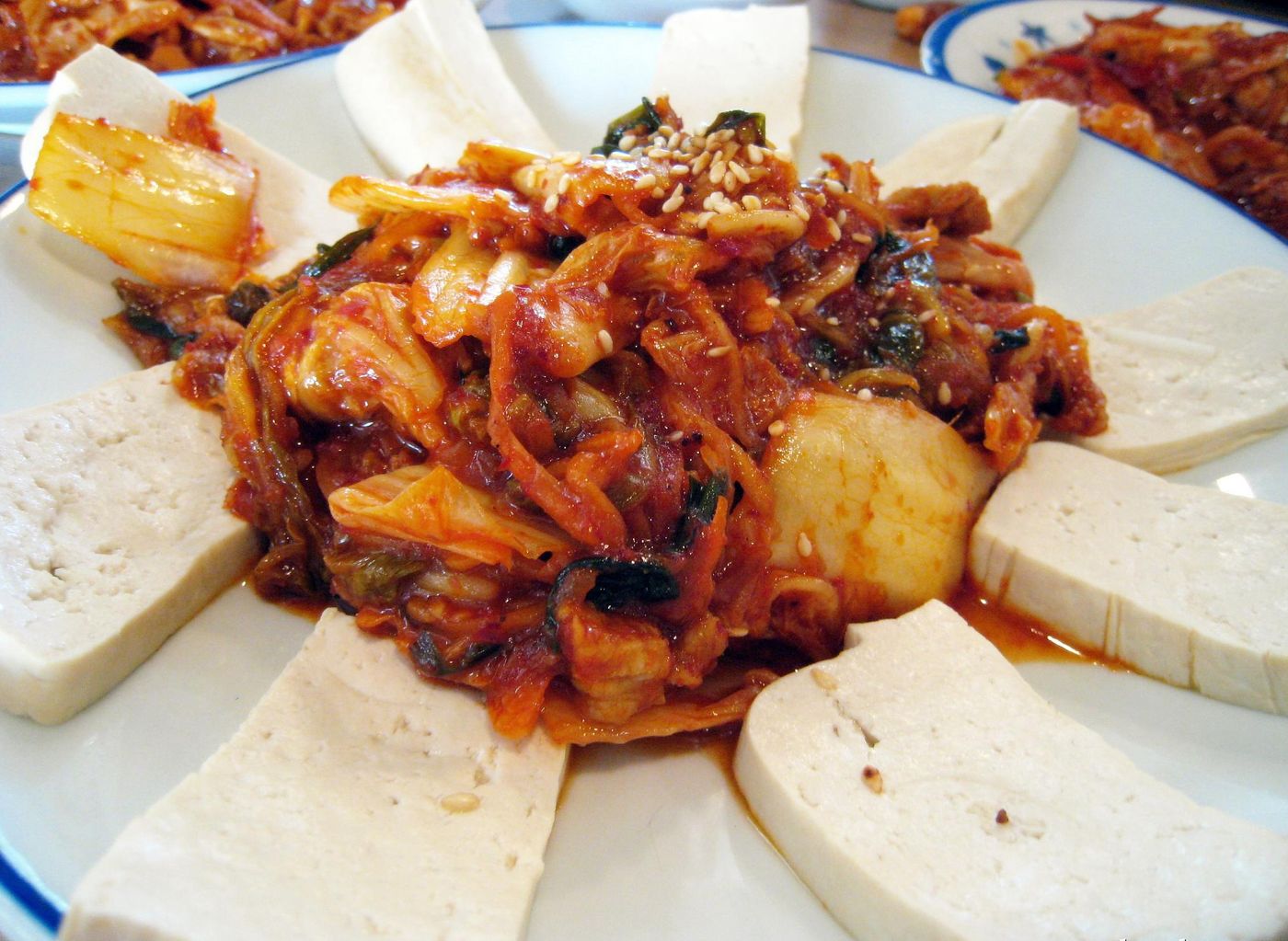 Dubu Kimchi (Tofu with Stir-Fried Kimchi)두부김치Warm slices of plain tofu arranged around kimchi stir-fried with pork — a mild-and-spicy pairing that is a favorite with soju and makgeolli.
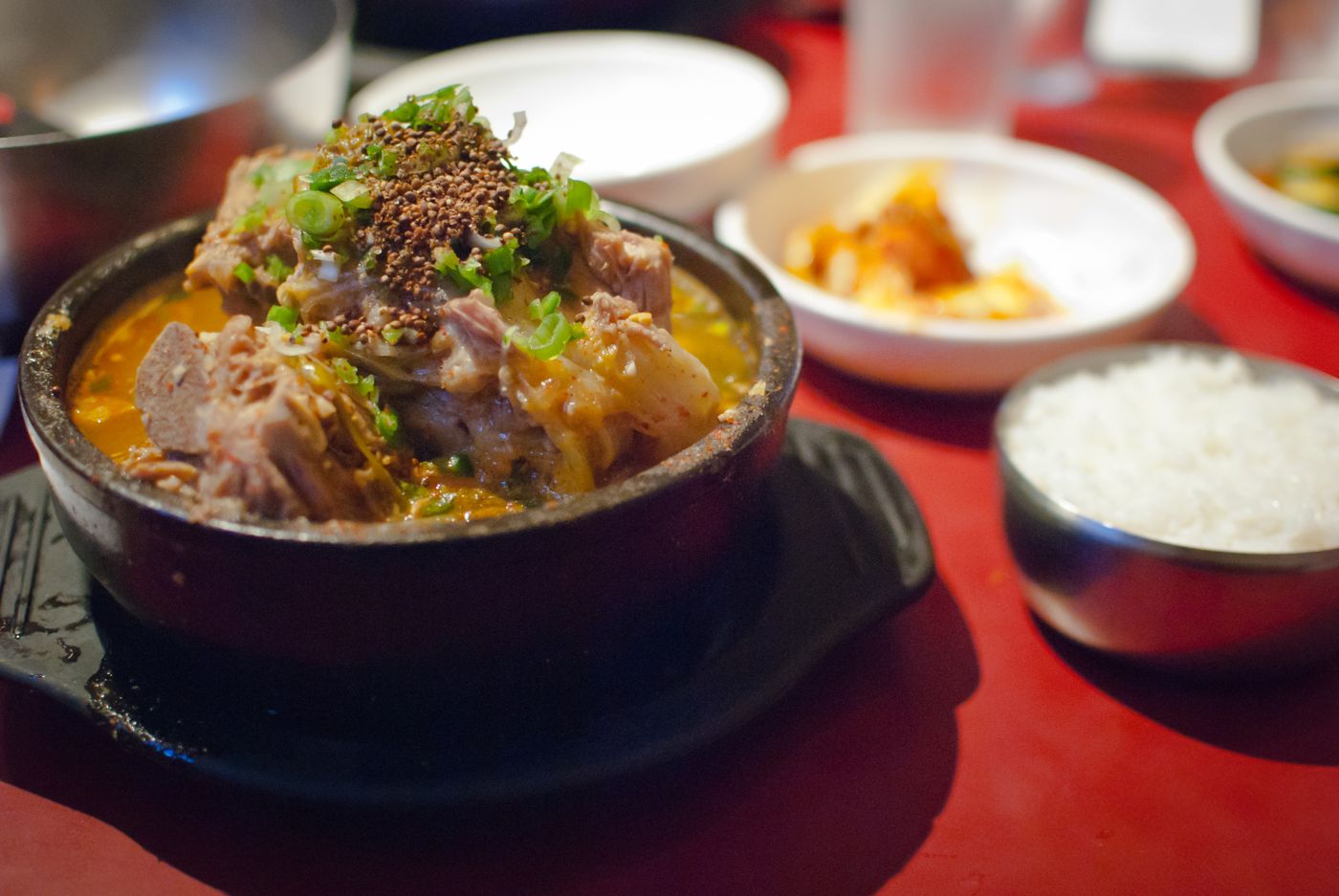 Gamjatang (Pork Bone and Potato Stew)감자탕Meaty pork spine simmered with potatoes, cabbage greens and perilla in a spicy doenjang-chili broth — a big shared pot of picking meat off the bones.
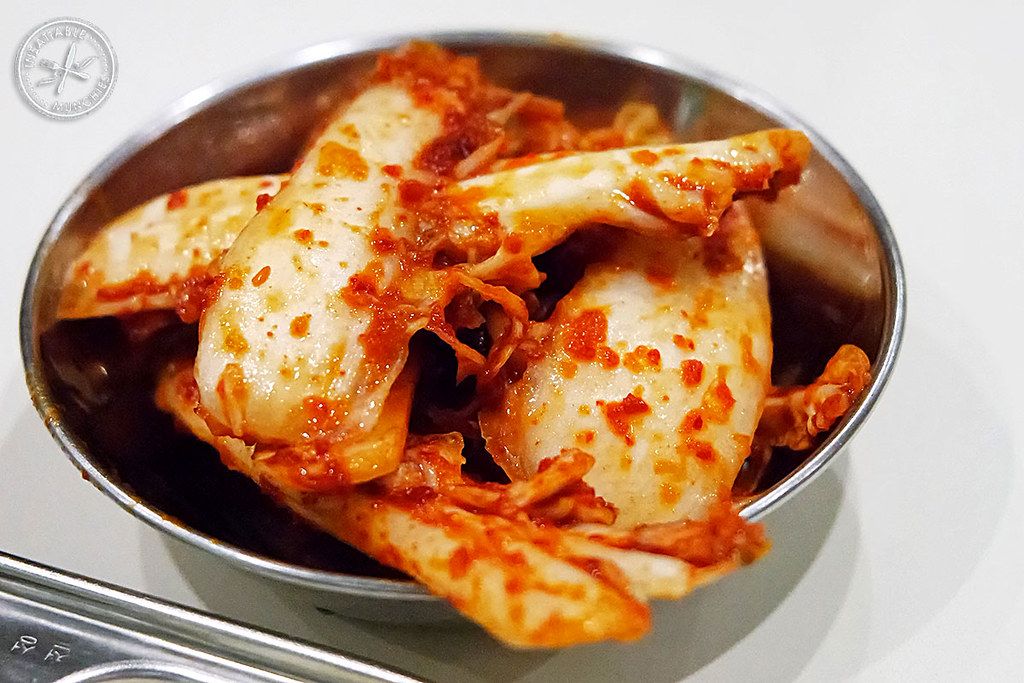 Fresh Cabbage Kimchi겉절이Napa cabbage salted only briefly, then tossed with chili, garlic and fish sauce and eaten the same day — kimchi at its freshest, crisp and bright.
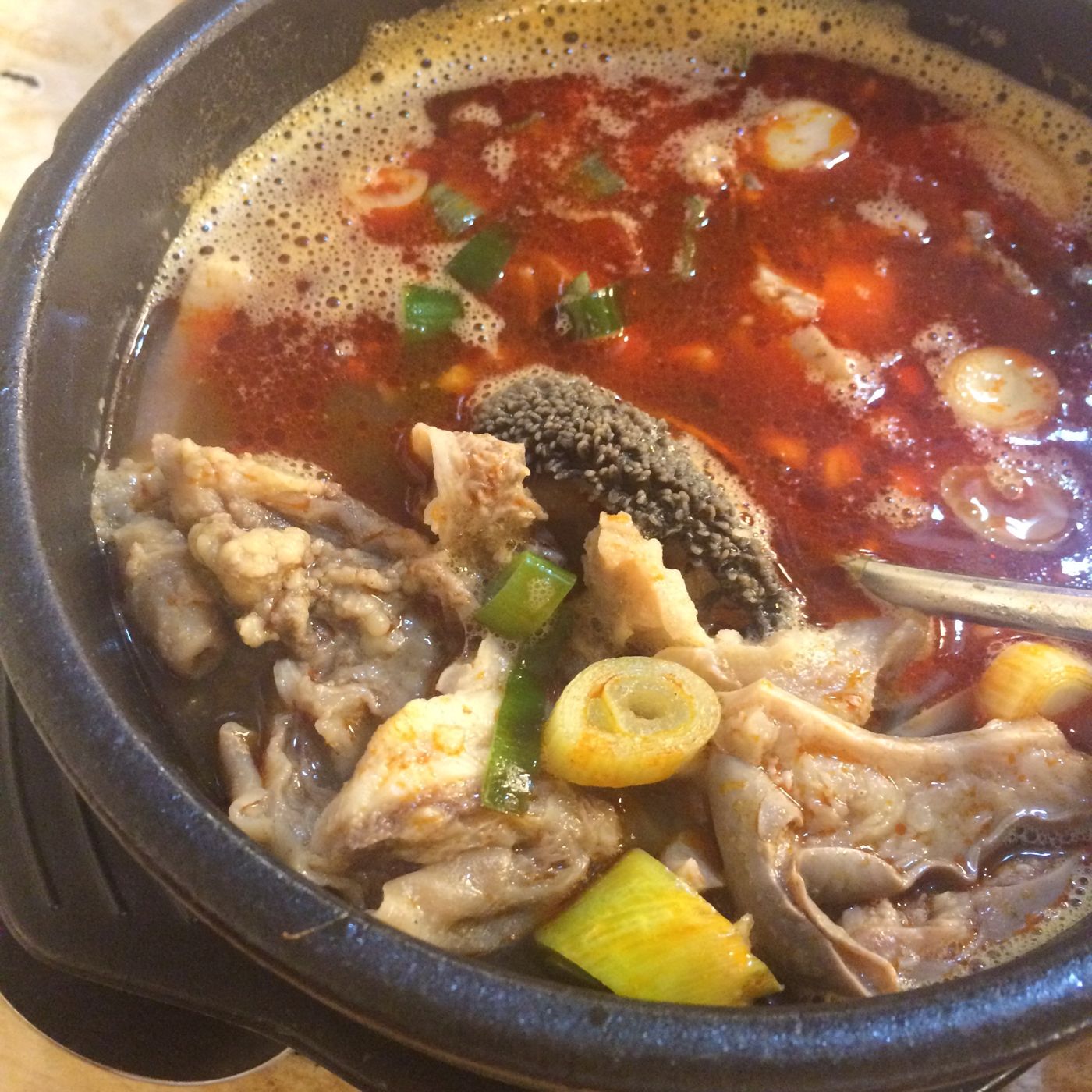 Haejangguk (Hangover Soup)해장국A hot, hearty morning soup — classically beef-bone broth with cabbage greens, bean sprouts and seonji (beef blood curd) — eaten over rice after a night of drinking.
- Pumpkin Kimchi for Stew호박김치Thick slices of pumpkin fermented with cabbage or young radish greens, then simmered into a mellow stew — a Hwanghae and Chungcheong cooking kimchi.
- Soy Sauce Water Kimchi장김치Cabbage and radish cured in soy sauce instead of salt, floated in a lightly sweet soy brine with pear, chestnut and pine nuts — a court and gentry kimchi.
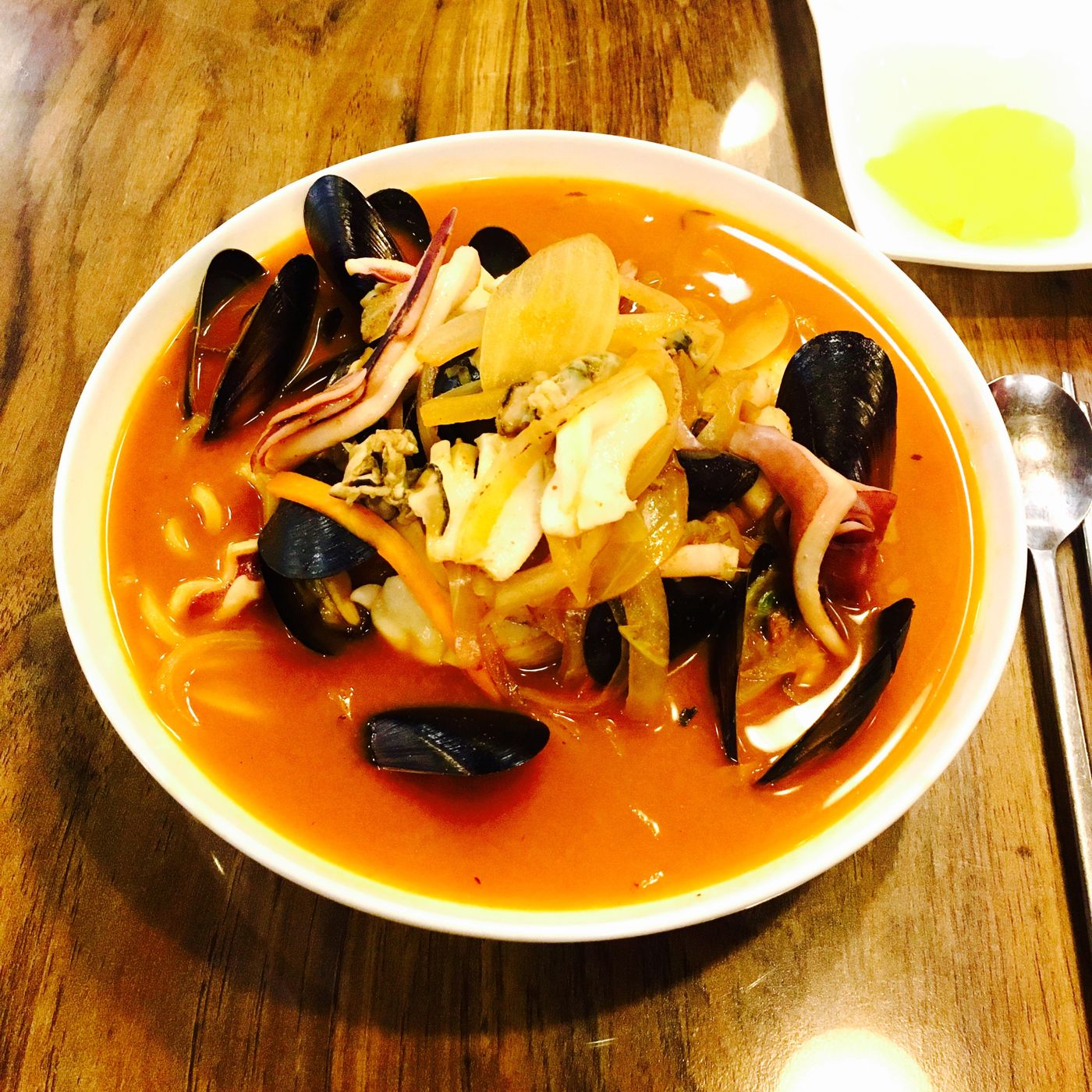 Jjamppong (Spicy Seafood Noodle Soup)짬뽕Thick wheat noodles in a fiery red broth of stir-fried pork, squid, shellfish and vegetables — the Korean-Chinese restaurant's spicy counterpart to jajangmyeon.
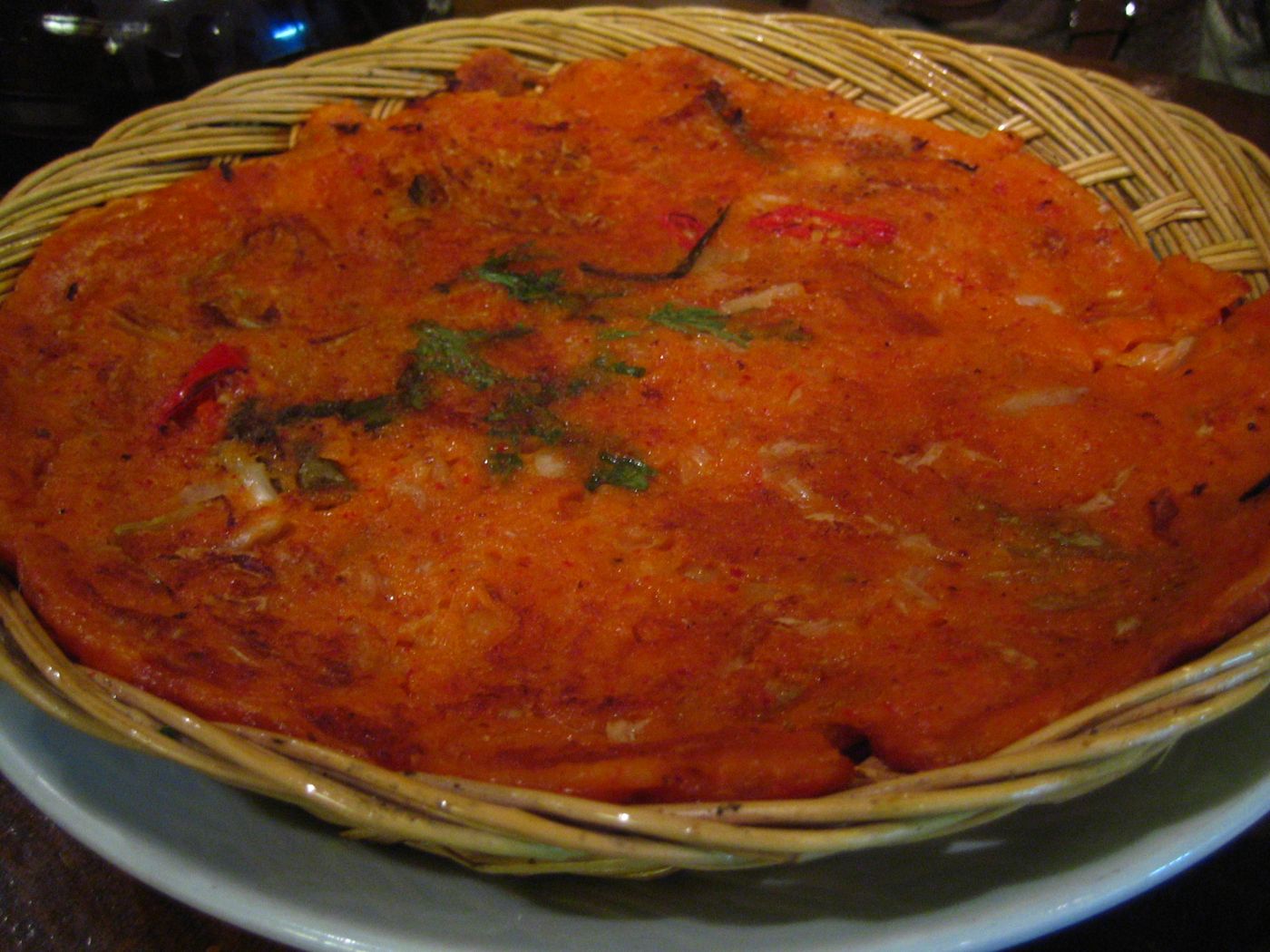 Kimchi Jeon (Kimchi Pancake)김치전Chopped, well-fermented kimchi folded into a thin flour batter and pan-fried until crisp at the edges — tangy, savory and quick to make.
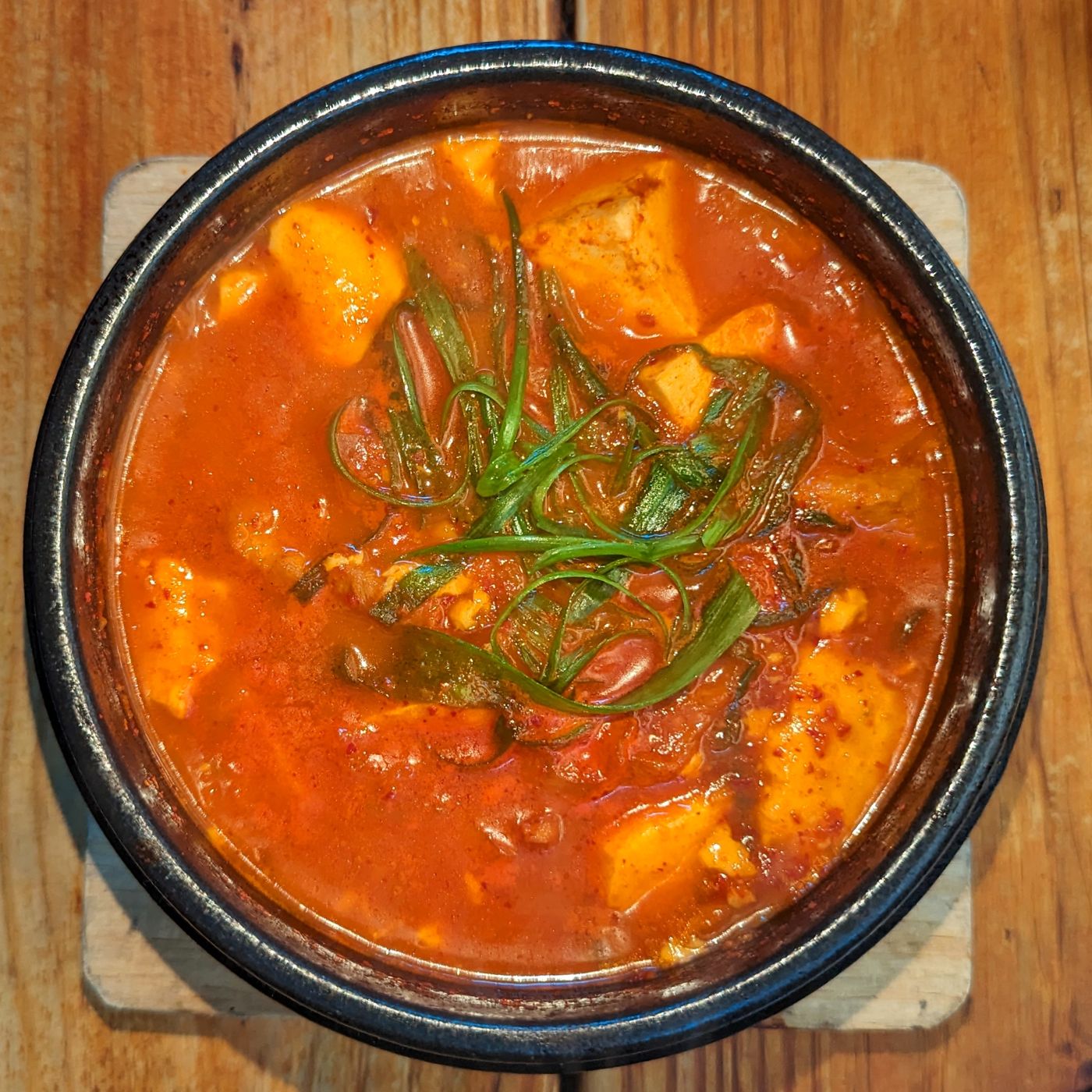 Kimchi Jjigae (Kimchi Stew)김치찌개Sour, well-aged napa cabbage kimchi simmered with pork and tofu into a tangy, spicy stew — the classic way to use up kimchi that has gone past its prime.
- Kongbiji Jjigae (Okara Stew)콩비지찌개Soybean pulp left from tofu-making — or freshly ground soaked soybeans — simmered thick with pork and sour kimchi and seasoned with salted shrimp; a nutty, homely winter stew.
- Cut Cabbage Kimchi막김치Napa cabbage cut into bite-size pieces before salting and tossed with the seasoning all at once — the quick, everyday way to make cabbage kimchi.
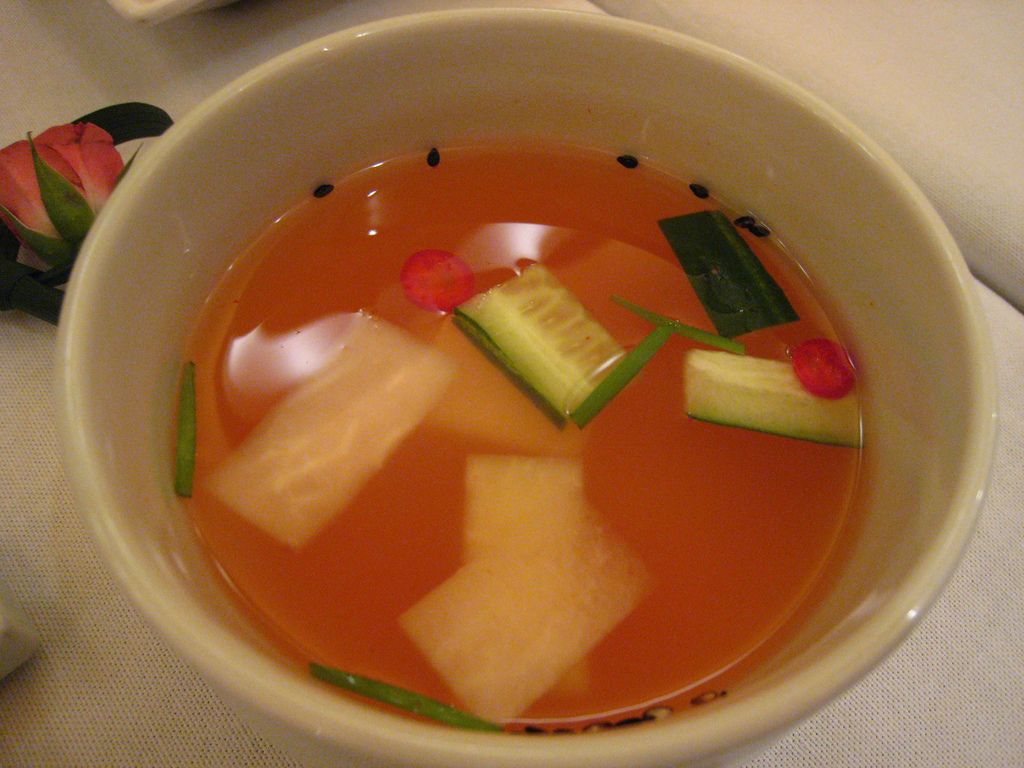 Radish and Cabbage Water Kimchi나박김치Thin squares of radish and napa cabbage in a lightly salted, pink-tinted broth — a mild, refreshing water kimchi eaten by the spoonful.
 Nokdu Bindaetteok (Mung Bean Pancake)녹두빈대떡Soaked mung beans ground into a thick batter with kimchi, sprouts and pork, then fried crisp in generous oil — a northern specialty and a Seoul market favorite.
- Chunky Radish and Cabbage Kimchi섞박지Big, flat-cut pieces of radish and cabbage mixed in one chili and jeotgal seasoning — a late-autumn “mixed” kimchi, and the name for big radish kimchi today.
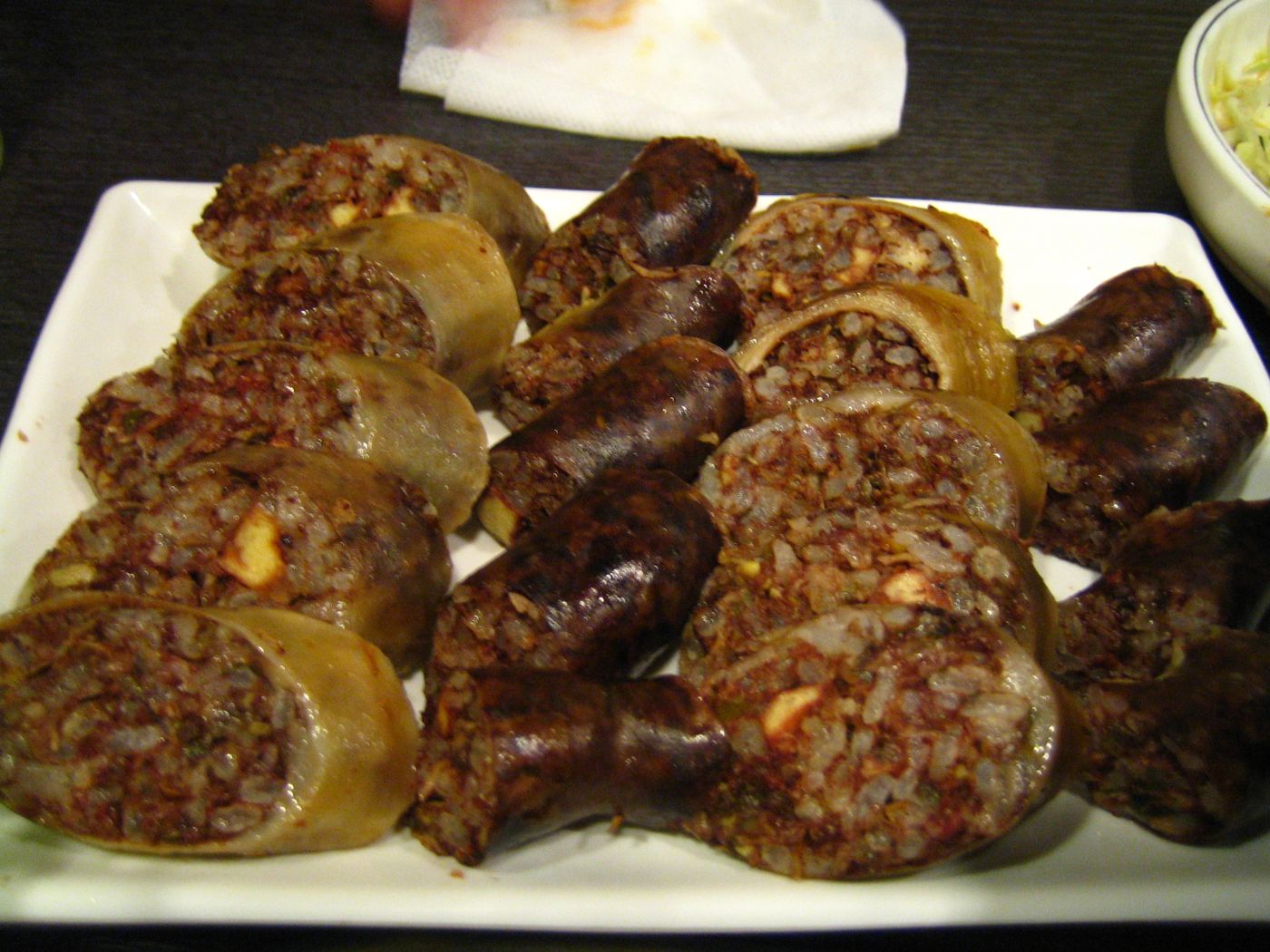 Sundae (Korean Blood Sausage)순대Pork intestine stuffed with pig's blood, glutinous rice, glass noodles and vegetables, then steamed — a northern farmhouse food that became a nationwide street snack.
Sources
- 01배추 — Encyclopedia of Korean Culture
- 02호배추(胡배추) — Encyclopedia of Korean Culture
- 03김치 — Encyclopedia of Korean Culture
- 04Kimjang, making and sharing kimchi in the Republic of Korea — UNESCO Intangible Cultural Heritage
- 05[여름배추 생산ㆍ유통 현장] ① 고랭지 배추 생산지 강릉 안반데기 — 식품저널 Foodnews
- 06Cabbage, chinese (pe-tsai), raw — USDA FoodData Central