Ingredient
Korean Pear
배
Romanization: bae
The large, round, crisp and very juicy Korean pear (bae). Beyond eating fresh, it is grated into meat marinades and sliced into mild kimchi for natural sweetness.
Flavor
Sweet, clean and refreshing, with a crunchy, slightly gritty texture and lots of juice. Its sweetness is milder than sugar, so it rounds out salty marinades and brines without tasting sugary.
Origin & History
Pears have been eaten on the Korean peninsula for a very long time. The Encyclopedia of Korean Culture notes that the New Book of Tang lists pears among the produce of Balhae, and that the Goryeosa records the planting of pear trees. Those early pears were wild dolbae, however. Joseon-era Korea had its own named varieties and regional specialties, but after a horticultural station opened at Ttukseom in 1906, improved varieties bred in Japan from East Asian sand pears gradually replaced them.
Modern Korean pears are round and russet- or golden-skinned, with crisp, granular flesh and abundant juice. Singo (Niitaka) is the cultivar analyzed in the Korean Food Composition Table, and pears are grown widely in the central and southern regions, mainly for eating fresh.
In cooking, pear does two jobs. Grated or juiced, it goes into marinades for beef dishes such as bulgogi and galbi, where it adds sweetness and moisture and its natural protease helps soften meat. Sliced or julienned, it is part of the filling for mild, chili-free kimchi such as baek-kimchi and Gaeseong's wrapped bossam kimchi. Traditional drinks include baesuk, pear poached with peppercorns, ginger and honey, and pear hwachae.
Nutrition
| Calories | 46 kcal |
|---|---|
| Protein | 0.3 g |
| Fat | 0.04 g |
| Carbohydrates | 12.4 g |
| Fiber | 1.3 g |
| Sodium | 0 mg |
Values from the Korean Food Composition Table (RDA, 2014 data): about 87 g water, 9.8 g sugars and 128 mg potassium per 100 g. Korean pear is mostly water and natural sugar and is not a concentrated source of vitamins or minerals. Actual values vary with ingredients, portion size and preparation.
Health Benefits
- Hydrating fruit: About 87 percent water, with modest fiber and natural sugars and almost no fat or sodium.
- Natural tenderizer: Korean pear contains a cysteine protease that breaks down muscle proteins in laboratory tests, which helps explain its traditional place in meat marinades.
- Do not over-marinate: America's Test Kitchen found that pear enzymes can turn thinly sliced beef mushy on the surface; a short marinade is enough.
- A lighter sweetener: Using grated pear in marinades and kimchi can replace part of the added sugar, though the pear itself still contributes natural sugars.
Informational, not medical advice. Talk to a qualified professional about your own health and diet.
Dishes with Korean Pear
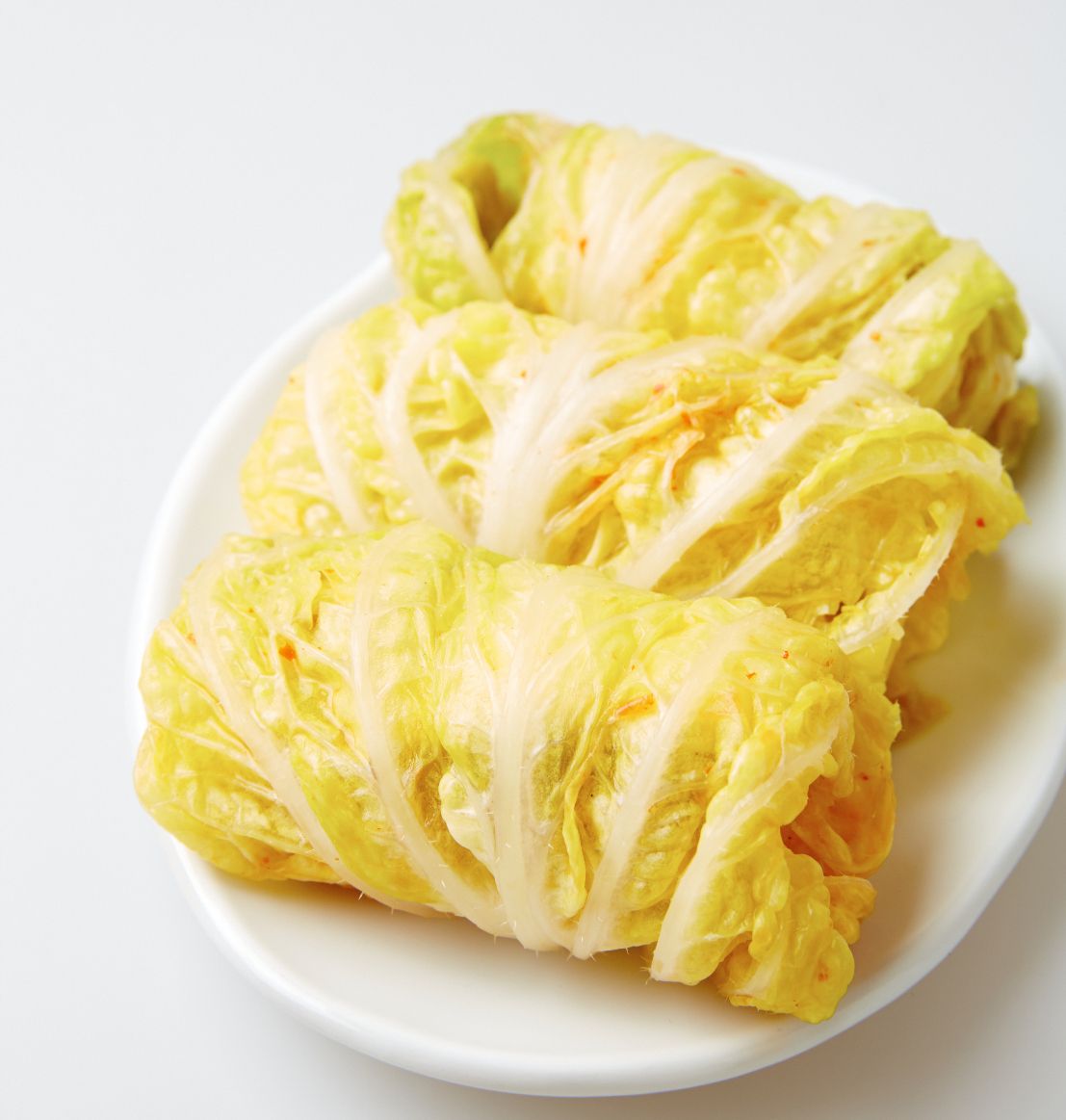 White Kimchi백김치Napa cabbage stuffed with radish, pear, chestnut and jujube and ripened in a clear, cool brine — kimchi with no chili flakes, mild and refreshing.
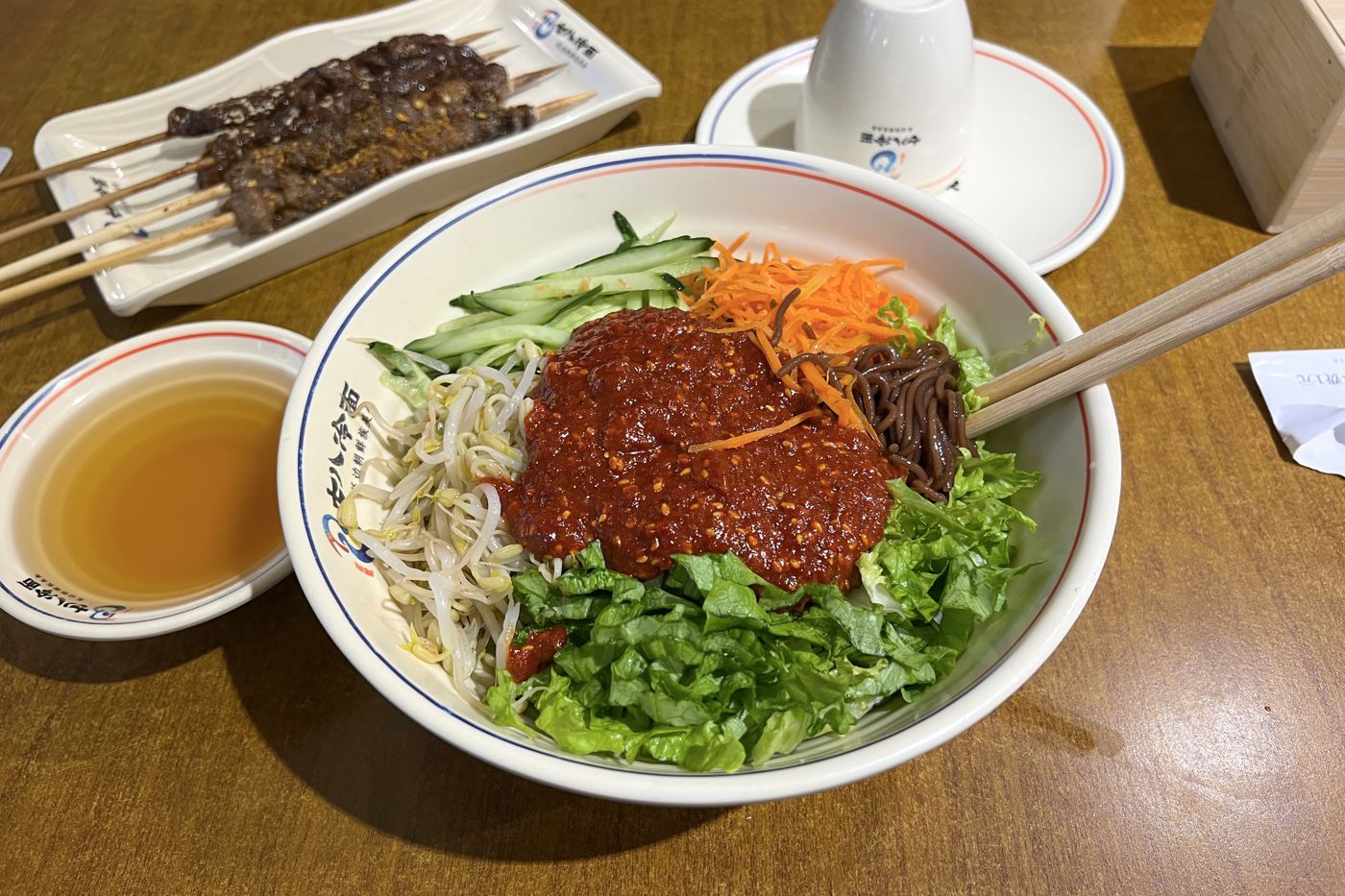 Bibim-naengmyeon (Spicy Mixed Cold Noodles)비빔냉면Chewy starch noodles tossed in a sweet, vinegary chili sauce, topped with cucumber, pear and egg — the Hamheung tradition of hoe-naengmyeon, carried south by refugees.
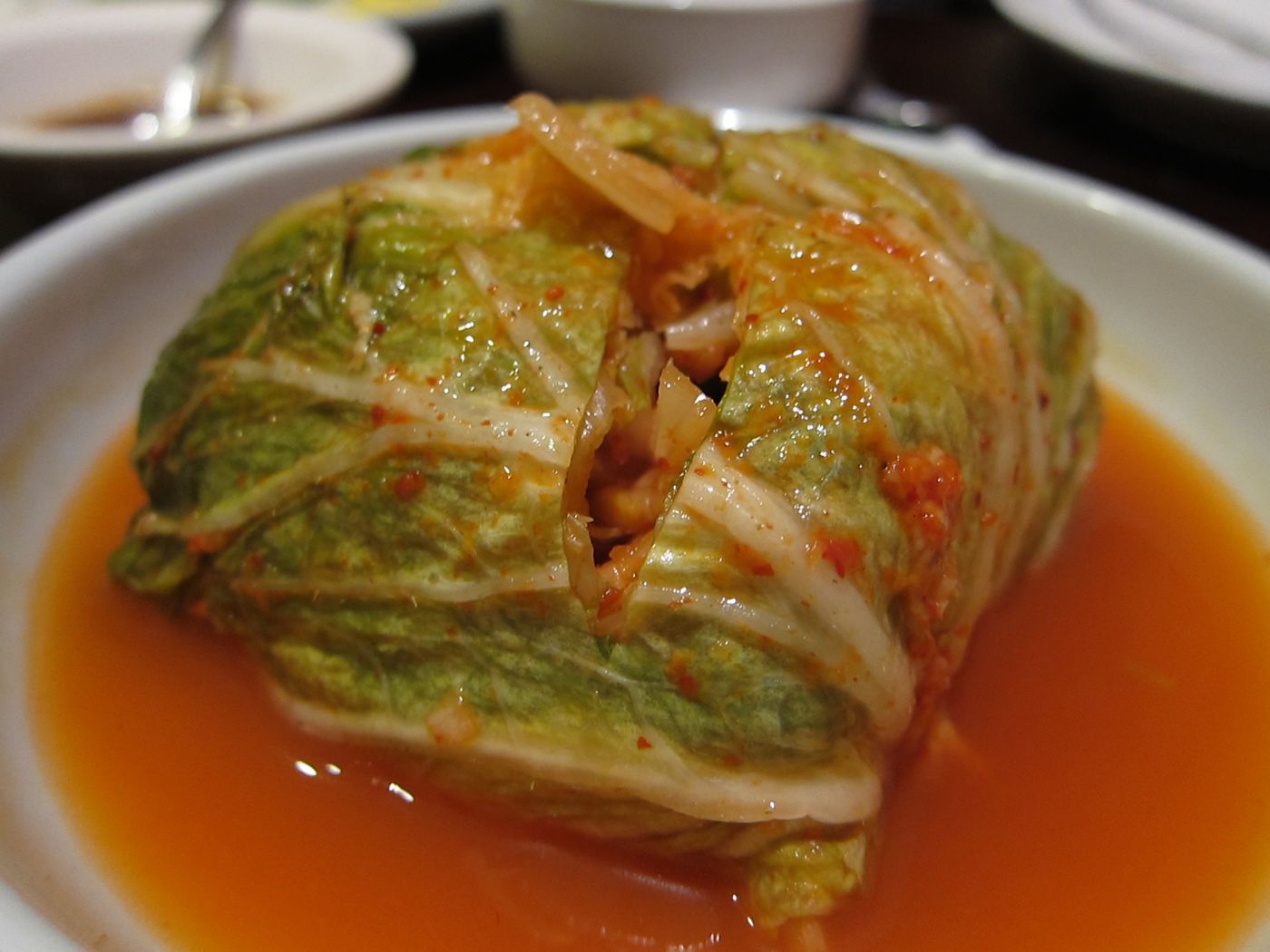 Wrapped Kimchi보쌈김치Cabbage, radish, fruit, nuts and seafood bundled inside whole cabbage leaves — the lavish wrapped kimchi of Gaeseong, made for honored guests.
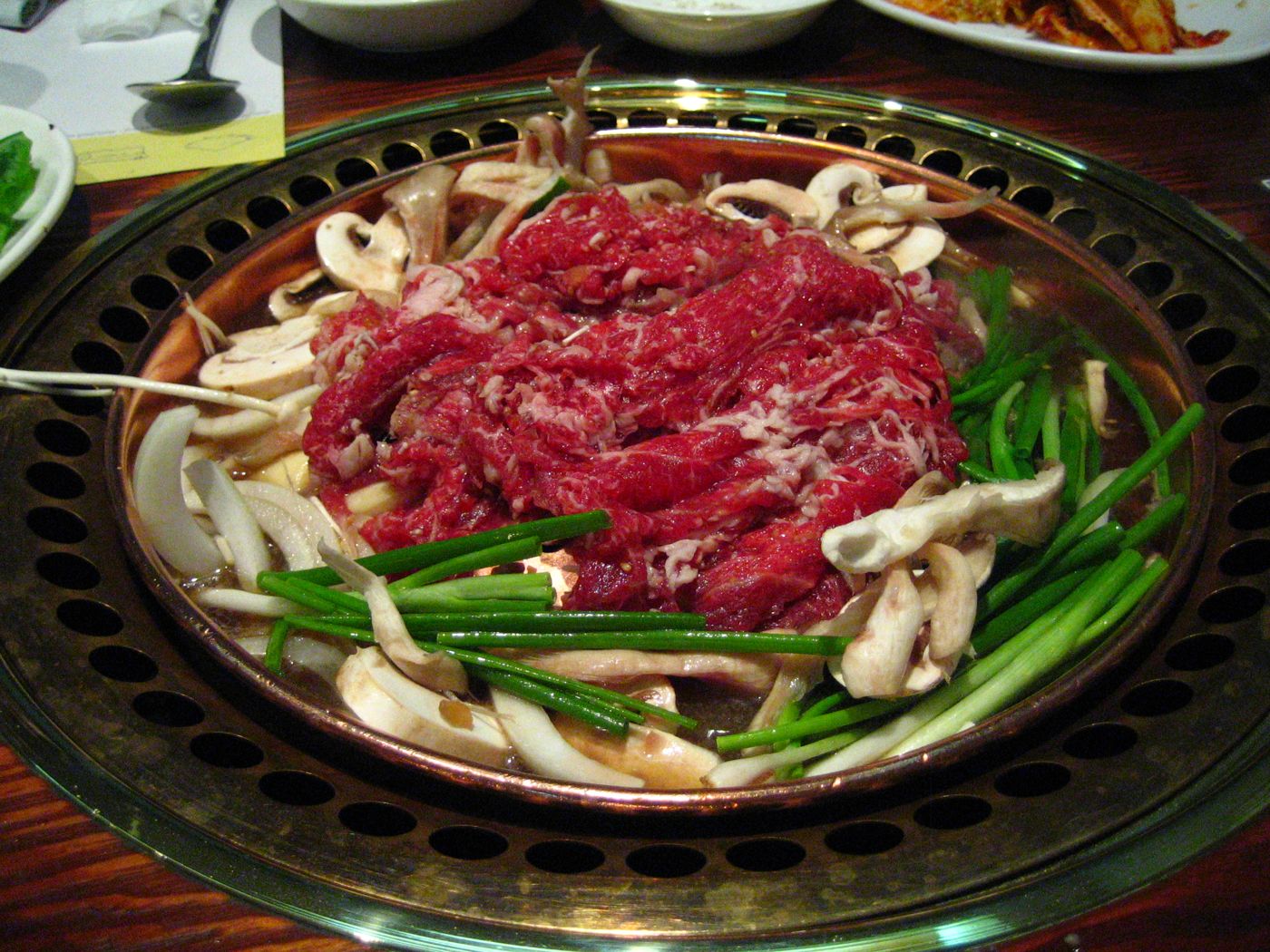 Bulgogi (Marinated Grilled Beef)불고기Thin slices of beef marinated in soy sauce, pear, garlic and sesame, then grilled or seared — descended from the court dish neobiani and Korea's best-known meat dish.
- Spicy Lightly Salted Oysters어리굴젓Fresh oysters lightly salted and ripened with chili — a short-keeping winter jeotgal famous in Seosan and Ganwoldo in South Chungcheong.
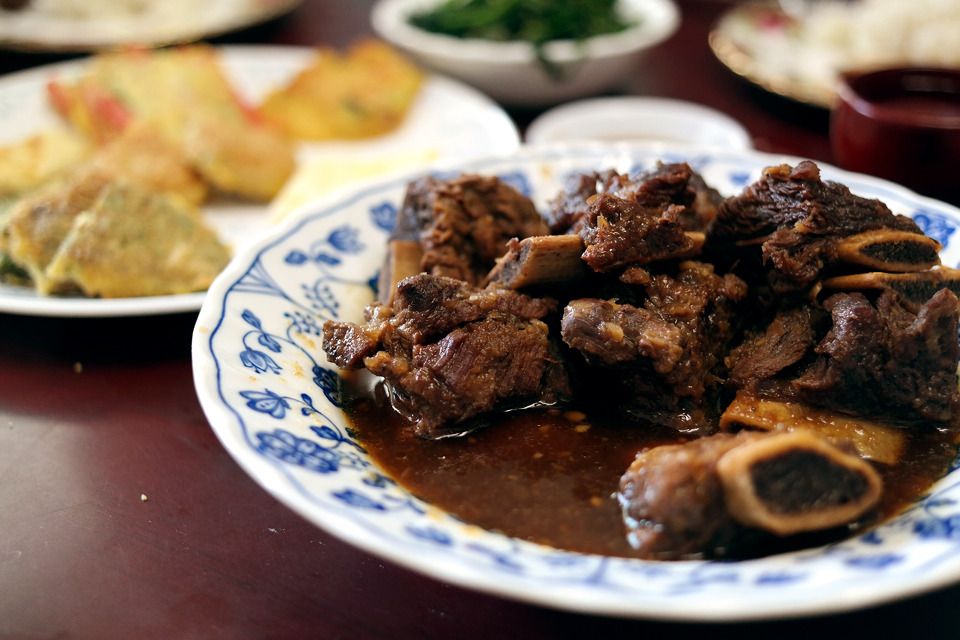 Galbi-jjim (Braised Beef Short Ribs)갈비찜Beef short ribs simmered slowly in soy sauce, pear and garlic with radish, carrot, chestnuts and jujubes until glossy and tender — a dish for holidays and honored guests.
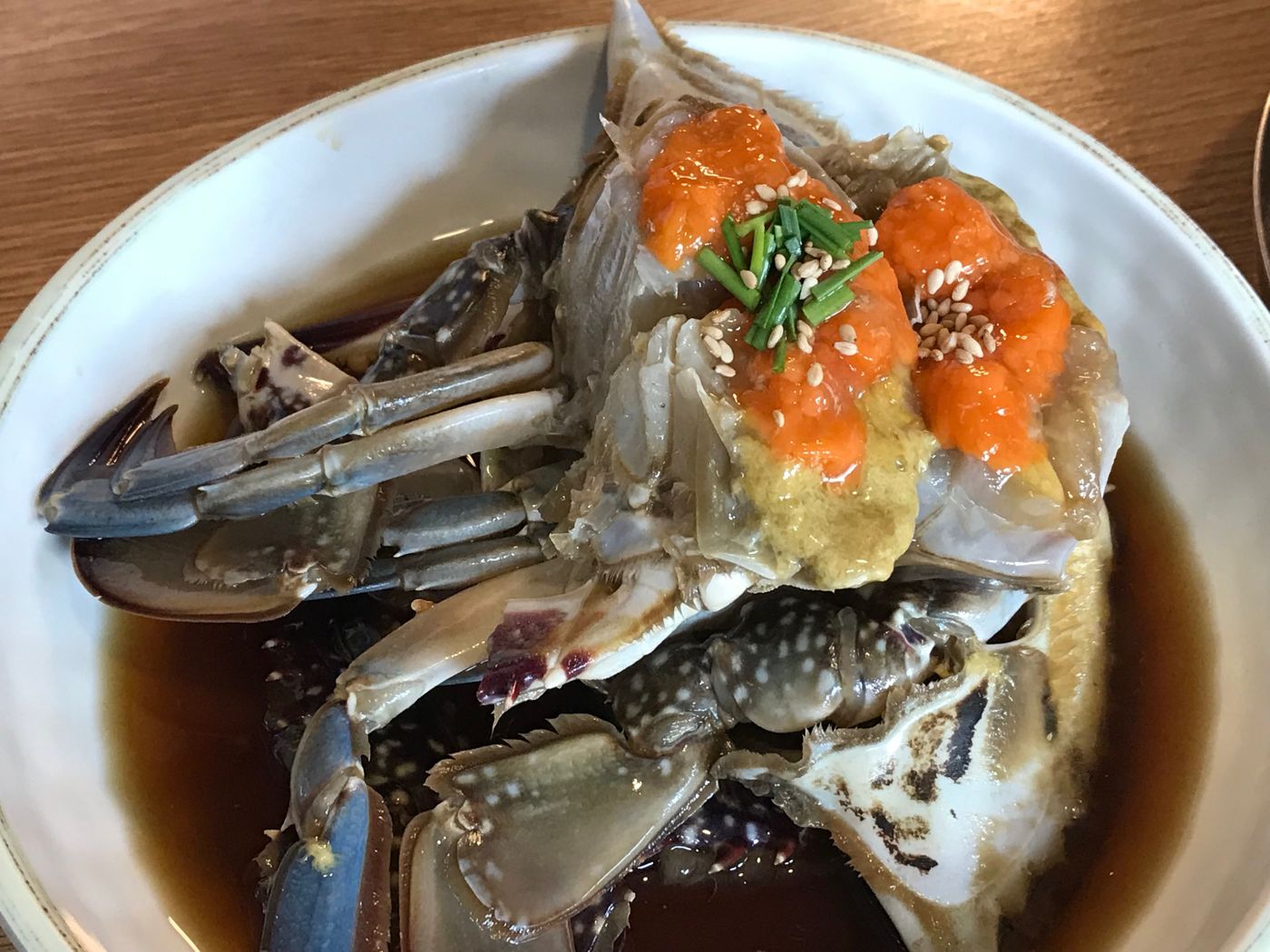 Soy-Marinated Raw Crab간장게장Raw crabs steeped in a boiled-and-cooled soy marinade until silky and savory — a centuries-old preserve, eaten by spooning rice into the shell.
- Spicy Skate Salad홍어회무침Strips of raw or lightly fermented skate, firmed in vinegar and tossed with minari, radish and a sweet-sour gochujang dressing — Jeolla's feast-day salad.
- Soy Sauce Water Kimchi장김치Cabbage and radish cured in soy sauce instead of salt, floated in a lightly sweet soy brine with pear, chestnut and pine nuts — a court and gentry kimchi.
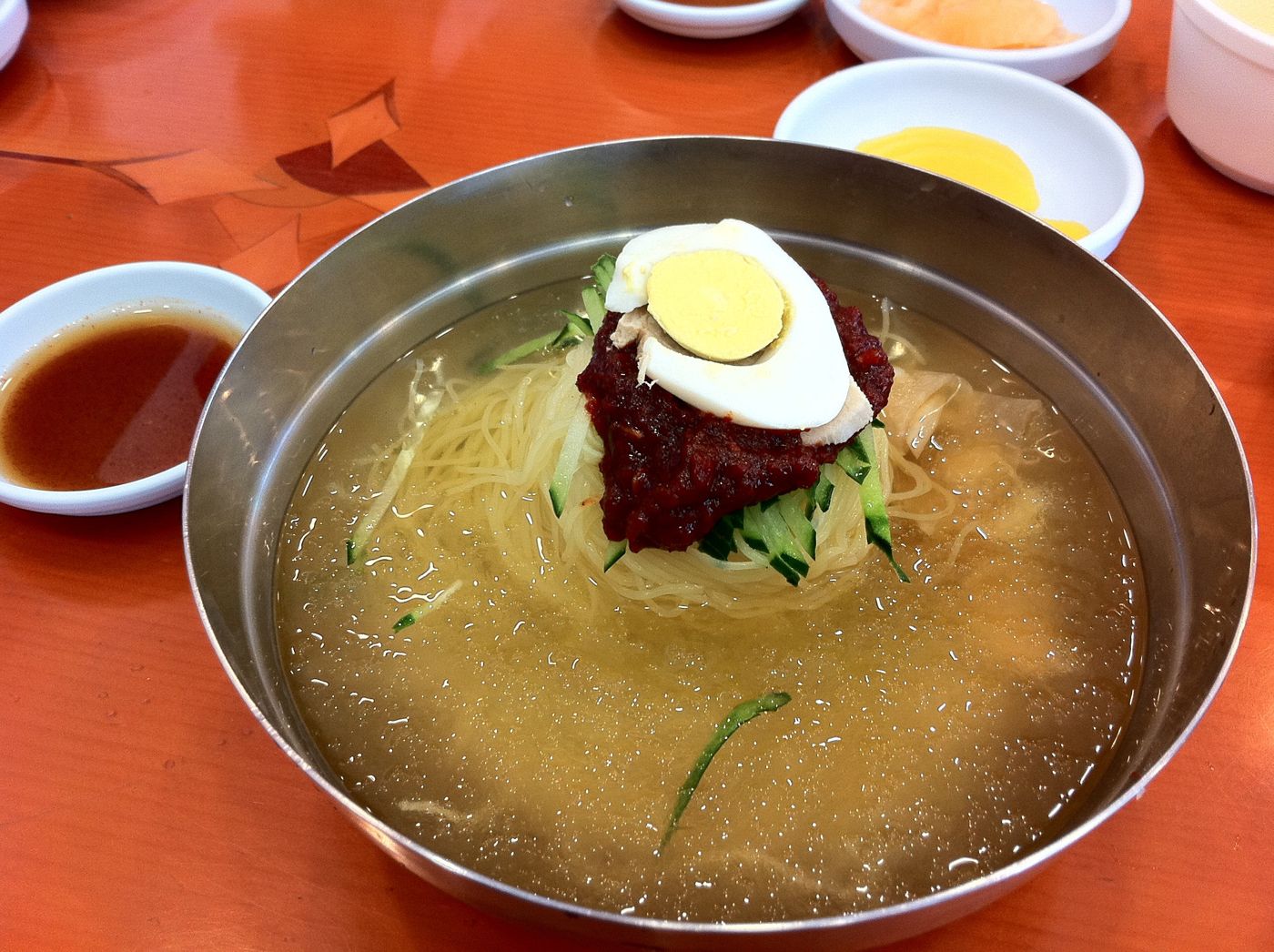 Milmyeon (Busan Wheat Cold Noodles)밀면Chewy wheat-and-starch noodles in an icy, sweet-sour beef broth or tossed in chili paste — Busan's refugee-era answer to northern naengmyeon.
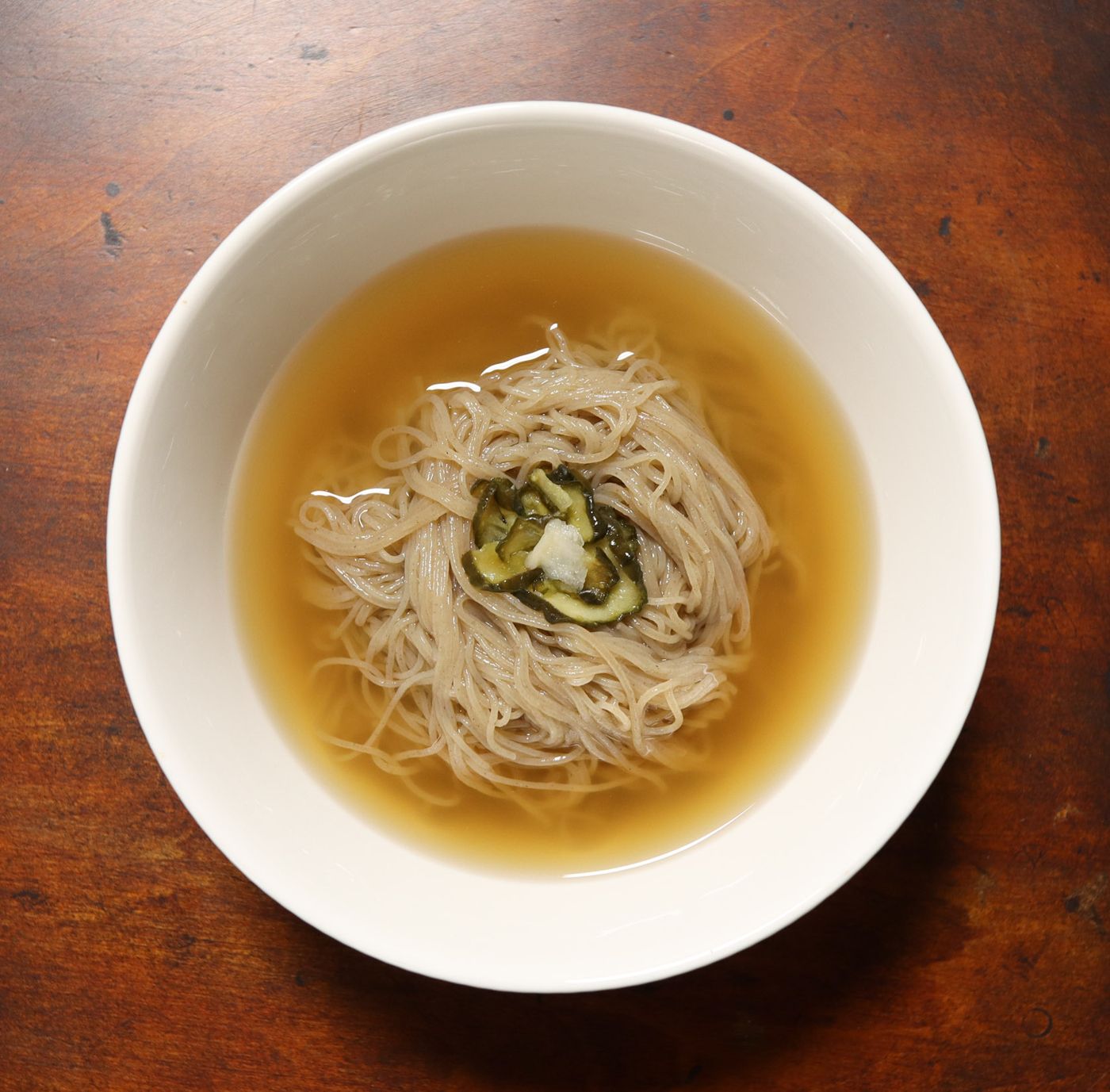 Mul-naengmyeon (Cold Buckwheat Noodles in Broth)물냉면Buckwheat noodles in an icy mix of beef broth and dongchimi, topped with sliced beef, pear, radish and egg — a Pyongyang winter dish now loved in summer.
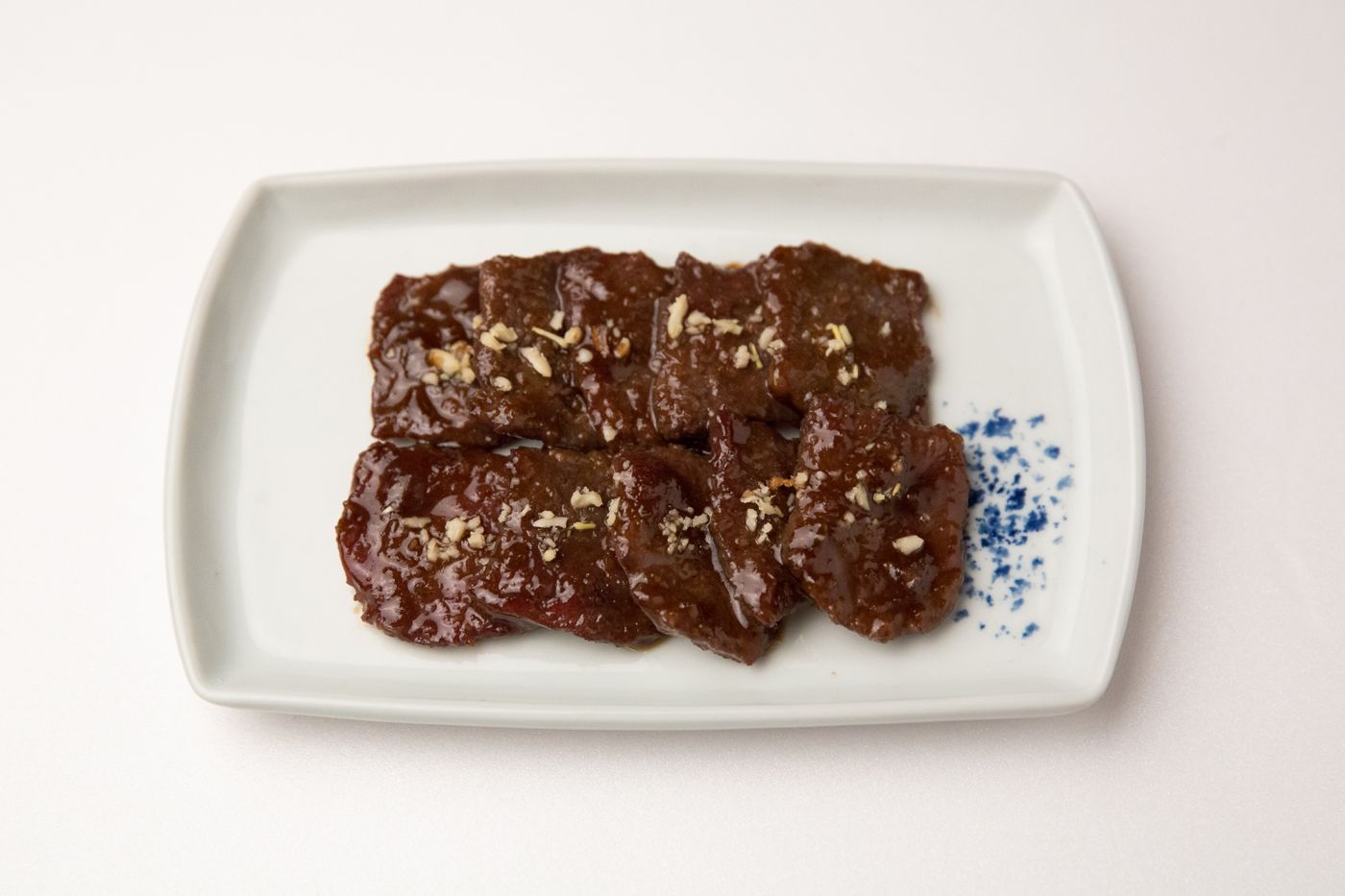 Neobiani (Court-Style Grilled Beef Slices)너비아니Broad, thin slices of beef marinated in soy, sugar, garlic and pear, then grilled lightly: the court and Seoul-household name for what is now usually called bulgogi.
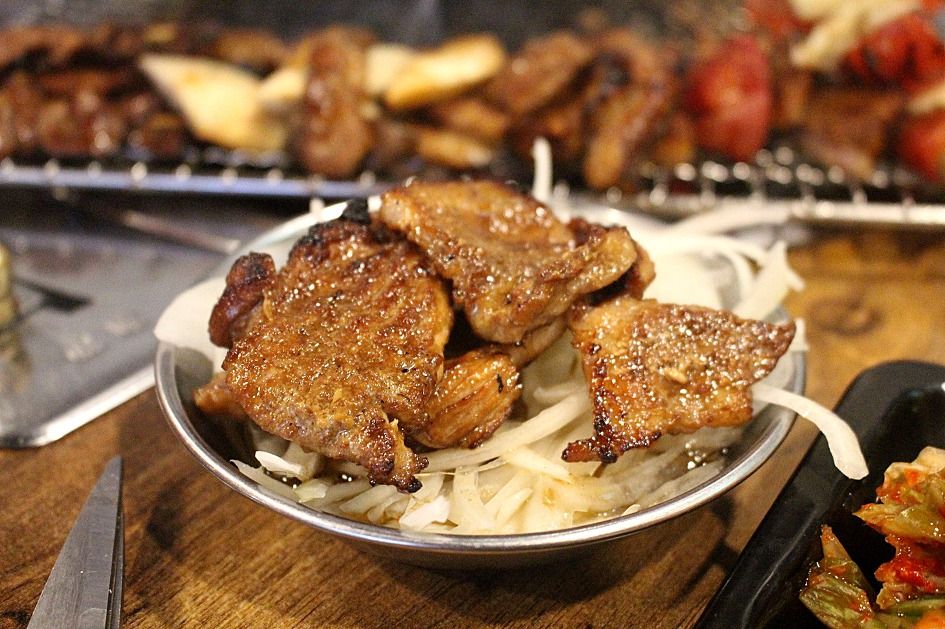 So-galbi-gui (Grilled Beef Short Ribs)소갈비구이Beef short ribs scored to the bone, marinated with soy, pear, garlic and sesame and grilled over charcoal — Korea's celebration barbecue, best known in Suwon's salt-seasoned style.
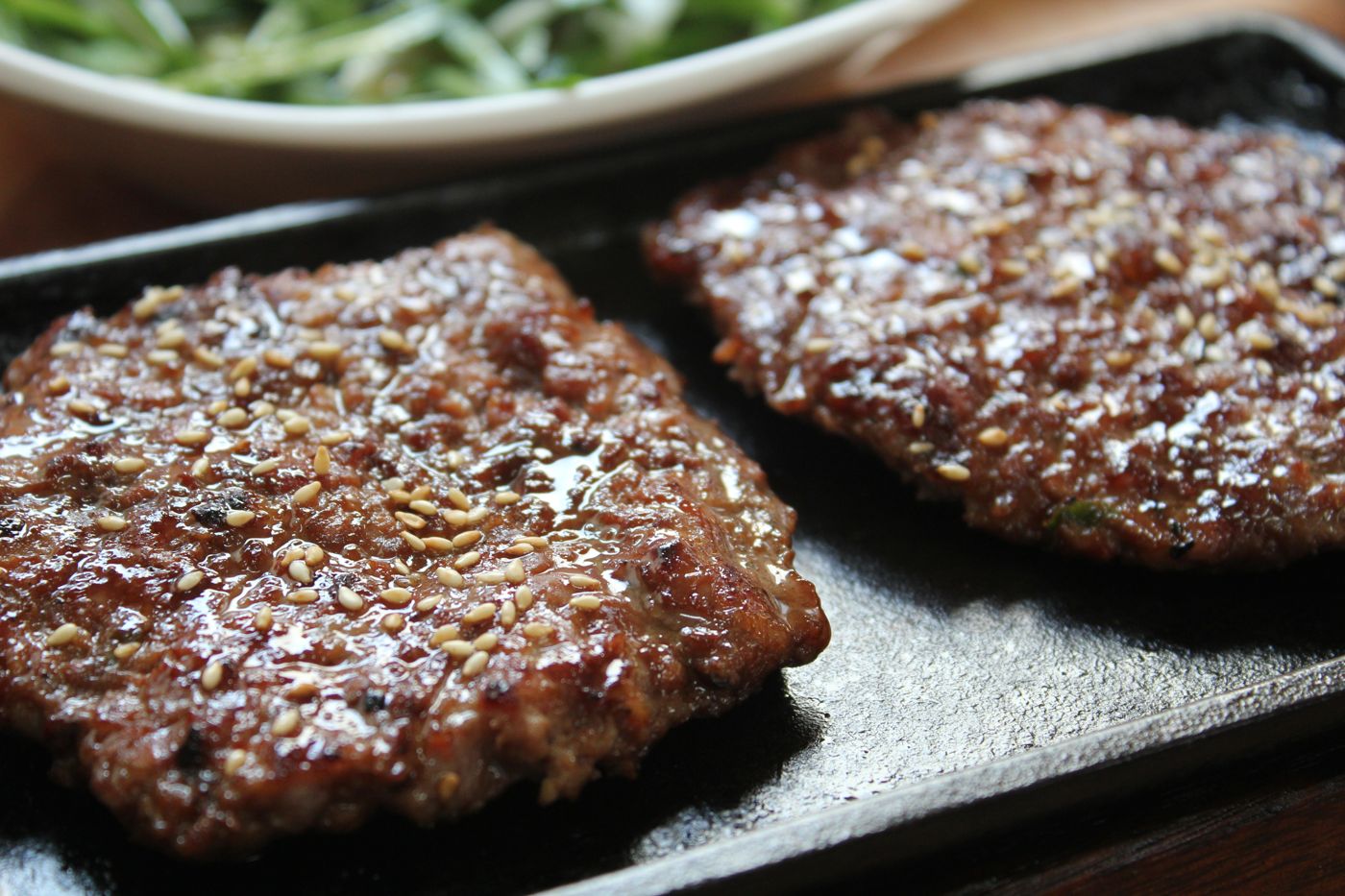 Tteokgalbi (Minced Short-Rib Patties)떡갈비Short-rib meat minced, seasoned sweet-savory and shaped into a patty, then grilled. Damyang presses it back onto the bone; Gwangju's Songjeong style is a flat boneless square.
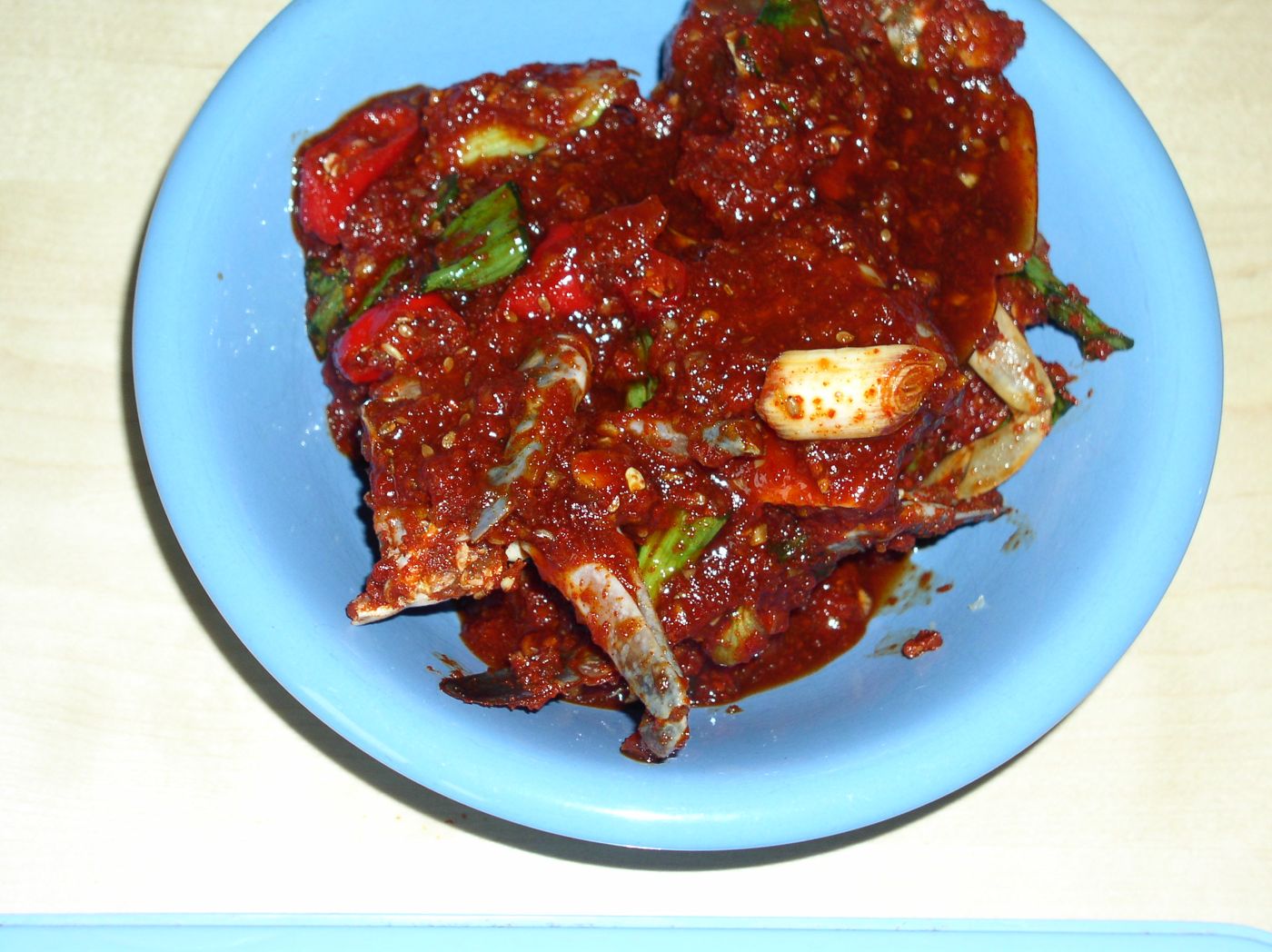 Spicy Marinated Raw Crab양념게장Raw crab pieces tossed in a glossy chili, garlic and soy dressing and eaten within days — sweet, fiery and a specialty of Yeosu's gejang restaurants.
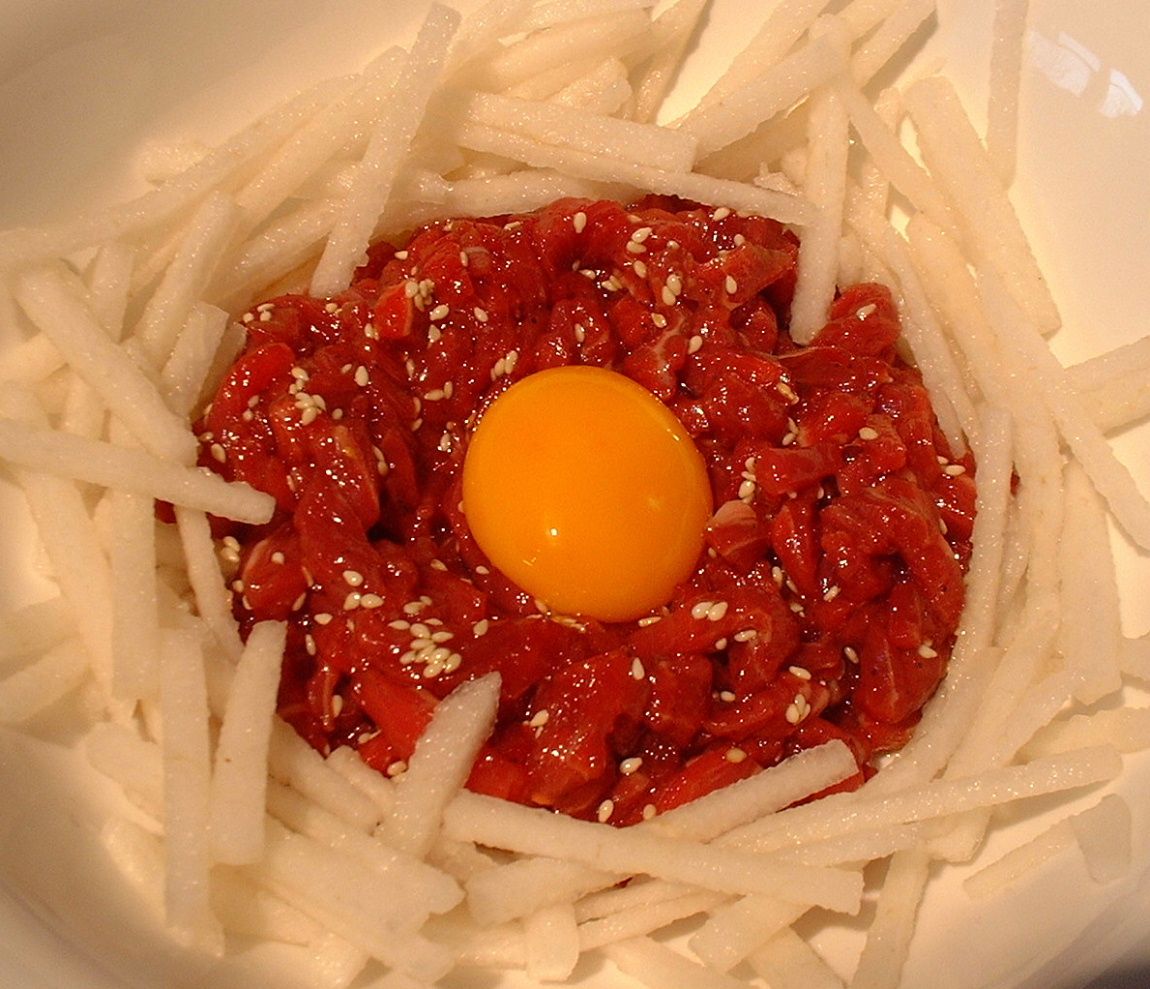 Yukhoe (Korean Seasoned Raw Beef)육회Thinly cut raw lean beef dressed with soy, sesame oil and garlic, served over Korean pear with an egg yolk. A festive, long-standing dish that needs the freshest meat and careful handling.
Sources
- 01배 (Pear) — Encyclopedia of Korean Culture
- 02배나무 (Pear tree) — Encyclopedia of Korean Culture
- 03백김치 (Baek-kimchi) — Encyclopedia of Korean Culture
- 04Functional characterization of purified pear protease and its proteolytic activities with casein and myofibrillar proteins — Food Science and Biotechnology (PMC)
- 05Korean Marinated Beef — America's Test Kitchen
- 06Korean Food Composition Table (National Standard Food Composition Table) search — Rural Development Administration