Regions
Yeosu
여수
A southern port of islands and tidal flats, known for Dolsan mustard-leaf kimchi, crab-marinade rice tables, vinegar-dressed seodae and a generous hanjeongsik.
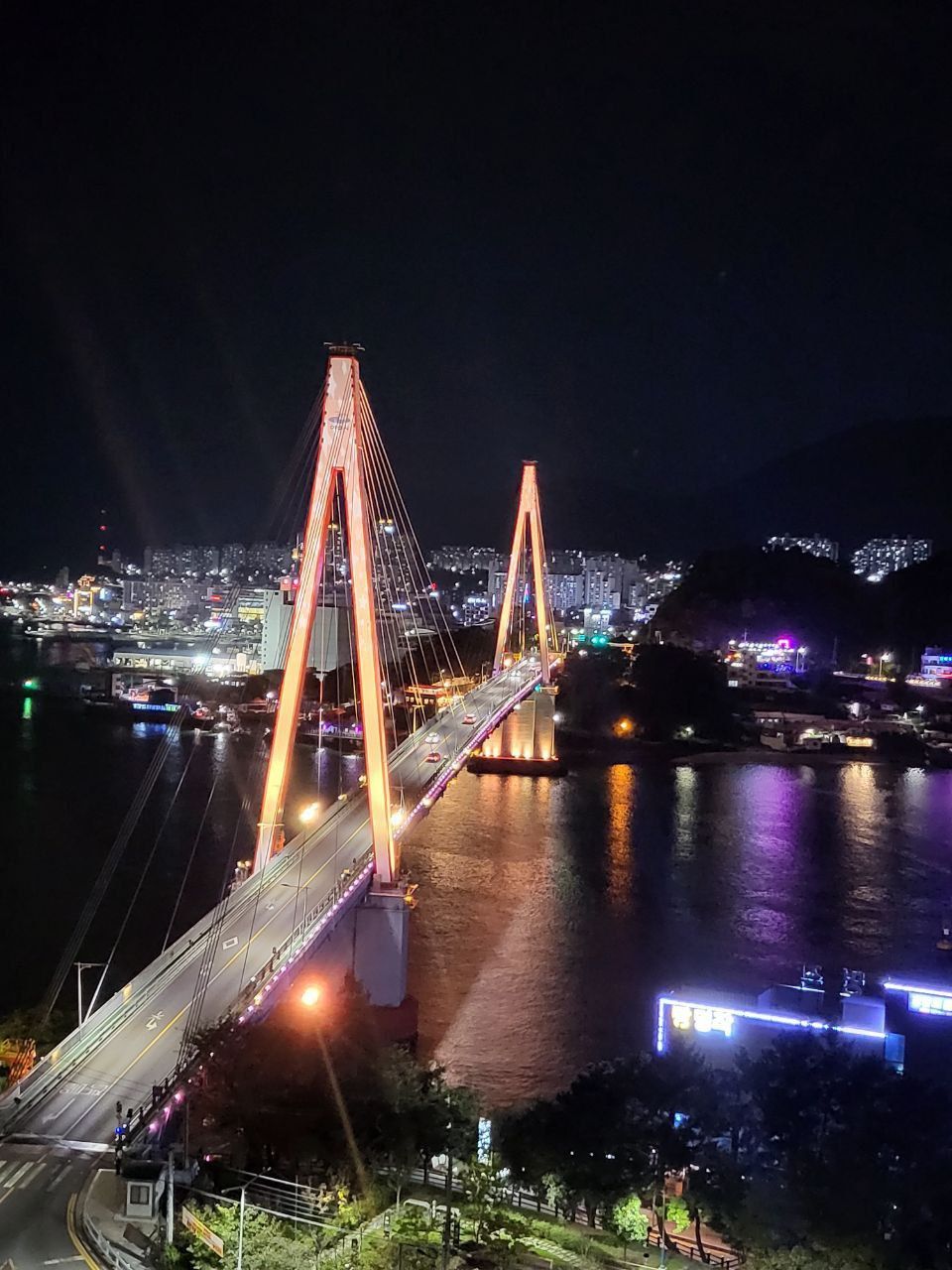
Yeosu occupies a peninsula and a scatter of islands on Korea's south coast, with sheltered bays such as Gamak and Yeoja. The Digital Yeosu Culture Encyclopedia describes a local cuisine built on seafood and salted fish, seasoned boldly with salt and chili because of the warm climate, and served in many dishes at once, so that the whole table fills. For the surrounding food region, see Jeolla.
Yeosu's ten flavors
The city has chosen its own list of ten scenic spots and ten flavors (Yeosu 10-mi). The flavors are Dolsan gat-kimchi, gejang-baekban (rice with marinated crab), seodae-hoe, Yeosu hanjeongsik, conger pike sashimi or shabu-shabu, grilled oysters, grilled eel and eel soup, braised cutlassfish, cockle shabu-shabu, and gizzard shad sashimi or grilled shad. Like other cities' lists, it is a tourism brand, but it is a fair guide to what the port eats.
Dolsan gat-kimchi
Dolsan island, part of the city, grows the mustard greens Yeosu is best known for. The Encyclopedia of Korean Culture describes Dolsan gat as soft, pale green and free of fine hairs, with a distinctive aroma, less fiber and a gentler bite than ordinary mustard greens. The local strain was introduced to Segeuji village on Dolsan during the Japanese colonial period, and the island's sunshine, mild maritime climate and sandy, alkaline soil suited it. According to the encyclopedia, Dolsan grows 82 percent of the mustard greens eaten in Korea, and about 70 percent of the harvest is made into kimchi or otherwise processed. Mustard greens from Dolsan are also said to have been sent to the Joseon court as tribute; treat that as tradition.
To make gat-kimchi, the greens are salted for four or five hours, then tossed with glutinous-rice porridge, gochugaru, garlic, anchovy sauce, fresh shrimp and ginger ground together, plus shredded green onion and carrot. The encyclopedia praises its nose-tingling sharpness and sourness as it ripens. Dolsan gat and Dolsan gat-kimchi were registered as geographical indications in 2010. Locals also make mustard-green water kimchi, mustard-green kimchi with young radish, and even mustard-green steamed rice cake. See making kimchi.
Seafood from the bays
The Digital Yeosu Culture Encyclopedia lists a long run of fish dishes. Seodae, a sole, is mild and tender and appears at every celebration; seodae-hoe is dressed with vinegar fermented from makgeolli, which locals consider essential. Conger pike (gaetjangeo) is caught in southern waters from mid-April to late October and eaten as a summer restorative. Gunpyeongseon-i, a hard-scaled, bony fish rarely seen elsewhere, is grilled and valued above dried croaker. Ppyeokkosi is young fish sliced fine with its soft bones. Fat greenling soup, norae-mi-tang, is a clear broth seasoned with soup soy sauce and crown daisy. Gamak Bay is almost one continuous oyster farm, which is why grilled oysters became popular; cockles come from the western tidal flats; and clams are threaded on skewers, steamed and brushed with sauce. For cutlassfish, see galchi-jorim.
Jeotgal, jangajji and gejang
Yeosu's side dishes lean heavily on salted seafood. The local encyclopedia lists gizzard-shad gut, cutlassfish innards, small squid, squid, anchovy, oyster and clam jeotgal, and crab preserves made with banjang-ge (a small local crab), freshwater crab and blue crab. Banjang-ge marinated in boiled soy sauce, with its seasoned shell, is the base of the gejang-baekban tables that draw visitors. Pickles of perilla leaves, onions, garlic and garlic scapes round out the table. See making jeotgal and jangajji pickling.
Hanjeongsik and the island kimchi
Yeosu hanjeongsik is one of the ten flavors, and the local style of serving many dishes at once makes it a natural showcase; see hanjeongsik. The local encyclopedia also highlights kimchi beyond gat: bittersweet godeulppaegi kimchi, nicknamed "ginseng kimchi"; winter spinach from Dolsan, grown in open fields and sometimes made into kimchi with chestnuts and oysters; and a coastal parae seaweed kimchi dressed with sesame oil at serving. For the neighboring ports, see Tongyeong and Mokpo.
Dishes from this region
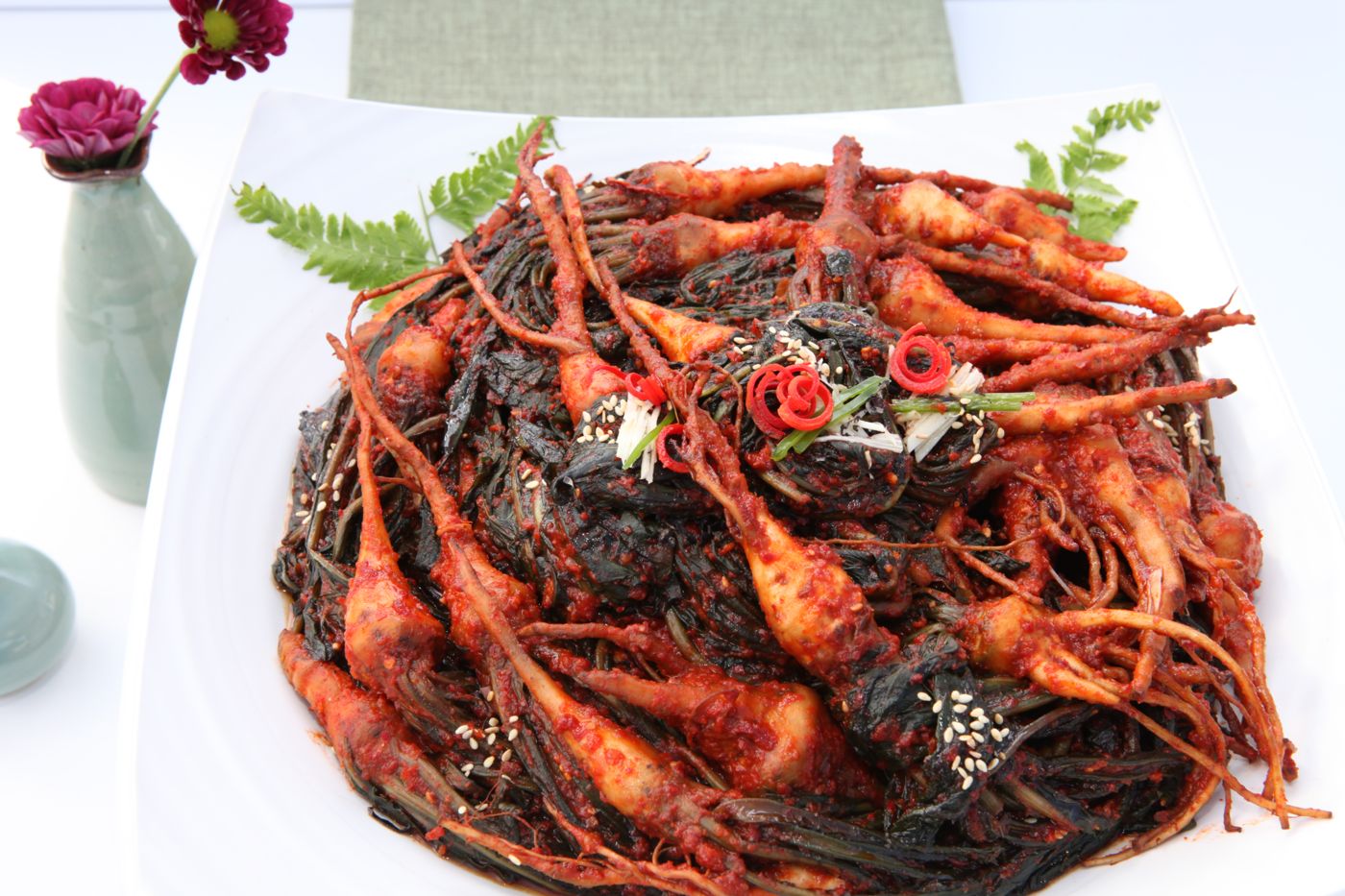 Bitter Godeulppaegi Kimchi고들빼기김치A bittersweet Jeolla kimchi of whole godeulppaegi greens and roots, soaked for days to tame the bitterness and dressed with anchovy jeotgal and chili.
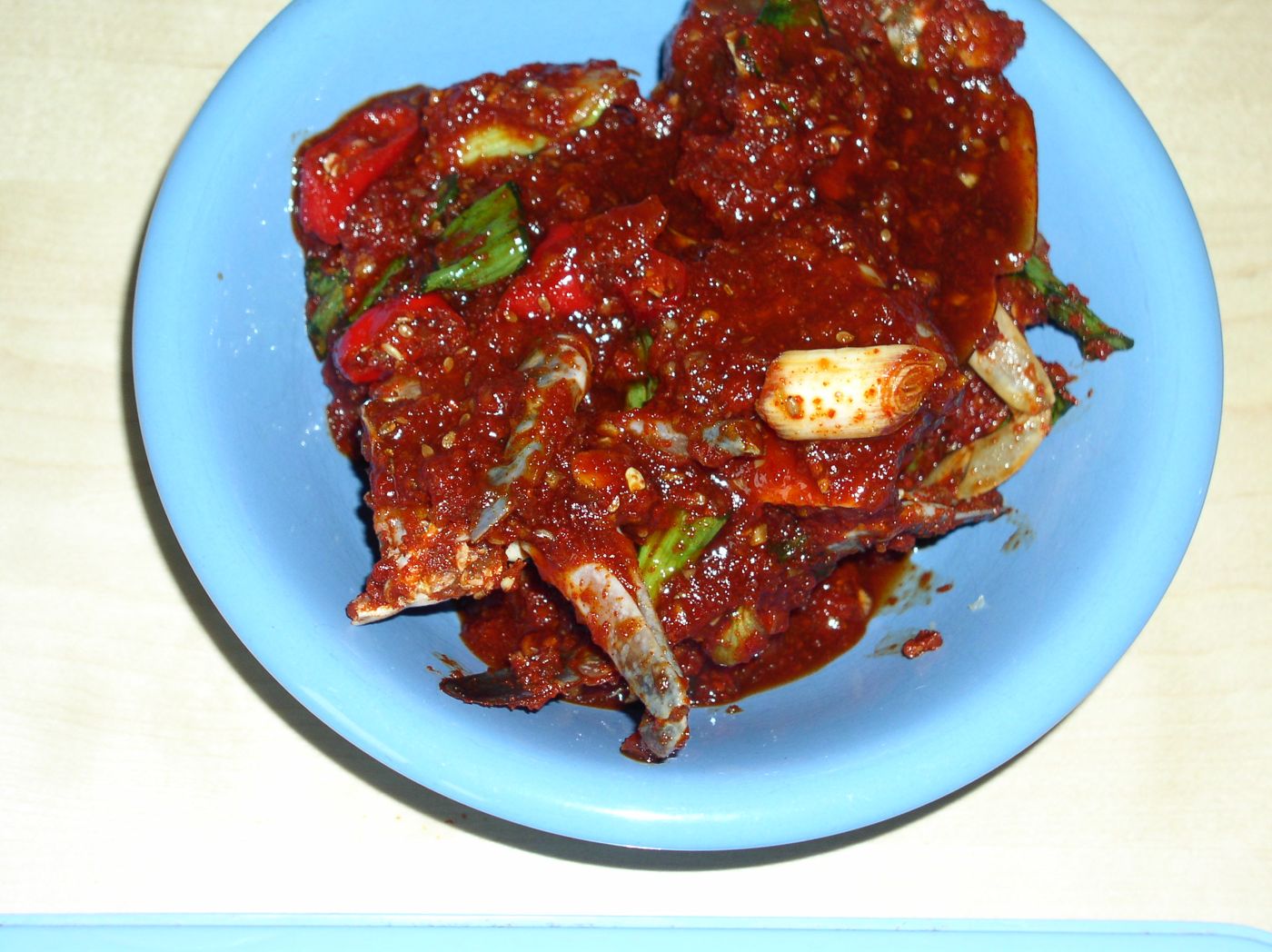 Spicy Marinated Raw Crab양념게장Raw crab pieces tossed in a glossy chili, garlic and soy dressing and eaten within days — sweet, fiery and a specialty of Yeosu's gejang restaurants.