Techniques
Making Jeotgal
젓갈 담그기
Salted, fermented seafood is one of Korea's oldest preserved foods: a seasoning for kimchi, a side dish on its own, and a careful exercise in salt and time.
Jeotgal is seafood (shrimp, anchovies, oysters, fish roe, squid, clams, fish innards) preserved with a large amount of salt and left to ripen. It appears on the Korean table in two ways: as a small, intensely savory side dish eaten with rice, and as a seasoning, above all in kimchi. Thin liquid versions strained from the solids, such as myeolchi-aekjeot, are commonly called fish sauce.
A very old food
The Encyclopedia of Korean Culture points out that a peninsula surrounded on three sides by sea, where warm and cold currents meet, has always had abundant shellfish and fish, and that salting surplus catches would have been a natural way to keep them. The earliest written mention it cites comes from the Samguk sagi: jeotgal was among the betrothal gifts sent when King Sinmun of Silla took his queen, listed alongside rice, wine, oil, honey, jang and dried meat. Joseon-era texts record four broad families of jeotgal: seafood in salt alone; salt with wine, oil and spices; salt with nuruk (fermentation starter); and salt with malt and cooked glutinous rice. Grain-fermented fish survives as sikhae, which the encyclopedia associates with the east-coast provinces; the flatfish sikhae of Hamgyeong, made with foxtail millet, chili and radish, is the best known.
How it works
Salt does two jobs. It draws water out of the seafood and holds back most spoilage organisms, while still allowing salt-tolerant microbes to grow. Meanwhile, enzymes already present in the flesh and innards break proteins down into amino acids. The encyclopedia credits this self-digestion for jeotgal's soft, slightly viscous texture and deep savor. A 2024 study following salted anchovies, salted hairtail innards and salted croaker over two years found that each developed its own distinctive community of salt-loving microbes, and that the type of seafood shaped flavor more than the length of fermentation.
The basic method
- Start fresh. The seafood must be very fresh and cleaned; small shrimp and anchovies are usually salted whole, while larger fish may be cut up.
- Salt in layers. Seafood and coarse salt (cheonilyeom is the traditional choice) are packed into a crock in alternating layers, finishing with a thick cap of salt. For oysters, the encyclopedia's historical recipe simply alternates oysters and salt in a jar; for herring, it stresses keeping everything free of excess water.
- Seal and wait. The crock is covered and left in a cool place to ripen, for weeks to many months depending on the seafood.
- Season to serve. Many side-dish jeotgal are mixed just before eating with chili flakes, garlic, green onion and sesame; eorigul-jeot, a spicy oyster jeotgal from Chungcheong, is a well-known example.
A calendar of jeotgal
Jeotgal follows the fishing seasons. The encyclopedia's month-by-month list puts pollack roe and oysters in winter, croaker and anchovy in late spring and early summer, and hairtail, squid and shrimp in high summer. Every region has its own: saeujeot around Seoul and Gyeonggi, anchovy jeotgal along the south coast, pollack roe and tripe jeotgal in Gangwon, damselfish jeotgal (jarijeot) on Jeju.
In the kitchen
Jeotgal is a seasoning first. Saeujeot salts and deepens baechu-kimchi and the custard of gyeran-jjim; anchovy jeotgal is a staple seasoning in the south. The encyclopedia adds that jeotgal also goes into stews and, in some regions, its liquid has stood in for soy sauce. As a side dish it is served in small amounts, since a little goes a long way. Historically, the encyclopedia notes, jeotgal also mattered nutritionally as a source of calcium in a diet with little dairy. See making kimchi and fermented foods for more.
Food safety and health notes
- Salt is the safety system. Traditional jeotgal relies on heavy salting (the samples in the 2024 study above measured just under 25 percent salinity) to keep spoilage organisms in check. Cutting the salt in a traditional recipe while still fermenting at room temperature removes that protection.
- Buy from reputable producers and refrigerate after opening. Discard jeotgal that smells putrid rather than pleasantly briny, or that shows mold.
- Sodium. Even small portions add a lot of sodium; see sodium in Korean food.
- Biogenic amines. Like other fermented fish products, jeotgal can contain histamine and related compounds produced during fermentation. A 2024 review notes that sensitive people, and those drinking alcohol or taking certain medications, may react at lower levels.
- Allergens. Jeotgal contains fish or shellfish, which matters for allergic diners, including when it is hidden inside kimchi.
Dishes using this technique
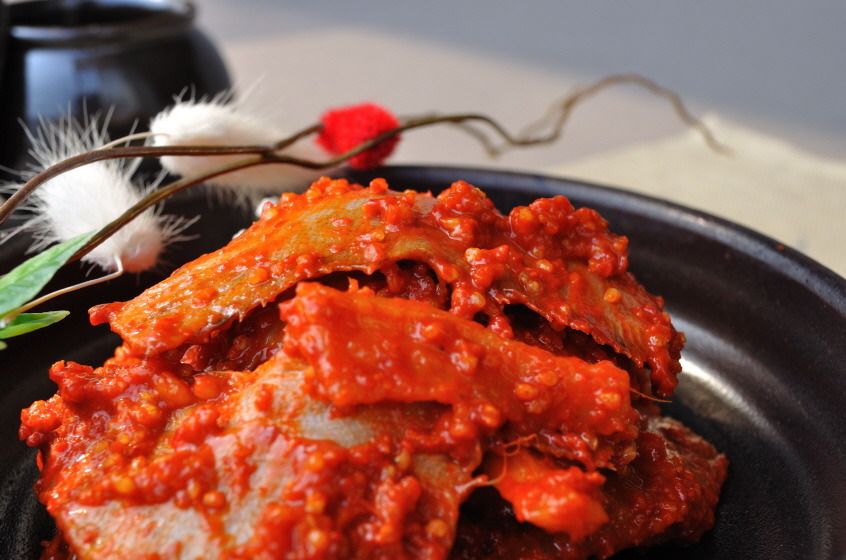 Fermented Flatfish with Millet가자미식해Salted flatfish fermented with foxtail millet, malt, radish and chili — the tangy, spicy sikhae of Hamgyeong, carried south to the Gangwon coast.
- Salted Anchovies멸치젓Whole anchovies packed in heavy salt and aged for months — the south coast's kimchi jeotgal, also boned, dressed with chili and eaten with rice or in ssam.
- Salted Clams조개젓Small shucked clams salted in their own boiled juices for a few weeks, then dressed with chili and green onion — an early-summer rice companion.
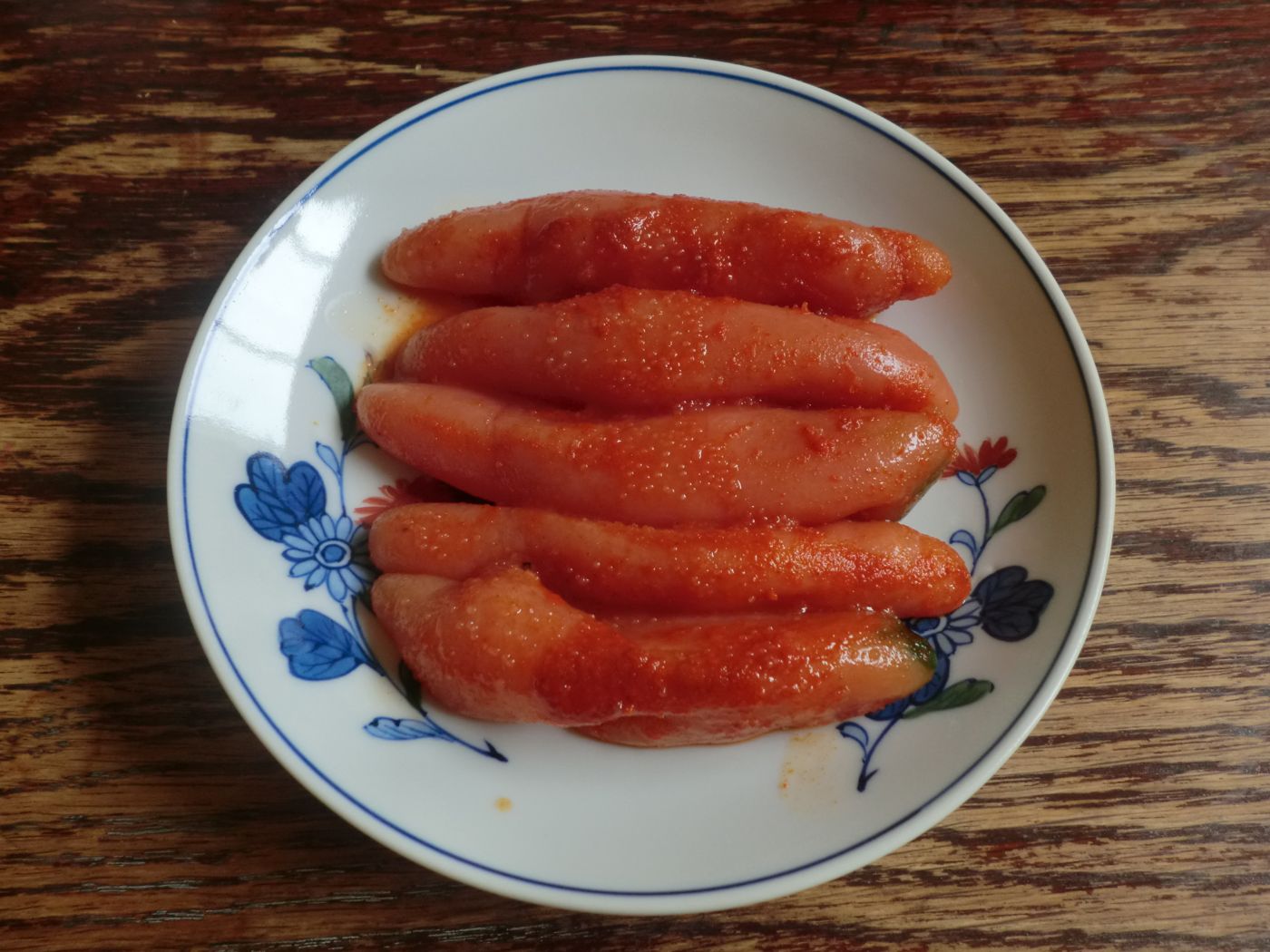 Salted Pollock Roe명란젓Whole sacs of Alaska pollock roe cured in salt and coated with chili and garlic — briny, savory and eaten in small amounts with rice and sesame oil.
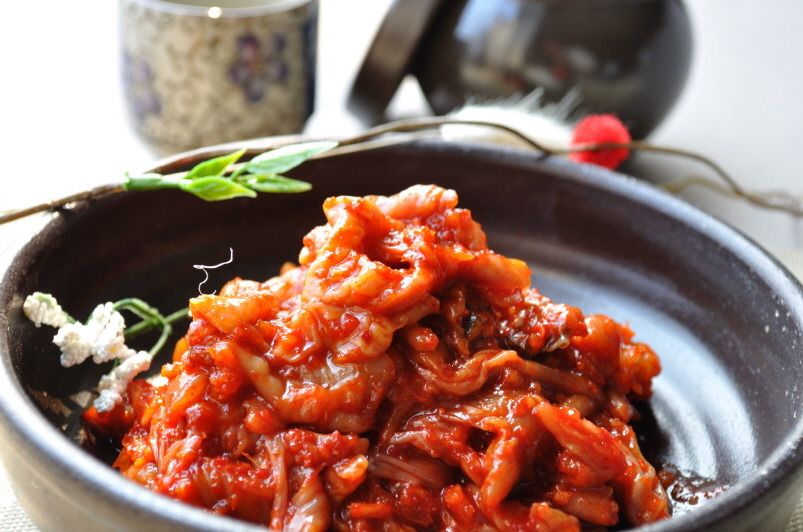 Salted Pollock Tripe창난젓Pollock intestines cured in salt, then cut and dressed with chili, garlic and green onion — a chewy, savory East Sea jeotgal, often mixed with radish.
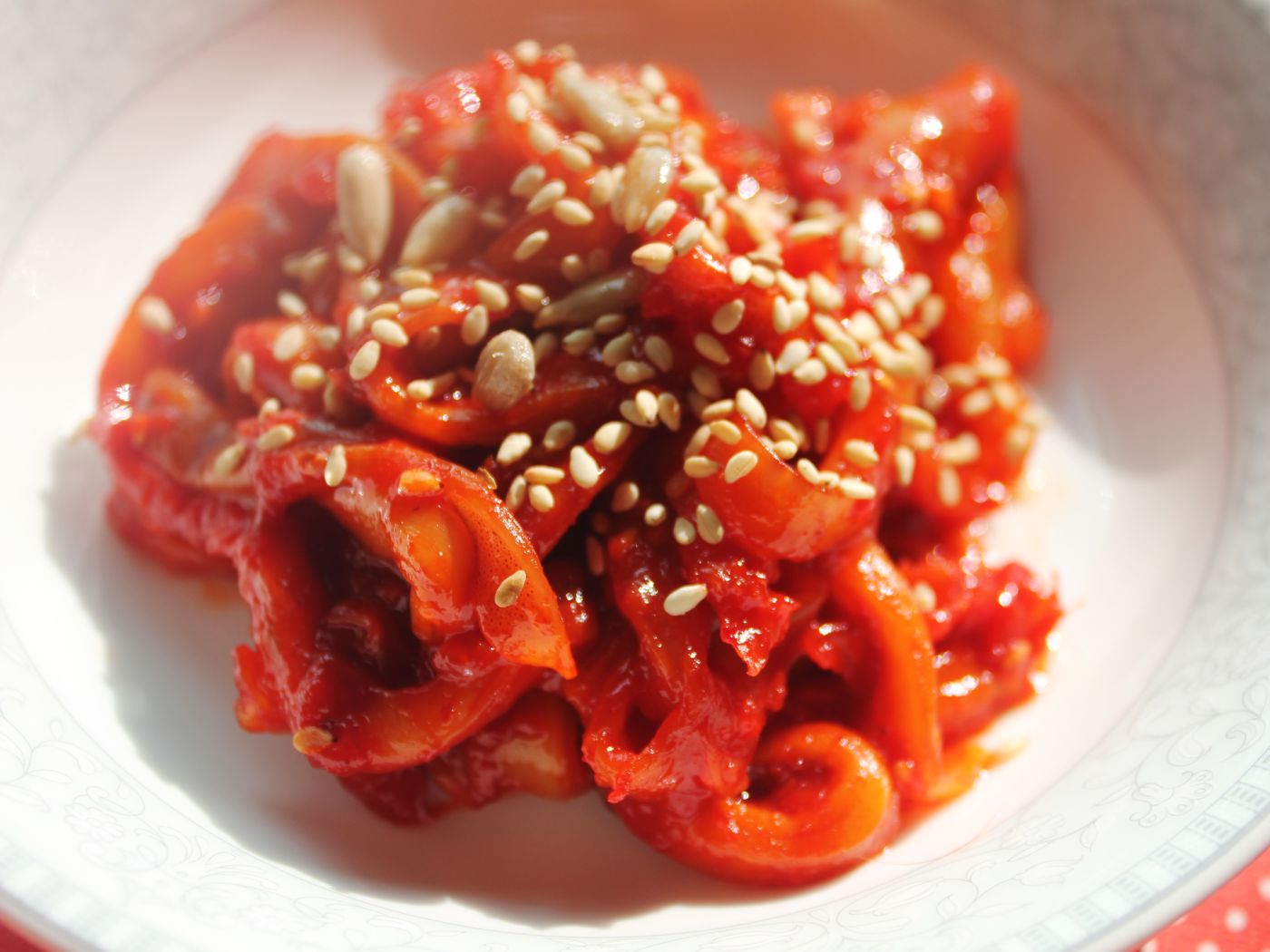 Salted Squid오징어젓Squid cured in salt, then sliced and tossed with chili, garlic and a touch of syrup — chewy, sweet-savory jeotgal from the East Sea coast.
- Spicy Lightly Salted Oysters어리굴젓Fresh oysters lightly salted and ripened with chili — a short-keeping winter jeotgal famous in Seosan and Ganwoldo in South Chungcheong.
Sources
- 01젓갈 (Jeotgal) — Encyclopedia of Korean Culture
- 02식해 (Sikhae) — Encyclopedia of Korean Culture
- 03Microbial Dynamics and Metabolite Profiles in Different Types of Salted Seafood (Jeotgal) During Fermentation — ACS Omega (2024)
- 04A review of biogenic amines in fermented foods: Occurrence and health effects — Heliyon (2024)